45+ Iconic INFJ Characters
INFJs characters tend to get one of three jobs: mysterious counselor, emotionally burdened visionary, or unsettling person who knows something terrible is coming but can’t explain it without sounding unhinged.
Sometimes they’re all three.
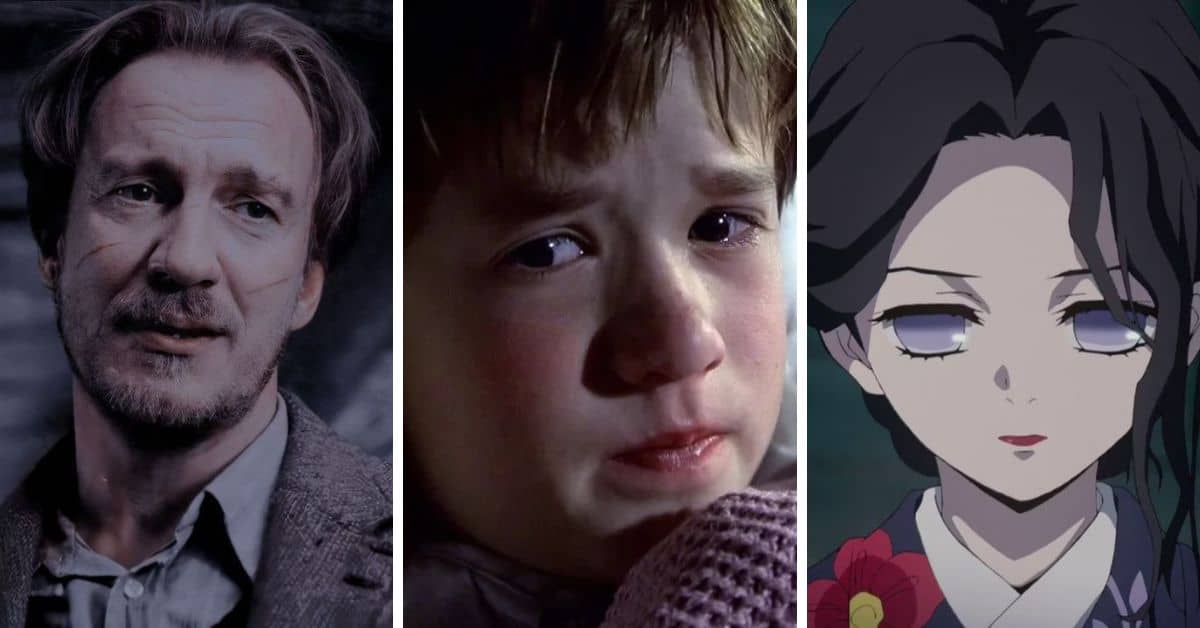
This list includes heroic INFJs, damaged INFJs, villainous INFJs, and a few characters people will probably fight me about in the comments. That’s fine. Profiling fictional characters involves interpretation, and writers rarely hand us a neat cognitive-function diagram with the screenplay.
I’ve tried to look beyond “this character is kind and mysterious.” Plenty of non-INFJs are kind and mysterious. I’m looking for the deeper pattern: how the character forms conclusions, reads people, makes decisions, and gets into trouble.
Not sure what your personality type is? Take our new personality questionnaire here. Or you can take the official MBTI® here.
Estimated reading time: 1 minute
40+ INFJ Fictional Characters

#1 – Remus Lupin from “Harry Potter”
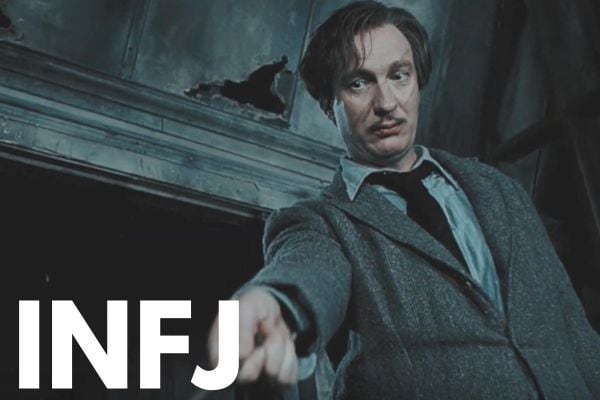
Snape to Lupin: “Possibly no one’s warned you, Lupin, but this class contains Neville Longbottom. I would advise you not to entrust him with anything difficult. Not unless Miss Granger is hissing instructions in his ear.” […]
Professor Lupin raised his eyebrows.
“I was hoping that Neville would assist me with the first stage of the operation,” he paused, “and I am sure he will perform admirably.”
I love Lupin, but his ability to see everyone else’s worth while distrusting his own is super frustrating. The man can encourage Neville Longbottom but cannot extend the same basic courtesy to himself.
Lupin is the kind of teacher who tosses out the traditional teaching methods of his peers and opts for individualized methods. He’s capable of seeing things about other people that they don’t even realize about themselves. Using this insight, he guides his students towards their potential without being overbearing or forceful. His insight into people and his genuine warmth and consideration with others puts him firmly into the INFJ camp.
#2 – Atticus Finch from “To Kill A Mockingbird”
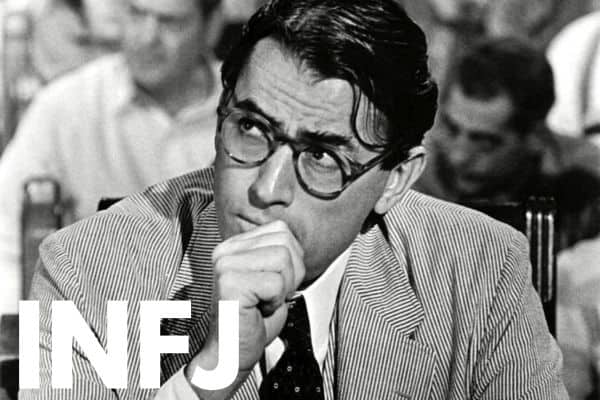
“I wanted you to see what real courage is, instead of getting the idea that courage is a man with a gun in his hand. It’s when you know you’re licked before you begin but you begin anyway and you see it through no matter what. You rarely win, but sometimes you do.” – Atticus Finch
Atticus knows he may lose before he begins. He begins anyway. That’s what makes him so inspiring to me. His idealism isn’t the cheerful kind that assumes everything will work out. It’s the stubborn kind that says doing the right thing still matters when it probably won’t work out. How I wish I could absorb this quality into myself! It takes hard work, conviction, and practice.
Atticus Finch becomes a role model for his children because of his belief in the equal value of people regardless of their outside appearance or the color of their skin. Finch has an insight into human nature and will stop at nothing to fight for his vision of a better world – even if he believes equality will probably never happen in his lifetime. INFJs will relate to his calm, focused determination – even when he’s ridiculed or scorned. They will also relate to how he believes every individual, young child, or grown man, is worth trying to understand. His focus on the big picture, on treating all humans with dignity and respect, and his empathy for every individual make him one of the most iconic literary INFJs.
#3 – Elsa from “Frozen”

“Are you someone out there who’s a little bit like me? Who knows deep down I’m not where I’m meant to be? Every day’s a little harder as I feel your power grow. Don’t you know there’s part of me that longs to go into the unknown?” – Elsa
Elsa wants to meet everyone’s expectations, protect the people she loves, understand the strange force calling to her, and avoid discussing her feelings until they become a weather event. There was a long period of time where I didn’t believe Elsa could be profiled. I felt that in the first Frozen film her character was too shrouded by trauma and a desire for survival for her true personality to shine. However, when the second Frozen film came out, I saw her INFJ leanings more clearly.
As Elsa’s life calms down, she finds herself hungering for something more; a more profound purpose in her life beyond family game nights or village traditions. While she values her family and friends and takes her responsibilities seriously, she has a ceaseless yearning to venture into the unknown. She wants to understand how the world works and search for answers about her existence. She’s driven to put together clues and insights about the deeper meaning of things.
#4 – Ra’s al Guhl from Batman Begins
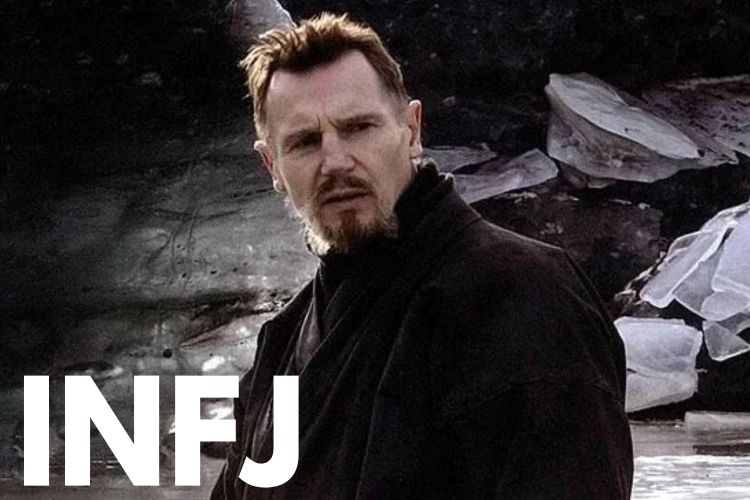
“If you make yourself more than just a man, if you devote yourself to an ideal and if they can’t stop you, you become something else entirely – legend, Mr. Wayne.”
– R’As al Guhl
I’m always interested in villains who can identify a genuine problem and then produce the most morally horrifying solution imaginable. R’as is excellent at that, and because of that, I really hope you don’t relate to him.
R’As al Guhl is driven by a singular vision of a better world. Unfortunately, he believes that the ends justify the means and will do whatever it takes to make that vision a reality – even if it means murdering innocent people in the process. As a mentor figure, R’As al Guhl is exceptional. He knows how to motivate and instill trust in people – but his ulterior motives and long-term strategies are more internalized. Many INFJs can have far-reaching ideas that lead them without necessarily sharing those ideas with others.
#5 – Pi Patel From “The Life of Pi”

“With the very first rays of light it came alive to me: hope. As things emerged in outline and filled with colour, hope increased until it was like a song in my heart. Oh, what it was to bask in it! Things would work out yet. The worst was over. I had survived the night.” – Pi Patel
I like that Pi’s response to several conflicting belief systems is curiosity rather than an urgent need to declare one side stupid. I wish more people would take this perspective.
Pi Patel is driven to understand the deeper meaning of the world around him. From religion to zoology, his mind is full of questions and a desire to unify all his ideals. He sees other perspectives easily and rather than rule out what doesn’t match his current ideology, he tries to maximize his understanding and rework his whole inner system of truth. This is why he’s able to fall in love with a variety of religions – he is drawn to the wonder, power, beauty, and diverse perspectives of each religion he encounters. He easily identifies with other people and this sense of wonder, along with his knowledge of zoology, keep him alive during his 227 days in the Pacific Ocean.
#6 – Sam Winchester from “Supernatural”

“It doesn’t matter what you are. It only matters what you do. It’s your choice.” – Sam Winchester
Sam wants to understand the monster’s tragic backstory. Dean would generally prefer to kill it before anyone loses an organ. This disagreement explains a considerable portion of Supernatural.
Sam Winchester is a reluctant hunter of supernatural darkness. His ability to make rapid connections and insights is valued by his brother, Dean. However, he struggles with his conscience and a deep sense of guilt over killing, even if he’s killing demons. He often shows clairvoyant tendencies, anticipating future events before they happen. Because INFJs have Introverted Intuition as their dominant function, they have a knack for predicting future outcomes and possibilities. Sam is usually gentle, kind, and protective. He’s a great example of an INFJ grappling with the dark and light sides of his personality.
#7 – Norman from “The Promised Neverland”
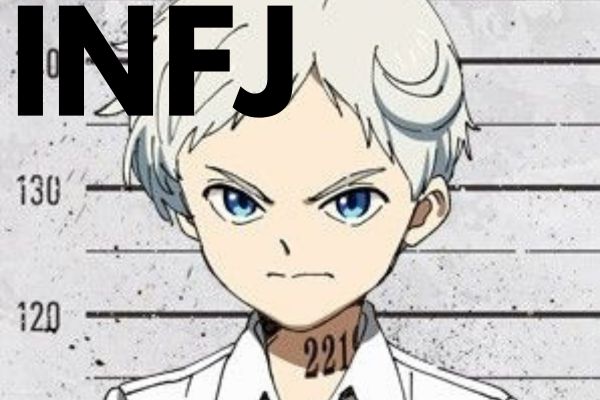
“You already know by now, right? I set a trap for three people. To Don, I said the rope was under my bed. To Gilda, I said the second floor bathroom’s ceiling. That’s what I told you, Ray. But actually, I told Don it was in the dining hall, and told Gilda it was in the library. Then the rope that was under my bed disappeared. Then what about the other two locations? Should we go check them now?” – Norman
Norman frightens me a little, and I mean that affectionately. No child should be able to construct plans this elaborate while maintaining such a reassuring smile.
Norman has complex, far-reaching strategies that regularly confuse his friends and fellow orphans. Nobody can beat him in a game of tag because he knows people’s patterns and can build strategies to avoid his opponents. He’s willing to put his own life on the line to save his friends. He’s continually altering his outward demeanor so that nobody will see the pain and anguish he is dealing with inside.
Here’s a tip: Be sure not to watch this show without a big box of Kleenex handy. If you don’t cry, I have questions.
Discover more INFJ Anime Characters Here!
#8 – Lady Galadriel from “The Lord of the Rings”
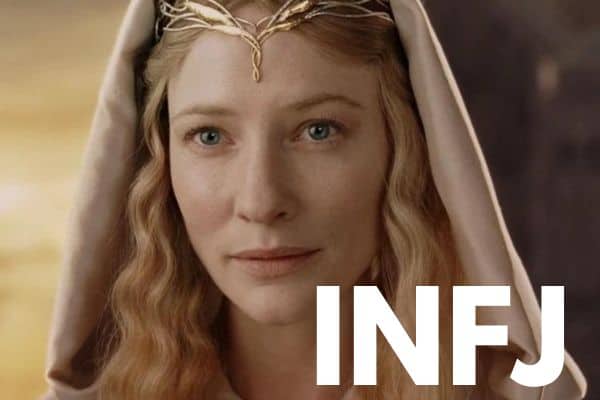
“Even the smallest person can change the course of the future.” – Galadriel
Galadriel has the unsettling energy of someone who already knows what you want, why you want it, and how badly you might behave if you get it. Frodo barely arrives before she is peering directly into the parts of him he would rather keep private. She is a firm defender of the forces of Good and Light and believes that love has no boundaries or limits. She believes in Frodo when other people struggle to do so, and has a great deal of heart and sympathy for the weakest creatures in Middle-Earth.
Choose Your INFJ Mentor
You have made a serious life mistake and need guidance. Who gets the phone call?
- Remus Lupin
- Atticus Finch
- Galadriel
- Absolutely no one. I will process this alone for seven years.
I’d choose Lupin. Galadriel would see far too much.
#9 – Plutarch Heavensbee from “The Hunger Games”
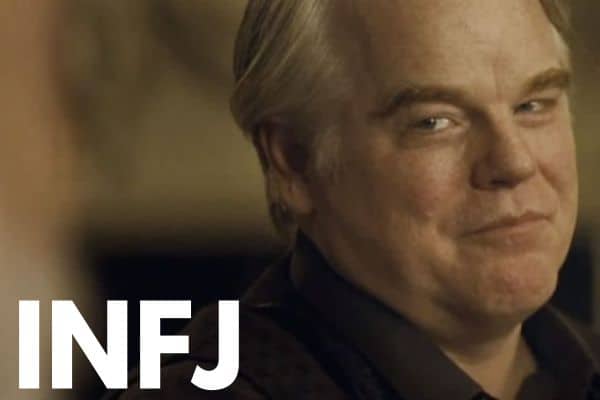
“Now, Katniss, you have been our mission from the beginning. The plan was always to get you out. Half the tributes were in on it. This is the revolution, and you are the mockingjay.” – Plutarch Heavensbee
Plutarch survives the Capitol by looking like he belongs there. He smiles, flatters the right people, and conceals an entire revolution behind excellent social skills. You can call it diplomacy. You can also call it playing the longest and most dangerous game of office politics imaginable. This is what INFJs can be capable of when they use all their strengths to manipulate, protect, and strategize. They can overlook the discomfort of dishonesty in order to serve the greater good and their ultimate vision. They can pretend to be nice to people they absolutely can’t stand for the sake of their ideals. Keeping their end goal in sight helps them overlook the discomfort and frustration of the present moment.
#10 – Cole Sear from “The Sixth Sense”
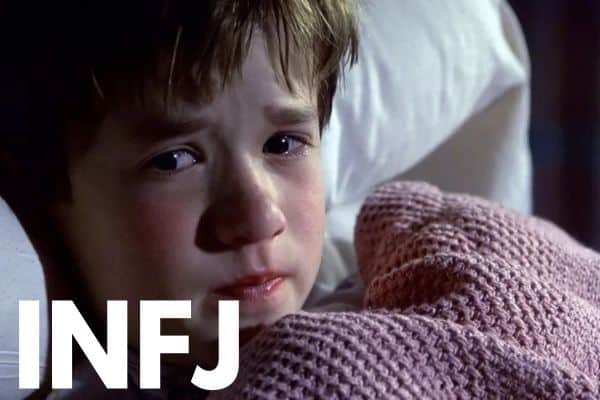
“Tell me the story about why you’re sad.” – Cole
“You think I’m sad? What makes you think that?” – Malcolm
“Your eyes told me.” – Cole
Cole seems to just know things about people, even without his supernatural ability. He senses people’s feelings and notices how they respond to the various experiences of life. He’s often labeled a “freak” because of his clairvoyant abilities. While INFJs can’t go around seeing dead people, like Cole, they also sense people’s feelings and often absorb those feelings into themselves. Especially in childhood they often feel like they don’t quite belong – like nobody really understands them or trusts their hunches.
#11 – Louise Banks in “Arrival”
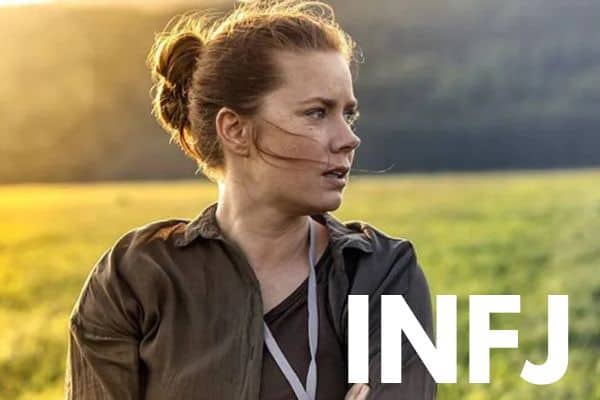
“Despite knowing the journey and where it leads, I embrace it, and I welcome every moment of it.” – Dr. Louise Banks
Louise Banks is very concerned with context and understanding the whole picture of something rather than how a situation appears on the surface. She knows how important it is to look at things from multiple perspectives and angles. Slow to jump to conclusions, she tries to examine things deeply before moving forward and potentially causing harm. She has a gentle, understanding personality and can even extend her empathy to the aliens she’s trying so desperately to communicate with. She frequently has visions of the future, and gut feelings about the real implications of things. INFJs, if you decide to watch this movie (which you should), be sure to be prepared emotionally – this is a beautiful movie but also emotionally impactful.
#12 – Lorraine Warren from “The Conjuring”
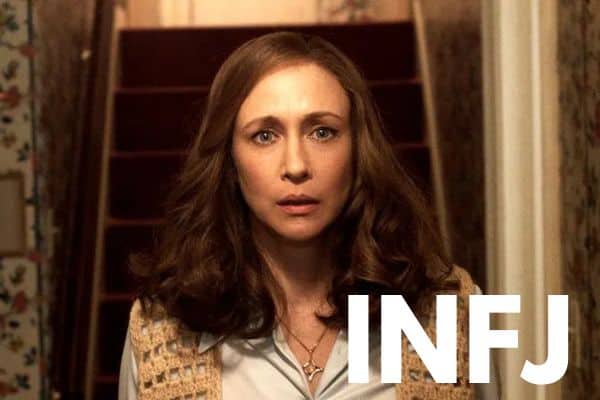
“Look, I know how it is. I know what it’s like to lose your friends because you’re different. But I also know that one person can change everything. And you just have to open up to them.” – Lorraine Warren
Now, we’re kind of cheating with this entry. Lorraine Warren is anything but fictional. She was a real individual who professed to be clairvoyant and worked as a demonologist alongside the Roman Catholic church. In the “Conjuring” films, Lorraine’s top priority is to help people and tap into their needs and emotional and spiritual difficulties. She seems to know just the words to say to get people to share their struggles with her. She never looks at the world around her in a surface-level way. She’s always probing deeper, trying to understand what’s going on beneath the obvious. She follows her hunches and instincts, even if there isn’t any tangible proof of a demonic possession or supernatural power somewhere. While she does try to use science and objective data, she knows that the supernatural world doesn’t always follow scientific pathways. She has a gift for intuitively understanding people and connecting the dots to see where problems lie and how to end haunting.
#13 – Malcolm Crowe (The Sixth Sense)
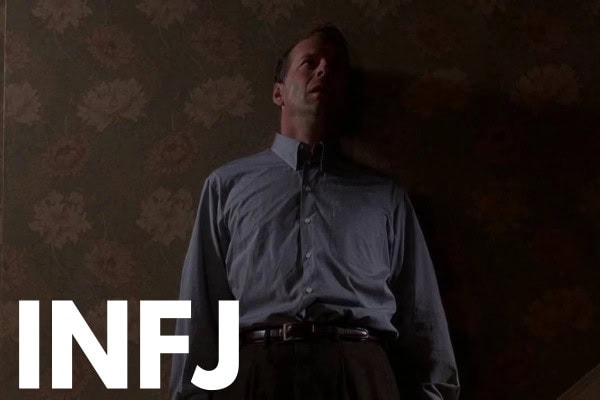
“Once upon a time there was this person named Malcolm. He worked with children. He loved it. He loved it more than anything else. And then one night, he found out that he made a mistake with one of them. He couldn’t help that one. And he can’t stop thinking about it, he can’t forget.” – Malcolm Crowe
Malcolm Crowe is the kind of person who makes you feel safe enough to tell the truth, even when the truth sounds impossible. As a child psychologist, he pays attention to more than words. He notices hesitation, fear, and everything a patient is trying not to say. With Cole Sear, he doesn’t force trust or arrive armed with easy answers; he earns his way in through patience, humor, and the stubborn decision to keep showing up. Malcolm is carrying his own failure, though, and it follows him into every conversation. That grief helps him recognize Cole’s loneliness because, in many ways, he is living inside it too.
#14 – Monica Dutton from Yellowstone

“I don’t want revenge. I just want peace.” – Monica Dutton
Monica can be frustrating, but I think that’s partly because she refuses to make a morally complicated situation convenient for the viewer. She’s caught between two worlds: her Native American community and the powerful family she married into. She sees the damage on both sides, which makes it impossible for her to accept the easy version of anyone’s story. Her compassion shows up in the classroom, in her loyalty to her people, and in her willingness to name an injustice even when doing so makes life harder. Much of her story is about trying to heal without becoming numb, protect her family without abandoning herself, and hold onto her values when everyone around her wants something different.
#15 – Grace Ling from Evil
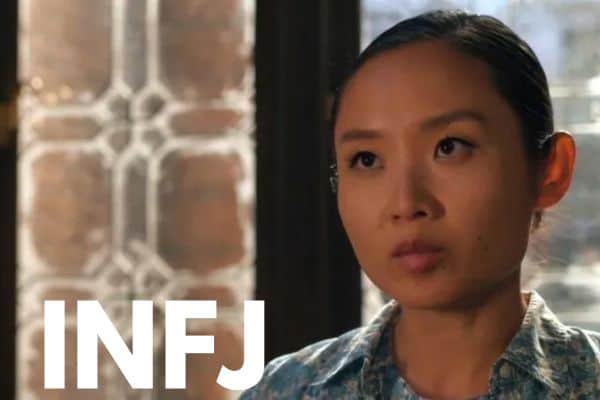
“Sometimes God sounds like a fortune cookie.”– Grace Ling
Grace can communicate directly with God, yet somehow avoids turning this into a personal branding opportunity. That’s impressive if you ask me.
As a day care worker she appears casual, caring, but down-to-earth. She doesn’t toot her own horn or act like she’s somehow better than everyone else because she can communicate directly with god. She simply asks God questions, and he answers. And she’s not afraid to help anyone who asks God for wisdom, no matter who it is. Evil is a supernatural show, so of course her powers are going to be beyond that of a typical INFJ. But like all INFJs, Grace is forward-looking, seeking out implications and patterns. And also like an INFJ, Grace cares about improving the lives of others and is quick to pick up on their moods and emotions.
#16 – The (Hot) Priest from Fleabag
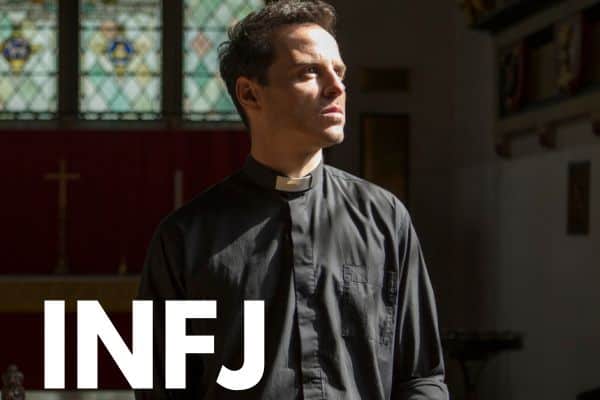
“I believe God meant for me to love people in a…different way. I believe I’m supposed to love people as a father.” – The Priest
The Hot Priest notices exactly when Fleabag turns toward the camera. That moment tells us nearly everything about him. Other people enjoy her charm; he catches her leaving the room emotionally while her body is still standing there. If you didn’t have even a tiny crush on him after watching Fleabag I don’t know what it would take.
The Hot Priest is a man of the cloth with a twinkle in his eye and a sense of humor sharp enough to leave a mark. His connection with Fleabag is equal parts tender and raw. He sees right through her bravado, past the deflections and sarcasm, to the vulnerability she’s trying so hard to hide. At the same time, he wrestles with his own demons, torn between his faith and the pull of something he knows he can’t have. He’s messy, human, and heartbreakingly real; a perfect example of what happens when head and heart go to war.
Who Would See Through You First?
- Cole Sear
- Malcolm Crowe
- Grace Ling
- The Hot Priest
Choose carefully. Some of these people may identify feelings you haven’t admitted to having.
#17 – Celeste Wright from Big Little Lies

“I feel so ashamed for saying this, but being a mother, it’s not enough for me. It’s just not. It’s not even close.” – Celeste Wright
Celeste is difficult to watch because her intelligence doesn’t immediately save her. At first, it helps her construct increasingly sophisticated explanations for why she isn’t really in danger.
On the surface, Celeste is the picture of elegance and control: a devoted mother, a sharp lawyer, and a loving wife. But behind closed doors, her world is anything but perfect. Like many INFJs, she knows what society expects and what people “want.” She knows how to play the part, but it’s hurting her every day. Her marriage is a minefield – a balancing act between protecting her kids and protecting herself. She’s proof that strength isn’t about never falling; it’s about getting back up, no matter how many times life knocks you down.
#18 – Anxiety from Inside Out 2
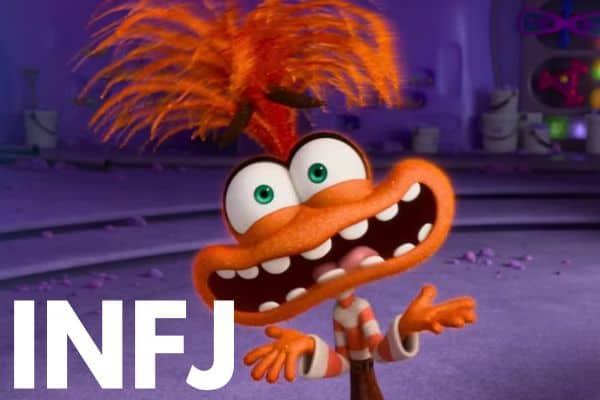
“Riley’s life is more complex now. She needs more sophisticated emotions than all of you. You’re just not what she needs anymore.” – Anxiety
Anxiety loves Riley so much that she is prepared to ruin Riley’s life in an effort to prevent anything bad from happening to it. Her intentions are protective. Her methods involve simulations, sleeplessness, and an internal projection screen devoted entirely to catastrophe.
I’m obviously taking some liberties by typing a literal emotion. Still, Anxiety’s ability to turn one upcoming social event into a feature-length disaster simulation feels painfully recognizable. She’s constantly scanning the horizon for patterns, predicting outcomes, and preparing for potential challenges. Beneath the hand-wringing and frantic energy is a well-meaning protector who just wants Riley to stay safe, even if that means overthinking everything.
#19 – Ellen Hutter from Nosferatu
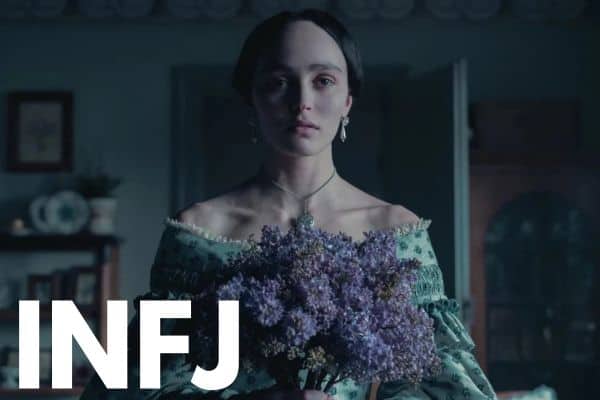
“Come to me, come to me, here is my call,” – Ellen Hutter
Ellen’s story gets under my skin because she isn’t only living in horrible terror of Orlok. She is trapped with the knowledge that no one will believe her until it is too late.
Her introverted intuition shows in the way she perceives Orlok’s return before anyone else understands what is happening. The doctors dismiss her visions as illness, while the people closest to her struggle to make sense of what she describes. Ellen does not have evidence she can neatly lay on a table, but she recognizes the pattern and knows where it leads. Her fear is seen as vague hysteria, but it’s truly the terror of seeing danger clearly while everyone else insists that nothing is there. I’m sure other INFJs will relate!
#20 – Paul Atreides from Dune
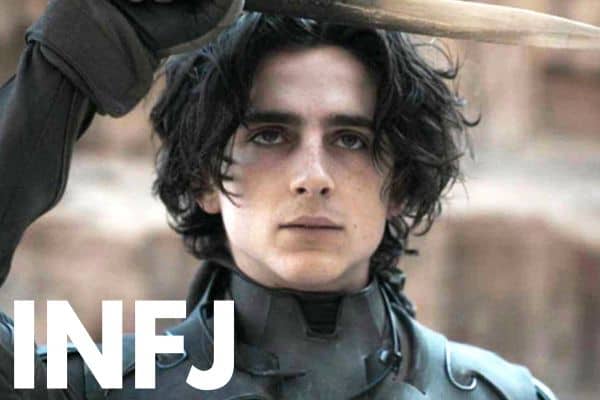
“I must not fear. Fear is the mind-killer. Fear is the little-death that brings total obliteration.” – Paul Atreides
Paul has every INFJ’s worst nightmare: he can see where everything is heading, people keep projecting enormous expectations onto him, and none of his available choices end particularly well. Also, everyone would like him to lead a religious revolution. No pressure.
Paul’s introverted intuition (Ni) manifests as vivid visions of the future, allowing him to see multiple potential outcomes and shape his path accordingly. While Paul’s Ni helps him strategize and understand the bigger picture, his extroverted feeling (Fe) shows in his connection to his people and his willingness to take on immense responsibility for their survival. Paul is not only insightful and visionary but persuasive and people-oriented, with the power to connect to others and bring them together towards one specific cause.
#21 – Izuku Midoriya from My Hero Academia

“If you ever feel hopeless, make sure you let us know.” – Izuku Midoriya
Deku fills notebooks with details about how other heroes move, fight, think, and respond under pressure. This would already be intense if he weren’t also flinging himself into mortal danger every time someone nearby looks distressed. His analytical mind says, “I have a plan.” His body doesn’t really receive the memo about self-preservation.
Midoriya has the heroism of someone with the focus of someone who has spent years imagining the person he wants to become. His introverted intuition shows in that long-range vision, but also in the way he studies people. He watches how heroes and villains move, searches for the pattern beneath their behavior, and often recognizes what is driving them before anyone else does.
His extraverted feeling gives that insight a strongly human focus. He’s constantly thinking about who needs him, who believed in him, and what his choices will mean for everyone around him. I notice this in battle after battle: when he is nearly spent, he remembers what others have given him and finds another reason to keep going. His vision gives him direction, but his connection to people supplies the fuel. Even when facing an enemy, Deku often wonders whether the person in front of him can still be reached.
#22 – Naomi Misora from Death Note
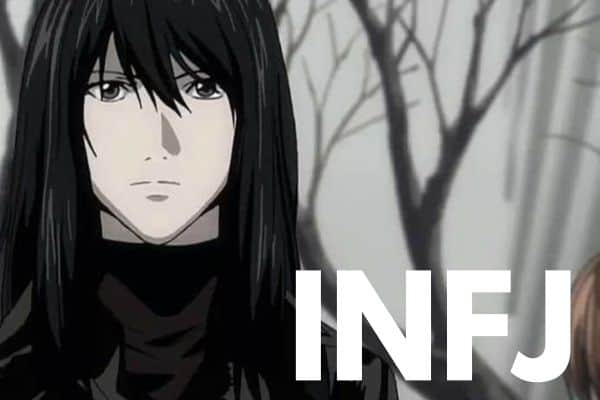
“I don’t need glory. I just need the truth.” – Naomi Misora
Naomi plays a small but important role in Death Note. She used to be an FBI agent, but left because starting a family with her fiancé was more important to her than a career. Like many INFJs, she’s intelligent and insightful, piecing together patterns of information so quickly that she rivals L in her investigative ability. Yet, unlike L, she’s more inclined to make emotional decisions, and Light Yagami is able to manipulate her and use her feelings against her.
#23 – Eurus Holmes from Sherlock
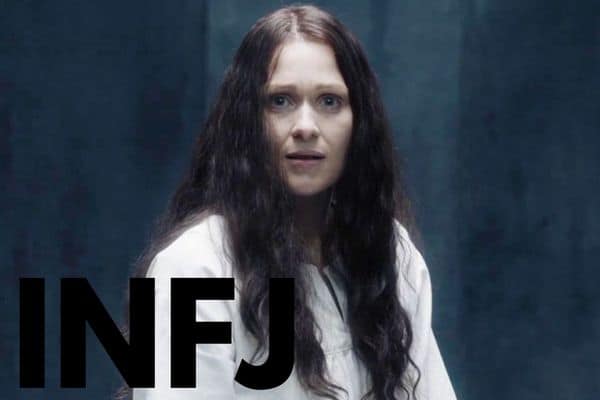
“Emotional context. It destroys you, every time.” – Eurus Holmes
Eurus Holmes is an INFJ taken to a terrifying extreme. Her introverted intuition (Ni) operates on a genius level, allowing her to construct complex psychological manipulations and predict the behavior of others with unnerving accuracy. She sees patterns and possibilities far beyond what anyone else can comprehend, using them to orchestrate events like a master puppeteer. However, her warped extroverted feeling (Fe) turns her into a chilling figure; instead of using her emotional intelligence to help others, she manipulates others’ emotions to devastating ends.
#24 – Lady Melisandre from Game of Thrones
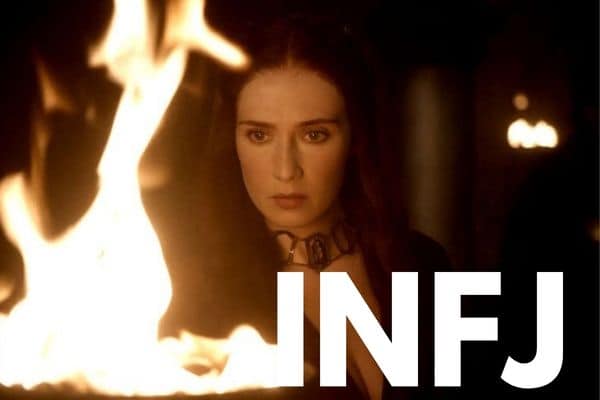
“The night is dark and full of terrors.” – Lady Melisandre
Lady Melisandre is simultaneously creepy and impressive. Like all INFJs, she’s driven by her insights, patterns, and predictions. Yet she’s so attached to her vision that she’s willing to go to any lengths to make them a reality (in some pretty morally off-kilter ways). Her extraverted feeling (Fe) shows up in her ability to inspire others, drawing them into her cause with an almost hypnotic charisma.
Though she often comes across as mysterious and calculating, Melisandre carries a deep sense of duty and regret, especially as her predictions fail and her faith wavers. She’s a morally murky INFJ who can’t always reconcile her inner convictions with the devastating consequences of her actions.
Your Vision Predicts Disaster. What Now?
- Investigate carefully like Louise Banks
- Build a secret plan like Norman
- Warn everyone like Ellen Hutter
- Set something on fire like Melisandre
One of these options should probably remain fictional.
#25 – Bran Stark from Game of Thrones
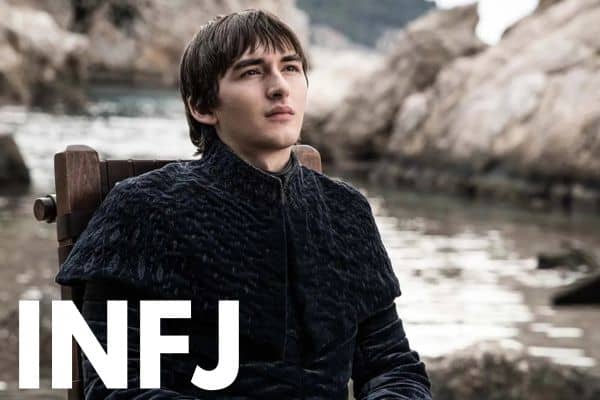
Bran Stark’s evolution from a curious boy to the all-seeing Three-Eyed Raven is the perfect example of an INFJ’s journey toward understanding their purpose. His introverted intuition (Ni) becomes his defining trait as he learns to tap into the vast web of time and memory, seeing connections and truths hidden from everyone else. His extroverted feeling (Fe) is more subdued but still present, driving him to use his insights to guide others and protect the realm.
Bran’s detachment can feel unsettling, but it’s a reflection of his INFJ nature: stepping back from personal desires to focus on the greater good. His transformation is a testament to the INFJ’s ability to embrace their unique gifts, even when it sets them apart from the rest of humanity.
#26 – Tamayo from Demon Slayer
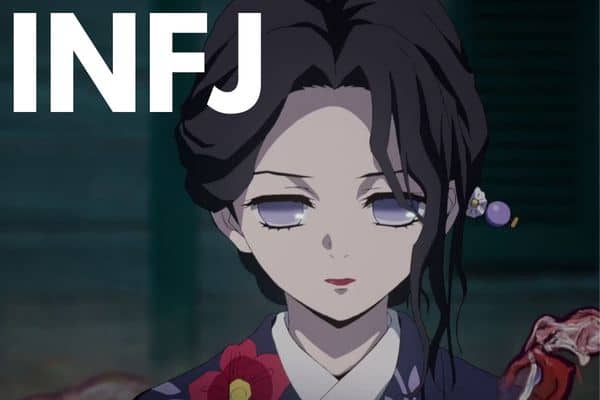
“Just as you’ll do whatever it takes to stay alive, I… No, we, will do whatever it takes to kill you!” – Tamayo
Tamayo is gentle, composed, and capable of holding a grudge for several centuries. I respect the range.
After breaking free from Muzan’s control, she could have disappeared and devoted the rest of her very long life to staying out of his way. Instead, she studies demons, treats the people they’ve harmed, and works toward a cure most people would consider impossible. She isn’t chasing a vague dream of a better future. She has spent hundreds of years acquiring the knowledge required to build one.
That long-range commitment is what points me toward INFJ. Tamayo sees where her research could eventually lead, even when the result is far beyond anyone else’s view. She then organizes her life around that possibility. Centuries pass. The world changes. Muzan remains horrible. Tamayo keeps working.
Her compassion has some steel in it too. She cares for her patients and pays close attention to what others need, but she isn’t endlessly agreeable. She deceives enemies, takes calculated risks, and fights when kindness alone won’t protect anyone. Her warmth gives her work a purpose, but it doesn’t make her harmless.
#27 – Kagaya Ubuyashiki from Demon Slayer
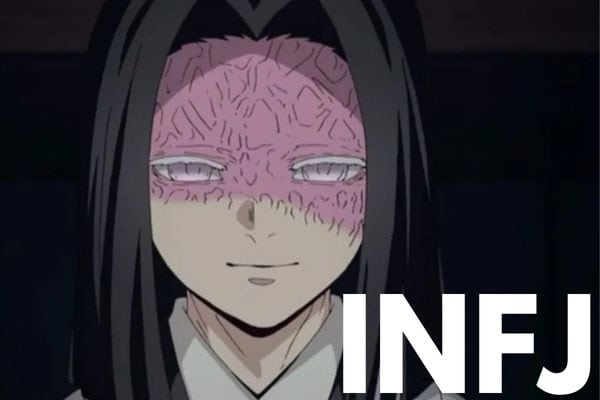
“I know what eternity is. Eternity is human feeling. Only human feelings last forever and are undying.” – Kagaya Ubuyashiki
I absolutely love Ubuyashiki because he proves you don’t have to be pushy and dominant in order to lead with power. He’s incredibly kind but he’s also wise, and the hashira learn to trust him because of his track record and his gentleness rather than any kind of brute force. He has a vision, notices patterns, and can spot ripple-effects. At the same time, he can build strong and compassionate relationships with a wide variety of people. Each of the hashira are so different, but somehow he learns to spot exactly what drives them and what they need in a leader.
#28 – Armin Arlert from Attack on Titan
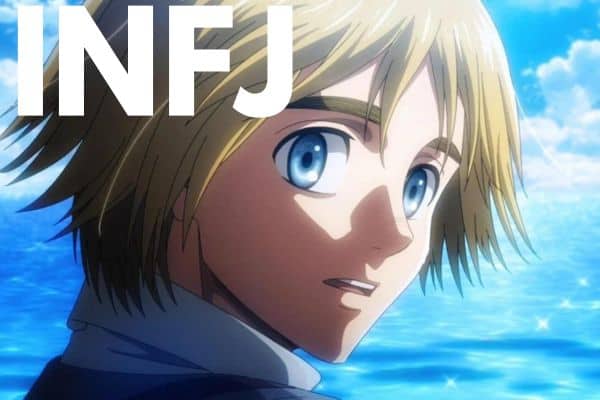
“I don’t like the idea of losing, but when it’s to save someone, I’ll do it.” – Armin Arlert
Armin is one of my favorite reminders that courage can look terrified. He often knows exactly how terrible the odds are, which makes his willingness to act more impressive. He’s not a fearless hero, in fact, he struggles with self-doubt and insecurity a lot. But his loyalty, empathy, and desire for peace make him a beloved figure. If you want to see an INFJ who’s in tune with all four of his cognitive functions in a healthy, powerful way, you should definitely watch Attack on Titan to get to know Armin. He’s proof that you don’t have to have all the answers to take the next right step.
#29 – Yuki Sohma from Fruits Basket
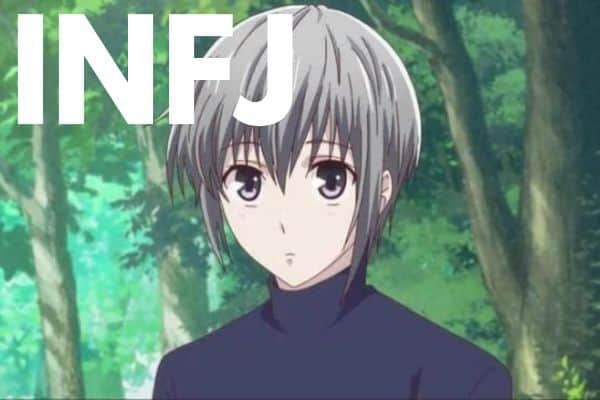
“There are things that I wanted. Things I pictured to myself. Parents who would hug me. A home I’d want to return to. A place where everyone smiled. A me that everyone wouldn’t leave… A warm place. A warm person. They really exist. They’re real.” – Yuki Sohma
Yuki’s story hurts because being admired never makes him feel known. Everyone loves the prince they have imagined. He is still waiting to find out whether anyone can love the actual person. As an intuitive, he wants to understand the meaning of life, and as a Feeling type, he’s especially attuned to the feelings of everyone around him. But sometimes he struggles to accept his own self with the same compassion and insight he extends to others.
#30 – Takashi Mitsuya from Tokyo Revengers

“No matter how hard things get, only use our strength to protect.” – Takashi Mitsuya
Tokyo Revengers is, I think, one of the most underrated animes, and Takashi Mitsuya is one of my favorite INFJ anime characters out there. He can design clothes, raise his sisters, settle an argument, and throw a punch without acting as if tenderness threatens his masculinity. Manosphere dudes should take note.
Mitsuya also has a knack for seeing potential in people and situations, often offering guidance that others don’t expect from someone in his position. He also embraces his role as a protector, whether it’s standing up for his siblings or supporting his friends during difficult times.
Takashi’s ability to balance strength with kindness is quintessentially INFJ. He’s the type of person who can design a beautiful outfit one moment and step into a fight to protect someone the next. His vision of harmony and his ability to build trust and loyalty in others make him a rare and deeply respected figure in a world full of chaos.
#31 – Charlotte “Lottie” Matthews from Yellowjackets
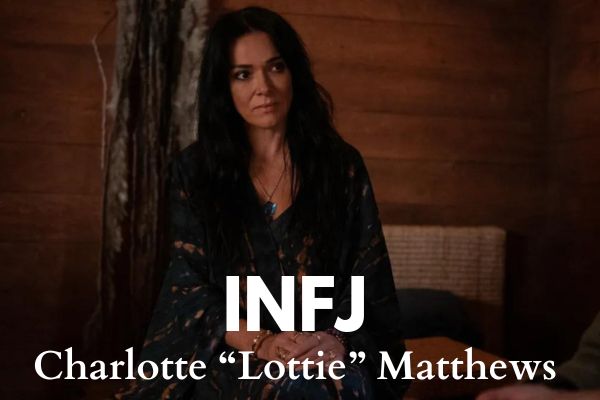
“You can’t control what happens out there, but you can control what happens in here.” – Lottie Matthews
Lottie Matthews is an interesting INFJ because her intuition is never presented as entirely trustworthy or entirely wrong. In the wilderness, she senses danger, notices patterns, and gives meaning to experiences the others cannot explain. Sometimes her instincts seem to protect the group. At other times, trauma, isolation, and fear pull her so far into her visions that no one, including Lottie, can tell where insight ends and delusion begins.
She reads the group and gives people something to hold onto in a time where hope is nearly impossible to find. She creates rituals, shared beliefs, and a sense of purpose when everyone is frightened and falling apart. That ability can be comforting, but it also gives her enormous influence over vulnerable people. Lottie captures both sides of the INFJ’s pattern-seeking mind: the wish to heal and unite others, and the danger of becoming so convinced by an inner vision that every event starts to look like proof.
#32 – Linus van Pelt from Peanuts
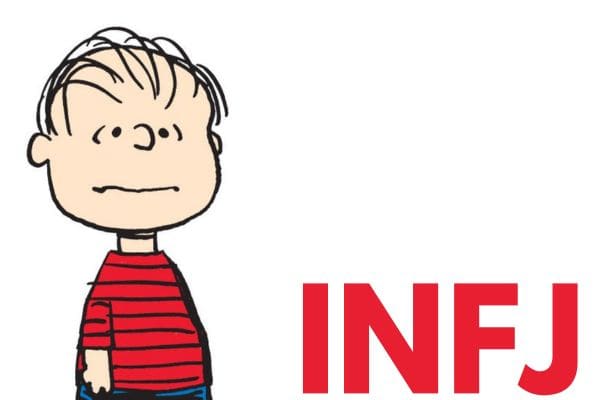
“Happiness is a warm blanket.” – Linus van Pelt
Linus makes me smile because he can deliver a philosophical insight and then return immediately to his security blanket. He proves that psychological depth doesn’t cancel out the need for comfort.
His introverted intuition (Ni) shows in his philosophical musings and his deep belief in things others might dismiss, like the Great Pumpkin. While others laugh at his convictions, Linus holds firm, seeing the world through a lens of possibility and faith.
His extroverted feeling (Fe) makes him a caring and supportive friend, always ready with advice or a comforting word. Linus loves deeply, even if it means clinging to his security blanket when life feels overwhelming. I think any INFJ will find a kindred spirit in this beloved character.
#33 – Lexi Howard from Euphoria

“Being the observer means I see everything and say nothing. It’s like living in a fishbowl, watching everyone swim in circles.” – Lexi Howard
I have mixed feelings about Lexi’s play. It’s observant and brave, but it also turns other people’s pain into material without giving them much choice. I’m curious what you think so if you have thoughts, let me know in the comments!
Lexi’s introverted intuition (Ni) makes her a keen observer, constantly analyzing the lives of those around her and creatively crafting their stories into her own expressions. She also cares a lot for others, although that can be a blessing and a curse in Euphoria, where so many people are constantly making reckless decisions.
#34 – Istredd from The Witcher
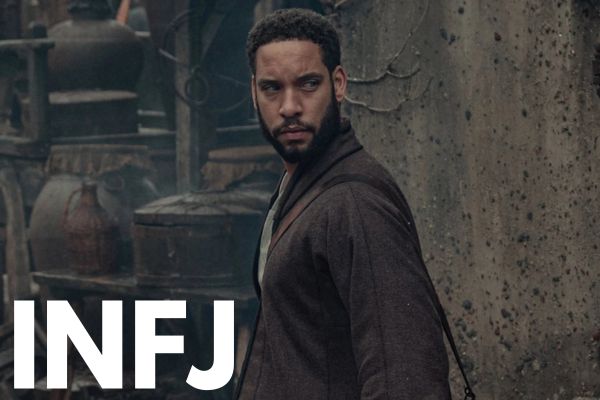
“Knowledge is power, but what you do with it defines you.” – Istredd
Istredd is thoughtful, serious, and far more interested in understanding the world than controlling it. As a historian and mage, he spends his life studying the past, but he is always looking for the larger pattern and what it might mean for the future. That long-range focus fits his introverted intuition, as does his tendency to follow an idea long after everyone else has dismissed it.
His extraverted feeling appears in his concern for how political decisions affect actual people, along with his desire to be understood by those closest to him. He wants to do the responsible thing, although his relationships have a habit of making that question much messier. Istredd may be measured on the surface, but underneath he is deeply invested in both his work and his people. His struggle is often figuring out what to do when knowledge, duty, and love all point in different directions.
Assemble Your INFJ Survival Team
Choose one:
- Strategist: Norman, Armin, Tamayo
- Counselor: Lupin, Malcolm, Linus
- Wildcard: Lottie, Lexi, Will
You may not choose Joe Goldberg for any position.
#35 – Van Hohenheim from Fullmetal Alchemist
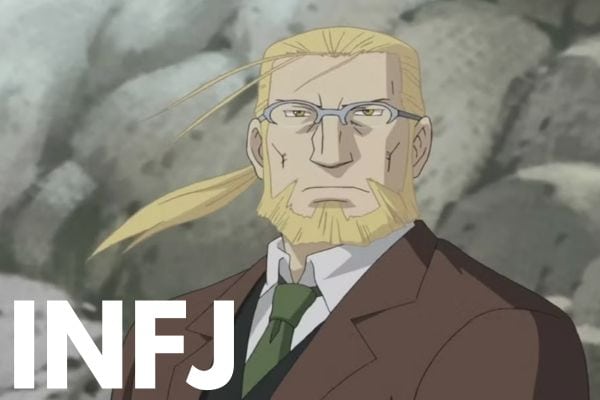
“I simply wanted to be human. To learn. To grow old. To die.” – Van Hohenheim
Hohenheim may be immortal, but what he wants is painfully ordinary: to grow older with the people he loves and eventually die. His introverted intuition (Ni) helps him to see the far-reaching consequences of actions, as well as the interconnectedness of life and alchemy. This foresight often sets him apart, as he carries the weight of centuries of knowledge and sacrifice. Hohenheim’s journey to atone for past mistakes and protect those he loves is, I think, a great example of the INFJ’s desire to make the world better, even at great personal cost.
#36 – Joe Goldberg from You
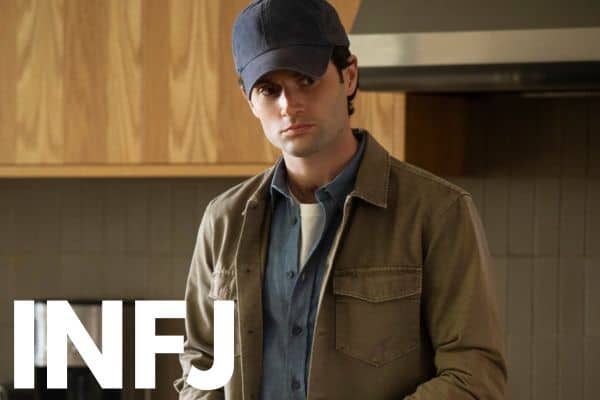
“I love you because onions are more complicated than cherries. I’m doomed.” – Joe Goldberg
Okay, I wouldn’t necessarily say Joe Goldberg is “amazing.” Truth be told, he’s a horrible human being. But I often get asked to represent INFJ villains, so I thought I’d include him here. Joe Goldberg is a dark and disturbing example of an INFJ whose cognitive functions have taken a sinister turn. His introverted intuition (Ni) is razor-sharp, allowing him to piece together details about others’ lives and construct far-reaching plans. However, his extroverted feeling (Fe), while powerful, is twisted into obsessive tendencies, making him hyper-focused on controlling and manipulating others under the guise of love and protection.
Joe’s story is a cautionary tale of what happens when an INFJ’s visionary mind becomes unmoored from genuine empathy and ethics. His charisma and ability to blend into his environment are unnervingly compelling, but his actions highlight the dangers of unchecked idealism and distorted emotional connections.
#37 – Yuta Okkotsu from Jujutsu Kaisen
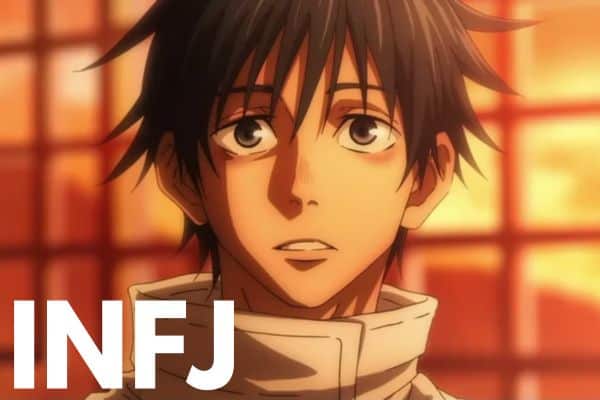
“I want to be needed by someone. I want the confidence to feel like it’s okay to live.” – Yuta Okkotsu
Yuta Okkotsu is willing to sacrifice himself if it means saving others, even when he’s unsure of his own worth. Complicated and tragic, he spends the first part of his life living in constant fear of what he might do or grappling with the grief of loss. His growth story involves reclaiming his own value; his ability to use his strengths to overcome evil rather than to stay stuck in self-disparagement and anguish. His growth from a withdrawn, guilt-ridden boy into a confident and compassionate protector will resonate deeply with INFJs striving to embrace their inner strength.
#38 – Will Graham from Hannibal
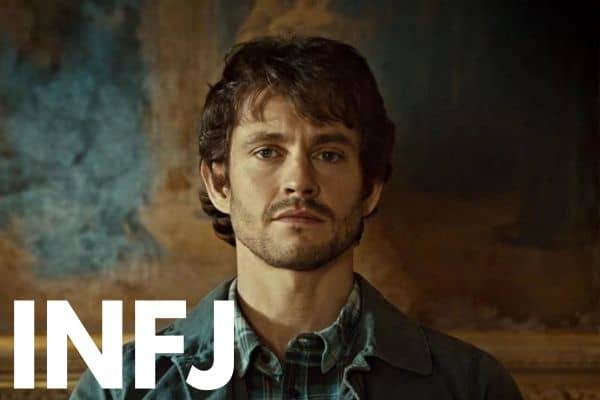
“You’re the head of the Behavioral Science Unit, Jack, why don’t you come up with your own answers if you don’t like mine?” – Will Graham
Will makes me deeply uncomfortable, in the intended way. His empathy is so immersive that understanding another mind begins to threaten the borders of his own. His perceptiveness helps him to step into the minds of killers, seeing their motives and methods in a totally creepy but impressive way. This talent, combined with his extroverted feeling (Fe), makes him a uniquely empathetic profiler who connects deeply with both victims and perpetrators.
However, Will’s emotional depth often leaves him vulnerable, as he struggles to distinguish his own identity from the darkness he investigates. His relationship with Hannibal is an amazing example of the INFJ’s true complexity. On one hand, he wants connection with the complicated, intelligent Hannibal. Yet on the other hand, he knows he must stay true to his moral compass. He’s always torn between the light and dark, the good in him and the evil he struggles to understand.
#39 – Veronica Sawyer from Heathers
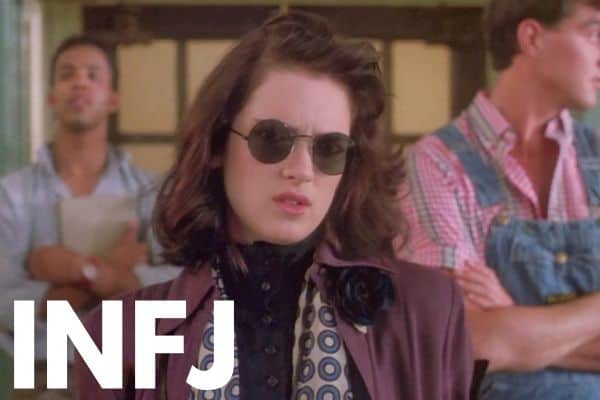
“If you were happy every day of your life you wouldn’t be a human being. You’d be a game-show host.” – Veronica Sawyer
Veronica’s sarcasm is funny because it’s filled with real disgust. She sees the cruelty of the social system clearly, but she also has to admit that part of her still wanted its approval. Yikes…I think many INFJs will relate to that. They see underneath the patterns of human behavior, but often still want to feel connected to society in a meaningful way. Sometimes that means struggling with peer pressure and the desire to be liked.
Veronica’s darkly humorous, introspective nature makes her a relatable figure for INFJs who often feel out of place in shallow environments. Her growth comes from learning to stand firm in her values, even when it means confronting uncomfortable truths about herself and those around her.
#40 – Master Oogway from Kung Fu Panda

“One often meets his destiny on the road he takes to avoid it.” – Master Oogway
Oogway choosing Po looks ridiculous to everyone except Oogway. I love characters who can recognize potential before it becomes presentable. Master Oogway’s intuition helps him to foresee outcomes and guide others toward their destinies. Meanwhile, his feeling side shows up in his mentorship, as he nurtures and inspires others with compassion and encouragement.
Oogway’s ability to balance the big picture with present-moment mindfulness is a hallmark of an INFJ at peace with themselves. His calm demeanor and gentle humor remind others to trust in the process and embrace their unique paths, making him a timeless and beloved figure.
#41 – Aaron Burr from Hamilton
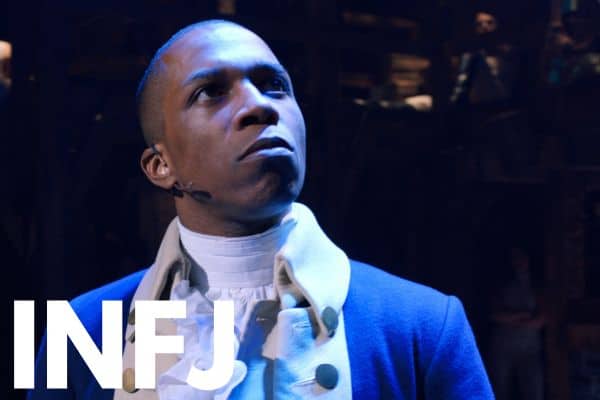
“Talk less, smile more. Don’t let them know what you’re against or what you’re for.” – Aaron Burr
Aaron Burr gives us an example of an INFJ who isn’t using their talents for the best overall goals. He values tight-lipped strategy over bold declarations (unlike Alexander Hamilton himself). His introverted intuition (Ni) makes him a master of foresight, carefully plotting his moves and weighing long-term consequences. His song “Wait for It” could be a theme song for INFJs because they care very much about timing and believe there is an optimal time for each action. One of the strengths of INFJs is their ability to spot timing rather than rushing headlong into things. Aaron Burr demonstrates this, and then takes it a little too far. His extroverted feeling (Fe) drives his desire to be liked and respected, which sometimes leads to compromise and internal conflict.
Burr’s infamous rivalry with Alexander Hamilton is a great example of the INFJ’s struggle between caution and conviction. While Hamilton acts impulsively, Burr’s hesitancy ultimately costs him dearly. His story is a reminder of how an INFJ’s deep thinking and emotional sensitivity can either empower or isolate, depending on how they balance their inner and outer worlds.
#42 – Obi-Wan Kenobi from Star Wars
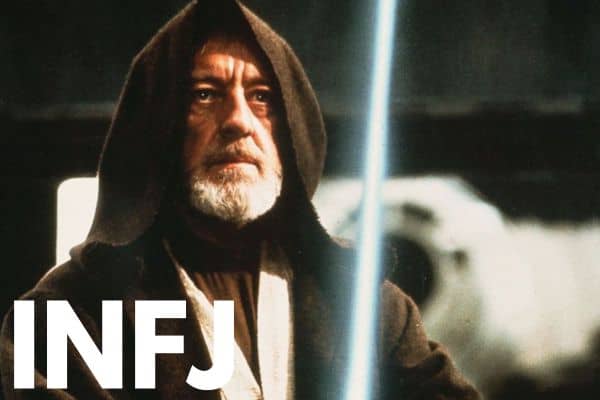
“The Force will be with you. Always.” – Obi-Wan Kenobi
Obi-Wan Kenobi balances wisdom and compassion in his role as a Jedi Master. His introverted intuition (Ni) helps him to anticipate the broader implications of his actions, guiding Anakin Skywalker and later Luke Skywalker with an eye on the galaxy’s future. He also knows how to lead gently, touching others’ emotions rather than just telling them what to do. He’s comforting, gentle, compassionate, but also steadfast in going after his calling.
#43 – Jesus (Paul Monroe) from The Walking Dead
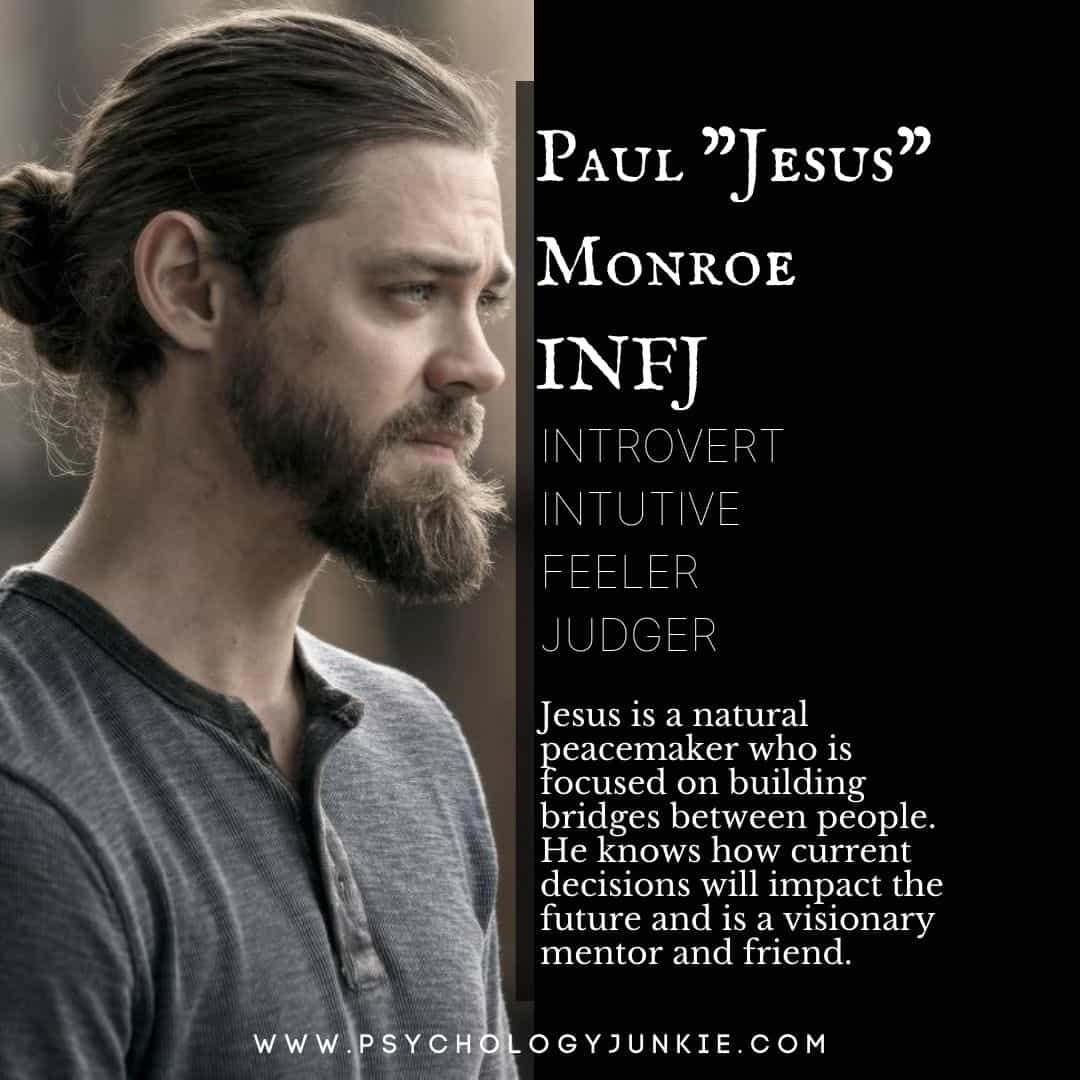
“Part of my job is searching out for other settlements to trade with. I took your truck because my community needs things, and both of you looked like trouble. I was wrong. You’re good people. And this is a good place. I think our communities may be in position to help each other.” – Jesus
Paul “Jesus” Monroe is an INFJ trying to change the world to be more peaceful and understanding. Yet sadly, this world is full of zombies and power mongers (yikes!). His introverted intuition (Ni) allows him to assess situations with a long-term perspective, finding alliances and solutions that benefit everyone involved. His extroverted feeling (Fe) is evident in his diplomatic approach—he prioritizes relationships and believes in the power of cooperation, even in a post-apocalyptic world.
Jesus’s empathy and belief in people make him a trusted leader, but they also put him at odds with those who see brutality as the only path to survival.
#44 – The Ancient One from Doctor Strange
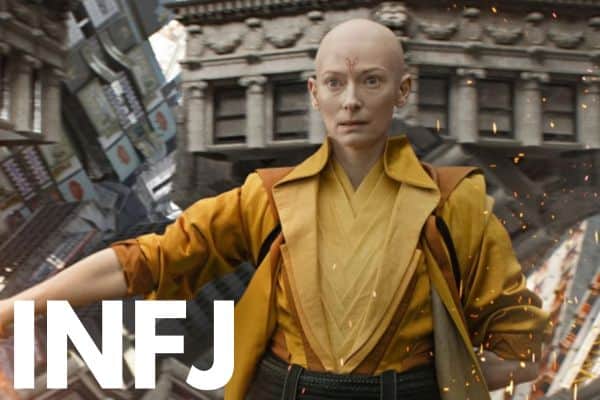
“We never lose our demons, Mordo. We only learn to live above them.” – The Ancient One
I like that the Ancient One’s wisdom doesn’t exempt her from hypocrisy. She teaches detachment and honesty while concealing the source of her own power. Mentors are more interesting when they have something left to confront in my opinion.
Her introverted intuition (Ni) helps her to see beyond the immediate moment, spotting possibilities and guiding others toward their potential. Her extroverted feeling (Fe) shows up in her mentorship, as she nurtures her students with both compassion and tough love.
#45 – Ryu Sun Jae (Lovely Runner)
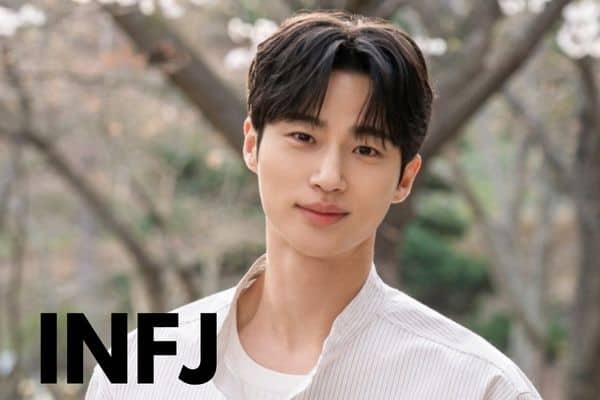
“If I end up dying to save you, I’ll be fine with that. That doesn’t matter.” – Ryu Sun-Jae
Ryu Sun-Jae falls in love once and apparently decides that should cover every available timeline. Even when his memories change, his life changes, and Sol does everything possible to stay out of his path, some part of him keeps finding its way back to her.
What makes Sun-Jae feel like an INFJ to me is the depth and continuity of his attachment. His feelings aren’t shallow or momentary, instead they become part of the larger story he carries inside himself. He remembers small encounters for years, writes his emotions into music, and holds onto the meaning of a relationship even when the relationship itself seems impossible.
I love that he isn’t presented as a perfectly composed mystical dream man. Teenage Sun-Jae is awkward, jealous, easily flustered, and spectacularly bad at acting normal around his crush. Underneath the celebrity image is someone extremely private who has been carrying years of longing, grief, and exhaustion alone.
Lovely Runner takes the INFJ idea of recognizing one meaningful future and turns it into an entire time-travel romance. Change the past. Remove the memories. Rearrange reality. Sun-Jae still knows, on some level, where he belongs.
#46 – Seo Yul from Alchemy of Souls
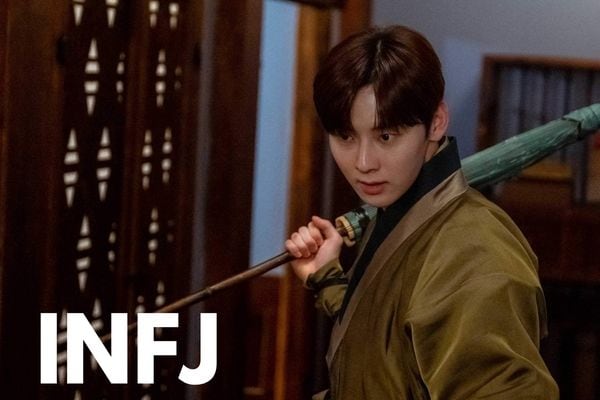
Seo Yul is intelligent, principled, frighteningly skilled, and cursed with the unfortunate belief that he should handle every emotional crisis entirely by himself.
As the gifted heir of Seoho Fortress, Yul has learned the importance of discipline and moral responsibility. He usually appears composed, but his restraint hides an enormous amount of inner conflict. When he realizes that Mu-deok is the assassin he knew and loved as a boy, he watches, gathers information, and tries to understand who she has become. His principles tell him that she may be dangerous. His compassion keeps reminding him that she is also a person he once knew.
Yul’s introverted intuition shows in his ability to recognize identities, motives, and consequences before other people do. Unfortunately, seeing what might happen doesn’t make deciding what to do any easier. He spends so much time trying to find the morally perfect path that his hesitation eventually becomes another source of guilt.
I love Seo Yul because his gentleness never makes him weak. He can be compassionate and lethal within the same scene. But his story also shows the danger of turning empathy, foresight, and personal responsibility inward until they become self-punishment. Sometimes the honorable choice is not to suffer beautifully. It is to let the people who love you know that you need them.
Now I Want to Know
- Which character felt most like you?
- Which typing do you completely disagree with?
- Who deserves a place in the next update?
Extra credit: Build a four-person INFJ survival team. You need one mentor, one strategist, one emotional-support person, and one wildcard. Joe Goldberg is not available. This is for your safety.
Find out more about your personality type in our eBooks, Discovering You: Unlocking the Power of Personality Type, The INFJ – Understanding the Mystic, The ISFJ – Understanding the Protector, and The INFP – Understanding the Dreamer. You can also connect with me via Facebook, Instagram, or YouTube!





I could always relate with Sam’s character as in his feelings, his decisions and why he does what he does but I still liked Dean more. Probably because, being an INFJ myself, I missed having a big brotherly yet funny and light hearted Dean in my life.
As an INFJ I didn’t really think of Norman being an INFJ I felt like I could relate more to Emma but reading your insights made me understand why he’s an INFJ.
I love your insights and the characters and people you see as INFJs, which is my type. I had to laugh with joy that all of these characters in books, tv and movies are my favorite characters! I didn’t realise it was because they are my MBTI type.
Oh my god, I really relate to Norman.
Have you watched Stargate SG1? I really appreciate your posts on this website, and I would be very excited to hear your opinions on the character’s mbti types in SG1.
Darth Siduous (who is evil) from Star Wars is also an INFJ. It’s actually very creepy to think about – he is the most manipulative character in Star Wars…
Matt Murdock (Daredevil)
This list is fantastic! I love seeing so many diverse INFJ characters, each with their unique depths and complexities. It’s fascinating how their traits mirror real INFJs in life. I particularly enjoyed the analysis of their motivations and how they navigate their worlds. Can’t wait to read more content like this!
This was such an enjoyable read! As an INFJ myself, I loved seeing how these characters embody our traits in such interesting ways. It’s fascinating to see how their unique perspectives and complexities shine through in their stories. Thanks for curating this list!
OMG I could so relate to Lupin! I’m basically a cheerleader for everyone but myself (except I don’t do cheer). but I’m really hard on myself and doubt myself a lot.