
Why You Can’t Sleep at Night, Based On Your Myers-Briggs® Personality Type
Ever crawl into bed exhausted… only for your brain to suddenly decide it’s the perfect time to replay every awkward conversation you’ve ever had, solve your entire future, plan a new business, or analyze the meaning of existence?
Apparently, sleep is easy. Convincing your personality to stop doing personality things? Not so much.

Today’s article takes a funny look at why each Myers-Briggs® personality type sabotages their sleep, from midnight idea rabbit holes to overthinking spirals and “I’ll just fix one more thing” projects. Plus, I’ve included practical sleep tips for each type so you can actually help your brain wind down.
Find your type and see if I called you out
Some general sleep tips for everyone:
- Increase bright light exposure during the day
- Avoid blue light at night (from phones, computers, televisions, or lights)
- Don’t consume caffeine late in the day
- Reduce naps after 3 PM, and try to keep naps to 20 minutes in length
- Sleep and wake at consistent times as much as possible
- Keep your bedroom between 60-67 degrees
- Reduce light in your room
- Play white noise
- Don’t eat late in the evening
- Exercise during the daytime, but not within the hour before bed
- Make sure you have a comfortable mattress, comforter, and pillow
Okay, now that the practical stuff is out of the way, let’s take a look at why you’ve been staying awake!
Table of contents
- Some general sleep tips for everyone:
- Here’s How You’re Sabotaging Your Sleep, Based On Your Myers-Briggs® Personality Type
- If you’re an ENFP
- If you’re an ENTP
- If you’re an INFP
- If you’re an INTP
- If you’re an ENFJ
- If you’re an ENTJ
- If you’re an INFJ
- If you’re an INTJ
- If you’re an ESFP
- If you’re an ESTP
- If you’re an ISFP
- If you’re an ISTP
- If you’re an ESFJ
- If you’re an ESTJ
- If you’re an ISFJ
- If you’re an ISTJ
- What Are Your Thoughts?
Estimated reading time: 17 minutes
Here’s How You’re Sabotaging Your Sleep, Based On Your Myers-Briggs® Personality Type
If you’re an ENFP
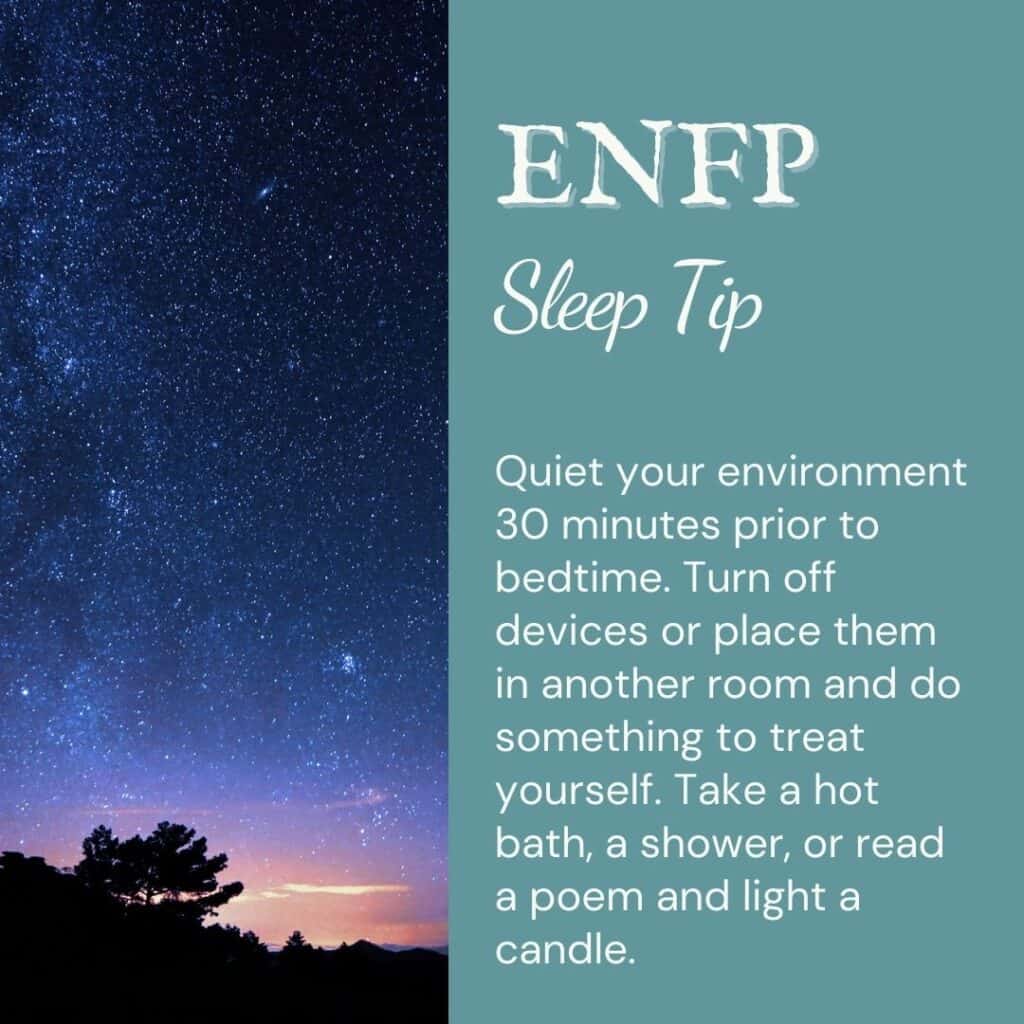
You’re probably up late theorizing about the how amazing your life would be if you could just sell all your possessions, live in an RV, and travel the world. You start listing your material possessions and valuing them based on how helpful they would be in your new nomadic lifestyle. You’ve read about people who have done this and you’re convinced that it’s the only way to be truly happy. The thought of a 9-5 job feels like slow death.
The problem isn’t that you have too many ideas. Your brain is wired to explore possibilities, connections, and alternate futures. During the day this makes you imaginative and adaptable. At midnight, when there are no real-world interruptions, your mind suddenly gets the keys to the car and decides to drive across seventeen different hypothetical timelines.
Before bed, don’t tell yourself “stop thinking.” That’s basically asking your brain to fight itself. Instead, give your ideas somewhere to land. Keep a notebook nearby where you can write down possibilities for tomorrow, then remind yourself: “I don’t have to explore every door tonight.”
Read This Next: 10 Must-Read Books for ENFPs
If you’re an ENTP
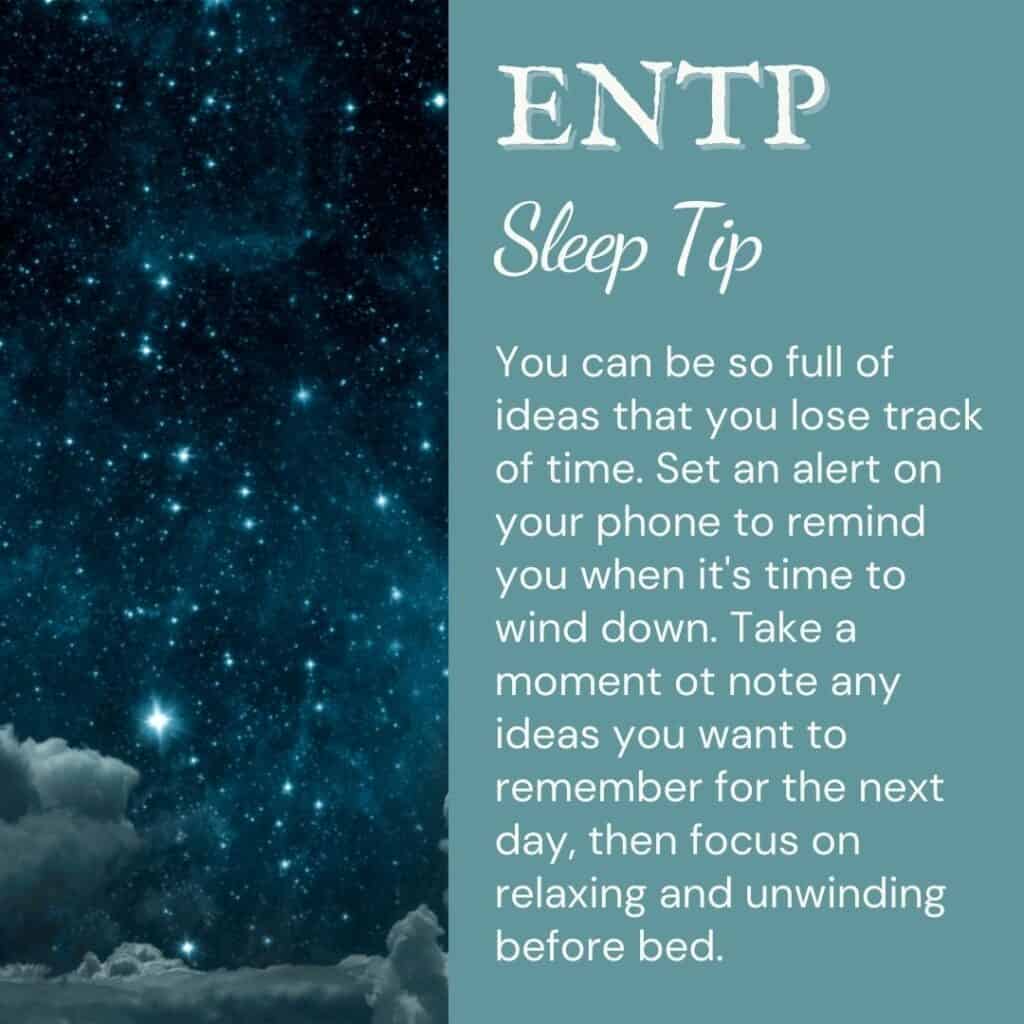
You’re up late because someone on Reddit told you about a new intellectual rabbit hole and now you can’t stop thinking about it (or the arguments against it). Even though you know the theory is most likely inaccurate, you can’t help but be fascinated by it. You start to look for evidence to support the theory and you find yourself scrambling down a rabbit hole of related theories. As you try to sleep, you keep waking up with “aha” counter-arguments to every possible theory, and new counter-arguments for your own arguments.
Your mind loves puzzles. The problem is that your brain doesn’t care whether that puzzle is “solve a major philosophical dilemma” or “figure out why this random stranger online is wrong at 1:43 AM.”
Give your brain a closing argument. Write down your current conclusion, even if it’s temporary. Your mind relaxes more easily when it feels like the debate has been saved rather than abandoned.
Read This Next: 10 Must-Read Books for ENTPs
If you’re an INFP
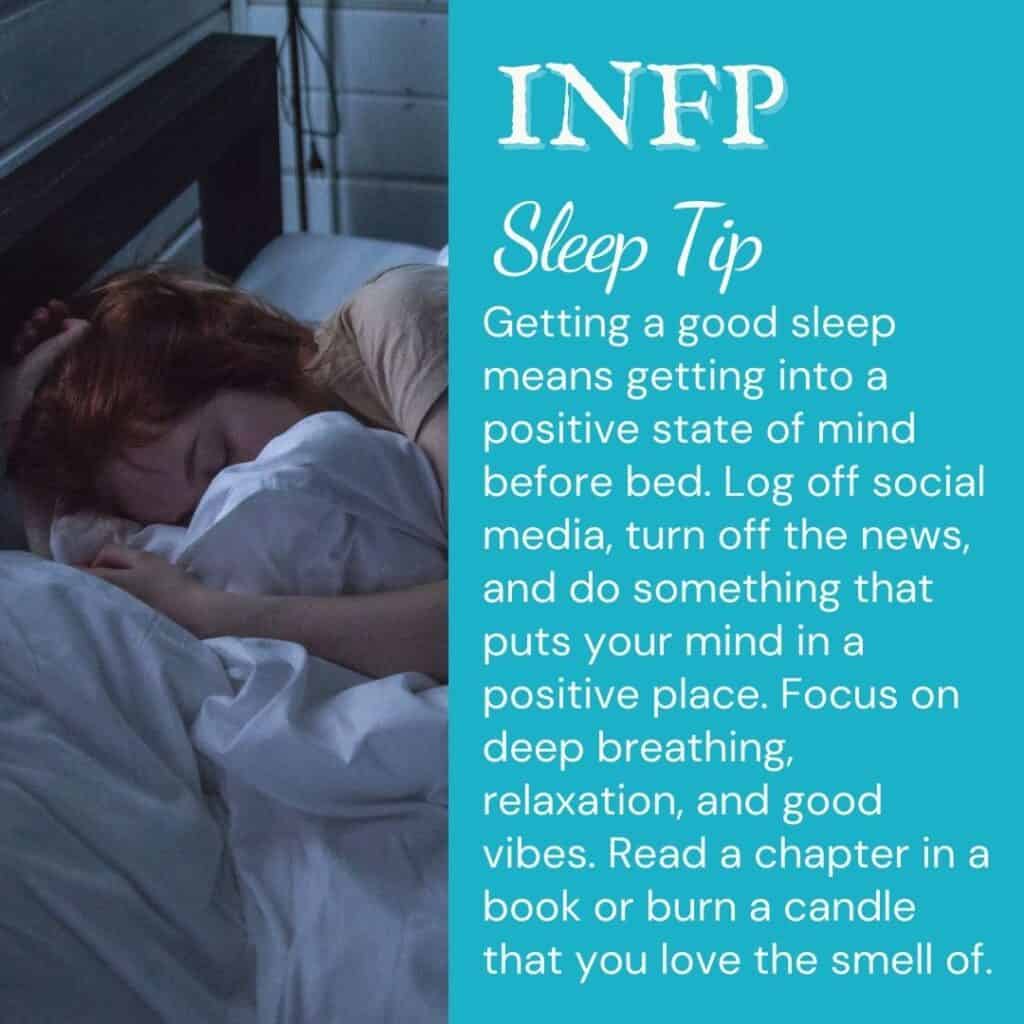
You’re up late because you’re imagining a utopian universe where everyone is kind and accepting. This world is so perfect that it almost makes you cry. You then start to worry that you’ll never find a partner or friend who shares your ideals and you’ll die alone. To make matters worse, all the happy couples you know seem to be miserable behind closed doors. You start to feel like love is a lie and you’ll never find true happiness. You watch your favorite Harry Potter movie so that you can believe in the best of humanity again.
Your imagination is one of your greatest gifts, but at night it can turn into an emotional IMAX theater. One minute you’re imagining your ideal future; the next, you’re grieving a hypothetical tragedy that has not happened and may never happen.
Before bed, try grounding yourself in something real and comforting: a familiar book, calming sensory routine, gratitude list, or anything that reminds your brain: “I am here, not in every possible future.”
Read This Next: 3 Weird and Wonderful Secrets of the INFP Personality Type
If you’re an INTP
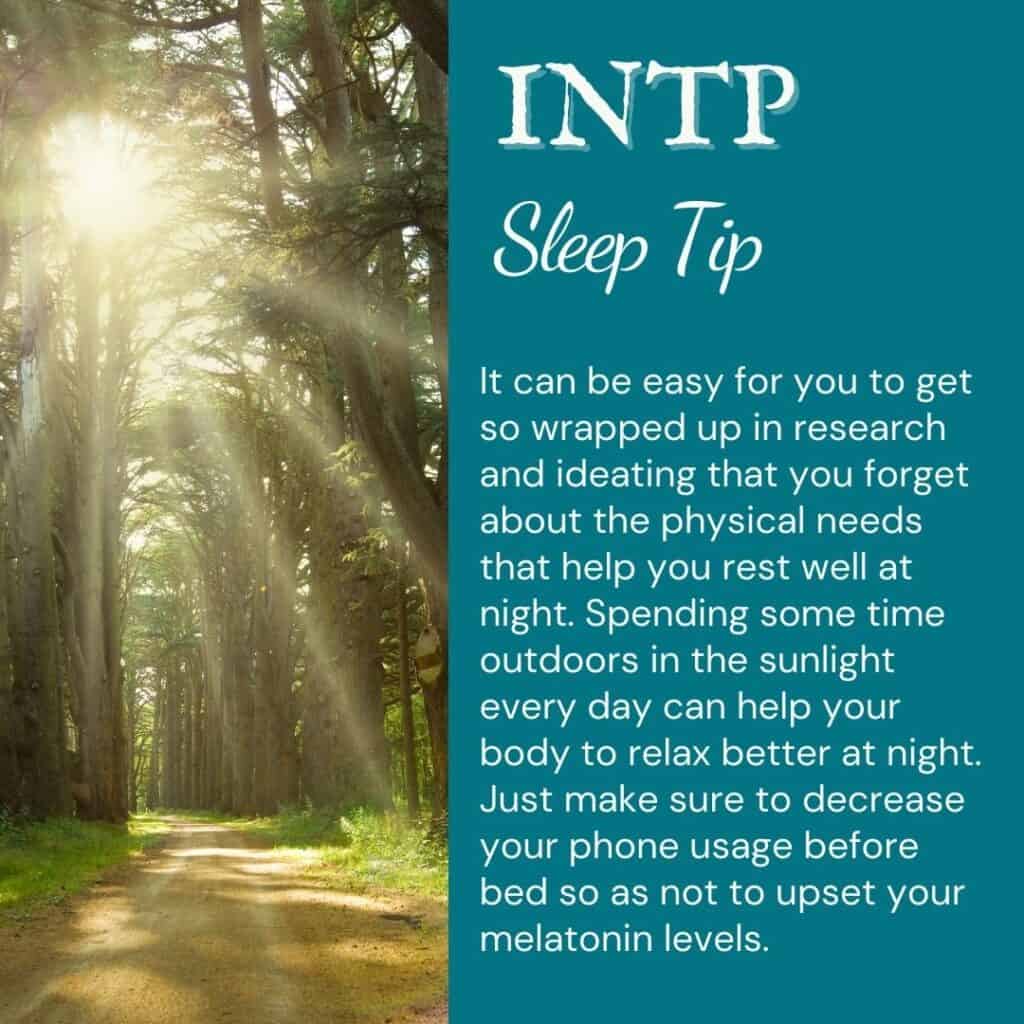
You’re up late because you have an unfinished podcast, report, or project that’s due tomorrow. You’re trying to finish it, but you keep getting sidetracked by new ideas related (and, let’s face it, unrelated) to the project. Suddenly, you have a Eureka moment and you start working on a whole new project or venture. The new idea is so much better than your original idea that you can’t help but work on it till 5 AM. Finally, you close out of your internet browser (and the 57 tabs left open on it), plug in your phone, and dream about giant algorithms fighting each other to the death.
Your brain loves unfinished questions. Unfortunately, sleep requires a certain level of “good enough,” and your mind would often prefer “complete understanding of the universe first.”
Create a mental parking lot before bed. Write the question, theory, or idea down. You’re not abandoning the thought; you’re just scheduling a meeting with it tomorrow.
Read This Next: A Look at the INTP Leader
If you’re an ENFJ

You’re up late because two of your friends are not speaking to each other, and you’re trying to mediate the situation. You can easily see the inconsistencies in each of their arguments, but you know that they’re both too proud to admit they’re wrong. You start to write a long message to each of them, explaining why they should make up, but you eventually fall asleep at your laptop. In the morning, you wake up to find that you accidentally sent the message to both of them.
Your greatest strength is seeing the emotional threads connecting people. But nighttime can become the place where you process everyone else’s needs because you didn’t have room for your own during the day.
Before bed, ask: “What feelings today were actually mine?” Give yourself the same attention you naturally give everyone else.
If you’re an ENTJ
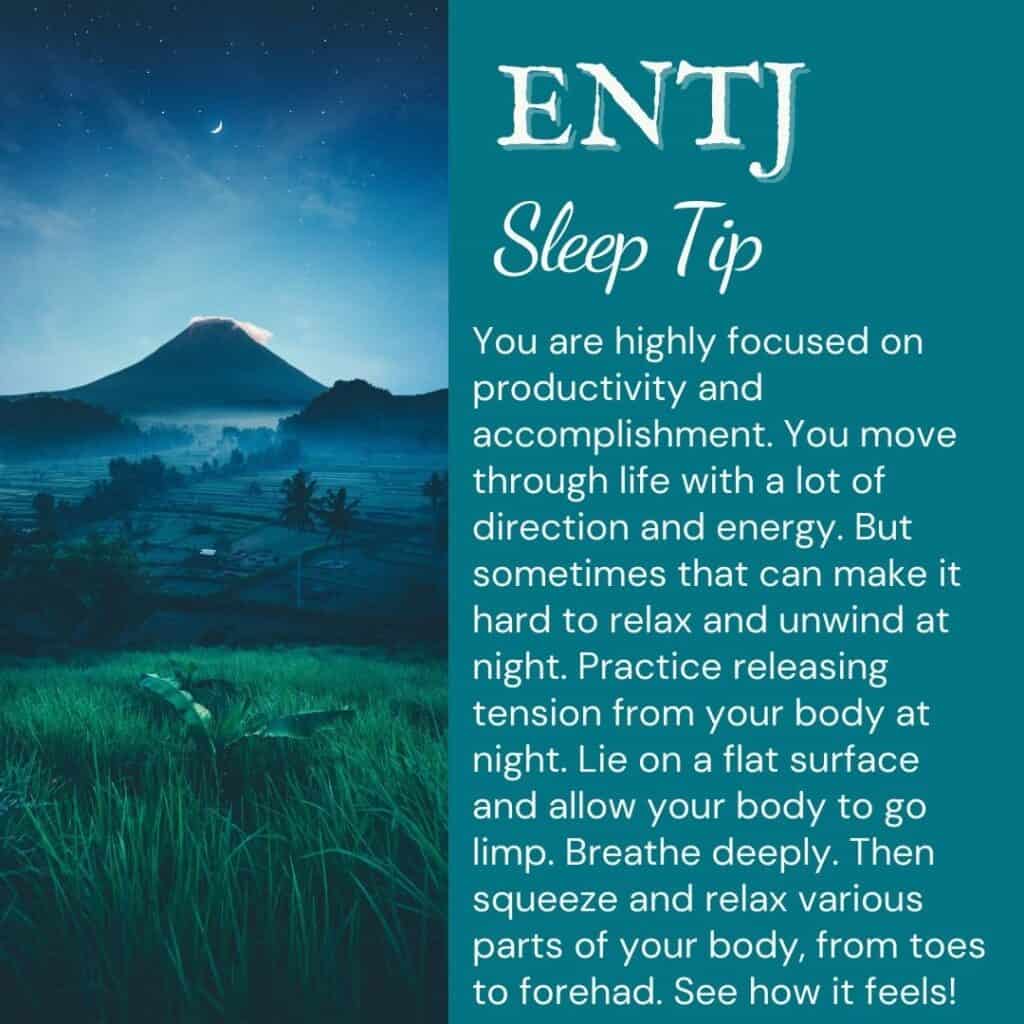
You’re up late because you know it’s only a matter of time before the world ends due to global warming, warfare, or a rogue asteroid headed towards the planet. You put together your dream team of people to help you save the world and you start making a plan. But then you realize that your dream team is full of people with different opinions and worldviews. Eventually, everyone would start having pointless arguments and the plan would fall flat. As the sun starts to come up, you finally fall asleep after deciding that the only way to save the world is to take over as its dictator.
Your mind is built to solve problems. The downside? At night your brain doesn’t always distinguish between “important problem I can solve tomorrow” and “large-scale global crisis outside my control.”
Before bed, separate concerns into two categories: action items and unsolvable-for-tonight. Your brain relaxes when it trusts that the important things have been captured.
Read This Next: 10 Must-Read Books for ENTJs
If you’re an INFJ
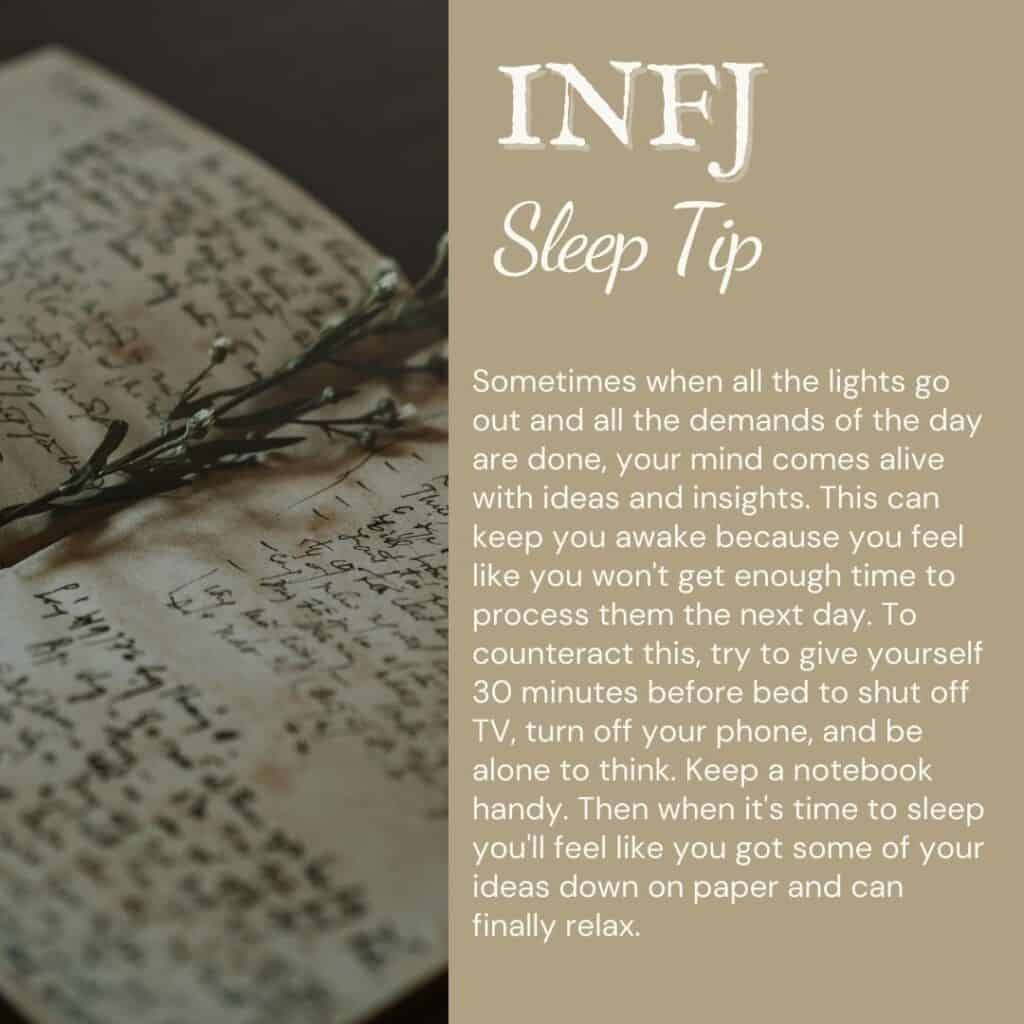
You’re up late because your friends keep calling you to trauma-dump all their problems on you. As the designated listener of the group, you feel obligated to stay up and listen to their every problem, even though you have your own problems to deal with. You lie in bed wide awake, trying to figure out your own feelings about things because you’ve been so busy managing everyone else’s personal problems. Right as you’re getting close to an epiphany about one of your own issues, you fall asleep and dream that you’re being chased by a giant, amorphous blob.
Your mind needs quiet space to process your own insights and emotions. The trouble is, you may spend so much of the day absorbing everyone else’s experiences that your own thoughts finally show up the second your head hits the pillow.
Give yourself a small “decompression window” before bed where nobody needs anything from you. Your mind needs time to hear itself before it can rest.
Read This Next: How INFJs Process Emotions
If you’re an INTJ
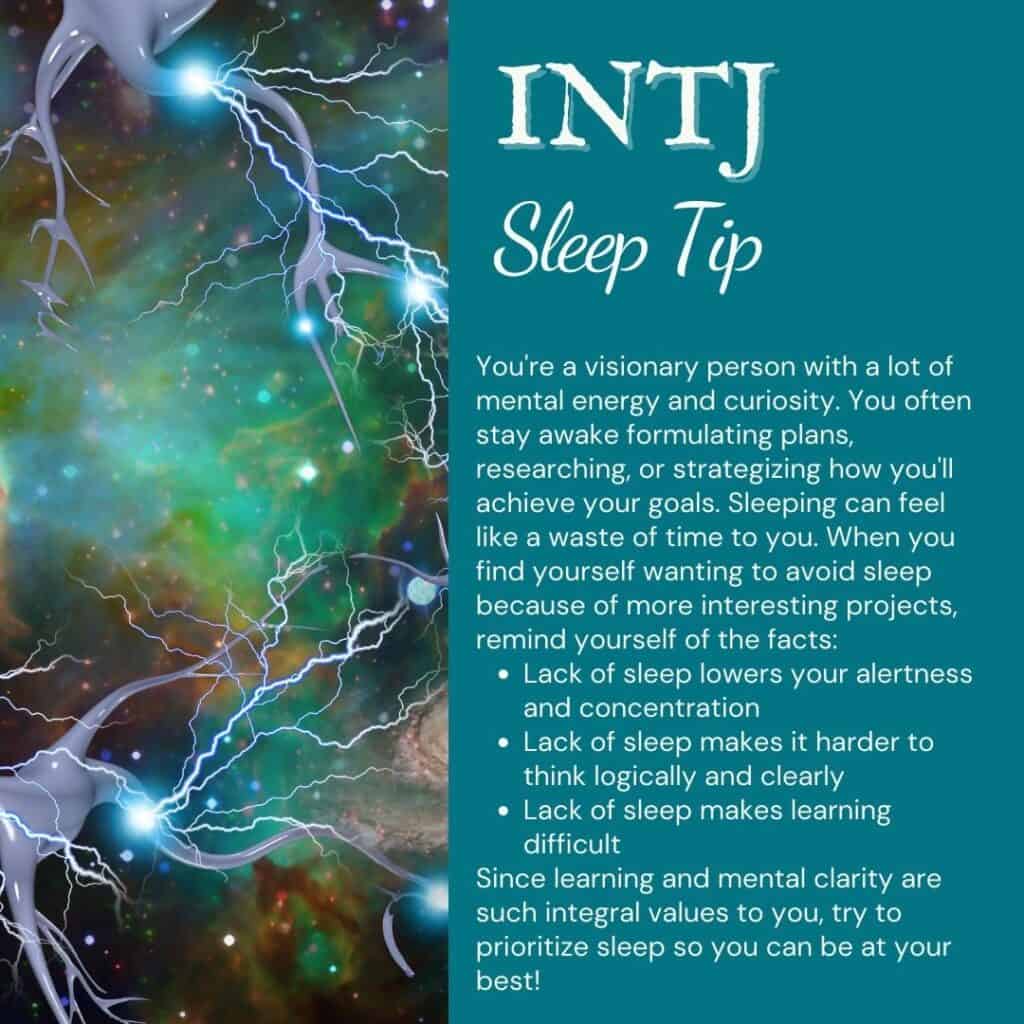
You’re up late because you can’t stop thinking about all the things you have to do tomorrow. You make a list in your head of all the things you need to do and then you start planning out how to do them as efficiently as possible. But then you get sidetracked by an article about a new study that debunks the efficiency of your current method. You read more and more articles until you’ve completely lost track of time. As the sun starts to come up, you finally fall asleep after deciding that the only way to really be efficient is to clone yourself.
Your brain is constantly building, refining, predicting, and optimizing. That’s powerful during the day. At night? Your mind may treat sleep like an inefficient obstacle standing between you and improvement.
Instead of planning in bed, create a shutdown ritual: tomorrow’s priorities written down, loose ends captured, systems closed. Your mind sleeps better when it knows there’s already a plan.
Read This Next: 12 Stress-Busting Techniques for INTJs
If you’re an ESFP

You’re up late because you’re trying to find a way to make your life more exciting. You feel like you’re stuck in a rut and you don’t know how to get out of it. In a fit of frustration, you decide to watch one funny video before bed. Unfortunately that video reminded you of a song you forgot existed, which reminded you of a trip you want to take, which reminded you to text your friend, which somehow led to researching pottery classes at 2 AM.
Your brain wakes up through experience. The trick isn’t removing excitement from your life; it’s creating evening experiences that calm your senses instead of activating them.
If you’re an ESTP

You’re up late because you convinced your friends that white-water rafting under the moonlight would be a fun adventure. But now that you’re actually in the raft, people are starting to complain about the icy-cold water and the fact that the moon is hiding behind the clouds. Wimps. You try to rally the troops and get them pumped up for the adventure, but it’s not working. Eventually, people start bailing out of the raft and you’re left alone to navigate the rapids by yourself. As you finally make it to shore, you realize you lost one of your friends somewhere along the way. You spend the rest of the night searching for them, but you never find them.
Your brain likes action. Give yourself a physical wind-down: stretching, calming music, low stimulation. Don’t start a “quick project.” There is no quick project.
Read This Next: Understanding ESTP Sensing
If you’re an ISFP

You’re up late because you have to make the perfect playlist to capture the exact mood you’re in. It starts with one song, but that reminds you of another song you loved five years ago, which reminds you of an old memory, which reminds you of a creative idea you never finished. Suddenly you’re looking through photos, revisiting old inspirations, and planning a project that finally feels like you again.
You tell yourself you should probably go to sleep, but then inspiration hits. And inspiration is rude. It does not check your calendar or ask if you have responsibilities tomorrow.
Eventually, you drift off somewhere between exhaustion and excitement, promising yourself that tomorrow you’ll actually bring the idea to life. (And maybe you will. Or maybe tomorrow-you will have an entirely different, equally beautiful idea.)
Read This Next: 10 Things That Excite the ISFP Personality Type
If you’re an ISTP
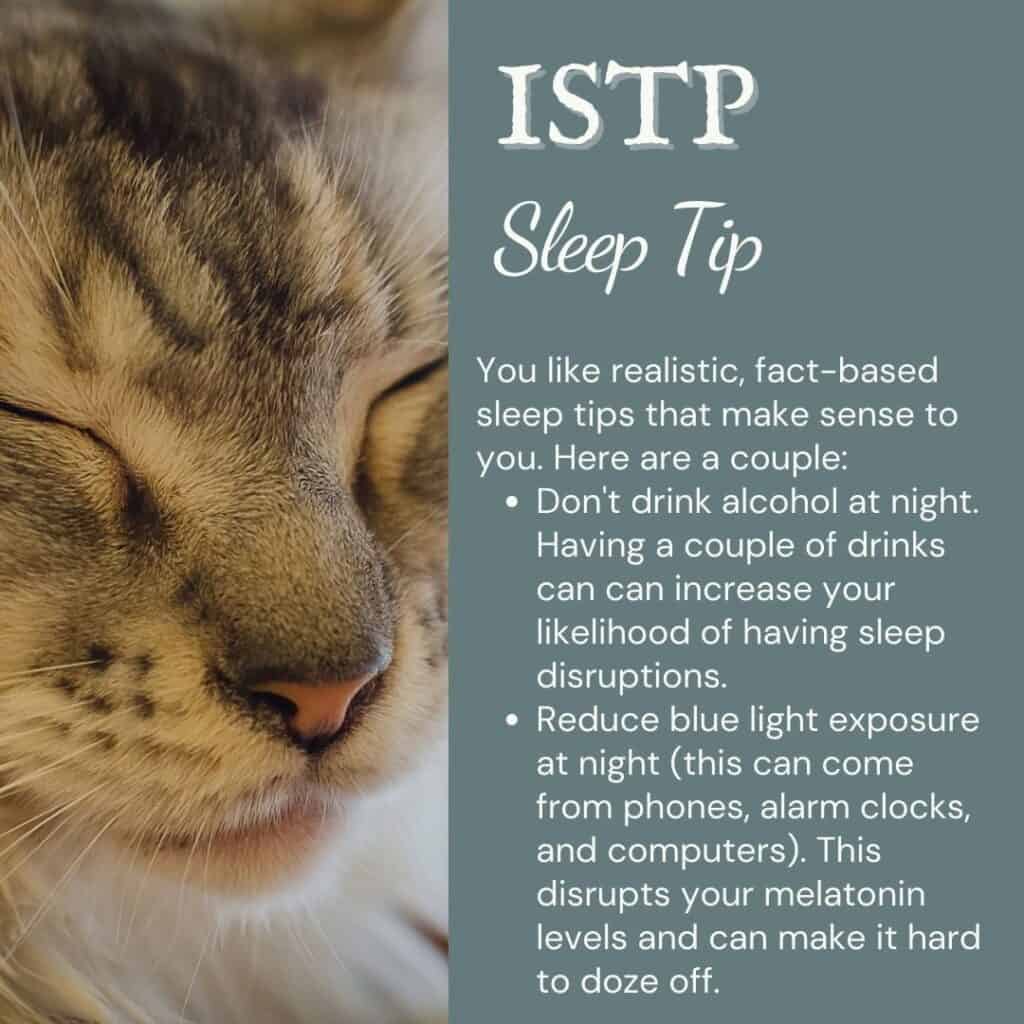
You were supposed to go to bed an hour ago, but then you spotted a flaw in someone’s argument, a weird plot hole in a movie, a glitch in your computer, or a skill you suddenly decided you needed to master. “I’ll just figure this out really quick” sounded reasonable at 10:30 PM.
Unfortunately, “really quick” is the biggest lie an ISTP tells themselves.
Now it’s 2 AM. You have watched six tutorials, read three obscure forum threads from 2009, tested four different approaches, and somehow developed a respectable beginner-level understanding of something you didn’t even know existed yesterday.
On the plus side, you solved the problem.
On the downside, the problem was supposed to be “getting enough sleep.”
Your mind naturally wants to understand how things work. Whether that “thing” is a machine, a person, a game, a theory, or your own mind, unresolved questions can feel like open tabs running in the background. You want the clean answer. The principle. The piece that makes everything click.
Before bed, give yourself a stopping point before you start investigating. Write down the question, save the link, leave yourself a note. You’re not giving up on solving it; you’re just letting tomorrow-you take over the experiment.
Read This Next: 5 Reasons Why You’ll Need an ISTP During a Zombie Apocalypse
If you’re an ESFJ
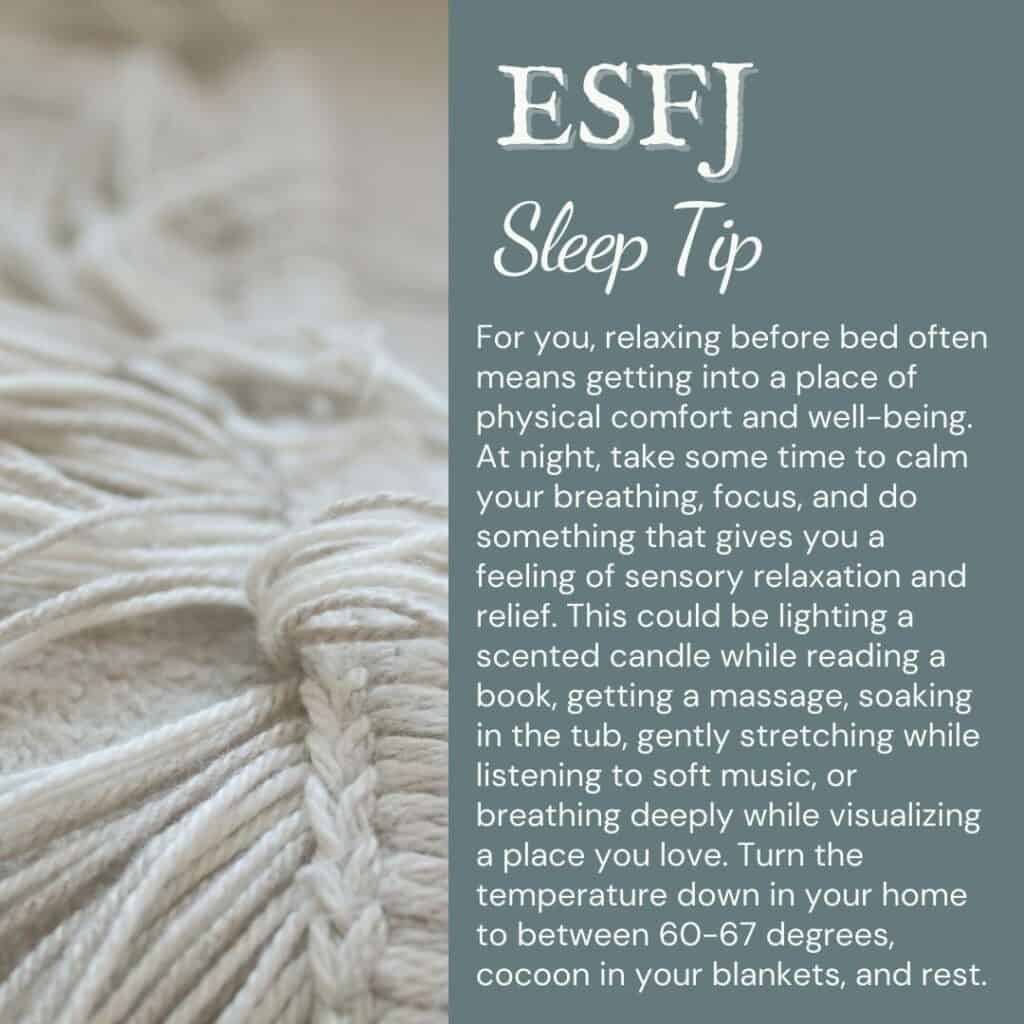
You’re up late because you’re worried about your friend who is going through a tough time. You try baking them a chocolate cake, but then remember that they’re trying to eat healthy. Carrot cake? No, they have a nut allergy. You spend the night looking up recipes and finally settle on a zucchini bread. You stay up all night baking it and then deliver it to your friend’s house early in the morning. They are so touched by your gesture that they start crying and you spend the rest of the day comforting them.
You notice needs other people miss. But sometimes your mind keeps running because you’re managing everyone’s comfort long after everyone else has gone to sleep.
Remind yourself: caring about people doesn’t mean being emotionally on-call 24/7.
If you’re an ESTJ

You’re up late because you noticed something that Future You would have to deal with tomorrow, and frankly, Future You deserves better.
You were just going to make one quick adjustment before bed. Reply to that email. Update that spreadsheet. Prep tomorrow’s schedule. Fix the thing everyone keeps complaining about but somehow nobody has taken the initiative to actually fix.
One task becomes five tasks. Five tasks become a complete evaluation of every inefficient system currently operating in your home, workplace, and possibly society as a whole.
At some point someone says, “Can’t you just relax?” Interesting question. You would love to relax. You have actually scheduled relaxation. Unfortunately, relaxation was supposed to happen after you finished making everything run smoothly enough to relax.
Now it’s 1 AM and you’re exhausted, but at least tomorrow’s problems have been reduced by 37%.
Your mind naturally notices what’s working, what isn’t, and what needs to happen next. This ability helps you create stability, solve problems, and keep life moving forward. But at night, your brain may keep scanning for unresolved tasks instead of recognizing that rest itself is a productive choice.
Before bed, make a “closed for the day” list. Write down what’s done, what can wait, and what tomorrow-you can handle. Not every problem deserves access to your off-hours.
If you’re an ISFJ

You’re up late because you just remembered an embarrassing moment that happened in middle school. Determined to never let anything like that happen again, you start brainstorming a list of social rules that you will never break. However, the more you think about it, the more you realize how many social rules there are and how often you break them without even realizing it. You start to feel overwhelmed and anxious about all the ways you could potentially embarrass yourself.
Your memory is detailed, which is a gift. But sometimes your brain uses that gift to replay every moment you wish went differently.
Instead of reviewing what went wrong, intentionally review what went right. Your brain needs a balanced archive.
Read This Next: 10 Things You Should Never Say to an ISFJ
If you’re an ISTJ
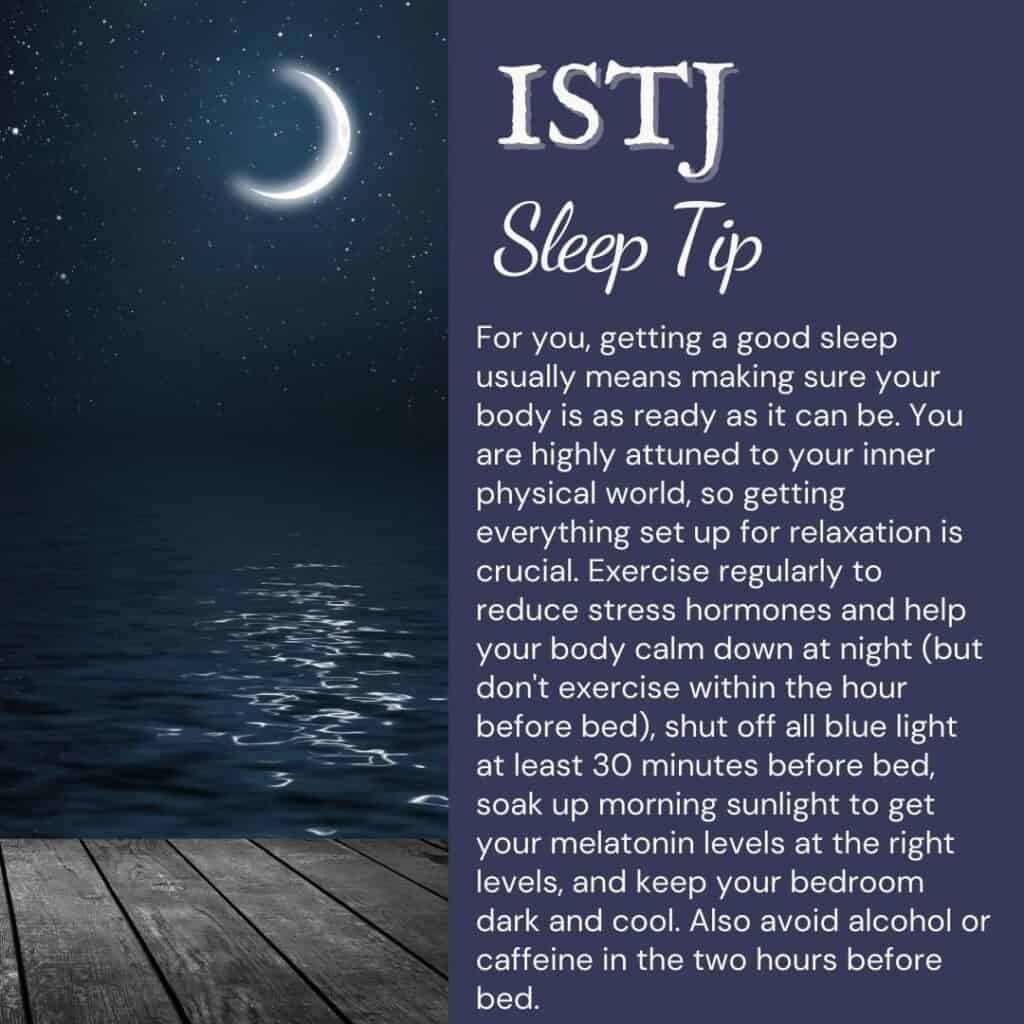
You’re up late because you suddenly remembered That Thing™ you forgot to do.
You know, the thing you told yourself you’d handle three weeks ago but somehow got buried under 47 other responsibilities.
A normal person might think, “I’ll deal with it tomorrow.” Your brain says, “Interesting idea. Counterpoint: let’s replay the entire chain of events that led to this oversight and create a prevention strategy so it never happens again.”
Now you’re checking your calendar, updating your lists, mentally reviewing every commitment you’ve ever made, and wondering if there are other forgotten tasks sneakily waiting to ambush you.
Your mind is built to retain details and learn from experience. This helps you stay dependable and prepared, but at night your brain can turn into a very dedicated quality-control department that refuses to clock out.
Before bed, write down anything unfinished and give yourself permission to revisit it tomorrow. Rest isn’t neglecting your responsibilities; it’s what gives you the energy to handle them well.
You Might Also Like This Article: What ISTJs Do When They’re Stressed Out
What Are Your Thoughts?
Did you enjoy this article? Do you have any insights or tips for other readers? Let us know in the comments!
Find out more about your personality type in our eBooks, Discovering You: Unlocking the Power of Personality Type, The INFJ – Understanding the Mystic, The INTJ – Understanding the Strategist, and The INFP – Understanding the Dreamer. You can also connect with me via Facebook, Instagram, or Twitter!







Love this article.
The INTJ portion is absolutely accurate. I always get sidetracked when something intriguing catches my eye; no matter how much I promise myself the contrary.
I am an ENFP who has struggled with insomnia all my life. No jokes, that totally went away when I quit my job at the end of last year and started volunteering/travelling for a living. I am sleeping now, even though my income and future plans are precarious. In my case, a 9/5 was literally robbing me of sleep, and vitality.
Don’t know of other personality types, but I can say INTJ is accurate
Eerily accurate for me, INFP. Accurate for my ENFJ friend, too.
As an INFJ, I found this very accurate. What is funny is that I’ll stay up trying to proccess my emotions but in the morning I would be unable to communicate anything I gathered from my contemplation because I fell asleep right as I was about to reach an epiphany. This was highly relatable.
ISTJ here and, yes, I dwell on things that are not complete. I also ruminate on past failures at bedtime.