
Which Intuitive Author Has Your Myers-Briggs® Personality Type?
Writers do more than just tell stories; they leak their personalities all over the page. The way you string words together has as much to do with your brain wiring as it does with grammar rules your English teacher drilled into you.
Sensors tend to write like they’re building a road: steady, structured, with every detail neatly painted on the asphalt. Intuitives? We’re more like kids with glow sticks in a dark room; dancing with metaphors, leaping through time, scribbling symbols on the walls.
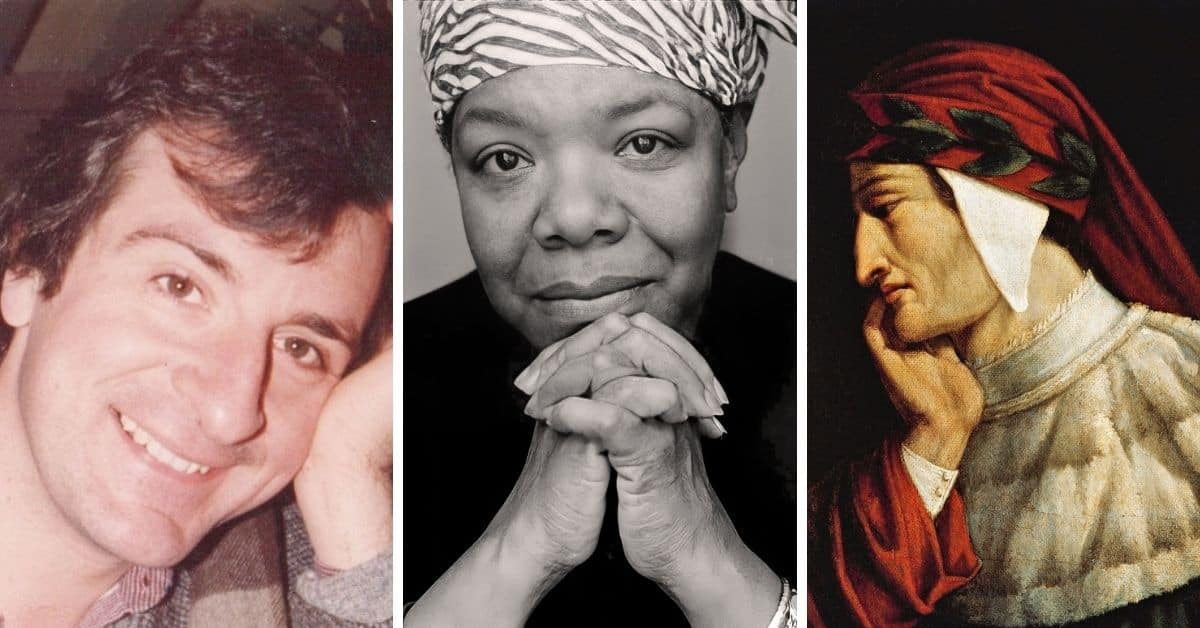
Carl Jung himself used to obsess over this stuff. He liked typing historical figures and authors, just to see how their minds worked under the hood. Later, David Keirsey joined the fun, analyzing famous authors by combing through their books, interviews, and journals.
So let’s do what we do best—people-watch our favorite authors through their writing. Ready? Let’s start with the mystics of the MBTI world: the INFJs.
Are you a sensor? Check out the sensor authors here!
I hope you enjoy this list! Please feel free to comment with your suggestions and thoughts!
Not sure what your personality type is? Take our personality questionnaire here. Or you can take the official MBTI® here.
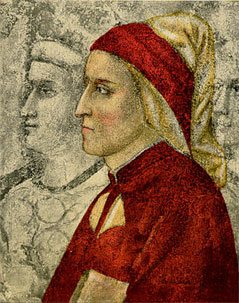
INFJ Author – Dante Alighieri
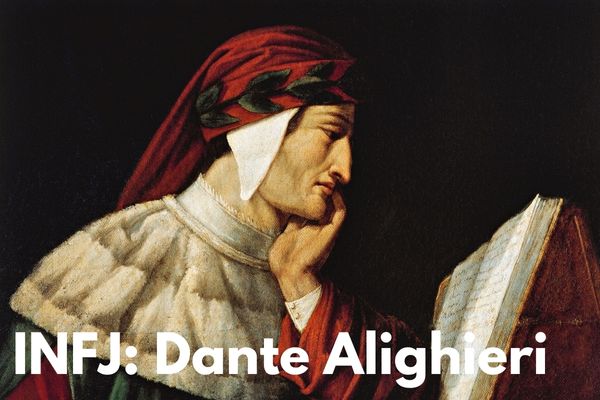
“Heaven wheels above you, displaying to you her eternal glories, and still your eyes are on the ground.”
Dante is known for writing about sins and virtue. But the truth is, he was writing out of his own heartbreak, exile, and vision. Born in Florence in 1265, he lost his mother young and was married off at twelve to a woman chosen for him. But his heart had already chosen someone else: Beatrice Portinari. Though he barely spoke with her in real life, he immortalized her in La Vita Nuova and later made her the radiant guide through heaven in The Divine Comedy. That’s pure INFJ: reality doesn’t stop you from shaping a soul-deep connection into a symbol of redemption.
Florence, meanwhile, was ripping itself apart. Dante fought at the Battle of Campaldino, then watched his beloved city collapse under endless factionalism. He sided with the White Guelphs, who resisted papal control, and when the Black Guelphs seized power, Dante was banished—his property seized, his name disgraced. He would never set foot in Florence again. Out of that devastation came his greatest work. The Divine Comedy isn’t just an epic journey through Hell, Purgatory, and Paradise—it’s the map of an exile’s soul, someone trying to make sense of justice, power, and salvation when the world had cast him aside.
The INFJ fingerprints are everywhere: symbols layered on symbols, every moment pointing to a hidden meaning; the obsession with how today’s choices ripple into eternity; the refusal to let go of ideals even when life strips everything else away. Dante didn’t choose to suck up to the elites by writing in Latin. Instead he wrote in Italian, the people’s language, because he wanted his vision of humanity’s moral arc to reach everyone. He invented terza rima to give his words a structure as elegant and unbreakable as his faith in meaning itself.
“Consider your origin. You were not formed to live like brutes but to follow virtue and knowledge.” – Dante Alighieri
Other INFJ Authors: Leo Tolstoy, Soren Kierkegaard, Emily Dickinson, Stephen King.

Why INFJs Need to Trust Their ‘Weird’ Insights More Often

Reaching a Flow State as an INFJ
INFP Author – Edgar Allan Poe

“All that we see or seem is but a dream within a dream.”
If the INFP soul had a soundtrack, Poe would be the one composing it on a broken organ in a candlelit room. Nobody does “mysterious, poetic, slightly unhinged but also deeply tender” quite like him.
Poe wasn’t afraid to crawl into the darkest corners of the human psyche and pull out a story that still makes us shiver centuries later. The Raven, The Tell-Tale Heart, The Fall of the House of Usher—these always seemed to me like emotional exorcisms. At the same time, he could write with aching romance, like a man who knew beauty and horror always hold hands.
That’s quintessential INFP: feelings dialed up to eleven, imagination spilling everywhere, symbolism layered in. His writing was an attempt to show the raw machinery of his inner world. And when INFPs write, you feel it. They’re here to make you wrestle with truth, grief, passion, and that strange, fragile thing called humanity.
James Oppenheim once said of Poe: “Everything about him suggests introversion, self-immersion, mood, mystery. Everything suggests a man seeking his own soul.” That’s the INFP in a nutshell: forever digging deeper, forever chasing meaning, forever hoping to turn pain into beauty.
“From childhood’s hour I have not been. As others were, I have not seen. As others saw, I could not awaken. My heart to joy at the same tone. And all I loved, I loved alone.” – Edgar Allan Poe
Other INFP Authors: George Orwell, A.A. Milne, Albert Camus, William Shakespeare, J.R.R. Tolkien, Antoine de Saint-Exupéry, Bill Watterson, Franz Kafka, Hans Christian Andersen

Why INFPs Want to Heal the World (But Also Avoid It)
10 Famous INFPs Who Changed the World
ENFJ Author – Maya Angelou
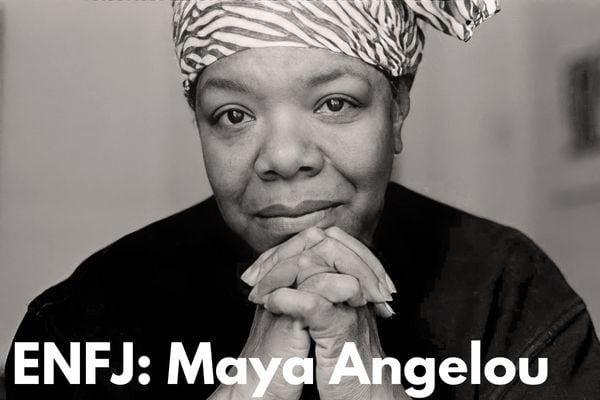
“I’m convinced of this: Good done anywhere is good done everywhere. For a change, start by speaking to people rather than walking by them like they’re stones that don’t exist. As long as you’re breathing, it’s never too late to do some good.”
If INFJs are the mystics and INFPs are the dreamers, ENFJs are the fire-starters, the ones who see pain, injustice, beauty, and possibility and then say, “Okay, let’s actually do something about it.” Maya Angelou lived and breathed that energy. Every stage she stood on—whether a cabaret floor in the ’50s, the steps of the Lincoln Memorial, or President Clinton’s inauguration—became a classroom in empathy and power.
Her childhood was extremely painful. After suffering sexual abuse, Angelou stopped speaking for nearly six years, believing her words had caused a man’s death. But even in silence, her mind was alive; memorizing Shakespeare and Poe, storing up the language that would later spill into some of the most important books of the 20th century. That’s the ENFJ gift: even in pain, they’re gathering insight, waiting for the moment to transform it into something that helps others.
I Know Why the Caged Bird Sings, The Heart of a Woman, her poetry—it all carried her voice saying, “You are seen. You matter. Don’t give up.”
Angelou faced poverty, racism, and abuse, but instead of letting those experiences silence her, she turned them into fuel for compassion and activism. She wanted art to move people, but more than that, she wanted art to heal. That’s ENFJ power: the ability to blend insight with action, empathy with influence, beauty with purpose.
Angelou became the first African American woman to work as a streetcar conductor in San Francisco at just 16 (after showing up every single day for three weeks until they gave in—that’s ENFJ persistence). Later, she danced her way across the world, sang calypso, acted on Broadway, organized for civil rights, and eventually turned her life story into art with I Know Why the Caged Bird Sings. It was raw, brave, and revolutionary—so much so that schools tried to ban it. But it cracked open space for survivors to tell their truths, proving again that when ENFJs speak, they have the power to liberate.
“I’m convinced of this: Good done anywhere is good done everywhere. For a change, start by speaking to people rather than walking by them like they’re stones that don’t exist.” – Maya Angelou
Other ENFJ Authors: Johann Wolfgang von Goethe, Desiderius Erasmus

10 Must-Read Books for ENFJs

7 Ways That ENFJs Make an Impact
ENFP Author – Charles Dickens

“Whatever I have tried to do in life, I have tried with all my heart to do it well; whatever I have devoted myself to, I have devoted myself completely; in great aims and in small I have always thoroughly been in earnest.”
Charles Dickens was, quite simply, the rock star of 19th-century literature. During his lifetime, nobody had reached the level of fame he did. His serialized novels were the binge-worthy TV shows of their day, gobbled up by everyone from factory workers to Queen Victoria. Crowds would line up to hear him read his work aloud. He was that guy.
And like many larger-than-life ENFPs, Dickens had his scruples. His personal life was… complicated. He could be mercurial, restless, not exactly the poster child for domestic bliss. His marriage crumbled, and his relationship with actress Ellen Ternan was quietly kept in the shadows for decades. He wasn’t always gentle in how he handled the people closest to him. For a man who wrote so passionately about compassion, Dickens sometimes missed the mark at home.
But here’s the thing: his writing never stopped caring. He carried the scars of his childhood; forced into factory work while his father sat in debtor’s prison, and he poured that pain onto the page with fiery empathy. He championed the poor, the oppressed, the forgotten child. His novels like Oliver Twist, David Copperfield, and Great Expectations weren’t just for fun. They were indictments of a society that let people slip through the cracks. Even when he leaned into sentimentality, he was doing it to wake readers up, to stir their hearts.
That’s the paradox of Dickens. Messy man, luminous writer. His ENFP spark showed up in his sprawling imagination, his theatrical flair, his humor, and his unrelenting belief that stories could change the world. And to a large degree, they did. Without Dickens, Christmas as we know it wouldn’t exist (A Christmas Carol basically rewrote the holiday spirit). Without Dickens, social reform in England might have trudged along a lot more slowly.
So yes, Dickens stumbled in his personal life—but he also gave voice to the voiceless. He embodied the ENFP drive to use art as both mirror and megaphone, entertaining us while nudging us toward a better version of ourselves.
Other ENFP Authors: Anne Frank, Upton Sinclair, Dr. Seuss

The Courage of the ENFP Personality Type

15 Must-Read Books for ENFPs
INTJ Author – Octavia Butler

“All that you touch You Change. All that you Change Changes you. The only lasting truth is Change.”
Octavia Butler was an author who designed futures no one else dared to imagine. Born in Pasadena in 1947, raised by a widowed mother who scrubbed floors so her daughter could have a library card, Butler grew up knowing two things: life was unfair, and stories could remake the world. Both truths fueled her writing.
She struggled with dyslexia, with loneliness, with teachers who dismissed her as “slow.” What she actually was? Obsessed. Determined. At ten years old she was carrying a notebook everywhere, scribbling down worlds while other kids played tag. At thirteen, she submitted her first story to a magazine. Rejected? Of course. Did she stop? Not for a second. Butler woke at 2 A.M. every day to write before clocking into jobs like telemarketer or warehouse worker. INTJ relentlessness: when the vision is clear, the grind doesn’t matter.
Her breakout came with Patternmaster in 1976, but it was Kindred (1979) that changed everything. This wasn’t your cliche time-travel story—she hurled a modern Black woman into slavery-era Maryland, forcing readers to confront history not as dates in a textbook but as blood, terror, and survival. She researched archives, walked the geography, and made sure every detail carried weight. The result was a book that still sits in classrooms today, unflinching and unforgettable.
Butler’s entire body of work wrestled with the big questions INTJs love: How do power systems rise and fall? What happens when survival collides with morality? How does humanity adapt—or fail to adapt—when the world itself is on fire? She bent science fiction away from silver-suited astronauts and toward Afrofuturism, writing herself and her people into futures where they had too long been excluded.
Her reward? Hugos, Nebulas, a PEN Lifetime Achievement Award, and the rare MacArthur “Genius” Grant—the only sci-fi writer ever to win it. But awards were never the point. Butler’s oath was persistence: “Do the thing that you love and do it as well as you possibly can and be persistent about it.”
She died suddenly in 2006, but her books have only grown in reach, inspiring new generations of writers and sparking TV and film adaptations. Butler wrote with the core INTJ conviction that the future is not random—it’s built. And if you don’t like the blueprint you’ve been handed, then draft a new one.
Other INTJ Authors: Jane Austen, Isaac Asimov, Ayn Rand, Friedrich Nietzsche

Are INTJs Smart? A Look at the Strategist

The Childhood Struggles of INTJs
INTP Author – Henry David Thoreau

“As a single footstep will not make a path on the earth, so a single thought will not make a pathway in the mind. To make a deep physical path, we walk again and again. To make a deep mental path, we must think over and over the kinds of thoughts we wish to dominate our lives.”
If ever there was a man who took “think for yourself” to Olympic levels, it was Henry David Thoreau. Born in Concord, Massachusetts, he tried out the respectable paths—teaching, factory work, journalism—but none of them fit for long. INTPs aren’t built to clock in and nod politely to rules they don’t believe in. Case in point: Thoreau quit his first teaching job after two weeks because the superintendent insisted on corporal punishment. Thoreau basically said, “Yeah, no thanks,” and walked out.
Instead, he turned to what INTPs do best: experimenting with life. He lived with his mentor Ralph Waldo Emerson, soaked in Transcendentalist philosophy, then built himself a tiny cabin on Walden Pond to test a radical question: could a person work one day a week and spend the rest of their time thinking, walking, and writing? Spoiler: yes, but you’ll confuse the neighbors. Walden was his answer to the curious townsfolk, part memoir, part philosophy, part nature log.
But Thoreau wasn’t just a dreamy recluse scribbling by a pond. He was a sharp critic of authority and hypocrisy. When he refused to pay a poll tax to protest slavery and the Mexican-American War, he landed in jail for a night and later wrote “Civil Disobedience”—an essay that would go on to inspire Gandhi and Martin Luther King Jr. INTPs might seem quiet, but they have big ideas!
He also had a knack for the curious and the practical. He researched German pencil-making techniques and helped his family turn out the best pencils in America. He walked miles daily, keeping meticulous notes on plants, animals, and weather patterns—essentially a one-man data-collection machine long before climate science was a thing.
Thoreau died young, at 44, of tuberculosis, but he left behind shelves of journals, essays, and unfinished projects. His friend Emerson summed it up best: “His soul was made for the noblest society; he had in a short life exhausted the capabilities of this world.”
Like many INTPs, Thoreau was skeptical of institutions, allergic to small talk, endlessly curious, stubbornly individualistic, and determined to turn thought into a way of life.
Other INTP Authors: Hannah Arendt, John Locke, Lemony Snicket

The Top 35 Favorite INTP Movies

Understanding INTP Thinking
ENTP Author – Douglas Adams

“Every country is like a particular type of person. America is like a belligerent, adolescent boy; Canada is like an intelligent, 35-year-old woman. Australia is like Jack Nicholson. It comes right up to you and laughs very hard in your face in a highly threatening and engaging manner.”
Douglas Adams rewired reality so that it could be slightly more ridiculous and slightly more profound at the same time. Born in Cambridge in 1952, he studied English at St. John’s College before unleashing The Hitchhiker’s Guide to the Galaxy on the world—a project that began as a BBC radio show and spiraled into novels, TV, stage plays, albums, a computer game, and eventually a cult-level franchise. ENTP energy at its finest: Why stick to one medium when you can conquer all of them?
Adams had the quintessential ENTP gift: turning skepticism into comedy and wild imagination into philosophy. He made readers laugh at bureaucrats, politicians, and even the universe itself while slipping in questions about meaning, technology, and humanity. His famous invention of the “Answer to the Ultimate Question of Life, the Universe, and Everything” (spoiler: it’s 42) was perfectly Adams—satirical nonsense hiding a profound shrug at our need for neat answers.
But Adams wasn’t only about cosmic punchlines. He had a fierce curiosity about the natural world. In Last Chance to See (co-written with zoologist Mark Carwardine), he trekked across the globe to meet endangered species and delivered an eco-memoir that was equal parts hilarious and heartbreaking. He was also a passionate technophile, dabbling in computer games like Starship Titanic and founding an early digital community, h2g2, years before online collaboration became the norm.
His life was short—he died suddenly of a heart attack at 49—but the imprint he left is unmistakable: wit sharpened into a scalpel, ideas scattered everywhere, and a reminder that laughter itself can be a kind of rebellion. Adams made absurdity feel meaningful. He was able to take chaos, give it a voice, and make you laugh your way into seeing the truth.
Other ENTP Authors: Niccolò Machiavelli

Reaching a Flow State as an ENTP

10 Must-Read Books for ENTPs
ENTJ Author – George Bernard Shaw

“Until the men of action clear out the talkers, we who have social consciences are at the mercy of those who have none.”
If Dickens was the conscience of Victorian England, George Bernard Shaw was the megaphone blasting through the Edwardian dinner parties. Born in Dublin in 1856, Shaw had little patience for traditional education and even less for convention. He carved out his career first as a music and theater critic, then as a novelist, then as a playwright who turned stages into sparring rings of ideas.
Shaw was fearless in using his pen as a weapon. His “Plays Pleasant and Unpleasant” attacked social hypocrisy head-on. Mrs. Warren’s Profession skewered society’s exploitation of women; Major Barbara questioned the morality of charity funded by arms dealers. Even Pygmalion, later adapted into My Fair Lady, was more than a charming tale about phonetics—it was a biting commentary on class, morality, and the absurdities of middle-class pretensions.
Like many ENTJs, he loved to argue, to provoke, to force people into discomfort and then laugh while they squirmed. His wit was volcanic, his rationalism radical, his disregard for convention absolute. At times, his plays blurred into essays; dialogue giving way to debate, drama swallowed by discussion.
Shaw was not just a dramatist but a social engineer, a member of the Fabian Society and a man who believed political activity was the only true road to salvation. He despised passivity, mocked hypocrisy, and held every institution—church, medicine, marriage, even government—to a merciless spotlight. If an idea couldn’t survive Shaw’s attack, maybe it wasn’t worth keeping.
And yet, for all his sharpness, Shaw wasn’t heartless. Saint Joan—arguably his masterpiece—showed his ability to take a familiar story and remake it into something transcendent, connecting the Middle Ages to the modern world, using Joan’s passion to mirror humanity’s struggle for progress.
Shaw died in 1950, leaving behind more than sixty plays and a reputation as the sharpest tongue in English theater. Love him or hate him, he embodied ENTJ energy: blunt, commanding, impossible to ignore, and utterly committed to remaking the world in the image of his ideas.
Other ENTJ Authors: Sheryl Sandberg, Robert James Waller

10 Must-Read Books for ENTJs
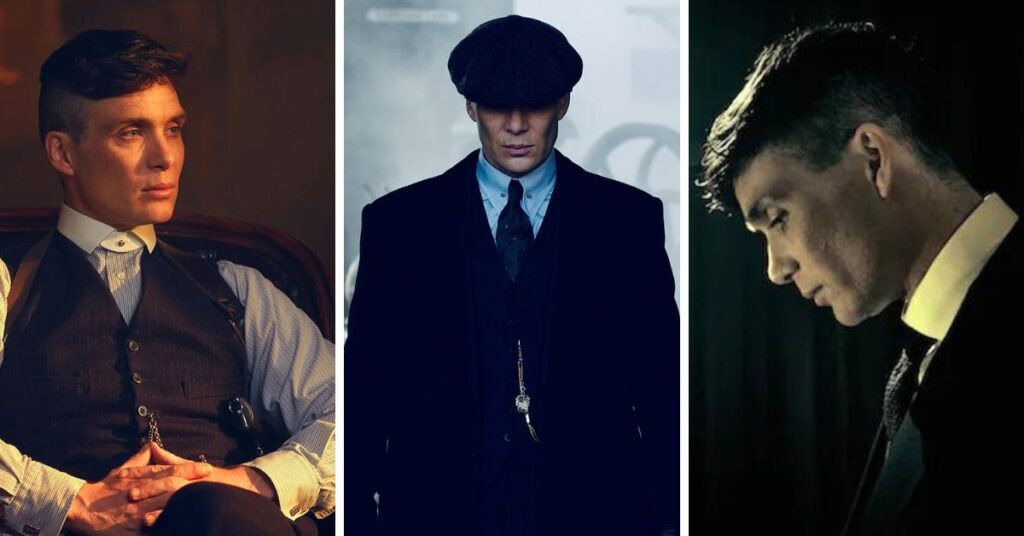
15 Times Tommy Shelby Exemplified the ENTJ Personality Type
What are Your Thoughts?
Do you agree with this article? Disagree? Let us know in the comments!
Find out more about your personality type in our eBooks, Discovering You: Unlocking the Power of Personality Type, The INFJ – Understanding the Mystic, and The INFP – Understanding the Dreamer. You can also connect with me via Facebook, Instagram, or Twitter!








Neil Gaiman is one of my favorite authors. I think he may be an INTJ. What do you think?
Oh, that is very likely! I will have to look into that more. I’d love to add his name onto this list 🙂
Hi Susan,
I belive Neil is INFJ, he stated it himself somewhere online.
It makes sense since I am totally enchanted – as an ENFP.
Thanks for your articles, they are incredibly helpful.
Nikola
Oh, thank you! I’ll look into this!
He’s INFP. His wife is ENFP.
I am an ESFJ “Consul” pursuing a career in scriptwriting, filmmaking and directing. Is this a valid career path?
I find your lack of Chekhov disturbing, but other than that, a wonderful list. 🙂
I’ve always been unsure about Kafka being an INFP, I always thought he’s an INTP. I’m just adding my analysis for discussion here.
My first point is: Of course, writing (art in a general way) is something that when you do it, it’s mostly unconscious. Not the language, not the grammar or the logical sense, the intentional things. But most of the time, the story you are writing shadows yourself. For example, I’ve noticed that in my recent manuscript that the three main characters are my archetypes, So, yes, of course. Most of the time you don’t have control about what the story is going to show about you. But this is not, in my vision, the most reliable source. Firstly, because you’re going to revise, cut some parts that are excessive, make alterations in the language, try to make it look nicer, etc. What I mean is that you can’t focus on what it’s been written, but why and how. And, as he’s not alive anymore, I will analyse his fiction and his diaries and letters.
Ne vs Ni: It’s very prominent in his writing as a whole. I think you will notice it mostly in the dialogues of the characters (especially in his longer works, like The Castle and The Trial): they are always contradicting themselves, vomiting their thoughts, almost if they are constructing the basis of their arguments while talking like Kafka himself. The length of his paragraphs suggest Ne, mostly because Ne is divergent and Ni is convergent and I suspect by reading his unfinished novels that they would be even longer without the revision.. How? While Ne is preoccupied in covering all of the variables, Ni is preoccupied in being concise and objective. “Oh, so isn’t this irrelevant because of revision?”. Well, kind of. If he was an Se-Ni writer (of course, not trying to manufacture something he isn’t) he would most likely clean the excesses, it would be something that annoys the objectiveness, the “look and see it” and the course of action. If he wan an Ni-Se, he would reduce them but for a different reason- too long paragraphs would be meaningless to greatest goal of the plot and they carefully filter their word to create a personalized vision of world. Kafka doesn’t do it, he wants to cover all the variables and create a very logical plot or argument. His characters’ show that and the narrator is meticulous in showing each present character action to mirror a thought or feeling, etc.
Si vs Se: I think you can notice it in how his characters mostly receive information and on scenarios. When their characters are receiving a new information, you can see that they aren’t raw or unfiltered, most of the time there is a comparative with a related information already presented and in his Letter to the Father, you can see how he evoked already past experiences to justify why they couldn’t get along or why he was the were in the present moment. And his scenarios are mostly poor, showing a low sensory function on him. They are basic and, I would guess, almost internal in the narrator as if he’s expecting you to picture it briefly than to feel fully immersed on it. And another argument to his Si would be how Kafka is meticulous in describing what is necessary to make the plot (as we call today, Kafkaesque) go, to show the characters’ thoughts and to describe their logical arguments by their dialogues. On his real life, I could add his clear disgust with bureaucracy, routines and micromanaging, even though he followed a routine himself.
Now, his judging functions.
Ti vs Fi: I will compare him with Murakami, who is an INFP (even though people say he’s an INFJ, I think he’s a very good example of INFP. I could explain in the replies if anyone ask). I think, in his fiction works, the greatest difference is what they both are aiming with their works. Murakami wants to tell stories that can evoke emotion on the reader or, at least, make him feel identified with the story. His focus on his stories are people. Kafka, on the other hand, is not focused on his characters, but what they represent as a whole to the plot, almost if they are tools. Even his shortest stories (like First Pain or a Hunger Artist) is not trying to make you feel, but to make you think. Kafka wants to be inquisitive, he creates situations where the actions, the characters, what is happening is not important, but what you can extract for it and reflect (differently than Ni, that would have a meaning. Kafka doesn’t have a concrete meaning, he has a plot and he wants your mind to take your own conclusions along with the ones he is trying to prove openly with Ne). Even in Letter to the Father, which is of course an emotional confession, you can see that he’s not disapproving his father in a moral way, but in a logical one. The whole letter is him creating arguments to justify why, for example, his father made him insecure. He creates a whole system, a whole structure, with “what ifs”, “what could lead to” instead of just feeling and showing why he is feeling. He’s not talking about the emotions itself, he’s trying to justify them, to give them a reason. And, of course, he is focused on himself and on being individualistic, but INTPs are really individualistic because, remember it, Ti creates systems of variables based on what is logical for the individual and what isn’t. Of course, he’s going to be individualistic or to rebel against what his father or society imposes to him: he doesn’t see any sense on it!
Inferior Fe vs Te: This is clearer in Letter to the Father. “Fi will feel continually threatened by the Te perspective because Te has the potential to disrupt or shatter one’s ego-image. Te is focused on applying universal standards/judgments as well as securing efficient outcomes through making broad generalizations.”. I don’t think the whole Kafka’s problem with his father (possibly ESTJ) is that, with his “universal standards” he’ll erase Kafka’s personality, but because Kafka didn’t feel adequate to these standards and that made him feel as if he wasn’t belonging the group. Fe is focused on creating social harmony, on being part of a group and INTPs struggle with it because people are unpredictable and this harms Ti inner stability and belonging on a group seems restrictive because of the social obligations that come with it. Kafka always struggled with what his father expected him to do, because he could never fully understand the reason on them, but at the same time, he didn’t want to harm the social harmony that suffocated his individuality. INTPs often try to create logical theories to justify the human behavior (seem as unpredictable) and he does this frequently in his fiction works and on his letters. Also, he tries to justify his feelings of inadequacy by analyzing himself and trying to justify it universally (never forget that INTPs are their main guinea-pigs) instead of properly feeling them and processing it.
So, that’s why I think Kafka is an INTP and not an INFP. What do you think? I’m INTP and open to discussion.
The blog is amazing by the way. Hope the best. Thanks!
Also, sorry for the typos and grammar mistakes as couldn’t do a proper revision and English is not my first language. Please ignore them.
Thoreau displays significant Fi values, so he is clearly an introverted personality on the Fi axis (INTJ or INFP). Your argument that Thoreau’s use of the scientific method displays him having Ne is invalid, since Thoreau would reasonable have learned the scientific method as part of his education, and having learned a pattern, Ni can easily repeat that pattern. Also, although Ti has some individualistic characteristics, it ultimately seeks the logical ideal that allows the individual to exist as part of the greater society, not ostracized from it. Therefore, Ti would not normally take a person to the extremes that Thoreau welcomed, whereas Fi would happily accept those extremes. We do not find, for instance, INTPs in Germany behaving as Thoreau did in resistance of the Nazi Germany government, but rather we find INTPs working at high levels of that government. Even the quotation you cite at the beginning about the need to repeat mental processes over and over until they become worn like a path is not strictly logical in a Ti way – once a thought process is completed, why do I need to repeat it as the answer will be the same? – but rather has an ultimate goal of ingraining values. This is Fi, and it is what Fi does – even an INFP will iterate the same thoughts over and over, leave them and come back to them. Thoreau clearly acted from his values first, or as you yourself noted, “made a strong case for acting on one’s own individual conscience,” and then sought to explain that in outward expression as logically as possible. But because he explained it logically does not mean that the root cause of his actions was derived from a logical process. As you cite in his second quotation above, it is ultimately “injustice” that drives his action, his “individual conscious,” and then his actions are explained logically, but only if we accept the core value from his “individual conscious” that opposing injustice is a valid reason for lawbreaking, and that logic is never examined by Thoreau – he simply accepts that his core value, “individual conscious,” is right, whereas an INTP would not be able to make that leap and would need to begin with a debate of under what circumstances does a perceived injustice to one’s self justify violating the laws of a greater society? For instance, Locke in his Treatises of Government goes all the way back to the nature of man in a primitive state and builds from there. That’s an INTP. But starting at core values a la Thoreau is Fi, most likely INFP as the complete rejection of exterior society is much more P than J, and thus does not suggest INTJ. So why not an INFP with an Enneagram type 5, starting from core values but after that coldly logical. Though I wouldn’t completely rule out INTJ. But INTP probably can be ruled out.
I’m really surprised that Mark Twain wasn’t listed as an ENTP author. Is there a reason you left him off? Or, do you not feel that he is actually an ENTP? I have seen him typed as ENFP, on occasion. Though overwhelmingly, across the board – ENTP.
I always did wonder what mbti type Thoreau had. What type do you think Gail o. Dellslee is?