
The Myers-Briggs® Personality Types of the Thunderbolt Characters
The Thunderbolts are sort of the off-brand cereal of superhero teams. They may not wear as flashy outfits or be as cocky and righteous as the other MCU heroes, but that’s kind of what makes them work.
I’ve watched Thunderbolts twice this week and each time I got something new out of it. It was grittier, more human, more profound, and less polished than any other Marvel movie I’ve seen. Its themes of redemption, forgiveness, and finding hope in the midst of corruption and trauma really made me think.
And if you squint past the trauma, manipulation, and betrayals, you’ll find a collection of very specific and beautifully broken personality types that are doing their best to save the world…sometimes after they accidentally helped ruin it.
Not sure what your personality type is? Take our personality questionnaire here. Or you can take the official MBTI® here.
The Myers-Briggs® Personality Types of the Thunderbolt Characters
Sentry (Robert “Bob” Reynolds): INFP – The Idealist Haunted by His Own Shadow

Let’s start with the walking existential crisis that is Bob Reynolds. This man is the human equivalent of a rainy Tuesday afternoon where you’re both craving meaning and wondering if your plants hate you.
Bob is soft-spoken, withdrawn, lost in thought, and blaming himself for absolutely everything. He didn’t ask to be the ultimate weapon. He just wanted to feel something other than the weight of the Void gnawing at his mind. INFPs are driven by their deeply personal values, often forming deeply personal connections to morality, meaning, and identity. Unfortunately for Bob, his “deep” also contains a swirling abyss named Void, who takes your worst memories and makes them into a haunted house.
INFPs tend to experience the world internally first—feeling everything, processing it slowly, then acting. Bob’s hesitance, his confusion, his aching desire to protect people (despite being terrifyingly powerful) all point to this. He’s not looking to control anyone. He just doesn’t want to become the thing he’s afraid of.
And if you watch “Thunderbolts” and don’t walk away wanting to give him a hug, you’re a monster. Enough said.
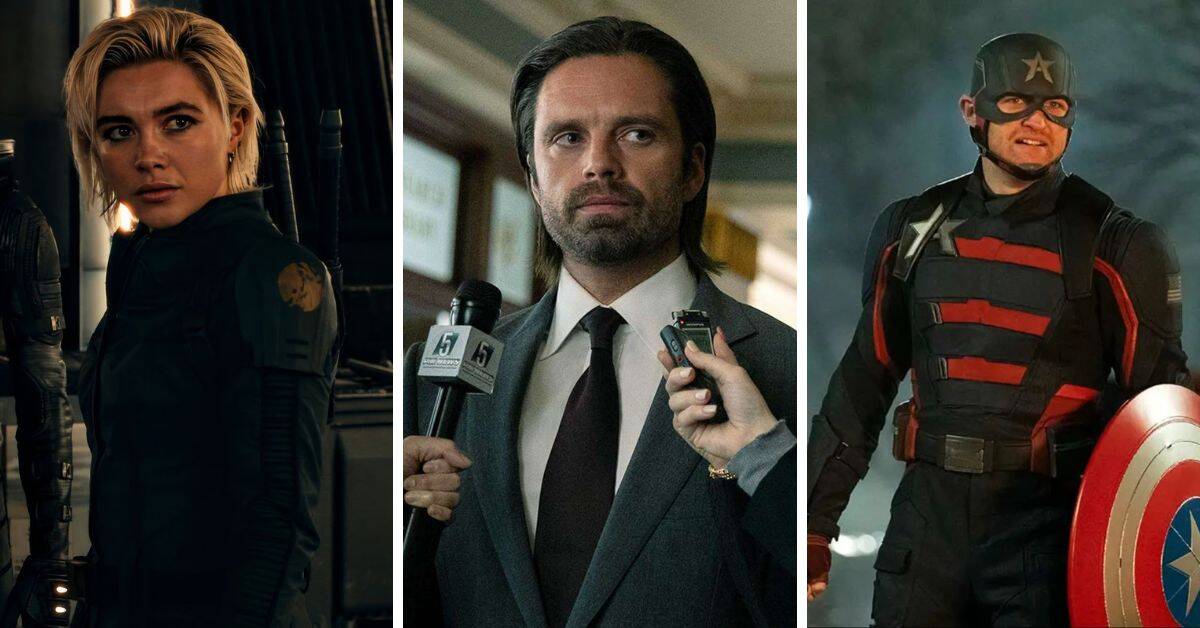
Yelena Belova: ESFP – The Cynical Mercenary with a Shattered Heart

If sarcasm could be weaponized, Yelena would have a vibranium-grade arsenal.
On the surface, she’s a walking punchline generator—witty, bold, unfazed. But ESFPs are more than chaotic good memes with killer eyeliner. Underneath all the sass is a heart that bruises easily and deeply. ESFPs are feelers who want to do what’s right, who live in the moment but ache when those moments feel fake or stolen.
Yelena’s whole life has been a mind-control experiment wrapped in a pretend family wrapped in betrayal. So yeah, she’s going to cover that with vodka, jokes, and impulsively adopting a dog named Fanny.
Her sensory awareness and physical instincts (Se) make her an incredibly skilled fighter. Her inner value system (Fi) gives her a reason to fight—but not always the clarity to separate justice from revenge. She lashes out when she’s hurting, only to realize too late that her fight wasn’t with the target, but with her own grief.
Bucky Barnes (Winter Soldier): ESTP (…But in Recovery)

Bucky is the ESTP who’s been through so much trauma he now spends his time brooding, reading old journals, and staring into the middle distance.
Here’s the thing: ESTPs are typically bold, action-oriented, and charming in that “accidentally punched a vending machine and somehow fixed it” way. And deep down, Bucky is still that guy. He’s quick-thinking. Physically capable. Skilled in battle. But trauma rewired his nervous system. The extroverted energy? The sense of humor? It’s still there—just buried under layers of guilt, PTSD, and state-sponsored mind wipes.
He’s a high-speed processor forced into slow mode. That shows up in his dry humor, his hesitancy to connect, and his relentless need to make amends. He’s constantly testing the world for safety—never quite sure if he’s allowed to be the hero, or if he’s still the weapon.
But despite all that, Bucky’s still got that ESTP spark: He jumps in when it counts. He trusts action over overthinking. And when Void threatens Manhattan, Bucky doesn’t run. He walks into the darkness like a man who’s already survived worse.
John Walker (U.S. Agent): ESTJ – The Unraveling Enforcer

If you took Steve Rogers’ “follow the rules” mindset and injected it with unresolved daddy issues and a bit of unfiltered rage, you’d get John Walker.
Walker is an unhealthy, overwhelmed, psychologically broken ESTJ. Duty-bound. Impulsively decisive. Efficient. He wanted to be Captain America. He got manslaughter memes and a public trial instead.
John Walker is what you get when an ESTJ is handed a legacy they can’t live up to and told, “Don’t mess it up.” ESTJs crave competence, respect, and a mission. And Walker had all of that—until he didn’t. The moment the mission got murky and grief got personal, he spun out.
He wants to be useful. But when the system discards him, he doesn’t pivot—he digs in. With a vengeance. And possibly some homemade welding.
Like many unhealthy ESTJs he’s haunted by the past, decisions he made too quickly, and relationships he didn’t take care of enough.
Still, Walker isn’t heartless. He saved civilians when he could’ve chased revenge. He stood shoulder to shoulder with the same people who watched him fall. He’s not the hero we wanted, but he’s trying. Badly. Loudly. But trying.
Red Guardian (Alexei Shostakov): ESFP – The Washed-Up Glory Hound with a Heart

Red Guardian is what happens when an ESFP hits middle age and realizes no one remembers their mixtape—or their Cold War heroics.
He’s boisterous, dramatic, and probably tried to sell his memoirs to a Soviet-themed podcast. But beneath the bravado is a man who just wants to be seen again. ESFPs often struggle with feeling obsolete when they’re not actively admired. Alexei clings to past victories because he’s terrified that, without them, he’s just… a washed-up dad with fading relevance.
And yet, when it comes to action, Alexei shows up. He’s a people-person. A warrior. A man who, despite his failings, still fights for the people he considers family. His Se–Fi combo makes him instinctive and emotionally driven—but also hilariously prone to off-topic tangents and petty grudge-holding.
He’s like your uncle who still talks about “the big game” from ‘85, but he’ll also take a bullet for you without hesitation.
Valentina Allegra de Fontaine: ENTJ – The Strategist with a Napoleonic Complex

Val is the ENTJ your therapist warned you about.
Charming. Visionary. Tactical. Also? Morally compromised and all about the power plays. ENTJs are all about long-term vision, and Val’s vision involves privatized super-weapons, political puppeteering, and controlling emotionally volatile people with mommy issues.
Her Te–Ni combo is laser-focused on outcomes, even if it means sacrificing pawns. She frames herself as a patriot, but it’s patriotism as a branding tool, not a belief system. Every move is calculated. Every betrayal is justified. And if things fall apart? She’ll spin the narrative faster than you can say “CIA cover-up.”
But her fatal flaw? ENTJ overconfidence. She thought she could control Sentry. Instead, she nearly triggered a shadow-apocalypse. She adapts, of course—ENTJs always do—but she also got outmaneuvered by the very people she underestimated.
Ghost (Ava Starr): ISFP – The Silent Storm

Ava is the ghost of trauma incarnate. Weaponized as a child. Lied to. Used. Left for dead. She didn’t become ruthless because she was cruel. She became ruthless because the world taught her that being soft was a death sentence.
ISFPs have strong Fi—meaning they build their identity based on inner emotional truth. Ava’s truth was pain, and for a long time, that made her dangerous. But when she stabilizes, you see her real ISFP nature emerge: fiercely protective, deeply loyal, and quietly sacrificial. She just needs something—or someone—worth trusting again.
Mel: ISFJ – The Soft-Spoken Conscience Who Accidentally Works for the Devil

Let’s be honest—we don’t know a ton about Mel yet. She’s the quiet one in the corner of the room, refilling everyone’s coffee while also low-key keeping national security from collapsing. She’s not in the spotlight, but you get the sense that if she ever quit, the entire operation would grind to a halt and Valentina would have to gasp send her own emails.
Mel is grounded, dependable, and detail-oriented. She also has a strong internal value system. But like a lot of ISFJs, she can get so wrapped up in fulfilling her role that she doesn’t always notice when her values are quietly being compromised. She’s loyal to a fault. Dutiful to a fault. Even-tempered to a fault. She followed Valentina not because she was power-hungry, but because she thought she was helping someone protect the country. Structure + purpose = comfort. Until it doesn’t.
Bucky—trauma-scented human lie detector that he is—saw through the “just following orders” mask and reached the real Mel underneath. The one who knows this isn’t right. The one who wants to help, but needs someone else to give her permission to break the rules. Once that switch flipped, she helped him locate the team, track down de Fontaine, and quietly pivoted toward justice without ever making a big deal about it.
Mel’s not flashy. She’s not dramatic. But she’s the reason the entire climax of this story was possible.
What Do You Think?
What is your favorite Thunderbolts character? Mine was the guinea pig. But let me know your favorite in the comments below! And if you’d like more superhero personality articles check out my related posts below: