16 Amazing ENTJ K-Drama Characters
If you’ve spent any time searching for ENTJ characters online, you’ve probably noticed a pattern. They’re usually portrayed as ruthless CEOs, terrifying villains, military commanders, or people who somehow manage to dominate every room they walk into.
But K-dramas do something I really appreciate. Instead of reducing ENTJs to power-hungry masterminds, many of these stories show what ambition actually looks like from the inside. Sometimes it’s inspiring. Sometimes it’s lonely. Sometimes it’s destructive. And sometimes it’s simply someone dragging around far more responsibility than anyone realizes.

One misconception I run into constantly is that ENTJs don’t care about people. What I’ve actually seen is that many of them express care by solving problems instead of verbalizing emotion. And some of these characters exemplify that in a really entertaining or thought-provoking way.
The characters on this list all express ENTJ preferences differently. Some lead criminal empires. Others run corporations, command organizations, or fight corruption. Some become healthier over time, while others allow their ambition to consume them. But beneath all those different stories you’ll see the same cognitive patterns showing up again and again: strategic thinking, decisive action, long-range vision, and an instinct to organize the world into something more effective than they found it.
Let’s start with one of the most entertaining examples.
Not sure what your personality type is? Take our personality questionnaire here. Or you can take the official MBTI® here.
The Commanders
Like I said before, people often picture ENTJs as people who want to be in charge. And sure, sometimes that’s true. But more often, I think they simply have a difficult time watching something be run badly.
When they walk into a room, they immediately start noticing bottlenecks, inefficiencies, conflicting priorities, and problems that no one else seems eager to address. Before long they’re suggesting improvements, organizing people, or stepping into leadership simply because someone has to. To people who prefer a more relaxed approach, that can feel overbearing. To the ENTJ, it usually feels like common sense. If there’s a better way to do something, why wouldn’t you do it?
These characters all approach leadership differently, but they share that same instinct to take responsibility when the situation calls for it.
Hong Hae-in (Queen of Tears)

When Queen of Tears begins, Hong Hae-in is easy to dismiss as cold. She’s demanding, emotionally reserved, and rarely communicates affection in ways that are easy for other people to recognize. Because she’s so strategic and self-contained, I understand why so many people see her as an INTJ.
About three or four episodes in, I realized I was typing her completely differently than I had during the premiere. At first she struck me as another emotionally detached CEO. But the longer I watched, the more obvious it became that her instinct wasn’t simply to analyze problems. She wanted to organize people and solve them immediately. She doesn’t sit back and develop theories about how things could work better. She wants to solve problems now. She takes charge during crises, makes decisions quickly, delegates responsibility, and expects the people around her to keep up. Running an enormous corporation comes naturally, kind of like it’s the language she speaks.
Hae-in has spent her entire life believing that competence earns security. If she works hard enough, stays composed enough, and keeps everything under control, then life won’t fall apart. It’s a mindset that has served her well as a CEO, but it gradually damages her marriage. She approaches relationships the same way she approaches business problems, assuming that responsibility and reliability are enough to sustain intimacy. And of course they aren’t.
As the series unfolds, her illness forces her to confront something no amount of planning can fix. For perhaps the first time in her life, she can’t simply work harder or make a better decision. She has to allow herself to be vulnerable, to admit she’s frightened, and to let someone else carry part of the burden. Watching those walls slowly come down is one of the reasons Hae-in became one of my favorite characters in the drama. She never stops being strong or decisive, but she begins realizing that genuine strength also includes letting yourself be known.
Bong-suk (Mr. Plankton)

Bong-suk reminds me of several ENTJ women I’ve worked with over the years. People assumed they were intimidating because they weren’t emotionally demonstrative, but behind the scenes they were constantly solving problems for the people they loved.
She owns a nightclub, speaks her mind without much hesitation, and has a strong presence. Yet underneath her blunt exterior is someone who has spent years building stability for the people she loves. She took Hae-jo in when he had nowhere to go, gave him work, looked after him, and remained one of the few constants in his unpredictable life. She rarely wraps those actions in sentimental speeches. Like most ENTJs, she just shows up when she’s needed.
I think that’s something people often misunderstand about ENTJs. Because many of them aren’t especially expressive with their emotions, people sometimes assume they don’t feel deeply. In reality, their care often shows itself through practical action. They solve problems, create opportunities, provide resources, and protect the people they’ve chosen to invest in. Their affection is often built into what they do rather than what they say.
Jung Ji-woo (Love & Leashes)
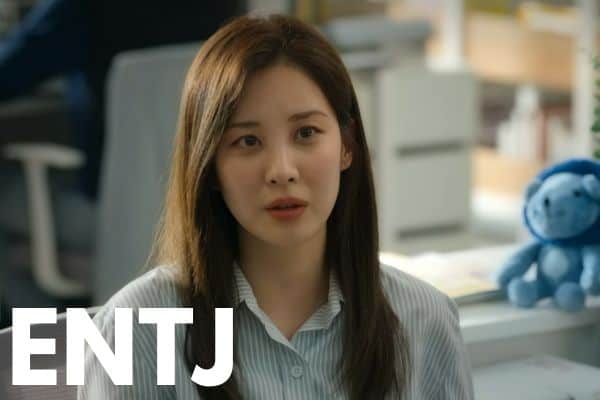
I don’t think many people expected Love & Leashes to become an interesting study of personality type. I went into watching this movie a little wary, and then I ended up falling in love with the story and the characters.
Most discussions naturally focus on the film’s BDSM premise, but what fascinated me was Ji-woo herself. Strip away the unusual relationship dynamic for a moment and pay attention to how she approaches the world. She’s direct, responsible, confident, and remarkably comfortable taking initiative. When something unfamiliar lands in her lap, she doesn’t get shocked and run away. She researches it, learns everything she can, and builds enough understanding to make informed decisions.
That curiosity paired with practicality feels very characteristic of a healthy ENTJ. Rather than relying on assumptions, she wants mastery and competence. Once she commits to something, she takes the responsibility seriously, making sure she understands both the ethical and practical implications of the choices she’s making.
Something I kept noticing throughout the film is that Ji-woo never treats authority as permission to disregard another person’s wellbeing. In fact, the opposite happens. The more responsibility she accepts, the more carefully she pays attention to trust, communication, and consent. She understands that leadership, whether inside a company or inside a relationship, isn’t about getting your own way. It’s about creating an environment where both people feel respected and safe.
That’s probably why she feels like such a refreshing portrayal of an assertive female character. Modern media sometimes mistakes confidence for arrogance or strength for emotional detachment. Ji-woo doesn’t fall into either trap. She’s decisive without becoming domineering, confident without needing to diminish anyone else, and capable of admitting when she still has something to learn. Those qualities make her a great example of balanced expression of Extraverted Thinking.
Baek Kang-hyuk (The Trauma Code: Heroes on Call)

If someone told me they thought all ENTJs were arrogant villains, this is probably the character I’d show them first.
Baek Kang-hyuk certainly isn’t warm and fuzzy. He’s blunt, demanding, impatient with incompetence, and has absolutely no interest in sugarcoating the truth. If a resident makes a mistake, he’ll point it out immediately. If hospital bureaucracy gets in the way of saving someone’s life, he’ll bulldoze straight through it. To people who don’t know him, he can come across as abrasive or even intimidating.
The longer I watched The Trauma Code, though, the more obvious it became that none of those qualities come from ego. Instead, they come from urgency and a desire to do right in a limited amount of time.
Every second matters in trauma medicine, and Kang-hyuk knows that better than anyone. While other doctors are worrying about budgets, hospital politics, or protecting their reputations, he’s asking a much simpler question:
“How do we keep this patient alive?”
That unstoppable focus is one of the things I associate most strongly with healthy Extraverted Thinking. If the system helps patients, he’ll use it. If the system gets in the way, he’ll challenge it without a second thought.
I couldn’t help noticing that he demands just as much from himself as he does from everyone else. He isn’t the kind of leader who gives orders from behind a desk while someone else takes the risks. He’s usually the first person running toward the operating room, the first person willing to shoulder responsibility when things go wrong, and the first person willing to put his own career on the line if it means giving a patient another chance. That’s the kind of leadership that naturally earns respect rather than demanding it.
I also see healthy Introverted Feeling working underneath all that confidence. Kang-hyuk doesn’t gives emotional speeches about why he became a doctor. He doesn’t have to. His values show up in his actions. Time after time, he chooses the difficult path because he genuinely believes every life is worth fighting for, even when doing the right thing costs him personally. That’s inferior Fi at its best. It’s not worn on the sleeve, but acting as a steady ethical guide that gives purpose to everything his Extraverted Thinking accomplishes.
The Relentless Achievers
One thing I’ve noticed after typing a lot of ENTJs is that very few of them are motivated by achievement for achievement’s sake. Usually they’re trying to build something, prove something, or create enough competence that life finally feels manageable. Of eEarly in life, they may put achievement ahead of relationships, dismiss emotions that seem inconvenient, or assume every problem has a practical solution.
These characters all have that unmistakable drive to succeed, but they’re also learning that life can’t always be managed like a business plan.
Kang Tae-mu (Business Proposal)

Kang Tae-mu is probably one of the clearest examples of a classic ENTJ CEO done well. I laughed several times because Tae-mu treats romance the way most people treat project management. His solution to endless blind dates isn’t to avoid them—it’s to marry the next woman his grandfather introduces him so he can get back to work. He hates wasting time and approaches almost every decision with an overly-practical mindset. Even his solution to avoiding endless blind dates is hilariously ENTJ: simply marry the next woman his grandfather introduces him to so he can get back to work.
Yet once Tae-mu realizes he loves Ha-ri, he doesn’t play games or hide his intentions. He tells her exactly how he feels and pursues the relationship with the same determination he brings to running a company. His growth comes from realizing that love isn’t another goal to accomplish. Some things can’t be optimized or scheduled, and learning to slow down for another person becomes one of the most meaningful parts of his story.
Woo Soo-ji (Because This Is My First Life)
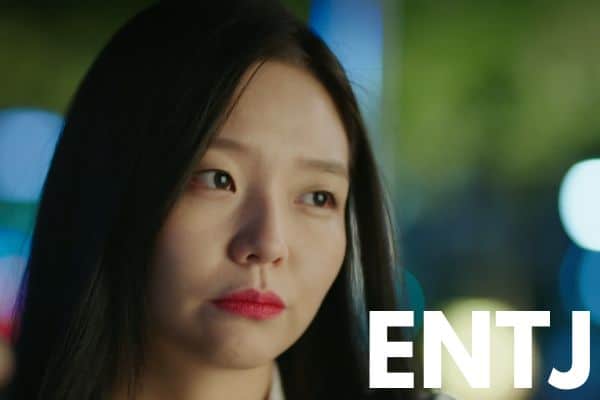
Woo Soo-ji has spent years convincing herself that independence is the safest way to live.
As a successful career woman navigating constant sexism in the workplace, she’s learned to protect herself by staying emotionally guarded and refusing to rely on anyone (as a fellow NTJ dismissive avoidant woman, I can relate). She’s practical, fiercely capable, and never hesitates to speak her mind, making her the friend everyone turns to when they need honest advice rather than empty reassurance.
What I appreciate about Soo-ji is that her story isn’t about becoming less independent. It’s about realizing that accepting love doesn’t mean giving up your strength. Through her relationship with Ma Sang-goo, she slowly learns that vulnerability isn’t the same thing as weakness. She remains every bit as ambitious and competent as she was before, but she no longer feels like she has to carry the entire weight of her life alone.
Sung Bo-ra (Reply 1988)
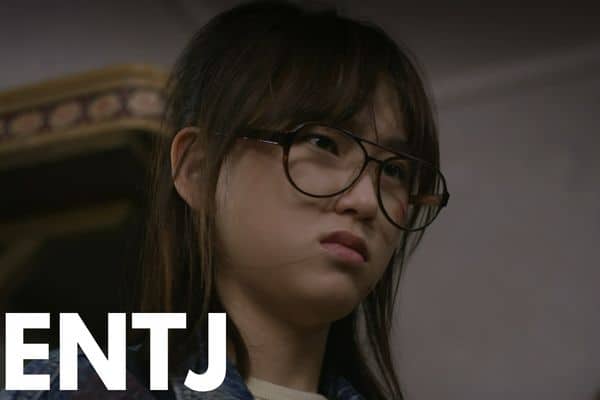
If I had to describe Sung Bo-ra in one word, it would probably be intense.
She’s brilliant, outspoken, fiercely principled, and completely unwilling to tolerate nonsense. Whether she’s arguing with her parents, fighting for political change, or pushing herself academically, Bo-ra throws herself into everything with remarkable determination. It’s easy to see why she eventually becomes a prosecutor. She has both the intellect and the resolve to thrive in a demanding career.
What makes Bo-ra so memorable, though, is the softer side that slowly emerges over the course of the series. Beneath all her frustration and fiery temper is someone who loves her family deeply, even if she isn’t always very good at expressing it. Some of the most touching moments in Reply 1988 come when she begins recognizing the sacrifices her parents made for her and learns to communicate feelings that she’d spent years hiding behind criticism and tough love. Watching that emotional maturity develop made me appreciate her character even more.
Maeng Se-na (Idol-I)

Maeng Se-na is the kind of person you want on your side when everything is falling apart.
She’s a brilliant criminal lawyer with an undefeated record, known for taking on difficult cases that other attorneys won’t touch. She’s confident, composed under pressure, and remarkably good at separating emotion from evidence when she needs to uncover the truth.
What makes her especially interesting, though, is the tension between her professional life and her personal one. For more than a decade she’s been a devoted fan of idol Do Ra-ik, only to find herself defending him after he’s accused of murder. Suddenly the person she’s admired from a distance becomes a complicated human being standing in front of her, and she has to balance her personal feelings with her professional responsibility.
I like that Se-na never lets admiration replace competence. She doesn’t stop thinking critically just because she cares about someone. Instead, she channels that loyalty into doing what she does best: investigating the facts, building a strategy, and fighting for justice. It’s a nice reminder that healthy ENTJs don’t only work hard to achieve success. At their best, they use their competence to protect the people and principles they’ve decided are worth fighting for.
The Strategic Survivors
Not every ENTJ grows up in an environment that rewards kindness or vulnerability. Instead, some learn early that the safest way to get through life is to become exceptionally capable. They build walls instead of asking for help and rely on strategy instead of trust. They convince themselves that if they’re always prepared, always thinking ahead, and always in control, they’ll never be powerless again.
These characters all use competence as a form of protection. Some eventually discover that there are things strength alone can’t fix.
Cha Se-gye (My Royal Nemesis)
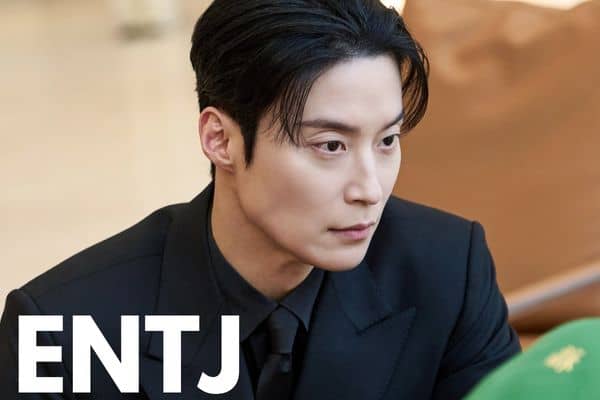
Cha Se-gye is introduced as exactly the sort of chaebol heir you’d expect to dislike.
He’s cold, calculating, and perfectly comfortable using his wealth and influence to get what he wants. Growing up surrounded by corporate power struggles taught him that winning matters more than sentiment, and by the time we meet him he’s become exceptionally good at conquering in that world. He isn’t interested in reacting emotionally when he can stay three steps ahead instead.
What I found interesting, though, is how gradually that certainty begins to unravel once Seo-ri enters his life. She doesn’t fit neatly into any of the plans he’s made for himself, and that’s exactly what makes her so disruptive (still working on ironing out her personality type). For perhaps the first time, Se-gye finds himself dealing with emotions he can’t solve through logic or control. Watching him slowly move from seeing relationships as something to manage toward something to genuinely invest in is one of the most satisfying parts of his character arc.
He’s still unmistakably an ENTJ by the end of the story. He’s decisive, strategic, and fiercely protective of the people he loves. The difference is that his competence is no longer serving only his own survival. It becomes a way of protecting someone else.
Ha Do-yeong (The Glory)
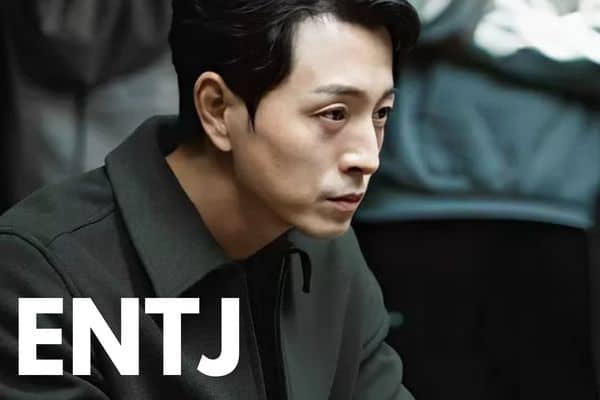
Ha Do-yeong is more contemplative and careful than most ENTJs on this list. As the CEO of a successful construction company, he’s already accustomed to making difficult decisions and separating emotion from action. Throughout most of The Glory, he approaches problems with composure, preferring to observe carefully before deciding what needs to be done.
Unfortunately, much of Do-yeong’s life has been built on appearances. His marriage to Yeon-jin is polished, successful, and socially enviable, but underneath that polished surface there’s very little genuine intimacy. For a long time, Do-yeong seems content to leave those deeper questions alone because, from a practical standpoint, the arrangement works.
That changes once Dong-eun forces him to confront the truth about his wife. Suddenly the efficient solution and the morally right solution are no longer the same thing. Watching him wrestle with that conflict felt very characteristic of inferior Introverted Feeling beginning to emerge. Instead of asking only what makes the most sense, he gradually begins asking what he can actually live with. By the end of the series, protecting his daughter matters more than protecting his carefully constructed life, and that shift gives his character far more emotional depth than he first appears to have.
Heo Joon-jae (Legend of the Blue Sea)
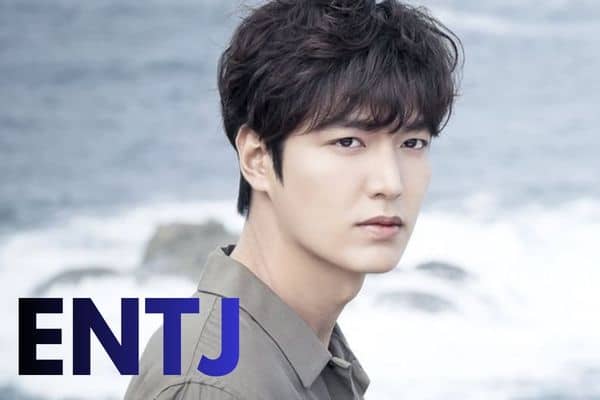
I’ll admit, I briefly considered ENTP for Joon-jae. He’s witty enough that I understand why people land there. But the longer I watched him, the more I noticed his attention wasn’t scattering across possibilities. It kept narrowing toward execution.
Every scam is carefully planned. Everyone on his team has a role to play, and Joon-jae naturally assumes leadership without making a big production out of it. He’s organizing people and information to accomplish something tangible. That’s much more characteristic of dominant Extraverted Thinking than Extraverted Intuition.
I also noticed how quickly he moves from analysis to execution. Once Joon-jae decides on a course of action, he commits. He doesn’t spend much time second-guessing himself or chasing alternative possibilities. Throughout the series, whether he’s trying to expose his stepmother, protect Shim Cheong, or uncover the truth about his past, his attention stays remarkably fixed on the goal. That’s the kind of singular focus I often associate with Introverted Intuition supporting Extraverted Thinking.
As the story progresses, his priorities become more personal, but his approach doesn’t really change. He continues solving problems the way he always has: by staying composed under pressure, building a strategy, and taking responsibility for the people depending on him. The difference is that he’s no longer using those abilities simply to stay ahead of everyone else. He’s using them to build a future with the people he loves.
The Empire Builders
If there’s one thing I consistently admire about healthy ENTJs, it’s their ability to build. Give them enough freedom and they’ll create a business, a hospital, a movement, or a system that leaves things better than they found them. Healthy ENTJs create organizations, businesses, systems, and communities that help people thrive. They’re often at their happiest when they can take something disorganized and leave it stronger than they found it.
The problem is that this ability is morally neutral.
Building itself isn’t inherently good or bad. A person can build a thriving hospital or a criminal empire with many of the same psychological tools. What ultimately determines the outcome isn’t the cognitive functions. It’s the values guiding them.
These characters show what happens when strategic brilliance becomes disconnected from empathy.
Kim Myeong-gil (Bloodhounds)
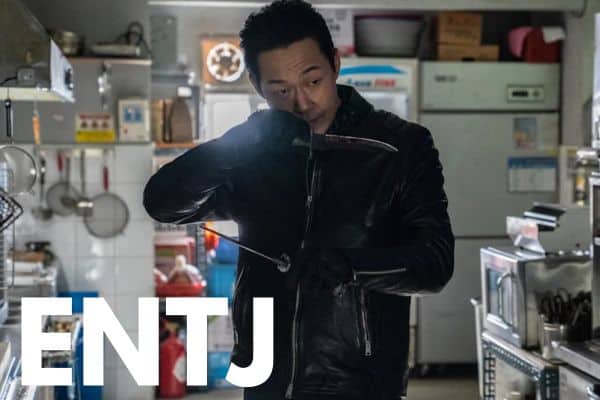
Kim Myeong-gil was a hard villain for me to watch simply because he was so dang smart. I wanted him to be less intelligent so that I’d be less stressed out watching Bloodhounds. But no. He had to not only be intelligent but also an incredible fighter.
He understands finance, contracts, intimidation, and organizational structure, then uses each of them to create an empire that becomes increasingly difficult to challenge. During the COVID-19 pandemic, he deliberately targets struggling business owners, trapping them in impossible loans and using their desperation as fuel for his own success.
Watching him, I kept thinking about how different this is from the impulsive, hot-headed villain we see so often. Myeong-gil doesn’t screw everything up by having emotional outbursts or giving long speeches when he should be finishing off his enemies. He’d much rather manipulate incentives, create dependency, and position himself so that people feel they have no choice but to play by his rules. Even violence becomes just another business tool. If intimidation achieves the objective more efficiently than negotiation, he’ll intimidate. If deception works better, he’ll deceive. His focus almost never shifts away from the result he wants.
That’s what makes him feel like such an unhealthy ENTJ to me. Healthy Extraverted Thinking organizes people toward meaningful goals. Unhealthy Extraverted Thinking can become obsessed with efficiency while gradually losing sight of humanity. People stop being individuals with inherent worth and start becoming assets, liabilities, or obstacles to be managed. Once someone adopts that mindset, it’s frightening how many terrible decisions can begin to feel perfectly logical.
Jo Yi-seo (Itaewon Class)

This character frustrated me. She’s one of the clearest examples of an immature ENTJ that I’ve seen in a K-drama.
From the moment she walks into DanBam, she starts identifying problems and proposing solutions. She isn’t content to observe for very long before she’s reorganizing the business, giving instructions, and developing strategies to help it succeed. Her intelligence is immediately directed toward creating results. She naturally thinks in terms of efficiency, long-term growth, and measurable success, which is exactly what I’d expect from dominant Extraverted Thinking.
Once she decides that helping Sae-ro-yi achieve his dream is her goal, almost everything else falls into place behind it. She develops strategies, adapts when circumstances change, and keeps moving toward the same objective year after year.
At the beginning of the series, though, Yi-seo has a glaring blind spot.
She never seems to stop to consider how her decisions affect other people emotionally. If someone isn’t contributing to the goal, her instinct is simply to remove the obstacle. We see that in the way she initially wants to fire Hyeon-yi after customer complaints, or in the matter-of-fact way she admits she’ll befriend people only if they can help her succeed. From her perspective, she’s being logical. From everyone else’s perspective, she can come across as astonishingly insensitive. I got major secondhand embarrassment from her several times throughout the show.
However, as Yi-seo grows closer to the DanBam family, her inferior Introverted Feeling slowly begins to develop. She starts paying attention to loyalty, personal values, and the emotional consequences of her decisions instead of viewing every situation as a strategic problem to solve. By the end of the series, she’s still ambitious, direct, and highly competent, but she’s become someone who uses those strengths to build people up rather than just achieve results.
Ko Moon-young (It’s Okay Not to Be Okay)

Ko Moon-young is one of the most misunderstood characters I’ve seen people type.
Some viewers see her confidence, bluntness, and powerful presence and immediately assume she’s simply a “badass.” Others point to her emotional volatility and conclude she can’t possibly be a Thinking type.
I don’t think either interpretation really captures what’s happening.
Moon-young is a deeply traumatized person whose entire personality has been shaped by abuse, neglect, and emotional deprivation. The series isn’t showing us what a healthy ENTJ looks like. It’s showing us what happens when someone grows up without the safety, love, and stability needed to develop in a healthy way. It’s also worth remembering that the writers explicitly portray her as having antisocial personality disorder. That’s part of what makes separating trauma from personality so difficult.
Even so, I still see Extraverted Thinking as her natural starting point. She’s exceptionally direct, decisive, and action-oriented. When she wants something, she doesn’t spend much time wondering whether she should pursue it. She just moves into action. Throughout the series she approaches obstacles head-on, often assuming that if she has enough determination she can simply force life to cooperate with her plans. Combined with her symbolic, future-oriented way of thinking, that creates a strong impression of the Te-Ni combination.
One thing that especially stands out is how disconnected she initially is from her own values in any healthy sense. She isn’t guided by a well-developed moral compass so much as by impulse, survival, and self-protection. Gang-tae repeatedly challenges her selfishness because she genuinely struggles to understand why other people’s emotional needs should matter when she’s spent most of her own life simply trying to survive.
As the series unfolds, Moon-young doesn’t become a different person. She stays outspoken, unconventional, and independent. What changes is that she slowly allows herself to care without immediately turning that vulnerability into control or possessiveness.
The Pragmatists
One thing I’ve noticed about many ENTJ characters is that they don’t spend much time asking whether the world should work a certain way.
They start with the world as it is.
If the rules are broken, they’ll work around them. If the system is corrupt, they’ll look for leverage. If playing fair accomplishes nothing, they’ll at least be tempted to ask whether fairness is still serving its purpose.
ENTJs are often willing to wrestle with uncomfortable ethical questions that many other personality types would avoid. Some arrive at good conclusions while others drift into dangerous territory. Either way, they force us to ask where pragmatism should end and principle should begin.
Vincenzo Cassano (Vincenzo)

Vincenzo Cassano has become one of the most recognizable K-drama characters in recent years, and it’s easy to understand why.
He’s sophisticated, composed, impeccably dressed, and somehow manages to be both terrifying and strangely charming at the same time. As the adopted son of an Italian mafia boss, he arrives in Korea with a moral code that feels completely upside down. Murder doesn’t particularly bother him. Betrayal does. He’ll threaten criminals without blinking, yet he refuses to harm innocent people, especially women and children.
Like most ENTJs, Vincenzo reacts from a place of strategy rather than impulse. Whenever Babel makes a move, he’s already considering three or four possible responses. He’s constantly looking for leverage, identifying weak points, and finding creative ways to force powerful people into positions they never anticipated. Even when he appears relaxed, you get the sense that part of his mind is always running several moves ahead.
That’s the kind of chess-player mentality I usually associate with ENTJs. By the time everyone else realizes the game has started, they’ve already committed to their move.. Once Vincenzo commits, though, he acts decisively. There isn’t much hesitation because, in his mind, the real decision happened long before anyone else realized the game had begun.
I also think his tertiary Extraverted Sensing shows up in interesting ways. Vincenzo has a refined awareness of his environment that’s difficult to ignore. His clothing is immaculate, his posture is controlled, and he pays close attention to how situations unfold in real time. He notices details other people miss and adapts quickly when circumstances change. That combination of long-range vision and immediate responsiveness makes him an incredibly difficult opponent to outmaneuver.
Ryu Soo-yeol (Bad & Crazy)

At first, Ryu Soo-yeol is exactly the kind of man you’d expect to dislike.
He’s ambitious, politically savvy, and perfectly willing to look the other way if it means earning another promotion. He’s learned how to survive inside a corrupt system by becoming very good at playing it. Every decision seems calculated around one question: Will this move me forward?
That kind of goal-oriented thinking is one of the clearest signatures of Extraverted Thinking (Te). ENTJs naturally want results. They’re constantly evaluating what works, what doesn’t, and how to reach an objective as efficiently as possible. For someone like Soo-yeol, promotions, status, and measurable success become the scoreboard that tells him whether he’s winning.
One reason I don’t buy the popular ENTP typing for him is how singular his focus is. ENTPs usually enjoy exploring possibilities for their own sake. They’re far more likely to bounce between ideas, theories, and interests because the exploration itself is rewarding. Soo-yeol isn’t exploring, he’s constantly executing.
Almost every major decision feeds into one long-range objective. That’s Introverted Intuition supporting Extraverted Thinking. Rather than chasing every interesting possibility, he narrows his attention toward one destination and builds a strategy to get there.
I also noticed something that’s easy to miss. Soo-yeol pays attention to appearances. His clothes are immaculate, his apartment is spotless, and he’s remarkably aware of how people perceive him. That’s something I often see with tertiary Extraverted Sensing. Healthy ENTJs frequently care about presentation because they understand that image affects influence.
But the amazing thing about Soo-yeol is that he doesn’t stay in an unhealthy state. His conscience eventually crowds into his more selfish tendencies. Throughout Bad & Crazy, he’s forced to confront the growing gap between the successful man he’s become and the person he actually wants to be. The arrival of K forces him to ask a question he’s spent years avoiding, like: “What exactly am I becoming?” and “Where did I come from?”
What Do You Think?
Do you relate to these characters? Do you have any other characters you’d recommend? Let me know in the comments!
Find out more about your personality type in our eBooks, Discovering You: Unlocking the Power of Personality Type, The INFJ – Understanding the Mystic, The ISFJ – Understanding the Protector, and The INFP – Understanding the Dreamer. You can also connect with me via Facebook, Instagram, or YouTube!