The Myers-Briggs® Personality Types of the Teach You a Lesson Characters
Set in a version of South Korea where school violence, corruption, and powerless teachers have reached a breaking point, Teach You a Lesson follows the Educational Rights Protection Bureau (ERPB), a government agency tasked with restoring order by whatever means necessary. That sometimes means psychological manipulation. Sometimes it means exposing corruption. And occasionally… it means punching a bully in the face.
It’s dramatic, surprisingly funny at times, and underneath all the action there’s a lot to unpack psychologically. Nearly every case explores what happens when fear, power, trauma, or desperation push people to unhealthy extremes. That makes it a fascinating series to look at through the lens of personality type.

As always, these are my opinions based on the evidence we see in the show. Personality typing fictional characters is part psychology, part detective work, and part spirited debate. If you see something differently, I’d love to hear your thoughts. Some of the characters I couldn’t profile at all because there just isn’t enough information or there’s too much narcissism or sociopathology to really make a fair estimate.
The Myers-Briggs® Personality Types of the Teach You a Lesson Characters
Na Hwa-jin — ESTP
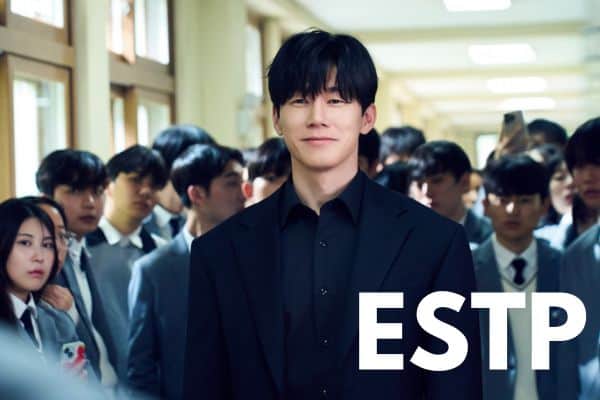
I’ve seen quite a few people argue that Hwa-jin is an ENTJ, and on the surface I understand why. He’s decisive. He naturally takes charge. He organizes people, builds strategies, and doesn’t hesitate when action is needed.
But none of those qualities belong exclusively to ENTJs.
To me, Hwa-jin feels much more like an experienced, highly mature ESTP.
The biggest giveaway is how quickly he responds to what’s happening right now. He doesn’t spend long constructing elaborate long-range plans. Instead, he constantly adapts to changing circumstances, reading people in real time and adjusting his approach on the fly. He’s remarkably good at noticing tiny behavioral cues, understanding what motivates someone, and pressing exactly the right emotional button.
That combination points much more toward Extraverted Sensing supported by Extraverted Feeling (two of the ESTP’s valued functions) than dominant Extraverted Thinking.
He’s also comfortable playing roles when necessary. One moment he’s charming and approachable, the next he’s intimidating, sarcastic, compassionate, or completely unreadable. None of it feels fake exactly. He’s simply using whatever social approach best fits the situation. Healthy or mature ESTPs often become surprisingly skilled at this because tertiary Fe gives them an intuitive understanding of emotional dynamics.
His tactics also have that unmistakable ESTP flavor. Rather than trying to control everything beforehand, he trusts his ability to improvise. We see this repeatedly throughout the series. He reacts quickly under pressure, takes calculated risks, and often throws himself into dangerous situations because he believes he’ll figure out the next step once he’s there. Most of the time, he’s right.
That isn’t to say he lacks foresight.
As an older ESTP, Hwa-jin has clearly developed his Introverted Intuition. One of the best examples comes when he deliberately punches Cho Gyu-cheol, fully aware that the confrontation will set larger events into motion and ultimately help expose the organization behind him. That’s not blind impulsiveness. It’s an experienced ESTP using emerging Ni to steer events toward a larger outcome while still relying primarily on instinct in the moment.
Yet underneath all the toughness is a man who’s still carrying enormous grief. The death of his fiancée changed the trajectory of his life, and you can see that pain shaping many of his decisions. He jokes with friends, teases people, and walks calmly into situations that would terrify most of us. Yet beneath all of it is someone who never really stopped mourning.
ESTPs often experience incredibly deep feelings but instead of processing them, they keep moving. To the ESTP, sometimes action becomes the only language grief knows how to speak.
Im Han-rim — ESFP
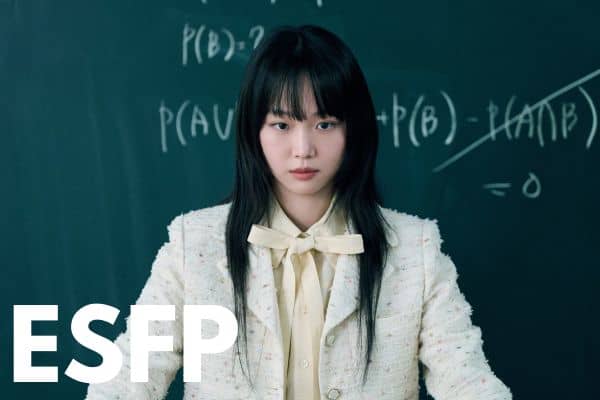
Im Han-rim is fearless. She’s physically capable. She rushes into danger without much hesitation and enjoys living on the edge. Because of this, many people profile her as ESTP. But after watching her for a while, I kept coming back to one thing: She follows her heart far more than she follows detached logic.
Whenever Bong Geun-dae starts diving into technical explanations or complicated systems, Han-rim checks out almost immediately. She doesn’t care about the mechanics nearly as much as the practical takeaway. Give her the one-sentence version and let’s get moving.
That’s a pretty common difference between Fi/Te (Feeling-Perceivers) and Ti (Thinking-Perceivers).
Han-rim trusts her gut. She acts on what feels right. She doesn’t spend much time trying to analyze everything into neat categories.
She’s also refreshingly unconcerned with fitting anyone else’s expectations. She’s quirky, expressive, and perfectly comfortable being herself, even if other people find her a little strange. That kind of authenticity feels much more like Introverted Feeling than the social adaptability we often see in ESTPs.
Another clue is how private she is with her deeper emotions.
She clearly cares about people, especially Hwa-jin and Geun-dae, but she doesn’t wear those feelings on her sleeve. Instead, they come out through loyalty, action, and the risks she’s willing to take for the people she loves. That’s often how Fi works. The feelings run deep, but they stay carefully protected.
She also has an infectious enthusiasm for the present moment. She throws herself fully into whatever she’s doing, whether that’s chasing suspects, fighting bullies, or making everyone around her wonder what she’ll do next.
Han-rim doesn’t overcomplicate life. Instead, she experiences it. And that combination of bold action, instinctive values, quirkiness, and living fully in the present makes ESFP the type that fits her best.
Bong Geun-dae — INTP
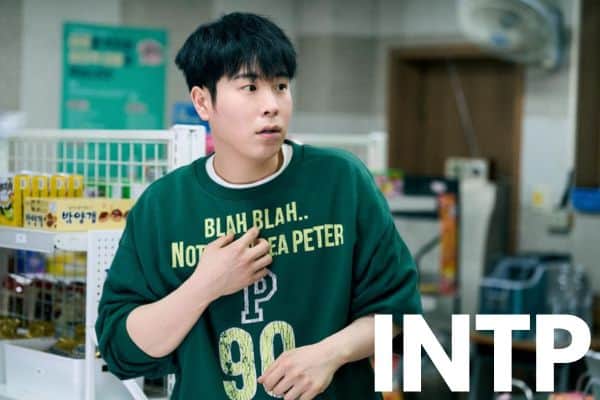
If Hwa-jin is the one kicking down the door, Bong Geun-dae is the one figuring out how the lock works.
He’s brilliant, endlessly curious, and happiest when he gets to untangle complicated systems. Whether it’s hacking into networks, decoding messages, or solving technical problems, his mind naturally zooms in on how things work beneath the surface. While everyone else is focused on the crisis itself, Geun-dae is busy understanding the mechanics behind it.
One of my favorite moments comes when he’s kidnapped by an illegal gambling ring. Most people would panic. Geun-dae starts programming, secretly using the blinking of a website banner as Morse code to reveal his location while intentionally dropping his phone as another clue. That’s exactly the kind of creative, analytical problem-solving you’d expect from an INTP.
He’s also delightfully eccentric.
He can seem absent-minded, awkward, or a little disconnected from what’s happening socially. Not because he doesn’t care about people, but because his attention naturally drifts toward ideas instead of social dynamics. Sometimes everyone else seems to be having one conversation while Geun-dae is halfway through a completely different one in his own head.
The series hints at a relationship between him and Han-rim, but Geun-dae doesn’t even seem to recognize what he’s feeling. He understands computers better than his own heart. That’s actually a pretty common pattern for INTPs. They often spend so much time analyzing the outside world that sorting through their own emotions can take much longer.
Choi Ga-yoon — ENFJ
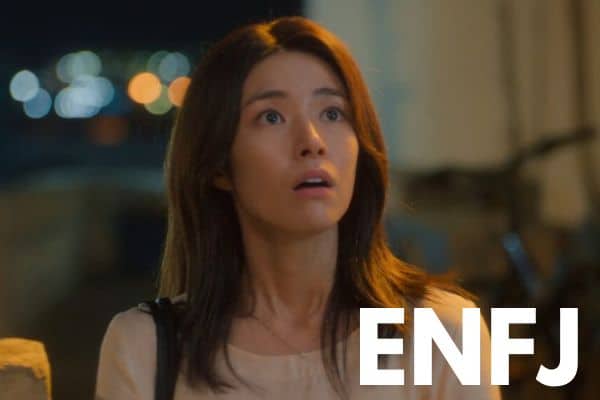
Ga-yoon doesn’t get nearly enough screen time to type with complete confidence, but based on what we do see, I’d lean toward ENFJ.
She’s an idealist in the truest sense of the word. Rather than fixating on the seemingly hopeless details of the moment, she’s convinced she can cause ripples that will change things for people in the long-run.
Where Hwa-jin sees some people as too dangerous to save, Ga-yoon refuses to give up on them. She knows change isn’t easy and that one conversation probably won’t transform someone’s life. But she believes people need at least one person who refuses to stop believing in them.
One scene captures this perfectly. After Hwa-jin argues that one troubled student is beyond redemption, Ga-yoon promptly karate chops him on the head for saying it. Then, almost as quickly, she calms down and gently explains why she can’t accept that way of thinking. Teachers exist because people can change, even if it takes years. If everyone gives up, what hope is left?
That combination of conviction and compassion feels very ENFJ to me. She’s warm and nurturing, but she’s far from passive. When something challenges her deepest values, she’s willing to stand her ground. She doesn’t simply want people to feel better today. She wants them to become better people tomorrow. So it’s fitting that her influence continues long after she’s gone.
Even though she dies before most of the story unfolds, her life becomes the emotional foundation for nearly everything that follows. Her father builds the Educational Rights Protection Bureau in her memory. Hwa-jin dedicates his life to protecting teachers. Even the central conflict of the series traces back to the ripple effects of her choices.
Choi Gang-seok — ENTJ
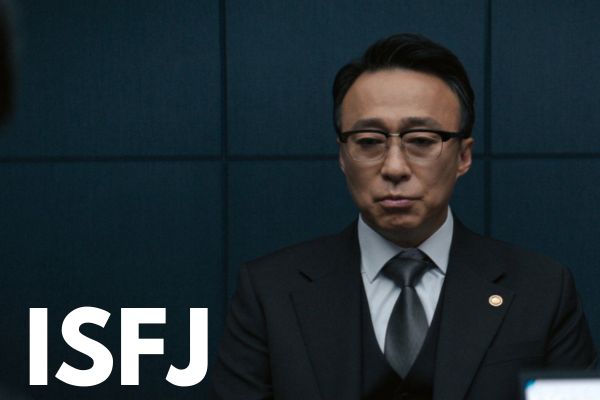
Choi Gang-seok is the definition of a person who takes unimaginable grief and turns it into action.
After losing his daughter, he doesn’t retreat from public life. He creates an entire government agency dedicated to protecting teachers from suffering the same fate. Why am I not surprised that an ENTJ would see a broken world and instead of grieving, build a system that fixes that world?
He’s strategic by nature. Before becoming Minister of Education, he spent decades in politics, earning a reputation for speaking bluntly, making difficult decisions, and refusing to soften his message just to keep everyone happy. He’s focused on results first and isn’t afraid of conflict if it moves the larger mission forward.
That doesn’t mean he’s cold.
In fact, one of my favorite things about Gang-seok is that the tough exterior is obviously just that—an exterior.
He constantly yells at Hwa-jin, insults him, and even kicks him whenever he calls him “Dad.” It’s almost become their love language. But underneath all the grumbling is genuine affection. He respects Hwa-jin, trusts him, and repeatedly puts himself on the line to support him.
The same is true of his daughter.
Her death clearly shattered him, but instead of letting that grief consume him, he channels it into a larger purpose. That’s something we often see with ENTJs. They don’t ignore painful emotions so much as they compartmentalize them until they can be turned into something productive.
There’s even a detail about him that really moved me as a fellow NTJ. Despite his intimidating reputation, we’re told he cried for an entire month after giving away a kitten.
It’s a perfect reminder that personality type isn’t about whether someone has feelings. It’s about what they do with them.
Gang-seok leads with vision, thinks on a large scale, and naturally organizes people around long-term goals. But underneath the commanding presence is a father who never stopped missing his daughter.
Cho Gyu-cheol — Difficult to Type (Possibly INFJ or INTJ)
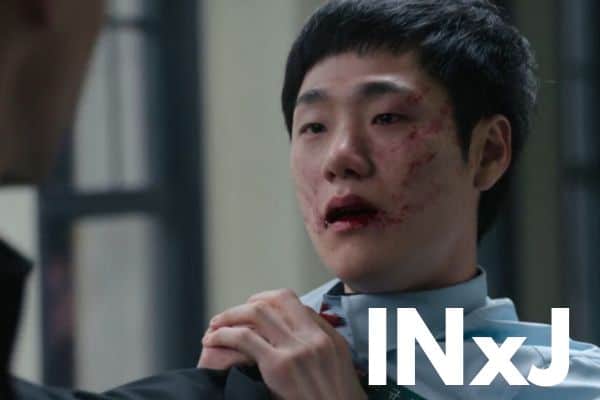
Cho Gyu-cheol is probably the hardest character in the series to assign a personality type.
The biggest reason is that he’s written as a sociopath. His lack of empathy, manipulative behavior, and obsession with power distort so many aspects of his personality that it’s difficult to separate what’s natural preference from what’s severe pathology.
Because of that, I wouldn’t feel comfortable assigning his type with much confidence.
That said, there are a couple of possibilities.
One argument could be made for INFJ.
Gyu-cheol is exceptionally good at understanding other people’s emotions—not because he cares about them, but because he knows how to exploit them. He studies people’s weaknesses, plays psychological games, and seems to instinctively understand which emotional pressure points will give him the most control. That’s the strongest evidence for a personality that naturally pays close attention to interpersonal dynamics.
On the other hand, I also see a lot of signs for INTJ.
Most of his ambitions revolve around building influence, maintaining power, and controlling systems rather than seeking emotional influence. He treats people like pieces on a chessboard, constantly calculating how they can advance his goals. His manipulation often feels cold and strategic rather than socially expressive.
Either way, he’s someone who is highly strategic and understands long-term implications and effects. He’s playing the long game right from the beginning of the series, and that’s something that INFJs and INTJs are both famous for.
Even then, it’s hard to know how much of that comes from personality and how much comes from his psychological disorder.
What makes Gyu-cheol such an unsettling villain isn’t simply that he’s intelligent. It’s that he lacks the normal emotional brakes that stop most people from using their intelligence to hurt others.
Throughout the series he exploits kindness without remorse, manipulates people who are overcoming tremendous grief, and clings to an obsessive fantasy surrounding Ga-yoon long after her death. His worldview is almost entirely transactional. Other people exist to be used, controlled, or discarded.
That’s why I’d hesitate to read too much into his personality type.
Healthy INFJs and INTJs are capable of incredible compassion, integrity, and self-sacrifice. Gyu-cheol isn’t a picture of what either type “looks like.” He’s a picture of what severe antisocial pathology can look like when intelligence and manipulation are added to the mix, and sometimes the disorder tells us far more than the personality type ever could.
Han Ye-ri — Unhealthy ESFJ

Han Ye-ri is one of those characters who reminds us that personality type doesn’t determine whether someone is kind. I’ve seen people argue that she can’t be an ESFJ because she’s not “kind like an ESFJ.”
The problem is that kindness isn’t a personality preference. Every personality type is capable of incredible compassion. Every personality type is also capable of becoming deeply unhealthy.
To me, Ye-ri looks like an ESFJ whose need for approval and social power has become completely twisted by trauma.
She’s incredibly aware of public opinion. She understands how quickly a crowd can turn against someone, and she knows exactly how to influence that process. Rather than confronting people directly, she manipulates stories, spreads misinformation, weaponizes social media, and carefully crafts the image she wants everyone else to believe. Reputation is her battlefield.
She’s also remarkably adaptable. Depending on who she’s talking to, she can appear sweet, vulnerable, innocent, or completely helpless. Then, when nobody’s watching, an entirely different side emerges. She shifts her presentation with surprising ease because she’s highly attuned to what other people expect from her.
These are all things that unhealthy or toxic ESFJs are capable of. They know how to adjust to what others want, and how to influence social opinion effectively.
So much of Ye-ri’s identity revolves around external relationships and social standing rather than an internal sense of self. Instead of asking, “Who am I?” she seems to ask, “How do I stay on top?”
She experienced real mistreatment from a teacher during middle school, and that history helps explain why she developed such deep distrust toward authority figures. It doesn’t excuse the choices she makes, but understanding why someone became who they are isn’t the same as defending what they did.
That’s one of the strengths of Teach You a Lesson. It often asks us to hold two truths at once.
Someone can be both deeply wounded, and deeply responsible for the harm they cause.
Jung Hyeon-min — ISFJ or INFJ
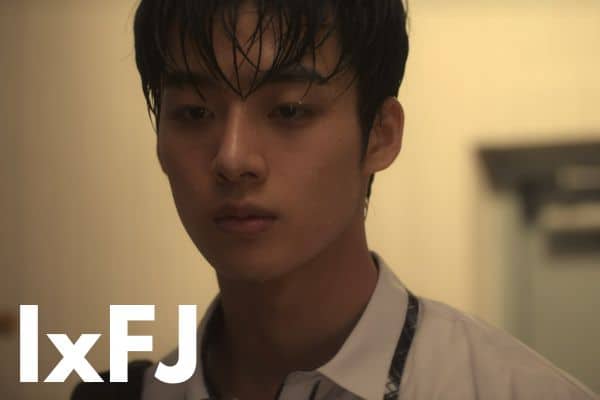
Hyeon-min is one of the few characters I’d leave as an IxFJ because I honestly don’t think we get enough information to confidently separate INFJ from ISFJ. We see the effects of his personality far more clearly than we see the way his mind naturally works, and those aren’t always the same thing.
What stands out most is how completely his mother’s expectations have become his own. He doesn’t stop to ask whether he wants to become a doctor. It doesn’t even seem like an available question. His entire life has been built around making her happy, earning her approval, and proving that all her sacrifices were worth it. Even when he’s physically falling apart, suffering nosebleeds, exhaustion, and eventually an overdose from the concentration pills she’s giving him, his instinct is to study harder to ease her pain.
Watching him was extremely difficult because he’s so disconnected from his own needs. He’s learned to tolerate almost anything if it means avoiding disappointment or conflict. Rather than asking for help, he absorbs the pressure until there’s almost nothing left of himself underneath it.
That’s part of why his story hit me so hard.
Abuse doesn’t always create someone who rebels. Sometimes it creates someone who becomes incredibly good at enduring. They lose track of where another person’s expectations end and their own desires begin. Hyeon-min has spent so long trying to become the son his mother wanted that he barely seems to know who he is without her voice directing him.
The ERPB doesn’t just rescue him from a dangerous situation. They give him permission to imagine a different future. For the first time, someone tells him that his life belongs to him, not to the ambitions someone else placed on his shoulders.
Choi Ji-seon — ISFJ
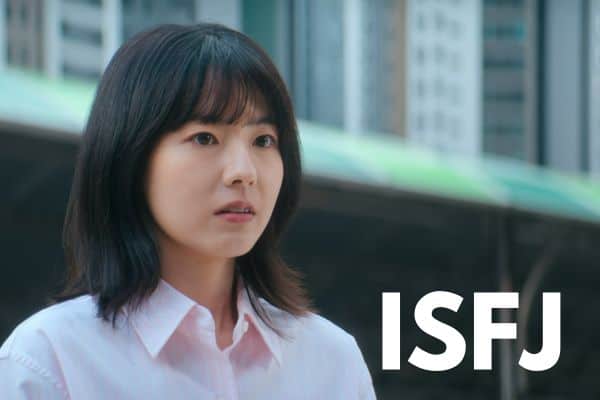
Watching Ji-seon’s story was probably one of the hardest parts of the series. As an INTJ I kept wanting to jump into the screen and say “Set some boundaries! Be more direct!” I wanted to give her some of my TJ bluntness, but that wasn’t going to work (sadly).
She’s a first-grade teacher who really loves her children. Like most ISFJs, you can see it in the little details. She wants her classroom to feel safe and welcoming, tries to create an environment where children can relax and learn, and carries herself with a gentle warmth that makes it obvious she chose teaching because she cares about kids.
The tragedy is that she assumes everyone else is operating from that same place.
Even after a student’s mother begins harassing and stalking her, Ji-seon keeps trying to smooth things over. She isn’t someone who naturally pushes back or demands that people respect her boundaries. Instead, she internalizes everything. She worries and second-guesses herself. She tries to endure just a little longer, hoping things will eventually settle down.
Unfortunately, people like her often become targets for people who sense they won’t fight back.
Let me clarify something: That doesn’t make her weak.
If anything, it shows how deeply she’s committed to keeping the peace. The problem is that peace only works when everyone involved wants it. When someone is determined to intimidate or control you, kindness by itself isn’t enough.
One thing that stood out to me is how reluctant Ji-seon is to ask for help. Even as the harassment grows worse and worse, she keeps carrying it alone. By the time she reaches her breaking point, she’s convinced there’s nowhere left to turn.
It’s heartbreaking because none of this happens overnight. It’s the result of countless moments where she minimizes her own pain, tells herself she can handle one more day, and quietly keeps going. I’ve seen this happen in all kinds of relationships: parent-child, boyfriend-girlfriend, boss-employee.
Part of what makes Ji-seon such a believable ISFJ is that she’s so relationship-focused and so dedicated to perfecting the details and make life harmonious for others. But when those strengths aren’t balanced with healthy boundaries, they can slowly become the very things that put someone in danger.
Hwang Gi-tae — ESTJ
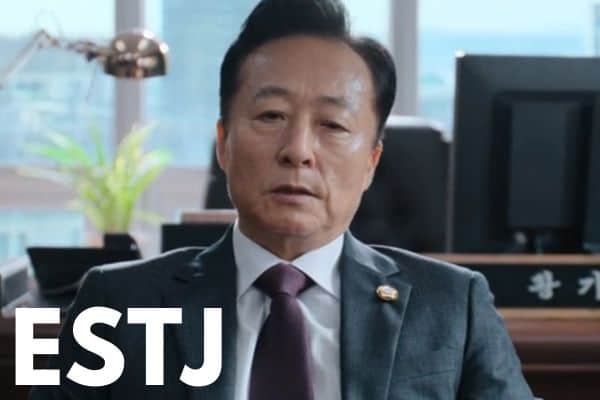
Hwang Gi-tae is decisive, organized, and naturally comfortable taking charge. As the leader of the opposition party, he’s constantly managing people, delegating responsibilities, and making practical decisions based on what will produce results in the current political climate. Rather than getting lost in theories or ideals, he’s focused on what works, what wins, and what people will respond to.
That’s one of the biggest reasons I lean toward ESTJ.
His attention stays grounded in immediate realities: public opinion, political leverage, and concrete outcomes. He isn’t trying to reinvent the system so much as position himself to lead it effectively. Even when he’s opposing the Educational Rights Protection Bureau, his thinking feels practical and tactical rather than driven by some sweeping vision for the future.
He’s confident, direct, and sometimes a little too certain he’s accounted for every variable. We see that when he underestimates what Cho Gyu-cheol is capable of, making decisions that seem sensible on paper but don’t fully anticipate how unpredictable people can be.
Overall, Gi-tae comes across as someone who trusts experience, structure, and decisive leadership. He believes problems are solved by competent people taking charge and making difficult decisions, and that practical, no-nonsense approach is what makes ESTJ the best fit for him.
Jung Seon-young — ISTJ
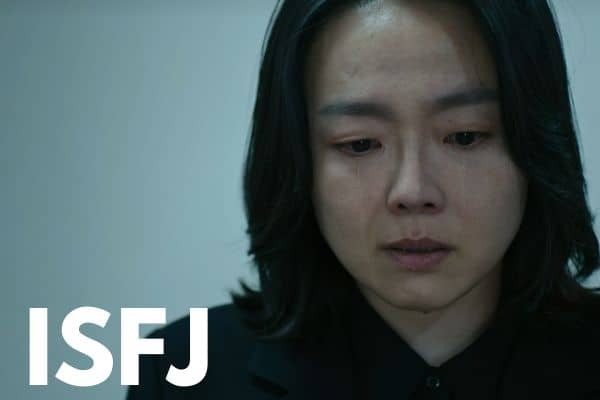
Jung Seon-young is exactly the kind of teacher you’d probably want when you’re trying to learn.
She’s organized, consistent, and believes that classrooms work best when there are clear expectations. Her students know the rules, she enforces them fairly, and she seems to find satisfaction in creating an environment where everyone can focus on learning.
The problem is that she’s suddenly thrown into a situation that no amount of preparation could have anticipated.
When Han Ye-ri begins manipulating videos, spreading false accusations online, and turning public opinion against her, Seon-young looks completely out of her depth. It’s not that she lacks courage. She simply keeps expecting the truth to speak for itself, and it doesn’t.
She continues trying to do the right thing while the rules around her seem to disappear. The systems she’s always trusted—the school administration, parents, even basic fairness—fail her one by one. Watching that happen is frustrating because you can almost see her searching for the familiar structure she’s always relied on, only to realize it no longer exists.
Cho In-beom — ESFP (Tentatively)
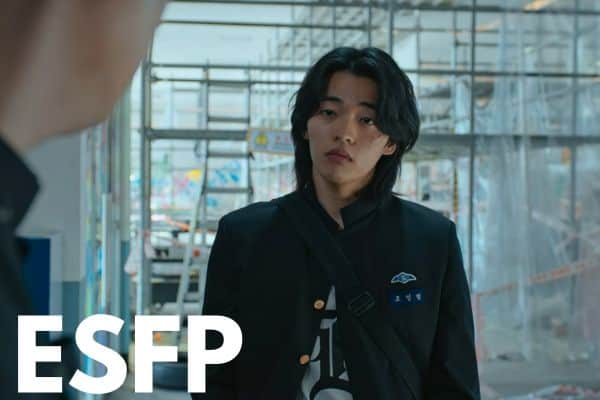
Cho In-beom is one of the harder characters to type simply because we don’t spend enough time with him. If I had to make a guess, though, I’d lean toward ESFP, even if I wouldn’t call it a certainty.
What stands out immediately is how reactive he is. He lives in the moment, acts first and worries about the consequences later, and seems to thrive on excitement, intimidation, and whatever is happening right in front of him. He isn’t carefully plotting years into the future. He’s responding to whatever opportunity presents itself.
He’s also surprisingly charismatic. For all his faults, people follow him. He knows how to project confidence, persuade others, and create an atmosphere where people are drawn into his way of doing things. That’s part of what makes him such an effective bully.
At the same time, I never got the sense that he was beyond redemption.
Unlike some of the show’s more disturbing villains, In-beom still feels like a teenager who’s adapted to a violent environment rather than someone who’s completely lost his humanity. There’s still emotion there and flashes of vulnerability underneath all the bravado.
That’s why I lean slightly toward ESFP over ESTP. His decisions seem driven more by impulse and emotion than detached calculation. We simply don’t see enough of him to be dogmatic about it, but based on what the series gives us, ESFP feels like the stronger fit.
Hyeon-min’s Mother — Unhealthy ESFJ or ENFJ
Hyeon-min’s mother was one of the most unsettling characters in the series because, in her own mind, she’s convinced she’s being a good parent.
Everything she does is wrapped in the language of sacrifice.
She tells herself she’s pushing her son because she loves him. She insists every other mother would do the same. She frames her abuse as dedication and her control as responsibility. But underneath all of that is someone who has become so consumed by status and achievement that she’s stopped seeing her son as a separate human being. He isn’t allowed to have dreams of his own because, in her mind, his life exists to fulfill hers.
She measures success almost entirely by external standards. Getting into medical school isn’t simply about Hyeon-min having a good future. It’s about what that success says about her as a mother. Every grade becomes a reflection of her worth. Every setback feels like a personal embarrassment.
As the pressure builds, her behavior becomes more and more disturbing. She controls nearly every aspect of Hyeon-min’s life, from how long he studies to how much he’s allowed to eat. She removes his bedroom door so she can monitor him, forces him to keep studying when he’s obviously ill, and even continues giving him illegal concentration pills after learning how dangerous they are.
The frightening part is that she rarely comes across as cruel in the traditional sense. She genuinely believes she’s doing what’s necessary.
By the end of her story, it becomes painfully clear that the real problem was never Hyeon-min’s grades.
It was her inability to separate her own identity from his future.
Final Thoughts
One of the things I appreciated most about Teach You a Lesson is that it doesn’t settle for simple heroes and villains. Even the characters who make terrible decisions usually have a history that helps explain how they got there. That doesn’t excuse their actions, but it does make them feel human.
That’s part of why the series is so interesting from a personality perspective. We get to see courageous people under enormous pressure, compassionate people pushed to their limits, and deeply unhealthy people whose strengths have become warped by fear, grief, or obsession. It’s a reminder that personality type isn’t a measure of goodness or badness. It simply describes the way someone naturally takes in information and makes decisions.
As always, these are my interpretations based on what we see in the show. Personality is complicated, fictional characters don’t always fit neatly into one category, and half the fun is comparing notes with other fans.
So now I’d love to hear from you.
Which types do you agree with? Which ones would you change? Let me know in the comments!