The Myers-Briggs® Personality Types of 425 Fictional Characters
Have you ever wondered which fictional characters have your Myers-Briggs® personality type? Today we’re going to explore the types of over four hundred fictional characters! This can give you an idea of how your personality type might show up in different situations or at different levels of maturity. Let’s get started!
Not sure what your personality type is? Take our new personality questionnaire here. Or you can take the official MBTI® here.

Table of contents
- The Personality Types of 325 Fictional Characters
- The ENFP “Visionary” – Imaginative/Inspiring/Innovative
- The ENTP “Trailblazer” – Revolutionary/Energetic/Analytical
- The INFP “Dreamer” – Idealistic/Imaginative/Individualistic
- The INTP “Prodigy” – Curious, Creative, Analytical
- The ENFJ “Mentor” – Empathetic/Visionary/Organized
- The ENTJ “Architect” – Strategic/Organized/Decisive
- The INFJ “Mystic” – Insightful/Empathic/Determined
- The INTJ “Strategist” – Independent/Rational/Insightful
- The ESFP “Champion” – Adventurous/Individualistic/Spontaneous
- The ESTP “Daredevil” – Impulsive/Clever/Energetic
- The ISFP “Virtuoso” – Gentle/Practical/Creative
- The ISTP “Vigilante” – Analytical/Realistic/Independent
- The ESFJ “Defender” – Practical/Personable/Thorough
- The ESTJ “Captain” – Decisive/Organized/Objective
- The ISFJ “Protector” – Nurturing/Grounded/Detail-Oriented
- The ISTJ “Detective” – Thorough/Meticulous/Responsible
- What Are Your Thoughts?
- Other Articles You Might Enjoy:
Estimated reading time: 41 minutes
The Personality Types of 325 Fictional Characters
The ENFP “Visionary” – Imaginative/Inspiring/Innovative

From left to right: Ariel (The Little Mermaid), Barley Lightfoot (Onward), Anne Shirley (Anne of Green Gables), Wizard Howl (Howl’s Moving Castle), Josephine “Jo” March (Little Women), John Keating (Dead Poets Society)
ENFPs are the ones who look at an ordinary day and see the beginning of a story. The ones who notice the glimmer of possibility everyone else walked past without seeing. The ones who, sometimes to everyone else’s exhaustion, say, “But what if…?”
Anne Shirley doesn’t just see a pond. She sees the Lake of Shining Waters. A tree isn’t a tree, it’s the White Way of Delight. Her imagination transforms reality and wakes people up to seeing things in totally new ways.
Jo March refuses to accept the small, prescribed life expected of her, declaring, “I’m so lonely!” because her spirit aches for something bigger: writing, adventure, meaning.
And John Keating stands on a desk and tells his students, “We must constantly look at things in a different way.” That’s the ENFP way right there: perspective as rebellion. Wonder as an act of courage.
ENFPs are fueled by possibility. Their minds jump quickly between ideas, connections, and meanings, often seeing patterns or parallels that other people miss entirely. To them, life is less like a straight road and more like a constellation, points of meaning waiting to be connected into something beautiful.
This is what makes them inspiring. They invite other people into a dream they can build in a fraction of a second. Barley Lightfoot charging into quests with unshakable enthusiasm. Ariel singing about worlds she hasn’t even seen yet, already believing in them with her whole heart.
But that same strength can be a stumbling block.
Details bore them. Logistics feel like gravity. The future is exciting; paperwork isn’t (who can argue with that?). ENFPs can sometimes trip over the practicalities of daily life because their energy is aimed at what could be, not what already is.
Freedom is oxygen to them. Try to box in an ENFP and you’ll watch the light in their eyes dim, the way a flame gutters when the air disappears.
At their core, ENFPs are guided by their personal values. They may explore endlessly, question everything, and change course a dozen times, but the conviction inside them stays strong. They know what feels true, and they follow it, even when it costs them.
Fictional ENFPs:
Bob Cratchit (A Christmas Carol), Benji Kaplan (A Real Pain), Anne Shirley (Anne of Green Gables), The Mad Hatter (Alice’s Adventures in Wonderland), Grandpa Joe (Charlie and the Chocolate Factory), Josephine “Jo” March (Little Women), Peter Pan, Pippi Longstocking, Wizard Howl (Howl’s Moving Castle), Ellie (Up), Clementine Kruczynski (Eternal Sunshine of the Spotless Mind), John Keating (Dead Poets Society), Barley Lightfoot (Onward), Patrick (The Perks of Being a Wallflower), Renly Baratheon (Game of Thrones), Ariel (The Little Mermaid), Elizabeth Bennett (Pride and Prejudice, the book, not the movie), Percival Blakeney (The Scarlet Pimpernel), Boo (Fleabag), Phoebe Buffay (FRIENDS), Janine/Ofwarren (A Handmaid’s Tale), Joy (Inside Out), Bing Bong (Inside Out), Jody Moreno (The Fall Guy), Jack Twist (Brokeback Mountain), Nemo (Finding Nemo), Aimee Gibbs (Sex Education), Olaf (Frozen), Jinx (Arcane), Guido Orefice (Life is Beautiful), Hong Ah-Jun (Revenge of Others).
The ENTP “Trailblazer” – Revolutionary/Energetic/Analytical

From left to right: Tony Stark “Iron Man,” Willy Wonka (Charlie and the Chocolate Factory), The Tenth Doctor (Doctor Who), Captain Jack Sparrow (Pirates of the Caribbean), Fleabag (Fleabag), Augustus Waters (The Fault in Our Stars).
ENTPs play with ideas, turn them over, ask questions nobody wanted asked, and occasionally break something fragile while trying to figure out how it works. There is a restless curiosity at the center of them, a kind of intellectual hunger that feels less like a hobby and more like an itch under the skin. Ideas are everywhere, and they cannot stop touching them.
Tony Stark pieces apart weapons systems in caves while cracking jokes because fear, to an ENTP, often feels like just another puzzle to be solved or mocked into submission. The Doctor ricochets through time and space with a grin that barely conceals the weight of centuries, talking faster than most people can think because slowing down would mean feeling everything all at once, and that is rarely a comfortable prospect. Willy Wonka smiles serenely while running what is essentially an edible fever dream of a factory, proving that logic and madness are sometimes just two rooms in the same house.
There is a particular kind of loneliness that comes with seeing too many angles at once. ENTPs are wired to question assumptions, including their own, which means certainty is always slightly out of reach, like trying to stand on a staircase that keeps unfolding into more stairs. They debate ideas the way some people breathe, sometimes for fun, sometimes because pulling apart an argument feels like the only honest way to understand it. Augustus Waters says, “I’m on a roller coaster that only goes up, my friend,” and there is something quintessentially ENTP in that mix of bravado, hope, and quiet defiance in the face of reality.
Routine drains an ENTP in a way that surprises many other personality types. Repetition can feel like being buried alive under paperwork and polite small talk, slowly suffocating while everyone else insists this is perfectly normal and probably character-building. ENTPs chase novelty and possibility because the alternative feels like watching their own minds go dim, and that is a prospect they find genuinely frightening.
What makes them compelling, and sometimes exhausting to be around, is the way they refuse to accept the world at face value. They poke at traditions, question rules, and take apart systems with the enthusiasm of someone taking apart a toaster just to see what sparks. Captain Jack Sparrow staggering across a dock with a sinking ship behind him somehow still feels like a metaphor here. Improvisation, charm, chaos, survival, and a strange kind of brilliance that only becomes obvious in hindsight.
At their best, ENTPs expand the world for everyone else. They challenge stale thinking, uncover hidden possibilities, and inject energy into stagnant systems. At their worst, they can scatter themselves across too many interests, chasing sparks while the fire never quite catches. Either way, they rarely live quietly. Their minds are too loud for that, and the universe, for better or worse, keeps giving them new things to question.
Fictional ENTPs:
Tony Stark (Iron Man), Helena (A Midsummer Night’s Dream), Augustus Waters (The Fault in Our Stars), Fred and George Weasley (Harry Potter), Henry Tinley (Northanger Abbey), The Cheshire Cat (Alice’s Adventures in Wonderland), Willy Wonka (Charlie and the Chocolate Factory), Lord Henry “Harry” Wotton (The Picture of Dorian Grey), Mei Hatsume (My Hero Academia), Dustin Henderson (Stranger Things), Murray Bauman (Stranger Things), The Tenth Doctor (Doctor Who), Jeff Winger (Community), Fleabag (Fleabag), Leo Valdez (Percy Jackson and the Olympians), Mercutio (Romeo and Juliet), Will Herondale (The Infernal Devices), Captain Jack Sparrow (Pirates of the Caribbean), Jack Skellington (The Nightmare Before Christmas), Ryuk (Death Note), Hayden Upchurch (Unwind book series), Chandler Bing (FRIENDS), Jimmy McGill “Saul” Goodman (Better Call Saul), Michael (The Good Place), Eames (Inception), Oliver (Call Me By Your Name), Samson (Carnivale), Jean Milburn (Sex Education), Phineas Flynn (Phineas and Ferb), Fink (The Wild Robot), Angus Tully (The Holdovers), Betelgeuse (Beetlejuice), Olivia Octavius (Into the Spider-Verse), Cosmo Brown (Singin’ in the Rain), Dr. Ian Malcolm (Jurassic Park), George Wilkins (Silo), Allison Becker (Silo), Dong Go Yoon (Daily Dose of Sunshine), Leland Townsend (Evil).
The INFP “Dreamer” – Idealistic/Imaginative/Individualistic

From left to right: Frodo Baggins (Lord of the Rings), Newt Scamander (Fantastic Beasts and Where to Find Them), The Little Prince, Jacob Portman (Miss Peregrine’s Home for Peculiar Children), Lucy Pevensie (The Chronicles of Narnia), Fern (Charlotte’s Web)
INFP characters often feel like they are walking through the same world as everyone else but hearing a different soundtrack, one that is quieter, more haunting, and sometimes so beautiful it almost hurts. They move through life guided less by status or efficiency and more by meaning, beauty, and the stubborn hope that people can be kinder than they usually are.
Frodo does not set out to be a hero in the usual sense. He is frightened, uncertain, and painfully aware of his limits, yet he keeps going because some part of him knows that preserving goodness matters more than comfort. Lucy Pevensie believes in Narnia long before anyone else does, holding onto what feels true even when she stands alone in it.
The Little Prince says, “What is essential is invisible to the eye,” and that line captures something central about the INFP mind. They are always looking for what cannot be measured or easily explained, the meaning beneath the surface, the profound emotional truths most people rush past.
There is a tenderness to this way of living, and tenderness is not always easy to carry. Many INFPs grow up feeling slightly out of step, improvising their own path because the one everyone else seems to follow feels hollow to them. Newt Scamander wandering through the world with a suitcase full of creatures nobody else understands feels like a fitting image for this inner life, rich, strange, and often hidden.
This gentleness should never be mistaken for weakness. INFPs can be quietly unyielding when a value is threatened. Fern standing in a barn, insisting that a small, overlooked life matters, shows the kind of moral resolve that doesn’t necessarily need to dominate to be powerful.
INFPs keep searching for meaning because they have glimpsed how empty life feels without it, and once you have seen that emptiness clearly, settling for a shallow life stops feeling like an option.
Fictional INFPs:
Belle (Beauty and the Beast), Newt Scamander (Fantastic Beasts and Where to Find Them), Scout Finch (To Kill a Mockingbird), Louis de Pointe du Lac (Interview with the Vampire), Nico de Angelo (Percy Jackson and the Olympians), The Little Prince (The Little Prince), Quasimodo (The Hunchback of Notre D’ame), Mike Ross (Suits), Frodo Baggins (Lord of the Rings), Romeo Montague (Romeo and Juliet), Coraline Jones (Coraline), Lucy Pevensie (The Chronicles of Narnia), Fern (Charlotte’s Web), Jacob Portman (Miss Peregrine’s Home for Peculiar Children), Marius Pontmercy (Les Miserables), Lady Dedlock (Bleak House), Tamaki Amajiki (My Hero Academia), Eric Alphonse (FullMetal Alchemist: Brotherhood), Nagato (Naruto), Ed Mackenzie (Big Little Lies), Sadness (Inside Out), Elio Perlman (Call Me By Your Name), Dr. Heinz Doofenshmirtz (Phineas & Ferb), Brightbill (Wild Robot), Lydia Deetz (Beetlejuice), Tim Laughlin (Fellow Travelers), Moni (Moana 2), Grandma Tala (Moana), Kim Seo-Wan (Daily Dose of Sunshine), Yoon Jon-Woo (Strangers from Hell), Will Byers (Stranger Things), Vanya/Victor Hargreeves (The Umbrella Academy), Hester Prynne (The Scarlet Letter).
Read This Next: 24 Signs That You’re an INFP, the “Dreamer” Personality Type
The INTP “Prodigy” – Curious, Creative, Analytical

From left to right: Alice (Alice’s Adventures in Wonderland), Victor Frankenstein, Heimerdinger (Arcane), Hiccup (How to Train Your Dragon), Nick Carraway (The Great Gatsby), Arthur Weasley (Harry Potter).
INTP characters often move through life with the uneasy feeling that everyone else received an instruction manual for reality and they somehow missed distribution day, so they spend their time reverse-engineering everything instead. Systems, people, traditions, physics, social rituals, small talk, all of it becomes material for analysis. The world is less a place to live in and more a puzzle to understand, and once you start seeing life that way it is hard to stop.
Alice falls down a rabbit hole and responds to surreal absurdity with curiosity, asking questions even when the answers make less sense than the questions. L Lawliet sits hunched over in a chair, eating sweets and unraveling criminal minds with a kind of eerie detachment, following threads of logic that other people never even notice. INTPs trust their reasoning even when it leads them somewhere strange, especially when it leads them somewhere strange.
INTPs are driven to understand how things work at their core. Surface explanations feel irritatingly incomplete, like being handed the last page of a novel and told that is all you need to know. They pull ideas apart, turn them over, rebuild them, question the assumptions holding them together, and then sometimes dismantle the whole thing again because a better framework just occurred to them in the middle of brushing their teeth.
There can be a kind of isolation that comes with this way of thinking. When your mind constantly runs ahead into theories and possibilities, ordinary conversations can feel slow and oddly unsatisfying, like trying to sprint through waist-deep water. Nick Carraway watching the glittering world of Gatsby from the sidelines captures that detached observer quality, present but slightly removed, studying everything with a thoughtful, almost anthropological curiosity.
INTPs are often more open-minded than people realize because they are less attached to being right than to understanding what is true. Changing their mind does not feel like defeat; it feels like progress. Hiccup studying dragons instead of blindly fighting them shows this willingness to question inherited assumptions and look deeper, even when everyone else insists the answer is obvious.
At their best, INTPs expand how people think. They ask the questions nobody else thinks to ask and follow the answers wherever they lead, even when the path is lonely, even when the conclusions are uncomfortable. The search for understanding matters more than applause, and curiosity, once it takes hold, rarely loosens its grip.
Fictional INTPs:
Margaret “Meg” Murry (A Wrinkle in Time), Arthur Weasley (Harry Potter), Smaug (The Hobbit), Pierre Bezukhov (War and Peace), Nick Carraway (The Great Gatsby), Alice (Alice’s Adventures in Wonderland), Hiccup (How to Train Your Dragon), Matilda (Matilda), Tsuyu Asui “Froppy” (My Hero Academia), Scott Clarke (Stranger Things), Bruce Banner “Hulk”, Neo (The Matrix), Elliot Alderson (Mr. Robot), Ranpo Edogawa (Bungou Stray Dogs), Winston Smith (1984), Victor Frankenstein, Sheldon Cooper (Young Sheldon), Tam Nguyen (Young Sheldon), Joseph Lawrence (The Handmaid’s Tale), Chidi Anagonye (The Good Place), Lily Igleheart (Sex Education), Professor Albin Eberhart von Franz (Nosferatu), Heimerdinger (Arcane), Henry Jones Sr. (Indiana Jones), Loto (Moana 2), Dylan (Severance), Lukas (Silo), Sarah Wilder (Palm Springs), Ariadne (Inception), Betee Latier (The Hunger Games).
The ENFJ “Mentor” – Empathetic/Visionary/Organized

From left to right: Morpheus (The Matrix), Donna Paulsen (Suits), Anna Karenina, Queenie Goldstein (Fantastic Beasts and Where to Find Them), Professor Charles Xavier “Professor X” (X-Men), Margaery Tyrell (Game of Thrones)
ENFJ characters are watching not just what people do but what they could become if someone believed in them long enough. They walk into a room and instinctively begin reading the emotional weather, noticing who feels invisible, who feels defensive, who is quietly falling apart behind a polite smile. It is less a skill they consciously practice and more a reflex they cannot quite turn off.
Morpheus looks at Neo and sees a savior long before Neo sees anything but confusion and fear. Professor Xavier gathers broken, frightened mutants and treats them as students instead of weapons, which is sometimes the first kindness they have ever been shown. There is something distinctly ENFJ about seeing potential in people who have forgotten they have any.
This way of living is powerful, but it can also be exhausting in ways that are difficult to explain. Caring about people at that depth means carrying pieces of their pain with you, sometimes long after the conversation ends, sometimes when you are lying awake at night replaying something you said and wondering if you should have said it differently, more gently, more wisely, more something you cannot quite name.
ENFJs are often drawn to guiding, teaching, or leading, yet their leadership rarely looks like barking orders or demanding loyalty. It looks more like Donna Paulsen quietly steering chaos into order while making everyone feel understood, or Margaery Tyrell reading an entire crowd in seconds and knowing exactly which words will move them. Influence, for an ENFJ, is almost always about connection.
ENFJs are also more perceptive than people realize. Many ENFJs sense motives, tensions, and hidden dynamics that others overlook, which can feel like both a gift and a burden. Seeing the emotional undercurrents of a situation means you rarely get to pretend everything is fine when it is not.
At their best, ENFJs remind people who they are capable of becoming. They lend courage, clarity, and sometimes hope to people who had desperately run out of all three. And while they may not always admit it, they are often searching for someone who sees them with that same depth in return, someone who notices the subtle weariness behind the encouragement and understands that even the strongest encourager sometimes needs to be held up for a while.
Fictional ENFJs:
Margaery Tyrell (Game of Thrones), High Sparrow (Game of Thrones), Donna Paulsen (Suits), Luke Castellan (Percy Jackson and the Olympians), Anna Karenina, Phoebe Caulfield (The Catcher in the Rye), Mufasa (The Lion King), Morpheus (The Matrix), Diana Prince “Wonder Woman (Wonder Woman), Queenie Goldstein (Fantastic Beasts and Where to Find Them), Charles Xavier “Professor X” (X-Men), Carlisle Cullen (Twilight), Tanjiro (Kimetsu no Yaiba “Demon Slayer”), Lots o’ Bear (Toy Story), Valentina “Val” Ortiz (Inside Out 2), Gail Meyer (The Fall Guy), Mia Dolan (La La Land), Frank (The Last of Us), Abbi Montgomery (Sex Education), Hans (Frozen), Longneck (The Wild Robot), Leto Atreides (Dune), Vander (Arcane), Skylar (Good Will Hunting), Mayor Ruth Jahns (Silo), Hwang Yeo-Hwan (Daily Dose of Sunshine), David Acosta (Evil), Peeta Mellark (The Hunger Games).
The ENTJ “Architect” – Strategic/Organized/Decisive
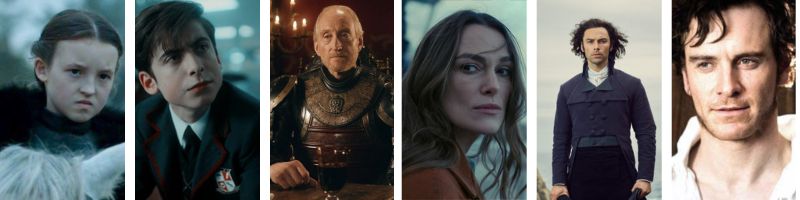
From left to right: Lyanna Mormont (Game of Thrones), Number Five (The Umbrella Academy), Tywin Lannister (Game of Thrones), Helen Webb (Black Doves), Ross Poldark (Poldark), Edward Rochester (Jane Eyre)
ENTJ characters go through life with a fierce, relentless sense of direction, like people who woke up one morning, looked around, and decided someone needed to take charge because clearly this situation was not going to fix itself. They see systems where others see chaos, trajectories where others see scattered events, and inefficiencies that itch at them until something is done about them.
Number Five calculates timelines and probabilities with the weary precision of someone who has seen too much to indulge in wishful thinking, solving impossible problems because the alternative is annihilation and that seems like poor planning. Lyanna Mormont stands in a hall full of grown men and calmly tells them what they should already know, which is that courage and clarity are not distributed by age or size and never have been.
ENTJs are drawn to long-range goals the way some people are drawn to music. The future is not abstract to them; it is tangible, almost visible, a vision waiting to be built. They think in terms of outcomes, consequences, leverage points, and strategy, often several steps ahead of the present moment, which can make ordinary conversation feel a little like discussing the weather while a storm system is forming on the horizon and nobody else seems concerned yet.
There is a certain frustration that can accompany this kind of vision. When you see what needs to be done clearly, hesitation in others can feel baffling, sometimes even painful. Tywin Lannister embodies the darker edge of this mindset, the ruthless willingness to sacrifice almost anything for the sake of legacy and control, a reminder that strength without compassion can harden into something cold and brittle.
Yet ENTJs are not only commanders. Ross Poldark charging headlong into impossible odds out of loyalty and conviction shows the other side of the type, the fierce sense of responsibility to protect and build something that lasts. Many ENTJs care deeply about the people and systems they lead, even if they express that care through action rather than words.
At their best, ENTJs bring order to chaos and momentum to stagnation. They make plans that others only talk about and carry them through when enthusiasm fades and obstacles multiply. And beneath the confidence, beneath the decisiveness, there is often a quiet, persistent question they rarely voice out loud, whether all this building and striving and pushing forward is actually enough, or whether there is some deeper meaning still waiting, just out of reach, beyond the next horizon they are already planning to conquer.
Fictional ENTJs:
Ross Poldark (Poldark), President Snow (The Hunger Games), Yennefer of Vengerberg (The Witcher), Tywin Lannister (Game of Thrones), Edward Rochester (Jane Eyre), All For One (My Hero Academia), Madara Uchiha (Naruto), Octavian (Percy Jackson and the Olympians), Katsuki Bakugo (My Hero Academia), Number Five (The Umbrella Academy), Francis J. Underwood (House of Cards), Harvey Specter (Suits), Mei Mei (Jujutsu Kaisen), Lyanna Mormont (Game of Thrones), Helen Webb (Black Doves), The Handler (The Umbrella Academy), Almut (We Live in Time), Paddler (The Wild Robot), Christian Grey (50 Shades of Grey), Hawkins “Hawk” Fuller (Fellow Travelers), Mel Medarda (Arcane), Saito (Inception), Kikoru Shinomiya (Daily Dose of Sunshine), Ryu Soo-yeol (Bad and Crazy), Ryle (It Ends With Us), Beth Dutton (Yellowstone), Renee Harris (Evil), Belinda Friers (Fleabag), Joe MacMillan (Halt and Catch Fire).
The INFJ “Mystic” – Insightful/Empathic/Determined

From left to right: Louise Banks (Arrival), Will Graham (Red Dragon), Kagaya Ubuyashiki (Kimetsu no Yaiba “Demon Slayer”), Sayuri (Memoirs of a Geisha), Norman (The Promised Neverland), Atticus Finch (To Kill a Mockingbird)
INFJs often feel like people who are listening to a conversation happening just beneath the surface of everything, a subtle current of meaning and motive and unspoken longing that most people either cannot hear or would rather ignore. They notice patterns in behavior, contradictions in words, the subtle shifts in tone that reveal what someone is afraid to say. It is not mind-reading, but sometimes it feels uncomfortably close.
Louise Banks sits in a silent room staring at symbols that bend time itself, patiently assembling meaning piece by piece, accepting that understanding rarely arrives in a neat, linear order. Will Graham steps into the minds of monsters and comes back shaken but determined, carrying knowledge most people would run from. INFJs have a willingness to look into the dark in order to understand it.
INFJs are drawn to meaning the way some people are drawn to light. Surface explanations feel suffocating, like breathing through cloth. They want to know why people do what they do, what shaped them, what they are searching for even when they do not know it themselves. Atticus Finch defending what is right in a town determined to misunderstand him captures this steady, principled courage, the kind that does not need applause and rarely receives it anyway.
This way of seeing can be isolating. When you sense underlying tensions and future consequences, it becomes difficult to fully relax into the present. There is always another layer, another implication, another realization unfolding in the back of the mind. INFJs often carry a strange mixture of hope and melancholy, believing deeply in human potential while being painfully aware of how often that potential is wasted.
They are often described as compassionate, which is true, but the word can feel too soft or incomplete. Their empathy is not simply kindness, it feels the emotional atmosphere around them, sometimes so strongly that they need solitude just to remember where other people end and they begin.
At their best, INFJs help people see themselves more clearly. They offer insight, perspective, and a kind of steady faith in growth that can change the course of a life. And yet, beneath the calm exterior, there is often a quiet fatigue, the weight of seeing too much, feeling too much, caring too much in a world that moves quickly and listens rarely. They keep going anyway, guided by the stubborn belief that understanding is worth the effort, even when it hurts.
Fictional INFJs:
Atticus Finch (To Kill A Mockingbird), Galadriel (The Lord of the Rings), Jane Eyre, Sayuri (Memoirs of a Geisha), Will Graham (Red Dragon), Holden Ford (Mindhunter), Remus Lupin (Harry Potter), Sydney Chambers (Grantchester), Sara Crewe (A Little Princess), Abbe Faria (The Count of Monte Cristo), Agnes Wickfield (David Copperfield), Tamayo (Kimetsu no Yaiba “Demon Slayer”), Kagaya Ubuyashiki (Kimetsu no Yaiba “Demon Slayer”), Itachi Uchiha (Naruto), Armin Arlert (Attack on Titan), R’As Al Ghul (Batman Series), Louise Banks (Arrival), Lorraine Warren (The Conjuring), Malcolm Crowe (The Sixth Sense), Izuku Midoriya (My Hero Academia), Cole Sear (The Sixth Sense), So Jung-Hwa (Strangers from Hell), Dr. Samira Mohan (The Pitt), Monica (Yellowstone), Grace Ling (Evil), The (Hot) Priest (Fleabag), Celeste Wright (Big Little Lies), Anxiety (Inside Out), Sam Winchester (Supernatural), Ellen Hunter (Nosferatu), Pi Patel (Life of Pi), Norman (The Promised Neverland), Bran Stark (Game of Thrones)..
Read This Next: 24 Signs That You’re an INFJ, the “Mystic” Personality Type
The INTJ “Strategist” – Independent/Rational/Insightful

From left to right: Kai Chisaki “Overhaul” (My Hero Academia), Petyr Baelish (Game of Thrones), Ender Wiggin (Ender’s Game), Fitzwilliam Darcy (Pride and Prejudice), Thranduil (The Hobbit), Lisbeth Salander (The Girl with the Dragon Tattoo)
INTJ characters have the intensity of people who are always thinking three moves ahead, even in conversations that only require one. They observe, calculate, and anticipate, assembling a strategy of how to achieve a vision and understanding how it could break at the same time. Life becomes a series of patterns to understand, refine, and sometimes dismantle entirely when they prove inefficient or false.
Ender Wiggin studies his enemies until he understands them better than they understand themselves, winning through strategy and foresight no one else could muster. Lisbeth Salander rescues victims of terrible crimes with a fierce, self-contained focus, trusting her own judgment long before she trusts anyone else’s.
INTJs are drawn to complexity. Simple answers feel suspicious, like a puzzle with half the pieces missing. They want to understand the deeper structure of things, the patterns beneath the noise, the forces shaping outcomes long before those outcomes become visible to everyone else. This often gives them an air of detachment, as though part of their mind is always standing outside the present moment, observing it from a distance.
This perspective can create distance in relationships as well. INTJs are rarely inclined to perform warmth for its own sake, and their directness can be mistaken for coldness. Fitzwilliam Darcy’s quiet reserve and awkward honesty capture this well, the struggle to express feeling in a language that feels imprecise and inadequate. Beneath the restraint, there is often far more loyalty and depth than people initially realize.
There is also a certain solitude that comes with seeing patterns others miss. When you anticipate consequences that nobody else seems concerned about, it can feel like watching a slow-moving avalanche while everyone around you is still admiring the view. INTJs often learn to trust their foresight even when it isolates them, because experience has taught them that their instincts are rarely baseless.
At their best, INTJs bring clarity and direction to a world that often drifts aimlessly. They solve problems others consider impossible. And beneath the calm, analytical exterior, there is often a quiet, relentless drive to understand life itself, to find the deeper patterns beneath the chaos, and to build something that will still stand long after they are gone.
Fictional INTJs:
Amy Dunne (Gone Girl), Artemis Fowl, Saruman (The Lord of the Rings), Thranduil (The Hobbit), Ender Wiggin (Ender’s Game), Dracula, Caleb Trask (East of Eden), Heinrich Faust (Faust), Elrond (Lord of the Rings), Fitzwilliam Darcy (Pride and Prejudice), George Warleggan (Poldark), Kai Chisaki “Overhaul” (My Hero Academia), Petyr Baelish (Game of Thrones), Bruce Wayne (Batman), Lisbeth Salander (The Girl with the Dragon Tattoo), Rowena Ravenclaw (Harry Potter), Captain Ahab (Moby Dick), Phileas Fogg (Around the World in 80 Days), Sir Reginald Hargreeves (The Umbrella Academy), Lelouch vi Britannia (Code Geass: Lelouch of the Rebellion), Seo Moon-Jo (Strangers From Hell), Tae So Yeon (Revenge of Others), Sister Andrea (Evil), Risa Ward (Unwind), Serena Joy Waterford (The Handmaid’s Tale), Dominick Cobb (Inception), Ben Cash (Captain Fantastic), Marcus Hooks (Fellow Travelers), Viktor (Arcane).
Read This Next: 24 Signs That You’re an INTJ, the “Strategist” Personality Type
The ESFP “Champion” – Adventurous/Individualistic/Spontaneous

From left to right: Ron Weasley (Harry Potter), Finnick Odair (The Hunger Games), Mina Ashido (My Hero Academia), Peregrine Took (The Lord of the Rings), Steve Harrington (Stranger Things), Daisy Buchanan (The Great Gatsby).
ESFP characters tend to live with a kind of immediacy that can feel almost shocking to people who spend most of their lives in their heads. They are here, fully here, in the sound of laughter, the heat of sunlight, the rush of a crowd, the thrill of something unpredictable unfolding right in front of them. Life, to an ESFP, is something to be tasted while it is still warm.
Pippin running headlong into trouble with a grin, Steve Harrington swinging a bat at monsters because someone has to protect the kids, Finnick Odair smiling with dazzling charm while carrying more grief than most people could survive, all of them show that strange ESFP combination of charisma, courage, and a refusal to let the world flatten them into something dull.
There is often more depth here than people expect. ESFPs get stereotyped as carefree, but living so close to experience means they also feel pain sharply. Joy hits hard, but so does loss, rejection, and fear. Ron Weasley cracking jokes in the middle of danger is funny until you realize humor is sometimes the only way he knows how to hold himself together.
ESFPs are observant in a way that is easy to overlook. They notice shifts in mood, subtle expressions, the small details of what is happening right now, and they react quickly, often instinctively, sometimes brilliantly. They trust their gut, and more often than not it carries them through.
At their best, ESFPs remind everyone else that life is happening in the present, not in the abstract future or the endlessly analyzed past. They bring energy, laughter, and a kind of stubborn aliveness that pulls people out of their heads and back into the world. And beneath the laughter, beneath the spontaneity, there is often a quiet determination to squeeze meaning and connection out of every fleeting moment before it disappears.
Fictional ESFPs:
Ron Weasley (Harry Potter), Alexei Vronsky (Anna Karenina), Kitty Fane (The Painted Veil), Daisy Buchanan (The Great Gatsby), Lydia Bennet (Pride and Prejudice), Peregrine Took (Lord of the Rings), Fred (A Christmas Carol), Felicity Merriman (American Girl Character), Eren Yeager (Attack on Titan), Joey Tribbiani (FRIENDS), Rachel Green (FRIENDS), Moira Strand (The Handmaid’s Tale), Jessie (Toy Story), Ellie Williams (The Last of Us), Eric Effiong (Sex Education), Paddy (Speak No Evil), Mary Lamb (The Holdovers), Frankie Hines (Fellow Travelers), Wilhelmina “Willie” Scott (Indiana Jones), Miguel Rivera (Coco), Amy March (Little Women), Percy Jackson (Percy Jackson and the Olympians), Francis Poldark (Poldark), Dorian Grey (The Picture of Dorian Gray), Mina Ashido (My Hero Academia), Present Mike (My Hero Academia), Yuga Aoyama (My Hero Academia), Steve Harrington (Stranger Things), Kallen Kozuki (Code Geass: Lelouch of the Rebellion), Finnick Odair (The Hunger Games), Theon Greyjoy (Game of Thrones), Oberyn Martell (Game of Thrones), Robert Baratheon (Game of Thrones).
The ESTP “Daredevil” – Impulsive/Clever/Energetic

From left to right: Gimli (Lord of the Rings), Aquaman, Jamie Lannister (Game of Thrones), Sawyer (Lost), Chee (Dark Winds), Rebecca Sharp (Vanity Fair)
ESTP characters often carry the restless energy of people who cannot sit still while life is happening somewhere else. Action is a necessity to them, it’s the air they breathe. They learn by doing, decide by engaging, and trust what they can see, touch, and test in the real world far more than anything theoretical.
Jaime Lannister charging into battles he has no guarantee of surviving, Gimli laughing in the middle of chaos, Aquaman moving through storms as if they are home terrain, there is a grounded fearlessness here, a willingness to meet reality head-on rather than stepping back to analyze it from a safe distance.
ESTPs tend to be sharp observers of the physical world. They notice leverage points, timing, opportunities, and weaknesses in real time, often reacting faster than people who need time to deliberate. To watch a healthy ESTP solve a problem in motion can feel a little like watching improvisational jazz, chaotic on the surface, but guided by an instinctive understanding of rhythm and tempo underneath.
There is also a side to ESTPs that people sometimes miss, because it is quieter and harder to spot. Many of them carry a complicated relationship with vulnerability. Strength and competence become armor, not because they lack feeling, but because showing uncertainty can feel like stepping onto thin ice in a world that rewards toughness.
At their best, ESTPs cut through hesitation and get things moving. They adapt quickly, think on their feet, and bring a grounded realism that balances out people who get lost in speculation. They remind everyone else that sometimes the only way to understand life is to step into it, to risk something, to act before certainty arrives, because certainty, as it turns out, rarely shows up on time anyway.
Fictional ESTPs:
Frank Abagnale, Jr. (Catch Me If You Can), Bigwig (Watership Down), Jamie Lannister (Game of Thrones), Catherine Earnshaw (Wuthering Heights), James Potter (Harry Potter), Khal Drogo (Game of Thrones), Lestat de Lioncourt (Interview with the Vampire), Gimli (Lord of the Rings), Rebecca Sharp (Vanity Fair), Frank Churchill (Emma), Caroline Penvenen (Poldark), Robinson Crusoe, Phinks (Hunter X Hunter), Inosuke Hashibira (Kimetsu no Yaiba “Demon Slayer”), Envy (Fullmetal Alchemist: Brotherhood), Connor Lassiter (Unwind), Chee (Dark Winds), Don Lockwood (Singin’ in the Rain), Mortimer Brewster (Arsenic and Old Lace), Owen Grady (Jurassic Park), “K” (Bad and Crazy), Amarantha (A Court of Thorns and Roses), Dr. Michael “Robby” Robinavitch (The Pitt), Billy Hargrove (Stranger Things), Merida (Brave), Bronn (Game of Thrones), Chuuya Nakahara (Bungou Stray Dogs), James “Sawyer” Ford (Lost), Arthur Curry “Aquaman” (Aquaman), Tanaka Ryunosuke (Haikyuu!!), Joanna Mason (The Hunger Games), Clarissa LaRue (Percy Jackson and the Olympians).
The ISFP “Virtuoso” – Gentle/Practical/Creative

From left to right: Claire Fraser (Outlander), Rose Dewitt Bukater (Titanic), Eleven (Stranger Things), Cinna (The Hunger Games), Jon Snow (Game of Thrones), Eowyn (Lord of the Rings).
ISFP characters have a quiet intensity that is easy to underestimate. They do not usually announce themselves or seek out attention and applause. They observe, they feel, they take everything in, and somewhere inside, values are forming with the slow certainty of stone settling into place. When those values are challenged, the softness people assumed was weakness turns out to be something far more unyielding.
Éowyn standing on a battlefield, defying every expectation placed on her, carries that silent defiance. Cinna designing costumes that are acts of rebellion disguised as beauty shows the ISFP gift for expression, the way art becomes a language for truths that cannot be spoken plainly. Eleven, saying very little but feeling everything, reminds you that depth does not need volume to exist.
ISFPs often experience life in a deeply sensory, immediate way, but there is also a rich inner world beneath that awareness, a private world of feeling and meaning that few people ever fully see. They may struggle to explain what they feel because their emotions are complex, layered, and sometimes too personal to put into words without diminishing them.
There is often a longing for freedom here, a need to live authentically, to choose one’s own path rather than inherit someone else’s. At their best, ISFPs bring beauty, compassion, and a fierce respect for individuality into the world. They remind others that meaning is not always loud or visible, that quiet courage exists, that a single act of integrity, done without witnesses or applause, can still matter enormously.
Fictional ISFPs:
Lady Sybil Crawley (Downton Abbey), Jacob Black (Twilight), Claire Fraser (Outlander), Princess Buttercup (The Princess Bride), Cinna (The Hunger Games), Arwen (The Lord of the Rings), Liesel Meminger (The Book Thief), Catherine Morland (Northanger Abbey), Eowyn (The Lord of the Rings), Demelza Poldark (Poldark), Fantine (Les Miserables), Chizome Akaguro “Stain” (My Hero Academia), Jane “Eleven” (Stranger Things), Jonathan Byers (Stranger Things), Jon Snow (Game of Thrones), Rose Dewitt Bukater (Titanic), Isabella “Bella” Swan (Twilight), Yuichiro Hyakuya (Seraph of the End), Baby (Baby Driver), Edmond Dantes (The Count of Monte Cristo), Bonnie Carlson (Big Little Lies), June Osborne (The Handmaid’s Tale), Ennui (Inside Out), Riley (Inside Out), Sebastian “Seb” Wilder (La La Land), Desmond Doss (Hacksaw Ridge), Joel Miller (The Last of Us), Ben Hawkins (Carnivale), Adam Groff (Sex Education), Ciara (Speak No Evil), Jessie (Civil War).
The ISTP “Vigilante” – Analytical/Realistic/Independent

From left to right: Arya Stark (Game of Thrones), Jason Bourne (The Bourne Identity), Shoto Aizawa “Eraserhead” (My Hero Academia), Levi Ackerman (Attack on Titan), Jessica Jones, Jace Herondale (Shadowhunters)
ISTP characters often give the impression of people who have already sized up the room, the exits, the weak points, and the probable outcomes before anyone else has finished sitting down. What works matters. What does not work gets discarded, sometimes without ceremony.
Arya Stark learning to survive by adapting, observing, and striking with precision captures this practical resilience. Jason Bourne navigating danger through instinct and skill shows the ISTP relationship with action, which is less about thrill and more about competence. The world makes sense when your hands are busy and your mind has something tangible to solve.
ISTPs tend to trust what they can verify. Speculation without evidence feels irritating, like trying to build a bridge out of fog. They prefer to test, to experiment, to figure things out firsthand, and this can make them extraordinarily capable in crises, when everyone else is still processing what just happened and the ISTP is already moving.
There is often a strong need for independence here. Too many rules, too much oversight, too many people demanding explanations for every decision, and the ISTP begins to feel cornered, restless, like they’re slowly suffocating. Freedom is not a luxury to them. It is the condition that allows them to function at their best.
Emotionally, ISTPs can seem distant, but distance is not the same as indifference. Many of them feel more than they show, choosing to express care through action rather than words. Levi Ackerman risking everything for his comrades says more through a single decisive act than pages of dialogue ever could.
At their best, ISTPs bring clarity and effectiveness into chaotic situations. They cut through noise, solve real problems, and remain steady when others panic. They remind people that competence is a form of kindness, that sometimes the most compassionate thing you can do is simply handle the problem in front of you and make the world, in one small but concrete way, work a little better.
Fictional ISTPs:
Jason Bourne (The Bourne Identity), John Wick (John Wick), Bard (The Hobbit), Jace Herondale (Shadowhunters), Alex Fierro (Magnus Chase and the Gods of Asgard), Jean-Baptiste Grenouille (Perfume), Shoto Aizawa “Eraserhead” (My Hero Academia), Levi Ackerman (Attack on Titan), Arya Stark (Game of Thrones), Natasha Romanoff “Black Widow” (The Avengers), Saitama (One Punch Man), Clint Barton “Hawkeye” (The Avengers), Max Mayfield (Stranger Things), Geralt of Rivera (The Witcher), Sandor “The Hound” Clegane (Game of Thrones), Daryl Dixon (The Walking Dead), Shinya Kogami (Psycho-Pass), Jessica Jones, Diego Hargreeves (The Umbrella Academy), Mare Sheehan (Mare of Easttown).
The ESFJ “Defender” – Practical/Personable/Thorough

From left to right: Sakura Haruno (Naruto: Shippenden), Anna Smith (Downton Abbey), Molly Weasley (Harry Potter), Bilbo Baggins (The Lord of the Rings), Sansa Stark (Game of Thrones), Effie Trinket (The Hunger Games)
ESFJ characters often carry the subtle, invisible labor of holding communities together, the kind of work that rarely gets applause because when it is done well, everything simply feels normal. Meals appear. Traditions continue. People feel welcomed, included, remembered. The machinery of daily life hums along, and few people stop to think about who is keeping it running.
Molly Weasley knitting sweaters and feeding an army of teenagers feels warm and cozy until you realize how much strength it takes to keep loving people in a world that constantly gives you reasons to stop. Anna Smith preserving the atmosphere of Downton Abbey with steady grace, quietly helping others through heartbreaks and scandals, shows the ESFJ gift for care that is both practical and emotionally intelligent.
ESFJs are deeply attuned to the emotional atmosphere around them. They notice who feels left out, who seems tired, who has stopped talking as much as they used to. This awareness is a strength, but it can also become a burden, because once you notice those things, it becomes very hard to ignore them.
There is often a complicated relationship with appreciation. ESFJs give freely, sometimes so freely that people begin to assume their effort is effortless. Over time this can create a quiet, aching resentment they may not even admit to themselves, the feeling of being needed but not fully seen.
Sansa Stark learning to navigate a dangerous world through patience, social intelligence, and endurance shows another side of the type, a resilience that grows slowly and steadily rather than explosively. ESFJs are often stronger than they appear, capable of enduring far more than people expect while still choosing kindness.
At their best, ESFJs create warmth in places that would otherwise feel cold and impersonal. They remind people to celebrate, to gather, to care for one another in tangible ways. And beneath all the giving, there is often a quiet hope that someone, somewhere, is paying attention closely enough to care for them in return.
Fictional ESFJs:
Effie Trinkett (The Hunger Games), Margaret Hale (North and South), Bilbo Baggins (The Hobbit), Anna Smith (Downton Abbey), Wendy Darling (Peter Pan), Mrs. Bennett (Pride and Prejudice), Elizabeth Poldark (Poldark), Lucie Manette (A Tale of Two Cities), Sansa Stark (Game of Thrones), Sakura Haruno (Naruto: Shippenden), Molly Weasley (Harry Potter), Cedric Diggory (Harry Potter), Bob Newby (Stranger Things), Allison Hargreeves (The Umbrella Academy), Maka Albarn (Soul Eater).
The ESTJ “Captain” – Decisive/Organized/Objective
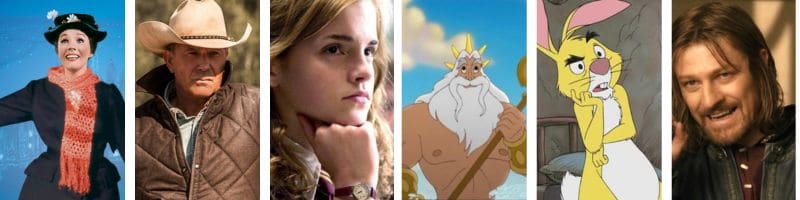
From left to right: Mary Poppins, John Dutton (Yellowstone), Hermione Granger, King Triton (The Little Mermaid), Rabbit (Winnie the Pooh), Boromir (Lord of the Rings)
ESTJs have a sense of responsibility that feels like carrying a heavy pack that nobody else seems to notice but that they are unwilling to put down. Someone has to take charge. Someone has to make sure the job gets done correctly. Someone has to step forward when everyone else hesitates, and more often than not, that someone turns out to be them.
Hermione Granger studying late into the night and insisting on doing things properly is not driven by perfectionism alone. There is a deep conviction that competence matters, that knowledge matters, that effort matters, and that chaos grows when people stop paying attention.
ESTJs are often misunderstood as rigid or overly serious, yet much of their drive comes from a desire to create stability and fairness. Rules, systems, and structure are not ends in themselves but tools that prevent things from falling apart. When they see inefficiency or carelessness, it can feel less like an annoyance and more like watching a crack spread across a foundation.
There is also a vulnerability here that rarely gets discussed. When you are the one who organizes, decides, and leads, it becomes difficult to admit uncertainty. People look to you for answers, and after a while you start to feel as though you are not allowed to have doubts, even when you do.
Boromir’s struggle captures this tension, the fierce desire to protect his people colliding with the weight of expectations and the fear of failure. Strength, in this context, is not clean or simple. It is complicated, human, and sometimes terribly flawed.
At their best, ESTJs bring order, clarity, and follow-through to a world full of abandoned plans and half-finished ideas. They turn intentions into results. They make things work. And even if they rarely say it out loud, there is often a quiet longing beneath their competence, the wish that someone else would take the reins for a while so they could finally rest.
Fictional ESTJs:
Hermione Granger (Harry Potter), Minerva McGonagall (Harry Potter), Nancy Wheeler (Stranger Things), Peter Pevensie (The Chronicles of Narnia), Rabbit (Winnie the Pooh), Violet Crawley (Downton Abbey), Cersei Lannister (Game of Thrones), Boromir (Lord of the Rings), Leia Organa (Star Wars), Endeavor (My Hero Academia), General Li Shang (Mulan), Jack Shephard (Lost), Yubaba (Spirited Away), Tatsumaki (One Punch Man), Cornelia li Brittania (Code Geass: Lelouch of the Rebellion), Mary Poppins, Dolores Umbridge (Harry Potter), King Triton (The Little Mermaid), Shirley “Shiri” Crain (The Haunting of Hill House), John Dutton (Yellowstone), Kristen Bouchard (Evil).
The ISFJ “Protector” – Nurturing/Grounded/Detail-Oriented

From left to right: Steve Rogers (Captain America), Jennifer Honey (Matilda), Beth March (Little Women), Charlie Buckets (Charlie and the Chocolate Factory), Sophie Hatter (Howl’s Moving Castle), Clay Jensen (13 Reasons Why)
ISFJs have a quiet steadiness that does not draw much attention at first. They are the ones who notice what needs doing and do it, who remember what others forget, who keep showing up long after the excitement has faded and the work has become ordinary. There is a kind of strength in that persistence that rarely gets celebrated because it looks so simple from the outside.
Steve Rogers throwing himself onto a grenade before he has any superpowers tells you almost everything you need to know about this type. The instinct to protect comes first, sometimes before logic, sometimes before self-preservation. Beth March playing the piano softly in a dim room, trying to bring comfort even while she is quietly fading, shows the gentler side of that same instinct, the desire to ease suffering in whatever way is possible.
ISFJs tend to hold onto memories with intense, personal conviction. Small moments matter to them. The way someone laughed, the way a room felt, the promises people made and whether they kept them. These details form a kind of inner archive that shapes how they understand the present, and sometimes it makes it hard to let go of what once was.
There is often a private exhaustion here. Caring for others is meaningful, but it can also become a role that feels impossible to step out of. People grow accustomed to the reliability, the kindness, the willingness to help, and after a while it becomes expected. The ISFJ keeps giving, sometimes without realizing how empty their own reserves have become.
Sophie Hatter quietly enduring, adapting, and continuing to care for others even while she believes herself to be ordinary captures something essential. ISFJs rarely see their own strength clearly. They assume anyone would do the same, anyone would keep going, anyone would stay loyal. Experience suggests otherwise.
At their best, ISFJs create stability in a world that often feels uncertain and fragile. They protect what matters, preserve what is good, and offer a kind of quiet, dependable love that does not fade when circumstances become difficult. And beneath that steadiness, there is often a simple, unspoken hope that someone will notice how much they carry, and gently remind them that they do not have to carry it alone.
Fictional ISFJs:
Clay Jensen (13 Reasons Why), Amy Dorritt (Little Dorritt), Steve Rogers “Captain America” (Captain America), Dr. James Watson (Sherlock), Arthur Dent (The Hitchhiker’s Guide to the Galaxy), Miss Havisham (Great Expectations), Narcissa Malfoy (Harry Potter), Matthew Cuthbert (Anne of Green Gables), Meg March (Little Women), Anne Elliot (Persuasion), Samwise Gamgee (The Lord of the Rings), Edward Ferrars (Sense & Sensibility), Kirsten Larson (The American Girls Series), Amelia Sedley (Vanity Fair), Charlie Buckets (Charlie and the Chocolate Factory), Jonathan Harker (Dracula), Elizabeth “Beth” March (Little Women), Miss Jennifer Honey (Matilda), Grover Underwood (Percy Jackson and the Olympians), Verity Poldark (Poldark), Cosette (Les Miserables), Sophie Hatter (Howl’s Moving Castle), Mayuri Shiina (SteinsGate).
The ISTJ “Detective” – Thorough/Meticulous/Responsible
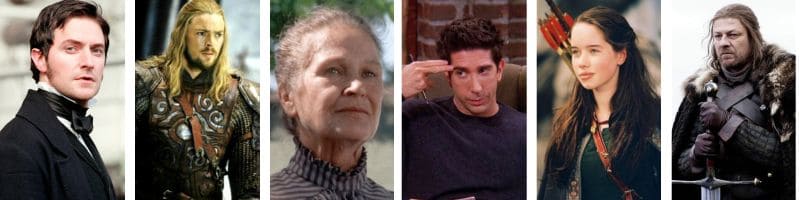
From left to right: John Thornton (North and South), Eomer (The Lord of the Rings), Marilla Cuthbert (Anne of Green Gables), Ross Geller (FRIENDS), Susan Pevensie (The Chronicles of Narnia), Eddard Stark (Game of Thrones)
ISTJ characters go through life with a strong sense of duty. Responsibilities exist, therefore they must be fulfilled. Promises are made, therefore they must be kept. There is a certainty in this worldview that can seem almost severe to people who live more loosely, but it is also what makes others trust them when things begin to fall apart.
Eddard Stark choosing honor even when it costs him everything is a painful but accurate portrait of this mindset. Personal morals and rules are not convenient tools to be used when they help and discarded when they hurt. They are anchors. Without them, nothing feels stable.
ISTJs tend to see the world in concrete terms. Facts matter. Evidence matters. Procedures exist for a reason, usually because someone learned the hard way what happens when they are ignored. Marilla Cuthbert running her household with firm expectations and quiet care shows this practicality, the understanding that discipline and kindness are not opposites but partners.
There can be a frustration in this way of living. When you take responsibility seriously, you often find yourself carrying burdens other people set down without noticing. You become the reliable one, the one who stays, the one who finishes what others abandon. Over time that role can feel isolating, overwhelming, and suffocating.
ISTJs are often far more compassionate than they appear, but their compassion is expressed through action rather than verbal compliments. Protecting people, standing firm, doing what must be done even when it is unpleasant, these are their languages of care.
At their best, ISTJs provide continuity and integrity in a world that often forgets both. They hold the line when others waver, remember what others overlook, and keep moving forward one deliberate step at a time. And somewhere beneath the composure, there is often a quiet wish that life would slow down long enough for them to set the burdens aside, just for a little while, and rest without feeling that something important is being left undone.
Fictional ISTJs:
Bill Tench (Mindhunter), John Bates (Downton Abbey), Susan Pevensie (The Chronicles of Narnia), Bathsheba Everdene (Far from the Madding Crowd), John Thornton (North and South), Marilla Cuthbert (Anne of Green Gables), Eddard Stark (Game of Thrones), Eomer (The Lord of the Rings), Theoden (The Lord of the Rings), Alexei Karenin (Anna Karenina), Inspector Javert (Les Miserables), Dr. Alan Grant (Jurassic Park), Thorin Oakenshield (The Hobbit), Ebenezer Scrooge (A Christmas Carol), George Knightley (Emma), Eudora Patch (The Umbrella Academy), Luther Hargreeves (The Umbrella Academy), Raymond Holt (Brooklyn 99), Ross Geller (FRIENDS), Peter Sutherland (The Night Agent).
What Are Your Thoughts?
Do you have any other fictional characters you’d recommend? Do you agree with your characters? Let us know in the comments!
Find out more about your personality type in our eBooks, Discovering You: Unlocking the Power of Personality Type, The INFJ – Understanding the Mystic, and The INFP – Understanding the Dreamer. You can also connect with me via Facebook, Instagram, or Twitter!
Other Articles You Might Enjoy:

The Myers-Briggs® Personality Types of the IT: Welcome to Derry Characters

The Myers-Briggs® Personality Types of the How to Train Your Dragon Characters

The Myers-Briggs® Personality Types of the Arcane Characters

The Myers-Briggs® Personality Types of the FRIENDS Characters

The Myers-Briggs ® Personality types of the Severance Characters

The Myers-Briggs® Personality Types of the Winnie the Pooh Characters







My only disagreement is that I would type Hiccup as an INFP, as the description for the INFP is like a description for Hiccup:
Creative and contemplative, he looks for meaning over material success. He is driven by his imagination and his hope for a better, kinder world. He values peace quite highly and would rather talk than go in guns blazing. More than anything, he is loyal to his personal values. He gains his perspective of right and wrong from an independent standpoint, rather than looking to society’s rules and agendas (for instance, with the obvious dragon issue). Naturally curious, he is adept at thinking outside-the-box and seeing many perspectives. His lifestyle is flexible, adaptable, and tolerant unless a value is threatened.
Eowyn, however, was perfectly typed. All I need to know that is when Aragorn asks her what she fears and her answer is “a cage.”
Great post!
Hello, thanks for the cool article! I’m curious about the MBTi type of Inspector Jules Maigret, from the prolific author Georges Simenon. Ive read almost all of these books in order, and i love this character so much. He is certainly an intuitive type. I realise these books are probably pretty obscure to most people but asking all the same! Thanks in advance, and thanks for your articles in general 🙂
I just love your blog!
Thank you so much!!
Captain Jean Luc Picard of Star Trek is a classic INTJ and one of my favorite characters of all time 😀
. No and no for Bourne … ISTP is really the trap. Bourne chose an ability improvement program to serve his country. He embarked on a training for a complete de-humanization. He was agreed to lose all his autonomy, all his personnal thinking. To become a machine. He was very cold and very obedient until his past resurfaces despite the programming (Strong Si?) All his abilities are absolutely artificial and do not come from any personal training. ISTPs hate not understanding the process of something (Ti). They want to know how they got an result more than any other (S) type. ISTP is literally impossible for Bourne: ISTJ.
. Yes for Tyler. He is rather ESTP, even if ENTPs recognize themselves in him. His philosophy is based on physical combat, essentially.
For Louise Banks. Well observed. INFJ makes sense indeed.
Fun post. I mostly agree with the ENTP choices. The one I disagree with is the 10th Doctor. I would think the 11th Doctor is more fitting. The 10th doctor always seemed ENFP to me. Either way, both are Ne dominants, but I found 10th to have a more Fi manner to his dress and his reserved nature. He had moments of self righteousness that drive him to break rules. Whereas the 11th wore clothes more acceptable and any unpopular additions (bow ties, fez, cowboy hat) he would try to influence popular thought by saying they were cool (Fe). 11 also would go on logic rants as he analyzed situations always excited by the revelations that came from them.
I think that Harry Potter is more of an ISTP i the books. In the movies he is different, okay (and T and F are very close functions)
Hmm… This is very… Hmm… Well, I won’t bother being polite. This is somewhat inaccurate.
First of all, I would like to address the issue that Harry Potter and Susan Pevensie are very different, and have different personality types from each other.
Susan is probably an ESTJ. Harry’s an ISFP, and doesn’t fit the ISTJ type. He is Feeling and Prospecting, not Thinking and Judging.
ISTJs respect the rules, and hate it when people break them. This is entirely different from Harry, who often breaks the rules throughout the series.
Secondly, I wish to address the mistake you made with Mr Darcy’s personality type. He is an ISTJ, not an INTJ. I can’t stand it when people mix the two up.
~Narcissa Snape
I think Lily in Modern Family is an INTP.
Severus Snape was missed in the INTJ list.
I absolutely loved this post! It was fascinating to see how various fictional characters align with the different Myers-Briggs personality types. It really added depth to my understanding of both the characters and the personality framework itself. I would love to see more profiles or perhaps even some lesser-known characters analyzed in future posts!
I appreciate the clarity that Elizabeth Bennet is an ENFP in the books, because I think the movie did her an injustice by changing her character a bit. The 2005 movie is beautiful, but I can’t get over that. Jennifer Ehle brought a lot of that energy into the 1995 series, though.