
Why Enneagram Twos Think They Have to Earn Love (And How to Stop)
If you’re a Two, you probably know how to make yourself indispensable.
You’re the one who remembers everyone’s birthday and their preferred cake flavor. The one who shows up with soup when someone so much as sneezes in your vicinity. You’re a master of love-through-action, the emotional EMT who knows how to stabilize a heart before it even realizes it’s been broken.
And yet… somewhere deep in your gut, there’s a lingering, corrosive doubt:
Would anyone love me if I stopped being useful?
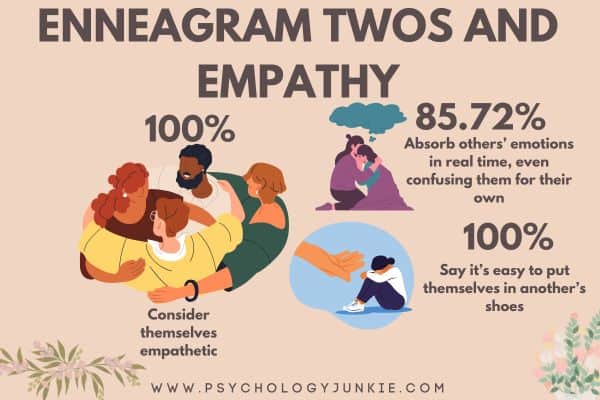
Enneagram Twos, often called “The Helpers,” are wired for connection. Your core motivation is to feel loved and wanted, and your strategy to get there is through being helpful, needed, and generous, sometimes to the point of self-erasure. You fear being unworthy of love unless you’re actively offering something, fixing something, supporting someone else.
You shine when you’re giving. Your warmth, attunement, and empathy make you the human equivalent of a weighted blanket and a cup of chamomile tea. But under all that comfort you provide, there’s often a quiet panic: “If I stop being everything for everyone, who am I? And who would stick around?”
This article is for that question.
For anyone who is new to the Enneagram, it is a personality type system that consists of nine different types. Each type has its own unique set of characteristics, fears, desires, strengths, and weaknesses. You can find out more about the Enneagram in my introductory article on the subject. You can also find out what your Enneagram type is by taking our questionnaire.
Where It Begins: The Childhood Blueprint
Picture a little girl — let’s call her Lily. She’s six years old, dragging a stepstool to the kitchen so she can stir the pot while her mother lies exhausted on the couch. Her father’s angry a lot. Her older brother has a learning disability that consumes everyone’s attention. Nobody told her she had to help. But no one stopped her either. And when she did, her mother smiled. When she didn’t, the air got heavier.
Over time, Lily’s nervous system starts making associations:
- Helping = praise
- Not helping = distance
- Being useful = being lovable
- Having needs = being a burden
So she stops crying when she’s hurt. Starts anticipating other people’s emotions and strategizing ways to manage them. Learns to preempt discomfort with care. She’s seven going on therapist.
This is a story from a client of mine who gave me permission to share it.
It’s not always this dramatic. Some Twos grow up in warm homes. But even in loving families, if a child senses they get more connection when they’re making things easier for others, that lesson gets stored somewhere deep in the bones.
By adulthood, that little internal contract becomes subconscious law: “I am only as lovable as I am helpful.”
Client Confessions: Stories from the Frontlines
Case #1: The Disappearing Woman
One client — we’ll call her Maria — was 43 when she told me, “I don’t think anyone actually knows me.”
Maria was a school counselor. She knew how to calm an anxious parent, mediate a fight between eighth graders, or support a grieving colleague. But when her own mother died, she found herself crouched on the floor of her kitchen, holding in tears because she didn’t want to “burden” anyone.
“I realized,” she said, “I’ve spent my whole life being the person people lean on — and I don’t know if anyone would catch me if I fell.”
Case #2: The Hero Complex That Burned Her Out
Another client, Jess, was a single mom and nonprofit director. She said yes to everything: fundraisers, bake sales, emergency friend rides to the airport at 4 a.m. “It feels amazing to be needed,” she admitted. “But also… I’m really tired.”
Her health was in shambles. She hadn’t slept properly in weeks. And when she finally took a weekend off, she sat in her quiet apartment and had a panic attack. She told me, “I feel invisible when nobody needs me. I feel like I don’t exist.”
Case #3: The Relationship That Turned Transactional
Then there was Trevor. He kept dating people who treated him like a free emotional concierge. He’d cook, clean, affirm, support, but when he asked for the same — crickets. One day he said, “I don’t know how to ask for love without offering a service first.”
I asked him to go one week without doing anything “helpful” in his relationship. Just to receive.
He lasted two days. Then showed up for a friend who was going through a breakup.
How to Heal: Reclaiming Your Worth Outside of Usefulness

I’m not going to tell you to start being selfish and demanding. I just want you to practice making yourself whole. You’re allowed to be kind. You’re allowed to be giving. But not at the cost of your own presence, truth, and humanity.
Here’s how to start reclaiming the part of you that exists even when you’re not holding up the sky:
1. Name the Fear Without Running From It
Sit with this question:
“What do I believe will happen if I stop being helpful?”
Write your answer. Don’t edit. Be brutal. Be honest. Let the scared part speak.
It might say things like:
- “People will leave.”
- “I’ll be forgotten.”
- “I’ll feel empty.”
- “No one will choose me.”
Now look at that part. Thank it. It’s trying to protect you. But remind it: You are not six years old anymore. You are not only as valuable as your service output.
2. Experiment with Being “Unhelpful”
Yes, this sounds horrifying. That’s the point. Try it in small doses.
- Let someone else clean up after dinner.
- Say “I’m tired” instead of “It’s fine, I’ve got it.”
- Wait and see who checks in on you — without you initiating.
Let people meet you in your mess. You’ll quickly find out who actually sees you, and who just likes your free therapy.
3. Track Your Energy, Not Just Others’
Twos are amazing at reading the emotional weather of a room. But start reading your own forecast.
Ask yourself:
- What do I want right now?
- Am I doing this out of love — or fear of rejection?
- How do I feel after I help someone?
If you’re feeling depleted, resentful, or invisible, that’s your cue: You may not be trying to help out of love, but out of a misplaced sense of duty.
4. Receive Without Apology
Start practicing the art of receiving.
Let someone compliment you. Don’t deflect it.
Let someone offer help. Don’t say, “Are you sure?” Just say, “Thank you.”
Let yourself rest. Without earning it first.
It’ll feel weird. Like wearing someone else’s shoes. But keep walking in them.
5. Build Identity Outside of Being Needed
You are not just a helper. You are funny, creative, complex. Maybe you like weird sci-fi books or growing succulents or playing air guitar to Bon Jovi in the shower. Explore the parts of you that have nothing to do with caretaking.
Ask:
- What do I enjoy when nobody else is around?
- Who am I when I’m not being useful?
That’s the core of real self-worth: knowing you matter, even when you’re not “on duty.”
6. Reparent the Child Who Thought Love Had to Be Earned
You may not have gotten the unconditional love you needed. But you can start offering it now — to yourself.
Speak to yourself the way you wish a parent or caregiver had. When you rest, when you cry, when you mess up.
Final Words: You Are Not a Utility
Dear Two, you are not a vending machine for affirmation. You are not the be-all and end-all for other people’s crises.
You are a person.
A whole person.
With needs. Desires. Imperfections. Longings. Beauty.
Even if you never bring another casserole to a grieving neighbor,
Even if you say no to the next twelve volunteer requests,
Even if you just… rest,
You are still worthy of love.
Not because you’re useful.
But because you’re you.