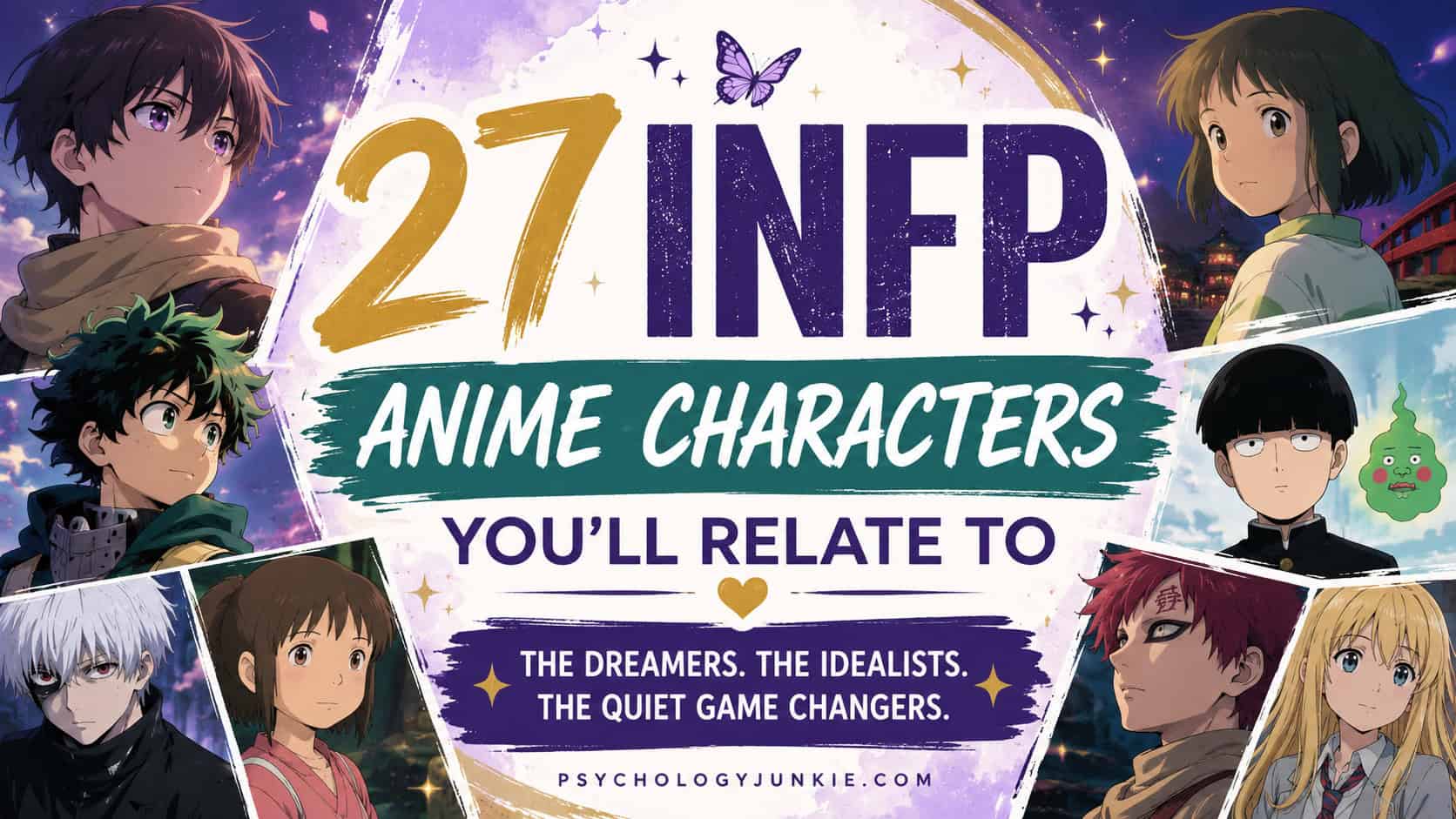
Over the last several months, I’ve gotten dozens of requests for an article about INFP characters in anime. It seems to me that anime characters have a special place in the hearts of INFPs, and it’s not hard to see why. Anime is filled with characters who fight for what they believe in, live with conviction, and strive to make the world a better place. There’s also a lot of artistic merit in anime, with dramatic colors and designs portraying the inner world of the characters’ hearts. Today I want to explore twenty-seven characters you’ll probably relate to if you’re an INFP. Some of these characters showcase the best qualities of INFPs, while others showcase unhealthy characteristics.
Maybe you’re here and you’re not 100% sure what INFP stands for. No worries, I’m here to help. INFP stands for Introverted, Intuitive, Feeling, Perceiving. These four letters make up one of the sixteen personality types in the Myers-Briggs Type Indicator (MBTI) personality system.
INFPs are known for their strong sense of personal values and beliefs. They are often described as idealistic, empathetic, and creative individuals who strive to make a positive impact in the world. INFPs also have a deep need for personal authenticity and can struggle with conforming to societal norms or expectations.
Now that we have a basic understanding of what an INFP is, let’s dive into some anime characters that embody these traits!
27 INFP Anime Characters
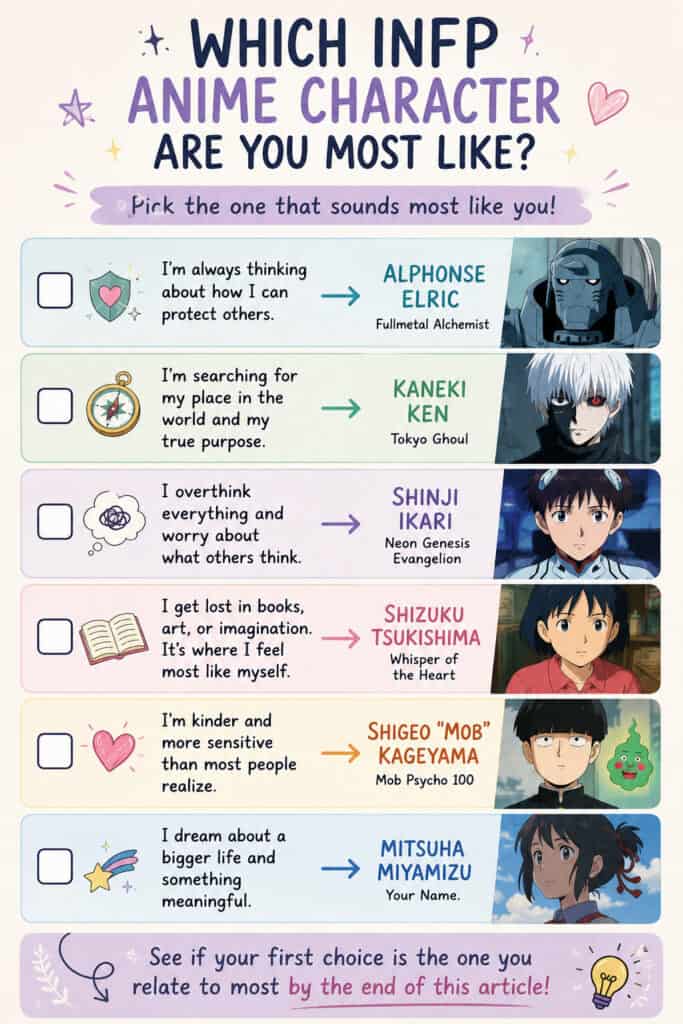
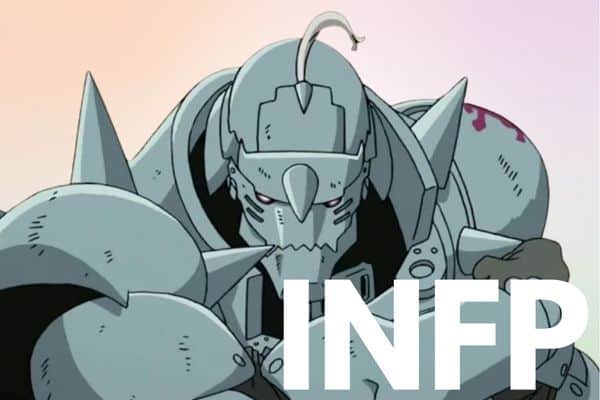
#1 – Alphonse Elric (Fullmetal Alchemist)
“I’m sick of watching people die and I can’t just sit back and take it anymore. I won’t let anyone else get killed, not when I can protect them.” – Alphonse Elric
If you’ve watched Fullmetal Alchemist, you’ve probably noticed that Alphonse Elric has a very different energy than his brother Edward. Edward charges into situations headfirst. Alphonse is more likely to stop, take everything in, and think about how his choices affect the people around him. To me, he’s one of the clearest examples of an INFP in anime.
After working with INFPs for years as an MBTI® practitioner, one thing I’ve noticed is how hard it is for many of them to walk away from suffering. If they see someone or something that’s vulnerable, there’s usually an immediate urge to help if they can. Alphonse shows this over and over again. One of my favorite things about him is that he keeps rescuing stray cats and hiding them inside his suit of armor. It has almost nothing to do with the main story, but it tells you so much about who he is. He sees something defenseless, and his first thought is, “How can I keep this safe?” That’s a very INFP kind of response.
He’s also the kind of person who spends a lot of time thinking about life’s bigger questions. Considering that his soul is attached to a suit of armor, that isn’t exactly surprising. Throughout the series he’s trying to figure out who he is, what makes someone human, and how to keep moving forward without losing himself in the process. Carl Jung once wrote, “Who looks outside, dreams; who looks inside, awakes.” Whether or not you’ve read Jung, I think a lot of INFPs would recognize that pull to keep looking inward, trying to understand themselves and what they believe.
More than anything else, Alphonse is guided by his own sense of right and wrong. He’s willing to question authority, tradition, and even the military he’s part of when something doesn’t sit right with him. Even as a child soldier, he keeps asking difficult questions about violence, revenge, and whether the ends really justify the means. I think that’s one of the reasons so many people connect with him. He never lets a harsh world convince him to stop caring, and that’s one of the qualities that makes him feel so unmistakably INFP.
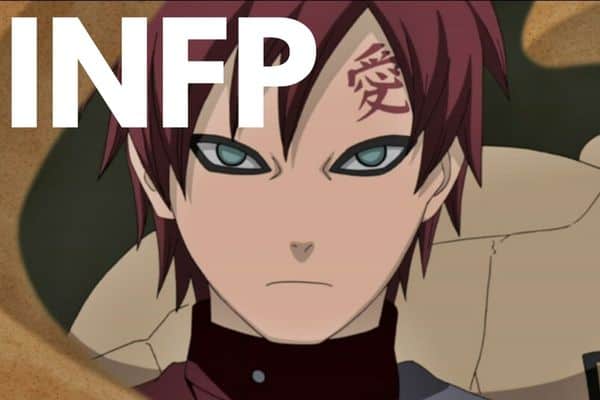
#2 – Gaara (Naruto)
Gaara shows us what can happen when an INFP grows up without love, safety, or a reason to trust other people. He’s a much more complicated character, and that’s part of what makes him so interesting.
When Gaara is very young, you catch glimpses of a sweet, caring kid who wants the same things most children want. He wants to be accepted. He wants someone to love him. But after years of rejection, betrayal, and isolation, he reaches a point where protecting himself becomes more important than connecting with anyone else. Fear takes over, and compassion gets buried underneath it. As psychologist Carl Rogers once said, “The curious paradox is that when I accept myself just as I am, then I can change.” Gaara spends much of his early life believing he’s fundamentally unworthy of acceptance, so instead of building relationships, he builds walls.
One thing I’ve noticed after years of working with INFPs is that they often experience emotional pain very deeply. When they have healthy relationships and a sense of purpose, that depth becomes empathy, creativity, and an incredible ability to understand other people. But severe trauma can twist those same qualities into isolation, hopelessness, or the belief that no one could ever understand them. Gaara takes that struggle to an extreme, but the emotional pattern underneath it is one I’ve seen many times.
Thankfully, his story doesn’t end there. As he slowly discovers friendship, acceptance, and people who genuinely care about him, his compassion begins to return. The same idealism that once became tangled up with anger starts pulling him toward peace instead. He eventually dedicates himself to creating unity among the shinobi, and in many ways he becomes the person he might have been all along if his childhood had been different.
Most INFPs aren’t going to relate to Gaara’s actions during his darkest moments, but I think many of them will recognize the longing underneath them. His story is really about what happens when someone desperately wants love but becomes convinced they’re beyond it. That’s what makes him such a memorable character and, for many viewers, such a sympathetic one.
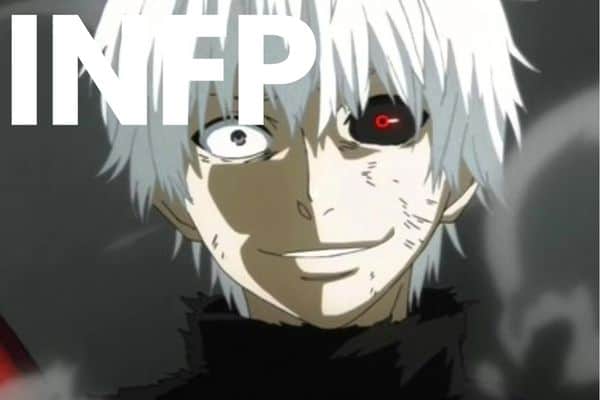
#3 – Kaneki Ken (Tokyo Ghoul)
“If you want to write a story with me in the lead role, it would certainly be a tragedy.” – Kaneki Ken
After years of working with INFPs, I’ve noticed that many of them can tolerate hardship surprisingly well. What they struggle with is the feeling that life is slowly pulling them away from the person they want to be. Success doesn’t mean much if it comes at the expense of their values. Acceptance isn’t worth much if they have to pretend to be someone else to get it. That inner conflict sits at the center of Kaneki’s story.
Everything he goes through forces him to ask difficult questions. Who am I now? What parts of me are still mine? How much can I change before I become someone I don’t recognize anymore? Viktor Frankl wrote, “Everything can be taken from a man but one thing: the last of the human freedoms—to choose one’s attitude.” Kaneki keeps searching for that freedom, even when so much of his life is no longer under his control.
At heart, he’s gentle, thoughtful, and extremely protective of the people he loves. Again and again, he’s willing to put himself in danger if it means someone else might be spared. That combination of compassion and conviction is something I see in many INFPs. Their kindness is less about being agreeable and more about sticking up for the values and people they care about.
That’s why Kaneki feels like such an authentic INFP to me. His story is ultimately about hanging onto his humanity when almost everything around him is trying to redefine it.
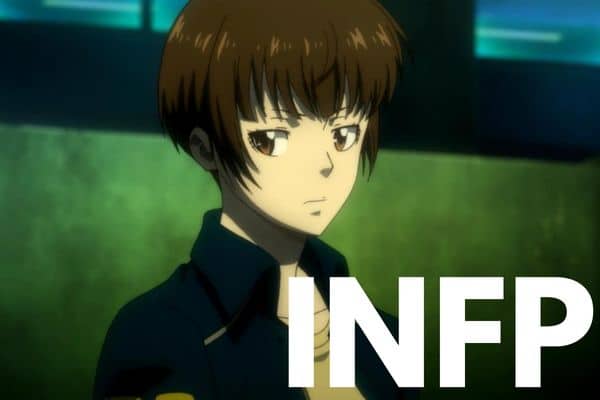
#4 – Akane Tsunemori (Psycho-Pass)
“It’s not the final judgment of “good” and “evil” that’s important. What matters is that you come to that decision yourself. That you agonize over it and eventually accept it.” – Akane Tsunemori
Throughout Psycho-Pass, Akane is surrounded by a system that expects people to stop asking difficult questions and trust its judgment. She never seems comfortable doing that (I can’t imagine any INFP being comfy with that). She wants to understand things for herself, even when the answers are complicated or uncomfortable.
In my experience INFPs aren’t interested in following rules just because they’re rules. They want to know whether those rules are actually just. If something clashes with their conscience, they’ll wrestle with it for a long time rather than ignore it. That search for meaning runs all through Akane’s story. She’s constantly trying to figure out what justice really looks like instead of accepting someone else’s definition. Although she’s generally calm and reserved, there are moments when her emotions break through, especially when she sees cruelty or people being treated as though their lives have no value. I’ve seen this with many INFPs. They may come across as easygoing most of the time, but when something violates one of their deepest values, they can become surprisingly passionate and determined.
What makes Akane such a compelling INFP is that she never stops examining herself along with the world around her. As she grows into her role as a detective, she’s asking bigger questions than who committed the crime. She’s trying to understand why people make the choices they do, what gives life meaning, and how someone can hold onto their humanity in a deeply flawed system.
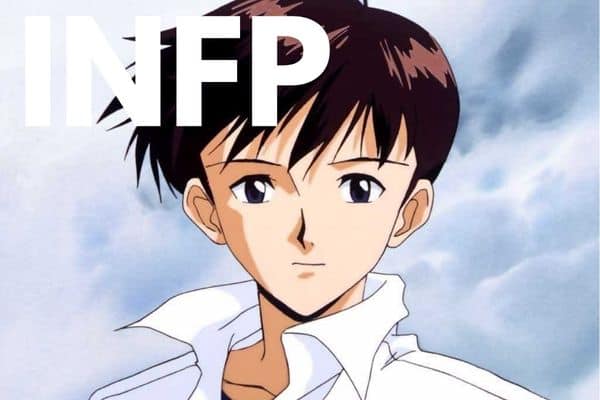
#5 – Shinji Ikari (Evangelion)
“I still don’t know where to find happiness. But I’ll continue to think about whether it’s good to be here…whether it was good to have been born. But in the end, it’s just realizing the obvious over and over again. Because I am myself.” – Shinji Ikari
Shinji Ikari is probably one of the most emotionally raw portrayals of an INFP in anime. He’s not only fighting terrifying enemies, but he’s trying to figure out whether he has value at all, and that’s a much harder battle.
INFPs spend a lot of time asking questions that other people brush aside. Who am I? Why am I here? What kind of person do I want to become? Those questions are everything to them. Shinji wrestles with them almost constantly, even while grappling with responsibilities that would overwhelm most adults.
It’s important to remember that much of Shinji’s fear, self-doubt, and withdrawal comes from trauma rather than personality type. Healthy INFPs aren’t defined by anxiety or hopelessness. But many of them do recognize what it’s like to feel deeply misunderstood or to wonder if they’re somehow falling short of who they hoped they would be. As psychiatrist Carl Jung observed, “The privilege of a lifetime is to become who you truly are.” For Shinji, that feels almost impossible for much of the series, yet he keeps searching anyway.
One of the ways he copes is through music. His headphones become a place to retreat when the world feels too loud and too painful. I’ve noticed that many INFPs have something similar in their lives. It might be music, books, art, or writing, but they often need a private space where they can sort through feelings before they’re ready to face the world again.
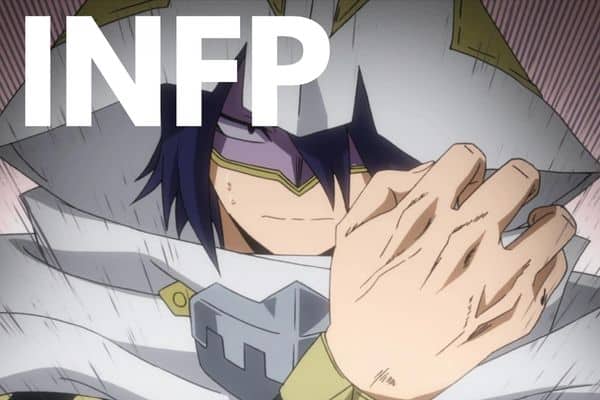
#6 – Tamaki Amajiki (My Hero Academia)
“What should I do? The words…they won’t come out! No matter how hard I try to think of them (classmates) as potatoes…everything except their heads just keeps its human form…and besides their heads I can only see them as humans!”– Tamaki Amajiki
One of the funniest running jokes in My Hero Academia is how desperately Tamaki Amajiki tries to disappear whenever he has to talk to people. His attempt to picture his classmates as potatoes so he won’t feel so anxious is both hilarious and painfully relatable for anyone who’s ever been overwhelmed in social situations (like me, just saying).
I’ve worked with a lot of INFPs over the years, and one thing I’ve learned is that many of them underestimate themselves. They aren’t usually interested in being the loudest person in the room or proving they’re exceptional. They’d much rather do meaningful work than receive recognition for it. Tamaki captures that so well. Rather than seeking out admiration, he wants to use his abilities in a way that actually helps people.
What I appreciate most about Tamaki is that his fear never completely disappears. He’s anxious. He second-guesses himself. He’d often rather hide than be the center of attention. Yet when someone needs him, he steps forward anyway. That’s a kind of courage we don’t talk about enough. As psychologist Rollo May put it, “Courage is not the absence of despair; it is, rather, the capacity to move ahead in spite of despair.” I’d probably swap “despair” for “fear” in Tamaki’s case, but the idea still fits.
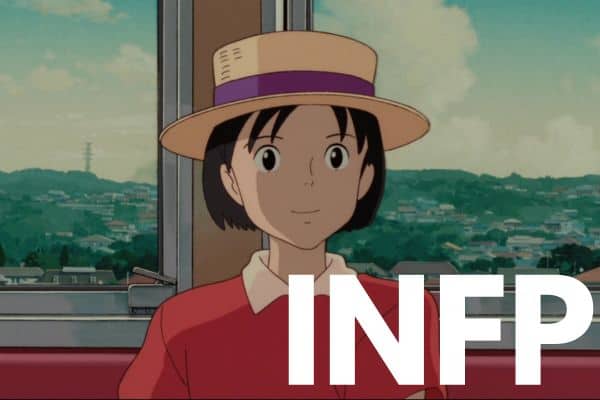
#7 – Shizuku Tsukishima (Whisper of the Heart)
“There’s always a voice inside me that says, ‘Things won’t go that smoothly.'” – Shizuku Tsukishima
Shizuku Tsukishima captures something I’ve seen in a lot of INFPs over the years: the feeling of knowing you’re meant to create something, even if you have no idea what that something is yet. She gets lost in books, rewrites song lyrics for fun, and eventually begins writing stories of her own. Her imagination is her refuge; the place where she comes alive.
At the same time, she’s constantly wondering if she’s good enough. While the people around her seem to have their futures mapped out, Shizuku is still trying to figure out where she fits. I think that’s a struggle many young INFPs will recognize. They usually don’t want just any career. They want work that feels meaningful and reflects who they are, and their intuition can see so many branches and possibilities it’s hard to settle on one. As Søren Kierkegaard wrote, “Life can only be understood backwards; but it must be lived forwards.” Shizuku learns that she can’t wait until she has everything figured out before taking the first step.
What I love most about her is that she chooses to create anyway. She doesn’t suddenly become fearless or certain of herself. She just starts, and in the process she discovers a little more about who she is. That’s a lesson that feels just as relevant for adults as it does for teenagers.
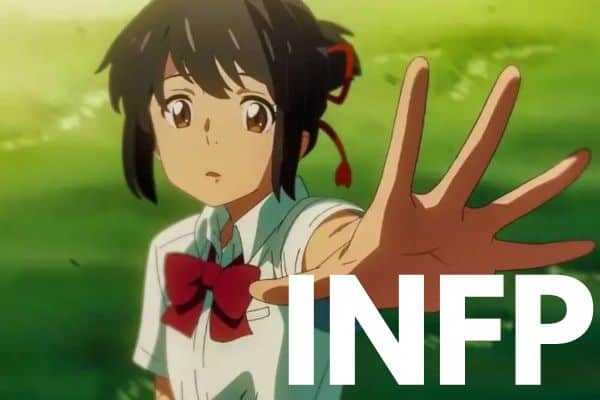
#8 – Mitsuha Miyamizu (Your Name)
“There’s no way we could meet. But one thing is certain. If we see each other, we’ll know. That you were the one who was inside me. That I was the one who was inside you.” – Mitsuha Miyamizu
Mitsuha Miyamizu reminds me of something I’ve heard from many INFPs over the years: the feeling that life has to be bigger than what they’ve known so far. It’s not that they’re ungrateful for where they are. They just have a persistent curiosity about what else is out there. New places, new people, new experiences…they want to understand life from as many angles as they can.
At the beginning of Your Name, Mitsuha feels confined by the expectations of her small town and dreams about a different future. When she unexpectedly begins swapping lives with Taki, she gets exactly what she’d been longing for. The experience opens her eyes to another world while also helping her see her own life differently. Anaïs Nin once wrote, “Life shrinks or expands in proportion to one’s courage.” I think that captures Mitsuha’s journey so much. Her world grows because she’s willing to step into the unknown.
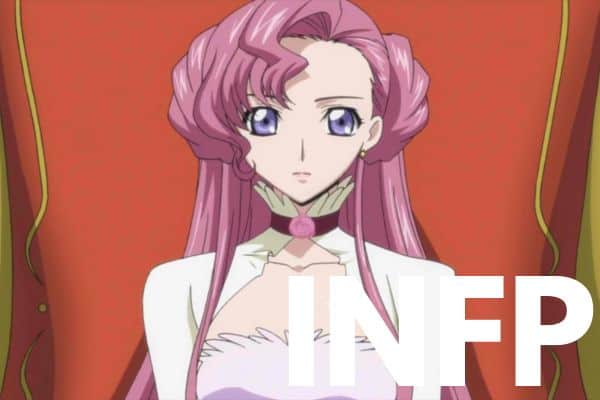
#9 – Euphemia Li Britannia (Code Geass: Lelouch of the Rebellion)
“Suzaku Kururugi. The truth is you and I… ah that is… you see… I hereby command you to love me. And in return, I will love you forever. Suzaku, I love your stubbornness, and your kindness, and your strength. I love your sad eyes, your clumsiness, and the way you have trouble with cats. I love everything about you. So please, don’t hate yourself!” – Euphemia Li Britannia
Even though Euphemia Li Britannia is surrounded by people who see power, status, and conquest as the answer to every problem, she never loses sight of the humanity in the people around her. That’s one of the reasons she feels like such a natural INFP. Every INFPs I’ve known has had a hard time accepting systems that treat one group of people as less valuable than another. Rather than accepting the prejudice around her, she imagines a future where the Elevens are treated with dignity and respect. As Carl Jung wrote, “Thinking is difficult, that’s why most people judge.” Euphemia resists that impulse. She looks beyond labels and tries to see people as individuals.
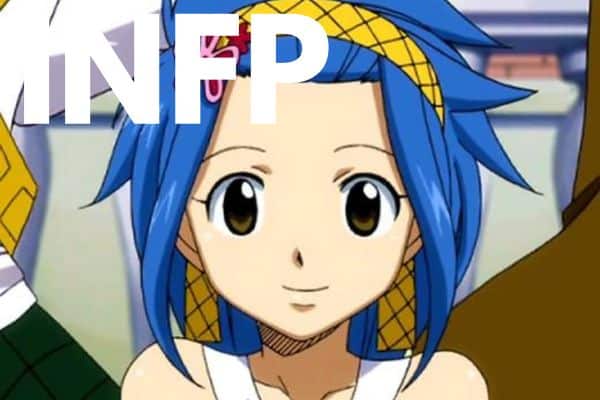
#10 – Levy McGarden (Fairy Tail)
“Behind every beautiful thing there’s some kind of pain.” – Levy McGarden
Cheerful and kind-spirited, Levy McGarden follows her heart and values in every decision she makes. Like most INFPs, she adores books and forms friendships around a love of shared stories. One unique quality of Levy is that she can see the goodness even in the most brutal characters, going so far as to forgive Gajeel Redfox even after he tortured her earlier in the series. She looks at the inside rather than judging by outside appearances and behavior.
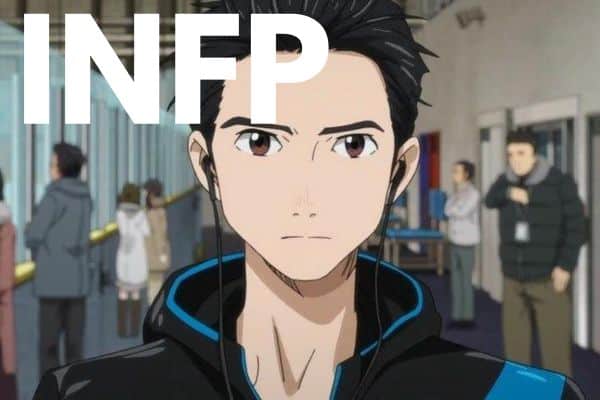
#11 – Yuuri Katsuki (Yuri On Ice)
“There’s a place you just can’t reach unless you have a dream too large to bear alone. We call everything on the ice “love.”” – Yuuri Katsuki
I just finished watching “Yuuri on Ice” and had to jump on here to add him to this list. I absolutely loved this anime and his character in particular. Shy, imaginative, and conflicted, Yuuri captures what many INFPs experience when they take on daunting challenges and competitions. Unlike many other players in the show, he’s more focused on living up to his ideals than winning. Like most INFP anime characters, he’s more focused on his inner experience than what’s going on around him sometimes, to his detriment or strength depending on the situation. In the beginning of “Yuuri on Ice” he appears to be in a Fi-Si loop, replaying past failures and getting stuck in a rut of unhealthy habits. However, as Victor (an ENFJ I believe) enters his life, he brings out an inspired, more playful side of Yuuri.
#12 – Kaidou Shun (The Disastrous Life of Saiki K.)
“I don’t care about your past. What matters is who you are now and who you’ll be in the future!” – Kaidou Shun
It’s easy to laugh at Kaidou Shun because, let’s be honest, he spends half the series acting like he’s the hero of a supernatural action movie. But what I love is that Kaidou has a huge imagination, and instead of hiding it, he leans into it with complete sincerity.
INFPs have incredibly rich inner worlds. As children especially, they can spend hours inventing stories, imaginary adventures, or entire worlds that feel every bit as real as the one around them. Most eventually learn to keep those fantasies to themselves because they’re afraid of looking weird. Kaidou never really gets that memo, and I think that’s part of what makes him so endearing.
Despite all his dramatic speeches and imaginary battles, he’s genuinely kind. He wants to protect people, stand up for what’s right, and believe that good can overcome evil. The details may be wildly exaggerated, but the heart behind them is real. As G.K. Chesterton wrote, “Fairy tales do not tell children dragons exist. Children already know dragons exist. Fairy tales tell children the dragons can be beaten.” In many ways, Kaidou is still holding onto that hope.
I think that’s why so many INFPs have a soft spot for him. Underneath all the comedy is someone who’s trying very hard not to lose his sense of wonder in a world that keeps telling him to grow up. That’s a struggle more people relate to than they might admit.
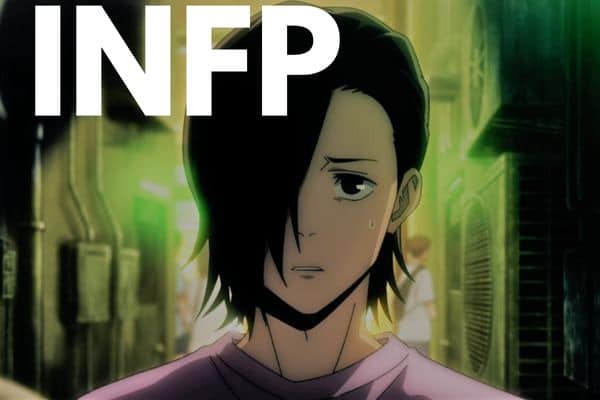
#13 – Junpei Yoshino (Jujutsu Kaisen)
“If I had a button that killed everyone I hated, I probably wouldn’t push it. But if I had a button that killed everyone who hated me…I’d push it without hesitation.”– Junpei Yoshino
Junpei’s storyline really affected me emotionally, and I’m curious if they’ll manage to bring him back in any possible way in the future. Deeply feeling, private, and drawn to the arts and storytelling, Junpei aligns well with a tormented INFP personality type. His actions and thoughts are profoundly influenced by his values, and he’s often found contemplating ethical and moral dilemmas. However, Junpei’s troubled past, marked by relentless bullying and abuse, has shaped him into a more cynical and vengeful version of an INFP. This distortion in his personality leads him to employ flawed reasoning to justify his actions. Itadori rightfully challenges him for employing faulty logic to support his beliefs, a tendency that INFPs may fall prey to when in an unhealthy state of mind.
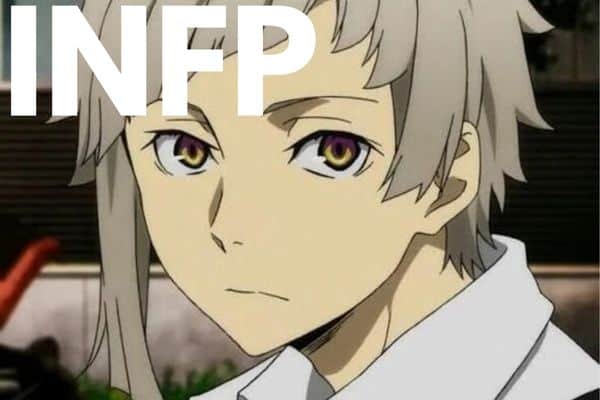
#14 – Atsushi Nakajima (Bungou Stray Dogs)
“It’s not up to you to decide who’s worth living. Why couldn’t you have spoken to her some other way? People can’t live unless someone tells them ‘it’s okay to go on!’ Why can’t you even understand something that simple!?” – Atsushi Nakajima
Atsushi Nakajima is one of those characters who reminds me that kindness can be an act of courage. After everything he’s endured, you’d expect him to become bitter or convinced that people are beyond saving. Instead, he keeps believing that a person’s life has value, even when they can’t see it themselves. Viktor Frankl once wrote, “Those who have a ‘why’ to live can bear almost any ‘how.'” Much of Atsushi’s journey is about discovering that reason to keep going, both for himself and for others.
Like many INFPs, he wrestles with self-doubt and carries the weight of his past with him. But he never lets that pain become an excuse to stop caring. If anything, it makes him even more compassionate toward people who are suffering. That’s what makes him such a memorable INFP to me. His greatest strength isn’t his supernatural ability. It’s his refusal to believe that anyone is beyond hope.
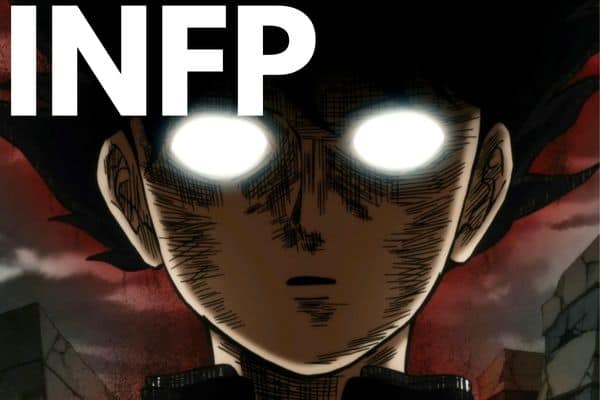
#15 – Shigeo “Mob” Kageyama (Mob Psycho 100)
“Everyone lacks something. People making up for others’ deficiencies is what makes this world go round.” – Shigeo “Mob” Kageyama
Mob is one of my favorite examples of an INFP because, beneath all the psychic battles, his story is really about learning that your worth isn’t determined by what you can do. It’s determined by who you choose to be. Rather than using his powers to dominate people or prove himself, he spends most of the series trying to make sure they never control him.
I also love that Mob never believes he has to be extraordinary to deserve love or respect. He joins the Body Improvement Club, struggles through awkward social situations, and keeps trying to grow as a person in ordinary ways. His psychic abilities may make him unique, but they aren’t what define him. His kindness, humility, and willingness to keep improving are.
I think that’s why so many INFPs connect with Mob. He’s searching for a place where he can be accepted for who he is rather than what he can accomplish. That’s a longing I’ve heard from many INFPs over the years, and it’s one of the reasons his story resonates with so many people, even beyond the world of anime.
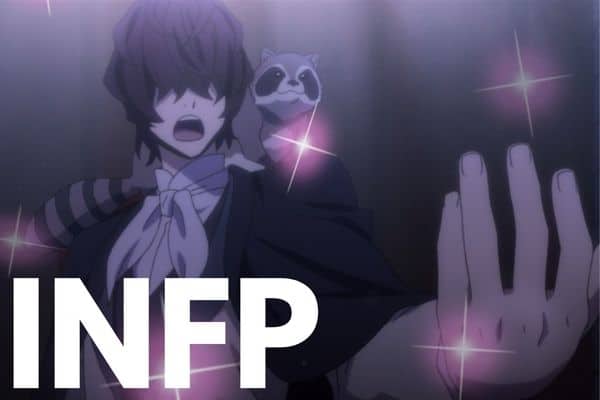
#16 – Edgar Allan Poe (Bungou Stray Dogs)
“Deep into that darkness peering, long I stood there, wondering, fearing, doubting, dreaming dreams no mortal ever dared to dream before.” – Edgar Allan Poe
INFPs are often drawn to the world of art, literature, and imagination, and Poe reveals this with his poetic musings and imaginative stories. Like many INFPs, he has a rich inner world filled with dreams, fears, and wonders, and his sense of mystery adds a layer of complexity that makes him hard to understand from the outside. But, as INFPs know well, it’s not about being understood, it’s about staying true to oneself and one’s vision.
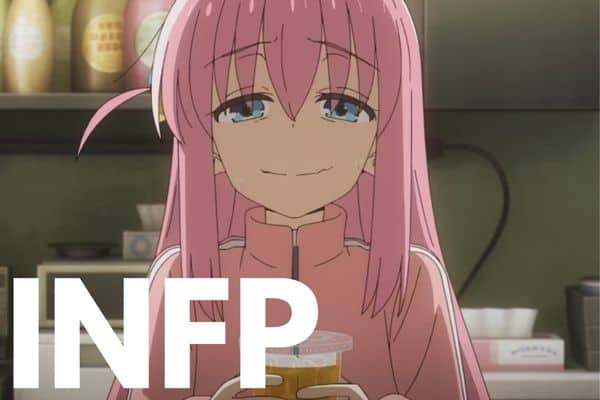
#17 – Hitori Gotou (Bocchi the Rock!)
“A life as the archetypal introvert just seems to fit me best.” – Hitori “Bocchi” Gotou
Hitori Gotou, also known as Bocchi, is an introverted, anxious girl with a love for music, which she uses as a form of self-expression and escape. Like many INFPs, she struggles with her self-image and finds comfort in her inner world. INFPs will relate to Bocchi’s fear of being misunderstood and her desire to connect with others, even while feeling isolated. Her creative, daydreaming nature is at the core of who she is, and her journey toward self-acceptance is one that many INFPs will relate to.
#18 – Miku Nakano (The Quintessential Quintuplets)
“Don’t give up after failing just twice… We’ll be able to do it next time. If Futaro’s with us, we’ll make it! Failure is the stepping stone to success, right?” – Miku Nakano
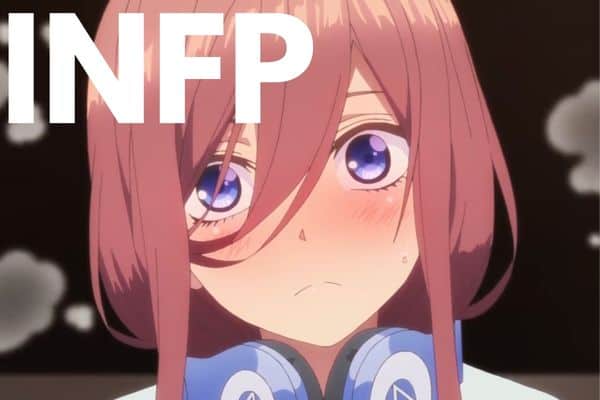
Miku Nakano is perfectly happy observing, thinking, and following whatever sparks her curiosity. In Miku’s case, that’s history. Her fascination with famous generals and historical figures is something she enjoys exploring, and she isn’t afraid to be herself, even if other people find it a little unusual. I admire that so much.
One thing I’ve noticed after working with INFPs over the years is that they often have interests that run more intensely than most. When something captures their imagination, they don’t just want to know the basics. They want to understand the stories, the people, and the meaning behind it all. And although she’s the quietest of the Nakano sisters, she’s not passive. When someone or something truly matters to her, she shows a surprising amount of determination. I think that’s something people often misunderstand about INFPs. Their strength isn’t always obvious at first, but once their heart is invested, they can be incredibly persistent. Watching Miku gradually find her voice is one of the most satisfying parts of her story, and it’s a journey that many INFPs will probably find very familiar.
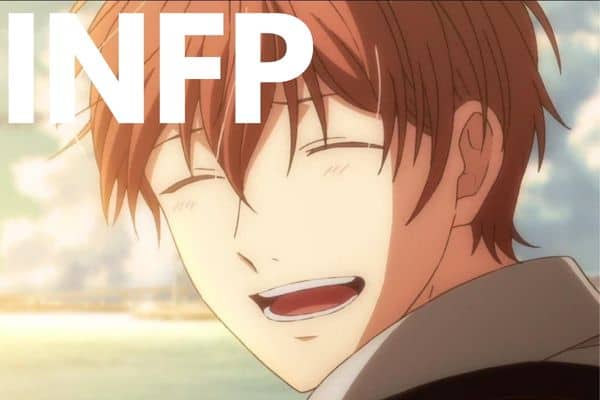
#19 – Mafuyu Satou (Given)
“I’m definitely worse at expressing myself than other people are. But, even so, the truth is… The truth is I’ve always… just wanted someone to completely understand how hard and painful it is… Wanting to scream and cry but not being able to express it. But even understand a little is okay.” – Mafuyu Satou
Not everyone experiences emotions the same way. Some people can put their feelings into words almost immediately (I’m not jealous….). Others have to sit with them for a long time before they can even explain what’s happening inside. Mafuyu falls into that second group, and I think a lot of INFPs will recognize themselves in that struggle.
Introverted Feeling types often express themselves most honestly through something they create. It might be music, writing, painting, or photography, but creativity often becomes the language they couldn’t find in conversation. That’s exactly what happens with Mafuyu. Music gives him a way to express grief, love, and longing that words never could. As poet Robert Frost once wrote, “Poetry is when an emotion has found its thought and the thought has found words.” Mafuyu’s songs become that bridge between what he feels and what he’s finally able to share.
#20 – Noé Archiviste (The Case Study of Vanitas)
“Even now, I vividly remember the color of the rising sun I saw then. And… all too easily, memories of the beginning summon memories of the end. The things that slipped through my fingers… The people I couldn’t protect… The regrets of that day… when I didn’t grab your hand.” – Noé Archiviste
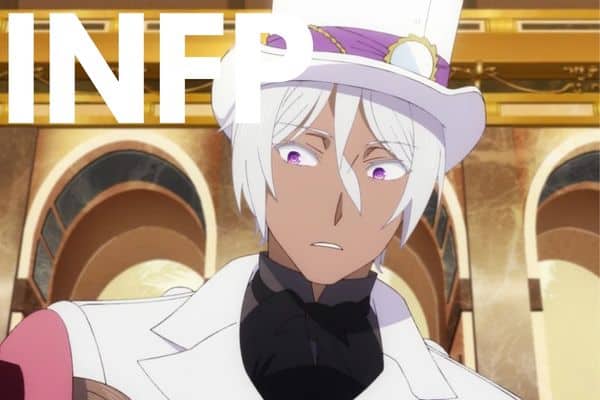
Noé Archiviste has a sense of wonder that’s hard not to love. While other people are busy rushing toward the next objective, he’s just as likely to get sidetracked by an interesting place, an unusual person, or a question he can’t stop thinking about. I feel like most INFPs share that same curiosity. They enjoy following ideas wherever they lead, and sometimes that means arriving somewhere completely unexpected…or forgetting where they were supposed to be in the first place. In Noé’s case, it occasionally means wandering off and accidentally leaving poor Murr behind.
What keeps Noé grounded is his conscience. Before he acts, he has to feel that what he’s doing is right. Even when the practical choice seems obvious, INFPs will always hesitate if it clashes with their values. As Carl Jung wrote, “The shoe that fits one person pinches another.” Noé doesn’t want to live by someone else’s definition of what is acceptable. He has to come to those conclusions for himself.
That commitment to his ideals is admirable, but it also creates some of his biggest struggles. There are moments when he hesitates because he can’t bring himself to betray his own sense of compassion, even when making a difficult decision might protect him or someone else. His conflict with Astolfo is a good example. He’s wrestling with the painful reality that sometimes every option carries a cost.
#21 – Chihiro Ogino (Spirited Away)
“Nothing that happens is ever forgotten, even if you can’t remember it.” – Chihiro Ogino
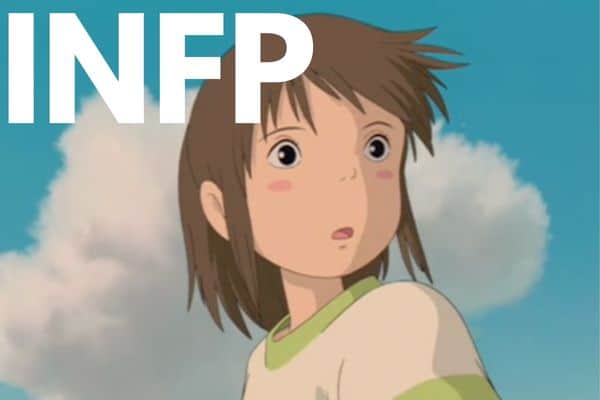
At the beginning of Spirited Away, Chihiro is scared, uncertain, and overwhelmed by everything happening around her. Little by little, though, she learns to trust her own heart instead of her fears.
While Chihiro never becomes fearless, she keeps choosing kindness, even when she’s surrounded by strange creatures and impossible situations. Her courage grows out of her empathy, especially in her determination to help her parents and the people she meets along the way. Ultimately, I think she reminds us that real strength is choosing to keep doing the right thing, even when you’re frightened and have no idea how the story is going to end.
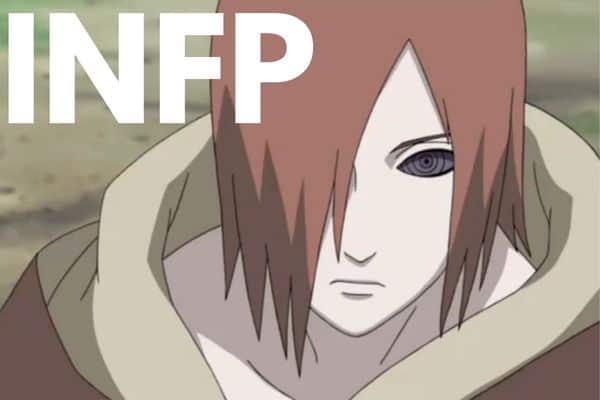
#22 – Nagato (Naruto)
“Those who do not understand true pain can never understand true peace.” – Nagato
Nagato’s life is a story of sensitivity turned into strength, but also the danger of losing your way. As a child, he was incredibly empathetic, often crying over the pain he saw in the world around him. Yahiko’s influence pushed him to stop crying, but it wasn’t until Jiraiya helped him see that his sensitivity was a strength that he began to view his emotions as a tool for understanding and kindness. That realization shaped Nagato’s core motivation: to carry the pain of others so they wouldn’t have to.
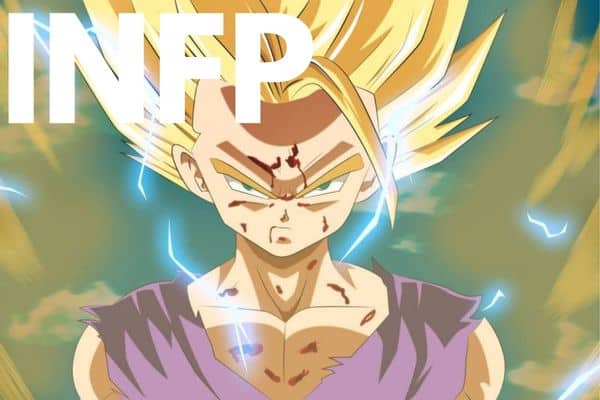
#23 – Son Gohan (Dragon Ball)
“I am the unmitigated champion of Justice! Who tolerates no evil! THE GREAT SAIYAMAN”
When we first meet Gohan, he seems like the opposite of his father, Goku. He’s shy, reserved, and much more interested in studying than fighting. His goal? To be a scholar, something his mother Chi-Chi drilled into him. Gohan has no interest in following in his father’s footsteps as a fighter, he just wants to make his mom proud and live a quiet, academic life.
But growing up surrounded by powerful people like Goku and Piccolo made Gohan always felt he couldn’t measure up. Sure, he had insane potential, but compared to his dad, the first Super Saiyan, he thought he didn’t belong on the battlefield. He was hesitant, unsure of his place in the world of combat.
Then came the Cell saga, where Gohan finally broke through his insecurities. His transformation into Super Saiyan 2 was a huge moment, not just because of his power (although that was epic), but because he finally accepted his own strength. Gohan realized that he didn’t have to be his father. In fact, he could surpass him. In that moment, he let go of his fear, embraced his anger, and stepped up as Earth’s next great defender.
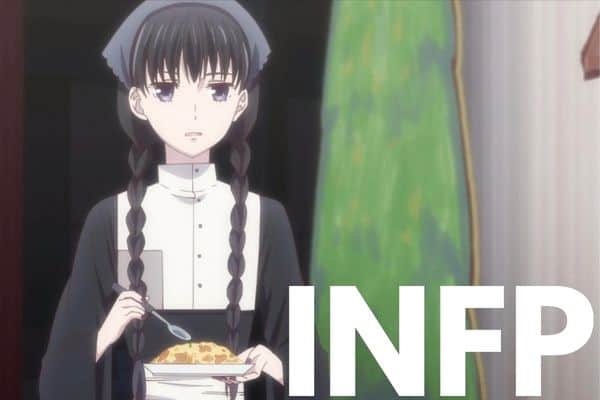
#24 – Saki Hanajima (Fruits Basket)
“When you treasure someone, it can be a little painful to see them find happiness with another and sometimes you may get lonely…but it also can make you happy.”
Much of Saki’s early life was spent in self-imposed isolation, punishing herself for her past and believing she deserved to be ostracized. INFPs, often hard on themselves, will resonate with Saki’s struggle to reconcile her past and learn self-compassion. Yet despite her reserved nature, she’s incredibly blunt when she speaks, unafraid to confront others head-on. Yet, under her stoic exterior, she has a dry sense of humor and a playful side that she only reveals to those closest to her—something INFPs may identify with, as they often guard their inner worlds, sharing them with only a select few.
Her auxiliary Extraverted Intuition (Ne) surfaces in her perceptiveness. Saki can pick up on the emotions and intentions of others effortlessly, even detecting what others miss entirely. However, this heightened awareness doesn’t make her immune to the more relaxed, whimsical side of her personality. Saki can be air-headed and lazy at times, preferring to read a book or slack off rather than engage in physical activity. INFPs may recognize this tendency to disengage from the concrete world, especially when their minds are consumed by more imaginative pursuits.
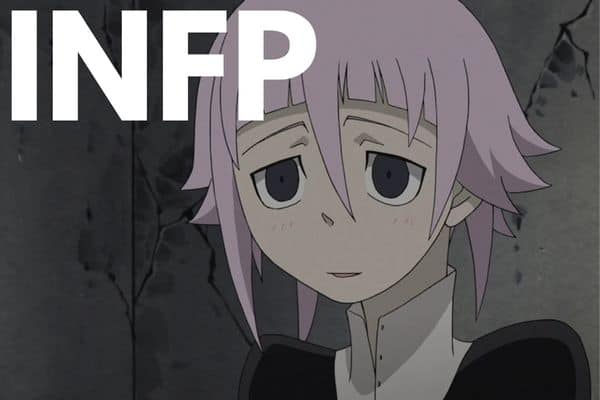
#25 – Crona Gorgon (Soul Eater)
“When you treasure someone, it can be a little painful to see them find happiness with another and sometimes you may get lonely…but it also can make you happy.”
Crona is an INFP who’s been pushed to the extremes of their emotional world. Pessimistic and self-loathing, Crona struggles deeply with their sense of identity, largely shaped by the abusive environment they were raised in by Medusa and Ragnarok. Their introversion runs deep, as they’re frequently overwhelmed by situations and people, often shutting down entirely when they can’t “deal” with the world around them.
Crona’s dominant function, Introverted Feeling (Fi), is twisted by their upbringing. They struggle to form a clear sense of morality, having been conditioned to follow Medusa’s warped goals. Their desire for acceptance and love is tragically tied to fulfilling Medusa’s expectations, even if that means becoming a Kishin. This desperate search for meaning and validation is something many INFPs can relate to, though in Crona’s case, it’s been severely distorted.
Despite their darkness, Crona’s auxiliary Extraverted Intuition (Ne) sparks moments of creativity, like their habit of naming parts of rooms or the dark humor in their poetry. These quirks reveal a layer of whimsy beneath their negativity. Their journey is one of battling inner demons, finding some semblance of peace only after confronting their past, and, in the end, sacrificing themselves for the greater good.
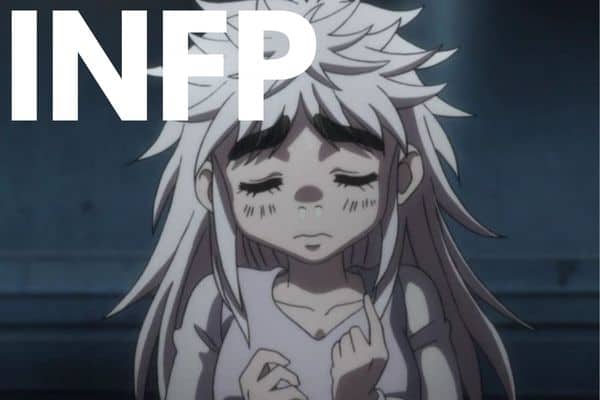
#26 – Komugi (Hunter X Hunter)
“All these won’erful plays are flowin’ into me head like a flood. I know I can be e’en better!” – Komugi
Komugi is a humble, introverted character with a deep love for Gungi, a board game she masters. Like many INFPs, she finds meaning and fulfillment in her passions, rather than trying to fit in with everyone else. INFPs will relate to her focus on doing what she loves, regardless of what others think, along with her emotional depth and quiet sincerity.
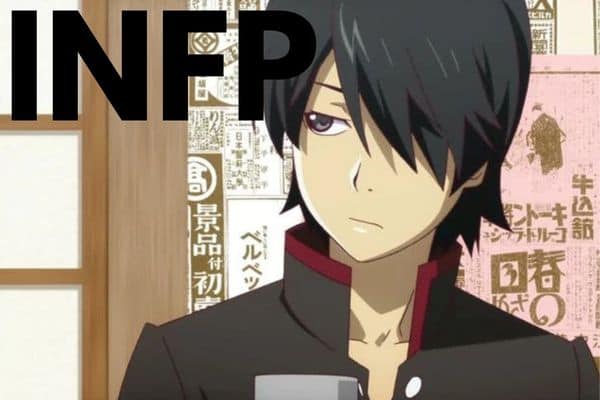
#27 – Koyomi Araragi (Monogatari Series)
“Humans tend to learn from defeat rather than victory.”
Koyomi Araragi struggles with the balance between isolation and connection. Before meeting Tsubasa Hanekawa, Koyomi was practically a loner in high school, convinced that having friends would make him vulnerable. He believed that forming close relationships would give others a chance to hurt him, which would ultimately make him weaker. This way of thinking aligned with his personal philosophy that “truth” should not be dictated by majority rule—a view that kept him at arm’s length from others.
But after meeting Hanekawa, Koyomi starts to open up and becomes more willing to make friends. He’s far from perfect—academically, he’s barely passing, except in math, and he often misreads the dynamics of his family. However, what stands out most about Koyomi is his strong desire to help others, even if it means putting himself in harm’s way. This altruism, though admirable, is often seen as reckless by those around him, especially since he abuses his regeneration powers to take on danger that isn’t always his to bear.
Koyomi’s struggle to balance his self-imposed isolation with his growing sense of responsibility reflects the INFP’s internal battle between staying true to their individual ideals and forming deep connections with others. Like many INFPs, Koyomi’s desire to help is both a strength and a potential flaw—driven by a personal sense of duty, yet often bordering on self-sacrifice.
Susan Storm is a certified MBTI® practitioner and Enneagram coach. She is the mom of five beautiful children and loves using her knowledge of personality type to understand them and others better!
Susan has written over 1,000 articles about typology as well as four books including: Discovering You: Unlocking the Power of Personality Type, The INFJ: Understanding the Mystic, The INTJ: Understanding the Strategist, and The INFP: Understanding the Dreamer.
Alongside her writing, Susan has collaborated with Personality Hacker, Introvert, Dear, Joyce Meng, The British Association of Psychological Type, and The Association for Psychological Type International. Her work has been featured in The New York Times, The Sun, and Yahoo! Lifestyle.
As an ISFP, relationships can sometimes feel complicated, especially when you’re trying to balance your desire for connection with your need for freedom and authenticity. I’ve worked with many ISFPs who want to be in loving relationships, but feel trapped when their partners start to build a lot of mental expectations of them. Relationships are…
Whether you love country music, pop music, or rock, I think we all can agree on one thing: Taylor Swift can write a song. The singer’s vulnerability with her emotions leaves fans worldwide crying on their beds or dancing around their rooms! Her songwriting skills are beyond impressive, and the hooks are so catchy you’ll find…
The Innovative, Inspiring Type Creative, Adventurous, Imaginative, Authentic The ENFP Personality Type in Brief ENFPs approach life with a desire to explore all the options available to them. They quickly generate alternatives, ideas, possibilities, and new ways of doing things. When they look around them, they can notice two unrelated things and find ways of…
We’ve all been there. You’re about to go on a date, a job interview, or a hangout with a new potential friend, and you find yourself suddenly worrying about your first impression. Will you make the properly timed joke or will you say something awkward and feel like digging yourself a hole to crawl in?…
Have you ever wondered what unique qualities draw us to different personality types? While there are MANY things (completely unrelated to type) that can be attractive about a person, there are usually a few core characteristics that make each type deeply appealing. Find out what those are here! Not sure what your personality type is?…
As an MBTI® practitioner I’ve heard a lot of misconceptions about intelligence and type. Some people assume that intuitives are smarter than sensors or vice versa. Many people think thinking types are naturally smarter than feeling types as well. All of these ideas are inaccurate – the truth is there is no particular type that…
Alors pour gaara c’est parfaitement ça je l’ai toujours considéré comme quelqu’un qui a juste souffert trop longtemps quelqu’un qui a besoin d’aide et qu’on le sauve même si je détestait comment il tuait des gens pour son plaisir j’étais tellement contente de savoir qu’il essaye de changer et il a réussi
Dont forget Killua Zoldyck from “Hunter x Hunter” he strives to separate his identity from that of his family and is extremely loyal and protective of Gon, he’s taught to be analytical and not show emotion due to his upbringing but its clear from his inner monologues and his conflicts with his brother Illumi that there’s a deeper sensitivity that’s just naturally underlying it all and despite being raised as an assassin by the end becomes a moral compass of sorts for Gon who is lost in his rage, if only gon had listened.
I absolutely loved this list! It’s fascinating to see how many characters embody the INFP traits so perfectly. Characters like Shikamaru and Hikari truly resonate with me. Their depth and inner struggles really highlight the beauty of the INFP personality. Thanks for sharing such an insightful post!






Theres one more i know of- Koe Mabuchi in Ao Haru Ride.
Alors pour gaara c’est parfaitement ça je l’ai toujours considéré comme quelqu’un qui a juste souffert trop longtemps quelqu’un qui a besoin d’aide et qu’on le sauve même si je détestait comment il tuait des gens pour son plaisir j’étais tellement contente de savoir qu’il essaye de changer et il a réussi
Nakajima Atsushi of Bungou Stray Dogs
He’s a typical example of soft, conflicted INFP, in my opinion
Dont forget Killua Zoldyck from “Hunter x Hunter” he strives to separate his identity from that of his family and is extremely loyal and protective of Gon, he’s taught to be analytical and not show emotion due to his upbringing but its clear from his inner monologues and his conflicts with his brother Illumi that there’s a deeper sensitivity that’s just naturally underlying it all and despite being raised as an assassin by the end becomes a moral compass of sorts for Gon who is lost in his rage, if only gon had listened.
No N from Pokémon? IMO he’s THE INFP.
I like food
And INFP-T fits me to a “t”
Akane Tsunemori is an INFJ, look into her cognitive functions, not the letters.
shawn froste in inazuma eleven
I absolutely loved this list! It’s fascinating to see how many characters embody the INFP traits so perfectly. Characters like Shikamaru and Hikari truly resonate with me. Their depth and inner struggles really highlight the beauty of the INFP personality. Thanks for sharing such an insightful post!