
40+ ESFJ Characters From Movies, TV, and Literature
ESFJs tend to get a very specific treatment in personality articles. They’re friendly. They remember birthdays. They bring food. Somewhere around paragraph three, someone gives them an apron and stops asking questions. Of course, some of these characters might wear aprons, but some also wear badges, cowboy hats, or capes.
Some of these characters will personally offend you as an ESFJ. Others you will absolutely love. There’s villains, heroes, airheads, and intellectuals.

Some typings are clearer than others, especially when a character has limited screen time. I’ll explain where I see the pattern and acknowledge where the evidence leaves room for another interpretation.
Spoilers appear throughout.

Not sure what your personality type is? Take our personality questionnaire!
Before You Read: Which ESFJ Struggle Sounds Familiar?
Keep one of these in mind as you read:
- I become responsible for everyone and then wonder why I’m exhausted.
- I want closeness, but sometimes I get more involved than people want.
- I struggle when people don’t appreciate what I do.
- I keep pursuing a life other people told me I should want.
- I have trouble accepting choices I believe will hurt someone I love.
You may recognize yourself in several characters, including a few whose methods you would strongly prefer not to borrow.
Table of contents
- Before You Read: Which ESFJ Struggle Sounds Familiar?
- The People Who Keep Everyone Going
- 1. Terry Jeffords — Brooklyn Nine-Nine
- 2. Mary Cooper — Young Sheldon
- 3. Jill Andersen — Inside Out
- 4. Anna Harding — Nosferatu
- 5. Lydia Crane — The Holdovers
- 6. Rio Morales — Spider-Man: Into the Spider-Verse
- 7. Kanga — Winnie-the-Pooh
- 8. Martha “Mrs.” Hudson — Sherlock
- 9. Jocelyn Schitt — Schitt’s Creek
- 10. Sung Sun-woo — Reply 1988
- Reader Pause: When You’re the Dependable One
- The Devoted Friends and Partners
- 11. Charles Boyle — Brooklyn Nine-Nine
- 12. Isabella Garcia-Shapiro — Phineas and Ferb
- 13. Anna — Frozen
- 14. Constanze Mozart — Amadeus
- 15. Johnny Dogs — Peaky Blinders
- 16. Eo Heung — Mr. Plankton
- 17. Jung Ji-hoo — Love and Leashes
- 18. Lee Jun-ho — Extraordinary Attorney Woo
- 19. Cho Yong-pil — Welcome to Samdal-ri
- A Question About Devotion
- The Ones Who Take Charge
- 20. Madeline Mackenzie — Big Little Lies
- 21. Woody — Toy Story
- 22. Barbie — Toy Story
- 23. Polly Gray — Peaky Blinders
- 24. Candace Flynn — Phineas and Ferb
- 25. Leslie Knope — Parks and Recreation
- Reader Pause: What Happens When Nobody Follows the Plan?
- When Approval Becomes a Full-Time Job
- 26. Tahani Al-Jamil — The Good Place
- 27. Ken — Toy Story
- 28. Glinda Upland — Wicked
- 29. Jackie Taylor — Yellowjackets
- 30. Jin Cho-yeon — Alchemy of Souls
- 31. Cameron “Cam” Tucker — Modern Family
- The People Trying to Build the Life They Were Promised
- 32. Jackson Marchetti — Sex Education
- 33. Lucy Smith — Fellow Travelers
- 34. Kathy — The Bikeriders
- 35. Yang Ho-rang — Because This Is My First Life
- 36. Sansa Stark — Game of Thrones
- 37. Daphne Bridgerton — Bridgerton
- 38. Troy Bolton — High School Musical
- Reader Pause: Whose Future Are You Building?
- The Protectors Who Show Up When It Counts
- 39. Ochaco Uraraka — My Hero Academia
- 40. Jang Geum-ja — Squid Game
- 41. Mitsuri Kanroji — Demon Slayer
- 42. Lloyd Pierce — Yellowstone
- 43. Snow White — Snow White and the Seven Dwarfs
- 44. Cedric Diggory — Harry Potter
- When Care Turns Into Control
- 45. Pastor Jeff Dillard — Young Sheldon
- 46. Mary Louise Wright — Big Little Lies
- 47. Aunt Lydia — The Handmaid’s Tale
- 48. Eileen Furlong — Small Things Like These
- 49. Abby Winbury — The Perfect Couple
- 50. Park Yeon-gyo — Parasite
- Which ESFJ Character Did You Recognize Yourself In?
- Final Thoughts
- Other Articles You Might Enjoy:
The People Who Keep Everyone Going
ESFJs are people who pay attention. They notice when someone hasn’t eaten, when someone seems overwhelmed, or the person that is insisting their fine has barely spoken all evening.
That brings me to these characters. They’re the people paying attention, noticing the details, the emotions, and the struggles. Their care shows up in ordinary actions: checking in, making arrangements, giving reassurance, making sure life is stable. Those things may not seem dramatic, but they make a huge difference to the people on the receiving end.
For ESFJs, the challenge is knowing when to step back. Being useful can become a role they struggle to put down, especially when they’re accustomed to seeing a need and responding before anyone else does.
1. Terry Jeffords — Brooklyn Nine-Nine
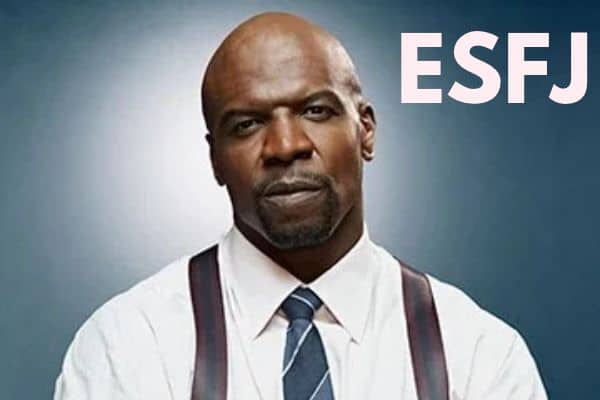
Terry Jeffords has a wife, three daughters, and a squad of detectives who sometimes require approximately the same level of supervision. For every responsibility, Jeffords takes the task seriously and thinks hard about how to perform at his best.
As the squad’s supervisor, Terry stays attentive to what is happening around him. Who is struggling? Who needs guidance? Which of Jake’s decisions is about to create a problem? He generally responds by getting involved, giving direction, and coordinating what needs to happen next.
Why I see ESFJ:
- E: He naturally tracks the squad’s activity and responds through direct involvement, guidance, and coordination.
- S: He focuses on real tangible needs, practical skills, and the details of daily work and family life.
- F: He weighs decisions in terms of their emotional consequences for his children and colleagues.
- J: He wants responsibilities understood, procedures followed, and a clear plan for handling problems.
2. Mary Cooper — Young Sheldon
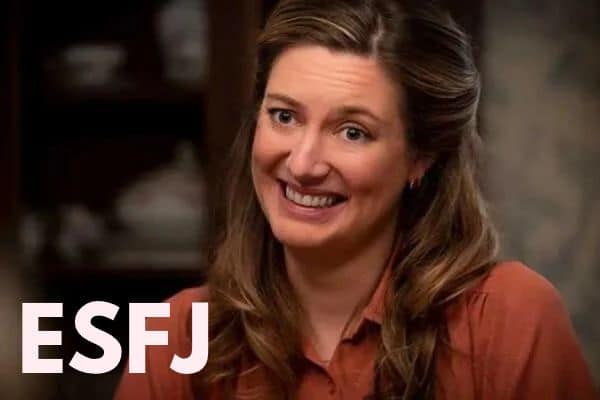
Mary Cooper would like everyone to eat dinner, behave reasonably, and get through one evening without a crisis. Unfortunately, that’s difficult in her household.
Mary has a very active love. She cooks, prepares, checks, advocates, worries, and makes arrangements. When something unsettles her, she often moves toward the people and circumstances involved: talking to a teacher, consulting her church community, or deciding what the family needs to do. This type of crowdsourcing is very common with ESFJs. They gather opinions and look for the most reasonable consensus.
As an extrovert, her attention focuses outwards towards the situation and how she can influence it. Of course, this doesn’t mean she lacks an inner life. She has doubts, frustrations, and feelings she struggles to express. But her usual response to a problem is to become involved in managing it.
Why I see ESFJ:
- E: She pays attention more to what’s going on around her than to her inner world. She’s constantly reaching out to the people involved and acting on the circumstances around her.
- S: She trusts familiar practices and expresses care through meals, routines, and practical arrangements.
- F: Family welfare, loyalty, and her beliefs about responsible parenting strongly influence her decisions.
- J: She wants clear expectations and settled plans. Her chore charts suggest considerable optimism about other people’s willingness to cooperate.
3. Jill Andersen — Inside Out
Jill Andersen is trying to help her family settle into San Francisco while her daughter’s entire inner world is falling apart. She can see that Riley is struggling. She just doesn’t yet understand how much.
Jill responds to the upheaval by taking care of what the family is experiencing together. She tries to make the new city manageable, get Riley involved in hockey, and monitor the tension between her daughter and husband.
Her focus often falls on the shared situation: how everyone is adjusting, what they can do next, and whether the family is holding together. This is a sign of Extraverted Feeling, the dominant function of the ESFJ.
When Jill thanks Riley for remaining their “happy girl,” she unintentionally makes cheerfulness feel like another responsibility. Riley needs room to be sad, but her mother is hoping that a positive attitude will help everyone cope. Sometimes ESFJs can be so focused in getting everyone back to harmony that they rush people through the process of healing.
Why I see ESFJ:
- E: Her attention frequently moves toward the family’s shared circumstances, and she tries to improve them through interaction, talking, and experiences.
- S: She supports adjustment through concrete experiences, familiar activities, and everyday family routines.
- F: She is attentive to the emotional atmosphere and wants her family to feel supported.
- J: She tries to create a workable rhythm and bring back stability during a disruptive move.
4. Anna Harding — Nosferatu
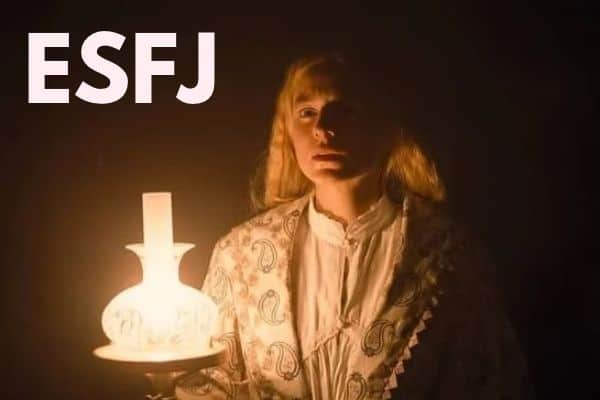
Anna Harding gives Ellen Hutter friendship and a place within her family’s household. She wants her friend to feel cared for and return to something resembling ordinary life.
Unfortunately, ordinary life is becoming increasingly difficult to locate.
Anna responds to Ellen’s distress through the circumstances she understands: friendship, family, companionship, and immediate care and support. She tries to draw Ellen into that shared world, sometimes struggling to comprehend experiences that fall outside it.
“Our friendship is a precious balm to my heart,” she tells Ellen, asking forgiveness for chiding her. The way Anna consistently prioritizes her relationships, trying again and again to mend things and help her, is admirable.
Why I lean ESFJ:
- E: She tends to respond through involvement in the shared situation, trying to bring Ellen back into familiar life.
- S: She relies on concrete experience and practical care to understand what is happening. She distrusts the more abstract, strange visions that Ellen experiences.
- F: Friendship and family attachment guide her responses and decisions.
- J: She tries to preserve stability and recognizable expectations as events become increasingly frightening.
5. Lydia Crane — The Holdovers
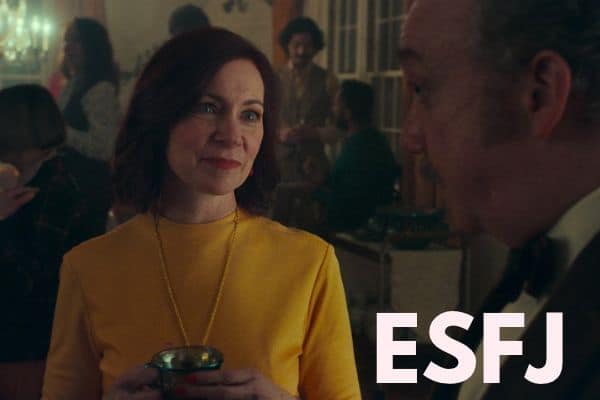
As an administrative assistant at Barton Academy, Lydia naturally gets involved in the everyday social world Paul often keeps at a distance. She notices an opportunity to include him and invites him to her Christmas party.
When Paul describes a world in which integrity seems pointless, she suggests that this may be exactly when students need someone like him. She’s a great example of how the attentiveness, emotional consideration, and warmth of an ESFJ can melt even the coldest hearts.
Why I lean ESFJ:
- E: She gets involved with the immediate social situation and creates opportunities for others to participate as well.
- S: She shows her care in tangible ways: food, an invitation, and attention to Paul’s actual circumstances.
- F: She thinks about everyone’s feelings when making decisions, moreso than cold, hard logic.
- J: She’s good at making arrangements and plans and following a routine.
6. Rio Morales — Spider-Man: Into the Spider-Verse

Rio Morales wants Miles to have opportunities. She also wants him to remember that having opportunities doesn’t excuse him from answering his parents.
Rio pays attention to how her family is functioning. When Miles struggles with his new school and his father’s expectations, she steps into the situation and helps him understand what Jefferson is trying to communicate.
She often acts on the relationship as it unfolds: explaining, reminding, encouraging, and setting expectations. Her attention is directed toward the people and circumstances in front of her, with a strong interest in how they can move forward together.
“Our family doesn’t run from things, Miles,” she tells him.
There is affection in that statement, but also a standard. Rio believes her son can face difficulty, and she expects him to try. Her support helps him stay connected to his family while beginning to find his own way.
Across the Spider-Verse develops her further, especially her concern about whether the wider world will welcome Miles as fully as his family does.
Why I see ESFJ:
- E: She responds to family tensions through direct engagement and efforts to influence the situation as it develops.
- S: She’s pragmatic, grounding her guidance in shared family experience and everyday responsibilities.
- F: She considers the feelings beneath people’s behavior and tries to preserve understanding between them.
- J: She prioritizes follow-through and clear expectations while supporting Miles’s growing independence.
7. Kanga — Winnie-the-Pooh
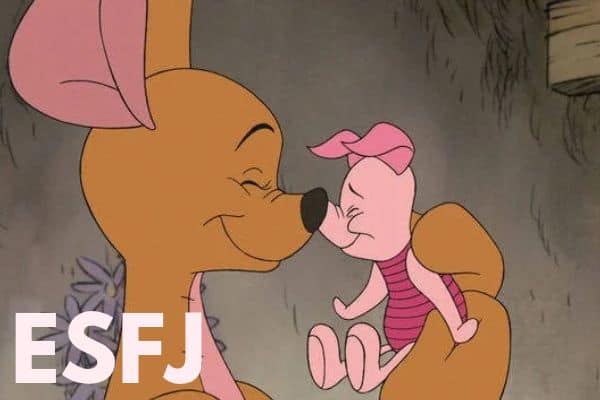
Kanga isn’t just the mother of Roo, she’s in many ways the mother of every animal in the hundred-acre wood. Roo can explore because someone is paying attention. The others can seek help because someone has made room for their needs.
But she also has a sense of humor that gets lost when she’s described only as maternal.
In the original book, Rabbit’s scheme leaves Piglet pretending to be Roo. Kanga recognizes what is happening and plays along, giving Piglet a bath he would very much prefer to decline.
“Don’t open the mouth, dear, or the soap goes in.”
She observes the situation accurately, adapts to it, and handles the nonsense with considerable composure.
I can see an ESFJ interpretation, but ISFJ is also plausible. Her caregiving doesn’t settle the question. The case for Extraversion rests on how readily she engages with what is happening around her; the stories give us less access to whether she ordinarily needs inward reflection first.
Why I lean ESFJ:
- E: She readily responds to the activity around her, though the evidence for a consistently outward orientation is limited.
- S: She attends to immediate needs and trusts familiar, dependable routines.
- F: Her decisions account for others’ comfort, safety, and emotional security.
- J: She provides structure and expects basic standards to be followed, including by reluctant bath recipients.
8. Martha “Mrs.” Hudson — Sherlock
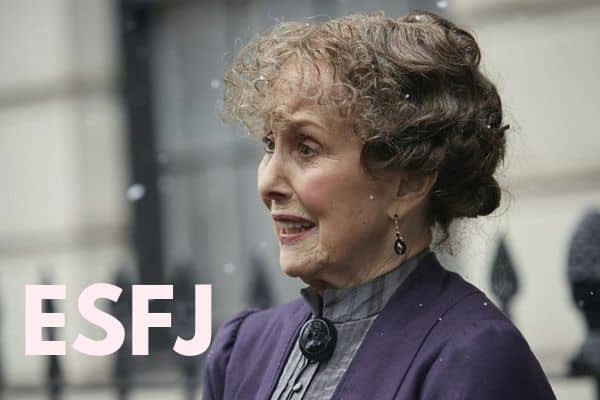
Mrs. Hudson repeatedly explains that she is the landlady, not the housekeeper. Sherlock and John appear to regard this as an interesting theory.
She pays attention to the life unfolding around her: their visitors, their moods, their arguments, and the latest disruption to her property. She generally responds by entering the situation, commenting on it, or deciding that someone needs to do something.
She creates a sense of home around two people who are unusually skilled at disrupting one. Yet she also has boundaries, opinions, and a life neither man fully appreciates.
Why I see ESFJ:
- E: Her attention is readily drawn into events around her, and she responds through participation and intervention.
- S: She handles immediate circumstances practically and draws on substantial life experience.
- F: She considers people’s feelings in every decision.
- J: She expects boundaries to be respected and takes action when their behavior makes ordinary life impossible.
9. Jocelyn Schitt — Schitt’s Creek

Jocelyn Schitt has spent enough time around Roland to develop patience. She has also spent enough time around Moira to know when patience needs backup.
As a teacher, mother, and participant in the town’s social life, Jocelyn stays involved with what her community is doing. She notices how the Roses are fitting in and helps create opportunities for them to participate.
What I enjoy about Jocelyn is that she usually understands more than people give her credit for. She can recognize an insult, make a pointed observation, and carry on without turning the moment into a big deal.
Her friendliness has endurance behind it. She knows these people, knows their flaws, and still sees reasons to maintain the relationships.
Why I see ESFJ:
- E: She naturally gets involved with the activity of her community and responds through participation and coordination.
- S: She stays grounded in everyday realities and handles practical responsibilities without much ceremony.
- F: She considers how decisions and interactions affect people’s sense of welcome and belonging.
- J: She helps organize group activities and likes routine, stability, and a clear plan.
10. Sung Sun-woo — Reply 1988
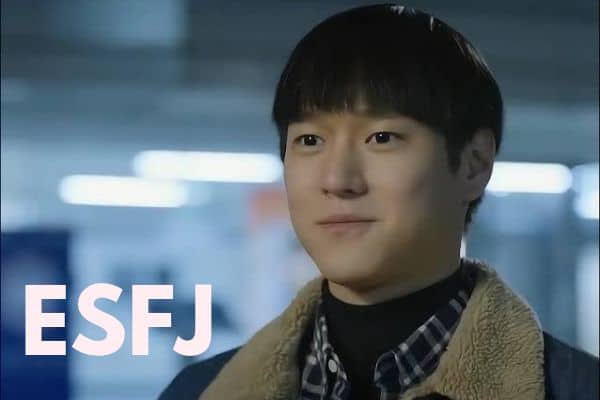
Sun-woo is the dependable son, the affectionate older brother, and the friend who seems to have remembered that other people have needs.
He takes school seriously, cares for Jin-joo, and pays attention to his widowed mother. Much of his responsibility appears through ordinary behavior rather than speeches about being responsible.
His relationship with Bo-ra becomes especially revealing when his mother’s expectations conflict with a choice he wants to make for himself.
“With my marriage, at least I want it to be with the person I love,” he tells her.
He wants her blessing, but he is learning to distinguish consideration from surrendering his own decisions. This is a huge step for ESFJs who often struggle to prioritize their own needs when they clash with others’ desires for them.
Why I lean ESFJ:
- E: His attention often tracks the changing circumstances around him, prompting involvement in family and neighborhood life.
- S: He shows sustained attention to everyday obligations, familiar relationships, and concrete ways of helping.
- F: Loyalty and concern for the people he loves strongly influence his decisions.
- J: He wants a plan, takes commitments seriously, and wants a clear understanding of where a relationship is going.
Reader Pause: When You’re the Dependable One
Which part of being dependable feels best to you: helping, belonging, knowing you’ve made a difference, or knowing things won’t fall apart?
And which part costs you the most?
These characters offer a question worth bringing into the rest of the article: Can you keep caring for people while allowing them to need something different from what you would choose for them?
The Devoted Friends and Partners
These characters put massive amounts of energy into their relationships. They pay attention, make plans, give help, and sometimes get involved several steps beyond what anyone requested.
For them, affection often creates an impulse to act. A friend is struggling, so they step in. A relationship feels uncertain, so they try to establish where it’s going. Someone they love has disappeared, so apparently they’re going on a road trip.
Their stories raise a question many ESFJs may recognize: how do you remain involved in someone’s life without making yourself responsible for every part of it?
11. Charles Boyle — Brooklyn Nine-Nine

Charles Boyle would like to support your relationship. Extensively. Possibly with a tasting menu and several questions you wish he hadn’t asked.
Charles invests wholeheartedly in the people he loves. Jake’s happiness becomes a major event in his own life, and he approaches friendship with an enthusiasm that occasionally makes everyone else consider hiding their phones.
His attention immediately jumps to what his friends are doing and how he can be part of it. He wants to help the relationship develop, improve the occasion, or supply the missing ingredient. Sometimes the missing ingredient was privacy.
But Charles has more backbone than his eager manner suggests. He has exacting food opinions, takes his work seriously, and puts himself in danger to protect Rosa. When someone needs him, his affection becomes action.
Why I see ESFJ:
- E: His attention readily follows the people and events around him, and he develops his response through enthusiastic involvement.
- S: He notices specific qualities in food and experiences, while familiar Boyle traditions give him a strong sense of continuity.
- F: Personal attachment carries enormous weight in his choices, sometimes making other people’s happiness feel like his responsibility.
- J: He turns enthusiasm into arrangements and commitments, occasionally establishing a relationship’s future before the other person has finished deciding about lunch.
12. Isabella Garcia-Shapiro — Phineas and Ferb

Isabella usually arrives with a question: “Whatcha doin’?”
It’s a fitting introduction to someone whose attention is readily drawn toward the activity around her. Phineas and Ferb have a project underway, and she wants to understand it, participate, and see where her Fireside Girls can help.
Her crush on Phineas gives those visits another purpose, of course. But Isabella deserves more credit than “girl waiting for boy to notice her.” She can organize a team, coordinate practical help, and keep people working together when a task becomes difficult.
Her frustration in Paris is especially revealing. Phineas is absorbed in solving their problem, while Isabella wants him to notice the experience they could be sharing. She sees an opportunity for connection that he keeps walking past.
She is capable and resourceful. Expressing her own needs directly is sometimes the harder assignment.
Why I see ESFJ:
- E: She naturally gets involved with ongoing events and looks for a place to participate rather than remaining an observer.
- S: She attends to the practical requirements of projects and the specific opportunities available in the moment.
- F: She considers how people relate to one another and wants shared experiences to feel personally meaningful.
- J: Her leadership of the Fireside Girls shows a preference for coordinating effort, fulfilling responsibilities, and completing tasks.
13. Anna — Frozen

Anna has spent years with very little access to the world outside the castle or the sister inside it. When the gates finally open, she would like to experience approximately everything at once.
When Elsa withdraws, Anna follows. She wants to talk, repair the relationship, and bring her sister home. Her attention goes toward what is happening between them and what she can do about it.
Her quick engagement to Hans reveals how much she longs for an established bond. She mistakes immediate rapport for sufficient knowledge of another person, which is understandable after years of isolation, if still a spectacularly bad decision.
Across both films, her devotion becomes more discerning. She learns that love can require difficult action even when reassurance and reunion aren’t available.
Why I lean ESFJ:
- E: She instinctively moves toward people and events, developing her understanding through participation and direct encounters.
- S: She acts on the concrete situation before her and places considerable importance on shared experiences and her history with Elsa.
- F: Love, loyalty, and the emotional consequences for people she cares about guide her most significant decisions.
- J: She repeatedly seeks a definite resolution: restore the relationship, bring Elsa home, or decide what must happen next.
14. Constanze Mozart — Amadeus
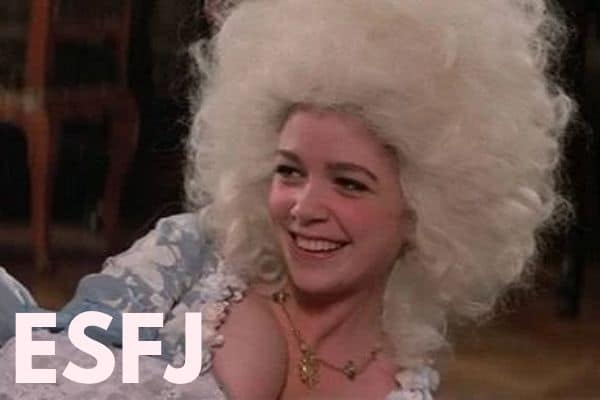
Constanze Mozart loves a man whose extraordinary musical ability does not come with an equally extraordinary ability to manage household finances.
Someone has to notice.
In the film, Constanze is playful and affectionate, but also attentive to the practical conditions surrounding Mozart’s work. They need income. He needs opportunities. His health matters. Talent is impressive, but it doesn’t automatically pay the bills.
When she approaches Salieri with Mozart’s scores, she takes an active role in trying to improve their circumstances. She seeks access, asks questions, and attempts to secure support rather than leaving the problem entirely with her husband.
Her concern becomes sharper as Mozart deteriorates. She can appreciate his gifts while recognizing that the situation around him is becoming dangerous.
Why I lean ESFJ:
- E: She responds to difficulties by engaging with the people and opportunities that might change their circumstances.
- S: She keeps returning to concrete realities such as money, employment, health, and the demands of their household.
- F: Her decisions are guided by her values, relationships, and emotions.
- J: She wants practical problems addressed and takes steps to establish a more secure situation.
15. Johnny Dogs — Peaky Blinders

Johnny Dogs knows people. He understands the local situation. He can arrange access, bridge relationships, and help turn a plan into something that actually happens.
His attention is closely connected to the world around him: who is involved, what they need, and how a situation can be handled. He often works through direct dealings with people rather than standing back to observe and hypothesize.
Johnny also has enough familiarity with Tommy to tease him. That humor gives their relationship a different texture from the tense exchanges Tommy has with many of his associates.
His loyalty is substantial, although loyalty within a criminal organization has consequences. Being a dependable friend doesn’t make every task he helps accomplish admirable.
Why I lean ESFJ:
- E: He is involved with people and unfolding events, using participation and negotiation to navigate them.
- S: He relies on local knowledge, experience, and practical understanding of how things work.
- F: Established personal loyalties strongly influence whom he supports and how he uses his connections.
- J: He helps make arrangements and follows through on the responsibilities he accepts. This is suggestive rather than conclusive evidence for Judging.
16. Eo Heung — Mr. Plankton

Eo Heung loves Jae-mi. His mother would like that love to comply with several family requirements first.
Heung begins the series caught between his attachment to Jae-mi and the expectations surrounding his family’s lineage. He wants the relationship, but he is accustomed to living within a structure where other people have considerable authority over his choices.
Then Jae-mi disappears on their wedding day, and his carefully contained life becomes considerably less contained.
His pursuit takes him into unfamiliar circumstances where he has to respond, make decisions, and act without the usual protections. He develops courage by becoming involved in a world he previously had little reason to navigate.
“I will never give up on you,” he tells Jae-mi during one rescue attempt. His development involves learning what that devotion should mean when her feelings and choices complicate the future he imagined.
Why I see ESFJ:
- E: People, experiences, and relationships always come first.
- S: Familiar family practices and established expectations initially shape his understanding of how life should proceed.
- F: His attachment to Jae-mi and concern about family relationships drive his major decisions.
- J: He wants a definite commitment and a settled future, even as events force him to reconsider how that future can be built.
17. Jung Ji-hoo — Love and Leashes
Jung Ji-hoo has become very good at appearing agreeable, competent, and easy to like. Maintaining that impression is exhausting.
At work, he is attentive to how people respond to him and what the situation requires. He wants to do well, avoid rejection, and remain someone others regard positively. When Ji-woo accidentally discovers his interest in BDSM submission, he becomes acutely aware of how his private preferences might alter that public relationship.
What makes their developing connection meaningful is the possibility of being accepted without maintaining the same level of control. He gradually becomes more willing to express what he wants, rather than treating acceptance as something he must earn through a flawless performance.
Why I see ESFJ:
- E: Much of his attention goes toward the interpersonal situation around him and how to respond within it.
- S: He approaches their arrangement through specific practices, concrete feedback, and learning what works in experience.
- F: Acceptance, respect, and concern about others’ reactions carry considerable weight in his decisions.
- J: He needs explicit boundaries and agreements that give the relationship a clear structure.
18. Lee Jun-ho — Extraordinary Attorney Woo

Lee Jun-ho pays attention, which sounds simple until you notice how many people around Young-woo respond to their assumptions about her instead of the person in front of them.
Jun-ho listens to her interests, recognizes her ability, and learns what helps her survive unfamiliar situations. His care is practical. Helping with a revolving door or learning how to comfort someone requires attention to particular needs, rather than a general intention to be nice.
But Jun-ho also has feelings of his own. His relationship with Young-woo becomes more convincing when he expresses hurt and explains what their time together means to him. He needs the connection to include his experience too.
Why I lean ESFJ:
- E: He often develops his response through close engagement with the person and circumstances in front of him.
- S: He notices specific needs and adapts his behavior through concrete experience.
- F: He gives substantial weight to values, emotional understanding, and the consequences of his actions for Young-woo.
- J: He wants clarity about their relationship and wants to address problems rather than leave important questions indefinitely unsettled.
19. Cho Yong-pil — Welcome to Samdal-ri

Cho Yong-pil knows his hometown, cares about its people, and has opinions about weather forecasts that his superiors would occasionally prefer he kept to himself.
His work has a personal foundation. After losing his mother, a diver, because of an inaccurate forecast, he becomes committed to helping protect people whose safety depends on the weather.
That commitment keeps his attention directed toward the conditions around him. What is actually happening? Who could be affected? Does the official decision account for the local reality?
He brings a similar involvement to his relationship with Sam-dal. When she returns home, he responds to the person and situation before him, giving support while she struggles to recover her footing.
Why I see ESFJ:
- E: He naturally gets involved with local events and people, socializing, interacting, and talking out problems.
- S: He trusts close observation, local experience, and facts about changing conditions.
- F: The welfare of his community and his longstanding attachments give his decisions personal weight.
- J: He takes responsibility for outcomes and wants decisions made carefully enough that others can rely on them.
A Question About Devotion
When you care about someone, what do you tend to do first: offer practical help, seek reassurance, make a plan, or try to understand what they need?
And what happens when they decline?
For these characters, an important part of growth is learning to stay connected without assuming that greater involvement will always create a better relationship.
The Ones Who Take Charge
These characters notice a problem and begin getting involved while everyone else is still deciding whether it counts as their business.
They rally people, make arrangements, enforce expectations, and try to move a situation toward a workable outcome. Their attention goes toward what is happening around them and how they can influence it.
That can be a tremendous gift. Groups need people who will take responsibility, especially when the alternative is six people politely waiting for someone else to volunteer.
But taking charge has its complications. These characters sometimes become so invested in the outcome that they forget other people have their own priorities. Their growth often involves learning to lead without treating disagreement as a personal rejection.
20. Madeline Mackenzie — Big Little Lies

Madeline Mackenzie can make you feel fiercely supported within five minutes of meeting her. She can also acquire an enemy in roughly the same amount of time.
When Jane arrives in Monterey, Madeline draws her into her circle and takes an interest in her life. She notices the social situation, identifies where she stands, and gets involved. If you’re one of her people, she will defend you, include you, and probably become considerably angrier on your behalf than you were planning to be.
Her outward focus is visible in how she handles uncertainty. She enters the conversation, challenges the person, or starts organizing a response. She often discovers exactly how she feels while everyone else is receiving a detailed explanation of it.
That investment makes her a devoted friend. It also makes her daughter’s independence and her ex-husband’s new life difficult to accept. She wants to matter, and sometimes tries to secure her place by influencing choices that belong to someone else.
Why I see ESFJ:
- E: Her attention quickly moves toward people’s behavior and the situation unfolding around her; she develops her response through direct involvement.
- S: She focuses on concrete disputes, family arrangements, and specific incidents she remembers in considerable detail.
- F: Relationships, values, and emotional considerations are at the forefront of her decisions.
- J: She wants action and resolution, often taking responsibility for making something happen.
21. Woody — Toy Story

Woody knows what the toys are supposed to do. They belong to a child, they show up when needed, and they look after one another.
Then Buzz arrives and makes several parts of that arrangement uncomfortable.
Woody’s attention is closely tied to the life around him: Andy’s preferences, the other toys’ behavior, and any development that might disrupt their place in the household. He responds by directing the group and trying to manage events. When his position feels threatened, that same involvement becomes competitive and possessive.
Across the films, his understanding of responsibility grows. In Toy Story 2, he has to choose between preserving himself in a museum and returning to a relationship that cannot last forever. In Toy Story 3, his commitment brings him back to rescue the others from Sunnyside.
Why I see ESFJ:
- E: He stays engaged with the group’s activity and changing circumstances, usually responding through leadership and direct action.
- S: His judgments draw heavily on his history with Andy and his established understanding of a toy’s responsibilities.
- F: Belonging, connection, and the welfare of his child and fellow toys give his decisions their weight.
- J: He prefers a clear purpose, shared expectations, and a plan that keeps everyone together.
22. Barbie — Toy Story
Barbie arrives at Sunnyside, meets Ken, and briefly appears to have found a very promising combination of romance and wardrobe access.
What I appreciate about Barbie is how readily she changes her behavior when new information demands it. Her attraction to Ken doesn’t prevent her from confronting his involvement in Lotso’s treatment of the other toys. She participates in their escape and uses her understanding of Ken to obtain the information they need.
“Authority should derive from the consent of the governed, not from the threat of force!” she announces.
A fairly substantial contribution from someone everyone was prepared to underestimate.
Why I lean ESFJ:
- E: She responds to changing events through participation, confrontation, and coordination with the others.
- S: She uses concrete observations, available resources, and her knowledge of Ken’s preferences to solve immediate problems.
- F: Her concern for the toys’ treatment outweighs the comfort of staying on good terms with Ken.
- J: She wants the abusive arrangement changed and helps work toward a more accountable structure.
23. Polly Gray — Peaky Blinders

Polly Gray kept the Shelby business going while the men were at war. Their return does not persuade her that she should suddenly stop having opinions.
She understands the family as a working system of loyalties, vulnerabilities, money, and consequences. When someone acts recklessly, she wants to know what it will cost and who will be left handling the damage.
Her attention moves readily toward those external realities. She questions, advises, confronts, and negotiates. She is especially willing to challenge Tommy when his plans disregard something she considers essential.
But her responsibilities can pull against one another. Her place in the Shelby family and her attachment to her son Michael don’t always lead her toward the same decision. Those conflicts make her more interesting than an endlessly competent matriarch dispensing instructions.
Polly can understand people well and still make choices that hurt them. Her judgment deserves scrutiny alongside her loyalty.
Why I see ESFJ:
- E: She interacts immediately with the family’s changing circumstances and develops decisions through confrontation, discussion, and negotiation.
- S: She draws on experience and keeps track of practical consequences, resources, and past behavior.
- F: Personal loyalties and relationships shape her judgments.
- J: She expects accountability, anticipates what needs handling, and works to keep the business and household functioning.
24. Candace Flynn — Phineas and Ferb

Candace Flynn would like someone to acknowledge that her brothers built something physically impossible in the backyard.
This seems reasonable. Unfortunately, the evidence keeps disappearing.
Her attention is repeatedly captured by events outside her: what Phineas and Ferb are doing, whether her mother can see it, and how she might finally make the situation resolve in her favor. She acts on what she observes, recruits help, and changes tactics as circumstances change.
There is also a personal stake beneath the pursuit. Candace wants her experience recognized. Being the only person treated as unreasonable while everyone else enjoys the day becomes increasingly frustrating.
I lean ESFJ for Candace because this combination of outward engagement, concrete observation, interpersonal concern, and desire for closure recurs across her stories.
Why I lean ESFJ:
- E: Her focus naturally follows outside events, and she tries to understand and influence them through immediate involvement.
- S: She concentrates on observable evidence and the specific sequence of what happened.
- F: Recognition, family fairness, and the state of her relationships strongly affect her reactions.
- J: She wants a definite outcome: her mother sees the invention, the rules are enforced, or the relationship becomes clear.
25. Leslie Knope — Parks and Recreation

Leslie Knope has a plan, a binder, and several reasons you should care about something you were hoping to ignore.
Her enthusiasm is directed toward the world around her. She sees a neglected space, an underserved community, or a friend having a difficult time, and starts considering what can be done. Her ideas develop through meetings, projects, conversations, and the sometimes exhausting process of getting people involved.
Her care is unusually specific. She remembers preferences, plans celebrations, and puts effort into details other people might overlook. That same attention carries into public service. A park matters because people will use it. Administrative work matters because it affects their lives.
Of course, Leslie can become so certain about helping that she stops listening. Her conflicts with Ann and Ron reveal how easily affection and conviction can turn into pressure. She has to learn that other people can appreciate her dedication and still want something different.
Why I see ESFJ:
- E: She naturally participates with public events and people, developing her ideas through participation and collaboration.
- S: She pays close attention to local needs, personal details, procedures, and the practical work required to complete a project.
- F: Her decisions are strongly guided by concern for friends, colleagues, and the community she serves.
- J: She plans extensively, establishes goals, and works persistently to turn intentions into completed outcomes.
Reader Pause: What Happens When Nobody Follows the Plan?
When people disagree with your solution, what bothers you most?
- You’re worried that someone will get hurt.
- You feel that your effort has gone unappreciated.
- You can see the practical problems they’re overlooking.
- You feel less needed or included.
- You’re frustrated that a decision still hasn’t been made.
The answer can help you recognize whether the situation needs more information, a clearer boundary, or a little room for someone else to take responsibility.
When Approval Becomes a Full-Time Job
Wanting people to like you is fairly ordinary. Most of us would prefer appreciation to being the subject of a concerned group chat.
For these characters, though, approval is even more prioritized. It can mean belonging, security, success, or proof that they matter. They become attentive to how others respond to them and may work hard to maintain the version of themselves that receives the best reception.
That sensitivity can help them understand a room. It can also make the room’s opinion difficult to escape.
Their stories become especially interesting when being liked and making a choice they respect stop pointing in the same direction.
26. Tahani Al-Jamil — The Good Place

Tahani Al-Jamil has raised enormous amounts of money for charity, knows approximately every famous person alive, and would appreciate it if you noticed.
Preferably before mentioning her sister.
Growing up in Kamilah’s shadow teaches Tahani to treat recognition as something she must continually earn. She becomes accomplished at hosting, fundraising, and presenting herself beautifully, but satisfaction rarely lasts. There is always another comparison waiting.
Her outward orientation is visible in how readily she engages with that social world. She organizes occasions, tracks people’s responses, and uses external recognition to assess how things are going. Her attention keeps returning to the audience, even when the audience is a remembered version of her parents.
The show gradually asks her to reconsider what makes an action worthwhile. Helping someone can feel different when she isn’t also waiting to see whether it improves her standing.
Why I see ESFJ:
- E: Her attention naturally goes to social events, participation, and the responses of people around her.
- S: She notices concrete markers of status and invests in the practical details that make an occasion successful.
- F: Acceptance, interpersonal comparison, and the desire to be valued strongly influence her decisions.
- J: She plans extensively, manages expectations, and prefers a clearly established place within the social order.
27. Ken — Toy Story

Ken would like someone to appreciate his clothes. Sunnyside has been disappointingly unhelpful in this regard.
When Barbie arrives, she notices what matters to him. Their immediate connection offers something he has been missing: someone who seems delighted by the person he is trying to express.
Ken’s attention is directed toward the social environment around him. He shows newcomers around, presents his lifestyle, and responds closely to whether others admire or dismiss him. His relationship with Lotso’s group also gives him a place in the daycare hierarchy, even though its members don’t always respect him.
That creates his central conflict. Staying accepted by the group requires tolerating behavior Barbie refuses to excuse.
His eventual break with Lotso shows a willingness to reconsider where he belongs. He and Barbie help create a better Sunnyside, giving his interest in social life a more constructive purpose.
Why I lean ESFJ:
- E: He is absorbed in the social world around him and readily engages through hosting, showing, and responding to others.
- S: He notices specific details of clothing and surroundings and takes pleasure in tangible experiences.
- F: Appreciation, belonging, and his attachment to Barbie weigh heavily in his choices.
- J: He initially accepts Sunnyside’s established roles and later helps maintain a different arrangement. This is the least clear part of his typing.
28. Glinda Upland — Wicked

Glinda understands that a room has an opinion, and she would generally like that opinion to be excellent.
About her.
In the musical and the 2024 film, she arrives at Shiz with confidence in the value of popularity. She knows how to present herself, attract attention, and encourage people to see a situation her way.
Her focus is readily directed toward that external social world. She notices reactions and opportunities, then adjusts what she says or does to influence them. She often discovers how much a choice matters through the encounter itself.
The Ozdust scene brings this into sharp focus. After contributing to Elphaba’s humiliation, Glinda sees what her behavior has caused. Joining Elphaba’s dance requires her to risk the approval she usually protects, and her participation changes how the room responds.
Their friendship gives her reasons to question the standards she once accepted so easily. Her struggle is sustaining that judgment when social rewards become harder to refuse.
Why I see ESFJ:
- E: Her attention moves naturally toward the people and activity around her, and she actively shapes the social situation.
- S: She is attentive to presentation, manners, and the concrete customs through which status is communicated.
- F: Acceptance and interpersonal consequences strongly influence her judgments, with growing concern for Elphaba challenging her priorities.
- J: She wants a recognizable path toward success and is comfortable working within established expectations.
29. Jackie Taylor — Yellowjackets

Jackie Taylor knows how to be the person people look toward.
Before the crash, that ability matters. As team captain, she has influence, social confidence, and a sense of how to keep the group together. She understands the familiar world they occupy and her place within it.
Then the world changes.
In the wilderness, the qualities that once secured her position become less useful. Practical survival skills gain importance. The group’s expectations shift, and Jackie struggles to adjust to an environment where her authority no longer carries the same weight.
Her attention remains closely connected to what others are doing and how their behavior compares with the social order she knows. When that order breaks down, she becomes increasingly frustrated and alienated.
Why I see ESFJ:
- E: She is strongly oriented toward the group’s activity and relationships, using participation and influence to navigate them.
- S: She trusts familiar experiences and social expectations, struggling when they no longer fit the circumstances.
- F: Friendship, acceptance, and perceived loyalty have considerable weight in her judgments.
- J: She prefers established roles and expectations and finds the group’s changing rules difficult to tolerate.
30. Jin Cho-yeon — Alchemy of Souls

Jin Cho-yeon begins with a fairly clear understanding of where she belongs. She is a daughter of the Jin family, she has expectations surrounding her future, and she would very much like Jang Uk to participate in those expectations.
He has other things happening.
Cho-yeon is emotionally expressive and responsive to the social situation around her. She notices how she is being treated, who appears to be getting attention, and whether events are moving toward the future she wants.
Her privilege can make her careless about how her words affect someone with less power, particularly Mu-deok. But she also has an openness that makes her feelings easy to recognize. Affection, embarrassment, jealousy, and disappointment tend to enter the conversation quickly.
Her developing relationship with Dang-gu and the loss of her father change the terms of her life. Familiar expectations give way to experiences she cannot easily manage, and her later behavior carries more grief and seriousness.
Why I lean ESFJ:
- E: Her attention readily follows external relationships and events, with her responses developing through direct involvement.
- S: She relies on familiar family arrangements, social customs, and the concrete realities of her position.
- F: Personal attachments and the treatment of people close to her strongly influence her reactions and choices.
- J: She initially seeks a clear, ordered future and commitments, becoming distressed when events disrupt that picture.
31. Cameron “Cam” Tucker — Modern Family

Cam Tucker cares deeply, and he would like the emotional significance of that care to be properly acknowledged.
He creates occasions, entertains, coaches, parents, and finds plenty of opportunities to bring people together. His attention is readily drawn toward the life unfolding around him: what the family is doing, how others respond, and where he can contribute.
He also has a strong interest in how his contribution is received. Feeling overlooked can lead him to exaggerate, dramatize, or maneuver for reassurance. Mitchell sometimes finds himself responding to a situation Cam has made substantially larger than it needed to be.
Yet Cam’s affection and competence are real. His background in farming, football, music, and performance gives him practical abilities that can surprise people who have noticed only the theatrics.
“I’m sort of like Costco,” he says. “I’m big, I’m not fancy and I dare you not to like me.”
Why I see ESFJ:
- E: He naturally gets involved with external events and people, developing his responses through participation, performance, and conversation.
- S: He draws on lived experience and expresses himself through activities, traditions, and carefully arranged occasions.
- F: Affection, appreciation, and the state of his relationships strongly influence his judgments.
- J: He likes making arrangements and planning how an occasion or family situation should unfold, sometimes becoming controlling when others depart from that plan.
These characters make approval look appealing and exhausting. Being responsive to people can help you build a good relationship. It becomes harder when their response starts deciding how much you are allowed to value yourself.
The People Trying to Build the Life They Were Promised
These characters have an idea of how life is supposed to unfold.
Work hard. Be someone people can depend on. Find the right partner. Build a family. Become the person everyone seems to expect.
Then experience starts asking inconvenient questions.
Sometimes the expected life no longer fits. Sometimes the relationship requires more compromise than they anticipated. Sometimes they discover that being good at a role doesn’t mean they want to spend their life performing it.
Their stories explore what happens when familiar expectations collide with personal needs. Changing direction can be especially difficult when other people have already made themselves comfortable with your future.
32. Jackson Marchetti — Sex Education
Jackson Marchetti looks like someone who has things figured out. He’s popular, accomplished, and a star swimmer. Adults have considerable confidence in where his life is going.
Jackson is less convinced.
His outward attention helps him get through school life with relative ease. He understands the expectations surrounding him and knows how to participate successfully. But being responsive to those expectations has become exhausting. Swimming gives other people a clear story about who he is, while leaving him increasingly anxious and disconnected from what he wants.
His decision to pursue acting lets him explore an experience without already being the finished product everyone expects. His friendships and relationships also reveal a need for emotional connection that achievement cannot satisfy.
Why I lean ESFJ:
- E: He tends to get involved directly with school life and relationships, developing his responses through participation and interpersonal feedback.
- S: He is accustomed to tangible standards, practiced skills, and an established routine built around measurable performance.
- F: Acceptance and meaningful relationships carry substantial weight, often complicating the choices others consider obvious.
- J: He takes responsibilities seriously and initially tries to maintain the clear path laid out for him.
33. Lucy Smith — Fellow Travelers

Lucy Smith wants a loving marriage and a family. Hawkins Fuller appears to belong in that picture. But over time, keeping the picture intact requires her to live with things she understands more fully than she can comfortably acknowledge.
Lucy’s story is painful in many ways. She and Hawk share history, familiarity, children, and significant losses. The marriage contains companionship alongside the knowledge that an essential part of his emotional life remains elsewhere.
Her attention often goes toward what their shared life requires: how the family is doing, how they present themselves, and what acknowledging a truth might change for everyone involved. She tries to preserve something she values, even as the cost grows.
Eventually, she has to reconsider whether the arrangement still serves the people living inside it, including herself.
Why I lean ESFJ:
- E: Much of her attention is directed toward the external life she shares with Hawk and how to sustain its relationships and obligations.
- S: Shared history, familiar routines, and the concrete reality of their family give her decisions considerable weight.
- F: She repeatedly considers what her choices will mean for the people she loves.
- J: She values an established family structure and works to preserve it long after it becomes difficult.
34. Kathy — The Bikeriders
Kathy falls for Benny and acquires a considerable amount of trouble along with him.
As the film’s narrator, she looks back on the Vandals with affection, irritation, and an eye for how people behave. She notices the group’s customs, its personalities, and the difference between what the lifestyle promises and what it costs.
Her attention is wrapped up in that external world. She enters it, reacts to it, and develops her understanding through experience. Benny’s freedom attracts her, but living beside that freedom is another matter. She wants a relationship in which the person she loves remains alive, present, and at least somewhat accountable. The club gives Benny other loyalties and exposes them both to danger.
Why I lean ESFJ:
- E: She is closely engaged with the people and events around her, forming judgments through participation and direct experience.
- S: Her observations are specific and grounded in what she has seen people do.
- F: Her attachment to Benny and concern about their life together strongly influence her choices.
- J: She wants greater reliability and a workable future, creating tension with Benny’s resistance to being tied down.
35. Yang Ho-rang — Because This Is My First Life
Ho-rang would like to get married. She has been with Won-seok for years and assumed they were moving toward the same destination.
Discovering that he doesn’t share that assumption is deeply unsettling to her.
For Ho-rang, marriage represents love, security, recognition, and a place among other adults whose lives seem to be progressing. Her attention is strongly connected to that surrounding social world. She notices where others stand, compares their circumstances with her own, and tries to bring her relationship into the shape she expects.
But hints and frustration cannot substitute for an honest conversation about what both partners want. Her story becomes more interesting when she has to examine the future she has been pursuing and negotiate it more directly.
Why I see ESFJ:
- E: Her focus often moves toward her relationship’s external circumstances and its place within the social world around her.
- S: She gives weight to familiar milestones and the tangible conditions of building a household.
- F: Relationships, recognition, and what marriage means personally shape her judgments.
- J: She wants a definite direction and becomes frustrated by a relationship whose future remains unsettled.
36. Sansa Stark — Game of Thrones
Sansa begins with a picture of life drawn from courtly stories. A handsome prince, a noble marriage, beautiful clothes, and the chance to become the lady she has been taught to admire.
Joffrey is a particularly unpleasant introduction to the limitations of that plan.
Early Sansa pays close attention to the social world she wants to enter. She notices manners, rank, appearance, and what people expect of her. Her judgments are influenced by those external standards, sometimes more than by the warnings available in her own experience.
As her circumstances become dangerous, she learns to distinguish presentation from intention. Her later attention to alliances, supplies, and Northern interests shows a more experienced understanding of what leadership requires.
I lean ESFJ, but her Extraversion is debatable. Her early orientation toward the surrounding social order supports the case; her later reserve also reflects circumstances in which openly expressing herself would be unsafe.
Why I lean ESFJ:
- E: Especially early on, she looks outward toward social roles and expectations to understand where she belongs and how to proceed.
- S: She attends to real details, established customs, and lessons drawn from experience.
- F: Attachment, loyalty, and relational awareness are the major factors in her decision-making.
- J: She prefers recognizable roles and eventually becomes skilled at establishing order and preparing for practical needs.
37. Daphne Bridgerton — Bridgerton

Daphne has been raised to become an excellent wife. Unfortunately, her education has left out several things she needs to know about actually being married.
She enters society with a clear goal: find a loving partner and build a family like the one she grew up in. She understands the expectations of the marriage market and initially trusts that following them will help her secure that future.
Her attention moves toward the world she must navigate. She observes interactions, responds to opportunities, and adjusts her conduct as events develop. Her arrangement with Simon is an active attempt to change those external circumstances.
Her story asks what happens when an expected future becomes so important that another person’s autonomy is pushed aside.
Why I see ESFJ:
- E: She gets involved actively with the social situation around her and develops her approach through encounters and changing circumstances.
- S: She initially trusts familiar customs and the concrete model of family life she knows.
- F: Love, family attachment, and the personal meaning of marriage drive her decisions.
- J: She wants a defined commitment and a clear future, struggling when her marriage cannot fulfill the expectations she brought into it.
38. Troy Bolton — High School Musical

Troy Bolton is the basketball guy. His father knows it. His friends know it. The school appears to have reached a consensus.
Then he sings with Gabriella and discovers that the consensus is incomplete.
Troy’s attention is closely connected to the people and activities around him. He responds to his team, his father, Gabriella, and the opportunities that appear, sometimes trying to satisfy so many expectations that his own preference becomes difficult to hear.
“Sometimes I don’t wanna be the ‘basketball guy,’” he admits. “I just wanna be a guy.”
His interest in music creates a conflict between belonging to the group he knows and exploring something that could change his place within it. Across the films, he becomes more willing to make choices that include both parts of himself.
He still cares about the people affected. He gradually learns that their disappointment doesn’t automatically mean he has made the wrong decision.
Why I see ESFJ:
- E: He is naturally involved in external activities and relationships, with his understanding developing through participation.
- S: He trusts practiced skills, shared experiences, and the familiar world of basketball and school life.
- F: His decisions repeatedly account for the feelings and expectations of people important to him.
- J: He wants his commitments to fit into a coherent plan and struggles when they pull his future in different directions.
Reader Pause: Whose Future Are You Building?
Think about one goal you’ve been pursuing for a long time.
Do you still want it? Do you want the belonging or approval you expect it to provide? Or has it simply become difficult to imagine explaining a different choice?
You don’t have to abandon a familiar path to make it your own. But you do need enough room to ask whether it still fits.
The Protectors Who Show Up When It Counts
Care becomes easier to understand when it asks something of the person offering it.
These characters help when doing so costs time, comfort, status, or safety. They notice someone struggling and become involved, sometimes before they have worked out what that involvement will require.
Their methods vary considerably. One offers practical guidance. Another confronts a frightened crowd. Someone else insists that a victory earned unfairly would be difficult to enjoy.
What connects them is the importance they place on how people are treated. Their stories become especially revealing when loyalty to one person conflicts with responsibility toward another.
39. Ochaco Uraraka — My Hero Academia

Ochaco wants to become a hero partly because her parents need money.
I appreciate how straightforward that is. Helping your family pay the bills is a perfectly meaningful ambition, even if it sounds less impressive than saying that you intend to save civilization.
Her attention initially focuses on the tangible difference a career could make in her parents’ lives. As she gains experience, that concern expands. She notices the exhaustion behind heroic behavior and begins asking who supports the people everyone expects to keep saving others.
“Who protects the heroes when they are hurting?”
Her defense of Deku before the crowd at U.A. gives that question a public form. She sees a person carrying too much and tries to change how the people around him respond.
Ochaco can also compete fiercely. Her fight with Bakugo shows determination and preparation, even when spectators would prefer to treat her as someone who needs protecting.
Why I see ESFJ:
- E: Her attention is focused on the people and conditions around her, and she develops her judgments through participation in that world.
- S: She focuses on tangible needs and practical consequences, from her parents’ finances to the physical demands of hero work.
- F: The welfare and dignity of people affected by a decision carry substantial weight for her.
- J: She commits to a goal, prepares for challenges, and works steadily toward becoming someone others can depend on.
40. Jang Geum-ja — Squid Game
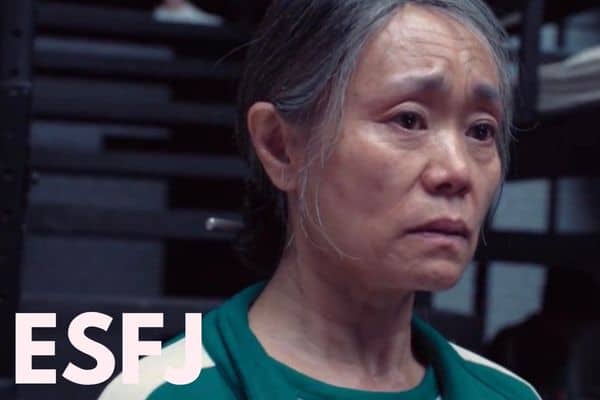
Geum-ja enters the games with her son, Yong-sik. Protecting him gives her an immediate purpose in a place designed to make people disposable.
Her care is practical. She pays attention to food, safety, vulnerability, and who needs someone beside them. When she recognizes Jun-hee’s needs, she becomes involved rather than leaving the younger woman to manage alone.
Her outward focus is visible in how closely she follows the group’s changing circumstances. She notices danger and distress, responds to the people in front of her, and urges others to reconsider decisions that could get them killed.
“Let’s put our lives first and get out of this place,” she tells the players.
Season three makes her loyalty painfully complicated. Protecting her son and protecting another vulnerable life become incompatible. Her choice carries a devastating cost.
Why I see ESFJ:
- E: She stays focused on unfolding events and people’s immediate reactions, responding through direct involvement.
- S: She notices real needs and offers practical care under dangerous conditions.
- F: Personal attachment and concern for vulnerable people guide her most consequential choices.
- J: She wants clear decisions that protect life and repeatedly tries to move others toward a safer course.
41. Mitsuri Kanroji — Demon Slayer

Mitsuri Kanroji is strong, affectionate, and hungry. Unfortunately, someone once convinced her that these were problems she needed to solve before becoming acceptable.
After rejection, she tries to conceal parts of herself. She changes her appearance, restricts her appetite, and suppresses her strength. The attempt reveals how much other people’s judgments have shaped her understanding of what she is allowed to be.
The Demon Slayer Corps gives her a different experience. Her abilities have a purpose, and the people around her value what she can contribute.
I lean ESFJ because her attention is so often drawn toward others’ qualities, responses, and needs. Her affection develops through interaction with the people around her, and her desire to belong becomes closely connected to protecting them.
Why I lean ESFJ:
- E: Her attention readily moves toward the people around her, with her responses developing through involvement and interpersonal feedback.
- S: She is attentive to physical experience and responds concretely to what a situation requires, though this alone doesn’t settle her Sensing preference.
- F: Acceptance, attachment, and the consequences for others strongly influence her choices.
- J: She thrives in the structure and order of the Demon Slayer Corp.
42. Lloyd Pierce — Yellowstone

Lloyd knows what the work requires. He has spent enough years doing it to recognize when someone needs instruction, encouragement, or a warning they probably won’t enjoy hearing.
His relationship with Jimmy shows that care clearly. He offers practical guidance, helps him recognize an ability, and gives him support when he is still trying to find his footing.
Lloyd’s attention is closely connected to the working life around him. He notices what people are doing, how well they’re coping, and where his experience might help. His involvement gives the bunkhouse a sense of continuity.
But experience doesn’t make him immune to jealousy or poor judgment. His conflict with Walker exposes how threatened status can undermine the standards he otherwise upholds. And his loyalty operates within a ranch culture that enables serious violence.
Why I lean ESFJ:
- E: He often responds to the activity around him through participation and guidance, although his underlying orientation is less clear than his practical involvement.
- S: He relies mostly on accumulated experience, demonstrated skills, and concrete knowledge of ranch work.
- F: Loyalty and attachment influence whom he supports and why their progress matters to him.
- J: He values established responsibilities and standards, expecting people to learn the work and fulfill their role.
43. Snow White — Snow White and the Seven Dwarfs

Snow White arrives in an unfamiliar forest frightened and alone. Gradually, she begins paying attention to what is around her and finding ways to participate in it.
The animals become companions. The cottage becomes somewhere she might belong. Its inhabitants become people whose lives she can help make more comfortable.
Her response to difficulty is outward and practical. She engages with her surroundings, gathers cooperation, and starts making arrangements. There is considerable initiative beneath the gentle manner.
She also has expectations. The dwarfs may be offering shelter, but that doesn’t mean they are getting dinner without washing first.
Her willingness to trust becomes dangerous when the Queen arrives in disguise. Snow White’s hopefulness helps her build relationships, but it leaves her poorly prepared for someone deliberately exploiting it.
I lean ESFJ for Disney’s animated version, while recognizing that the film gives us a relatively simple portrait.
Why I lean ESFJ:
- E: She naturally engages with her surroundings and builds a response through interaction with those she encounters.
- S: She notices concrete conditions and begins with practical tasks that improve the immediate situation.
- F: She considers others’ comfort and works to establish friendly, cooperative relationships.
- J: She organizes the household and sets expectations for how shared life should function.
44. Cedric Diggory — Harry Potter

Cedric Diggory is accomplished, popular, and apparently capable of behaving decently while competing. Hogwarts could use more of that.
What stands out to me is how seriously he takes fair treatment. When circumstances give him an advantage he considers undeserved, he doesn’t simply accept it and move on.
In the books, he wants a rematch after Harry’s encounter with the Dementors disrupts their Quidditch match. During the Triwizard Tournament, he discourages the hostility directed at Harry and repays useful information with help of his own.
At the end of the maze, after Harry saves him, Cedric urges him to take the Cup. Winning matters, but the circumstances of winning matter too.
I lean ESFJ, though we have limited access to his inner life. His participation in the school community and attention to how people are treated support the interpretation..
Why I lean ESFJ:
- E: He is actively engaged in the school’s shared activities and responds to problems by addressing the people involved; an introverted reading remains possible.
- S: He attends to what actually happened and adjusts his judgment according to concrete circumstances.
- F: He considers what others deserve and how his actions affect them, even when doing so costs him an advantage.
- J: He takes commitments and agreed standards seriously and wants the outcome to reflect them.
These characters make protection look different from simply wanting someone to be safe. It can mean preparing them, speaking for them, sharing an opportunity, or accepting a difficult responsibility.
The question is what happens when care requires giving up something you wanted for yourself.
When Care Turns Into Control
Wanting to help someone doesn’t automatically mean you understand what they need. It also doesn’t give you authority over their life.
These characters bring us to the more uncomfortable side of responsibility, loyalty, and social expectations. Some want to protect a family. Others want to preserve an institution, maintain their position, or keep a familiar arrangement from changing.
Their behavior differs enormously in severity. Eileen’s fear for her family, Mary Louise’s interference, and Aunt Lydia’s participation in systematic abuse are not equivalent.
What makes them useful to examine together is the question they raise: what happens when your idea of protecting people stops making room for their experience?
45. Pastor Jeff Dillard — Young Sheldon

Pastor Jeff generally wants people to feel welcome at church. He supports the congregation, encourages participation, and tries to make religious teaching accessible.
Then Sheldon asks a question nobody scheduled.
Jeff’s attention is readily directed toward the gathering in front of him. He responds to its reactions, invites engagement, and tries to turn an unexpected interruption into a shared experience. His approach often develops through that exchange, even when Sheldon quickly exposes a weakness in his explanation.
The more difficult side of Jeff appears when the Cooper family’s circumstances conflict with church expectations. During the controversy surrounding Georgie and Mandy’s pregnancy, his concern for maintaining the congregation’s standards limits the support he offers Mary.
He wants a community that functions according to shared beliefs. The problem is what happens to people who no longer fit comfortably inside those expectations.
Why I see ESFJ:
- E: His focus is outwards, towards the congregation’s activity and responses.
- S: He grounds himself with familiar explanations, established practices, and concrete expectations for everyday conduct.
- F: Belonging, social approval, and the values of his community strongly influence his judgments.
- J: He prefers clear standards and recognizable roles, particularly when the church’s expectations are challenged.
46. Mary Louise Wright — Big Little Lies
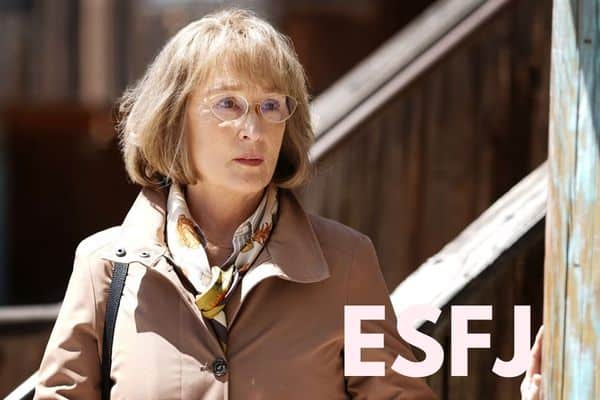
After Perry’s death, Mary Louise arrives determined to understand what happened and protect her grandsons. But she brings an pre-established picture of her son with her. Accepting information about his abuse would require reconsidering someone she loves and the family history attached to him. So instead, she subjects Celeste to increasing scrutiny.
Her attention is directed toward the household around her: what Celeste is doing, what the boys are experiencing, and what Mary Louise believes should happen next. She tries to resolve uncertainty by questioning people and taking greater control of the situation.
Why I lean ESFJ:
- E: She repeatedly looks to external involvement and information-gathering to resolve her concerns.
- S: Her judgments rely on remembered experience and concrete details she can inspect in Celeste’s life.
- F: Family attachment and her understanding of maternal responsibility shape how she considers everything.
- J: She wants definite answers and a settled arrangement for the boys, becoming more controlling when she distrusts Celeste’s decisions.
47. Aunt Lydia — The Handmaid’s Tale
Aunt Lydia believes she is responsible for the women under her supervision. That belief does very little to protect them from her.
In the television series, she presents obedience as safety and punishment as necessary correction. She closely monitors conduct, enforces expectations, and attempts to shape how the Handmaids understand their circumstances.
Her attention is actively engaged with the institution around her. Who is complying? Who is resisting? What needs correcting? She responds through instruction and intervention, trying to make the outside world conform to the order she believes it should have.
Her attachment to particular women makes her more complicated, but it doesn’t cancel the harm. Later experiences challenge her understanding of Gilead. Those moments force her to confront the gap between the protection she claims to offer and what the women actually endure.
Why I see ESFJ:
- E: She is persistently engaged with external conduct and group life, responding through supervision and direct intervention.
- S: She relies on established practices, prescribed roles, and concrete standards of behavior.
- F: Her judgments are organized around moral obligations and her claimed responsibility for others, even when those values become coercive.
- J: She strongly favors structure, compliance, and predetermined expectations for how people should live.
48. Eileen Furlong — Small Things Like These
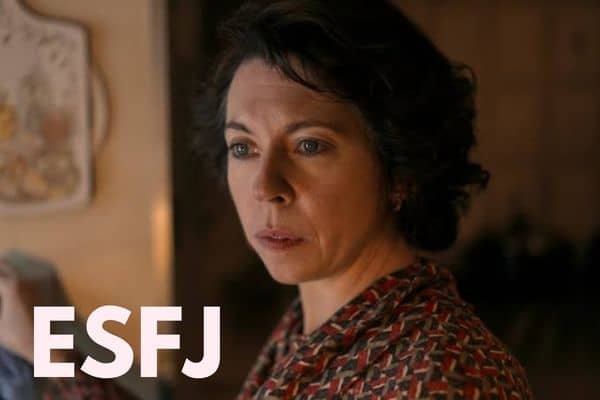
Eileen Furlong has a household to maintain and five daughters whose futures matter to her. She knows that a family’s security can depend on staying on the right side of powerful people.
When Bill becomes troubled by what is happening at the convent, Eileen wants him to consider those consequences.
Her concern is practical and immediate. What might involvement cost them? Who could make life difficult? How are they supposed to keep going if Bill challenges an institution with influence over the town?
Her story captures a painful form of moral compromise: knowing that something is wrong while treating involvement as a danger your family cannot afford.
Why I lean ESFJ:
- E: She tends to evaluate problems through the external circumstances and obligations that need managing.
- S: She trusts familiar routines, lived experience, and concrete assessments of what their household can sustain.
- F: Family loyalty and the emotional welfare of her children give her decisions their strongest personal weight.
- J: She wants continuity and a clear course that preserves the life they have worked to establish.
49. Abby Winbury — The Perfect Couple

Abby Winbury knows how to look as though she belongs in the family.
She understands its expectations, presents herself as an appropriate daughter-in-law, and offers remarks that can sound helpful while revealing something considerably less generous underneath.
Her attention is closely directed toward the social environment: who has influence, how people are being perceived, and what developments might affect her position. She adjusts her behavior accordingly. ESFJs can be masters of knowing all of this; picking up on all those little cues that you have status or social power.
The finale reveals how far she is willing to go to protect her anticipated financial future.
Why I tentatively lean ESFJ:
- E: She closely tracks the external social situation and acts to influence her place within it.
- S: She pays the most attention to concrete privileges, familial traditions, and the real details.
- F: Social belonging and interpersonal standing appear central to her judgments.
- J: She wants a defined outcome and takes calculated steps to secure the future she expects.
50. Park Yeon-gyo — Parasite
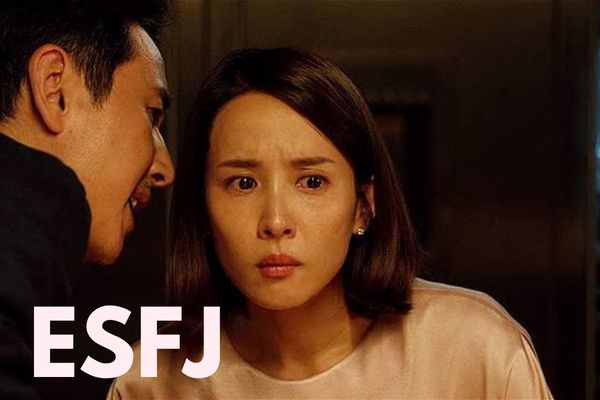
Yeon-gyo wants her children cared for, her home running properly, and competent people handling the things she cannot manage herself.
Her attention moves toward the immediate household situation: her son’s needs, the staff’s behavior, and whatever problem someone has just brought to her attention. She develops her judgments through those encounters, often accepting the interpretation offered by the person who seems most authoritative.
Her concern for her family is sincere. But her comfortable circumstances keep her from fully recognizing the lives of the people working for her. A decision that briefly inconveniences her may have devastating consequences for someone else.
Yeon-gyo illustrates how consideration can remain selective when you rarely have to look beyond the needs of your own household.
Why I lean ESFJ:
- E: She tends to form responses through immediate dealings with people and events around her.
- S: She focuses on concrete household needs and trusts recognizable signs of experience, competence, and status.
- F: Her children’s welfare and her sense of whom she can trust strongly influence her decisions.
- J: She wants problems resolved promptly and clear arrangements that keep family life comfortable and predictable.
Which ESFJ Character Did You Recognize Yourself In?
Return to the question you chose near the beginning.
“I become responsible for everyone and then wonder why I’m exhausted.”
You may recognize parts of Terry, Mary Cooper, or Jocelyn. Being capable can make people forget that your capacity has limits.
“I want closeness, but sometimes I get more involved than people want.”
Charles, Madeline, and Woody show us different versions of that struggle. Ask what the other person actually wants you to handle before assuming the whole situation belongs to you.
“I struggle when people don’t appreciate what I do.”
Tahani, Cam, or Glinda may feel familiar. Appreciation matters, but it becomes difficult to enjoy your contribution when you are continually checking its reception.
“I keep pursuing a life other people told me I should want.”
You might relate to Jackson, Ho-rang, Daphne, or Troy. A familiar goal can still be right for you. It deserves examination rather than automatic obedience.
“I have trouble accepting choices I believe will hurt someone I love.”
Mary Cooper, Polly, and Woody may offer something to think about. Concern can justify a conversation. It doesn’t always justify taking over.
Final Thoughts
What I love about these characters is how much they notice in the lives around them. A need, a strained relationship, an unfinished responsibility, an opportunity to include someone. They often respond while other people are still deciding whether to get involved, and that can make an enormous difference.
The most useful growth for an ESFJ may involve becoming more deliberate about that outward attention. What deserves your effort? What are you assuming? Have you asked what the other person needs? Does the familiar arrangement still work?
You can care deeply and leave someone room to choose. You can contribute without making yourself indispensable. And you can belong to a family or community while disagreeing with how it handles something important.
Which character felt most familiar to you? And which typing would you argue with? Let me know in the comments.