
Why Do INFPs Ghost? The Why Behind the Disappearing Act
Let’s just say it: ghosting is awkward. It’s like emotional limbo; one person dangling, the other hiding under a metaphorical blanket muttering, “If I don’t move, maybe they’ll go away.”
If you’ve ever been ghosted by an INFP, you probably thought they disappeared because you said something wrong, or because Mercury is in retrograde, or because they got abducted by aliens with strong feelings about boundaries. But here’s the thing: INFPs don’t ghost out of malice. They ghost because their emotional operating system is like one of those old computers that freezes when you open too many tabs. And the tabs are labeled “Guilt,” “Conflict,” “Existential Dread,” and “What If They Hate Me Forever.”

They vanish because they’re overwhelmed — not by you necessarily (though, you know, maybe a little), but by the sheer act of being a human with emotions, responsibilities, and a moral compass that won’t shut up. They want to answer. They mean to answer. They draft a reply in their mind that’s equal parts heartfelt apology and 3,000-word essay explaining their psychological state. Then they blink, it’s three weeks later, and now it feels too weird to say anything. So they do what any self-respecting introverted feeler does: spiral, procrastinate, and then ghost harder.
It’s not that they don’t care (usually). It’s that they care so much they implode.
And yes, sometimes it is about you. INFPs can smell phoniness like a bloodhound on a moral quest. If you’ve got manipulative vibes, they’ll pick up on that and retreat like, “Ah. Unauthentic energy detected. Must return to the forest.” But we’ll get to that.
For now, let’s wander into their psyche; a haunted house filled with good intentions, emotional landmines, and half-written texts that say, “Sorry for disappearing, I’ve been… [REDACTED FOR OVERTHINKING].”
Not sure what your personality type is? Take our personality questionnaire here. Or you can take the official MBTI® here.
Table of contents
- The Anatomy of an INFP
- The Need to Recenter (Fi + Si Seeking Inner Peace)
- Conflict Avoidance and Procrastinated Honesty
- The Authenticity Filter (Fi + Te Boundary Setting)
- Emotional Overload and Guilt Paralysis
- Growth Pressure and Te Grip
- How INFPs Can Break the Ghosting Cycle
- Silence as a Signal
- Want Help Clarifying or Understanding Your Type?
- Other Articles You Might Enjoy:
The Anatomy of an INFP
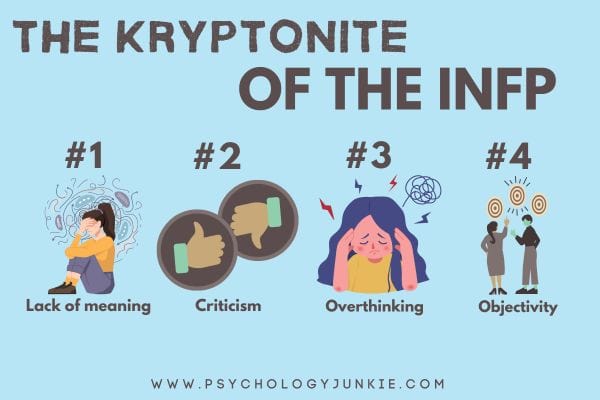
To understand why INFPs ghost, you have to understand the machinery inside their mind.
At the helm is Introverted Feeling (Fi) — the emotional black box where every decision must pass a 37-point authenticity inspection. Fi is that inner voice whispering, “Is this true? Is this kind? Does this align with my values? Is this meaningful?” It’s beautiful, but exhausting. They can’t just say “Sure, let’s hang out.” They have to cross-examine their motives, your motives, their mood now, their mood later, and the cosmic implications of hanging out.
Then there’s Extraverted Intuition (Ne) — the part that says, “Ooh, what if everything’s connected in a vast web of meaning and metaphor?” Ne is the reason an INFP will start explaining why they didn’t text you back and somehow end up comparing their emotional bandwidth to a ghost trapped in a teapot. It’s great for creativity, terrible for closure.
Beneath that hums Introverted Sensing (Si): the nostalgia troll that stores every past embarrassment like cursed treasure. Si says, “Remember that one time you said something slightly weird in 2012? Let’s think about it instead of replying.” It’s also where they go to self-soothe, wrapped in routines, familiar shows, and comfort snacks, recharging before they face the terrifying concept of… other people.
And finally, limping along in the basement, you’ll find Extraverted Thinking (Te) — their underdeveloped, slightly bitter project manager. Te wants efficiency, order, lists. It shows up in crisis mode like, “Enough feelings. Cut losses. Block number. Delete chat.” When Fi’s compassion gets overwhelmed, Te grabs the wheel and says, “We’re done here.”
So, when an INFP ghosts, it’s not because they’re indifferent. It’s because they’re juggling an emotional Rubik’s Cube while Ne’s screaming metaphors, Si’s replaying childhood trauma, Fi’s drafting a manifesto, and Te’s trying to file for emotional bankruptcy.
The Need to Recenter (Fi + Si Seeking Inner Peace)
Here’s something people don’t get about INFPs: they want their inner world to feel like a peaceful meadow. But often it feels more like a national park at capacity. Every emotion is a camper demanding space. Every moral dilemma is a bear rummaging through their cooler. Eventually, the park rangers (Fi and Si) shut the gates and say, “No more visitors. We’re full. Please leave a message after the existential crisis.”
When an INFP ghosts, it’s often less “I’m rejecting you” and more “I’ve hit emotional bankruptcy and must retreat to the nearest cave to file for inner peace.”
They need solitude the way your phone needs charging, because they literally cannot function until they’re plugged back in. And the more demands pile up (texts, calls, obligations, small talk, feelings, people) the more their mental bandwidth screams, “Error 404: Social Capacity Not Found.”
For some INFPs, especially the ones juggling jobs, kids, and approximately 97 unprocessed emotions per hour, “alone time” isn’t a luxury. It’s a medical necessity. You might see unread messages. They see an avalanche of moral decisions: Do I have the energy to respond meaningfully? Will my tone sound authentic? Should I wait until I feel centered? Oh no, it’s been three days. It’s too late now. I’ll just fake my death.
And then there’s Si, the introverted memory keeper, leaning over their shoulder whispering, “Remember last time you pushed yourself to reply before you were ready? You said something weird and regretted it for five years. Let’s not do that again.”
So, they don’t.
Basically their peace of mind is leaking oil, and before they can drive anywhere — even toward you — they have to fix the engine. Unfortunately, to everyone else, it looks like they parked the car, disappeared into the forest, and never came back.
So if you haven’t heard from an INFP in a while, it might not be about you. It might just be that they’re somewhere in their inner cabin trying to remember what silence sounds like. When they come back, they’ll probably apologize profusely, and then spend another week overanalyzing the apology.
Conflict Avoidance and Procrastinated Honesty
INFPs hate conflict. Not in the “I’m scared of yelling” way (though, yes, also that), but in the “If I hurt someone, my soul will leak sadness forever” way. They want to be honest, but they also want to be kind, and Fi insists that both are moral imperatives. Unfortunately, those imperatives sometimes cancel each other out, leaving the INFP frozen, like, “I’ll explain everything perfectly… later. When I have the right words. And the stars align. And I’ve emotionally evolved another level.”
Later becomes never.
Ne joins the party, providing a thousand scenarios: “If you say this, they’ll cry. If you say that, they’ll hate you. If you ghost, you’ll feel guilty forever. But if you reply right now, you might ruin everything.”
During stressful moments if can feel like having a personal assistant who only speaks in worst-case fanfiction.
And so the INFP procrastinates. I’ll reply tomorrow.
Tomorrow becomes next week. Next week becomes too late, and too late becomes a spiritual prison cell made of unspoken good intentions. Now they’re ghosting because they’ve backed themselves into a corner of guilt so dense light can’t escape it.
There’s also the perfectionism. If they can’t respond exactly right — in a way that fully honors your feelings, their feelings, and the ethical implications of all human interaction — they’ll delay until they can. Which is, uh, never. Because they’re exhausted. Because they’ve spent 40 minutes rewriting a three-sentence text that still feels emotionally imprecise.
Eventually, silence becomes self-defense. The INFP tells themselves, I’ll reconnect when I’m ready. When I’m grounded. When I can be honest and kind and articulate. But they never feel ready, so they wait. And wait. And before long, the waiting is the ghosting.
The Authenticity Filter (Fi + Te Boundary Setting)
Here’s the thing: INFPs don’t ghost everyone. If they’ve gone silent on you and it’s not because of emotional burnout or conflict anxiety, it might be because you felt dishonest, manipulative, or ethically suspicious to them.
See, Fi (Introverted Feeling) has this built-in bullsh*t detector calibrated to moral seismic activity. It can pick up dishonesty the way a bat picks up sound. If someone’s being manipulative, condescending, or — worst of all — performative, Fi feels it deep in its bones and goes, Nope. Not safe. Not real. Not my people.
And then, from the back of the brain, Te (Extraverted Thinking) shows up like a disgruntled accountant and says, Alright, let’s streamline this. No point wasting time explaining ourselves. Just cut them out and reallocate resources to people who aren’t emotional black holes.
To the INFP, this is self-respect. To others, it can seem like ghosting.
INFPs don’t have the energy budget for fakeness. If your vibe screams “disingenuous,” Fi won’t debate it; it’ll just quietly pack its emotional suitcase and leave.
And here’s the thing: they genuinely don’t always feel like they owe an explanation.
Fi runs on inner alignment, not social contracts. It says, My feelings are my responsibility, your feelings are yours, and if this connection doesn’t align, I’m not morally obligated to drag it out for closure’s sake.
Meanwhile, Te is in the background highlighting the phrase “time management” on a spreadsheet labeled People Who Are Worth My Energy.
It’s not that they don’t feel bad — they often do. They’ll lie awake wondering if they should’ve said something. But guilt is a small price to pay for integrity. In their eyes, ghosting someone who feels inauthentic is just pruning dead branches so their soul tree doesn’t rot.
If you’re an INFP reading this and wincing, you know exactly what I’m talking about. That moment where you clock someone’s subtle manipulation, smile politely, and think, Ah, yes. You shall never hear from me again. It’s the moral version of Marie Kondo-ing your social life: Does this relationship spark authenticity? No? Thank you for your time.
If you’re on the receiving end, don’t take it personally — unless you were, in fact, being fake. In which case… well. You probably stopped reading two paragraphs ago.
Emotional Overload and Guilt Paralysis
There’s a specific kind of ghosting INFPs do that isn’t about boundaries or conflict or moral detection, it’s about shame. That heavy, slow kind that feels like trying to swim in wet denim.
It starts small. They miss a message. Life gets hectic, their brain’s a hurricane, their emotional battery is flashing red. I’ll respond later, they tell themselves. Except “later” comes with a side of guilt. You didn’t respond. That was rude. Guilt becomes anxiety. Anxiety becomes avoidance. Avoidance becomes silence. And suddenly it’s been three weeks, and they’ve mentally staged fifteen apology drafts, all of which sound either too dramatic or too fake, and now they can’t send anything because the situation has decayed beyond repair.
This is how INFPs end up ghosting people they actually like. They spiral into self-loathing limbo, the kind where Fi says, You’re a bad friend, while Si chimes in with a slideshow of every past relationship they’ve fumbled. Ne, ever the helpful disaster artist, starts pitching possible scripts: What if you write a heartfelt apology? What if they hate you forever? What if you move to another country and start over? How’s Morocco?
By the time Te wakes up to offer practical advice (Just text them, you coward), it’s too late. They’re too far gone, entombed in a guilt cocoon of their own making.
So they vanish because they feel unworthy of reappearing. They tell themselves they’ll return when they’re a better version of themselves, when they’ve earned forgiveness, when they’ve sorted out their chaos.
The irony is almost biblical: they ghost to avoid hurting people, and in doing so, hurt people. They crave authenticity, but shame convinces them they’ve failed at it, so they hide until they can re-emerge as some morally improved phoenix, one who never forgets to reply, never overthinks, never feels everything all at once. But the phoenix keeps missing its flight time.
If you’ve been ghosted by an INFP who actually cared about you, there’s a good chance they’re somewhere right now, staring at your unread message, thinking, You deserve better than my awkward apology.
Because for INFPs, ghosting isn’t about not caring. It’s about caring so much they short-circuit — and then spending eternity in their own mental purgatory, whispering, I’ll text them tomorrow, like a prayer they never quite answer.
Growth Pressure and Te Grip
Te grip is what happens when the INFP’s soft, values-first worldview hits a wall called Too Much. Too many people needing things. Too many emotions to hold. Too many metaphorical fires, and their Fi is just standing there trying to hug them out. So Te kicks in the door like a fed-up parent and says, No more feelings. We’re cleaning house.
And clean it does. Mercilessly.
That person who texts 14 times in a row? Blocked.
That group chat full of shallow chatter? Muted for eternity.
That friend who keeps asking for advice but never listens? Deleted. From. Life.
It’s not personal, except it kind of is, because Te in an Fi-dom’s hands is like a sword duct-taped to a teddy bear. It’s clumsy but decisive. Fi is thinking, I feel bad about this, while Te’s already pressing “remove contact” like, They were inefficient. It had to be done. The INFP will later mourn the loss, maybe even write a journal entry titled “Why Did I Do That?” but in the moment, Te gives them something Fi rarely can: relief. Clarity. A sense of control.
When an INFP feels like their life is unraveling, too many feelings, too many demands, too much noise, ghosting becomes a lifeline. It’s not “I don’t care.” It’s “I literally can’t.”
Every text they don’t send is one less variable. Every silence is one less source of chaos.
And sure, later they’ll regret it. They’ll feel that familiar ache in their chest, wondering if they were too harsh, too distant, too… Te. But Te doesn’t do remorse. Te does objectivity and efficiency.
And when Fi’s curled up in a corner contemplating their moral failures, Te’s just like, Look, we were drowning. I did what had to be done.
In some ways, this is their dark form of self-preservation; a temporary takeover by the part of them that doesn’t overthink, doesn’t overfeel, doesn’t spiral. It’s the version of them that can say “no” without writing a three-page apology afterward. It’s cold comfort, sure, but sometimes comfort isn’t warm. Sometimes it’s just clean lines and silence.
How INFPs Can Break the Ghosting Cycle
So… you’ve ghosted someone. Again. Congratulations, you’ve officially entered the Fi Hall of Guilt. Please accept this complimentary tote bag full of shame and unanswered texts.
But here’s the thing: you don’t have to live here. Ghosting isn’t a character flaw; it’s a maladaptive coping mechanism built out of empathy, fear, and the faint hope that silence will solve your problems.
If you’re tired of being emotionally possessed by the ghost of your own avoidance, here’s how to start clawing your way out:
1. Micro-Responses Are Still Real Responses
You don’t need to write a perfect paragraph every time you reply. You’re not publishing The Collected Works of Fi, Volume IV: My Feelings About Your Text.
You can just say:
“Hey, I’m low-energy right now, but I’ll get back to you soon.”
Or
“Thanks for reaching out, I appreciate it”
This way you’re being honest and protecting your energy — which, shockingly, can coexist.
2. Check Your Motives Before You Vanish
Before disappearing, ask yourself:
- Am I avoiding discomfort, or honoring a boundary?
- Is this silence about them, or about me?
- Am I seeking peace or escape?
Sometimes ghosting is the right call. Not every person deserves access to your emotional Wi-Fi (thank you Te). But if it’s avoidance, name it.
3. Name Your Pattern Out Loud
Tell the people you care about:
“Hey, I sometimes disappear when I’m overwhelmed — it’s not personal. I’m working on being more communicative.”
That one sentence can save relationships and exorcise 80% of your guilt.
4. Practice Emotional Minimalism
You don’t have to show up for everyone. You don’t have to respond to every message, join every group chat, or pretend you’re fine when you’re unraveling.
Pick a handful of relationships that feel reciprocal, real, and gentle, ones that let you be a half-charged human without performance.
If someone expects more than that, they’re not your people; they’re your exhaustion.
Silence as a Signal
Ghosting feels final. Like a slammed door. Like the credits rolling mid-conversation. But for INFPs, it’s rarely the end. Instead, it’s a pause. A white flag raised by a heart that’s too full, a mind that’s too loud, and a body that’s just trying to find stillness before it breaks.
Silence, for them, is survival. It’s a signal flare. It says, “I can’t right now. I’m trying to make sense of the noise.” But because they forget the world doesn’t speak in metaphor, that silence often gets mistranslated as rejection.
If you’re an INFP, know this: disappearing doesn’t make you a monster. It makes you human in a world that demands constancy when you’re built for depth. But don’t let the fear of being misunderstood keep you locked in silence. You don’t have to write the perfect explanation, just a small, honest one. Something like, “I wasn’t okay. I’m trying again.”
If you’re an INFP and you’re reading this and nodding your head, share your thoughts or insights in the comments. If you’ve got a tip or word of advice for other INFPs leave that too! Shared conversation makes this whole process easier.
Want Help Clarifying or Understanding Your Type?
I offer type clarification sessions and would love to help! Find out more here.












At 46 years old, newly discovering I was an INFP, my entire life has been explained in more shades of color than I ever expected to encounter: the late-blooming explanation, the emotional overwhelm and anxiety-induced freezing, the lack of verbal skills, yet smooth, articulate reflections through writing as a necessary, mandatory tool for self-actualization, all tied together. My unconventional life and odd personal trailblazing are understood, so thanks for your help as I listen to you and others on YouTube. It certainly is a strange ride.