BTS and the MBTI®: The Personality Types of Each Member
There are two ways people get into BTS.
One is intentional. You hear a song, you fall down the rabbit hole, and suddenly you know choreography names and inside jokes.

The other is what happened to me.
My kids were playing “Dynamite” on repeat. And usually when it comes to my kids songs, I kind of survive them. If you’re a parent, you know the drill. You try to find your inner zen and tune out the noise. But “Dynamite” was different. I never seemed to get sick of it. And neither did they. Then I started noticing things like the energy, ambition, and interesting group dynamics that the seven BTS members have. The way each member showed up completely differently, and how genuinely kind they all seemed to be.
And my brain went, Oh no.
This is going to become a personality typing project, isn’t it?
I’ve spent over a decade working as an MBTI® practitioner, analyzing cognitive functions, coaching clients, and watching how personality shows up in real life. Not just in theory, but in messy, human, contradictory ways. I especially love working with people who have a hard time landing on their best-fit type.
So this article is the result of me watching interviews, variety shows, American Hustle Life, Run BTS, Bon Voyage, and analyzing their decision-making, humor, stress patterns, and communication styles.
But let me say this clearly before we go any further:
I am not claiming to know their types with certainty.
No one knows them better than they know themselves. And even then, personality questionnaires can be confusing. Several BTS members have tested as different types over time, which is incredibly normal. Especially when you’re young, under pressure, or answering questions based on who you have to be for work rather than how you actually operate.
What I’m doing here is pattern recognition. Looking at publicly available behavior, language, and tendencies. That means this is inherently limited. Cameras change people. Outward pressure to appear in a certain way changes people. Expectations change people.
So take this as an informed perspective, not a final verdict.
Alright. Let’s get into it.
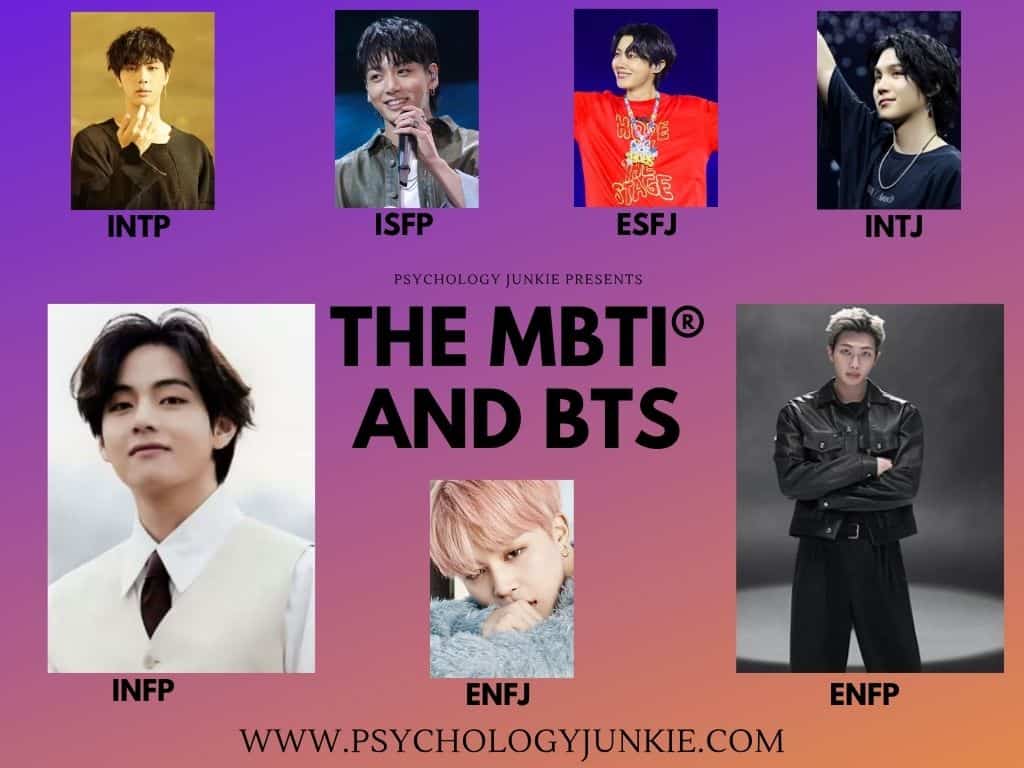
Table of contents
- RM (ENFP): The Explorer of Meaning
- Jimin (ENFJ): The Emotional Barometer
- Jin (INTP): The Quiet Thinker Behind the Humor
- Jung Kook (ISFP): The Passionate Realist
- Suga (INTJ): The Quiet Visionary With a Steel Core
- J-Hope (ESFJ): The Heartbeat of the Group
- V / Taehyung (INFP): The Poet Lost Between Dreams and Reality
- What Do You Think?
- Other Articles You Might Enjoy:
- References:
RM (ENFP): The Explorer of Meaning
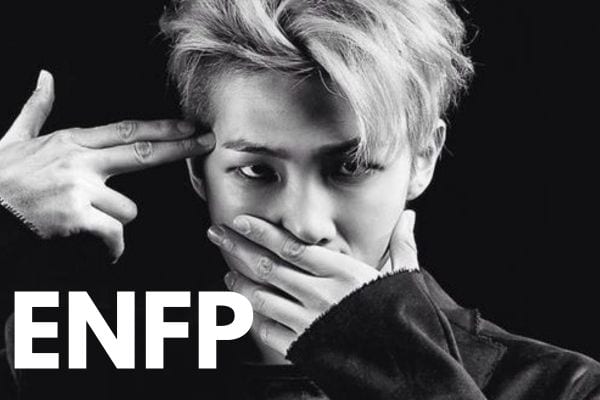
As the leader of BTS, Kim Namjoon, or RM, doesn’t just translate Korean into English. He has a habit of translating experiences into ideas, questions, metaphors, and sometimes entirely new questions that weren’t there when the conversation started.
That’s one of the biggest reasons I now type him as an ENFP.
Namjoon doesn’t necessarily have the bubbly, constantly social energy people associate with ENFPs. He needs regular time alone, loves museums and books, takes long walks, and can disappear pretty happily into art, philosophy, nature, or his own thoughts. But ENFPs are dominant Intuitives, and their Extraverted Intuition (Ne) isn’t necessarily about being the loudest person in the room. It’s about having a mind that keeps reaching outward for something else to discover.
“Looking for answers when there aren’t any, but we still learn. Isn’t this what life is about?”
That’s very much how Namjoon seems to approach life. Give him a word and he’ll start wondering about its etymology. Give him a painting and he’ll wonder about the artist who made it, what influenced them, and what else he should look at. He can start thinking about ordinary dust and end up imagining individual dust particles with personalities gathering together to create a “republic for dust,” before eventually wondering whether human beings are basically collections of dust ourselves.
“Sometimes I feel sorry for dust. Their existence isn’t a mistake but they still always get swept and thrown around like a mistake. They’re unwanted and harmful even when we’re breathing.
The fate of these dusts are quite sad. There isn’t a single person who sees dust as a precious thing. I don’t know if it’s possible, but what if these dusts each have a character..
Won’t all the dust in the world gather in one place and make a city for dust? A republic for dust?
Then, will a place without dust be clean and pleasant? I don’t know. Besides the real dust, there’s a lot of dust floating between humans now too. We might all simply be huge ‘piles of dust’ as well.”
His thoughts tend to expand. One idea opens another door, which opens another, and he doesn’t always seem particularly bothered if there isn’t a final answer waiting at the end.
Even his description of life reflects that openness. He’s called it “continuous wandering” and talked about there being value in uncertainty and questioning where you’re going. That strikes me as much closer to the exploratory nature of ENFP intuition than the stereotype of an ENFP bouncing enthusiastically from one hobby to another.
His Feeling side is just as important. Namjoon is clearly sensitive to other people and has spent years learning how to represent BTS as its leader, but underneath that public diplomacy is someone who seems intensely concerned with personal sincerity. Again and again, he asks who he actually is beneath the roles he’s accumulated: RM, Rap Monster, Kim Namjoon, leader, idol, rapper, public figure, “good influence.” He doesn’t seem comfortable accepting an identity simply because other people have decided it fits him.
“This is me, this is me too. I hate total jerks but I have a weak side to me too and in the end, I’m only human.”
That’s where I see Introverted Feeling (Fi). Namjoon spends an enormous amount of time evaluating his own motives, contradictions, values, anger, love, ambition, and shortcomings. In his younger writing, he even explained that talking about his struggles with friends, family, or the members didn’t necessarily resolve them for him. Instead, he wanted to take his “inner desires and conflicts” and turn them into music that expressed his true feelings.
“Back then, expressing my feelings for another person was something I wouldn’t even think about doing.” – Kim Namjoon
Expressing feelings is something FJ types do from an early age. The feeling has to spread outward and find communion, rapport, and connection with another human. For FP types, feelings spread in depth, privately, and is often expressed after they have been fully processed.
And then there’s the side of ENFPs that stereotypes often miss entirely: Extraverted Thinking (Te).
Namjoon can be fiercely ambitious. As a trainee, when Bang Si-hyuk questioned whether he could reach the level of other rappers, Namjoon’s response was essentially to work harder and prove what he could do. He has talked openly about needing to become more systematic, improve his deadline management, and develop the discipline necessary to turn his ideas into finished work. Years of leading BTS seem to have strengthened that side of him enormously.
There’s a line from Namjoon that may capture his ENFP personality better than almost anything else I’ve found:
“I think I just have to keep on following my own path. It’s the one thing I know for sure. I think I’ll just have to keep on drawing to find out if what I’m drawing is an elephant or not. It’s the one thing I know, and I don’t know anything else. (laughs) In the end, I think I just need to do my own thing, and I have to see it through by making it into something real.”
He doesn’t need to know exactly what the picture is before he begins. He’ll explore it, follow his own path, and see what emerges. But then he adds that ultimately he has to see it through by “making it into something real.”
That’s Ne, Fi, and Te working together in a nutshell: Follow the possibility. Make sure it’s yours. Then do something with it.
This also helps explain why Namjoon can seem contradictory. He’s highly social at times but needs long periods alone. He’s spontaneous and changeable but can be painstaking about his work. He’s intensely ambitious yet suspicious of conventional definitions of success. He can stand in front of the United Nations and speak for millions of people, then go home and wonder whether he understands himself at all.
Maybe that’s why this quote still feels so fitting for him:
“My father who works hard, mother who is a realtor, my dongsaeng all of whom are here today, the stray cats and dogs, even the stones and rocks on the road, all of us have a galaxy inside us… I want you to know that all of you have an entire galaxy inside of you and you are capable of anything.”
The more I’ve researched Namjoon, the less he seems like someone trying to arrive at one final interpretation of himself, other people, or life. He seems more interested in remaining curious enough to keep discovering what else might be there.
I’ve written much more about RM in my in-depth article: The Myers-Briggs Personality Type of Kim Namjoon “RM”
Jimin (ENFJ): The Emotional Barometer
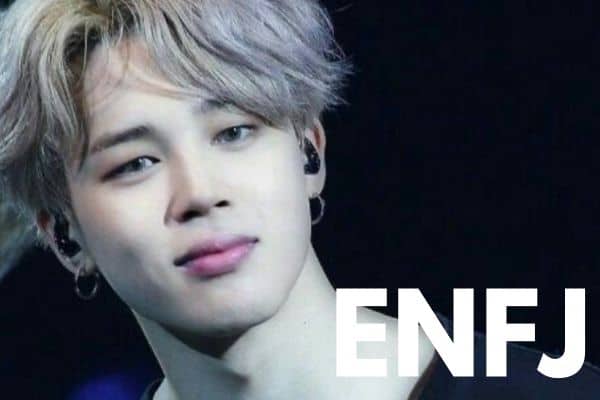
RM has publicly stated that Park Ji-min is someone he leans on for support, who he loves and respects and hopes to be friends with forever. When you look at their complementary personality types, it really makes sense.
Jimin has this ability to tune into people that goes beyond being friendly or warm. ENFJs are often described that way, but that description barely scratches the surface. What’s really happening is a kind of real-time emotional tracking. Jimin walks into a space and immediately picks up on the atmosphere. Who’s relaxed, who’s tense, who’s holding something back. And then he adjusts himself, often without thinking about it, to create a sense of connection or balance.
Both RM and Suga have talked about leaning on Jimin for support, and Jimin himself has stated that he often prioritizes others’ feelings and trying to be what others need.
“I’m kind of person who likes to be loved.”
“I am really so happy when I see the thousands of fans in the crowd. It’s so beautiful. The view that I have from the stage is like a pretty sunset. I get frustrated when I can’t express just how happy I am through expression or words.”
Extraverted Feeling, the dominant function of ENFJs, is all about creating intimacy, connection, and emotional alignment so that everyone feels seen and included. You can see it in how Jimin interacts with the members. He notices small shifts in mood, offers encouragement, and often steps in to bridge emotional gaps before they turn into bigger issues.
“Remember there is a person here in Korea, in the city of Seoul, who understands you.”
I’ve had ENFJ clients describe this as feeling like an emotional thermostat. If something is off in the room, they feel it in their body, and it’s hard to relax until it’s been addressed. That sensitivity is a strength, but it can also be exhausting. When your attention is constantly directed outward, it becomes easy to lose track of what you need.
Jimin’s growth moments seem to circle around that exact tension. Wanting to support everyone, to show up well, to create meaningful connections, while also learning how to care for himself without feeling guilty about it. There’s also a strong drive for self-improvement that shows up repeatedly. Jimin is notoriously hard on himself, subjecting himself to relentless self-criticism, strict diets, and countless hours of choreo work to try to be the best he can be at his craft. He’s also someone who has admitted struggling to express his own feelings for fear of burdening others. ENFJs tend to hold themselves to high emotional and interpersonal standards, and when they feel like they’ve fallen short, it hits deeply.
But at their best they don’t just sit in that feeling. They refine, learn, and adjust, and over time learn the value of speaking their own truth. Jimin doesn’t just want to perform well technically. He wants people to feel something genuine when he does, and that kind of intention shapes everything about how he shows up.
“Now I stay silent when I want to be silent, and I try to speak out when I don’t like something.”
I’ve written much more about Jimin’s personality type in my in depth article: The Myers-Briggs Personality Type of Jimin: A Mind That Seeks Harmony
Jin (INTP): The Quiet Thinker Behind the Humor
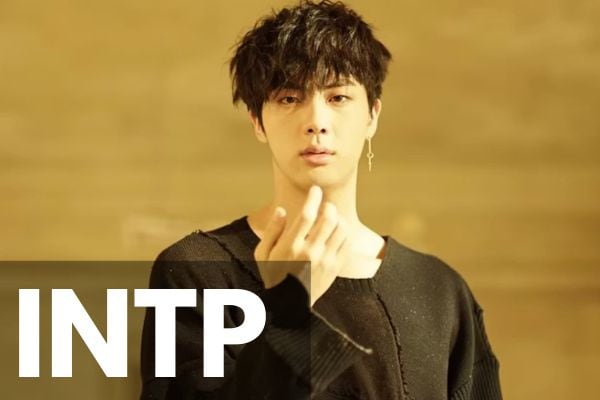
Kim Seok-jin was probably the most difficult BTS member for me to profile. I even wrote up a whole section on why he could be an ENTP or an ISFJ before deciding to go with INTP. I could easily see which functions he was using (Ne, Ti, Fe, Si) but the order of those functions was difficult to pin down. Overall, I decided to go with INTP because there was enough evidence to support it, and this is consistently his self-professed type. Unlike some of the other types who consistently get different results when taking a personality questionnaire, Jin has been consistent with getting an INTP result. That said, he seems much more expressive, jovial, and connecting in his public persona than most INTPs would appear. That could be a result of ongoing work to build up a public persona, however. He’s often talked about the responsibility he feels for the impact he has on others.
“I always try to be cheerful on-camera. People watch me because they want to be happy. If they feel sad from watching me, it would make my heart ache even more. I feel that I always have to show you the bright side of me. But for BTS Jin, life may be difficult on the other side.”
Jin is easy to misread if you stop at the surface. You see the jokes, the confidence, the “worldwide handsome” persona, and it’s tempting to assume he’s driven by social energy. But if you look carefully over time, a different pattern shows up. When he’s not on-camera there’s a quieter, more internal way of operating underneath all of that.
At his core, Jin seems to lead with internal reasoning. He doesn’t just go along with things because they’re expected. He thinks about why something should be done a certain way, and whether it makes sense to him personally. In the Run BTS episodes Jin consistently is a troubleshooter, thinking outside the box to find ways to complete challenges. He’s good at solving puzzles and creatively piecing together clues.
Jin also isn’t satisfied with surface-level knowledge. You can see that in the way he approached “Epiphany.” Instead of miming piano on stage as expected, he decided that didn’t feel right and taught himself to actually play the chords. You see that same pattern in how he thinks about bigger ideas:
“If you look at heroes in movies, they’re always destroying things… I wish there were heroes who protect the Earth. Like someone who keeps the Arctic ice from melting.”
When it comes to introversion, there’s a consistent thread of social discomfort and withdrawal in unfamiliar settings. He’s been very direct about this:
“I feel uncomfortable meeting new people. Do I have to really meet and greet?”
“If I have met someone at least once, I am comfortable… but the first time is so hard.”
He self-identifies as an introvert, and when he’s not performing, he definitely comes across as someone who is more introverted and quiet. He can engage, especially when needed, but it takes effort and familiarity.
That said, Jin has strong social skills. And this is where I have to say that you can have a hundred INTPs and they all may have varying levels of strength in different functions based on life experiences, culture, family values, personal values, and more. Jin definitely seems like someone who has worked hard to have a positive impact on other people, exuding friendliness even when it may not always be comfortable to him. While we have plenty of video examples of him saying hello to strangers and speaking up in group situations, it doesn’t seem like it’s always his comfort zone.
“When there are a lot of people I don’t know, my vision becomes blurry.”
“Talking on the phone is scary.”
“I don’t like loud or crowded places.”
Then there’s how he spends his free time. When there’s no expectation to perform or interact, he turns inward completely:
“When I get a day off I sleep 12 hours… I don’t really do anything else.”
“I realized my dream… sleeping half the time and playing games 16 hours a day.”
That’s pretty typical introvert recharging. Low stimulation, low social demand, full control over his environment.
“I don’t think I’m built to live this life of a superstar. I feel I’ve become way more famous than I deserve.”
But being an INTP doesn’t mean that Jin lacks care or concern for others. Many INTPs when they’re with the people in their comfort zone can be more expressive, humorous, and talkative. The same goes for Jin.
“Kindness costs nothing but changes everything.”
At the same time, his intuitive side is hard to miss. Jin is consistently creative, abstract, and willing to think outside of what’s expected. Whether it’s storytelling ideas, performance concepts, or the way he twists humor into something unexpected, there’s a clear pattern of exploring possibilities rather than sticking to what’s already established.
“When something is delicious, it’s zero calories.”
“When everyone’s embarrassment comes together, it becomes strength”
When you put it all together, the pattern is fairly consistent. A person who leads with internal reasoning, prefers familiar environments, recharges alone, and shows creativity and flexibility in how he explores ideas. The humor is real, the warmth is real, but neither of those seem to be the foundation. They’re expressions layered on top of a much more internal, analytical core.
Jung Kook (ISFP): The Passionate Realist
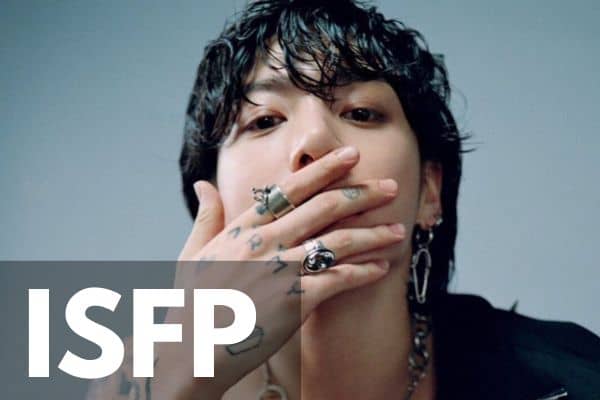
Jung Kook (Jeon Jung-kook) might be one of the clearest examples of an ISFP I’ve ever seen in a public figure, which is ironic considering how often people try to type him as an intuitive because of how artistic and emotionally reflective he is.
But artistry doesn’t automatically equal intuition.
Another point I want to bring up is that Jung Kook has taken questionnaires and gotten both ISFP and INTP results. However, in his most recent Rolling Stone interview, he stated that he’s a Sensor in the MBTI®.
Jung Kook’s personality seems deeply rooted in direct experience, physical expression, personal authenticity, and living fully in the present moment. He doesn’t spend much time philosophizing about abstract systems or trying to build elaborate conceptual frameworks. Even when he talks about emotions or art, he tends to do it in a grounded, immediate way rather than a highly theoretical one.
“When I’m not onstage, I try to keep my mind empty and avoid overthinking,” he says. “I pour out my inspiration when I’m working on an album or preparing for a performance. But in daily life, I prefer to keep things simple and think in a straightforward way.”
One of the clearest clues about Jung Kook’s personality type is how intensely connected he is to the sensory world. ISFPs lead with Introverted Feeling and support it with Extraverted Sensing, which creates people who often express themselves through aesthetics, movement, physical mastery, and lived experience. Jung Kook does this constantly.
His tattoos, fashion choices, piercings, physical hobbies, dancing, gaming, painting, workouts, cooking, and thrill-seeking tendencies all point toward someone who experiences life through direct engagement with the world around him. He doesn’t just think about experiences. He immerses himself in them.
And then there’s his physical competence. Whether it’s choreography, sports, stunts, visual arts, or random practical tasks around the house, he tends to learn through doing and adapt quickly in real time. There’s a grounded responsiveness to him that’s hard to miss.
Jung Kook is also someone who follows his own path, marches to the beat of his own drum, and doesn’t like to be controlled. Take his tattoos for example. Tattoos are often looked down upon in Korea, due to historical associations with crime, stigma, and Confucian views on body purity. However, that didn’t stop Jung Kook from getting a full sleeve of tattoos. This is common for Introverted Feeling types who care less about the rules and more about authentic self-expression.
In many quotes you can see Jung Kook’s individualism peer through:
“Isn’t a man someone who doesn’t care about what others think? A man does whatever he wants.”
“I always dress my way!”
“Never give up on something that you can’t go a day without thinking about.”
“Living without passion is like being dead.”
You can also see Jung Kook’s sensing-perceiving tendencies in other comments:
“I don’t really pay attention to things that have already happened. I think more about what I need right now.”
That’s present-focused awareness. Unlike an intuitive who thinks into the distant future or a Sensing-Judger who revisits the past, Sensing-Perceivers stay in the present.
He’s said even more directly:
“I don’t like the past. I’m enjoying right now.”
At the same time, his Introverted Feeling is everywhere.
ISFPs are deeply driven by personal authenticity. They need their life to feel emotionally real and internally aligned. Jung Kook talks about this constantly, especially when it comes to passion, individuality, and staying true to himself.
“Don’t do anything you don’t like to do. Just do whatever you want.”
That’s Fi language. Strong internal conviction. Personal values over external expectations.
You can also see it in how much importance he places on emotional honesty and understanding between people:
“When people are in love, the heart for compromising and understanding each other is the most important.”
“We should try to respect and understand each other.”
“If you’re not mad or sad, you won’t know when you’re happy”.
His emotional world feels personal and sincere rather than externally managed. Even when he talks about growth, it comes from an internal place:
“I have realistic thoughts and idealistic thoughts, and they always coexist.”
That combination actually feels very ISFP to me. Grounded realism paired with deeply personal ideals.
Suga (INTJ): The Quiet Visionary With a Steel Core
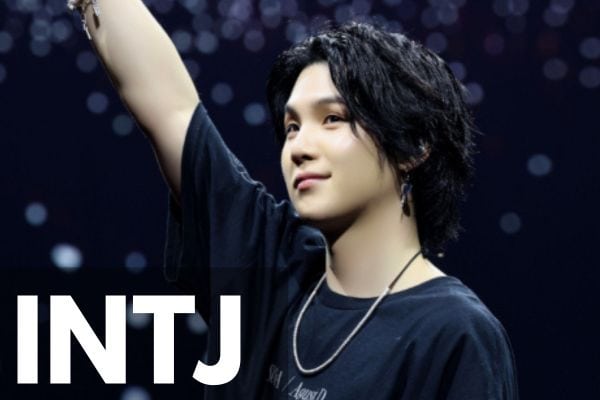
Suga, or or Min Yoon-gi, was one of the harder members for me to profile confidently. For a long time, I bounced back and forth between ISTP and INTJ because there’s evidence for both. He’s private, analytical, pragmatic, technically skilled, and emotionally restrained in a way that can easily resemble an ISTP or an INTJ at first glance.
But the more I watched interviews, listened to his lyrics, and paid attention to the themes that consistently show up in his thinking, the harder it became for me to ignore the INTJ pattern underneath everything else.
Ironically, Suga himself has expressed skepticism about MBTI® entirely:
“The results are getting changed a lot depending on the situations and how I feel… I’m kind of skeptical about the idea that personality can be indicated so simply.”
There’s a strong independent streak in the way he approaches systems and labels. He doesn’t seem interested in adopting a framework just because it’s popular or emotionally satisfying. He wants it to hold up logically.
What finally pushed me toward INTJ was how future-oriented and vision-driven he consistently is beneath his reserved exterior.
INTJs are often driven by an internal vision that becomes almost impossible to separate from their identity. And Suga talks about dreams, purpose, direction, and long-term meaning constantly.
“Dream, if you have anything to dream about. Dream, it’s the only way for you to escape reality.”
“Stay innocent, be naive. But still dream big. Dream big to the point that it is beyond your ability.”
“I’m the guy that will carve history on the ground”
There’s a very Ni-like fixation there on pursuing a singular inner vision beyond current limitations. While SP types are always trying to stay grounded in the present reality, intuitives are always trying to dream beyond that, to have a vision to work towards. It’s rare that a Sensing-Perceiving type would say something like “it’s the only way to escape reality” as if it’s a good thing, unless life itself has become too painful to bear.
He’s also talked about needing a dream and fixating on the future. INTJ minds naturally move toward long-term implications, hidden patterns, and preparing for what hasn’t happened yet.
What’s especially telling is that he later had to consciously train himself out of that tendency:
“There was a point in my life when I promised myself to think less about it. To focus on the present.”
That doesn’t sound like someone naturally rooted in the present moment. It sounds like someone whose mind drifts so far ahead that they had to intentionally anchor themselves back into reality. It takes work and it’s learned, not automatic.
There’s also an unmistakable strategic quality to Suga’s personality. Even the way he approaches creativity feels structured and purposeful rather than exploratory for exploration’s sake.
“Control is needed for the littlest thing in order to develop consistency.”
INTJs often approach mastery with an almost architectural mindset, constantly optimizing and improving the structure underneath what they’re building. His work ethic reflects that relentlessly. He’s talked about writing songs constantly, working in hotel rooms after concerts, sacrificing sleep, and obsessively refining his craft long before BTS became globally successful. There’s an intensity there that feels less like spontaneous immersion and more like long-range devotion to a vision.
And then there’s his blunt, no-nonsense style.
“When you’re busy being a moron
I will simply bury you alive in the grave
you dug out yourself”
In many group interviews, Suga stays quiet, seemingly uninterested in the surface-level questions. He’s much more focused on technical mastery, intellectual understanding, and direct, straightforward speech than being warm or connecting emotionally with interviewers. This doesn’t mean he doesn’t care, but the performative aspect of interviews seems unsatisfying to him, at least from outward appearances.
And as an INTJ there’s also his Introverted Feeling side to consider. This side becomes clearer the more he talks about identity and personal meaning.
“Don’t be trapped in someone else’s dream.”
“Believe in yourself and in the choices you make.”
“I want to be remembered as a good person rather than a good artist.”
Introverted Feeling, the INTJ’s tertiary function, is less concerned with social approval than with staying aligned with one’s own values and identity. There’s a counter-cultural, rebellious streaks to INTJs who want to trailblaze their own path while staying true to themselves against the odds.
“My parents didn’t understand rap. They are a generation apart from myself, and they never listened to rap; it wasn’t part of the music that they listened to. So it’s only natural they were against what I was doing. And, of course, being a musician is a very unstable profession as well. So I can understand perfectly why my parents were against what I was doing. But I think that motivated me or helped me work harder because there was something that I now had to prove. I had to show my parents it was possible. So it drove and motivated me to work even harder.”
“When I was younger, I guess I had a bit of an inferiority complex. As well as some frustration with society in general.”
He’s also deeply protective of authenticity. One of his recurring fears has been losing his “original color” as an artist. That concern about preserving inner identity beneath external success feels extremely INTJ to me, especially INTJs with developed Introverted Feeling.
And despite his emotional restraint, there’s enormous emotional depth underneath his work. It just tends to come out philosophically rather than performatively.
“People fall into despair because they can’t see the future… I want my music to become that light for those in the dark.”
INTJs often want their work to mean something. They may not always express emotion openly in daily interactions, but they pour immense purpose into what they create.
In 2025, Suga donated 5 billion KRW to establish the Min Yoongi Treatment Center for children and adolescents with Autism Spectrum Disorder at Severance Hospital in Seoul. He didn’t just lend his name to the project. He actively participated in creating the MIND program, a music-based therapy initiative focused on communication, emotional expression, and social development for autistic children. He even volunteered directly with the program as a music instructor and became a co-author of its clinical manual.
INTJs with tertiary Introverted Feeling often look for ways to bring big projects to reality that stem from their personal values and deep feelings.
In this case, Suga saw a long-term problem, helped build infrastructure around it, and contributed to something designed to continue helping people well beyond a single moment of publicity.
And this wasn’t an isolated event. Over the years, Suga has repeatedly donated to causes involving disaster relief, pediatric cancer patients, orphanages, autism support, and mental health initiatives. He’s also spoken openly about depression through his music and helped normalize conversations around emotional struggle in a culture where that vulnerability is often discouraged.
He bravely stated, “Many pretend to be okay, saying that they’re not ‘weak,’ as if that would make you a weak person. I don’t think that’s right. People won’t say you’re a weak person if your physical condition is not that good. It should be the same for the mental condition as well. Society should be more understanding.”
And while some people point to his practicality or groundedness as evidence for ISTP, I actually think that practicality fits well with INTJ’s Thinking side. INTJs are often far more pragmatic and technically capable than the stereotypes suggest. Especially mature INTJs. They aren’t always sitting around discussing philosophy under moonlight while staring into the void like emotionally constipated wizards.
Sometimes they’re just building things with terrifying levels of focus. That seems like Suga to me.
J-Hope (ESFJ): The Heartbeat of the Group
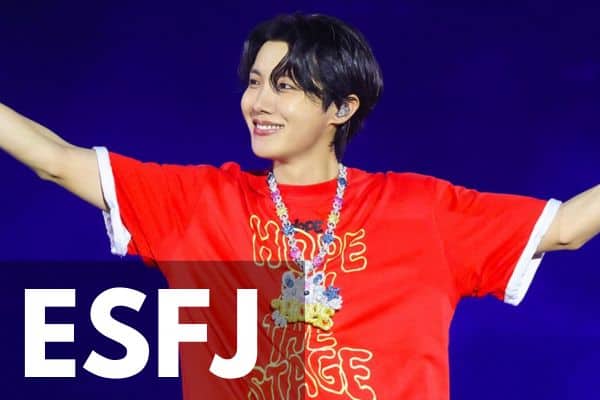
What stands out most about J-Hope, born Jung Ho-seok, is the combination of emotional attentiveness, consistency, responsibility, and detail orientation. He’s emotionally expressive but also emotionally reliable. There’s a groundedness to the way he supports people that feels very in line with the ESFJ personality type.
Even small details point in that direction.
He’s the kind of person who wakes up and immediately makes the bed. He pre-plans outfits carefully so everything aesthetically fits together. Arriving on time matters deeply to him. His fellow BTS members often mention that he’s someone who keeps things clean and organized and on time.
“Arriving on time is a delicate subject for me. I think it’s only polite to arrive on time. And it’s important if you’re meeting people. I could never give up that part of myself.”
That’s such a strong ESFJ statement because it’s framed in terms of responsibility and consideration for others. It’s not just “I like organization.” It’s “this affects people, therefore it matters.”
And you can see that mindset throughout his entire role in BTS. J-Hope often feels like the emotional stabilizer of the group. The person making sure everyone is functioning, encouraged, motivated, and cared for. BTS’ manager once said:
“If it weren’t for J-Hope, BTS wouldn’t exist as it is today.”
Professionalism is very important to J-Hope, but it doesn’t seem rooted in cold ambition. It seems rooted in care. He wants to do well because he understands how his energy impacts the people around him.
You can hear that directly in the way he talks about responsibility:
“I’m very affected by the people around me, so I have to think about whether I can handle the emotional effect my decisions will have on so many others.”
“I wouldn’t say it’s a burden (to be needed so much by the group), I just do what I can. I think that’s my role on the team. And, well…I don’t think of it as a requirement. I don’t think about what I need to do. It just comes naturally. This…role? Should I even call it that? It feels weird to call it a role. But all I do is take it in stride, and do what I can for the other members.”
In other interviews he frequently mentioned absorbing other people’s feelings; feeling sad when others are sad, happy when others are happy. His decisions naturally pass through an emotional and interpersonal filter.
And unlike many Extraverted Feeling (Fe) types who lose themselves completely in others’ expectations, J-Hope seems to have gradually developed a stronger relationship with his own identity over time. A lot of his recent interviews revolve around trying to integrate “J-Hope” the symbol with Jung Hoseok the actual person.
“Once I got this name, I told myself that I should take responsibility for this name. Once I started thinking that way, it changed something inside of me. I started searching for hope everywhere. So I told others about this as well. That if you change your mindset, you can truly find hope. I’m always reminding myself, you are J-Hope, and the reason you are where you are is because of the huge responsibility given to you by your name.”
This quote really stayed with me. Fe-dominant types often internalize roles and responsibilities very deeply. Sometimes so deeply that they become part of their identity. Where an Introverted Feeling type develops a sense of identity from within, skeptical of being labeled or “boxed in” by an external source, an Extraverted Feeling type often takes on expectations and identity from outward forms of expression.
What’s fascinating is that he’s also become increasingly aware of the pressure that creates:
“Back then, I felt like I was stuck in some kind of mold that kept me from expressing myself as freely as I wanted to.”
That sounds like tertiary Ne (Extraverted Intuition) pushing against limitation and craving more freedom of expression. There’s creativity in him that wants to expand beyond the role he initially became known for.
I think that’s why some people see ENFJ. J-Hope is genuinely imaginative. He uses symbolism naturally, especially with concepts like Pandora’s Box or the jack-in-the-box imagery he referenced while discussing identity and self-expression.
But even when he becomes philosophical, the focus usually comes back to lived emotional experience and connection rather than abstract future vision. In one interview he stated, “When I interviewed Jungkook earlier, he said that he wanted to come up with an imaginary situation and write a song about it, something outside of his own experience, which was interesting to me because I can’t do that. I mostly focus on my stories and my feelings.”
That doesn’t sound like an intuitive personality type to me. It sounds grounded in personal emotional experience, which is what Introverted Sensing is all about (the ESFJ’s auxiliary function). His creativity feels experiential, embodied, and relational.
You can also see his Sensing side very clearly in how physically and aesthetically engaged he is with the world around him. He’s known for his meticulous eye for detail when it comes to choreography, style, and presentation. ESFJs are like that. They want all the details just right and can’t rest if those same details are sloppy or out of place.
Even during military service, that same pattern emerged. He became an elite soldier and later a drill instructor, but instead of leaning into intimidation, his focus immediately went relational:
“Since drill instructors are often thought of as scary, I tried to be more approachable.”
Again, Extraverted Feeling first.
“I just thought I have to make music that can give consolation and a sense of hope to other people.”
“We’re just people like everybody else, so we feel the same as everybody else.”
And yes, there’s creativity, introspection, symbolism, and complexity underneath all of that. But at the center, J-Hope still seems most driven by connection, responsibility, emotional support, and lived human experience.Top of Form
V / Taehyung (INFP): The Poet Lost Between Dreams and Reality
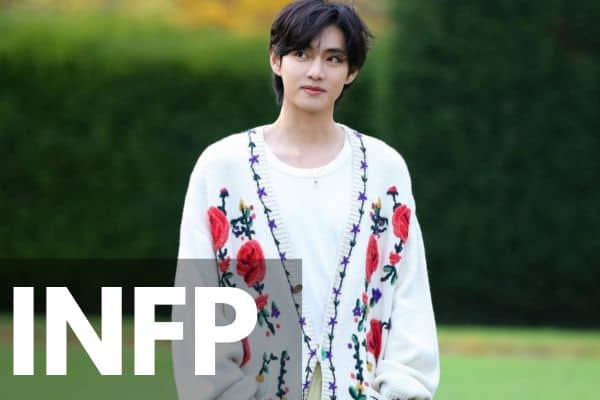
V is one of the most difficult BTS members to type if you rely too heavily on stereotypes. I considered ENFP for him for a long time because that seems to be the popular consensus online and he definitely showcases a lot of Extraverted Intuition. However, he has stated that as an adult he identifies more as an introvert so I want to honor that choice because there’s a good case for INFP as well.
People often assume that because he’s expressive, playful, socially warm, and capable of being chaotic in public, he must be extroverted. I can understand why. He absolutely has bursts of energy and spontaneity.
But the more I watched him over time, the more I started noticing something different underneath it all: a person who seems fundamentally inward-focused, emotionally private, imaginative, and guided by deeply personal feelings and impressions rather than external structure or social expectations.
No typing system is perfect. MBTI® results can absolutely fluctuate depending on stress, self-perception, or life stage. But when someone repeatedly lands on the same type while also displaying strong evidence for its cognitive patterns, I think it’s worth taking seriously. On top of that, INFPs can seem more extroverted when they’re using Extraverted Intuition to explore possibilities, improvise, or get creative.
INFPs lead with Introverted Feeling, which means they tend to process life through deeply personal emotional meaning rather than external consensus. They live inside their feelings, examine them, write them down, transform them into symbols, memories, metaphors, songs, aesthetics.
“She looks like a blue parrot,
Would you come fly to me?”
“When the world turns beautifully white
I’ll spread those fading colors with you
There’s a lot of white angels here and there this year”
And when he describes emotional pain, he rarely does it clinically or analytically. He turns it into imagery:
“That unleashed all the arrows charged with various emotions pent up in my heart.”
“Let’s meet in our dreams tonight. If you miss me, I’ll be there.”
“Purple is the last of the rainbow colors, so it means I will love and trust you for a long time”
V talks about frequently needing to pause and write down his feelings. In an episode of American Hustle Life, when the other members are packing and getting ready to fly back to Korea from Los Angeles, V has left the packing unfinished so he can write down his feelings. INFPs, who have dominant Introverted Feeling, often need to process their feelings before moving on with everyday life. To leave a feeling “trapped” and stifled feels suffocating to them. They can do it, but it’s extremely uncomfortable.
Another sign of V’s introversion comes from his frequent desire to “space out.” For an introvert, the inner world is the most fascinating world. Yes, they can be jovial and humorous and playful externally thanks to their Extraverted Intuition, but they often like to retreat into the world of the mind, the imagination, and inner feelings.
“I really like spacing out, so I’ll sit in my room doing nothing for hours. I could try putting on a movie, but then I couldn’t concentrate and would just zone out. When that happens, it’s kind of like I’m living without a thought or care in the world. Maybe I should make a song about all of this someday. Probably called “Spaced.” Anyway, these days I’m looking for ways to keep myself happy.”
“Compared to the other members, I am very lazy. Once I’ve set my mind on something, to get that into action, it takes me up to 2 months. I’d start working out, then quit. I’ve quit projects midway too. I’m the type where if I’m not feeling it, I don’t do it.”
“Spacing out. That’s something I do every day these days.”
Another sign of V’s Introverted Feeling is his frequent desire to stay true to his feelings, even if it rocks the boat or is “unproductive.” When he talks about “if I’m not feeling it, I don’t do it,” this is honoring his Feeling state. TJ or FJ personality types tend to push through the feeling to get an external result, minimizing the internal feeling for the pursuit of outer order. Introverted Feeling is very different in comparison. It needs to stay true to the self and one’s own personal values. It fights for individualism rather than keeping up with the status quo.
“Be yourself. Create your own unique style.”
“Live your life. It’s yours anyway. Don’t try too hard. It’s okay to lose.”
“It’s okay to be different. Being different is beautiful.”
“I’m doing things my way. I will become stronger.”
Introverts also need a slower pace, with more time to reflect and process their thoughts and feelings. The intense and often oppressive workload that BTS has shouldered over the years has not made this easy and has often led to various members, including V, struggling with burnout or bouts of depression and uncertainty.
“Because my pace is slower than the members and my thoughts are a bit different … is that why I’m more burned out?”
“Whenever I looked at our members when we perform, [I thought,] ‘The members are so perfect and they enjoy the stage. But why am I the only one like this?’ So relatively, my burnout was severe.”
“I was so exhausted that I asked, ‘Since tomorrow we only have dance practice, would it be OK if we took a day off?’ But we were preparing for our comeback and it was an important dance practice, so we couldn’t rest. … All this negativity piled up inside me, I didn’t think I could do anything in that state, so I kept thinking of ways I could rest, but I couldn’t think of anything, so I even thought I should get hurt [‘If I get hurt, would I be able to rest?’]. I thought I should get hurt.”
“I was stretched too thin and I was starting to sputter… It’s important to be successful, but I’m also trying to be happy, so how come I’m not happy right now?”
That question feels deeply INFP to me. External success means very little if the inner emotional reality feels disconnected or empty.
At the same time, his intuition is unmistakable.
Taehyung’s mind seems to move through associations, impressions, metaphors, possibilities, and strange imaginative leaps constantly. He often communicates indirectly, poetically, or abstractly rather than linearly.
“Life is perhaps not about finding shining moments among the worthless, but realizing that what had seemed worthless were really the shining moments.”
“Don’t be afraid, don’t worry yourself. The end and the beginning, beginning and the end are connected.”
Even his songwriting process sounds intuitive and impressionistic rather than structured:
“I always write the songs in gibberish, and the melodies too.”
“Because for me there’s an image in my head of each song.”
That doesn’t sound like someone building from concrete structure outward. It sounds like someone chasing emotional and imaginative impressions until they slowly take shape. During his live streams, he often sits quietly, not saying anything, for minutes at a time, just following his heart or his imagination wherever it leads. This dreamy inward drift feels incredibly INFP. Their minds often disappear into reflection, imagination, memory, fantasy, symbolism, or emotional processing even when they appear physically still.
At the same time, Taehyung’s playful side absolutely exists. INFPs can actually be extremely goofy and unpredictable once they feel emotionally comfortable. Especially with people they trust.
Jin once said:
“He’s really weird. I’m not kidding. He’ll be sitting in the dorms, then suddenly he’ll run around going ‘HO! HO! HO!’”
To me, this sounds exactly like an emotionally comfortable Ne-user suddenly getting overtaken by a bizarre internal impulse. But underneath the humor, there’s also unmistakable sensitivity. He also seems deeply attached to emotional memory and personal meaning. His stories about childhood with his grandparents are incredibly vivid and emotionally detailed:
“I was born in Daegu and raised in the countryside where the population was low. Whenever I ask my family about my younger days, They all answer in unison “You were an overly curious child” I can remember my childhood well, and have more memories than I could possibly speak of with my grandma. Every morning, we would walk to the park in our neighborhood and my grandma would always buy me a yuzu tea (citrus tea) from the vending machine on the way. Even now, I can still remember it. On top of that, whenever we went to the supermarket to go shopping, I would always sit in the child seat of the trolley for my grandma to push me. In summer, grandma would make hwachae (Watermelon mix with soda) and we would withstand the heat every year with hwachae.”
The memory is especially meaningful to V, and he often recounts memories with precise detail, even in interviews where perhaps everyone else has shifted to another topic.
Even RM described him this way: “Taehyung-ie has so many things (charms, abilities, etc,.) He’s very likable to anyone. I respect the pure aspects of him.”
That word “pure” actually makes sense to me here. Taehyung often comes across like someone operating from an emotionally sincere and imaginative inner world that he’s trying to preserve despite the pressures around him.
At his core, he doesn’t seem driven primarily by structure, efficiency, or external validation. He seems driven by emotional authenticity, beauty, imagination, meaning, connection, and the desire to stay emotionally alive in a world that can easily numb people.
“I have a big heart full of love, so please take it all.”
“You are part of my story, memory and scenery, thank you.”
“When things get hard, stop for awhile and look back and see how far you’ve come. Don’t forget how rewarding it is. You are the most beautiful flower, more than anyone else in this world.”
What Do You Think?
Do you agree with my perspectives on the personality types of the BTS members? Do you have a different opinion or insight to share? Feel free to let me know in the comments!
Find out more about your personality type in our eBooks, Discovering You: Unlocking the Power of Personality Type, The INFJ – Understanding the Mystic, and The INFP – Understanding the Dreamer. You can also connect with me via Facebook, Instagram, or YouTube!
Other Articles You Might Enjoy:

The Myers-Briggs® Personality Type of Jimin: A Mind That Seeks Harmony

The Myers-Briggs® Personality Type of Kim Namjoon “RM”
The Myers-Briggs® Personality Types of the Bloodhounds Characters
The Myers-Briggs® Personality Types of the Weak Hero Characters
All Of Us Are Dead: The MBTI® Types of Every Main Character

The Myers-Briggs® Personality Type of Lee Jun-Young
References:
I’ve watched probably over a hundred interviews, reels, live streams, and variety shows, so to list them all here would take hundreds of links. However, here are some articles that were useful as well:
https://www.rollingstone.com/music/music-features/rm-interview-arirang-bts-1235544804
https://www.rollingstone.com/music/music-features/v-interview-bts-solo-album-1235544831
Jimin Interview with Rolling Stone
J Hope Interview with Rolling Stone
Jin Interview with Rolling Stone
Suga Interview with Rolling Stone
https://people.com/all-about-bts-members-11893539
https://www.elle.com/culture/music/a69264924/who-are-bts-members
BTS: The Comeback on Netflix




I agree with them all except Jin. He seems more ENTP with a dose of social anxiety. Not severe enough to make him frozen, but enough to cause a mild panic and cold sweat when you meet people. The sleep half the day and play games for 16 hours sounds ENTP. Honestly, that way if thought is common for most Ne dom.
*Saying this as an ENFP who can stay happy doing the same thing for days but without the skill of a Ti user
Ne is such a weird function being “extroverted” yet not really requiring humans, just something that stimulates the part of the brain that brings up all the possibilities. Gaming would satisfy both his Ti and Ne. Ne because, in the moment you have to think of all the possibilities and quickly pick the best. Ti, because he can learn the base logic of the game (which is fun for them) which will help make better choices within the possibilities.
I’d love your take on their enneagrams. 😊
Hi! Just want to say that I really like reading this article! I’m new to your site, the MBTI is a study that I think truly understands me. I did a deeper dive into MBTI in my 20s and 30s. I’ve always been certain that I am an ENFP, but I noticed that I’ve become more selective and reserved socially (and in expressing myself) in my 30s.
There’s something about Tae Hyung (V) that resonates with me; whether it’s his style of singing or lyrics. I really like the lyrics and music of “Into the sun” and it was a song that I think about as I journal. The part about V needing personal time to process his feelings and is very true for me as well.
So I’m wondering if I have mistyped myself as ENFP or whether a lot of ENFP become introverted as they age?
It’s also true that V’s personality type can be and enigma and hard to pin point, and you did a great job explaining him. Thank you!