
40 Iconic Enneagram 9 Characters From Movies, Television, and Literature
Enneagram Nines are often called “the peacemakers,” but honestly? That makes it sound way too simple. Like your entire personality is just sitting cross-legged on a yoga mat whispering “om.” The truth is, being a Nine sometimes feels less about eternal serenity and more about carrying the weight of everyone else’s chaos while quietly trying not to implode. You want inner harmony. You crave it like caffeine on a Monday morning. But sometimes that means disappearing into Netflix binges or nodding along when you don’t actually agree, just because arguing feels like emotional tax season.
And yet Nines are often the calm in the storm. The people who can diffuse tension with a joke, or just by existing like a human weighted blanket. They’re deeply empathetic, imaginative, and often more stubborn than anyone realizes (try moving a mountain; that’s basically a Nine when they’ve actually made up their mind). It’s easy to miss their power because it doesn’t always show in a flashy, confrontational way. But trust me, you notice when it’s gone.

So today we’re looking at fictional Enneagram 9 characters—the dreamers, the mediators, the reluctant heroes, and yes, the occasional cartoon bear. Some of them show us the Nine’s quiet wisdom; others highlight the struggle to not vanish under pressure. Together, they paint a picture of what it’s like to want peace in a world that thrives on conflict. Spoiler: it’s messy, it’s beautiful, and if you’re a Nine, you’ll probably see yourself in more than a few of these characters (for better or worse).
Not sure what your personality type is? Take our Enneagram questionnaire here!
40 Iconic Enneagram 9 Characters From Movies, Television, and Literature
#1 – Remus Lupin (Harry Potter)
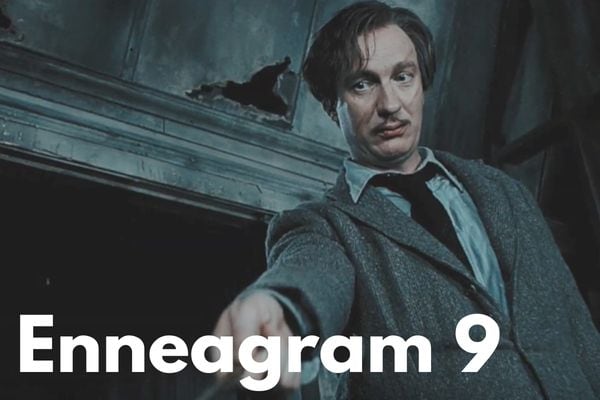
Remus Lupin is gentle, thoughtful, and endlessly patient, the kind of person who’d rather broker peace than stir up conflict. Even as a werewolf—something that made him an outcast and a target for prejudice—he carried himself with humility and grace, never letting bitterness define him. That’s what many Nines do: absorb the pain, downplay it, keep the waters calm.
Sometimes Lupin fades into the background because he doesn’t demand the spotlight. He’s the professor who makes you feel seen without making a big deal of it. He listens more than he talks, and when he does speak, it’s with a wisdom that feels both grounding and quietly transformative. You can almost feel the students in his Defense Against the Dark Arts class breathe easier just being in his presence.
But his Nine wiring also shows up in his struggles. Remus avoids conflict to his own detriment; keeping secrets about his condition, withdrawing when things get messy, convincing himself others would be better off without him. That’s the Nine’s shadow: the temptation to disappear instead of risking disharmony. Yet, when it really matters, Lupin steps up. He fights, he leads, and he proves that a calm spirit doesn’t equal a passive one. At his best, he’s the kind of Nine who shows us how quiet presence can be just as powerful as loud bravery.
#2 – Seishiro Nagi (Blue Lock)
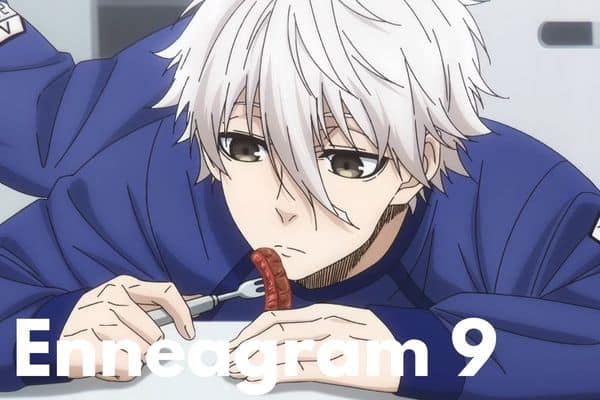
Nagi is basically the poster child for the Nine’s “why bother?” energy. At first, he’d rather stay curled up with his phone, cactus in the corner, and zero obligations than deal with the chaos of ambition. That laid-back, half-asleep vibe is almost stereotypical Nine. They can be content to drift, avoiding conflict, and sticking with what feels safe and easy. He doesn’t care about being the best, doesn’t even care much about soccer at all, until someone or something pushes him out of his comfort zone.
Like a lot of Nines, though, once you light that fire under him, you see how much power was just sitting there under the surface. Losing to Team Z wakes him up. Suddenly, he cares. He’s irritated by the taste of failure, motivated by rivalries, and for the first time, he’s willing to put effort into something—even if it risks shaking up his relationships. That shift from “lazy genius” to “driven competitor” shows the Nine’s arc perfectly: when they stop numbing out and finally engage with life, they can be unstoppable.
#3 – Kristoff Bjorgman (Frozen)
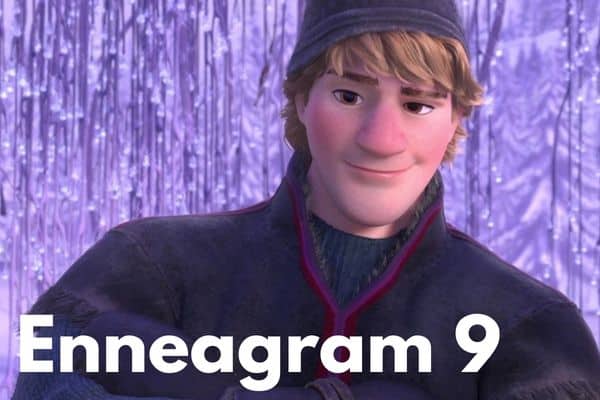
Kristoff is quiet, grounded, happiest with his reindeer and some peace and quiet in the mountains. If he could live his whole life avoiding drama, people, and responsibility beyond ice harvesting, he probably would. Of course, that’s until he falls for Anna.
But beneath that loner exterior is all the softness Nines are known for. He’s loyal to Sven to the point of absurdity. And when Anna crashes into his life, his guarded walls start to melt. Suddenly, he’s risking everything for someone else’s happiness. His story arc reminds us that when Nines finally let someone in, their love is steady, sacrificial, and quietly heroic.
Of course, Kristoff also carries the Nine struggles. He avoids hard conversations, doubts whether his needs really matter, and sometimes checks out when things get overwhelming. But when push comes to shove, he shows up. He saves Anna multiple times, stands by her side when things get messy, and proves that Nines, even when they doubt themselves, are often the glue that holds everyone else together.
#4 – Nicholas “Nick” Nelson (Heartstopper)
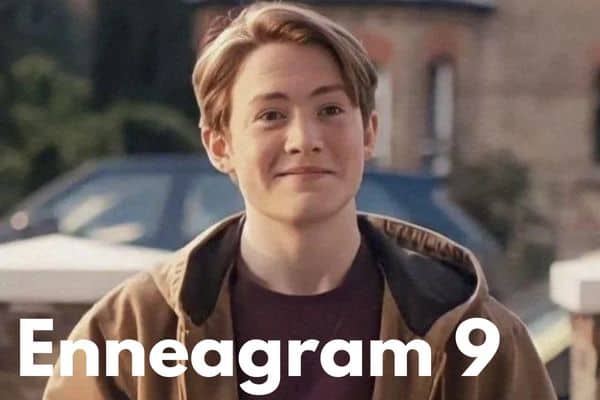
Nick is the kind of Nine who looks like he has it all together on the outside: popular, athletic, friendly—the golden retriever boy everyone likes. But inside, he’s caught in that classic Nine tug-of-war between wanting to keep the peace with the world around him and needing to figure out who he really is. His “proper full-on gay crisis” captures what many Nines struggle with; wondering whether to prioritize identity or harmony and keeping the peace.
Like many Nines, Nick’s instinct is to be the nice guy. Stay with the team. Keep things light. But when Charlie comes into his life, Nick realizes that keeping the peace at the expense of his truth isn’t sustainable. He starts doing the scary work—researching, questioning, and eventually coming out—because even though Nines hate conflict, they’ll face it when it’s about protecting what (and who) they love.
At his best, Nick shows the Nine’s warmth and steady loyalty. He’s protective, sweet, and genuinely safe for the people close to him. But like other Nines, he struggles with self-doubt, with disappearing into other people’s expectations, and with the fear that claiming his own identity will cost him connection.
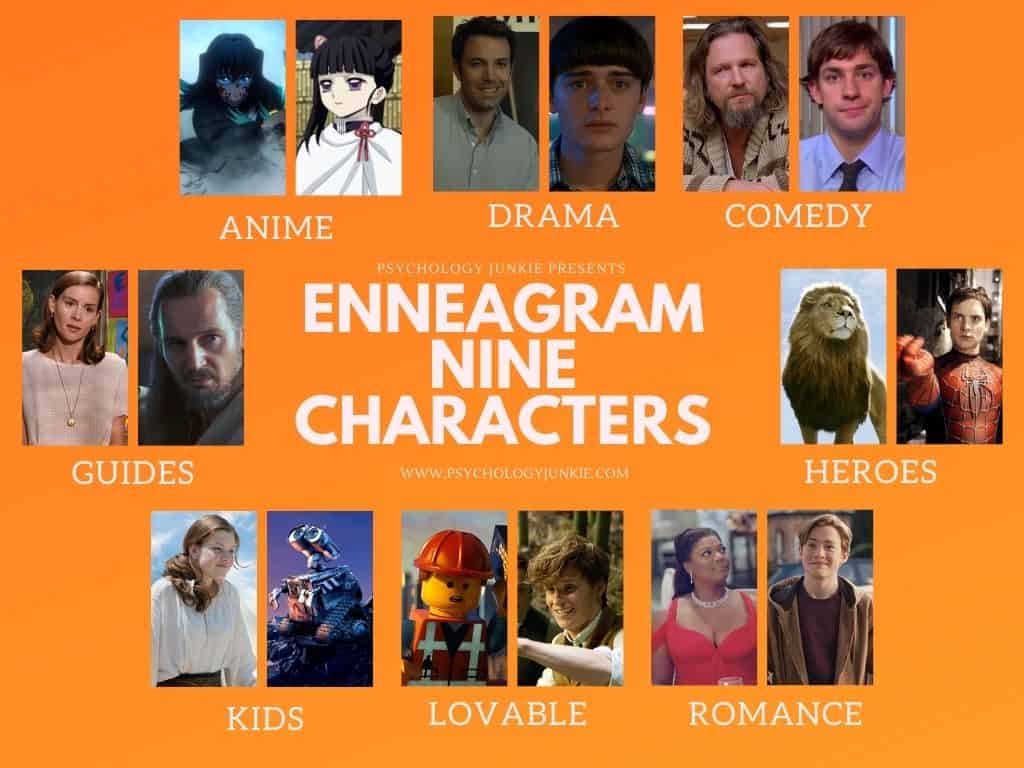
#5 – Alphonse Elric (Fullmetal Alchemist)
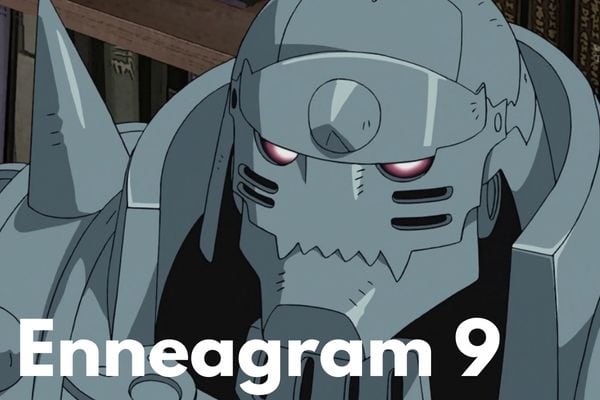
Alphonse is the quieter half of the Elric brothers, but don’t mistake that gentleness for weakness. He’s the steadying presence beside Edward’s firestorm energy, the calm voice when things spiral, and the literal shield when danger strikes.
Like many Nines, Al wrestles with self-doubt. Being trapped in a hulking suit of armor while still only a teenager leaves him with insecurities that cut deep. He fears disconnection; that he’s no longer truly human, that he’s lost something essential about belonging and closeness. He aches for warmth in the way he secretly longs for touch, food, and simple human comforts. Even his habit of scooping up stray kittens feels like his way of holding on to tenderness in a body that can’t feel.
What makes Al shine as a Nine is his protectiveness and his refusal to compromise his principles. He doesn’t want to hurt others, even if it means delaying his own dream of regaining his body. He’s pacifistic, but not passive. He’ll step into the line of fire to defend a friend, even if he’d rather avoid violence altogether. And while his brother burns with righteous anger, Al is more measured, more willing to forgive, more willing to look for the good.
#6 – Uncle Iroh (Avatar: The Last Airbender)
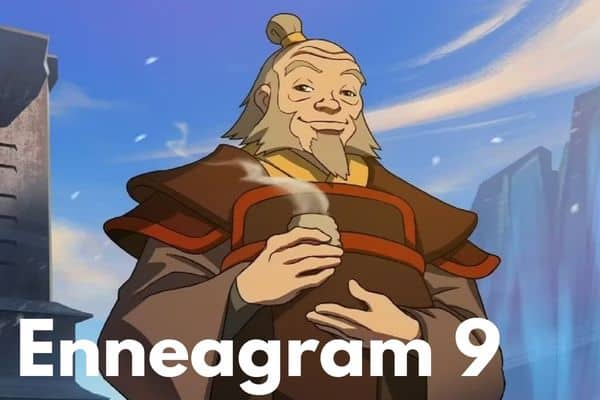
Iroh is steady, grounding, and deeply present, even when the world around him is falling apart. Unlike most of his fire-obsessed family, Iroh steps back and actually considers balance. He studies waterbenders to learn about flow, earthbenders to learn about grounding, and even holds on to the wisdom of dragons. That’s pure Nine energy: weaving together harmony where others only see division.
But his gentleness isn’t softness born of naiveté, it’s born of loss. The death of his son Lu Ten shattered him, and rather than double down on conquest like Ozai, Iroh laid down his weapons and began searching for peace. That shift—from ambitious Crown Prince to tea-drinking mentor—shows the Nine’s deep capacity to withdraw, reflect, and choose a quieter strength.
As a mentor to Zuko, Iroh embodies the Nine’s gift of steady presence. He doesn’t push Zuko with force; he nudges him with patience, humor, and parables that sound like nonsense until they land at the exact right moment. He plays Pai Sho while everyone else plots war. He makes tea when others make threats. And yet, when needed, he can breathe fire and stand toe-to-toe with generals.
Of course, Iroh’s struggle is the Nine struggle—sometimes preferring comfort and retreat over confrontation. He could have claimed the throne but chose not to. He could have faced Ozai’s cruelty more directly, but stayed in the background. Even his tendency to distract himself with food, games, and naps shows that Nine temptation to check out when things get too heavy.
Still, Iroh proves that the Nine’s gentleness isn’t weakness—it’s wisdom. He teaches that peace, patience, and compassion are their own kind of firepower, capable of changing hearts in ways brute force never can.
#7 – Qui-Gon Jinn (Star Wars)
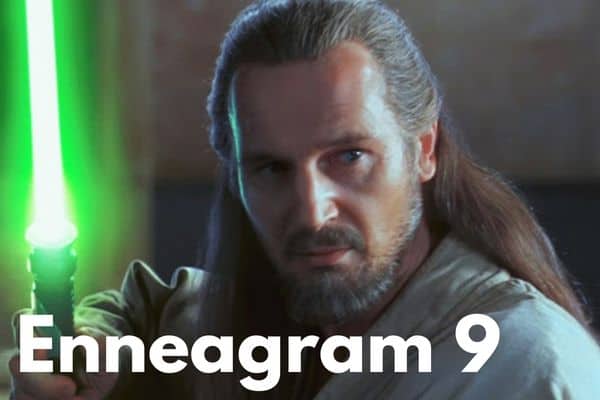
Qui-Gon is Jedi ASMR. Calm voice, soft eyes, and a spine of beskar. He orients around the Living Force, not committee politics. As a Nine, his superpowers are presence and harmony. He grounds rooms (and panicking queens), listens before swinging a lightsaber, and steers people back to what matters. He mentors Obi-Wan with patience, earns Jar Jar’s trust without condescension, and senses the light in a dusty slave boy when everyone else is busy reading bylaws.
But the Nine shadows show, too. Qui-Gon can check out of systems that feel wrong (Council seats? hard pass) and let “the will of the Force” override debate. That’s principled—also a little avoidant. He’ll dodge power games but then be immovable once his inner compass locks in (hello, Anakin). Nines hate conflict, yet when their core value is threatened, they’ll plant their feet and become a mountain.
#8 – Haruka ‘Haru’ Nanase (Free!)

Haru is serenity in swim goggles. Quiet, steady, allergic to drama, and happiest when submerged. Like most Nines, he’d rather move toward what brings peace (water), and away from what stirs conflict (people, plans, authorities telling him what to do). He doesn’t chase spotlights or speeches; he chooses, commits, and lets the lane lines do the talking. Once he decides? Stone-calm confidence. No overprocessing. Just glide.
He’s also deeply bonded—especially to Makoto. Nines can look detached, but when their people need them, they’re suddenly made of steel. Haru yanks Makoto from the surf without hesitation, tries to shield him from embarrassment, and wordlessly syncs with his team like they share one nervous system.
Shadow side? Avoidance in a speedo. Haru dodges “troublesome” conversations, new environments, and any agenda that fences him in. He’ll ghost a decision until it’s life-or-death (or finals), then sprint through it. The fixation on water can be a sanctuary—and a hiding place—when emotions crowd the deck.
#9 – Lee Cheongsan (All of Us Are Dead)
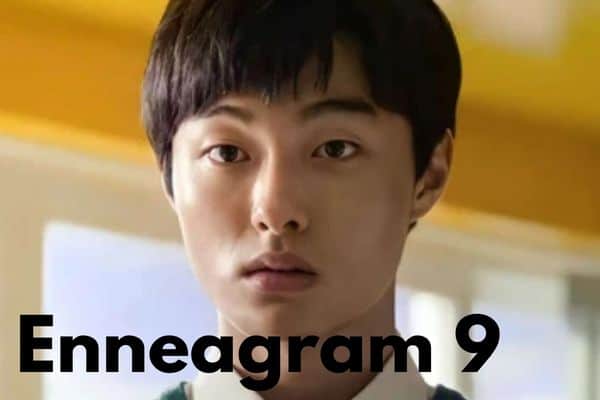
Cheong-san didn’t sign up to be anyone’s hero. He was just a kid next door, sneaking glances at his best friend On-jo, trying not to die of embarrassment over his parents wanting to plaster his face on their fried chicken shop. But when the world ended in blood and teeth, he stepped up because that’s what a Nine does when peace is shattered: they try to pull everyone back to safety.
Like many Enneagram 9s, Cheong-san was conflict-avoidant before the outbreak. He couldn’t even confess his feelings to On-jo, let alone confront his jealousy of Su-hyeok. His first instinct was always to keep life calm, stay in the background. But under pressure, his hidden strengths came out: resourcefulness, loyalty, and a fierce protectiveness. He was the one who thought up escape plans, volunteered for the dangerous tasks, and threw himself between his friends and the undead again and again. When others froze, Cheong-san acted. And always, at the core, his motive was the same: keep his friends alive, keep some kind of harmony in a world gone feral.
He’s also a textbook Nine in his self-effacing way of loving. His crush on On-jo sat buried for years because admitting it might rock the boat. Even his eventual confession came not as a demand, but almost an apology. Nines often minimize their needs like this, terrified of losing connection if they assert themselves too much. And yet, when it came time to let go, he still gave her his name tag as if to say, I exist. Remember me.
#10 – Saitama (One Punch Man)
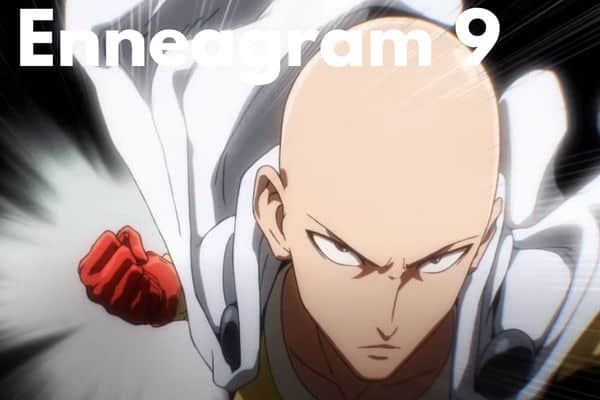
Saitama is what happens when a Nine gets everything they thought they wanted…and finds out it’s kind of boring. He dreamed of being a hero, trained until he lost his hair, and became the strongest being in the world. Now? Nothing excites him. One punch, and it’s over. Every battle ends the same way, and instead of glory, he’s left with an existential shrug and a grocery list.
Saitama doesn’t get worked up about insults, fame, or rank—he’d rather shop for sales or play video games than chase the spotlight. At the same time, his whole moral compass is pure Nine: he never uses his strength selfishly, he gives credit to other heroes so they can shine, and he stands up simply because someone has to. He doesn’t posture, he doesn’t grandstand—he just does what’s right, then goes home to nap. Every Nine will relate.
Underneath that “couldn’t care less” exterior is the other side of the Nine: deep loyalty and surprising wisdom. He pushes people like Genos and Fubuki to grow into themselves, encourages the insecure, and even sympathizes with villains who feel the same loneliness he does. Saitama embodies the Nine’s gift and curse: immense power coupled with a longing for peace so strong that excitement itself feels out of reach. His whole story is a reminder that even when you have everything, if you don’t feel connected, it still feels like nothing.
#11 – William “Will” Byers (Stranger Things)
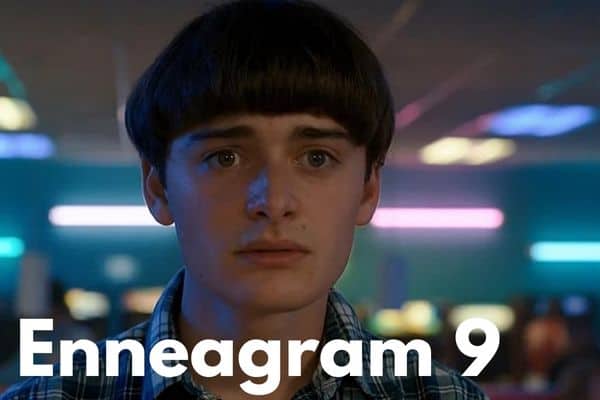
Will Byers is the definition of quiet strength. He’s the kind of kid who doesn’t need to shout to be heard—he’ll just be there, steady and gentle, trying to make sure everyone else is okay. He’s sweet and generous; the type of person who apologizes for taking up space even when he’s the one hurting.
Will’s happiest when things are calm. He spends hours tucked away in his fort in the woods, a sanctuary of quiet where the noise of the world fades out. Even when he’s terrified in the Upside Down, he goes back to that fort, because for him, peace is found in familiarity, not in fighting. That’s the 9 in him: seeking refuge in comfort, in what feels safe and known.
He’s a natural mediator, always trying to keep the peace among his friends, even if it means putting his own needs on pause. Conflict makes him shrink inward, like he can will it away by staying small and agreeable. But that quiet exterior hides a heart that’s deeply loyal, deeply feeling, and quietly resilient.
When stressed, though, that serenity cracks. He can slip into the anxious vigilance of a Six; suddenly questioning who he can trust, clinging harder to the people who make him feel safe. You see it in the way he watches the group splinter and wonders if he’ll be left behind. But underneath it all, Will’s gift is his gentleness. In a world full of monsters and mayhem, he’s the friend who makes you believe that maybe everything’s going to be okay.
#12 – Kanao Tsuyuri (Demon Slayer)
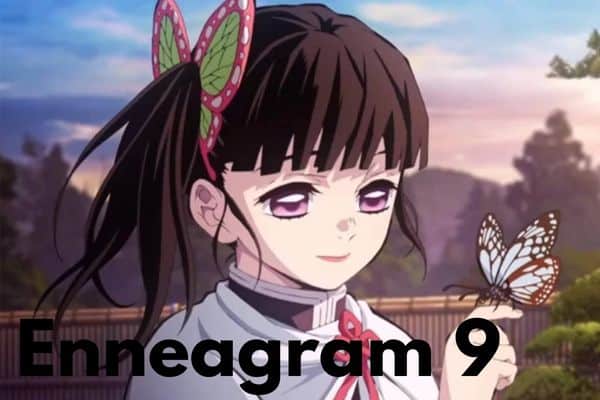
Kanao is the picture of Nine energy at the start: quiet, watchful, and so conflict-averse she outsourced her choices to a coin. After a childhood where feelings were unsafe, “numbing out” became her default. That’s the telltale Nine self-forgetting; keep the waters calm, keep yourself small, and maybe nothing will hurt.
But here’s the Nine plot twist: beneath the still surface is a spine of steel. Nines don’t lack anger; it just goes to sleep until something (or someone) they love is threatened. For Kanao, that “something” is her found family. The more she sees of what demons took, the more her will wakes up. She stops letting the coin decide and starts choosing. That’s a huge Nine milestone: moving from “I don’t know what I want” to “I do, and I’ll act on it.”
I’d say more, but I don’t want to give any spoilers!
#13 – Peter Parker (Spider-Man)

Peter Parker (the Tobey Maguire iteration) is your classic “I just want everyone to get along” kind of hero. Of course, this is hilarious considering his day job involves punching people through walls. At his core, he’s gentle, peace-loving, and deeply allergic to unnecessary conflict.
“But then why is he a hero out fighting villains?” you might ask. He’s in it because someone has to do the right thing, and he figures it might as well be him. He doesn’t need a crowd chanting his name; he just wants the people he loves to be safe and the city not to fall apart.
Still, Peter’s Nine-ness shows up in the way he tends to merge. He can lose himself in what everyone else needs — Aunt May, MJ, his friends, the city — until there’s barely anything left for him. He avoids confrontation like it’s his part-time job, apologizing while he’s saving you, because God forbid someone think he’s being too assertive. And when things go wrong (which, let’s face it, they always do), that easygoing peacekeeper exterior gives way to the anxiety and guilt of a stressed-out Six. Suddenly he’s replaying every decision, wondering if he could’ve fixed it, saved someone, done better.
But that’s what makes him so endearing; Peter’s not trying to be the best, he’s just trying to keep the peace in a world that never seems to stop breaking. He’ll shoulder the weight, make the joke, mend the bridge, and still show up to class late with a half-eaten sandwich.
#14 – Yor (Briar) Forger (Spy x Family)
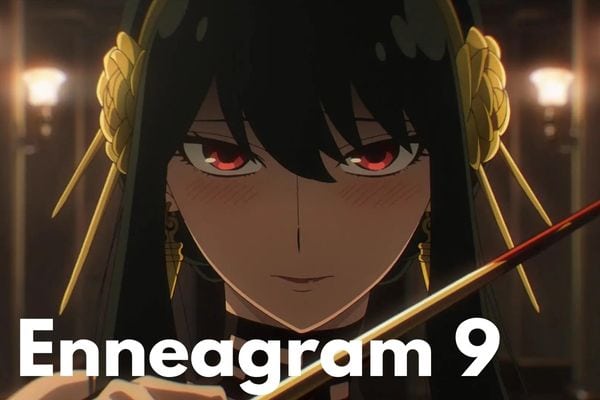
Yor is Nine energy wrapped in assassin’s steel. On the surface she’s quiet, polite, and almost painfully eager to “just seem normal.” She avoids conflict in daily life, blushes at romance, and would rather fold herself small than risk rocking the boat. Her mantra could be “keep the peace, keep everyone safe, keep yourself invisible.”
But here’s the Nine paradox: she’s literally the Thorn Princess. The same person who can’t get through dinner without apologizing for being “weird” will, without hesitation, turn into a whirlwind of blades if her family is threatened. That’s the Nine’s hidden fire—anger and power that lie dormant until love and loyalty call it up. For Yor, that fire burns most fiercely for Anya and Loid. Threaten them, and the gentle, bumbling mother figure is gone; in her place is a protector who won’t stop until the danger is ashes.
#15 – Pam Beesly (The Office)

At the start of The Office, Pam is the picture of Nine inertia: soft-spoken, conflict-averse, and so used to keeping the peace that she’s stuck in a long engagement with Roy that doesn’t really feed her soul. Like many Nines, she goes along to get along—better to keep things calm than risk rocking the boat, even if it means silencing her own wants.
But here’s the Nine arc: beneath all that “I’m fine” energy is a woman with her own voice, her own dreams, and a surprising well of courage. Pam’s journey is about waking up from self-forgetting. The art classes, the brave (and awkward) speeches, the moment she finally walks away from Roy are all Nine milestones. She moves from letting life “happen to her” to actively shaping it. And once a Nine starts choosing for themselves? That quiet current becomes unstoppable.
#16 – Wall-E (Wall-E)

WALL-E is Nine energy in its purest, gentlest form. He’s steady, unassuming, and endlessly patient—the last little trash-collecting bot still dutifully going about his work centuries after everyone else shut down. Like so many Nines, he fills his quiet life with small comforts—knickknacks, old musicals, the dream of holding hands—keeping the loneliness at bay by creating a world of peace inside himself.
But under that quiet exterior is a deep longing. Nines don’t just want peace, they want connection. WALL-E’s yearning for companionship—for someone to share his songs, his treasures, his hand—pushes him to risk everything when EVE arrives. He may be clumsy and hesitant, but when it matters, he shows the hidden Nine fire: loyalty that doesn’t waver, protectiveness that will stand in front of storms, lasers, and even space itself.
His influence is also classic Nine. Just by being himself—curious, kind, steady—he wakes up others. He nudges humans out of their stupor, helps malfunctioning robots break free from rigid programming, and softens even EVE’s edges until she learns to love. When Nines are at their best, their steady, open-minded presence allows other to show up more authentically.
#17 – Lucy Pevensie (The Chronicles of Narnia)
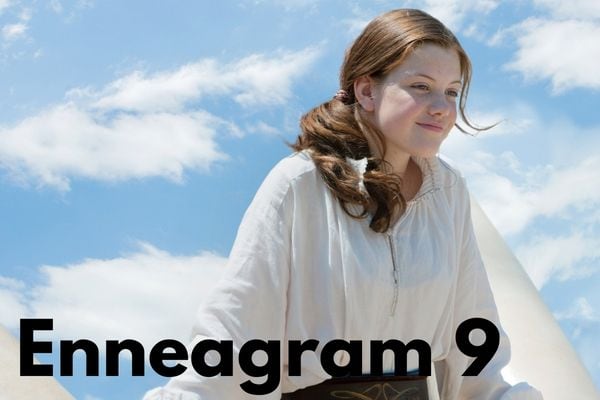
Lucy Pevensie radiates Nine energy from the moment she stumbles through the wardrobe. She’s gentle, open-hearted, and quick to believe in others. Where her siblings bicker, doubt, or jockey for control, Lucy quietly holds the center. She doesn’t need to be the loudest voice in the room; she just keeps following what feels true in her heart.
Like many Nines, Lucy’s strength shows in unexpected ways. She may seem small and soft-spoken, but when it matters, she has a spine of steel. She stands by Aslan even when others dismiss her visions, and she carries the healing cordial that saves countless lives. Her power shows up in her persistence and her refusal to turn away from what’s right.
Her influence on others is also very Nine. She brings peace simply by being herself, drawing her siblings (and even hardened Narnians) into courage and trust. She doesn’t bully or argue—she models faith, and in doing so, she wakes others up to their own better selves.
Lucy embodies the Nine at their best: calm without being passive, compassionate without being weak, and loyal to the truth even when it costs her. She teaches that peace isn’t the absence of conflict. Instead, it’s the courage to stay soft and steadfast in a world that’s hard and loud.
#18 – Hyakkimaru (Dororo)
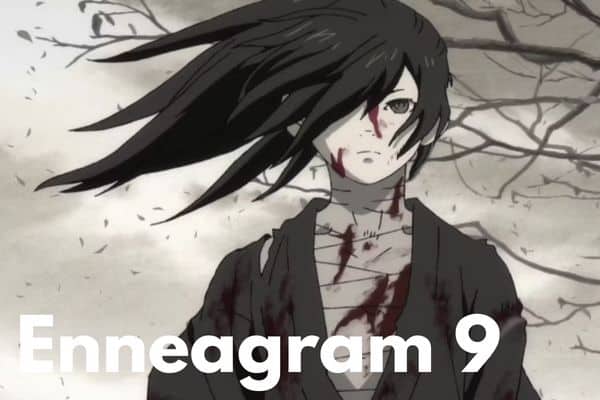
Hyakkimaru is what happens when Nine energy gets twisted by betrayal and abandonment. At his core, he’s a peace-seeker; someone who should have grown up attuned to beauty, connection, and the natural rhythm of life. But instead, his body was literally torn apart by demons and his parents’ choices.
Early on, Hyakkimaru looks like the textbook “numbed-out Nine.” He’s quiet, detached, almost ghostlike. Sadly, his voice, his senses, his humanity were ripped from him. When you strip a Nine of expression and belonging, what’s left is survival. His obsessive quest to regain his body parts is the Nine’s search for wholeness made flesh.
But here’s the Nine paradox: the same soul that longs for peace can unleash terrifying anger when pushed to the brink. Hyakkimaru’s berserk fury after a specific tragedy (trying to avoid spoilers) is that dormant Nine rage—decades of abandonment and injustice erupting all at once. His slaughter of soldiers isn’t random; it’s the shadow of a Peacemaker who has been denied peace his entire life.
And yet, even in his darkest stretches, Hyakkimaru’s Nine heart shows through. His bond with Dororo softens him. His mother’s love pulls him back from the edge. His final choice to restore his humanity instead of letting vengeance define him is the Nine’s highest gift: returning to himself, to gentleness, without denying the anger that kept him alive.
#19 – Nick Dunne (Gone Girl)
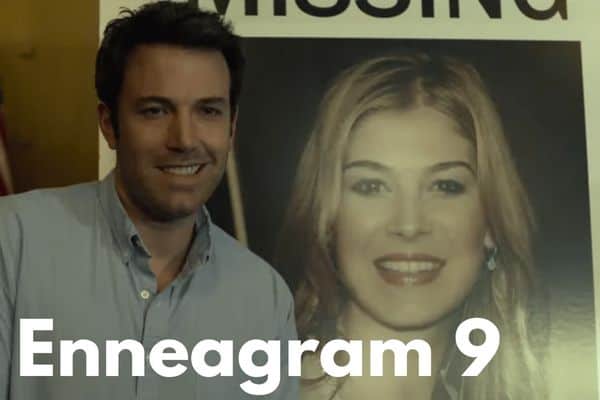
At first glance, Nick Dunne is the classic “easygoing guy”: charming enough, conflict-dodging, always trying to smooth things over instead of making hard choices. But scratch beneath the surface, and you see the Nine’s shadow; the way avoidance can curdle into inertia, self-forgetting, and denial.
Nick doesn’t want to face the hard truths of his marriage, so he coasts. He doesn’t want to confront Amy’s simmering rage, so he checks out emotionally. He doesn’t want to deal with his own dissatisfaction, so he drifts into an affair. His mantra might as well be, “Go along, stay comfortable, pretend things aren’t as bad as they are.”
But when Amy disappears, Nick is shoved into the Nine’s nightmare: conflict everywhere, no escape. Every camera, every cop, every neighbor’s eye is on him. His passive “don’t rock the boat” strategy collapses, and he’s forced to actually take a stand. Nines under extreme stress can either retreat further into denial or rise with a strange steadiness. Nick does both: he fumbles, stammers, plays the fool… but he also adapts. He learns to manage appearances, to project calm, to stay alive in Amy’s twisted game.
#20 – Jim Halpert (The Office)

Jim Halpert is what a Nine looks like when he hides behind charm and irony. On the surface, he’s easygoing, funny, the guy who diffuses tension with a smirk at the camera. He sidesteps conflict with a joke, a prank, or a shrug rather than getting in people’s faces when he disagrees. That’s classic Nine energy: keep things light, keep things pleasant, don’t get dragged into the mess.
But underneath, Jim’s whole arc is about avoidance. He doesn’t want to face his dissatisfaction at Dunder Mifflin, so he coasts. He doesn’t want to confront Pam’s engagement to Roy, so he flirts around the edges and waits. He doesn’t want to risk rejection, so he drifts in “maybe someday” mode for years. That’s the Nine trap—numbing out instead of making the hard move.
Where Jim shines is also Nine-ish: he’s steady, calm under chaos, a grounding presence for Pam and even for Michael. He knows how to hold the center without pushing. His pranks on Dwight are his low-stakes way of asserting himself without real confrontation.
#21 – Sophie Hatter (Howl’s Moving Castle)
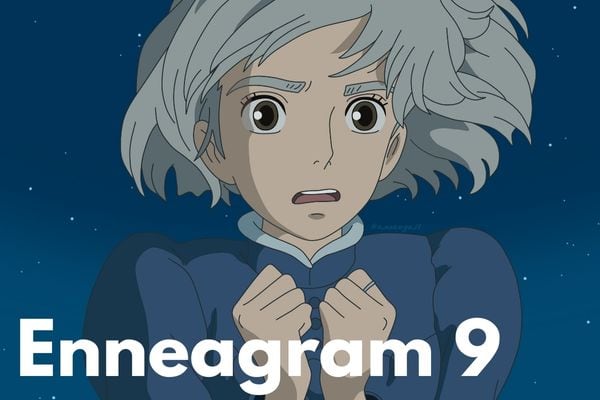
Sophie Hatter is what happens when a Nine gets shoved into an enchanted identity crisis and somehow still manages to keep everyone else’s lives running smoothly. At the start, she’s the definition of self-effacing: convinced she’s plain, ordinary, and destined for the background. And then the Witch of the Waste curses her, and Sophie’s “invisible” strategy goes nuclear. She literally becomes an old woman who’s easier to overlook. Subtle, right?
But here’s the magic of Sophie (and of Nines in general): once she stops fighting her role as “unimportant,” she actually wakes up. As an old woman, she speaks her mind more, she takes charge of Howl’s castle, she bosses fire demons and wizards around. Turns out she wasn’t voiceless—she just needed the cover of wrinkly camouflage to use it.
#22 – Newt Scamander (Fantastic Beasts and Where to Find Them)

Newt Scamander is the textbook Enneagram Nine who somehow wandered into a war but would still rather be talking to a Niffler about shiny objects. He’s awkward with people, brilliant with creatures, and would honestly prefer a quiet afternoon in his suitcase sanctuary to any Ministry meeting.
Like many Nines, Newt struggles with feeling “off” in the human world. He’s shy, mumbly, often misunderstood, and happiest when nobody’s watching. But here’s the Nine paradox: while he wants to disappear, he can’t turn off his deep sense of right and wrong. Newt notices suffering; whether it’s a Thunderbird in a cage or a friend stuck in grief, and he has to do something about it. That gentle stubbornness is what keeps him from being swayed by Grindelwald’s seductive speeches or by the Ministry’s pressure. He may avoid conflict until the last possible second, but once a Nine decides, they’re immovable.
#23 – Muichiro Tokito (Demon Slayer)
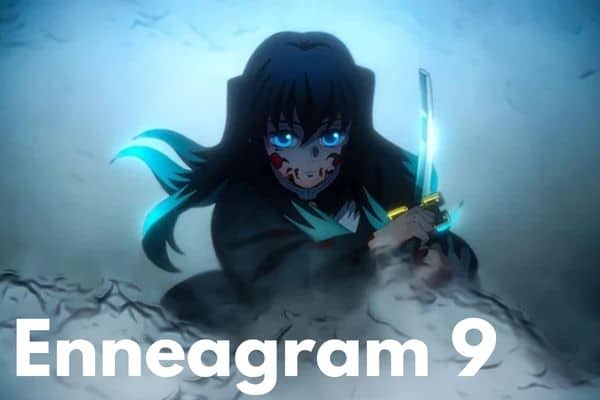
Muichiro Tokito is what happens when an Enneagram Nine gets dropped into a world of bloodthirsty demons and way too much trauma for an eleven-year-old to process. At first glance, he’s the classic “checked-out Nine”: spacey, air-headed, and drifting somewhere between this conversation and the next cloud he’s staring at. He looks like he doesn’t care, but he’s really protecting his psyche. Losing his twin brother cracked something deep in him, and his way of surviving was to go numb. Why feel, when feeling just means more pain?
But that’s the Nine trap, isn’t it? Go quiet, go small, go foggy; maybe the storm will pass over you. The thing is, Muichiro’s storm never passed. The grief, the rage, the loneliness—it just curled up in his chest and went to sleep. Until Tanjiro shows up and, in true Tanjiro fashion, refuses to let him stay half-alive. Slowly, Muichiro remembers who he was before everything broke: compassionate, optimistic, full of fire. You can literally see the Nine arc unfolding—moving from numbing out to waking up, from drifting through life to fighting for it.
#24 – Fezco (Euphoria)
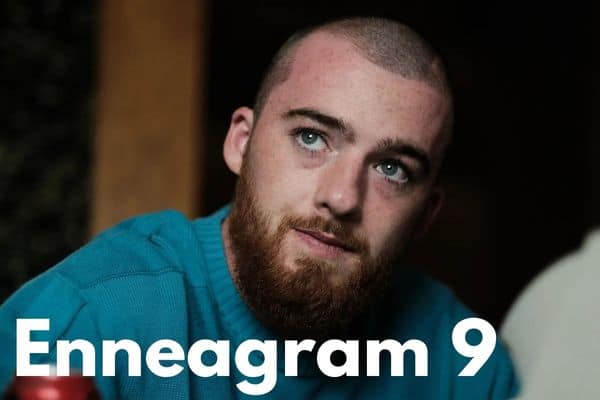
Fezco is Enneagram Nine energy wrapped in a hoodie and mumbled sentences. On the surface, he’s calm, unbothered, and steady—the kind of guy who rarely raises his voice unless you’ve really crossed a line. He’s not out here chasing drama, he’s trying to keep the peace, keep people safe, and keep things from spiraling out of control (which, in Euphoria, is like trying to carry a lit candle through a hurricane).
Like a true Nine, Fez tends to blend in the background until it matters. He’s soft-spoken, almost gentle, even though his life is surrounded by violence and drugs. That’s the Nine paradox—he’s a drug dealer who also acts like Rue’s protective older brother, refusing to sell to her when he knows it’ll hurt her. His vibe is “I’d rather chill and watch movies with Lexi than be in a fight,” but when Nate pushes him too far, Fez reminds you that Nines do have anger—they just keep it on low simmer until it explodes.
#25 – Shouta Aizawa (My Hero Academia)
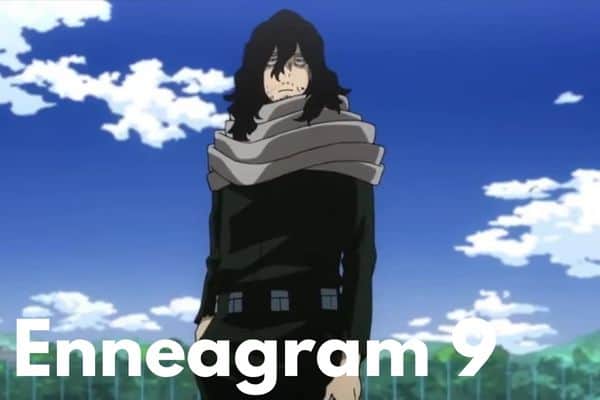
Aizawa is basically the Enneagram Nine if that Nine had dark circles, a sleeping bag for an emotional support blanket, and the patience of a saint until someone pushes his students too far.
On the surface, he’s the picture of Nine detachment: monotone voice, eyes half-shut, attitude that says please don’t make me stand up if I don’t have to. He’d rather nap than argue, and if there’s drama, he’d prefer it wrapped up in twenty words or less.
And beneath the grumpy, “leave me alone” exterior is the core Nine gift: steadiness. In the middle of villain attacks, when students panic, when everything is burning down—Aizawa holds the center. He doesn’t need to be flashy, he doesn’t need to be adored; he just needs his kids alive and stronger than they were yesterday.
#26 – Pocahontas

Pocahontas is calm in the storm, soft where others are sharp, and so deeply tuned into the natural world that she becomes one with it. She listens to the wind, trusts the river, and sees connection where others only see difference. That’s the Nine gift in its purest form: dissolving boundaries, reminding us that we’re all part of the same flow.
While everyone else is fighting about borders, power, or “progress,” Pocahontas is trying to understand where her “enemies” are coming from. She embodies open-mindedness, curiosity, and the refusal to flatten people (or the world) into black-and-white categories. Where her father and the colonists see enemies, she sees possibilities for peace.
Of course, like many Nines, she struggles with indecision at first. The river splits in two, and she hesitates—stay with the safe, expected path, or choose the unknown? That’s a classic Nine tug-of-war: do I go along to keep the peace, or follow the whisper inside me that says there’s more? Her strength comes when she realizes that peace isn’t the absence of conflict; it’s choosing love, courage, and understanding even when it’s risky.
#27 – The Driver (Drive)

Driver is quiet, withdrawn, and keeps his world small so it doesn’t swallow him whole. He lives in the margins, tuning engines and doing movie stunts, but inside he’s really just trying to keep the noise of the world at bay. On the surface, he’s detached, calm, even blank; like he could vanish into the wallpaper of his dingy apartment. But underneath that stillness is the Nine’s fire: when someone he cares about is threatened, the switch flips. The elevator scene says it all—one moment he’s offering Irene the gentlest, most tender kiss, the next he’s stomping a man’s skull into paste. Nines don’t lack anger, they bury it… until it explodes.
The Driver craves peace, yet he’s drawn into violence. He longs for love with Irene and Benicio, but the very world he’s tried to keep distant pulls him into bloodshed. And true to Nine form, he’d rather hurt himself than destroy the fragile connections he’s made. That’s why he leaves—stab wound and all—fading into the night. Better to disappear than risk bringing more chaos to the people he loves.
#28 – Legolas Greenleaf (The Lord of the Rings)
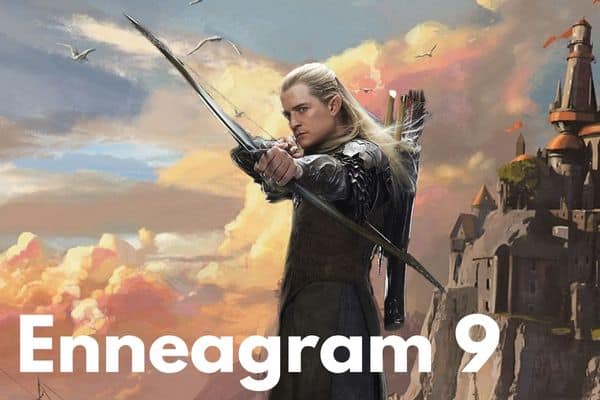
Whether Legolas is facing Orcs, trolls, flaming siege towers, it doesn’t matter. His calm is unshakable. While everyone else is panicking or posturing, Legolas is already scanning the horizon, one step ahead, arrow nocked, eyes soft but focused.
The Nine can be the peacekeeper who finds his center so others can find theirs. He doesn’t need to shout to command attention or throw a tantrum to prove his point. His quiet confidence says enough. Even among the Fellowship — a mix of hotheads, worriers, and power players — he stays grounded, bridging worlds (literally, elf and dwarf) with humor, grace, and some witty competition. He mediates, listens, and reminds everyone what they’re fighting for, not just who they’re fighting against.
#29 – Aslan (The Chronicles of Narnia)
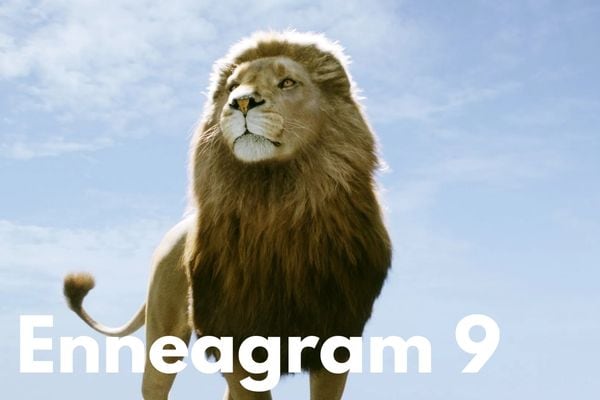
Nines often carry quiet strength that people mistake for passivity, but with Aslan, you see what it really is: power perfectly aligned with peace. He’s observant, forgiving, and peaceful, even when it means giving up his own life. His guidance always brings people back to their truest selves; because that’s one of the things that Nines do best: reflect the light in others until they see it, too.
And while many Nines struggle with withdrawing or numbing out when the world gets harsh, Aslan shows the opposite path, which is engagement rooted in love. He moves gently, speaks softly, and still faces cruelty, fear, and betrayal head-on. When he sacrifices himself on the Stone Table, he takes the weight of violence into himself and dissolves it in grace. That’s the transcendent Nine pattern: restoring harmony through compassion, not control.
#30 – Keishin Ukai (Haikyuu!!)
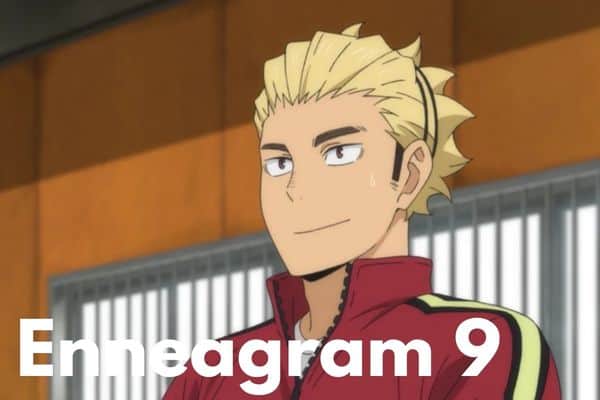
Ukai looks like a guy who’d rather read a newspaper behind the shop counter and pretend volleyball doesn’t exist. Typical Nine camouflage: low-profile, legs up, “don’t make me a whole thing.” But under the slouch he senses the room, settles the noise, and then nudges everyone half an inch toward better.
He coaches like a healthy Nine leads: by harmonizing. He doesn’t micromanage so much as unclench the team. Let Hinata and Kageyama crash a few times, then adjust the toss. Let Suga’s steadiness balance Kageyama’s fire. He holds space for all the personalities and somehow they stop sparring and start syncing.
Avoidant? At first, yeah. He ducks the job, waves off the legacy, claims he’s not his grandfather. Nines hate being drafted into the center. But once he says yes, he clicks into integration—decisive, strategic, visible (Nine → Three). He rewrites his work schedule, scouts like a man possessed, and builds match plans that feel like aikido: use what comes, redirect the force, keep the pulse calm.
Under stress, you see the Six line: tape study, contingency stacks, paranoia about serves and rotations. He copes by preparing. Then mid-match he returns to center—short timeouts, one clean instruction, trust your reps. He knows the team breathes with him; if he stays even, they rise.
#31 – Miss Jennifer Honey (Matilda)
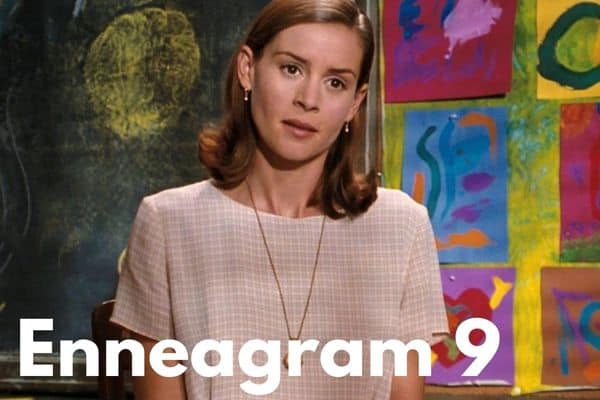
Miss Honey is what happens when gentleness grows a backbone. On the surface: soft voice, cardigan energy, apologizing for existing. Classic Nine camouflage—blend in, smooth the edges, don’t wake the dragon (especially when the dragon is your aunt with a shot put).
Miss Honey’s “quiet” is survival math. Years of walking on eggshells trained her to keep the peace, placate, and make herself small—Nine self-forgetting in a nutshell. She builds sanctuaries instead: the calmest classroom, where kids exhale and remember they’re clever.
Under stress, she slides to Six: hyper-vigilant, second-guessing, eyes always on the exits. You can feel the anxious hum when Trunchbull prowls; Miss Honey shrinks, calculates, endures. But give a healthy Nine a cause worth protecting and—click—she integrates to Three. Suddenly she’s all quiet action: taking Matilda seriously, telling the truth about her past, walking back into that oppressive house to claim her life.
Honey is all low-ego, high attunement. She notices the kid no one sees, hands them exactly the right book, and moves the furniture in her soul so they have room. She mediates, de-escalates, and only draws a line when it matters. Then the line holds. (Ask the Trunchbull how that felt.)
#32 – Jeffrey “The Dude” Lebowski (The Big Lebowski)
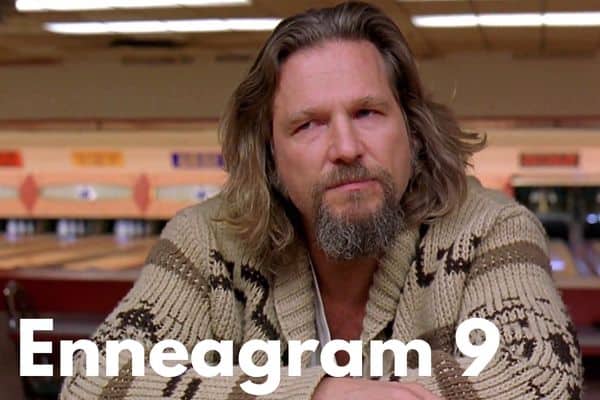
If inner peace had a bathrobe and a White Russian, it’d be The Dude. He’s the patron saint of going with the flow. Life tosses chaos his way — thugs, nihilists, urinated rugs — and he just sighs, sips, and somehow floats back to center. Like most Nines, he has a deep refusal to let the world’s noise drown out his inner hum of “it’s all gonna be okay.”
Like most Nines, he craves comfort and familiarity: the bowling alley, CCR tapes, his threadbare sweater. Change? Hard pass. Just give him his routine, his friends, and a rug that really ties the room together. He avoids conflict until it’s unavoidable (usually because Walter picked a fight first), then tries to patch things up with a mumble and a shrug.
At his best, The Dude is a living lesson in detachment: he’s calm when others spiral, accepting when others resist. But under stress, he edges toward Type 6 — anxious, paranoid, overthinking the cosmic joke he’s stuck in.
Still, The Dude’s core gift is presence. He reminds everyone — even the angry, the greedy, the uptight — that you can’t strong-arm peace. You can only relax into it. In a world of millionaires and nihilists, he’s the guy sipping half-and-half in his bathrobe, saying, “Yeah, well, that’s just, like, your opinion, man.” A Zen master in flip-flops.
#33 – Luna Lovegood (Harry Potter)
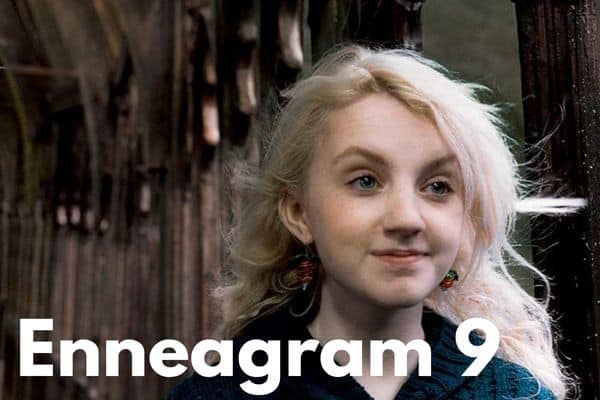
Luna Lovegood is calm where others panic, open where others judge. While her classmates chase status or certainty, Luna drifts just above the fray, unruffled and at ease in her own eccentric rhythm. She radiates that signature Nine serenity; she’s made peace with pain and being the misfit that others talk about in confused tones.
One thing I’ve always loved about Luna is how there’s no harshness in her; her kindness is patient, soft-edged, the kind that makes people exhale around her. She’s also deeply imaginative, finding comfort in her inner landscape when the outer world feels cruel. When the noise grows too loud — war, bullying, loss — Luna retreats inward, to her thoughts, her creatures, her father’s love. Her 1 wing gives her integrity and quiet conviction: she stands for truth and loyalty, even when it’s unpopular. You’ll never see her compromise what she knows to be right — but she’ll do it with a smile, not a sword.
#34 – Emmett Brickowskie (The Lego Movie)
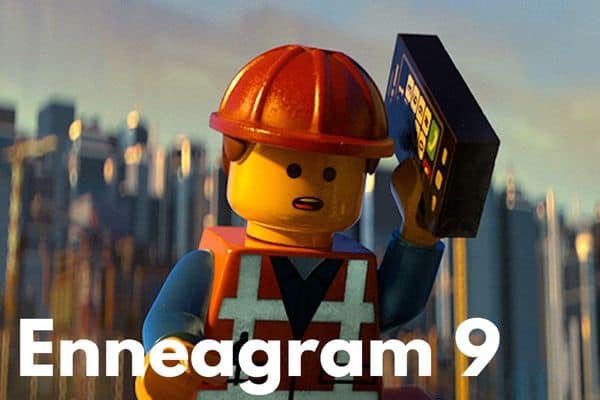
Emmet Brickowski is that cheerful, conflict-averse friend who just wants everyone to get along, follow the instructions, and have a good time building things together. If there were ever a poster child for the Enneagram 9’s gentle, go-with-the-flow optimism, it’s Emmet.
Emmett’s first instinct in chaos is to make peace with a friendly word, a quick plan, or a well-timed “Hi, guys!” to smooth over tension. Even when he’s surrounded by Master Builders with egos the size of skyscrapers, Emmet stays humble and cooperative, trusting that teamwork (and maybe a catchy song) can save the day.
Like many 9s, he struggles with self-doubt. When he learns that no one really sees him as special, it hits him hard. But he goes from being a pleasant but passive follower to realizing that peace doesn’t mean disappearing. It means showing up. Emmet’s gift isn’t grand imagination or rule-breaking genius—it’s his steadiness, his faith in others, and his ability to bring people together. He’s proof that gentleness is a superpower.
#35 – Scott Pilgrim
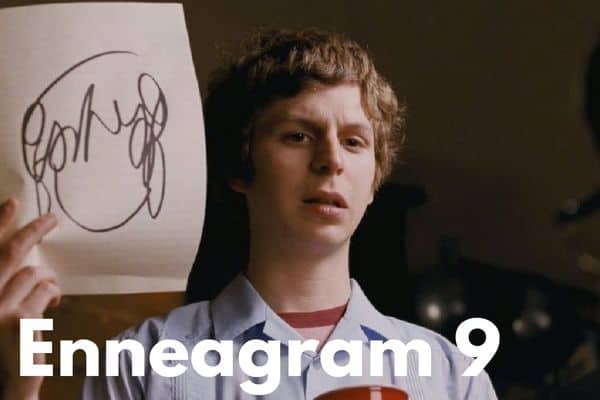
Scott is the human equivalent of “turn the volume down and eat poutine about it.” Easygoing, conflict-allergic, happiest when the vibe is chill and the bassline is simple. Classic Nine energy: merge with the room, keep things pleasant, nap through the hard parts, and maybe—just maybe—this whole “responsibility” thing will resolve itself while you play one more level.
He’s sweet, agreeable, and weirdly magnetic. People orbit Scott because he’s low-friction: he listens, cracks a dumb joke, and doesn’t push. And like most Nines he avoids discomfort like it owes him money. Breaking up with Knives? …tomorrow. Honest talk with Ramona? After band practice. Processing the Envy crater in his chest? Let’s just call that “a side quest” and never select it.
When Nines avoid themselves, they drift into fog. Scott’s fog looks like sleeping in, button-mashing through life, and letting other people (Wallace, Julie, Gideon, fate, whoever) set the quest marker. He doesn’t choose so much as slide. And then he’s stunned when everyone’s mad he never said how he felt. (Buddy, you barely said anything.)
Scott’s spine wakes up whenever love is on the line. That’s how a guy who can’t return library books ends up dueling stuntmen, vegans with telekinesis, and two literal evil exes at once. He fights to keep connection intact. That’s very Nine: gentle until you threaten the bond, then he’s suddenly The Final Boss of Toronto.
#36 – Elizabeth “Beth” March (Little Women)
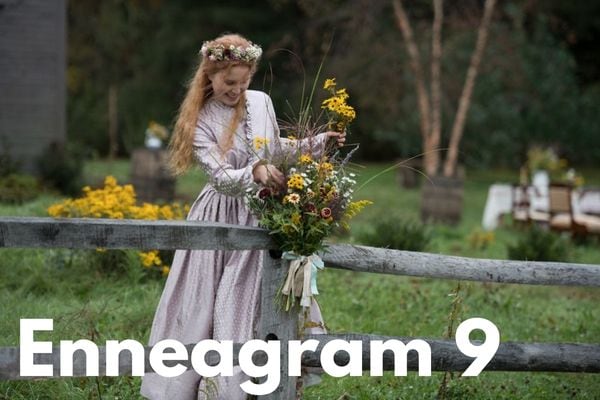
Beth is gentle, conflict-averse, and happiest when keeping everyone soothed, fed, and in tune (literally). She’d rather play the piano until the room unclenches than say what she wants out loud.
Beth blends so completely she almost disappears: “Don’t trouble about me,” the Nine lullaby. That’s the self-forgetting piece—merge with the family, keep the waters glass-calm, and maybe no one will hurt. Cue her visiting the Hummels, over-giving past the point of safety, and then pretending it’s fine so no one worries. Oof. Relatable, unhealthy Nine move.
But what about her wing? Very 9w1. She’s gentle and principled—orderly little tasks, rightness without righteousness. Under stress she tips toward 6: anxious, clingy to routine, wanting Jo nearby as a human weighted blanket. In growth she borrows from 3—not flashy ambition, but practicing, performing for the neighbors, letting her music be her voice instead of hiding behind the parlor curtains.
#37 – Winnie the Pooh
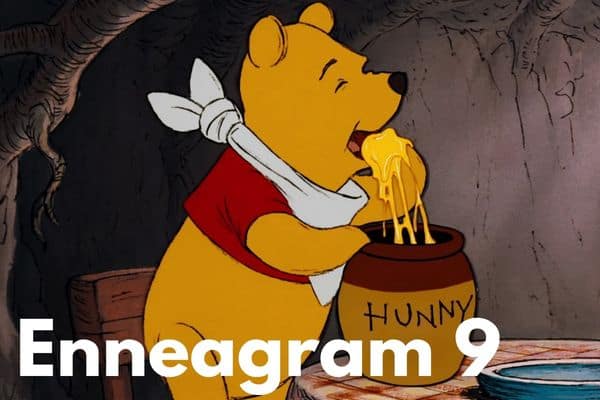
Winnie the Pooh is the embodiment of the peaceful, easygoing Nine: slow to anger, rich in warmth, and content to sit in the sunshine with a jar of something sweet. He’s not in a rush to change the world. He just wants everyone to get along (and maybe share a snack).
Pooh lives in a steady rhythm of simple joys. He hums his way through life, unbothered by ambition, always grounded in comfort and familiarity. Change confuses him, conflict unsettles him, and he’d rather take a nap than pick a fight. But beneath that drowsy charm is a heart that’s quietly heroic. When a friend is in trouble, Pooh shows up with encouragement and thoughtful ways to help.
When stressed, Pooh can drift into fog—forgetful, avoidant, a little too sleepy to deal with the hard stuff. But at his best, he moves toward Six-like courage: trusting his friends, facing small fears, and proving that steadfastness is its own quiet bravery.
#38 – Kathleen Kelly (You’ve Got Mail)
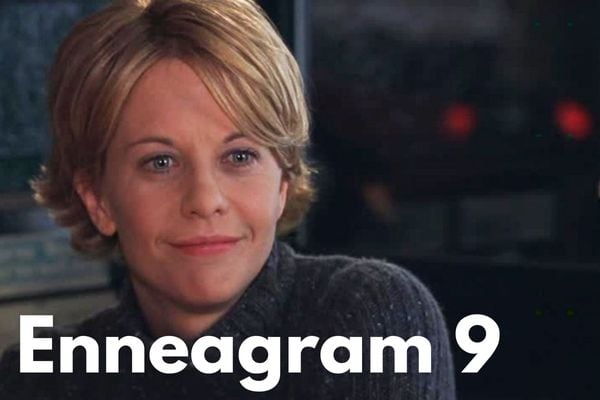
Kathleen Kelly runs The Shop Around the Corner as a kind of sanctuary that she hopes will stand the test of time. It’s a place where stories and relationships matter more than profit. Her deepest joy comes from seeing people happy, from creating small worlds of peace in a city that moves too fast to notice them.
When Joe Fox and his corporate bookstore move in across the street, she’s torn between her instinct to stay calm and her growing frustration at the injustice. She hates conflict but feels it bubbling up anyway. At first, she writes her feelings in emails, escaping into small comforts, trying to maintain composure while her world shifts around her. Yet as the story unfolds, she learns one of the Nine’s hardest lessons: peace isn’t always found by avoiding tension. Sometimes it’s born from truth-telling and change.
#39 – William Thacker (Notting Hill)
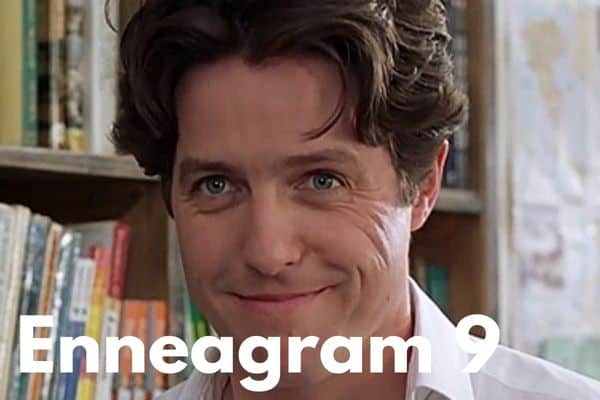
William Thacker is basically what happens when an apologetic cinnamon roll becomes a person. He’s soft-spoken, kind, and somehow gives off the vibe of someone who always smells faintly of tea and rain. He says “whoopsidaisies” unironically, holds the door open even if you’re still fifty feet away, and can’t say no even when he really should.
He runs a tiny travel bookshop in Notting Hill, which feels like a metaphor for his entire life: quaint, peaceful, slightly underfunded, and quietly yearning for adventure he’ll never quite take. Nines love comfort and predictability, and Will’s shop is both. He gets to talk about far-off places without the actual chaos of going there. Win-win.
But here’s the thing about Nines—they’ll build a whole cozy cocoon around themselves and then wonder why life feels a bit… muted. Will’s divorce hurt, but instead of healing, he just drifted. Like, oh well, that happened, might as well buy more marmalade.
Enter Anna Scott. A literal movie star walks into his life, and Will’s brain basically blue-screens. She’s glamorous, complicated, famous—everything that messes with his well-curated peace. And like any good Nine, he handles it by being adorably awkward. He trips, he apologizes, he makes sandwiches. He doesn’t chase her; he politely ambles in her general direction.
The real struggle for Will is believing he’s allowed to want something that big. Nines have this way of shrinking themselves so no one’s uncomfortable, including themselves. They downplay their desires until they’re practically invisible. So when Anna leaves, he retreats into his natural habitat: quiet resignation. “Ah well, probably for the best. She’s famous. I’m a man who says ‘whoopsidaisies.’”
But peace isn’t just about avoiding pain. It’s about choosing something worth the chaos. When Will finally bolts through Notting Hill to stop Anna from leaving, it’s like watching a sleepy cat suddenly remember it’s a tiger. He’s still gentle, still self-effacing, but now he’s awake. Alive. Ready to take up space, even if it means bumping into a few people along the way (and apologizing afterward).
#40 – Georgia Byrd (Last Holiday)
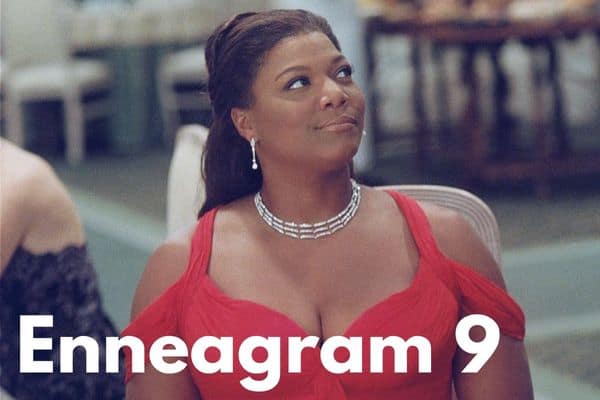
If there were ever an Enneagram 9 who deserved a Michelin star, it’s Georgia Byrd. She’s gentle, kind, steady, and more likely to whip up a gumbo than cause a fuss. Before her whole “whoops-I’m-dying-so-let’s-go-to-Europe” plot twist, Georgia lived life like most Nines do when they’re running on autopilot: quietly, politely, and somewhere in the background of her own story.
She works in the cookware department, and she has a Book of Possibilities where she writes down all the dreams she’s too hesitant to live out loud. She loves cooking, but doesn’t chase it. Loves Sean, but doesn’t tell him. She’s the queen of “maybe someday.”
Then life (or, okay, a broken CAT scanner) pulls a cruel prank: she’s told she’s dying. And suddenly, the Nine’s worst habit — staying comfortable at the expense of really living — gets flipped on its head. Because when Georgia thinks she’s only got a few weeks left, she finally wakes up. She stops waiting. She cashes out, packs her bags, and takes her gentle soul to the Grandhotel Pupp, where she proceeds to live like every Nine secretly longs to: at peace, unbothered, and wrapped in a designer robe.
She snowboards. She BASE jumps. She eats like joy isn’t something to ration. And the best part? Her kindness doesn’t disappear just because she’s “living large.” Everyone around her softens. The chef opens up. The staff glows under her warmth. Even the self-absorbed millionaire starts questioning his life choices. Because that’s the hidden superpower of a healthy Nine: they don’t force change; they inspire it simply by being fully alive and fully kind.
What Do You Think?
Do you see yourself in any of these characters? Do you have other characters you’d recommend for this article? Let us and other readers know in the comments!