MBTI® and Politics: What 3,000 People Revealed About Personality and Belief
Every time I write about personality types, people ask me, “Do you ever wonder how our types influence politics?” So I did what any curious typology nerd with too much coffee would do — I asked.
In 2025, over 3,097 people across all sixteen Myers-Briggs® types filled out a long political questionnaire. We asked about party alignment, government size, climate change, AI regulation, and even whether they’d still be friends with someone who votes differently. (Spoiler: most would.)
Before we dive in, here’s what this is not:
It’s not an argument. It’s not a scoreboard. It’s not about who’s “right.”
This is about patterns: the psychological lenses that color how we see government, community, and progress. I’m not here to cheer for your team or dunk on the other one. I’m here to explore why some of us tend to vote for one party or another, why some idealize empathy and others efficiency, and why almost everyone feels frustrated.
People on every side expressed exhaustion with polarization, fear for the future, and a longing for genuine dialogue. One INTP summed it up perfectly:
“I really believe the media as a whole (social, mainstream, etc.) is furthering the division and tension amongst our population, regardless of whether it is an intended goal or not, and that it is imperative that we debate and share ideas with openness and love for one another. Both sides of the aisle get different things right.”
That’s the energy of this project: curiosity over combat, understanding over outrage.
Not sure what your personality type is? Take our personality questionnaire here. Or you can take the official MBTI® here.
How to Read This
These are trends, not decrees from Mount Myers-Briggs.
Each type’s results come from dozens or hundreds of respondents, but no statistic can replace individual thought. If your type leans one way and you don’t, that doesn’t mean you’re “mistyped” — it means you’re a complex human being, not a stereotype.
A few things to know before we dive into the numbers:
- This survey was U.S.-based. The political parties referenced (Democrat, Republican, Libertarian, Independent, and Other) reflect American politics.
- Many types resisted the binary altogether. INTPs, ENTPs, and INTJs often said things like “No party accurately captures my political leanings.”
- The goal: to explore how our cognitive wiring shapes the kind of solutions we gravitate toward — not to tell anyone what’s correct.
If you disagree with something here, great. That means you’re thinking. My only request: when you comment, keep it curious, not combative. We already have enough shouting online; this space is for understanding.
The Big Picture: Temperament Trends
Across 3,097 people, some patterns popped up that even I didn’t expect. When you zoom out from the noise, you can see four broad temperaments shaping how people approach politics — not necessarily what they believe, but how they think about belief.

The Idealists (NF Types – INFJ, ENFJ, INFP, ENFP)
NFs tend to lean left, drawn to compassion-based politics and collective healing. They want a government that feels human, not mechanical.
- ENFJs overwhelmingly supported Democrat candidates — 89.9% to be exact — and often talked about empathy, fear for humanity, and the weight of polarization. One ENFJ wrote:
“We all need to have more empathy for each other, and social media algorithms are obliterating that possibility by pandering to people’s most hateful and one-sided inclinations.”
- INFJs echoed similar concerns, but in a more existential tone — frustration with both sides and exhaustion with the emotional toll of caring too much.
“I hate to admit this, but I’ve chosen to avoid a lot of news for my own mental well-being. I really do care, but caring has been too painful and soul-crushing.”
- INFPs were passionate but peace-seeking, wanting “team humanity” instead of “team party.”
“The biggest problem we face is the team mentality that political parties encourage. It destroys cooperation and objectivity.”
NFs don’t necessarily agree on policies, but they tend to measure politics in human impact rather than economic abstraction.
The Rationals (NT Types – INTJ, INTP, ENTJ, ENTP)
If politics were a lab experiment, the NTs would be the ones auditing everyone’s data. They approach ideology like engineers: fix what’s broken, scrap what’s illogical, and stop moralizing.
- INTPs were the most politically independent of any type. Many said, “No party accurately captures my views.” They trust logic more than loyalty, and 80% said they pause and research before forming political opinions.
“Lack of empathy is killing us — and it’s shocking that an INTP has to point this out.”
- ENTPs and INTJs showed a similar pattern: they value reason, nuance, and debate — but they’re losing patience with a system they see as increasingly performative.
“A two-party system was never ideal, but I would love to return to the days when politicians weren’t actively trying to dismantle checks and balances.”
- ENTJs, on the other hand, leaned Republican (55%) and valued leadership, structure, and getting things done, sometimes regardless of party labels.
“We as a nation must create spaces for conversation instead of getting into nonsense arguments. Conflict is healthy when people have tolerance for discomfort.”
The Guardians (SJ Types – ISTJ, ISFJ, ESTJ, ESFJ)
SJs lean more Republican overall, though they’re not a monolith. Tradition matters to them, but so does practicality — and many voiced frustration with how polarized and inefficient things have become.
- ESTJs leaned strongly Republican (75%), valuing order, accountability, and realism over idealism.
“Most of my opinions are nuanced. I want a simpler immigration path but stricter standards. More taxes for the rich — but only if it actually helps the middle class.”
- ISTJs were far more moderate than expected, with 51% Republican and 36% Democrat. Many talked about responsibility and frustration with political regression.
“We are moving backwards as a country… we deserve better.”
- ISFJs tended to worry about misinformation and media bias.
“We need to vastly improve the way we get our news. There are too many lies and misinformation being presented as fact.”
- ESFJs focused on community harmony over ideology.
“People just need to let everyone have their opinions. Stop trying to make everyone feel the same.”
Guardians don’t like chaos. They want working systems, honest communication, respect for traditions, and some sense that all this noise leads somewhere productive.
The Realists (SP Types – ISTP, ISFP, ESTP, ESFP)
SPs are allergic to red tape, performative outrage, and government inefficiency. They value freedom, practicality, and results over rhetoric.
- ESTPs leaned heavily Libertarian (67.9%), with many declaring both major parties “inefficient.”
“The current two-party system isn’t getting anything done in the best interests of the American people.”
- ESFPs, on the other hand, were more Republican-leaning (72.5%) but voiced strong pride and moral hope for the country.
“I’m still proud to be an American… I’ll continue to do my part to make this the best country it once was.”
- ISTPs and ISFPs were split — valuing autonomy but tired of conflict.
“The current political climate is toxic. It’s based on grievance instead of aspiration.”
SPs are not fans of grandstanding. They want less talk, more action, and fewer rules that slow everything down.
Friendship Across Party Lines
The biggest surprise wasn’t who voted where, it was how willing people were to stay friends with those on the opposite side. Despite what the internet might suggest, most people aren’t unfriending each other over politics.
- 100% of ESFPs said they’d still be friends with someone from the opposing party.
ESFPs may lean Republican, but their warmth and live-and-let-live attitude show up here beautifully. - 100% of ISTPs said the same — which feels perfectly on-brand for a type that values autonomy and dislikes unnecessary drama.
- ESTJs (97.5%), ENFPs (90%), and ENTPs (91%) also reported high openness to maintaining friendships across party lines.
- Even ENFJs (87%) and INFJs (72%), both deeply value-driven types, were more interested in connection than cancellation.
So, while social media would have us believe the whole country’s at war, the data says most people still want to grab coffee with someone who disagrees — they just don’t want to get yelled at while doing it.
Type-by-Type Breakdown
This is where we get into the specifics: the numbers, the voices, the personality fingerprints on politics.
I couldn’t possibly include every quote or data point here (trust me, it would’ve turned into a small book). Deep dives for each type are coming soon, but here’s a snapshot of what stood out in this year’s survey of 3,097 respondents.
INTP (34.6% Democrat, 15.4% Republican, 15.4% Libertarian, 34.6% Other)
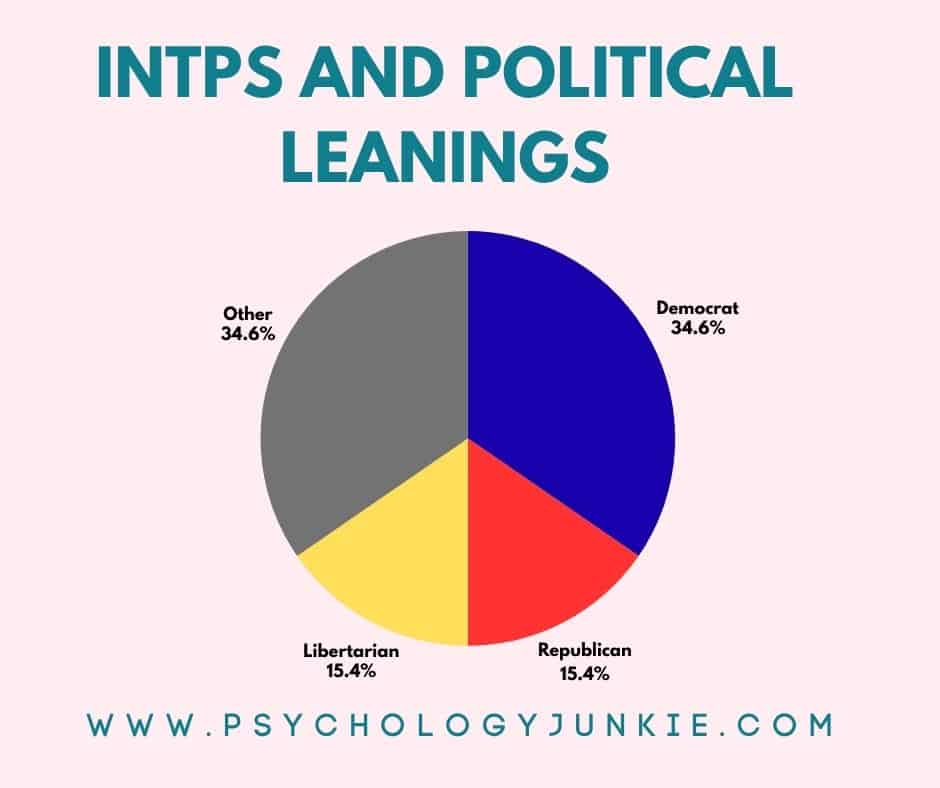
Politically independent and allergic to binary thinking, INTPs were the most likely to say “No party accurately captures my views.” They lead with analysis more than allegiance, and want systems that actually make sense.
“I try to navigate the social political climate with nuance. I wish I could have more conversations about these things without inciting panic.”
They want progress, but only if it’s logical, consistent, and free of hypocrisy, which is probably why most of them feel politically homeless.
You might also like: 7 Huge Misunderstandings About ISTPs and INTPs
INTJ (51.6% Democrat, 25.8% Republican, 12.9% Libertarian, 9.7% Other)

INTJs think about politics like a chessboard, scanning for long-term patterns, inefficiencies, and contradictions. They’re skeptical and future-oriented: seeing potential pitfalls, wondering what the next moves will be and the likely impacts.
“I wonder what would happen if news reporting stopped identifying everyone as either Democrat or Republican.”
“I’m a centrist with a slight left-leaning bias. I vote for what the country needs at the time.”
INTJs value strategy and competence over loyalty. Their biggest frustration? Watching the system fail because politicians are playing on peoples’ emotions in order to evade scrutiny while they pass their own selfish agendas.
You might also enjoy: INTJ Grip Stress: What It Is and How to Cope
ENTP (45.5% Democrat, 18.2% Republican, 9.1% Libertarian, 27.3% Other)
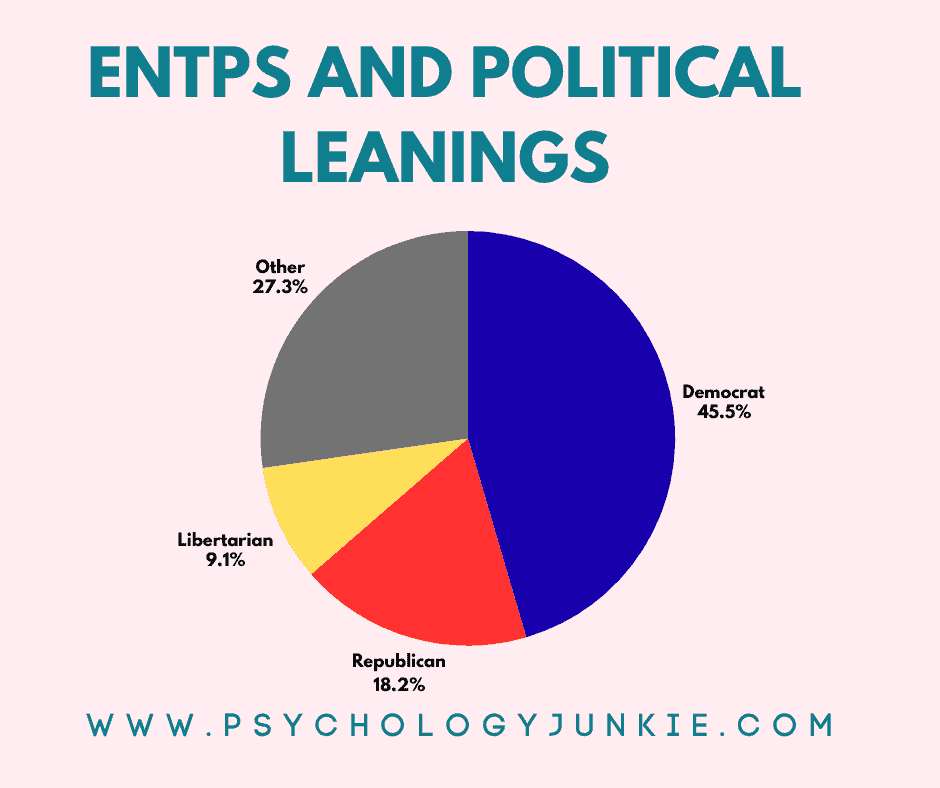
ENTPs treat politics like a giant debate club that’s gotten depressingly humorless. They crave reason, innovation, and the freedom to explore every idea, but they’re tired of performative outrage and echo chambers.
“A two-party system was never ideal… I used to enjoy discussing issues with those of differing political views, but now it’s harder when people won’t reason.”
ENTPs lean left in this data, but many positioned themselves as political free agents, loyal only to logic and the pursuit of a better future.
ENTJ (55.3% Republican, 25% Libertarian, 13% Democrat, 6.7% Other)
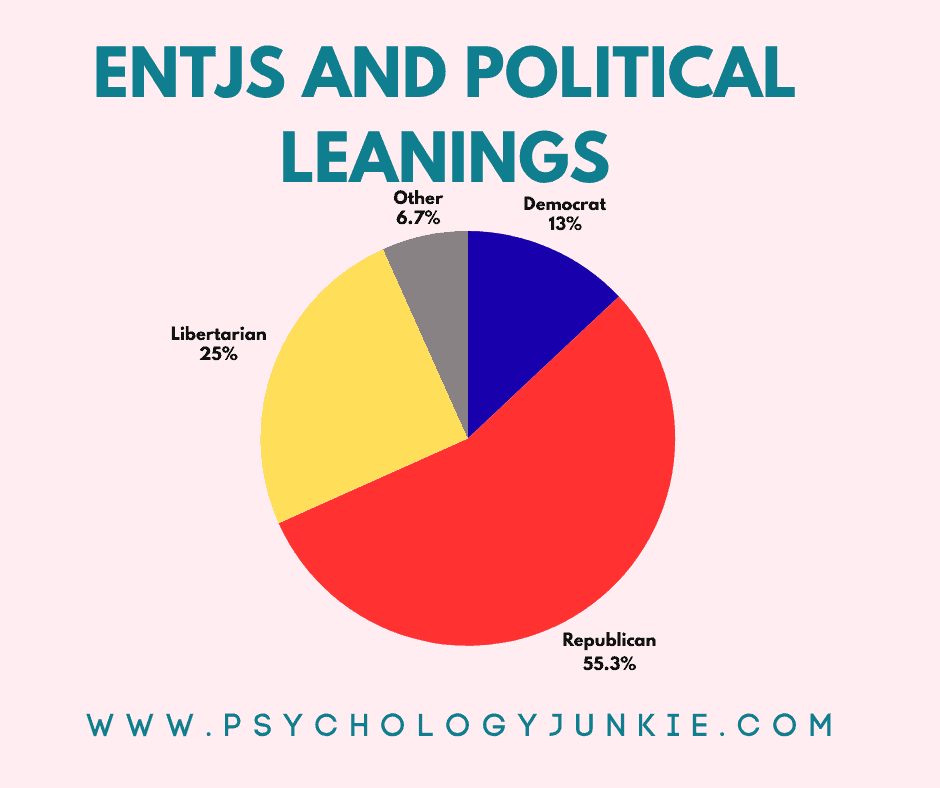
ENTJs want results, not rhetoric. They’re builders and strategists, drawn to parties and policies that promise strength, accountability, and measurable outcomes.
“We as a nation must create spaces for conversation instead of getting into nonsense arguments. Conflict is healthy when people have tolerance for discomfort.”
“Politicians aren’t bad people — they’re just incapable of fixing anything.”
They have little patience for talk without execution.
INFJ (55.4% Democrat, 21.6% Republican, 4% Libertarian, 6.8% Independent, 12.2% Other)
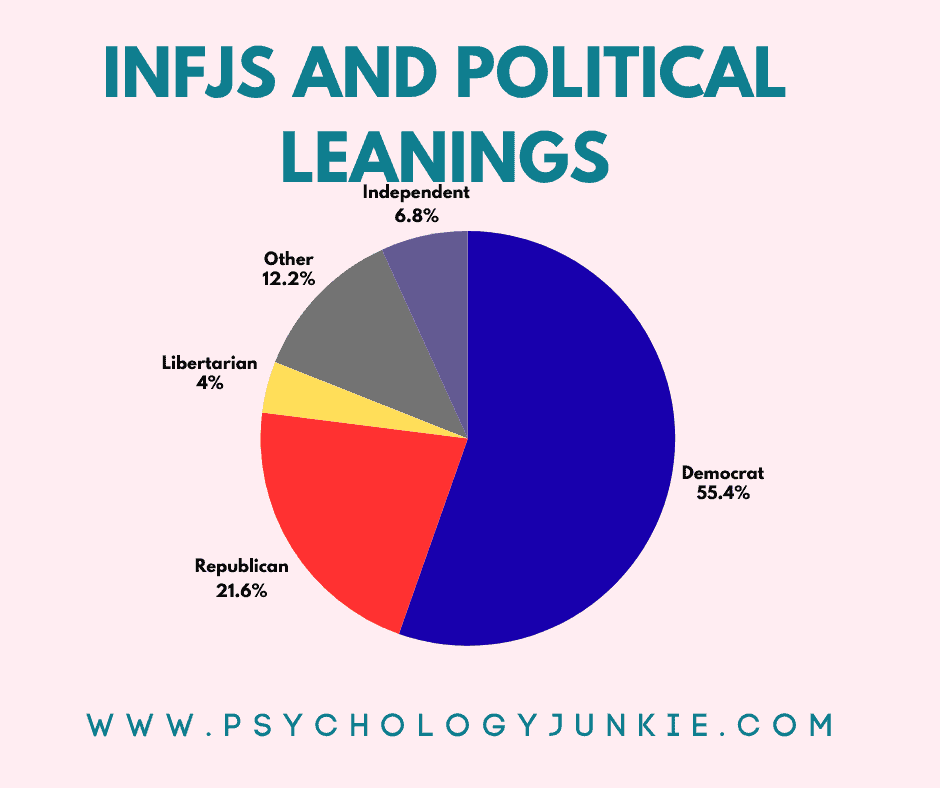
INFJs are the frustrated philosophers of the survey: deeply empathetic, reflective, and exhausted by polarization. They want honesty, compassion, and reform, but the emotional intensity of politics can burn them out.
“We all have to be willing to actually listen and try to understand each other.”
“I often feel total despair about what is happening to our country.”
“I hope something happens soon before stuff gets real bad. Like more Charlie Kirk scenarios..”
“Our country should have government backed healthcare for all, not just for the wealthy. We should have affordable housing and ensure there are no homeless people. Government is meant for the people”
INFJs see both sides’ humanity and flaws, which makes them ideal bridge-builders but sometimes emotionally overwhelmed ones.
You might also enjoy: Being Everyone’s Therapist (But Having No One to Talk To): The INFJ Experience
ENFJ (89.9% Democrat, 4.1% Republican, 6% Other)
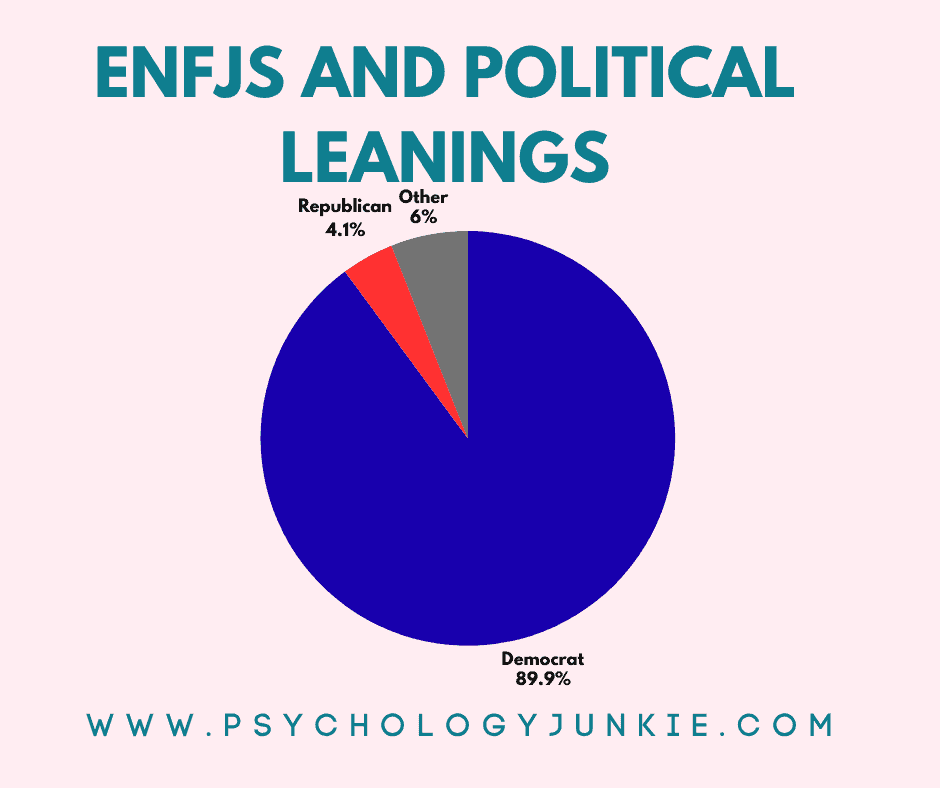
ENFJs want justice, equality, and humanity’s collective betterment, and they’re terrified of how cruel politics has become.
“We all need to have more empathy for each other, and social media algorithms are obliterating that possibility.”
“I’ve never been more afraid in my life for my immigrant friends.”
They believe in hope — sometimes to their own heartbreak.
INFP (63.6% Democrat, 11.5% Republican, 11.5% Libertarian, 3.8% Independent, 9.6% Other)

INFPs lead with values, not parties. They vote their conscience even if it leaves them stranded between camps. Many expressed frustration at both sides’ hypocrisy and a longing for unity rooted in compassion.
“The biggest problem we face is the team mentality political parties encourage. It destroys cooperation and objectivity.”
“Health care should be a human right.”
For INFPs, politics is personal: it’s about protecting humanity’s soul.
You might also enjoy: Why INFPs Are Here to Shake the System and Save the Strays
ENFP (56.5% Democrat, 17.4% Republican, 26.1% Libertarian)

ENFPs lean left but keep a strong independent streak. They want freedom and compassion, a world that’s idealistic but not micromanaged.
“I’ve never been more ready to up and leave this country.”
“We need big change to bring our democracy back.”
ENFPs are activists at heart, but they’d prefer revolutions with better playlists and coffee.
ISTJ (51% Republican, 35.7% Democrat, 6.5% Libertarian, 6.8% Other)
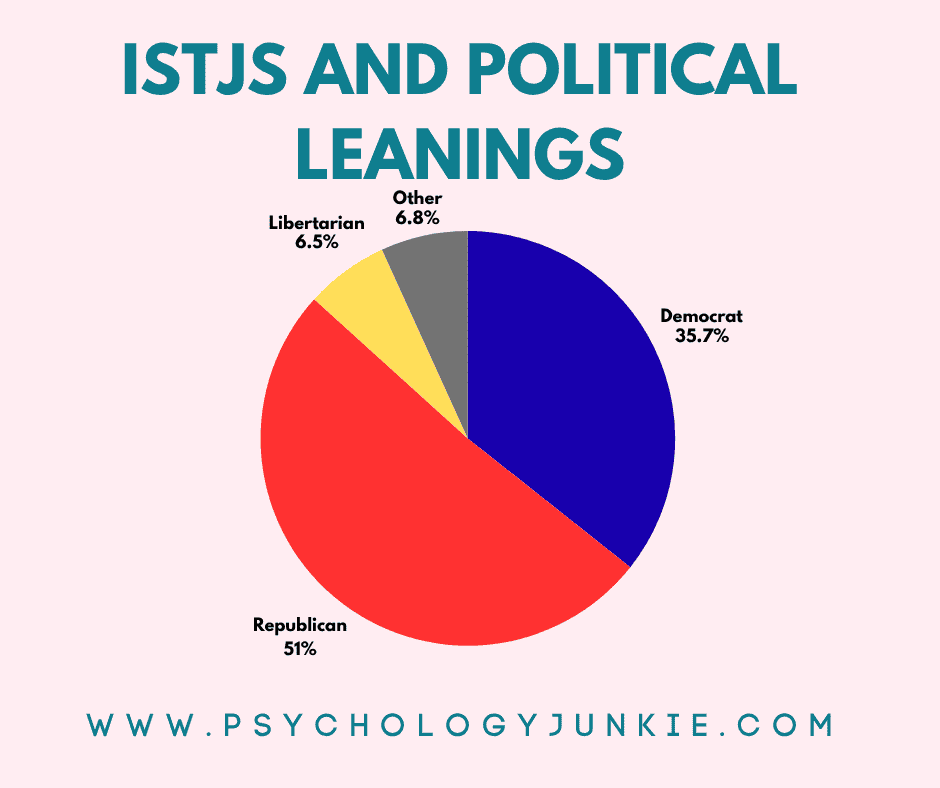
ISTJs lean right, but not dogmatically. They want order, integrity, and follow-through — but many are quietly disillusioned with the current state of politics.
“I understand that my personality can lead me to be inflexible at times, and I strive to be open to other points of view.”
“We are moving backwards as a country… we deserve better.”
They crave competence, reliability, and honesty, not chaos.
Read this next: 30 Day Personal Growth Challenge for ISTJs
ISFJ (35.3% Republican, 29.4% Democrat, 11.8% Libertarian, 5.9% Independent, 17.6% Other)
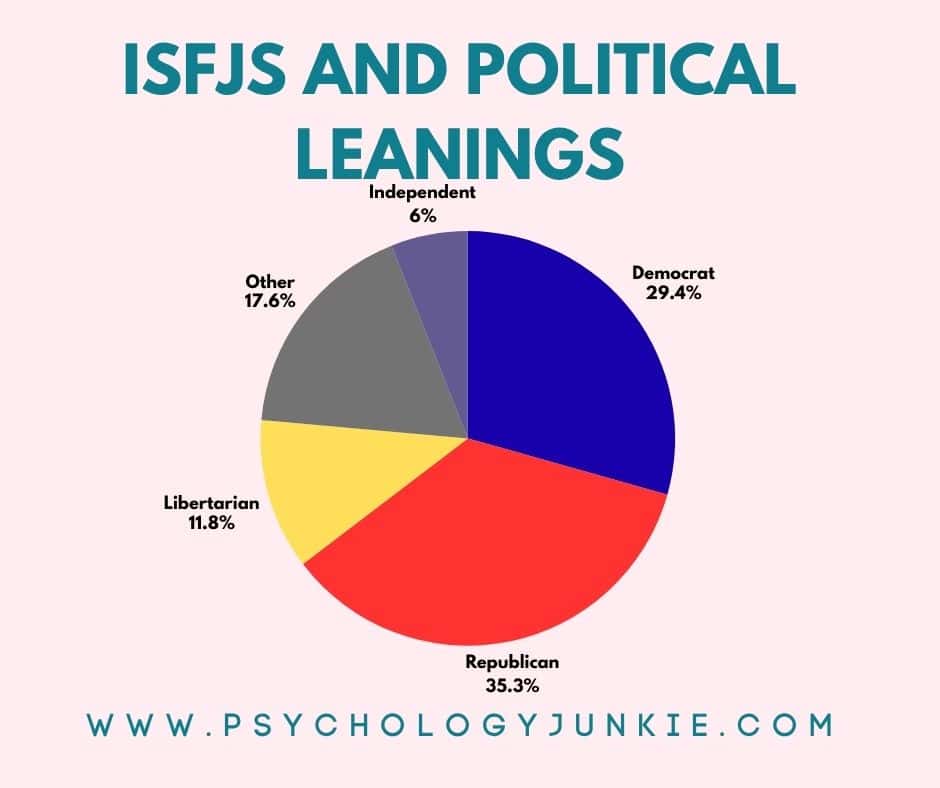
ISFJs want to protect people and preserve stability. They value honesty, trust, and compassion, and are increasingly frustrated by misinformation and corruption.
“We need to vastly improve the way we get our news.”
“I don’t like the two-party system; it restricts voters’ ability to choose.”
Bringing decency back was a major hope for ISFJs, and many felt disillusioned in this area.
ESTJ (75.4% Republican, 21.7% Democrat, 2.9% Libertarian)

ESTJs are the organizers of the political world: pragmatic, structured, and allergic to chaos. They want functional systems and leadership that actually gets results.
“Most of my opinions are much more nuanced. Like I would like simpler immigration path but stricter standards. More taxes that effect rich but not just because they are rich.
Big business can earn too much money but simply taxing them more can actually hurt mid-size companies and employees.”
They often lean conservative but bristle at extremes or inefficiency.
ESFJ (53.8% Republican, 38.5% Democrat, 7.7% Libertarian)

ESFJs prioritize community harmony, tradition, and cooperation. Even when politically opinionated, they dislike conflict and prefer civility.
“People just need to let everyone have their opinions. Stop trying to make everyone feel the same.”
They’re bridge-builders who see politics through relationships first, ideology second.
ISTP (38.6% Republican, 20.2% Democrat, 17.5% Libertarian, 23.7% Other)
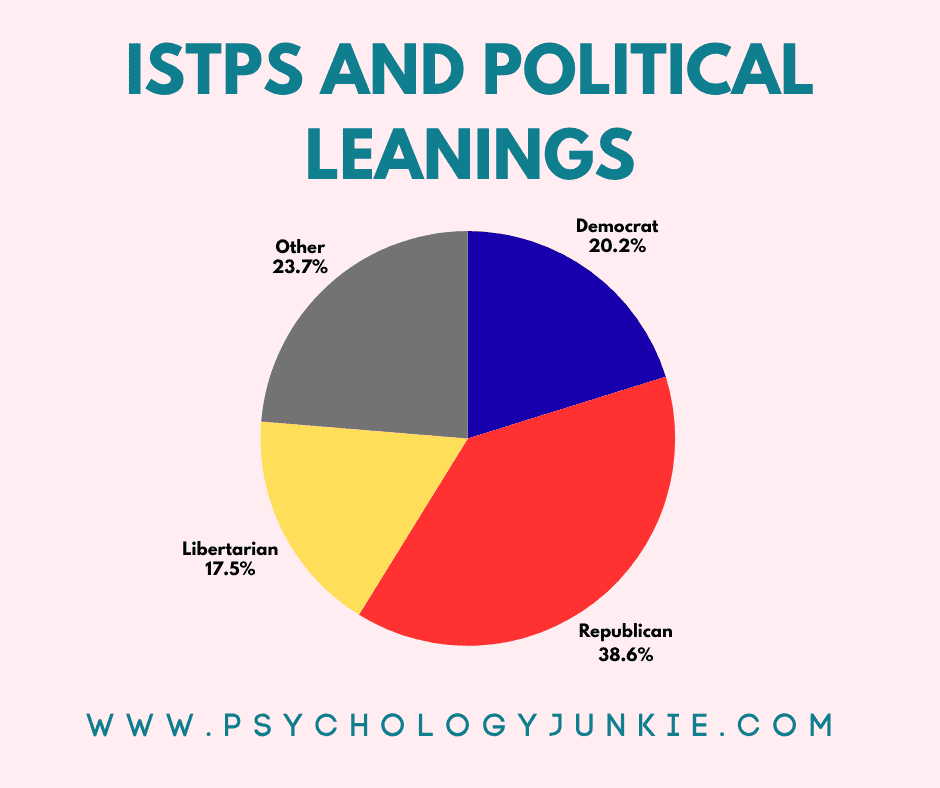
ISTPs approach politics like a machine that’s making too much noise — they’ll tolerate it only as long as it works.
“I miss the USA as I’ve known it prior to 2016.”
“Charlie Kirk 🙌”
They’re pragmatic, blunt, and not interested in emotional theatrics. Just fix the engine.
ISFP (52.9% Democrat, 17.7% Republican, 5.9% Libertarian, 23.5% Other)
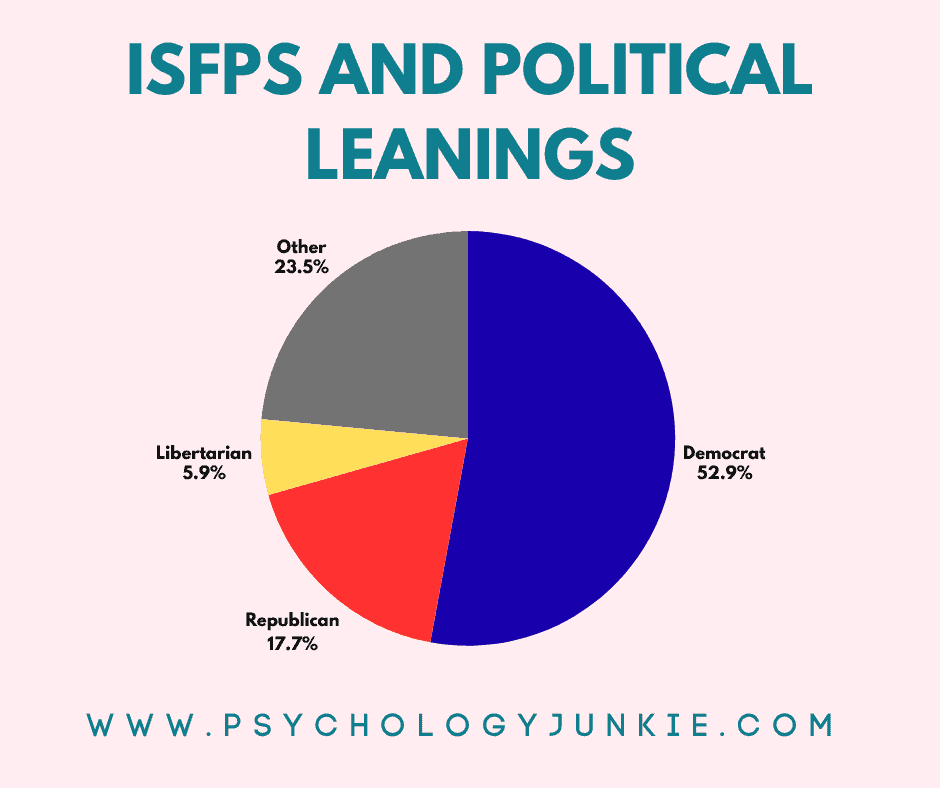
ISFPs expressed a lot of frustration with the two-party system, as evidenced by how many selected “Other” or “Libertarian” in their answers. They feel politics deeply but dislike hostility and hypocrisy and often struggled to know which news was factual and which news was biased.
“The current political climate is toxic. It’s based on grievance instead of aspiration.”
“The current government represents almost nothing I believe in”
“I despise cruelty and othering. This administration is transactional and only cares about the wealthy.”
“The logic I see from them (left) is inconsistent, illogical, and extremely emotionally driven–it’s very off-putting.”
For most of the ISFPs who commented, the human considerations were the biggest issues. Many were willing to speak out and attend protests to stick up for the causes they care about, for either side they represented.
ESTP (67.9% Libertarian, 17.4% Republican, 8.3% Independent, 6.4% Democrat)
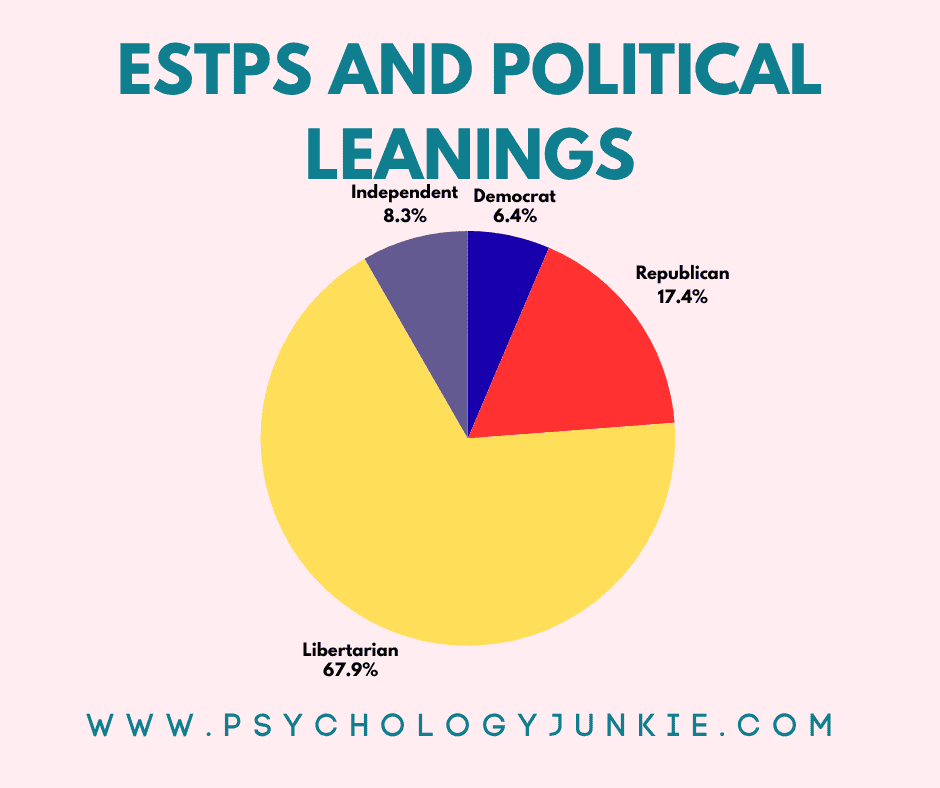
ESTPs are natural individualists — the “don’t tell me what to do” crowd. They want autonomy, freedom, and direct results. They remain skeptical of both parties and typically want little government control or interference in their lives.
“The current two-party system isn’t getting anything done in the best interests of the American people.”
They’d rather act than argue, and their political motto could be: “Cut the red tape, then go outside.”
ESFP (72.5% Republican, 20.8% Democrat, 6.7% Libertarian)

ESFPs are optimistic patriots: community-minded, passionate, and grounded in real-world compassion.
“I’m still proud to be an American and will continue to pray for wisdom for our leaders.”
“The Constitution shouldn’t be discarded, but it needs to be revisited to fit modern issues like AI and gun violence.”
They love their country, but they also expect it to evolve.
Join the Conversation (Respectfully, Please)
If you’ve made it this far, you probably care more about understanding people than winning arguments, and that’s exactly the kind of person this community needs.
This survey showed something that often gets lost in the noise: people do want to understand each other. Across types, most respondents said they’d stay friends with someone from the opposite party. They just want to talk without being mocked, dismissed, or labeled.
That’s what I want here too.
This isn’t a place for comment wars, it’s a place to explore how psychology and values shape our view of the world. You don’t have to agree with every type’s leanings (or mine, or your own) to take something meaningful from the data.
If something surprised you: if your type leaned differently than you expected, or if another type’s reasoning made unexpected sense, I’d love to hear about it in the comments. Tell me what clicked, what confused you, or what you’d like to see explored more deeply. Just remember: curiosity over combat.
And if you found this fascinating, stay tuned.
I’ll be publishing deep-dive profiles for each type, starting with the INTPs, who apparently have enough political nuance to fill a novel. Each one will explore not just how they vote, but why: the fears, ideals, and cognitive patterns behind those choices.
You can sign up for email updates below to be notified when your type’s profile drops (and to get new personality insights before they hit the blog).
Because if we want to bridge divides, it helps to start with the minds doing the dividing.









As a female ISTJ I was surprised by the percentage of Democrat responses. I have heard males are ISTJ in larger numbers than females and also males tend to favor Republican viewpoints. I’m wondering if these statements are true. If so, would breaking down the overall questionnaire responders by sex reveal significant differences between men and women. I am so glad you chose this for study and look forward to reading more in the future.
ISFP here. It’d be helpful/interesting to also know the number of responses you got from each type?
Also, this is great, thanks!
Thanks for the question! Here are the current numbers, but they keep changing as more results are coming in all the time (if the percentages change in a meaningful way, I’ll be sure to update the article):
INFJs: 573 people
INFPs: 390 people
INTJs: 235 people
INTPs: 158 people
ENFPs: 152 people
ISTJs: 186 people
ISFJs: 189 people
ISFPs: 158 people
ESFJs: 152 people
ENTPs: 111 people
ISTPs: 84 people
ENFJs: 74 people
ESTJs: 125 people
ENTJs: 108 people
ESFPs: 72 people
ESTPs: 64 people
That’s 88.49% of the respondents
The rest of the respondents put “Unsure” under their personality type.
Honestly, I don’t like having to take a moderate-sounding line when just to keep the family and few friends in my life. But that the price I pay for choosing between fully expressing my ultra-conservative political and social beliefs and not being hopelessly isolated.
According to the stats of this survey, I should be an ENTJ both in traits and voting wise, although I have been an INTJ (repeatedly tested) for decades otherwise. 🤔
Fascinating! Thank you so much, Susan! 🙂
“… the NTs would be the ones auditing everyone’s data.”
Yep, that’s what I’m going to do. 🙂
Please reorganize your bar chart ‘Political Preferences by…” into the 4 separate political categories (4 separate charts) and order the personality types on the X-axis from most to least preference. So for example, Republican preference would start with ESTJ at the left and end with ENFJ at the right. This will be much more meaningful at a glance than your aggregated bar chart. You have all of the necessary numerical data shown on this page in the pie charts, which means you also have it all in a spreadsheet and the additional analysis will be straightforward. I’m not up to transcribing it all, so I’m handing it back to you. Thanks