
What Each Myers-Briggs® Personality Type Does When They Want to Escape Adulting
Sometimes, adulthood feels like an endless spreadsheet of responsibilities: bills, deadlines, children who can find literally everything except their shoes. And in the middle of all that chaos, each of us has an inner child (what Jungians call the tertiary function) that’s whispering, “Can we not? Can we just… go do something fun instead?”
In typology terms, your tertiary function is the “Eternal Child” — the part of your psyche that longs to play, explore, and feel safe again. It’s the psychological seat of innocence, curiosity, and self-comfort. According to Jungian analyst Marie-Louise von Franz, the Child’s energy “is one of childlike exploration, playfulness, youthful vitality, and an inability to come to terms with ‘sadness, human restriction, disease, ugliness, and death.’” (1974/1995, p.44).

Mark Hunziker, who built on von Franz’s work, puts it beautifully:
“Good integration of the Child into the ego means allowing ourselves to be playful, silly, irresponsible, and vulnerable when appropriate and healthy.”
– Depth Typology, p.174
In other words, our “child” side isn’t weakness. It’s medicine. When we’re stressed, overworked, or emotionally dry, the tertiary function shows up as a way to reconnect with what feels safe and joyful. Sometimes that’s healthy self-care. Sometimes it’s avoidance with a Netflix subscription.
So let’s explore what you do when your inner child grabs the steering wheel and says, “No more adulting today.”
Not sure what your personality type is? Take our personality questionnaire here. Or you can take the official MBTI® here.
What Your Type Does When They Want to Escape Adulting
Table of contents
- What Your Type Does When They Want to Escape Adulting
- INFPs and INTPs: Child Introverted Sensing (Si)
- ISFPs and ISTPs: Child Introverted Intuition (Ni)
- INTJs and ISTJs: Child Introverted Feeling (Fi)
- INFJs and ISFJs: Child Introverted Thinking (Ti)
- ENTJs and ENFJs: Child Extraverted Sensing (Se)
- ESTJs and ESFJs: Child Extraverted Intuition (Ne)
- ENFPs and ESFPs: Child Extraverted Thinking (Te)
- ESTPs and ENTPs: Child Extraverted Feeling (Fe)
- What Do You Think?
- Other Articles You Might Enjoy:
INFPs and INTPs: Child Introverted Sensing (Si)
For INFPs and INTPs, the tertiary function, Introverted Sensing (Si), is the mind’s way of saying, “Let’s go back to something familiar. Something that makes sense. Something where nobody’s asking me for a password.”
When these types want to escape adulting, they don’t necessarily run forward into adventure; they retreat backward into comfort and memory. Si is the keeper of the inner scrapbook: the smell of your grandmother’s cookies, the sound of rain hitting the same old windows, the satisfaction of rereading a book you already know by heart. These are sensory time capsules, and Si moments help INFPs and INTPs feel safe again in a world that’s constantly demanding reinvention.
An INFP client once told me, “When I’m overwhelmed, I binge-watch the same movie trilogy I loved as a kid.” Another (an INTP) confessed that when taxes or emails get too real, he reorganizes his old Pokémon cards “for stress relief.” He could quote the HP stats of each card from memory but hadn’t eaten lunch yet. Si can look kind of like nostalgia and rebellion when it’s used to defend against demands from the outer world.
Hunziker reminds us that our inner Child resists the “responsible adult” script.
“It is, after all, the antithesis of the ‘responsible adult’ that our culture expects us to be.”
– Mark Hunziker, Depth Typology: The Guide Map to Becoming Who We Are
For INFPs and INTPs, the way out of over-responsibility is through familiarity. They self-soothe by revisiting what once worked: whether that’s a physical place, a comforting taste, or a familiar mental world.
When balanced, this is grounding. When overused, it can lead to getting stuck — repeating routines or memories as if life’s best chapter already happened. But when used well, Si helps these types restore peace before facing the world again.
How this shows up:
- Rewatching childhood movies or reading favorite books for the 27th time.
- Visiting old haunts: that park bench, that café, that feeling of “this smells like my childhood.”
- Falling into nostalgic YouTube rabbit holes.
- Keeping mementos or journals that anchor them when life feels uncertain.
- Cooking or baking family recipes because the act feels like home.
- Recreating old habits or setups “just because it felt right that way.”
ISFPs and ISTPs: Child Introverted Intuition (Ni)
When ISFPs and ISTPs want to escape adulting, they tend to drift inward. Their tertiary function, Introverted Intuition (Ni), is the mind’s built-in escape hatch: “Let’s go somewhere no one can find us, inside my head.”
For these types, Ni can feel like watching an inner movie — flashes of symbols, meaning, or future possibilities that make the external world fade for a while. They might start connecting dots no one else sees, staring into space while quietly solving the riddle of existence or wondering why pigeons always seem to know where to go. It’s their way of retreating from life’s noise into something more mysterious and controllable.
One ISTP client told me, “When I’m done being responsible, I just disappear into my thoughts. I start planning for things that may never happen, like if I suddenly decided to live off-grid in Alaska.” Another, an ISFP, said she journals about signs, dreams, and coincidences: “I like to build up my own personal mythology.”
That’s Ni in its playful, Child form: not yet about mastery or strategy, but about wonder. Psychologist Linda Berens says, “They often get a strong sense that future changes will unfold in a foreseen way and want to make those changes manifest in the real world.”
When the adult world feels too heavy, ISFPs and ISTPs use Ni to imagine something beyond it: beauty, meaning, redemption, or simply an alternate timeline where no one’s asking them for a performance review.
In moderation, this kind of inner wandering helps them reconnect with purpose. When overused, it can turn into dissociation: living in hypothetical futures instead of doing the dishes. But when balanced, Ni gives these types perspective and magic, reminding them why reality is worth returning to.
How this shows up:
- Daydreaming the life they wish they could have in the future.
- Obsessing over symbols, coincidences, or intuitive hunches.
- Spending hours researching one theory or spiritual concept.
- Retreating into quiet solitude to “see the bigger picture.”
- Replaying events to extract hidden meaning or lessons.
- Having flashes of insight while zoning out in the shower, then forgetting the laundry entirely.
INTJs and ISTJs: Child Introverted Feeling (Fi)
When INTJs and ISTJs want to escape adulting, they slip into a quiet, oddly tender space — a corner of their inner world that most people never see. Their tertiary function, Introverted Feeling (Fi), is like a hidden treehouse in the forest of their mind where logic takes a nap and feelings get the mic for once.
Normally, these types lead with Thinking and Intuition or Sensing: systems, strategies, structure. They’re planners, executors, the “we’ll fix it” crowd. But when the weight of constant responsibility gets too heavy, Fi says, “Forget the to-do list. Let’s feel something real.”
This can look like disappearing into music, poetry, or movies that hit too close to home. For me as an INTJ, I like to journal, watch sad movies, or listen to music that captures the energy of my inner world.
An ISTJ I worked with once said, “When life feels like too much, I go sit in my truck and just… let myself be sad.”
Fi gives these otherwise stoic types permission to be a little sentimental, a little idealistic, a little… human. They might journal, write a letter they’ll never send, donate to a cause, or tear up over a movie where the dog dies.
Healthy Fi reminds them that competence isn’t the same as wholeness. When they reconnect to their personal values, their world suddenly feels meaningful again. But when Fi takes over, they can spiral into moody isolation — resenting anyone who doesn’t “get” their deeper motives or accusing the world of being too shallow.
Used well, though, Fi reawakens compassion, purpose, and heart: all the things that put meaning behind their drive and hard work.
How this shows up:
- Listening to the same emotional song on repeat
- Looking for sad or emotionally complex movies for emotional solidarity or intensity
- Writing poetry or introspective journal entries in secret.
- Feeling a deep urge to “get back to what really matters.”
- Being drawn to moral or humanitarian causes.
- Retreating to reflect on personal values instead of tackling another task.
INFJs and ISFJs: Child Introverted Thinking (Ti)
For INFJs and ISFJs, the tertiary function, Introverted Thinking (Ti), is like a private science lab tucked behind the heart. It’s the part of them that says, “I love caring about people, but right now, I just need to think about something that won’t cry or need snacks.”
When these types want to escape adulting, they often retreat from emotional or social obligations into pure analysis. They’ll pick apart a theory, a system, or even a random niche fascination (“Did medieval monks actually drink more beer than water?”), anything that lets them use logic for its own sake instead of tending to everyone else’s needs.
INFJs and ISFJs lead with either intuition or sensing, and feeling, which means they’re usually attuned to others’ emotions and either intuitive insights (INFJs) or practical realities (ISFJs). Ti, their Child function, offers blessed relief from that. It says, “Let’s stop managing people’s feelings and just figure something out for a change.”
I once had an INFJ client who told me, “When I’m overwhelmed, I start researching obscure topics. I spent an entire weekend learning about Icelandic naming conventions. It was so soothing.” An ISFJ client said she escapes stress by playing Sudoku or researching how to make various breads; but not just the methods, the science behind the methods.
In healthy doses, Ti playtime helps these types detach long enough to regain clarity and objectivity. But when overused, it can turn into a type of coldness: analyzing emotions instead of feeling them, or retreating so far into mental tinkering that they lose touch with the world around them.
Still, Hunziker’s reminder applies: “Good integration of the Child into the ego means allowing ourselves to be playful, silly, irresponsible, and vulnerable when appropriate and healthy.” For INFJs and ISFJs, that “playful irresponsibility” might mean letting logic be a toy instead of a duty.
How this shows up:
- Falling down Wikipedia rabbit holes about abstract systems or random trivia.
- Organizing data, collections, or lists purely for the satisfaction of order.
- Getting sudden clarity about a long-held belief after quietly analyzing it.
- Solving puzzles, riddles, or theoretical problems as stress relief.
- Having mental arguments in the shower where you perfectly dismantle someone’s logic.
- Emotionally detaching and running internal experiments to “see what makes sense.”
Find out more about INFJs and their tertiary Ti here.
ENTJs and ENFJs: Child Extraverted Sensing (Se)
When ENTJs and ENFJs want to escape adulting, you’ll usually find them doing something impulsive — blasting music, cleaning at 2 a.m., dancing in the kitchen, or maybe baking cookies with double the chocolate chips.
Now an ENTJ might be shaking their head here, thinking, “I’ve been an adult since I came out of the womb.” But even ENTJs can get tired of rigidity, micromanaging, or the pressure of being “perfect.”
Their tertiary function, Extraverted Sensing (Se), is the part of them that says, “Let’s stop overthinking and actually be here.” These types normally live in the world of vision, insights, and people — always strategizing, leading, or mentoring. But when they’re fried, their inner Child just wants to touch grass, taste life, and maybe eat dessert before dinner.
For you, this could like going for a drive with the windows down, music loud, no destination. An ENFJ I know always bakes when she feels like life is getting too “adult.” Sugar plus butter equals joy. Nobody cries.
Se reconnects these types to immediacy, color, texture, and presence: things they often sacrifice for goals or obligations. It’s a reminder that joy isn’t a waste of time; it’s a reset button for their overactive visionary side.
When balanced, Se play restores vitality and joy. When overused, it can show up as impulse spending, sensory overload, or distraction. But in its healthy form, it’s where the mind gets quiet, the senses wake up, and you remember to live life rather than just conceptualizing it.
How this shows up:
- Spontaneous drives, dancing, or late-night food runs.
- Doing something physical to escape mental overload: exercising, hiking, redecorating.
- Listening to music at full volume and actually moving to it.
- Deciding to “live a little” after weeks of constant self-control.
- Savoring sensory beauty: sunsets, flavors, textures, or style.
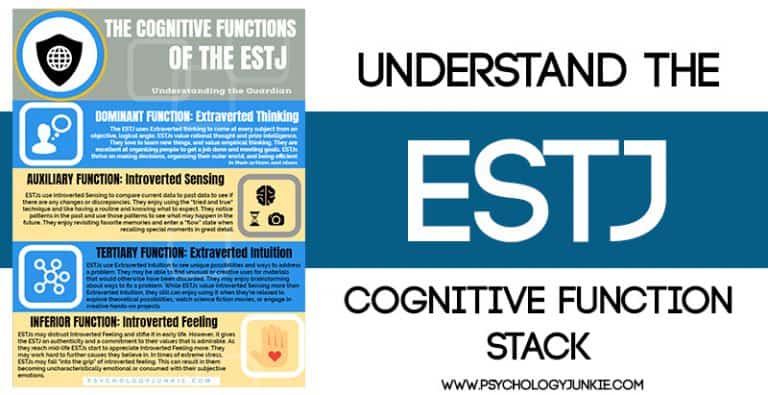
ESTJs and ESFJs: Child Extraverted Intuition (Ne)
When ESTJs and ESFJs want to escape adulting, their tertiary function, Extraverted Intuition (Ne), bursts out like a kid who just drank three energy drinks and discovered the concept of possibility.
These types are normally the responsible ones: scheduling the appointments, running the meetings, keeping the house or team from collapsing into chaos. But when their inner Child takes over, the script flips. They might start brainstorming wild ideas, telling quirky jokes, or bingeing Sci-Fi or fantasy movies.
Ne energy is playfully chaotic; it’s about “what if” and “why not,” not “should.”
One ESFJ client told me, “When I’m overwhelmed, I daydream about starting a bakery-slash-cat sanctuary-slash-bookstore. My husband says I’ve opened it twelve times in my head.” An ESTJ I know would start researching random business ideas or re-watching Star Trek, escaping into “the final frontier.”
Ne can be a joyful rebellion against rigidity. It balances the ESJ’s usual sense of duty with humor and imagination. Linda Berens, a psychologist, describes how it shows up in conversation, “Engaging in conversations where potential possibilities and hypotheses are explored can be energizing at times, helping them connect the details of their wealth of data and experiences.”
For ESTJs and ESFJs, Child Ne gives permission to loosen up and play with possibilities without committing to any of them.
When used well, this makes them adaptable, creative, and even funny. When overused, they can become scattered and unfocused. But at its best, Ne reminds them of the joy in imagination and exploration.
How this shows up:
- Turning chores or errands into creative adventures or competitions.
- Brainstorming wild business or life ideas “just for fun.”
- Impulsively changing plans because “something better came up.”
- Watching or reading fantasy or sci-fi for the imaginative escape.
- Making spontaneous jokes or puns just to keep things light.
- Starting projects purely because they sound exciting in the moment.
ENFPs and ESFPs: Child Extraverted Thinking (Te)
When ENFPs and ESFPs want to escape adulting, their tertiary function, Extraverted Thinking (Te), suddenly wakes up and says, “We are going to ORGANIZE EVERYTHING.” It’s intense and often short-lived.
Usually these types are more comfortable in the world of spontaneity, passion, and discovery. But when life gets overwhelming or chaotic, their inner Child flips the script: they grab a planner, write “TAKE CONTROL” in bold letters, and color-code the week — right before getting distracted by a YouTube video titled “Ten Surprising Facts About Otters.”
An ENFP client once told me, “When I’m stressed, I clean my whole apartment and alphabetize my spices. I also always wind up with a new productivity app on my phone.” An ESFP I know makes to-do lists and reorganizes rooms in her house.
Tertiary Te looks like playing with organization and planning long enough to calm down.
When balanced, this helps them channel their energy productively, giving their ideas form. When overused, it can turn into bossy micromanaging or a meltdown over other people’s inefficiency. But in its healthy, childlike form, Te helps them feel capable, focused, and oddly proud of making a spreadsheet that looks aesthetically pleasing.
How this shows up:
- Making ambitious to-do lists, then celebrating completing two items.
- Cleaning or organizing as a way to feel “in control.”
- Starting a new system (budget, planner, schedule), but maybe abandoning it a week later.
- Bossing friends or family around — affectionately — to create a sense of control.
- Testing ideas through trial and error.
- Suddenly becoming the productivity guru of the hour, then vanishing into creative chaos again.
ESTPs and ENTPs: Child Extraverted Feeling (Fe)
ESTPs and ENTPs usually lead with logic, innovation, or action. But when life gets too heavy, Fe looks for connection. Suddenly, they’re cracking jokes, calling friends out of nowhere, or organizing a group hangout. Video games, snacks, cracking jokes, talking about work and family; it’s all on the table.
My husband is an ESTP and he tends to play video games with his friends or approach me to talk, laugh, or watch funny videos together. An ENTP I know becomes more talkative when his work life seems too rigid.
This is Fe in its playful Child form: relational, affectionate, and playful. Fe gives these sharp-edged types a way to feel human again; to feel connected, wanted, and alive.
When balanced, this shows up as generosity, charm, and effortless charisma. When overused, it can slip into attention-seeking or performative friendliness that hides exhaustion underneath. But when healthy, these types remind everyone (including themselves) that laughter and friendship bring meaning and joy to life.
How this shows up:
- Becoming suddenly affectionate, talkative, or attentive to others.
- Making jokes or memes to lighten everyone’s mood.
- Planning social hangouts, movie nights, or impromptu parties.
- Over-complimenting friends because it feels good to make others smile.
- Using humor to defuse tension in a group.
- Temporarily prioritizing social harmony over logic or rules.
What Do You Think?
Do you relate to what I’ve written here or do you have a different experience or perspective? Let me know in the comments!
Find out more about your personality type in our eBooks, Discovering You: Unlocking the Power of Personality Type or The INFJ – Understanding the Mystic. You can also connect with me via Facebook, Instagram, or YouTube!












Hi Susan!
I just read the article about what we do when we are tired of adulting. I am sorry to say I did not fit my personality AT ALL! I am an ISFJ, but my S and N are 50/50, so I fit both personalities.
When I am tired of being an adult, I look at old family movies, read the childhood books, cook the old recipes and do the old traditions. According to the article, this is what INFP and INTP’s do. I don’t do any of the things listed for the INFJ and ISFJ list!
I love your articles and usually relate, but this one was so different, that I had to share that with you. Your e-mails are very enjoyable and I appreciate all your hard work!!
Sincerely,
Meg
Thank you for letting me know Meg! I appreciate it! It sounds like when you’re tired of adulting you lean more on your dominant function (Si) than your tertiary. I feel like this makes sense for an ISFJ; I think the times you might lean on Ti more would be a situation where you’ve somehow worn out your Si or your Si is kind of reminding you of negatives rather than positives. But I appreciate you bringing this up; it gives me pause to reflect and ask some questions to see if there needs to be editing on this!