
The Favorite U.S. Presidents of Each Myers-Briggs® Personality Type (Based on 3,000+ Responses)
You can tell a lot about a person by the presidents they admire; not in a “this means you vote XYZ” way, but in a “here’s what you value in leadership” way.
With that in mind, I recently ran a survey with over 3,000 respondents (3,120 so far), asking each Myers–Briggs® personality type to pick their favorite U.S. presidents.
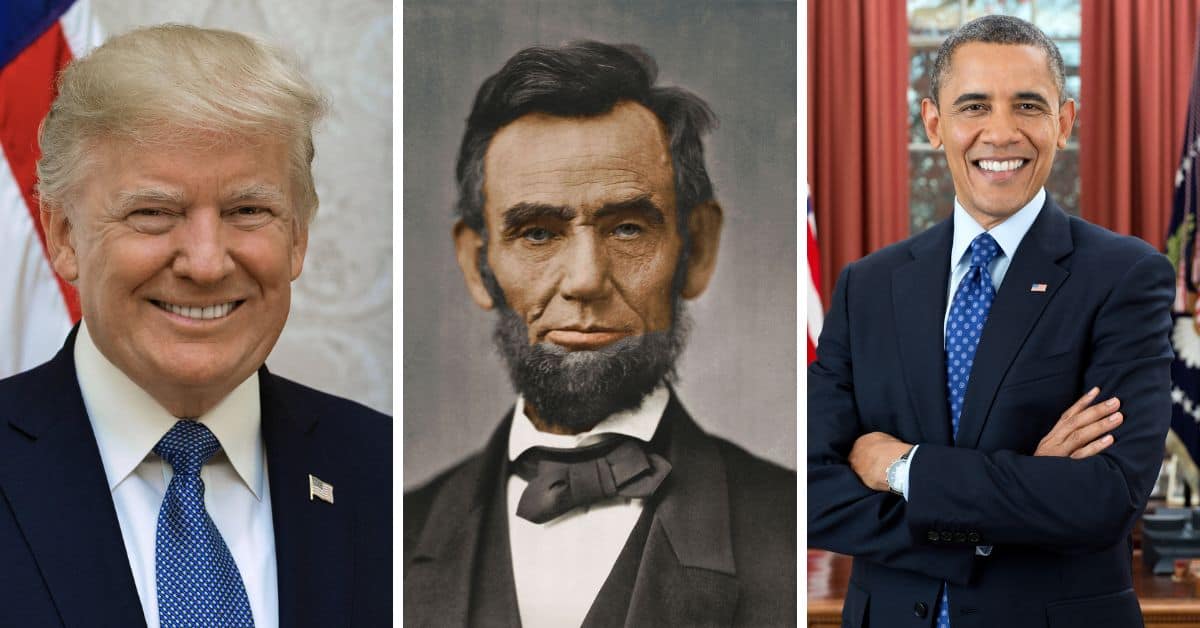
The goal is to look at the patterns underneath the preferences:
- What do certain types prize in leadership?
- Why do some types love bold reformers while others love steady builders?
- Why do a handful of presidents consistently show up across all 16 types?
Table of contents
- The Big Picture Patterns (Across All Types)
- 1. Abraham Lincoln is everyone’s favorite president.
- 2. Obama is especially beloved by intuitive and feeling types.
- 3. Washington shows up primarily among structured, stability-oriented types.
- 4. FDR attracts intuitive perceivers and change-oriented types.
- 5. Trump’s Appeal to Te-Dominant Types (ESTJs and ENTJs)
- The 16 Types and Their Top Three Favorite Presidents
- INTP – Abraham Lincoln, George Washington, Barack Obama
- ISTP – Donald Trump, Theodore Roosevelt, Abraham Lincoln
- INFP – Abraham Lincoln, Barack Obama, Franklin Delano Roosevelt
- ISFP – Abraham Lincoln, Barack Obama, George Washington
- INTJ – Barack Obama, Abraham Lincoln, George Washington
- ISTJ – Abraham Lincoln, George Washington, Theodore Roosevelt
- INFJ – Barack Obama, Abraham Lincoln, Jimmy Carter
- ISFJ – Abraham Lincoln, Ronald Reagan, Barack Obama
- ENTP – Abraham Lincoln, Franklin Delano Roosevelt, John F. Kennedy
- ESTP – Abraham Lincoln, Theodore Roosevelt, Franklin Delano Roosevelt
- ENFP – Abraham Lincoln, Franklin Delano Roosevelt, Barack Obama
- ESFP – Abraham Lincoln, Donald Trump, John F. Kennedy
- ENTJ – George Washington, Abraham Lincoln, Donald Trump
- ESTJ – Abraham Lincoln, Donald Trump, George Washington
- ENFJ – Abraham Lincoln, Barack Obama, John F. Kennedy
- ESFJ – Abraham Lincoln, George Washington, John F. Kennedy
- What This All Really Means
- Your Turn
The Big Picture Patterns (Across All Types)
1. Abraham Lincoln is everyone’s favorite president.
Literally everyone.
All 16 types.
Lincoln shows up in every single top-three list like the valedictorian who didn’t even try but still aced the final.
Why? Because across the board, people admire:
- Integrity
- Wisdom
- Moral courage
- Clear communication
- Leadership under extreme pressure
He’s the rare “four-quadrant” favorite.
2. Obama is especially beloved by intuitive and feeling types.
INFJs, ENFJs, INFPs, ENFPs.
Obama’s appeal crosses intuitive territory because he communicates in themes, meaning, patterns, and long-term implications.
NF types also tend to value:
- Empathy
- Inclusiveness
- Reflective decision-making
- A calm, relational communication style
Obama’s style maps cleanly onto Ni, Fe, and Fi values.
3. Washington shows up primarily among structured, stability-oriented types.
He shows up strongly for ESTJs, ESFJs, ISTJs, ISFJs, INTJs.
Why? These types often value:
- Foundations
- Duty
- Discipline
- Stability and continuity
- Leaders who model restraint rather than flash
Washington embodies “let’s build the system and do it cleanly,” which is catnip for the Judging temperament.
4. FDR attracts intuitive perceivers and change-oriented types.
Especially ENFPs, INFPs, ENTPs, ESTPs.
FDR represented bold action, wide-reaching reforms, and a willingness to rethink systems under extreme pressure.
This lines up beautifully with types who value:
- Innovation
- Experimentation
- Adaptability
- Big-picture change
- Breaking out of stuck patterns
If your brain runs on Ne, Se, or big-picture imagination, you probably get the appeal.
5. Trump’s Appeal to Te-Dominant Types (ESTJs and ENTJs)
When you look at the data, Trump appears most consistently among types that lead with Extraverted Thinking (Te), especially ESTJs and ENTJs. And this makes sense once you understand how Te works.
Te-dominant personalities value:
- Decisiveness
- Clear chains of command
- Straightforward, results-first communication
- Action over theorizing
- Efficiency and productivity
- Visible leadership and confidence
Te wants to see movement, outcomes, and assertive decision-making, even when the decisions themselves are controversial or imperfect.
They’re often drawn to:
- boldness rather than hesitation
- direct speech
- a commanding presence
- a willingness to disrupt systems if the system feels inefficient
This doesn’t mean all Te-doms approve of the same policies (my dad is an ENTJ and can’t stand Trump). It means they tend to resonate with the leadership style:
the unapologetic assertiveness, the visible drive, the emphasis on getting things done now, the refusal to back down, and the focus on tangible wins.
The 16 Types and Their Top Three Favorite Presidents
INTP – Abraham Lincoln, George Washington, Barack Obama
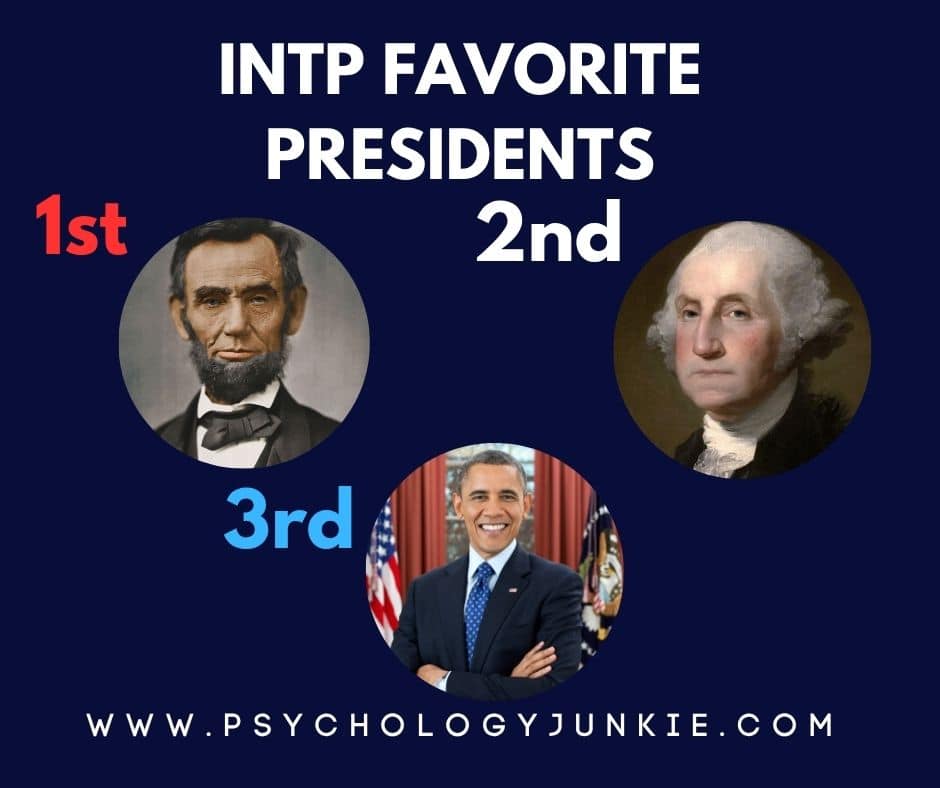
Theme: Quiet integrity, strategic depth, intellectual honesty.
INTPs are basically the Immanuel Kant’s of the personality world, minus the wig, plus a search history full of rabbit holes like “Do octopuses dream?” and “What is consciousness?” They want presidents who actually think before they speak. Preferably presidents who think during speaking too.
Enter: Lincoln, Washington, and Obama.
These three are like the holy trinity of “Please don’t talk just to hear yourself talk.”
Abraham Lincoln
INTPs love him because he was the original introvert philosopher-king. He’d literally sit alone in his law office, reading Euclid for fun, to “learn how to demonstrate.”
A quote Lincoln actually said that hits INTPs right in the soul:
“I am a slow walker, but I never walk back.”
Translation for INTPs: I overthink everything, but I don’t let my overthinking ruin the plan.
He also fought internal battles with melancholy and over-analysis, which every INTP reading this will relate to deeply.
George Washington
Washington was the quiet, stoic systems-builder who didn’t even want to be president. INTPs love that. They inherently distrust people who crave power, and Washington’s whole vibe was, “Please stop putting responsibilities on my plate; I just want to farm.”
His whole farewell address was:
“Don’t form political parties. Don’t fight each other. Don’t do dumb things.”
So, basically, an INTP trying to give advice to humanity (even though Washington was likely an ISTJ).
Washington is the INTP fantasy of leadership:
No nonsense. No theatrics. No emotional explosions. Just… calm competence and a refusal to participate in unnecessary chaos.
Barack Obama
Obama’s popularity among INTPs is almost mathematical. He’s thoughtful, measured, reflective—someone who pauses mid-sentence because the Ti filter is still evaluating the optimal phrasing.
Obama quote that INTPs vibe with:
“The thing about life is not to avoid mistakes, but to learn from them.”
This is the INTP motto—right after “Don’t bother me; I’m thinking.”
Obama also has that slightly detached, deadpan humor that INTPs use when they’ve had enough of everyone’s nonsense but are too polite to say it outright.
If INTPs could custom-build a president in some kind of ethical Sims 5, this trio would be very close to the final product.
That said, there are INTPs who dislike one or more of these presidents for their own personal reasons. If you’re reading this and dislike one of these choices, it could be for dozens of non-type related reasons (upbringing, values, religious beliefs, knowing a fact about them that the rest of us don’t know, etc,.).
ISTP – Donald Trump, Theodore Roosevelt, Abraham Lincoln

Theme: Hands-on competence, directness, grit, survival instincts.
ISTPs are the “I’ll fix it myself” types. If you handed them a broken chair, a dull knife, and half a roll of duct tape, they’d invent a new kind of furniture and then vanish into the woods for six hours.
They admire leaders who do stuff. Not leaders who talk about maybe eventually doing stuff someday after consulting three committees.
And their top three presidents? A fascinating trio of action-first energy.
Donald Trump
Whether ISTPs agree with him or not, many respect the style: blunt, unfiltered, move-fast-break-things energy. ISTPs love directness because subtlety is how bad decisions hide.
A quote ISTPs will probably enjoy:
“I try to learn from the past, but I plan for the future by focusing exclusively on the present. That’s were the fun is.”
Not all ISTPs like the policies. But many admire the guts.
Theodore Roosevelt
If ISTPs had a patron saint, it would be Teddy. He literally got shot mid-speech and said:
“I will give this speech or die.”
And then he… kept going.
That is the most STP thing a human has ever done.
Roosevelt was a cowboy, boxer, sheriff, explorer, reformer, warrior, and naturalist. He lived like life was an extreme sport and he’d already signed the waiver.
ISTPs see TR and think, “Yeah… that tracks.”
Abraham Lincoln
Lincoln shows up for almost everyone, but ISTPs vibe with his quiet toughness. He wasn’t flashy. He wasn’t emotional. He just… handled things. He told the truth even when it was ugly. He endured the hardest job in American history without theatrics or ego.
Lincoln quote ISTPs resonate with:
“Be sure you put your feet in the right place, then stand firm.”
That’s basically ISTP morality:
Do what’s right. Don’t brag about it. Don’t waffle. Stand your ground.
Lincoln was also a wrestling champion, which ISTPs always find out and say, “Of course he was.”
Because ISTPs love competence in all its forms: physical, mental, mechanical, strategic. Lincoln quietly excelled at all of them.
INFP – Abraham Lincoln, Barack Obama, Franklin Delano Roosevelt

Theme: Moral courage, emotional depth, transformative hope.
INFPs pick presidents the way some people pick poetry:
Does this person have a soul? Do they care about humanity? Do they see beyond the surface of things? Please dear God don’t let them be shallow.
So it makes perfect sense their top three are Lincoln, Obama, and FDR — the Big Three of “Let’s make life less awful and more humane.” INFPs want leaders who do the right thing even when nobody claps.
Abraham Lincoln
Lincoln and INFPs have similar vibes: quiet, gentle, but absolutely terrifying when pushed to their moral limit. Lincoln wrote melancholic poetry and carried the weight of an entire nation on his back like it was his personal side quest.
Quote that hits INFPs right in the gut:
“I have always found that mercy bears richer fruits than strict justice.”
INFP translation: Yes, finally a president with real heart.
Justice is important, sure. But mercy is the match that lights the whole world.
Also, Lincoln kept a stray cat in the White House and let him wander around Cabinet meetings. INFPs hear that and go, “I respect that.”
Barack Obama
Many INFPs love Obama for his reflective, empathetic, slow-thinking style. He’s the kind of guy who’d stop a meeting to check in with someone who looks sad. Fi appreciates that.
He also had that idealistic “We can do better” message that feels like someone opening a window in a stale room.
Obama quote that aligns with the INFP outlook on life:
“If there’s a child on the south side of Chicago who can’t read, that matters to me, even if it’s not my child. If there’s a senior citizen somewhere who can’t pay for their prescription, who has to choose between medicine and the rent, that makes my life poorer – even if it’s not my grandparent.”
INFPs are dreamers, but they’re not naive — they know darkness. They admire a leader who acknowledges the pain and still pushes toward the light.
Franklin Delano Roosevelt
FDR appealed to INFPs because he wasn’t afraid to redesign entire systems when people were suffering. INFPs love someone who says, “Okay, enough of this nonsense, let’s actually help people.”
His fireside chats were basically therapy sessions for a whole country.
And when he said,
“The only thing we have to fear is fear itself,”
INFPs think, “Ugh, fine, I’ll keep trying.”
Bottom line:
INFPs pick presidents who feel like wise, battle-weary healers trying to make the world less cruel.
ISFP – Abraham Lincoln, Barack Obama, George Washington
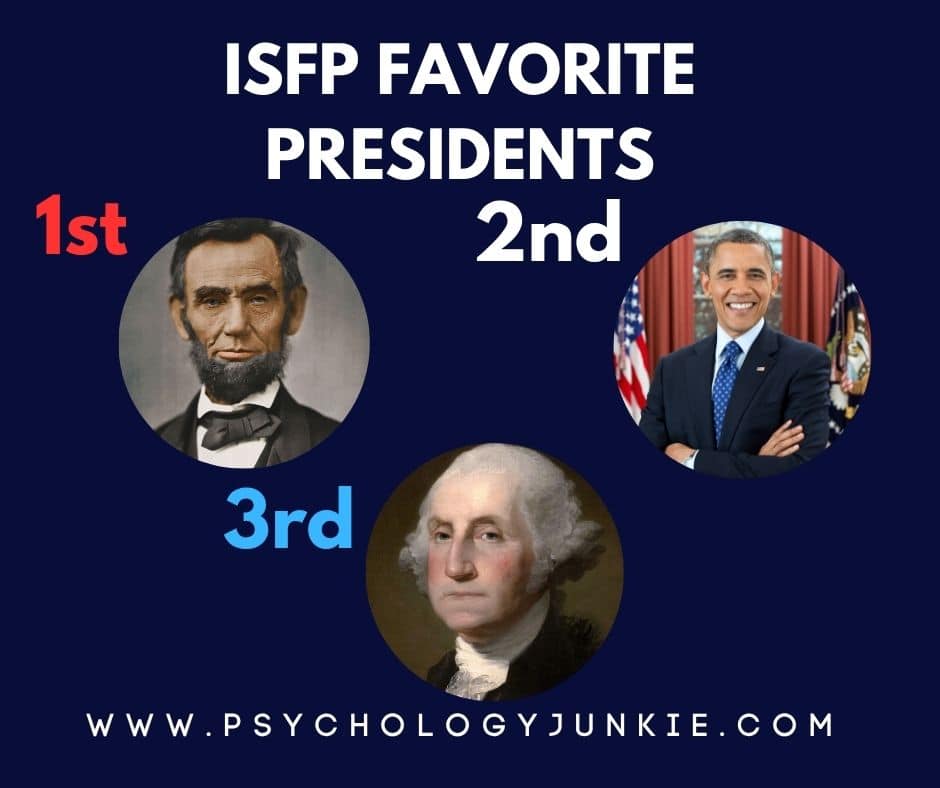
Theme: Quiet strength, compassion with boundaries, calm integrity.
ISFPs are gentle rebels. Soft hearts, steel cores, artsy souls who look sweet until you cross a moral line — and then suddenly you’re facing a very calm, very quiet, very determined wall of “Nope.”
Their presidential picks reflect that: the steady ones, the compassionate ones, the ones who say, “I’ll fight if I have to, but I’m not doing this for ego.”
Keep in mind, not all ISFPs will love every single one of these presidents. Some ISFPs I know, for example, aren’t big fans of Obama, while others adore him. If these presidents don’t feel right to you, that’s okay. Your Fi is unique to you.
Abraham Lincoln
Lincoln shows up again! ISFPs see Lincoln’s quiet resilience, his sadness, his heavy heart, and think, “Yeah… I get that.”
Lincoln wasn’t flashy. He wasn’t ego-driven. He held the nation together like a parent protecting a family that’s tearing itself apart. ISFPs understand that emotional exhaustion.
A Lincoln quote that resonates deeply with ISFPs:
“I would rather be a little nobody than to be an evil somebody.”
Lincoln’s humility + hidden strength = ISFP perfection.
Barack Obama
Obama appeals to many ISFPs because of his calm, grounded presence. He radiates the same kind of “I’m not yelling, but I mean it” energy ISFPs use when they’re serious.
Too many words overwhelm ISFPs. Obama’s deliberate, thoughtful cadence is soothing.
Obama also said things like:
“One voice can change a room, and if one voice can change a room, then it can change a city, and if it can change a city, it can change a state, and if it change a state, it can change a nation, and if it can change a nation, it can change the world. Your voice can change the world.”
For ISFPs who want their values to make a difference but often feel powerless in a world so big, this quote was one they mentioned as being especially inspiring.
George Washington
Washington is the surprise pick here, but honestly…it makes sense.
Washington was calm, principled, soft-spoken, hated drama, and wanted nothing to do with power-hungry nonsense.
Quote Washington actually said that feels very Fi:
“Be courteous to all, but intimate with few, and let those few be well tried before you give them your confidence. True friendship is a plant of slow growth.”
This is pretty much how every ISFP I know approaches friendships. I’m sure they’re nodding along right now, even if it’s just in their imagination.
Bottom line:
ISFPs choose presidents with heart, humility, and quiet backbone — the ones who didn’t want the spotlight but took responsibility anyway. They admire leaders who walk softly but carry a soul.
INTJ – Barack Obama, Abraham Lincoln, George Washington

Theme: Strategic clarity, long-range thinking, calm execution.
Their top three choices — Obama, Lincoln, and Washington — all share a similar energy: calm, strategic, internally driven, allergic to theatrical nonsense.
Barack Obama
Obama is measured. He’s thoughtful. He pauses mid-sentence because the internal engine is still running diagnostics.
The man treated the presidency like an eight-year roadmap to a more hopeful future, and INTJs appreciate that. They’re all about mapping out the course, figuring out the plan, and making sure forward progress is continually happening, even if it looks “slow” to outsiders.
A quote that INTJs will relate to:
“If you’re walking down the right path and you’re willing to keep walking, eventually you’ll make progress.”
Obama’s calm under pressure also resonates deeply with INTJs, who are often the only ones sitting quietly while everyone else is panicking.
Abraham Lincoln
INTJs admire Lincoln for his combination of moral clarity and long-range strategy. He wasn’t impulsive. He wasn’t loud. He didn’t care about approval. He just did the thing that needed to be done, even when it meant carrying enormous internal weight.
Lincoln quote INTJs feel in their bones:
“I am not bound to win, but I am bound to be true. I am not bound to
succeed, but I am bound to live up to what light I have.”
INTJs hear this and think, Yes. Be honest. Live up to your potential. Don’t settle.
Lincoln was the master of thinking five moves ahead and pursuing a goal no matter how exhausting the path.
George Washington
Washington was the original “reluctant leader,” and INTJs respect that so much. He didn’t want power. He just wanted the country to stop acting like a middle-school cafeteria.
His leadership philosophy was:
- Stay calm.
- Build systems that will outlive you.
- Leave before people turn you into a cult.
INTJs love boundaries, and Washington was the boundary king. He literally walked away from being president even though everyone begged him to stay — the presidential equivalent of Irish-exiting a party for the sake of national stability.
If you don’t like these picks, remember: your type is famous for quietly rewriting its own rulebook anyway.
ISTJ – Abraham Lincoln, George Washington, Theodore Roosevelt

Theme: Duty, responsibility, structure, and “please don’t create problems we didn’t need.”
ISTJs choose presidents using the internal metric of:
Are you reliable? Are you responsible? Will you follow the rules of the job instead of making the job follow you?
Their favorites — Lincoln, Washington, and TR — all have one big thing in common: they took their responsibilities seriously. Like, painfully seriously.
Abraham Lincoln
ISTJs love Lincoln because he is the patron saint of “I didn’t ask for this, but I will show up anyway.” He carried the job like it was a sacred trust, and ISTJs resonate deeply with that weight of duty.
Lincoln also worked insanely long hours, kept meticulous notes, and wrote dozens of letters per day: all very Si-Te “I’ll do the work no one else wants to do” energy.
Quote Lincoln said that hits ISTJs directly in their moral backbone:
“You cannot escape the responsibility of tomorrow by evading it today.”
For ISTJs, that quote is a lifestyle.
George Washington
Washington is the ultimate ISTJ pick: steady, principled, disciplined, allergic to drama. He ran the presidency like someone who understands rules are there for a reason. I also think he was an ISTJ personally.
He also turned down a potential third term because he believed the office wasn’t meant for unlimited power. That restraint, that self-control, that “follow the Constitution even if people think you’re boring” mindset?
ISTJs swoon.
A very ISTJ-flavored Washington quote:
“To be prepared for war is one of the most effective means of preserving peace.”
Translation: Take the job seriously. Prepare. Stop messing around.
Theodore Roosevelt
TR is louder than the average ISTJ likes, but he earned their respect by being alarmingly competent. He didn’t just talk about fixing things; he physically got up and fixed them.
He built national parks, cleaned up (some) government corruption, busted monopolies, and wrote 35 books in his spare time. ISTJs look at that résumé and think, “Finally, someone who uses their time properly.”
Also, TR quote that ISTJs secretly want embroidered on a pillow:
“Do what you can, with what you have, where you are.”
If this list doesn’t sit right with you, you’re not wrong. You’re just doing your ISTJ thing of fact-checking the universe. Each of these presidents had flaws. I personally used to adore Theodore Roosevelt, and then I learned that he had a lot of the racist beliefs of his time. It’s hard to know how to feel about someone who made genuine contributions to our country but also held some deeply harmful beliefs.
INFJ – Barack Obama, Abraham Lincoln, Jimmy Carter

Theme: Empathy with backbone, moral conviction, and the quiet courage to do the right thing even when everyone hates it.
INFJs pick presidents like they pick mentors: Show me your heart. Show me your vision. Show me that you’re thinking about the long arc of history, not the next news cycle.
So of course they gravitate toward Obama, Lincoln, and Carter — the presidents who led with empathy first, idealism second, and stubborn, steel-plated conviction third.
Barack Obama
Barack Obama is reflective, measured, deeply attuned to people but not swallowed by them. His entire vibe is “let me process this for a moment,” which INFJs appreciate because they also need eight business days to emotionally triangulate anything complicated.
A quote that INFJs feel in their solar plexus:
“We are the ones we’ve been waiting for.”
It’s the perfect mix of inspiration + responsibility. Basically, the INFJ battle cry when they’re tired of waiting for humanity to get its act together.
Abraham Lincoln
Lincoln and INFJs fit together like two old souls in a melancholy buddy drama.
He was thoughtful. Compassionate. Haunted. Burdened by the suffering around him.
INFJs see him and think, “He saw the bigger picture. And it cost him.”
Lincoln’s moral courage hits INFJs hard. He held the country together through conviction and emotional endurance.
Quote that feels like something an INFJ would say:
“I don’t like that man. I must get to know him better.”
INFJs want leaders who seek to understand what confuses them. That lights up the “Perspectives” side of their Introverted Intuition. Lincoln delivered that mindset in many facets of his life.
Jimmy Carter
Carter is basically an INFJ cottagecore fever dream.
Soft-spoken. Gentle. Kind. The president who served the poor not just in office, but after leaving it — swinging a hammer for Habitat for Humanity in his 90s while other former presidents were… not doing that.
INFJs love that he lived his values quietly, consistently, and without fanfare.
Carter quote that could double as an INFJ life mission statement:
“We must adjust to changing times and still hold to unchanging principles.”
If this list doesn’t resonate, breathe. It doesn’t mean you’re not an INFJ or that INFJs are “the enemy.” We all have a thousand stories outside of type that lead to our beliefs about a “good” president. Let us know what you think in the comments if you disagree (or agree). I’d be curious to know your perspective!
ISFJ – Abraham Lincoln, Ronald Reagan, Barack Obama
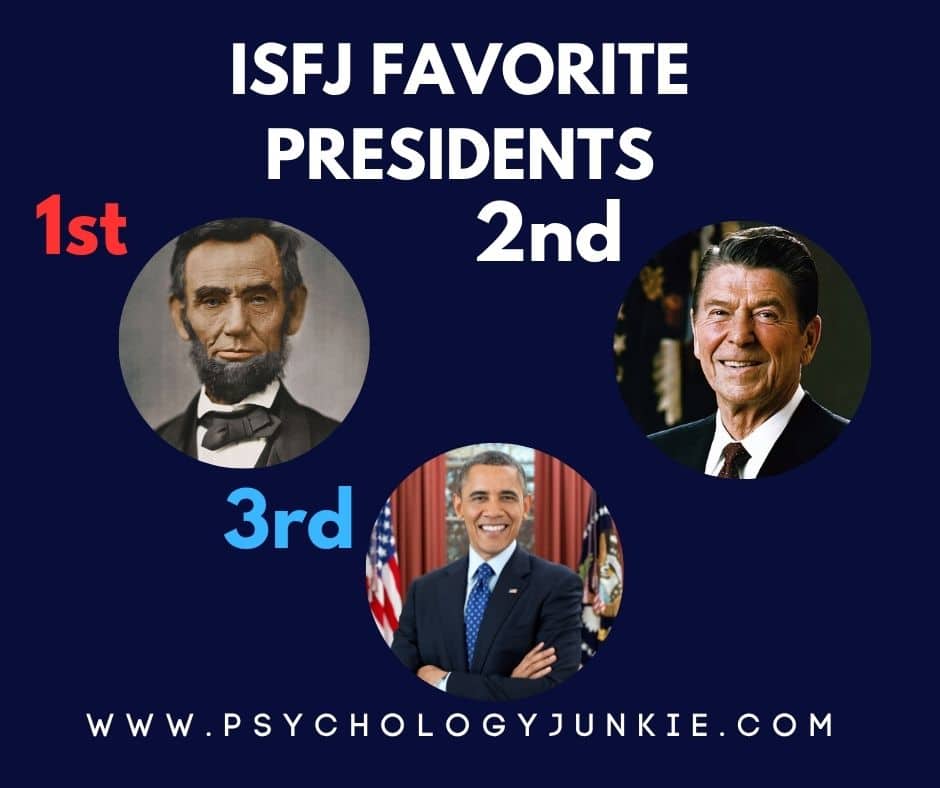
Theme: Stability with warmth, steady leadership, community focus, and a hopeful tone.
ISFJs pick presidents who feel trustworthy, grounded, and quietly devoted to the well-being of ordinary people. They want someone who shows up, stays consistent, and doesn’t stir up unnecessary drama.
So their trio — Lincoln, Reagan, and Obama — is all about reliability wrapped in heart.
Abraham Lincoln
ISFJs love Lincoln’s blend of humility, compassion, and responsibility. He carried the presidency like a moral calling, not a personal prize.
Lincoln also wrote letters filled with empathy, emotional depth, and genuine care — the kind of thoughtful communication ISFJs both respect and practice themselves.
A Lincoln quote they’ll love:
“We are not enemies, but friends. We must not be enemies. Though passion may have strained, it must not break our bonds of affection. The mystic chords of memory will swell when again touched, as surely they will be, by the better angels of our nature.”
Ronald Reagan
Reagan appeals to many ISFJs because he projected steadiness, optimism, and a sense of national reassurance. His “morning in America” tone felt calm and stabilizing — the emotional equivalent of tidying the living room and turning on a lamp after a hard day. ISFJs appreciate that kind of grounded, hopeful presence.
But it’s also important to acknowledge the full picture: some of Reagan’s policies were deeply harmful, particularly to Black communities. Many people today look back and see significant damage that wasn’t always visible in the hopeful speeches. ISFJs are usually the first to care about the human impact of leadership, so this nuance matters. I know there might be a few ISFJs who want this acknowledged.
Quote ISFJs relate to:
“We can’t help everyone, but everyone can help someone.”
That’s pure Si–Fe “care starts at home and grows outward.”
Barack Obama
Obama appeals to many ISFJs because of his thoughtful, empathetic communication and his emphasis on community, responsibility, and unity. His steady presence, calm demeanor, and respectful leadership style often made ISFJs feel safe and heard.
Quote that resonates deep in their gentle, steadfast cores:
“it’s important to make sure that we’re talking with each other in a way that heals, not in a way that wounds.”
ISFJs appreciate the gentle empathy of that statement.
If you’re not connecting with this list, that’s okay. You’ve always had your own quiet wisdom guiding you.
ENTP – Abraham Lincoln, Franklin Delano Roosevelt, John F. Kennedy

Theme: Vision, disruption, reinvention, charisma, and a strong whiff of “Let’s blow up the old system and build a better one.”
Their favorite trio — Lincoln, FDR, and JFK — all have big “change the rules or rewrite them entirely” energy.
Abraham Lincoln
ENTPs love Lincoln because he was the original “break the system to save the system” president. He walked into a national dumpster fire and said, “Okay, let’s remodel this place from the studs up.”
He was strategic, witty, and relentlessly curious; very ENTP-coded traits.
Lincoln’s humor also had that dry-near-sarcastic bite ENTPs appreciate.
He once said:
“You can fool some of the people all of the time, and all of the people some of the time, but you can’t fool all of the people all of the time”
Franklin Delano Roosevelt (FDR)
FDR appeals to ENTPs because he didn’t just change policies — he restructured the entire operating system. He was bold. He was innovative. He was unafraid of big experiments, even when half the country screamed about it.
Quote ENTPs will connect with:
“The only limit to our realization of tomorrow will be our doubts of today.”
ENTPs respond: Exactly. Let me dismantle some doubts real quick.
If something’s broken, try 20 new ideas. One of them will work.
John F. Kennedy
ENTPs and JFK are a match made in charisma heaven. He was forward-thinking, energetic, curious, charming — and a fellow ExTP (although I think he was an ESTP).
He also loved debate. Loved challenge. Loved pushing people to think bigger.
ENTPs see him as “one of the few presidents who probably would have fun in a heated argument.”
Quote that strikes peak ENTP:
“Conformity is the jailer of freedom and the enemy of growth.”
ENTPs whisper, “Preach.”
If none of these presidents feel right, argue with the data. It’s basically your cardio.
ESTP – Abraham Lincoln, Theodore Roosevelt, Franklin Delano Roosevelt

Theme: Action, grit, adaptability, boldness, and “Don’t just stand there — do something.”
ESTPs pick presidents who actually move.
Who act.
Who respond quickly.
Who aren’t afraid to get their hands metaphorically (or literally) dirty.
Their trio — Lincoln, TR, and FDR — are the presidents you’d want beside you during an emergency, probably building a raft from scratch while negotiating a peace treaty.
Abraham Lincoln
ESTPs appreciate Lincoln for one reason above all others: competence under pressure.
He wasn’t fragile. He did what needed to be done, even when the stakes were existential.
Lincoln was also a wrestling champion — a fact that makes every ESTP raise their eyebrows and say, “Wait, what? Respect.”
Quote ESTPs connect with:
“Always bear in mind that your own resolution to succeed is more important than any one thing.”
Theodore Roosevelt
TR is the unofficial ESTP spirit animal. He was a storm of physical energy, confidence, and outrageous levels of competence.
He got shot mid-speech. Kept speaking.
Fought corruption.
Created national parks.
Wrangled cattle.
Wrote 35 books.
Went exploring in the Amazon.
And once refused to shoot a bear, which is how we got the teddy bear.
ESTPs admire TR because he didn’t talk about adventure. He did adventure.
Roosevelt quote that is essentially ESTP scripture:
“Do what you can, with what you have, where you are.”
Franklin Delano Roosevelt (FDR)
FDR resonates with ESTPs for his bold, crisis-facing energy.
He saw the Great Depression, rolled up his sleeves, and threw the New Deal at it — an entire suite of action-driven programs designed to get people on their feet. That’s Se–Ti innovation with backbone.
His leadership during WWII also speaks to ESTPs:
Adapt. Respond. Keep moving. Don’t freeze.
ESTP-coded FDR quote:
“When you come to the end of your rope, tie a knot and hang on.”
Bold. Practical. Direct.
ENFP – Abraham Lincoln, Franklin Delano Roosevelt, Barack Obama

Theme: Vision, heart, idealism, moral courage, and the belief that the world can be better if we stop acting like tired raccoons fighting in a dumpster.
ENFPs pick presidents the way they pick future selves:
Show me someone who dreams big, feels deeply, fights for people, and refuses to let cynicism win.
Abraham Lincoln
Lincoln is an ENFP favorite because he led with moral clarity and emotional depth — two things ENFPs take way too personally (in the best way). He understood people. He carried their suffering like it was his own. ENFPs get that.
Quote ENFPs feel deep in their chest:
“The probability that we may fail in the struggle ought not to deter us
from the support of a cause we believe to be just.”
This will satisfy the ENFP’s Introverted Feeling side, which is all about standing your ground for your convictions, regardless of the storm coming your way.
Franklin Delano Roosevelt (FDR)
Many ENFPs adore FDR because he didn’t just talk about hope — he operationalized it. He saw a broken country, got to work, and rebuilt structures so people wouldn’t fall through the cracks. ENFPs love leaders who dream at scale.
His fireside chats?
Soothing. Encouraging. Visionary.
Like a national pep talk with tangible action steps.
FDR line ENFPs connect with:
“The only thing we have to fear is fear itself.”
Barack Obama
If ENFPs could vote for a vibe, many would vote for Obama’s entire aura. He’s reflective, hopeful, articulate, and deeply community-oriented. He speaks like someone who wants people to believe in their own agency again.
ENFPs love that he blends realism with possibility.
Obama quote ENFPs whisper “yes” to:
“Hope is that thing inside us that insists, despite all the evidence to the contrary, that something better awaits us.”
ESFP – Abraham Lincoln, Donald Trump, John F. Kennedy
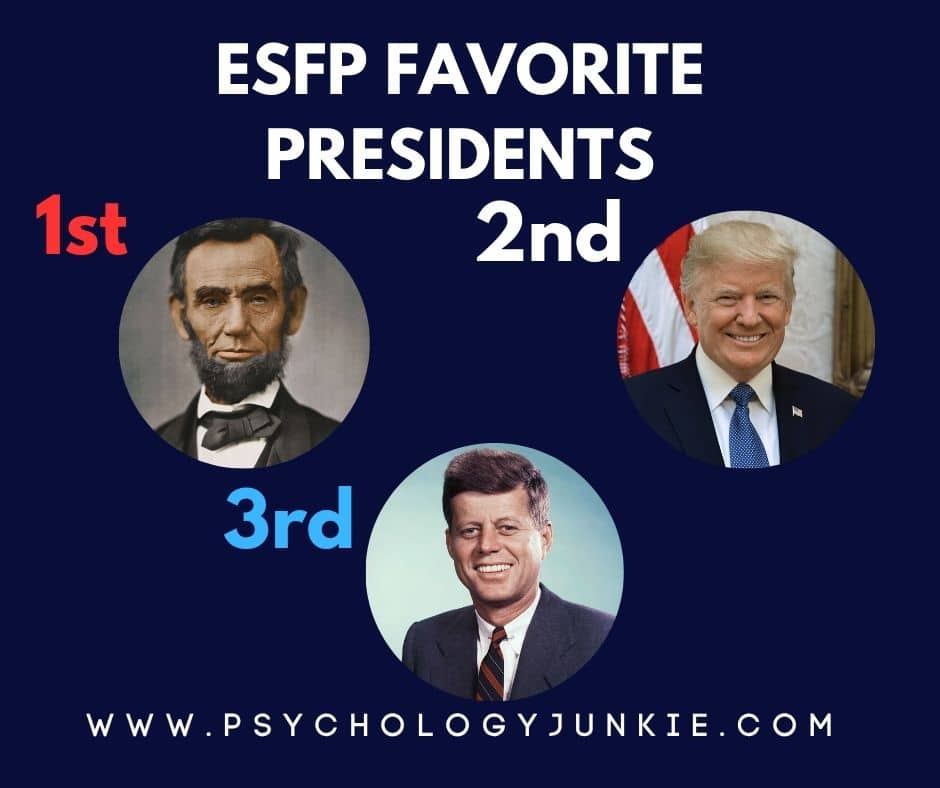
Theme: Charisma, boldness, shared values, presence, and leaders who actually show up instead of hiding behind paperwork.
Who has presence? Who’s dynamic? Who can light up a room, command attention, and make people feel something?
Abraham Lincoln
For ESFPs, Lincoln isn’t a pick about gravitas or stoicism. They choose him because of the nature of his heart — quiet, compassionate, principled, and stubbornly moral. Lincoln acted from a place of conviction, not performance. He didn’t posture. He didn’t brag. He just followed what he believed was right, even when it cost him emotionally.
That kind of authenticity lights up an ESFP’s introverted feeling side.
Lincoln was funny, too — warm, self-deprecating, human in a way that makes ESFPs say, “Okay, yes, that’s someone I can respect.”
Quote that ESFPs will relate to:
“I do the very best I know how, the very best I can, and I mean to keep on doing so until the end.”
Donald Trump
Some ESFPs resonate with Trump’s boldness and high-energy presence. He’s unfiltered. Confident. Dramatic. He puts on a show and doesn’t apologize for it — qualities that Se-dominant types instantly recognize.
ESFPs may not agree with everything he said or did, but they often appreciate his directness, his willingness to “just say the thing,” and his refusal to blend into anything.
He once said:
“If you’re going to think anything, you might as well think big.”
ESFP translation: Go big or go home, and ideally go big for policies I feel passionate about.
John F. Kennedy
JFK was charismatic. Charming. Stylish. Magnetic. He had that youthful spark that draws people in and really makes them listen. He also understood the emotional landscape of a nation the way ESFPs understand a room the moment they walk into it.
JFK quote that resonates with ESFPs:
“We are not here to curse the darkness, but to light a candle that can guide us through the darkness.”
It’s hopeful. It sounds like something an ESFP would tattoo on their forearm during a moment of spiritual clarity.
If this list doesn’t match your vibe, that’s fine — you’re the one who decides who has ‘main character energy,’ not a survey.
ENTJ – George Washington, Abraham Lincoln, Donald Trump

Theme: Commanding presence, strategic power moves, decisive leadership, and a refusal to sit still while a system falls apart.
Their top three — Washington, Lincoln, and Trump — all radiate “executive energy,” each in wildly different ways.
George Washington
Calm. Resolute. Disciplined.
Washington was a builder of systems, not a chaser of applause.
He accepted the presidency like someone taking on a job they didn’t want but knew they’d do better than anyone else.
He also stepped down after two terms because he believed in the system more than he believed in himself, and ENTJs respect the hell out of that.
Quote that ENTJs will admire:
“I hope I shall possess firmness and virtue enough to maintain what I consider the most enviable of all titles, the character of an honest man.”
Abraham Lincoln
Lincoln appeals to ENTJs because he was a strategist to the bone. He played the political long game with extraordinary patience and precision. He could also carry enormous burdens without flinching. ENTJs relate deeply to that “fine, I’ll do it myself” energy.
Quote ENTJs admire:
“Determine that the thing can and shall be done, and then we shall find the way.”
Donald Trump
Trump brings directness, dominance, assertiveness, decisiveness, and willingness to disrupt a system he believed was inefficient.
You don’t have to agree with his politics to see why ENTJs notice the force-of-will energy. I know a number of ENTJs who adore Trump, and I know several who absolutely can’t stand him. But what they can all see is the boldness, the command style, the refusal to back down.
They may think: Right or wrong, the man is not afraid of the wheel.
Trump quote that ENTJs admire:
“No dream is too big. No challenge is too great. Nothing we want for our future is beyond our reach.”
It’s visionary. It’s confident.
And ENTJs know that energy intimately.
ESTJ – Abraham Lincoln, Donald Trump, George Washington

Theme: Pragmatism, order, backbone, blunt communication, and the sacred art of getting things done on time.
Their trio — Lincoln, Trump, and Washington — reflects different flavors of “no-nonsense leader.”
Abraham Lincoln
ESTJs appreciate Lincoln’s sense of duty. He didn’t lead for glory. He didn’t take shortcuts. He did the agonizing work that was required, even when every side hated him.
Lincoln was methodical, responsible, and unshakably committed.
Quote that ESTJs relate to on a deep, cellular level:
“You cannot escape the responsibility of tomorrow by evading it today.”
Donald Trump
Many ESTJs resonate with Trump’s bluntness, directness, and hyper-practical communication style.
Trump emphasizes family, tradition, national pride, and a desire to bring things “back” to a more stable era. ESTJs may not necessarily agree with every detail, but many appreciate that he communicates like someone who believes in clear rules, strong authority, and preserving structure rather than reinventing everything from scratch.
ESTJs may not agree with every policy, but many appreciate his “no filter, no delay” energy.
Quote that ESTJs will relate to:
“If you’re interested in ‘balancing’ work and pleasure, stop trying to balance them. Instead make your work more pleasurable.”
George Washington
Washington appeals to ESTJs because he was principled, serious, organized, and maddeningly responsible.
Washington didn’t want power, which ESTJs actually appreciate — because he still did the job with integrity and then peacefully handed it off like an adult.
His whole approach to leadership was:
- Be clear.
- Be disciplined.
- Be consistent.
- Don’t scare the public.
ESTJs approve of all four.
Washington quote ESTJs love:
“To be prepared for war is one of the most effective means of preserving peace.”
ESTJs: Finally, someone who gets it.
Not your favorites? No problem. You get to make your own decisions — and you usually prefer it that way. Leave a comment if you have any thoughts about these rankings! We can keep the conversation going there.
ENFJ – Abraham Lincoln, Barack Obama, John F. Kennedy

Theme: Charisma with heart, inspirational leadership, moral conviction, and the ability to make a country feel like it has a shared purpose again.
ENFJs choose presidents the way they choose people to follow into battle:
Do you inspire me? Do you speak to the soul of a nation? Can you pull us together when everyone else is falling apart?
Their top trio — Lincoln, Obama, and JFK — are the presidents who made people feel something bigger than themselves.
Abraham Lincoln
Lincoln was empathetic, principled, emotionally intelligent, and a natural unifier in a time when unity felt impossible. He wasn’t loud, but his moral presence filled the room. ENFJs love a leader who carries responsibility with integrity rather than ego.
Lincoln quote that inspires ENFJs:
“With malice toward none, with charity for all, with firmness in the right as God gives us to see the right, let us strive on to finish the work we are in, to bind up the nation’s wounds, to care for him who shall have borne the battle and for his widow and his orphan, to do all which may achieve and cherish a just and lasting peace among ourselves and with all nations.”
ENFJs understand that leadership isn’t just about winning — it’s about healing.
Barack Obama
ENFJs see Obama as someone who leads with a mix of emotional resonance and long-range vision. He speaks like he’s inviting everyone into the story.
His speeches feel like heart-forward strategy sessions, and ENFJs respond to that blend of empathy and insight.
Obama quote ENFJs carry like a talisman:
“We are the change we have been waiting for.”
It’s inspiring, collectivist, and empowering — basically ENFJ oxygen.
John F. Kennedy
JFK has the charisma ENFJs admire, but also the idealism. The vision. The spark. He could electrify a room, and ENFJs love people who move others toward action through emotional resonance rather than brute force.
He also had a poetic streak that fits Ni–Fe beautifully.
JFK quote ENFJs love:
“One person can make a difference, and everyone should try.”
ENFJs hear that and immediately open a Google Doc titled “New life goals.”
ESFJ – Abraham Lincoln, George Washington, John F. Kennedy

Theme: Warmth, stability, moral clarity, community values, and leaders who make the country feel like a family that’s finally eating dinner together without arguing.
ESFJs pick presidents the way they pick people to run their communities:
Are you steady? Are you trustworthy? Do you care about people? Are you going to take care of the group instead of just yourself?
Their favorites — Lincoln, Washington, and JFK — reflect a combination of ethics, stability, and firm leadership.
Abraham Lincoln
ESFJs love Lincoln for his deep humanity and his commitment to doing what was right for the whole country, not just the loudest parts of it. He appealed to people’s better angels — something ESFJs resonate with strongly.
Lincoln was compassionate, emotionally intelligent, and carried the heaviness of leadership the way an ESFJ carries everyone’s emotional burdens at Thanksgiving.
Quote that inspires ESFJs:
“And in the end, it’s not the years in your life that count. It’s the life in your years.”
George Washington
Washington embodies the ESFJ preference for structure and respectability. He was calm, steady, responsible: the dad friend of early America.
He believed in order. Tradition. Careful decision-making.
ESFJs admire that blend of moral backbone and reliability.
He also created routines and expectations for the presidency because someone had to, and ESFJs know that sacred burden very well.
Washington quote ESFJs love:
“Let your heart feel for the afflictions and distress of everyone.”
John F. Kennedy
JFK’s optimism, charisma, and emotional connection to the public make him an ESFJ favorite. He made people feel hopeful and united, like they were part of something bright and meaningful.
He also had elegant social presence, something ESFJs appreciate more than they’ll admit out loud.
JFK quote that feels very ESFJ:
“We must find time to stop and thank the people who make a difference in our lives.”
What This All Really Means
No personality type sees the world exactly the same way, and that’s actually the good news.
We balance each other.
We challenge each other.
We make each other think.
And occasionally, we annoy each other in the comments section — but that’s part of the charm.
Your type might resonate with your type’s picks, or you might be staring at the list like,
“Absolutely not. Try again.”
Both reactions are valid. Personality data shows patterns, not destinies. You get to choose your own heroes.
And honestly? Your personal reaction probably says more about your story, your values, and your lived experience than it does about your type, and that’s the interesting part.
Your Turn
I’d love to hear your thoughts:
- What’s your personality type?
- Who are your favorite presidents?
- Do your picks line up with the survey or totally contradict it?
- And most importantly… what do you value in a leader?
Drop your thoughts in the comments.
Let’s keep it respectful, keep it curious, and learn from each other. No matter where we fall on the map (politically or personality-wise), better conversations start with better understanding.







INFJ here! 👋
While I found the trends really interesting and reasonable, I do wonder just how many presidents most Americans even know. Given the fact that our educational system tends to focus on a limited number, I found it really interesting how all we all circled around a very limited handful of the same presidents, just in varying order… While, I also agree that Lincoln should top the list of great people, let alone presidents, I have a feeling, next to Washington, he is simply the most well known due to how much school curriculum focuses on him.
I also found it interesting to see which more-recent presidents were not included in the list… 😏
Just a pondering food for thought… 🤔
Thanks so for sharing! I look forward to your articles, Susan! 💖