The Myers-Briggs® Personality Types of the Bloodhounds Characters
Bloodhounds is one of my favorite K-Dramas, and I just finished binge-watching Season 2 with my husband. Of course, I spent about 15% of the series hiding under my blanket asking my husband to tell me when it’s over…usually because someone I cared about was getting beaten in extreme ways that were just too intense for me. Now I’m finally ready to write up my thoughts about the personality types of the characters and I’d love your thoughts as you read along! Have a different perspective or insight? Let me know in the comments!
This is a series where people are pushed into corners—financially, physically, morally—and whatever is underneath gets exposed fast. You don’t get polished versions of people. You get who they are when things go sideways. And in some cases that made the personality types clearer, and in others, more difficult.
Let’s break it down.
Not sure what your personality type is? Take our personality questionnaire here. Or you can take the official MBTI® here.
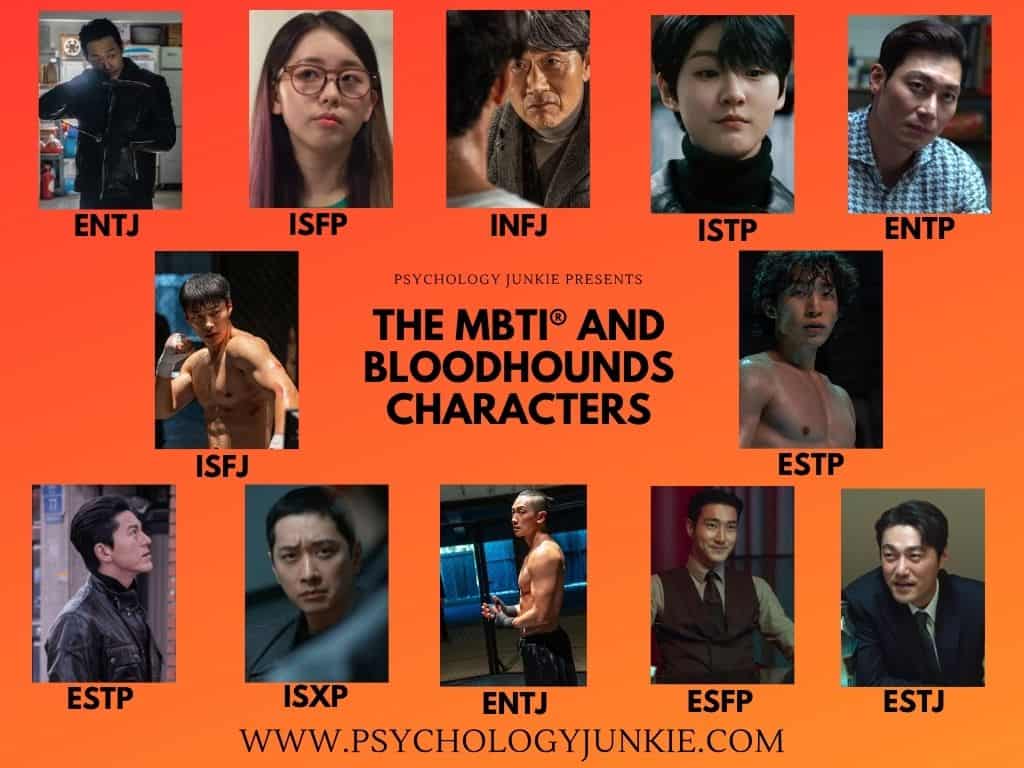
The Myers-Briggs® Personality Types of the Bloodhounds Characters
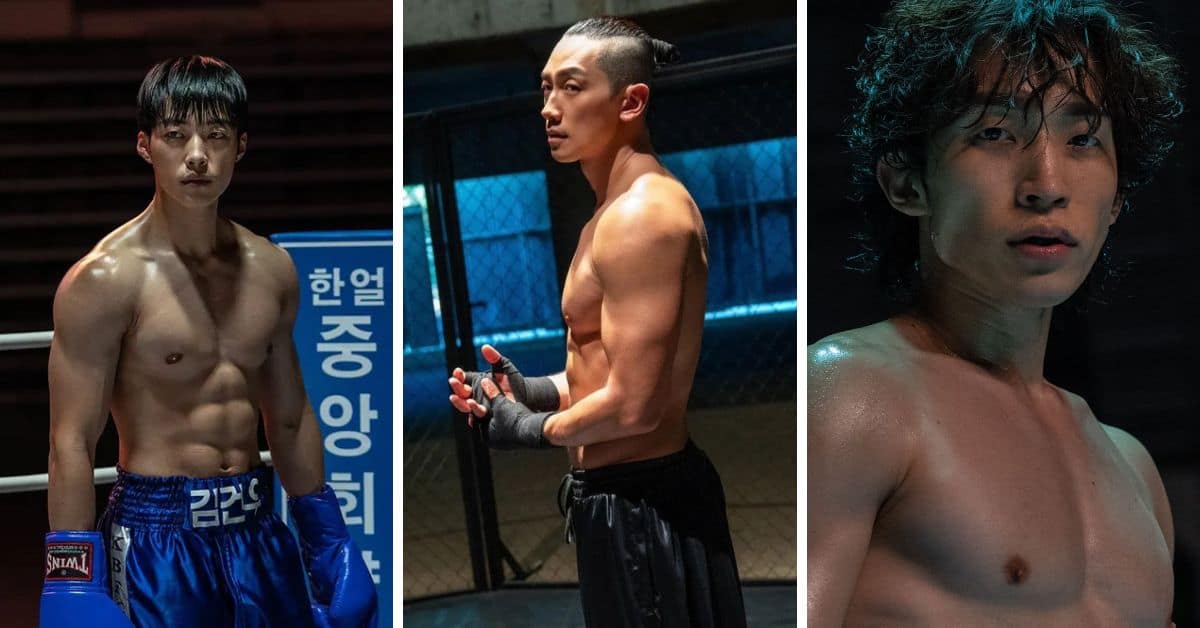
Kim Geon-Woo (ISFJ)
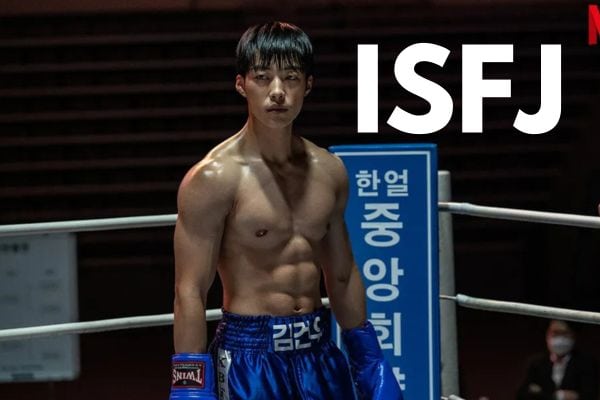
“This is the kind of person I want to be. A person who shows that dreams can come true if you have a strong will and undying passion.” – Kim Gun Woo
Sweet-natured yet stubborn, Kim Geon-woo has a trait many ISFJs wrestle with: his strength is obvious, but his intelligence is often overlooked because it doesn’t announce itself in flashy or strategic ways. He isn’t the kind of person who dominates a room with big theories or mastermind energy. Instead, his wisdom shows up in the choices he makes for the people he loves, the sacrifices he’s willing to endure, and the steadiness he brings when other people are falling apart. While he can be naïve in situations that require suspicion or strategic thinking, he has a deeply rooted moral compass and an unusual ability to keep going when someone else might have given up.
ISFJs often live by an inner code of duty, loyalty, and personal responsibility, and Geon-woo embodies that beautifully. He doesn’t fight for ego, power, or even ambition. He fights because someone is being hurt and he can’t just stand there and watch it happen. That can make him vulnerable in a world full of manipulators, because he tends to assume sincerity where there is none and decency where there is only greed. But it also makes him the emotional backbone of the story. Many ISFJs, especially those who’ve had to grow up fast or carry other people’s burdens, will probably recognize themselves in Geon-woo’s quiet endurance, his protectiveness, and the way he keeps showing up with a heart of gold in a world that keeps trying to beat it out of him.
Hong Woo-Jin (ESTP)
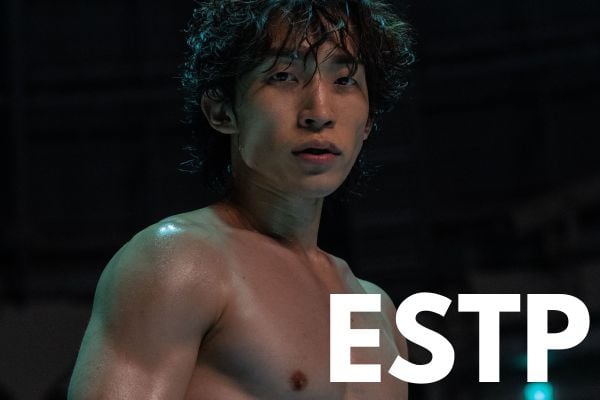
Upbeat, quick-witted, and impossible not to like, Hong Woo-jin has a quality many ESTPs rely on: an instinctive ability to read a room and decide, in real time, who he wants to be in it. On the surface, he’s all charm, humor, and action, someone who can turn tension into laughter and jump into a fight without overthinking it. But underneath that easygoing exterior is a sharp awareness of people and a deep loyalty that isn’t always obvious at first glance. His intelligence doesn’t come from sitting back and analyzing life from a distance. It shows up in motion, in split-second decisions, in the way he adapts and recalibrates when things go sideways.
“Desperate people are easier to rip off. The pandemic has made a lot of people desperate.”
Woo-jin sees the angles. He understands how the world works, including its darker sides. The difference is, he doesn’t let that awareness turn him cynical. Instead, he uses it to protect the people he cares about and to stay one step ahead when things get dangerous.
ESTPs are often underestimated as being all impulse and no depth, but Woo-jin shows how much heart sits underneath that spontaneity. His loyalty is fierce, and once someone becomes “his person,” that bond is nearly unbreakable.
“Once family, always family. And we protect our family with our lives til the end.”
“From now on, no matter what happens, let’s stick together. If we die, we die together. If we live, we live together. That’s us.”
That’s tertiary Fe in action. It’s not overly sentimental or poetic, but it’s real. It shows up in commitment, in presence, in refusing to walk away when things get hard.
At the same time, Woo-jin brings a kind of buoyancy to the story. He lightens the weight without denying it, using humor and confidence as a way to keep moving forward.
“Let’s not stop at the world championship. Let’s conquer the universe.”
“We’re the Marine Duo. Leave everything to us.”
Many ESTPs, especially those who’ve learned to balance their instinct for action with genuine emotional connection, will see themselves in Woo-jin’s blend of courage, humor, and loyalty. He doesn’t overcomplicate life. He shows up, reads the moment, and gives everything he has to the people standing beside him.
Kim Myeong-Gil (ENTJ)
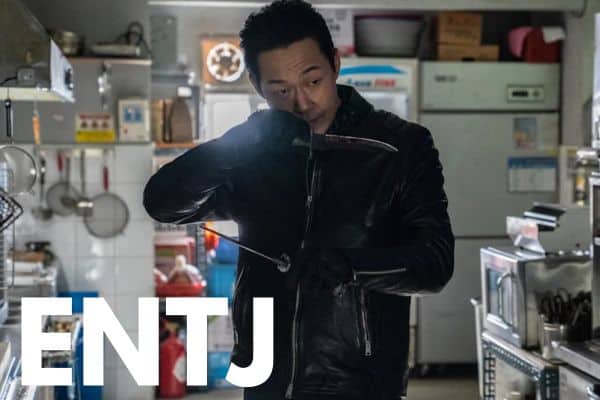
Cold, calculating, and precise in the way he operates, Kim Myeong-gil reflects a side of the ENTJ personality that shows up when ambition detaches from empathy. He’s controlled, intentional, and every move serves a purpose. Every person is evaluated based on their usefulness within the system he’s built. His intelligence is strategic, predictive, and ruthless. Early on in the series, I looked at my husband and said, “Ugh…he’s a really smart villain. It’s annoying.” I’m used to villains who make a lot of stupid short-sighted decisions in the heat of the moment. Myeong-Gil is different. He sees patterns early, anticipates resistance, and adjusts before anyone else realizes there’s a game being played.
ENTJs are often natural leaders, capable of building systems, solving complex problems, and bringing structure to chaos. But when that same drive is stripped of any internal moral anchor, it can become something else entirely. Myeong-gil isn’t just a business man, he positions himself at the center of a network where everyone else is either a pawn, a liability, or an asset to be optimized.
And yet, what makes him compelling is the way he understands exactly how the world works, at least from his perspective. Power protects. Money insulates. Weakness gets exploited. There’s no illusion there, no comforting narrative. Just a system he’s learned to master.
Many people won’t relate to Myeong-gil’s choices, but they may recognize the underlying mindset in smaller ways—the temptation to prioritize results over people, to justify harsh decisions in the name of efficiency, to distance themselves emotionally in order to stay in control. He represents what can happen when competence and ambition are left unchecked by conscience: a mind that can build anything, but chooses to build something that devours others to sustain itself.
Im Baek-Jeong (ENTJ)
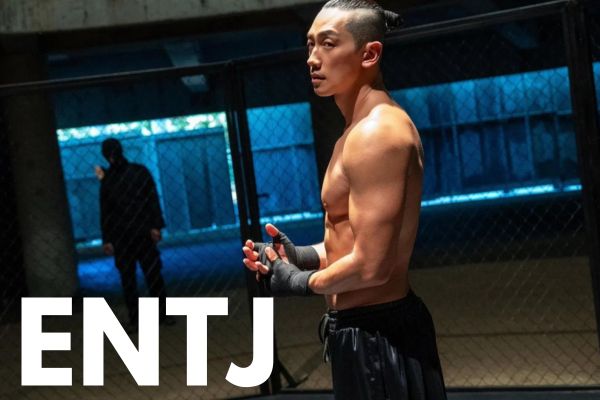
I hate profiling the top two bad guys in Bloodhounds as ENTJs because ENTJs are villified enough, but, in this case, the shoe fits.
Fierce, commanding, and impossible to ignore, Im Baek-jeong is what happens when an ENTJ’s drive for control gets fused with raw survival instinct and a lifetime of proving, over and over again, that no one will ever overpower him again. He’s strategic, but not in the clean, composed way of someone like Myeong-gil. Baek-jeong is more volatile. More personal. His decisions aren’t just about winning the game. They’re about dominating it.
He plans, organizes, and builds system. But there’s an undercurrent of impulsivity and emotional reactivity that complicates things. ESFP crossed my mind for a while, and I really struggled to settle on his type. But for now I’m tentatively profiling him as ENTJ, because while his emotions do interfere with his logic at times, the structure is still there. The long-game thinking. The desire to control outcomes. The refusal to leave anything to chance.
“I always get what I want. We will fight, I promise.”
What makes Baek-jeong especially interesting is how his inferior Fi shows up. It’s not absent. Instead, it’s distorted. Buried under layers of hardness, rejection, and survival.
“What do you fight for? Family? Friends? Those things don’t last… Only money stays. Only money protects you. Money never betrays you.”
That’s a wound talking. People don’t usually land on that belief unless something in them has been deeply let down early, repeatedly, or both. Instead of processing that pain, Baek-jeong has built an identity that makes him untouchable. If connection is weakness, then he’ll eliminate the need for it entirely. If vulnerability gets you hurt, then he’ll become the one no one dares to hurt.
And it works. Until it doesn’t.
“If you’re injured boxing, you’re crippled for life. Make your money while you still can.”
“Money buys everything. I’ll give you the money I promised. Just give me one fight.”
Everything is transactional. Even violence and identity.
There’s also a physical, grounded awareness to him that shows up in how he fights and reads people. He’s not just a strategist in theory, he’s embodied, reactive, dangerous in the moment. That’s where you see the blend of long-term vision and immediate execution, the Ni-Se axis working together in a way that makes him incredibly hard to predict and even harder to defeat.
Many ENTJs won’t see themselves in Baek-jeong’s behavior—but they may recognize the underlying mechanism: the drive to take control of a chaotic world, to rise above limitations, to ensure that no one else dictates their fate. Baek-jeong just takes that instinct to its most extreme conclusion, where strength becomes identity, control becomes safety, and anything soft or human gets pushed so far down that it starts to look like it never existed at all.
Mr. Choi Tae-Ho (INFJ)
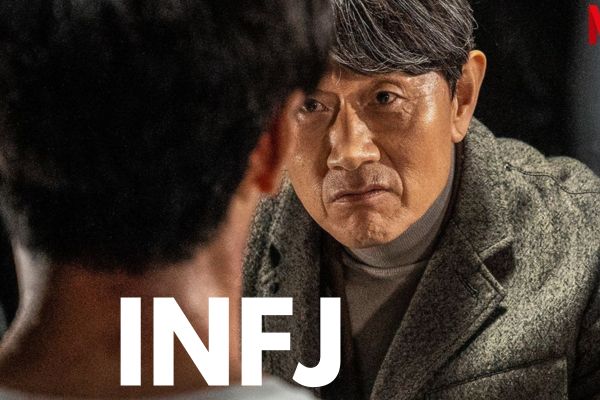
Calm, insightful, but powerful, Mr. Choi Tae-ho represents the kind of INFJ who doesn’t need to raise his voice to change the direction of a room. He understands people in a way that feels almost disarming: not just what they do, but why they do it. While others rely on force or intimidation, he leads with perception, patience, and an ability to see the long game without losing sight of the human beings inside it.
“People tend to trust those that know them well and empathize with them. Without gaining an individual’s trust, you can’t hope to divide an organization.”
That’s Ni and Fe working together seamlessly. He doesn’t just gather information, he interprets it, connects it, and uses it to influence outcomes in a way that feels almost invisible. Where someone like Myeong-gil manipulates systems, Mr. Choi understands hearts, and that makes him just as strategic, if not more so.
But what sets him apart isn’t just his insight. It’s his intention.
“I’m saying that we should overcome any difficult situation with a good heart.”
In a world where brutality is often the fastest path to power, Mr. Choi chooses restraint. He believes in justice, but not at the cost of becoming the very thing he’s fighting against.
INFJs often carry this tension: the ability to see exactly how to outmaneuver others, paired with a deep resistance to using that knowledge in ways that feel morally corrosive. Mr. Choi walks that line carefully. He builds systems and makes strategic decisions, but they’re anchored in something deeper than efficiency or control.
There’s also a quiet warmth to him that draws people in. He’s conscientious, kind, empathetic. And that’s why so many people are loyal to him.
Many INFJs, especially those who have learned to balance their insight with action, will recognize themselves in Mr. Choi’s way of living life. He’s thoughtful without being passive, strategic without being cold, and powerful without needing to prove it. In a story filled with people trying to dominate or survive, he stands out as someone trying to do what’s right, even when it costs him.
Cha Hyeon-Joo (ISTP)
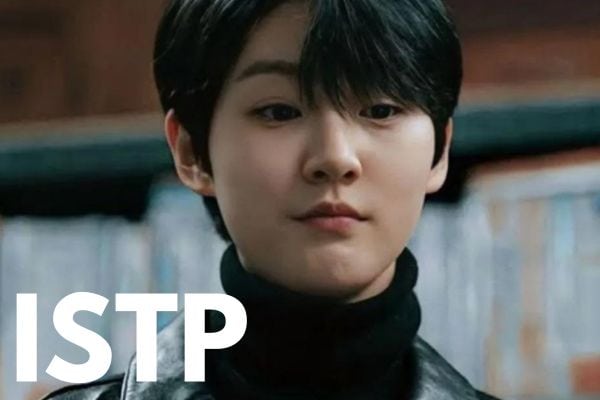
The detective who just….disappeared. Reserved, sharp, and intimidating, Cha Hyeon-joo is the kind of person who doesn’t waste time explaining herself, and doesn’t feel the need to. Like many ISTPs, she operates on a simple principle: handle what’s in front of you, and don’t make it more complicated than it needs to be. She’s observant, highly skilled, and quick to act when the situation demands it, but she keeps her thoughts and emotions tightly contained.
What stands out about Hyeon-joo, and most ISTPs, is her independence. She trusts her own judgment far more than anyone else’s, and she’d almost always rather do something herself than rely on a team.
Which is why this…
…does not go over well.
When Mr. Choi assigns her bodyguards, her reaction isn’t relief. It’s irritation. To her, it feels unnecessary, intrusive, and almost insulting. Most ISTPs will relate.
They don’t like being hovered over, managed, or “protected” in ways that limit their autonomy. It’s not that they don’t value people, it’s that they need space to operate on their own terms.
Hyeon-joo also shows the slightly more impulsive edge of ISTPs. She’s quick to act, sometimes before fully thinking through the long-term consequences. But in high-stakes environments like this, that responsiveness becomes an asset. She reads her surroundings well, adapts quickly, and stays grounded in the moment when others might panic or overthink.
Moon Gwang-Mu (ENTP)
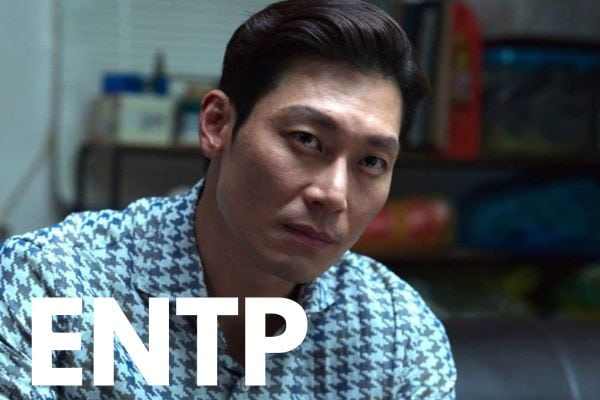
Quick-thinking, adaptable, and just unpredictable enough to keep everyone on their toes, Moon Gwang-mu has the kind of mind that doesn’t sit still for long. I struggled to profile him at first: At times, I thought ESTP, at other times I thought ENTP. In a series like Bloodhounds, where so much relies on quick tactics, action, and fists over theory, it’s hard to pinpoint the intuitives. Right now I’m leaning ENTP, but as they make season 3 I’d like to keep this open to change.
There’s a playful opportunism to Gwang-Mu. He’s always looking for angles, always thinking, How can this work better? Smarter? Faster?
But he’s not just clever for the sake of it. There’s a grounded, practical side to his thinking, especially when things get dangerous.
“Harden your heart like cast iron as well. That way, your people stay safe.”
“To take down a beast, you must be more beastly than a beast.”
ENTPs are often seen as idea-driven or abstract, but in high-pressure situations, that mental flexibility becomes a real-world advantage. Gwang-mu improvises, adapts, and recalibrates without freezing up.
Many ENTPs will recognize themselves in his mix of humor, strategy, and intensity. He may joke, pivot, and keep things light on the surface, but underneath, he’s always thinking a few steps ahead, figuring out how to survive and, if possible, win.
Min Kang-Yong (ESTJ)
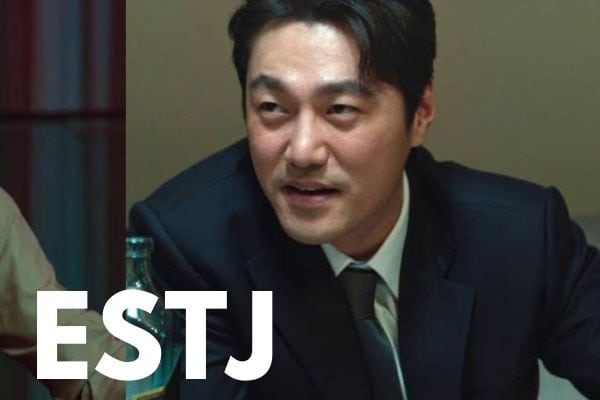
Grounded, decisive, and straightforward, Min Kang-yong is the kind of ESTJ who doesn’t need theatrics to be effective. He believes in structure, in doing things the right way, and in holding people accountable when they don’t. In a world full of chaos, shortcuts, and moral gray areas, he’s the one insisting that rules exist for a reason, and that justice should actually mean something. He often finds himself arguing with people like Moon Gwang-Mu, who sees the rules as ideal but optional when the villain is bad enough.
“Our job is to make them face the law, return their illegal assets to society, and lock them up so they pay for their crimes. That’s justice.”
He’s not interested in bending the system to his will or rewriting the rules. He wants the system to work, and to do what it was designed to do in the first place.
And while ESTJs can sometimes be portrayed as rigid or overly by-the-book, Kang-yong shows the strength of that mindset when it’s rooted in responsibility rather than control. He’s not enforcing rules to feel powerful. He’s enforcing them because without them, everything falls apart.
Many ESTJs will recognize themselves in his clarity, his sense of duty, and his no-nonsense approach to problem-solving. He’s not flashy and he’s not trying to be. He’s the kind of person you want in charge when things get serious, because he’ll do what needs to be done, and he won’t get distracted along the way.
Min Beom (ESFP)
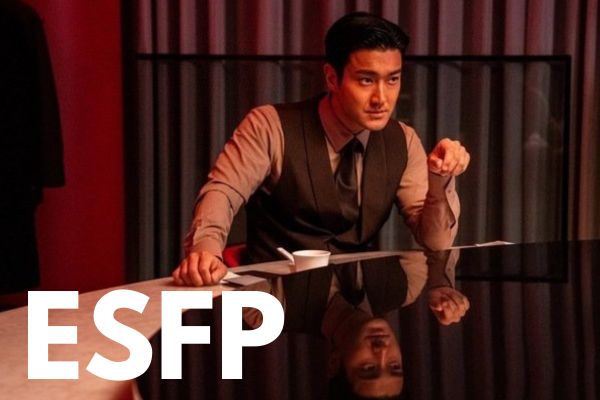
Ambitious, image-aware, and loyal, Min Beom is tuned into how he presents himself, how others see him, and what kind of impact he’s making in the moment. There’s a strong sense of personal brand there, but it’s not just shallow posturing. It’s tied to identity, pride, and wanting to matter.
When things are going well, he’s upbeat, engaging, and a go-getter. But when something threatens his people or his sense of control, there’s a sharp shift. He becomes more reactive, more willing to bend the rules, more driven to protect what’s his.
That’s the ESFP’s Fi underneath it all. It doesn’t care about external rules or procedures, it wants to follow its own moral code.
Doo-Young (ESTP)
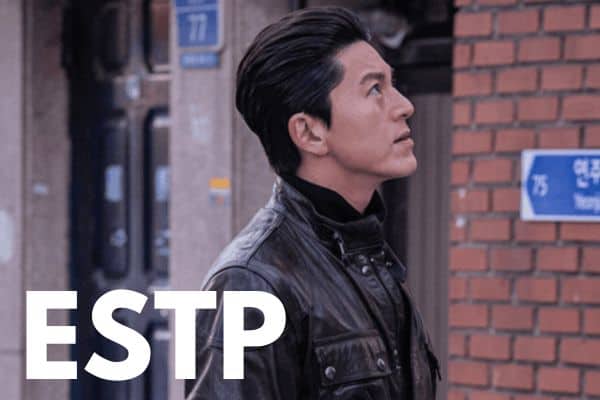
I see a lot of people profiling Doo-Young as ENFJ or ESFJ, but I see more of an ESTP energy. He’s quick moving and fierce, fighting for the people he loves, but sometimes fighting for the wrong reasons when life gets dark. He’s friendly and charming with his friends, but can quickly put his warmth aside when a fight demands it.
ESTPs can sometimes lose touch with their morals when stress mounts and increases. They have Introverted Feeling in the Trickster position in their function stack, which means that personal values and an individual sense of ethics can get lost when stress reaches a breaking point. This doesn’t mean they become psychopaths, but they can lose direction with what feels right to them personally. Doo-Young clearly exemplifies this problem in Season 2, struggling with the guilt and shame of a life lived for the wrong reasons after he lost his fiancée and child. But ultimately he redeems himself, when he’s guided back to a sense of justice by the found-family he cares so deeply for.
Oh Da-Min (ISFP)
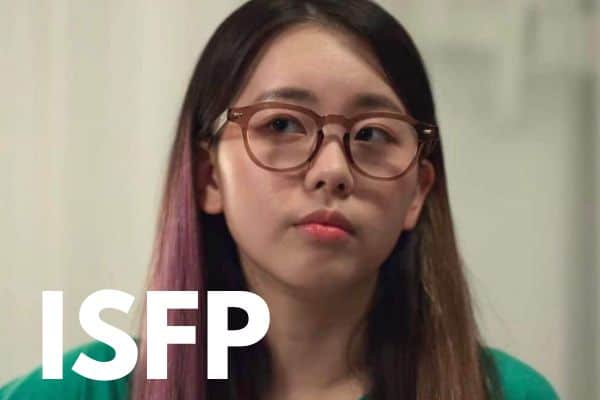
Oh Da-min isn’t in the Bloodhounds series for long, but she definitely makes an impact. I think she’s an ISFP. She’s private and protective of her space, but can also spontaneously leap into action at a moment’s notice. She’s got a bow and arrow and has no issue facing danger if it means she’s fighting for something she believes in.
Like most ISFPs, Da-Min is gentle and conscientious, but she’s also blunt and no-nonsense. She doesn’t want Gun-Woo or Woo-jin smelling up her apartment or accessing her computer, but she’ll fight for them if they’re in danger.
Yun Tae-Geom (Likely ISxP)
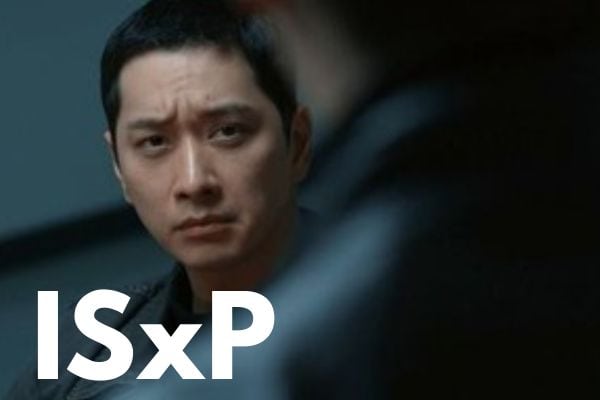
Unfortunately, Yun Tae-geom’s role in Season 2 of Bloodhounds didn’t give me a lot to work with. We mostly see him in high-stakes, survival-driven situations, which means we’re not getting a full picture of who he is at baseline. We’re getting who he is under pressure.
Still, there are patterns.
He’s quiet. Keeps his thoughts to himself. Doesn’t waste time explaining what he’s doing, and when things get intense, he doesn’t freeze or overthink, he leaps into action.
That points strongly toward an ISxP type.
He’s highly aware of his surroundings, quick to respond, and tactically proficient without needing a long-term master plan. He’s not sitting back trying to map out every possible future. He’s focused on right now, what’s happening, what needs to be done, and how to execute it cleanly.
What’s harder to pin down is whether he’s operating from Ti or Fi. We don’t see enough of his internal reasoning or value system to say for sure. Is he guided more by internal logic or personal conviction? The show doesn’t give us enough quiet moments to tell.
Lee U-Jeong (INTJ or INFJ Leaning INTJ)
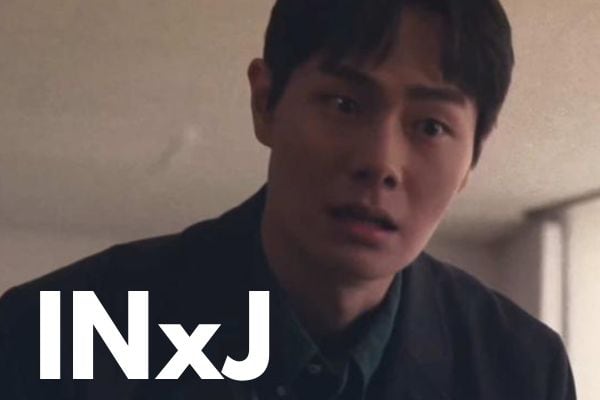
Thoughtful, principled, and more perceptive than he initially lets on, Lee U-jeong is the kind of character who understands that people aren’t problems to bulldoze, they’re patterns to read. He values structure, wants to follow the rules, and believes in doing things the right way. But he’s not rigid about it. He adapts when it matters.
There’s a moment where he recognizes that a forceful, intimidating approach won’t work with Ji-na, for example, and instead of doubling down, he completely adjusts his strategy, choosing a quieter, more understanding approach to actually reach her. That kind of flexibility suggests intuition at work.
The question is whether that intuition is more internally strategic (INTJ) or more relational and people-focused (INFJ). Right now, there’s a slight lean toward INTJ, not because he lacks empathy, but because his approach feels more measured than emotionally expressive. He reads people well, but he doesn’t immerse himself in their feelings. He uses that insight to guide outcomes.
That said, we don’t get enough screen time to lock it in.
Characters like U-jeong need quieter moments to fully reveal themselves, moments where we can see how they process, not just how they act under pressure. For now, what we can say is that he blends principle with perception, structure with adaptability, and logic with just enough emotional awareness to navigate people effectively.
What Do You Think?
Do you agree with my thoughts or do you have any other opinions or insights to share? I’d love your input! Maybe there’s something I missed along the way or a new way of looking at the same scene. Share your thoughts in the comments!
Find out more about your personality type in our eBooks, Discovering You: Unlocking the Power of Personality Type, The INFJ – Understanding the Mystic, and The INFP – Understanding the Dreamer. You can also connect with me via Facebook, Instagram, or Twitter!