The Myers-Briggs® Personality Type of Woo Do-hwan
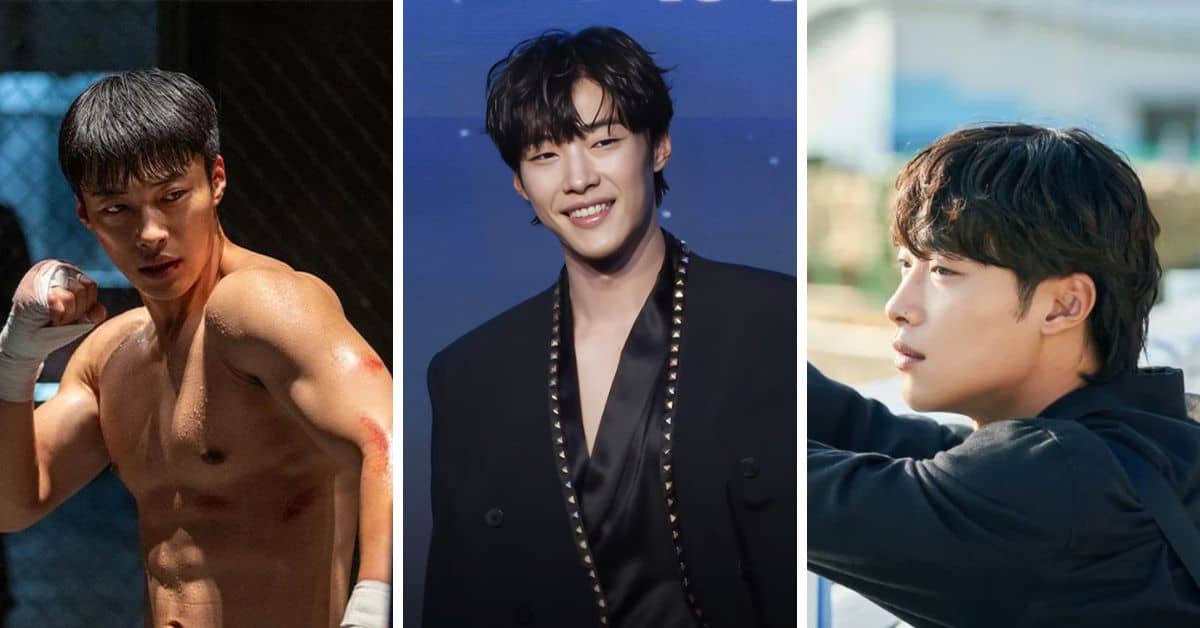
South Korean actor Woo Do-hwan, famous for his roles in Bloodhounds and Mr. Plankton, is one of the most disciplined, conscientious actors I’ve ever studied in my typology career. You’ve got a man who is:
Warm, affectionate, and people-oriented
Philosophical in a gentle, conscientious way
Deeply concerned with meaning, impact, and how he shows up for others
And yet he’s also someone who questions his life direction, who journals privately about things he won’t share, and who feels torn between discipline and freedom. There’s a push and pull here:
Duty vs. desire
Structure vs. spontaneity
Self-control vs. emotional expression
So what personality type actually explains that?
Let’s talk about it.
First, A Reality Check About Typing Real People
Before getting too confident about anything, it’s worth saying this clearly: profiling celebrities is always a bit of a guessing game.
We’re working with interviews, curated appearances, and edited moments. That’s not nothing, but it’s also not the same as sitting down with someone and understanding how their mind actually works over time.
Woo Do-hwan hasn’t officially confirmed a type, so what we’re doing here is pattern recognition, not foolproof diagnosis.
And as you’ve probably seen yourself, most online MBTI® tests aren’t especially reliable. People can easily mistype, especially if they take a questionnaire when they’re stressed, overworked, or wearing too many “hats” that hide their real identity.
So take this as an informed interpretation. It’s meant to get closer to the truth, not claim it completely.
The Case for ENFJ (Fe–Ni–Se–Ti)
When you step back and look at Woo Do-hwan’s patterns over time, one thing stands out clearly: his life is deeply oriented around meaning, people, and impact.
Yes, he’s a hard worker and is frequently lauded for his intense discipline, but he works hard for a reason. He’s extremely intentional and chooses his roles based on what they say, what they communicate, and how they might affect others.
That combination of relational awareness and long-term meaning points strongly toward ENFJ.
1. A Life Filtered Through People and Impact (Extraverted Feeling)
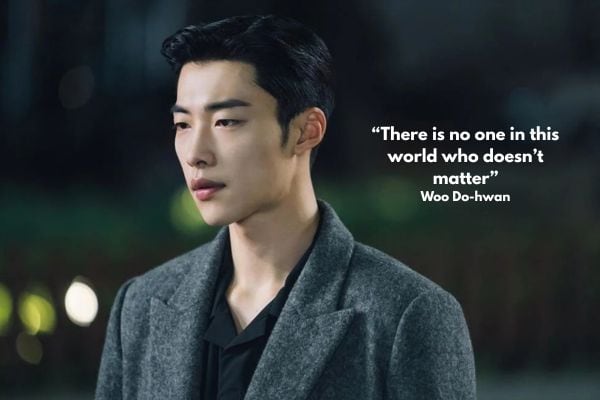
One of the clearest patterns in his interviews is how often he frames decisions in terms of other people. Not efficiency or personal gain, but how his decisions will impact others.
He talks about wanting to care for others more than himself. He chooses projects based on their message. He expresses a desire to encourage people who feel lonely, reminding them that their lives still matter.
“So likewise, I want to send out the message to everyone that no matter how rough life may be for them, they still matter.”
Even the way he describes relationships reflects this lens. He emphasizes respect, care, and emotional sincerity. During an interview for the drama Mad Dog, Do hwan stated that he values manners in dating because he will treat every woman he meets as a precious daughter of another man.
“I have to be a man of my own words. And I have to care more for others than myself.”
When asked about his role in Mr. Plankton, the benefit to people was one of his main concerns. He said, “I hope it can be a source of strength for those who feel lonely.”
This is what Extraverted Feeling looks like in real life. Any personality type can be kind, but ENFJs have a sense of responsibility for emotional impact. A drive to create meaning that extends beyond the self.
2. The Existential Thread (Introverted Intuition)
Alongside that outward focus, there’s a quieter, more introspective layer. As a child, he would lie in the park and ask himself questions about life and existence. This kind of existential wondering often points to Introverted Intuition.
“I would be curious about my life if I didn’t become an actor… in a parallel world.”
Ni tends to show up as a long-term search for meaning, a sense that there is something deeper underneath the surface of everyday life. It’s less about collecting ideas and more about narrowing down toward a personal understanding of how things fit together.
“I like shows that have a message. Even if it’s a trivial message, for example, even if it’s just a romance show, that says “This is just another way to show love to someone” or “Good guys win, bad guys lose.”
You can see that in how he reflects on his own growth. In interviews he wonders out loud how meeting more people might change him, whether he’ll lose certain parts of himself, whether compromise is necessary or dangerous.
Do-hwan also has a vision of the kind of person he wants to be. He wants to be like his character, Geon-Woo in Bloodhounds, someone like the heroes in the comic books and Mangas he collects. ENFJs are famous for having strong ideals about the kind of people they want to become, going to great lengths to embody heroic or conscientious qualities.
“I think I still have the desire to live like a comic book protagonist.”
Introverted Intuition can also show up in an ability to find symbolic patterns or connections. When taking a trip to a garden nursey with his Bloodhounds co-star Sang-Yi, he frequently mentioned how the plants were like his favorite characters in his comics. Everything he saw wasn’t just that thing, it was symbolic of something else. Introverted Intuition works like that; seeing symbols rather than literal details, noticing patterns, and creating an idea of the kind of future you want to create for yourself.
3. Discipline With a Moral Core
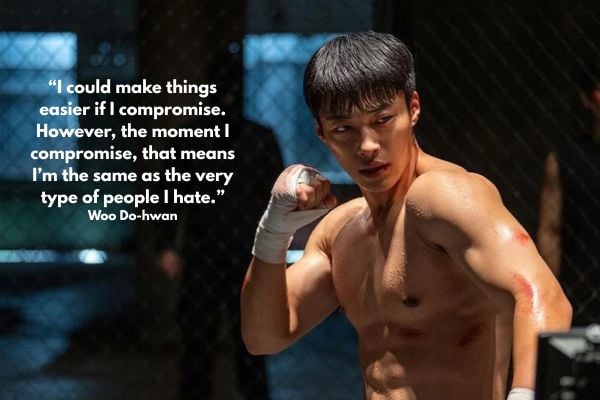
Do-hwan’s level of discipline is famous in the Korean art scene. He pushes himself physically, avoids “wasting time,” and holds himself to a high standard. He didn’t drink for years, avoids eating ryameon because of the salt, works out for hours daily, and structures his life carefully. When asked what his favorite thing is to do he said ‘Work hard’
“I didn’t want to be lazy… I thought I should put more effort in than others to achieve my dream.”
But the reason behind that discipline matters more than the behavior itself. He wants to live up to the ideals, selflessness, and heroism of characters in his favorite Mangas. He knows that going after any ideal that powerful will require self-sacrifice and tough work. In order to play Geon-Woo in Season 2 of Bloodhounds he put on 13kg and trained relentlessly to perfect the art of boxing.
“I put in a lot of effort because I worried that if I didn’t do well, people would say, ‘He’s a champion, so why can’t he fight any better?'”
“I exercised from the moment I woke up in the morning until going to sleep. I figured building stamina was important. With other projects in between, I thought I wouldn’t have enough stamina. If you don’t have stamina, you can get injured during filming… I wanted to build stamina, so I went to action school to train, did workouts at the gym, rested, and then went running. That is how I prepared.”
For ENFJs, discipline often becomes a way of aligning who they are with who they believe they should be. It’s tied to identity, meaning, and responsibility, not just results.
“I lived with muscle pain. I took muscle relaxants every day. Since there were so many running scenes, my thigh muscles just wouldn’t hold up. I think I kept asking the physical training team to let me run just one more time. Since we filmed so many hitting scenes, my neck wouldn’t turn. Seeing me in that state, no one on set could say they were in pain. I don’t remember using a stunt double at all.”
4. Clearly Energized by People
Do-hwan describes himself as a “huge extrovert,” and the behavior supports it. He doesn’t enjoy being alone for long, seeks out interaction on his days off, and feels drawn toward connection rather than away from it.
When asked about staying home for a week, he said, “I can’t do that” during a variety show, and admitted he doesn’t stay home during his days off, rather he spends time with friends or working out at the gym.
5. Emotional Expression
“It’s good to express your emotions” – Woo Do-hwan
Another interesting pattern is how Do-hwan approaches emotion. He believes it’s important to express feelings, and describes himself as a very affectionate person, but he also likes to manage his emotions intentionally.
For example, he recommends setting a timer when you’re angry, thinking through the feeling, and then letting it go once the time is up.
“You can set a 10-minute timer when you’re too angry and think about why you were angry… and then forget about it once the timer rings.”
That kind of timed, structured outlet of emotion points to Extraverted Feeling more than Introverted Feeling, the function FP types use. Introverted Feeling needs to deep dive into the emotion, exploring it in depth, understanding it individually moreso than sharing it or making it “efficient.” Extraverted Feeling types need to organize their emotions, structure them, express them, look for the lesson and then keep going. Introverted Feeling types are more likely to balk at the idea of exploring an emotion for ten minutes and then forgetting the emotion.
Do-hwan also cares about what society thinks, which is common in South Korea, but he makes a point to bring it up. When asked about whether or not he’d date an older woman, Do-hwan stated, “I’ve never dated an older woman before, but it’s fine. I’m fine with it as long as it doesn’t get criticized by society, and there’s a reasonable age gap between her and my parents.”
The fact that he made a point to say “as long as it doesn’t get criticized by society” says that he values social customs and societal standards, something that Extraverted Feeling, the ENFJ’s dominant function, reinforces.
ENFJs are skilled at knowing what’s expected, what the social expectations are, and adhering to them, unless, of course, their conscience objects in some form.
6. The Tension Between Discipline and Freedom
One of the most revealing threads in his story is the internal conflict between two ways of living.
On one hand, there’s the disciplined version of himself. Focused, controlled, structured, always working toward something. He frequently says that he relates to his character, Geon-Woo, in Bloodhounds, who is an extremely disciplined, selfless character.
“Before meeting Hae-jo (his character in Mr. Plankton), I was set on living my life like Geon-woo forever… I’m still conflicted.”
On the other hand, there’s a part of him that he admits he hasn’t explored much, that wants to live more freely, without worrying about expectations or judgment.
He describes feeling torn between these paths, unsure which direction is truly right.
This tension fits well with the ENFJ function stack. Extraverted Feeling pushes toward responsibility and contribution, while tertiary Se (Extraverted Sensing) creates a pull toward freedom, experience, and living in the moment.
The result is someone who can’t fully relax into either side. Too much structure feels restrictive, but too much freedom feels irresponsible.
The Core Pattern
When you put all of this together, a consistent picture emerges.
This is someone who orients his life around meaning and people, reflects deeply on who he is becoming, pushes himself to meet an internal standard, and struggles to balance responsibility with personal freedom.
That combination points most strongly to ENFJ.
Woo Do-hwan Quotes:
“I would be curious about my life if I didn’t become an actor… in a parallel world.”
“The character (Hae-jo from Mr. Plankton) has endured such deep wounds — betrayed and abandoned by someone he loved — which made him appear incredibly lonely to me. I feel one of the traits people associate most with me is that of a poignant child marked by a deep, sad loneliness just like Hae-jo. I wanted to portray the character like this while I still had the youthful essence to do him justice.”
“Having to go to school, serve in the military and work leaves little time to live freely, so I found myself forgetting what freedom feels like — a life where you don’t care about others’ opinions. But Hae-jo is a character who lives without worrying about others.”
“While working on this project, I was living in a rigid, highly disciplined way, much like Geon-woo from ‘Bloodhounds.’ But after stepping into the role, I started to think, ‘Maybe living this way isn’t so bad.'”
“Before meeting Hae-jo, I was set on living my life like Geon-woo forever. I’m still conflicted. If you ask me which direction I’d prefer to live, it’s hard to say.”
“Through this project, I came to feel the value of existence. (The series is) noisy, unpredictable and full of words that don’t always align with the heart, yet it undeniably exudes warmth. … That’s why I consider it a heartwarming drama.”
“I think Hae-jo’s free-spirited side was something that I’ve always wanted to express and try out.”
“I want to send out the message to everyone that no matter how rough life may be for them, they still matter. Life may be lonely but they are still valuable.”
“For starters, the script has to be engaging. By “engaging,” I mean I consider various factors—whether this is something I can pull off well or not, and what message the show conveys overall. I also tend to switch genres; if my previous project was a romance, I usually look for something different for my next role.”
“You can set a 10-minute timer when you’re too angry and think about why you were angry. Invest that 10 minutes into that thought, and then forget about it once the timer rings.”
“There is no one in this world who doesn’t matter”
“It’s good to express your emotions”
“I took care of my skin enough to apply sunscreen indoors, and I haven’t had ramen for more than 7 years. I thought I shouldn’t do what others do.”
“I think I’m quite affectionate.”
“I didn’t want to be lazy. I didn’t drink from 20 to 27. I never had any fun. I thought I should put more effort in than others to achieve my dream. I had that kind of attitude.”
“I like shows that have a message. Even if it’s a trivial message, for example, even if it’s just a romance show, that says “This is just another way to show love to someone” or “Good guys win, bad guys lose.”
“And one thing I always try to follow is to not lose my childhood innocence. I love comics.”
“One week before I’m done filming a show, I always order a bunch of comic books. This time I’ll read this, this time I’ll read that. It’s like a gift for myself.”
“There’s a saying and I think this is true, “Nobody who likes comics is a bad person.””
“I think I still have the desire to live like a comic book protagonist.”
“I learned life through comic books, and also love. Sometimes they can get cringey and cheesy, but they’re so cool!”
“I have to be a man of my own words. And I have to care more for others than myself. I want to be like them.”
“But one time I’d feel weary from life and I don’t want to read comic books. IT’s like, “This is all a lie! The real world isn’t like that! It feels like I’m turning into an adult who can no longer use the power of comic books to live strong!”
“I could make things easier if I compromise. However, the moment I compromise, that means I’m the same as the very type of people I hate.”
“It feels wasteful to just lie down”
“I’m a huge extrovert.”
“I like hanging out with people, it’s just that I don’t drink with others. I’m trying to work out, and I don’t want it to affect my work the next day.”
“There was this professor in college, and I only remember this one thing they said. The only things you hate are the things you’ve never tried.”
“The thing I worry about the most is that I don’t have as much stamina as I once had. I start to feel that more and more. I really love filming action scenes, so I want to experience a lot as an action film actor. But if I don’t have enough stamina in talking scenes, I can be like “Wait let’s do another take!” and reshoot it. But for action scenes I can’t do another take if I’m exhausted. So before I go to bed or right after dinner, I go outside to jog and try to run at least one more step than I did the day before. Without enough stamina, I can’t train or do action scenes.”
“When I see cute or pretty things it brings me back to my childhood and it makes me feel younger. As you know, there can be a lot of difficult moments in our reality. But when I see cute things, it makes me forget about all of my worries and I think everybody feels the same way. That’s why I love having things that make me smile or brighten my day.”
“For fitness and working out, I feel like I can focus better and it’s a comfortable sport that I can do by myself.”
“I love the atmosphere of Christmas with the red, green and white colors as well as the Christmas carols.”
“I like the heart eyes (emoji) because it’s adorable and lovely, and it makes me comfortable. Compared to the starry eyes which feels like an expression full of greed and it’s not as comfortable which is why I prefer the heart eye emoji.”
He doesn’t have doorknobs to his bedroom. He said, “I don’t like things that frustrate me, and whenever I have nightmares I always run outside and you can just hook it with two fingers and open it.”
“I like cute things….I buy things when I find them really cute. I think these little things you find in life is what makes you happy.”
“I love doodling while sitting down. I just write or draw anything that’s in my head without special meaning. It’s very fun whenever you do anything like that.”
“I don’t know why, but when I’m around Sangyi, I feel like I’m his younger brother. I want to play with him like a little brother.”
“I try not to eat salty food. My face gets puffy so easily, even if I eat a little bit of sodium.”
“I was poor, so I worked out at the mountains until I became 25.”
“Unlike other dramas, this one (Bloodhounds) demands everything — body and soul — leaving no room for anything else. Even off days mean training, building strength for the fight ahead. But when Season 2 was confirmed, excitement took over. I trained harder than ever. That meant three years of grueling prep to claim that belt, which ended for me with questions about how much more powerful and defined his body needed to be. There were no hard metrics, so I just gave it everything. Whatever limit I hit, that’s where I landed.”
“You can’t stay soft if you want to protect loved ones.”
“I always approach action like playing drums — mapping out the rhythm, beats and tempo to never lose that momentum. That’s our secret weapon.”
What Do You Think?
Do you relate to Woo Do-Hwan? Does his perspective inspire you or make you think of something in your own life? Let us know in the comments!
Find out more about your personality type in our eBooks, Discovering You: Unlocking the Power of Personality Type, The INFJ – Understanding the Mystic, The INFP – Understanding the Dreamer, and The INTJ – Understanding the Strategist. You can also connect with me via Facebook, Instagram, or Twitter!
References:
https://www.koreaherald.com/article/10011115
Other Articles You Might Enjoy:
The Myers-Briggs® Personality Type of Lee Jun-Young
Here’s the K-Drama Character You’d Be, Based On Your Myers-Briggs® Personality Type
All Of Us Are Dead: The MBTI® Types of Every Main Character
The Myers-Briggs® Personality Types of the Weak Hero Characters

The Myers-Briggs® Personality Types of the Bad and Crazy Characters
The Blessing and the Curse of Being an ENFJ Empath