
16 Iconic ISFP K-Drama Characters
ISFPs are some of my favorite fictional characters. They have passion, conviction, and (usually) street smarts, but they’re not talkers. They’re not the ones going on about their grand philosophy while everybody else waits patiently for the monologue to end. More often, we figure out what they believe by watching what they do when something real is at stake. I admire that.
These characters get through life guided by a strong personal sense of right and wrong. More than anything they care about freedom, sincerity, loyalty, and the dignity of the individual, although they may struggle to put any of that into a moving speech. Ask them to explain their beliefs and they might just shrug, but threaten someone they love and suddenly their beliefs become quite clear.

That combination comes from two mental processes that personality typologists call Introverted Feeling and Extraverted Sensing. Introverted Feeling, or “Fi,” evaluates life according to an internal code: Does this feel right to me? Can I live with this choice? Am I betraying something that matters? Extraverted Sensing, or “Se,” notices what is happening in the immediate environment and responds to it directly. Together, these preferences make someone who is sensitive but tough, private but spontaneous, gentle until a line has been crossed.
Carl Jung once wrote, “The shoe that fits one person pinches another; there is no recipe for living that suits all cases.” That idea fits the ISFP well. They tend to be suspicious of one-size-fits-all answers, especially when those answers ignore the actual person involved. They want room to decide what a meaningful life looks like for themselves.
Of course, fictional personality typing is interpretive. While some writers use MBTI® to help them with their process, many don’t build characters by consulting a cognitive function chart. On top of that, trauma can make any personality look withdrawn, reactive, reckless, or numb. The question isn’t whether a character performs every ISFP stereotype on command. It’s whether an ISFP pattern offers a useful explanation for how that character consistently evaluates choices and interacts with the world.
With that in mind, here are my picks for sixteen K-drama characters who capture something compelling about the ISFP experience.
Warning: There are spoilers ahead.
Not sure what your personality type is? Take our personality questionnaire here. Or you can take the official MBTI® here.
1. Min Eun-ji from All of Us Are Dead
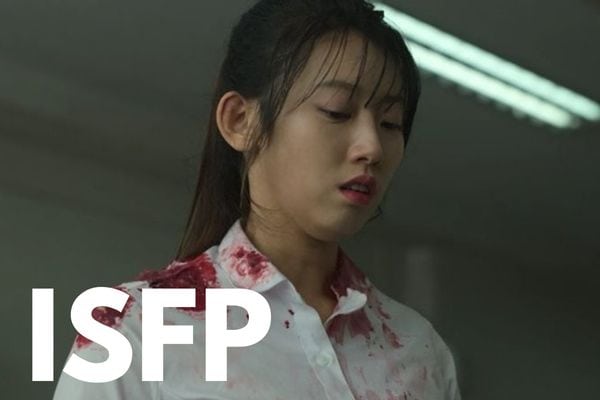
Min Eun-ji is not a cheerful example of the ISFP type. She is what we might see when a highly sensitive person is cornered for too long and finally decides that nothing matters except ending the humiliation.
Before the outbreak, Eun-ji is tormented by Gwi-nam and the other bullies at Hyosan High. They assault her, degrade her, and record a video intended to shame her publicly. When she looks for protection, the adults around her fail miserably. One teacher even suggests that victims must give people a reason to bully them. Apparently surviving high school wasn’t difficult enough; she also had to listen to an adult explain why her abuse was partly her fault.
Eun-ji’s desperation to destroy the phones containing the video tells us something important about her. She isn’t thinking strategically about the zombie outbreak, the school’s survival rate, or what anyone else believes she should prioritize. Her attention narrows around the violation that feels unbearable to her. The video represents the theft of her privacy and control over her own identity. Even while the school collapses around her, she needs to reclaim that control.
This resembles unhealthy or traumatized Introverted Feeling. Fi is often described as emotional, but that description is too vague to be useful. At its core, Fi is concerned with the integrity of the inner self. When that self has been repeatedly violated, the person may become fiercely protective of whatever dignity remains. Eun-ji doesn’t want the group’s approval anymore. She wants freedom from its power to define her.
Her Extraverted Sensing appears in the physical, immediate quality of her response. She acts on fury with very little distance between impulse and behavior. She eats, destroys, confronts, and retaliates. There is no elaborate long-term plan. The pain in front of her becomes the only reality that counts.
That said, I would be cautious about using her anger or recklessness alone as evidence of ISFP preferences. Those can be trauma responses in any type. The stronger argument lies in the personal nature of her struggle: the need to regain ownership of herself after other people have treated her identity, body, and reputation as public property.
2. Nam On-jo from All of Us Are Dead
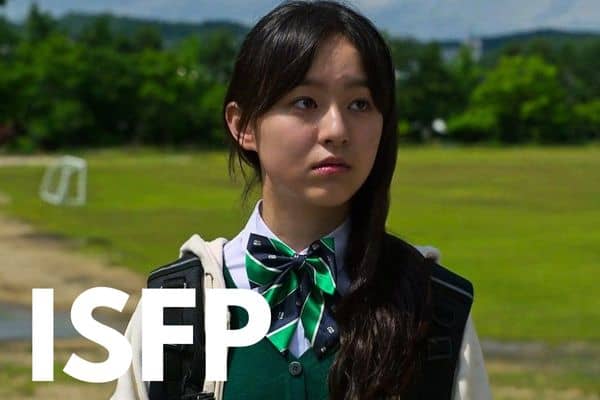
Nam On-jo doesn’t look like the obvious hero when the outbreak begins. She isn’t the strongest fighter, the smartest student, or the person most likely to impress us with an inspiring slow-motion kick. What she has is practical awareness, emotional steadiness, and a surprising ability to remain human when panic gives everyone else permission to become awful.
Raised by a firefighter, On-jo has learned survival skills that suddenly become useful when her school fills with zombies. She understands enough about emergencies to offer grounded suggestions, but she doesn’t try to seize control of the group. Her influence comes through noticing what is needed and responding to it.
This is one reason she can be read as an ISFP. Extraverted Sensing is often reduced to thrill-seeking, as though every Se user spends the weekend jumping from helicopters. In practice, healthy Se is awareness of present reality. It notices what can be used, where danger is coming from, and what the body needs to do next. On-jo is not always fearless, but fear doesn’t completely separate her from her surroundings. She can still participate in the crisis as it unfolds. Certain other types stay stuck in their head, trying to work out strategies or anticipate what will happen next.
Her compassion is equally important. On-jo cares about particular people rather than humanity as an abstract idea. Her attachments to Cheong-san, I-sak, Su-hyeok, and her father shape many of her decisions. She grieves openly and sometimes becomes overwhelmed, but her feelings are part of how she makes sense of everything.
There’s an earthy realism to her as well. She doesn’t need to be the most impressive person in the room, and she isn’t interested in building a heroic image. When someone needs help, she helps. When she is devastated, she looks devastated. She has none of the polished emotional distance that television sometimes gives its “strong female characters,” presumably because crying would interfere with the leather jacket.
3. Ali Abdul from Squid Game

Ali Abdul is one of the most painful characters in Squid Game because he enters a system built on mistrust and continues behaving as though human decency might still count for something. Agh…it still hurts me to think about it.
Ali is a Pakistani migrant worker whose employer has withheld his wages for six months. He has a wife and young son to support, an injured hand, and very little institutional power. He enters the games because he needs money, but desperation hasn’t erased his instinct to help. During “Red Light, Green Light,” he catches Gi-hun and holds him up with one arm, risking his own life for a stranger he has no practical reason to save.
That moment captures the best of the ISFP’s Feeling and Sensing combination. Ali sees an immediate human need and physically responds. He doesn’t get stuck theorizing inside his head. Someone is falling, so he catches him.
Ali’s values are personal and embodied. Loyalty means standing beside someone. Gratitude means remembering who helped him. Respect means how he speaks to people, even when they don’t possess the character to deserve it. These are habits and values that he’s woven into his everyday life and conduct, even when the stakes are high.
His relationship with Sang-woo reveals both his goodness and his vulnerability. Ali trusts the connection they have formed because, to him, shared hardship and acts of kindness mean something. He assumes that Sang-woo is operating within the same human agreement. Unfortunately, Sang-woo has already allowed the game’s logic to replace that agreement.
It is tempting to call Ali naïve and leave the analysis there, but that misses the moral tension of his character. Trusting Sang-woo is a disastrous strategic decision. It is not necessarily a failure of character. Squid Game places a decent person inside a structure that rewards betrayal and then asks us whether his decency was foolish or whether the structure itself is obscene.
Ali is an ISFP whose humanity survives exploitation, fear, and scarcity. It does not help him win, and that’s why his story hurts.
4. Cha Hyun-su from Sweet Home

At the beginning of Sweet Home, Cha Hyun-su has almost completely withdrawn from life. Years of bullying have hollowed out his confidence, his family has died in a car accident, and he moves into Green Home intending to end his life. Then monsters arrive, which is a fairly aggressive interruption to anyone’s plans.
Hyun-su initially appears numb, detached, and passive. Yet when other residents are endangered, something in him keeps responding. He risks himself to carry out dangerous tasks, protects people who haven’t always treated him well, and fights the monster growing inside him. The more useful he becomes to the group, the more complicated his relationship with humanity gets. Some people see a frightened teenager. Others see a weapon with legs.
His ISFP qualities become visible through his resistance to being reduced to a category. Human. Monster. Asset. Threat. Hyun-su is all of these things at different moments, but none of them explains him completely. His struggle is deeply personal: he wants to decide what kind of being he will become, even when his body, his trauma, and the people around him are trying to make that decision for him.
That reflects Introverted Feeling’s concern with inner authorship. Hyun-su may not control what has happened to him, but he keeps fighting for the right to determine what those experiences will turn him into. He doesn’t preserve his humanity by feeling pure or optimistic. He preserves it through repeated choices, many of them made when nobody would blame him for giving up.
His Extraverted Sensing appears in the physical immediacy of his courage. Hyun-su adapts to danger through action, using his altered body to shield others and confront threats directly. He isn’t a detached mastermind arranging everyone from a safe distance. His decisions put him in contact with pain: his own and everyone else’s.
This makes him a more complex ISFP than the familiar gentle-artist stereotype. ISFPs can be tender, but tenderness doesn’t mean fragility. When their values are activated, they may tolerate enormous physical risk. They can also become frighteningly stubborn when someone tries to dictate who they are allowed to be.
Hyun-su’s story asks whether humanity is something we possess or something we practice. He has monstrous impulses and very human despair, yet he keeps forming bonds, protecting lives, and resisting the urge to turn suffering into cruelty. His humanity isn’t proven by what he feels inside. It is proven by what he repeatedly chooses to do with those feelings.
5. Baek Hyun-woo from Queen of Tears

Baek Hyun-woo is a brilliant lawyer, former Marine, skilled boxer, good cook, excellent shot, and the favored son of a village that treats his visits like a minor holiday. He is also hiding in his in-laws’ house rehearsing a divorce speech because he is terrified of his wife’s family. Human beings contain multitudes.
Hyun-woo’s intelligence can make him look like a Thinking type at first. But Thinking doesn’t mean “intelligent” anymore than being Feeling means “kind.” His central struggle is not about mastering systems. It is about what happens when private hurt goes unspoken for so long that love becomes buried beneath resentment. He entered his marriage because he loved Hae-in, then found himself isolated inside her family’s world, unable to communicate how trapped and abandoned he felt.
His feelings are intense but he keeps them locked up, which is something Introverted Feeling types tend to do. Hyun-woo doesn’t naturally bring the relationship’s emotional atmosphere into the open. He suffers alone, talks to his friend, cries when drunk, and arrives at decisions privately. By the time he is ready to speak, he has often completed the entire emotional trial in his own head without inviting Hae-in to testify.
That is not healthy Fi, but it is recognizable and relatable to any IxFP or IxTJ out there. When hurt, ISFPs can protect the vulnerable center of themselves by becoming hard to reach. They may hope their care will be understood through actions while resenting that nobody seems to understand it.
Hyun-woo is an ISFP reminder that devotion can survive beneath anger, but love cannot live indefinitely on implication. At some point, even the most private heart has to use words.
6. Private An Jun-ho from D.P.

An Jun-ho enters the military already trained in one essential survival skill: keeping his head down. He grew up with violence at home, understands how power works, and knows that institutions rarely hurry to protect the person at the bottom. Then he is assigned to the Deserter Pursuit unit and has to look directly at what happens when soldiers can no longer endure the system. This series propelled me into weeks of study about the South Korean military, the history of South Korea, and more. I encourage you to explore more of this if you’re a fellow K-Drama watcher, it really explains a lot and will add more context to your understanding of the experience of being a Korean.
Anyway, back to the story…
Jun-ho is observant, physically capable, and good at reading small details. These qualities make him effective at tracking deserters, but the job gradually becomes a moral injury. He is ordered to retrieve people whose actions cannot be separated from the abuse that drove them away. The military wants a completed assignment. Jun-ho keeps seeing the human being inside the file.
This is where his Introverted Feeling stands out. His judgments come from a personal conscience that grows increasingly unwilling to accept “I followed orders” as a complete moral defense. He doesn’t begin as an outspoken reformer. He hesitates, complies, makes mistakes, and then carries the emotional weight of those choices. His conscience is definitely not convenient in a strict military system, and it does not let him off because he was junior in rank.
His Se gives him an alert, grounded presence. He boxes well, notices physical evidence, adapts during pursuit, and reacts quickly when situations turn dangerous. He learns through direct contact with reality, which is unfortunate because reality in D.P. usually punches him in the face and hands him paperwork.
Jun-ho’s inferior Extraverted Thinking also becomes important. The military presents itself as a structure of rules, ranks, and procedures, but he begins to see how easily a system can use order to conceal responsibility. Eventually he must do more than feel that something is wrong. He has to challenge the machinery that keeps producing the same suffering.
Jun-ho is compelling because his courage develops unevenly. He doesn’t always intervene soon enough, and he knows it. His story isn’t about being morally pure inside a corrupt institution. It is about the moment when privately knowing better is no longer enough.
7. Park Sae-ro-yi from Itaewon Class
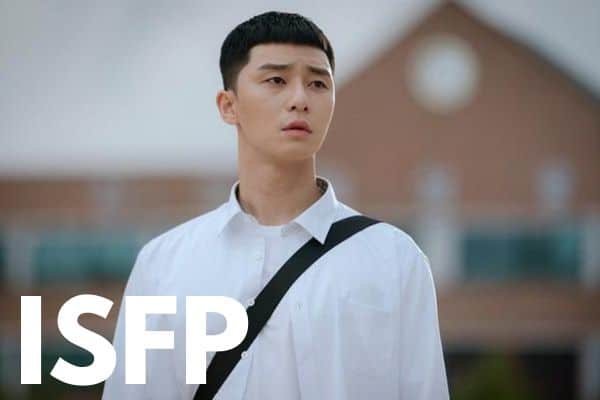
Park Sae-ro-yi has the kind of personal code that could survive fire, prison, public humiliation, and apparently that haircut (you all know what I’m talking about). He is expelled after punching a powerful bully, refuses to kneel before the bully’s father, and spends years building a restaurant business capable of challenging the corporation that destroyed his family.
He is often typed as a Judging type because he is disciplined and pursues a long-term goal. That is understandable, but schedules do not belong exclusively to J types. The more revealing question is where his decisions come from. Sae-ro-yi does not begin with efficiency, convention, or what the group considers reasonable. He begins with, Can I respect myself if I do this?
That is essentially what Introverted Feeling does. His values are not negotiated by popularity or power. When Chairman Jang demands an apology, Sae-ro-yi would rather accept punishment than say something he does not believe. This can look noble, stubborn, or spectacularly impractical depending on where you are standing. Usually it is all three. And it’s what I love about ISFPs. They won’t put their authenticity and conscience on the line just because someone in power said to do it.
As an MBTI® practitioner, I would distinguish his conviction from the rule-mindedness people often associate with Introverted Sensing. Sae-ro-yi isn’t loyal to established authority. He is loyal to an internal standard that frequently puts him in conflict with authority. He also creates space for people society dismisses, judging employees such as Hyun-yi and Seung-kwon by their character and potential rather than the category assigned to them.
His Se appears in his willingness to confront problems directly. He takes physical risks, works alongside his staff, and builds his dream in a real neighborhood through food, service, labor, and persistence. His vision matters, but he wants to make it tangible.
Sae-ro-yi’s great strength is integrity. His weakness is that integrity can harden into tunnel vision. Revenge gives his life structure for so long that he struggles to notice feelings that do not fit the plan. This is where the ISFP’s tertiary Introverted Intuition may become rigid: one future acquires so much meaning that other possibilities barely register.
8. Ji Soo-heon from Revenge of Others

Ji Soo-heon lives above an MMA gym, works to support his hospitalized mother, and discovers that he has a huge health crisis on the horizon (had to switch this up to give away fewer spoilers). Faced with limited time and a school where bullies act with impunity, he begins accepting money to punish abusers on behalf of their victims. Soo-heon’s sense of justice is personal, immediate, and physical. He isn’t trying to reform the education system through policy like a TJ type would. Instead, he sees someone who has been brutalized, identifies the person responsible, and uses his fists to restore a balance the adults failed to enforce. This makes him satisfying to watch and, for some, ethically difficult to endorse, which is exactly where the character gets interesting.
His Fi responds to the particular victim rather than an abstract legal principle. He believes their pain matters even when the institution has decided it is inconvenient. His Se supplies the method: direct confrontation, athletic skill, and fast adaptation under pressure. When he acts, there is very little separation between moral outrage and physical response.
Soo-heon is also private about his own suffering. He carries responsibility for his mother, his diagnosis, and his fear without turning himself into a public tragedy. His bond with Chan-mi develops through shared action and mutual recognition. Neither needs the other to produce a flawless account of their feelings before trust can begin. Introverted Feeling is often held deeply inside, only expressed after tremendous trust has been cultivated. That is definitely the case with Soo-heon.
I think that Soo-heon isn’t heroic because violence magically becomes moral in his hands. He is heroic because, with his own future collapsing, he refuses to become indifferent to other people’s pain. The method remains questionable. The refusal to look away does not.
9. Song Yu-chan from Daily Dose of Sunshine

Song Yu-chan looks cheerful, sociable, and comfortably unambitious. He helps at his family’s chicken shop, bickers with Da-eun, and gives the impression that he has opted out of the corporate race. The truth is less carefree. He left office work after panic attacks made him feel as if he were drowning. I don’t know about you, but I felt for him SO much. I wanted happiness for him sooo badly.
Yu-chan’s storyline is an unusually humane picture of what happens when a person’s natural limits collide with a culture that treats exhaustion as evidence of commitment. He tries to hide his condition, partly because he does not want to worry people and partly because shame tells him that struggling means he failed. His ISFPness show in his need for a life that is psychologically livable, not merely respectable from the outside. He just can’t force himself into somebody else’s definition of success. He needs work that leaves room for his body, relationships, and inner equilibrium. I wish so much of the world wouldn’t view that as laziness.
At first, Yu-chan has trouble listening to that information. He returns to office work and begins slipping into the same patterns, staying late and ignoring the warning signs. His growth comes when he tells his boss that he needs to leave on time to care for his health. It is a modest boundary with enormous meaning. He stops treating his nervous system as an employee who can be threatened into better performance.
Yu-chan’s story shows that sometimes bravery is returning to the world after panic has made it frightening. Sometimes it is leaving the office at a reasonable hour while everyone else performs devotion beneath fluorescent lighting.
10. Ashin from Kingdom: Ashin of the North

Ashin is one of the bleakest ISFP characters I’ve come across. I wouldn’t call her admirable, exactly, but I found her impossible to ignore. By the end of her story, she has done horrifying things. The uncomfortable part is that the drama makes it painfully easy to understand how she got there.
She grows up belonging nowhere. Her village is useful to Joseon but never accepted by it, and her people survive at the mercy of political powers that view them as expendable. As a girl, Ashin discovers the resurrection plant while searching for a cure for her dying mother. Her first connection to the plant comes from wanting to save someone she loves. Eventually, the same plant becomes the instrument of her revenge.
After her family and tribe are massacred, Ashin serves the people she believes can help her find justice. Instead, she discovers that Joseon officials engineered the lie that led to her village’s destruction. Her people were sacrificed to keep a larger conflict under control. To the officials involved, this was strategy. To Ashin, it was her father, her mother, her home, and every person who had ever given her a place in the world.
This is where I see her Introverted Feeling most clearly. Ashin’s loyalty is all about her personal story, and so is her fury. She doesn’t weigh the needs of the kingdom against the fate of her village and decide that the officials made a regrettable political choice. She sees people she loved reduced to useful casualties, and something in her refuses to accept the moral math.
Unfortunately, she doesn’t stop with the individuals responsible. Ashin turns the military camp into a feeding ground for the infected, condemning people who had varying degrees of guilt, knowledge, or involvement. Her grief has become so complete that it leaves no room for distinctions.
I can understand Ashin’s rage. I can even understand the desire to make powerful people experience the suffering they dismissed so easily. But understanding her is not the same as approving of her. Her story shows what can happen when love loses every path forward except vengeance. She refuses to let the world forget her people, but in preserving their pain, she allows it to consume almost everything human that remains in her.
11. Lee Tang from A Killer Paradox

Lee Tang begins as an aimless university student working at a convenience store and dreaming vaguely of going to Canada. After an accidental violent encounter, he discovers the victim was a serial killer. Then another person turns out to be monstrous too. At this point, coincidence begins looking suspiciously like a career path.
Tang is a dark and morally unstable ISFP. He’s reactive, guided by immediate emotion, and initially horrified by his own violence. Yet when circumstances suggest that his victims “deserved” it, he starts building a private moral justification around what he has done.
I think his Fi is visible in the private and personal nature of that justification. Tang feels that he can recognize evil and gradually treats that internal recognition as permission to act. His Se makes the violence immediate and opportunistic. He responds to the person and pressure in front of him, often before he has formed a coherent plan.
What makes him frightening is the way inferior Extraverted Thinking begins serving his private verdicts. Once he believes his killings have a purpose, he becomes more systematic about hiding evidence and continuing the mission. Logic enters after the moral conclusion, hired mainly to clean up.
Lee Tang represents the shadow side of following your heart, a phrase that sounds lovely on mugs and becomes considerably more alarming in a crime thriller. Inner conviction can protect integrity, but it also needs humility, accountability, and contact with reality. Otherwise, a person may confuse feeling morally chosen with being morally right.
12. Geum Jan-di from Boys Over Flowers

Geum Jan-di is the daughter of a dry cleaner who saves a bullied student from suicide and receives a scholarship to the elite Shinhwa High School. She arrives among heirs, designer uniforms, and enough unchecked privilege to power a small nation. Rather than learning her place, she kicks Gu Jun-pyo in the face.
Jan-di is stubborn, physically expressive, loyal to her friends, and unimpressed by status when status is being used to humiliate someone. This is classic Fi-Se territory. Her ethics are personal and immediate: she knows what cruelty looks like, hates it, and reacts. Her Se shows up in her athleticism, impulsiveness, and readiness to interact directly with whatever is happening. She swims, fights, works, shouts, runs, and generally experiences emotion with her whole body. Diplomacy is available in the building, but Jan-di rarely visits that floor.
Her Fi also protects her from being absorbed into the values of the wealthy world around her. Money can tempt or inconvenience her, but it does not automatically confer moral authority. She evaluates people according to how they behave, which is why she can challenge Jun-pyo fiercely while also recognizing his vulnerability and capacity to change.
That willingness to see the person beneath the reputation is both a strength and a source of frustration. Jan-di forgives behavior many viewers would reasonably consider unforgivable. Some of this belongs to the conventions of an older romantic drama rather than her personality type. We can appreciate her resilience without pretending every relationship choice deserves our praise.
13. Jang Han-seo from Vincenzo

Jang Han-seo is introduced as the arrogant chairman of Babel Group, but the title is mostly theater. His older half-brother, Han-seok, is the real power, and Han-seo has spent years surviving his abuse by playing the fool, obeying orders, and trying not to become the next target.
Initially Han-seo participates in corruption and enjoys some of the status attached to his position. Yet as the story progresses, we see the frightened person beneath the act. Han-seo has a moral line, however neglected, and his relationship with Vincenzo gives him a glimpse of loyalty that is not built on terror. I loved him. I always love this actor in any role, especially because he usually plays someone kind of overpowered by a real bully and I feel protective of him as a result.
As an ISFP, Han-seo is trying very hard to figure out what he believes in in a world dominated by fear and corruption and power struggles. Thanks to Vincenzo, he can eventually imagine that he could become someone different from the role his brother designed for him. His Fi has been buried beneath fear and self-preservation. Once it re-emerges, he becomes less willing to betray what he knows is right. His Se appears in his impulsive courage, physical nerve, and readiness to act when the emotional stakes show up. He becomes brave enough and driven with enough conviction to choose a side.
14. Go An-na from The K2

Go An-na has spent much of her life hidden away because her existence is inconvenient to powerful adults. She is the secret daughter of a presidential candidate, raised under surveillance in Spain, traumatized by her mother’s death, and used as leverage by her stepmother. By the time she returns to Korea, she has learned that visibility can be dangerous.
An-na is sensitive, private, and emotionally transparent once she trusts someone. Her social fear and panic around flashing lights are trauma responses, not evidence of personality type. The stronger ISFP case rests in her longing for a life that belongs to her and in the way she forms trust through direct, personal experience.
She does not care much about the political abstractions consuming the adults around her. Presidency, corporate control, public image, strategic alliances: these systems matter mainly because they keep intruding on her actual life. An-na wants ordinary freedom, honest affection, and the truth about her mother. In her world, those modest requests require armed security.
An-na is not written with the same complexity as some of the drama’s other characters, and it would be dishonest to pretend otherwise. At times the story uses her vulnerability to motivate Je-ha more than it develops her own agency. Still, she captures an important ISFP theme: the self pushing back against a life shaped by other people’s ambitions.
15. Jung Gi-jeon from Absolute Value of Romance

Jung Gi-jeon is a former athlete and physical education teacher who recognizes Eui-ju’s running ability and sees potential where other people might see an eccentric student with an “odd” web novel.
He is easy-going, friendly, active, and refreshingly uninterested in social rankings. Gi-jeon responds to people as they are rather than checking whether they are popular enough to deserve his attention. He believes in second chances and has the grounded confidence of someone who would rather help a person try again than lecture them about the first failure.
Gi-jeon is a smaller character, so there is less material for a detailed function analysis. Still, he represents the pleasantly unpretentious side of the ISFP: down-to-earth, accepting, physically engaged with life, and more interested in the real person than the social label attached to them.
16. Kim Min-ji from Agent Kim Reactivated

Kim Min-ji begins Agent Kim Reactivated as a teenager embarrassed by her mild-mannered father. She loves him, but she sees a man who apologizes too easily and seems unable to defend either of them. Meanwhile, she is being targeted by wealthy school bullies who assume their status will protect them from consequences.
Min-ji is sensitive to humiliation but not naturally submissive. When a bully attacks the subject of her mother, she finally fights back. I love this about her. She’s immediate, physical, and personal, which points toward the Fi-Se combination. A deeply protected value has been violated, and restraint loses the argument.
Her conflict with her father also has an ISFP flavor. Min-ji evaluates what she sees in front of her. She does not know his history as a covert operative or understand the reasons behind his restraint. She knows that she is hurting and that his public deference feels like abandonment. Her conclusion is incomplete, but emotionally honest from where she stands. As the story unfolds, Min-ji learns that her father’s gentleness was never the whole story. More importantly, she begins to understand the love beneath choices she previously interpreted as weakness. Their reunion gives both of them a chance to see the person behind the role: not merely the unimpressive father or the difficult teenage daughter, but two people who were trying to protect their pain from each other.
Final Thoughts
These sixteen characters do not share a single mood, moral alignment, or life plan. Some protect people. Some punish them. Some survive institutions, monsters, bullies, marriages, corporate offices, or the considerable inconvenience of falling in love with a chaebol heir.
What connects them is a pattern of personal conviction meeting immediate reality. ISFP characters ask, in one form or another, What can I live with? What belongs to me? Who needs me now? At their best, they turn compassion into action without seeking out a lot of prestige or applause. Under pressure, they may become impulsive, isolated, or so certain of their private judgment that they stop accepting correction. They are often the people who remind everyone else that principles have to mean something in the lives directly in front of us. And when those principles are violated, they may be the first to move.
Find out more about your personality type in our eBooks, Discovering You: Unlocking the Power of Personality Type, The INFJ – Understanding the Mystic, The ISFJ – Understanding the Protector, and The INFP – Understanding the Dreamer. You can also connect with me via Facebook, Instagram, or YouTube!
Research references
Character and plot details were checked against official Netflix and series pages, AsianWiki cast and synopsis pages, and reporting or reviews from TIME, Teen Vogue, Yonhap News Agency, The Korea Times, The Straits Times, Decider, and other entertainment sources. Carl Jung quotation: Collected Works, Vol. 16, paragraph 163.