
Why INTJs Disappear (and Why it’s Usually Not Personal)
I get this question a lot from readers, friends, and people who haven’t heard from me in three weeks and are trying very hard not to sound hurt when they ask it.
“Why do INTJs disappear?”

I’m chronically one of those people who struggles to maintain friendships, and, from speaking to other INTJs, I’m not alone. We’re loyal friends, we deeply care, but we’re not always…available.
Speaking for myself, I disappear regularly. I’m not a dramatic person so there’s no slamming doors involved. That would require being angry, which usually isn’t the case. I just… fade out of conversations. Text threads die quietly in my wake. Emails pile up in my inbox without response. People I genuinely care about experience me as someone who was there, then suddenly wasn’t.
This isn’t because I don’t value relationships. I don’t think I’m better than anyone else, and I promise I’m not secretly furious. Maybe I’m “bad at friendship” though I think it’s different than that, though I have interrogated myself on that charge at 2am more times than I’d like to admit. It’s because my brain is built around a very specific way of allocating energy, attention, and meaning, and social interaction is, frankly, one of the most expensive line items on the budget.
Not sure what your personality type is? Take our questionnaire here!
The INTJ Energy Equation
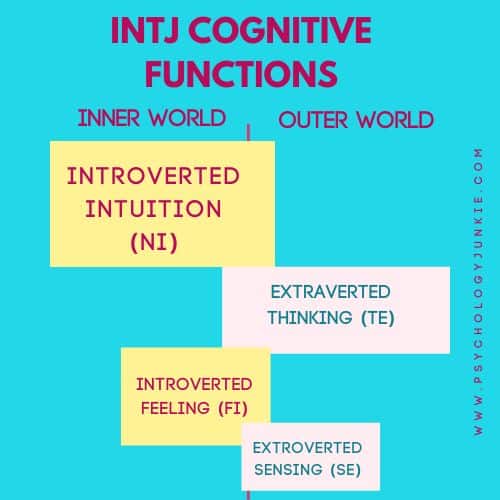
Most social interaction requires two things that sit in the most awkward corners of the INTJ psyche: real-time responsiveness and emotional attunement. In typology terms, that’s Se (Extraverted Sensing) and Fe (Extraverted Feeling) territory. In nervous-system terms, that’s “be present, be fast, be warm, and don’t think too long before you respond.” For an INTJ, that’s like asking a nocturnal animal to perform a musical number at noon under fluorescent lighting.
Se, our inferior function, handles real-time sensory engagement. Fe, which we don’t have in our primary/conscious stack at all, governs emotional reciprocity, social pacing, and the subtle art of checking in “just because.” When interaction demands quick replies, constant availability, emotional mirroring, and seamless context-switching, it pulls directly on our weakest psychological muscles.
And muscles that are weak get tired quickly, they tremble, they beg us to “stop.” They eventually refuse to cooperate.
Internally, INTJs are energy economists. We’re always, whether we mean to or not, running a quiet cost-benefit analysis: If I give my attention here, what doesn’t get it somewhere else? Parenting. Work. Long-term stability. Thinking. Planning. Writing. It’s going to be different for every INTJ out there.
Casual interaction doesn’t slot neatly into that system. It’s fragmented. It’s interruptive. It rarely feels complete. A text conversation is a dozen half-thoughts stretched across hours or days, demanding repeated re-entry into a social headspace that takes real effort to inhabit. From the outside it looks easy. From the inside it feels like being yanked out of deep water every few minutes to answer a polite but cognitively disruptive knock.
This is where people often assume INTJs must be lonely, or detached, or secretly miserable. In reality, many INTJs feel most regulated when they are alone, immersed, focused, quietly building something meaningful in their heads or their lives. We don’t experience silence as absence. For us, it’s when the world in our minds comes alive in full color, high-definition, when focus and flow come easily.
So when life fills up, and something has to give, interaction is often the first thing to slide off the edge. Because, in the ruthless math of an INTJ nervous system, it costs more energy per unit of meaning than almost anything else.
But I want to be clear, connection doesn’t fall off…interaction does. An INTJ who doesn’t talk to you for a few weeks doesn’t consider you unimportant. They just figure if you need them or have something important to talk about, you’ll reach out. In the meantime, they may be oblivious to “checking in” or small talk.
Low Fe Doesn’t Mean Low Care (It Means Low Maintenance Instinct)
This is the part where INTJs get unfairly convicted in the court of public opinion.
Low Extraverted Feeling does not mean low empathy, low loyalty, or low willingness to show up when it actually matters. Many INTJs will drop everything for a real crisis. A hospital visit. A true emergency. A moment that clearly requires presence, problem-solving, or support. We are often very good in those moments, calm, reliable, like someone flipped a switch labeled Now This Is Real.
What low Fe does mean is that we don’t have an automatic background program running that says: Check in. Send a heart emoji. Ask how they’re feeling again. Maintain the thread. Maintain the vibe. Maintain the emotional continuity.
That instinct just… isn’t there.
From a psychological standpoint, Fe is the function that monitors relational temperature. It notices when silence might mean hurt. It senses when reassurance is needed before it’s asked for. INTJs don’t naturally run that software. We rely on explicit signals, not atmospheric ones. If you tell us you need something, we take that seriously. If you want us to check in, reach out just to chat, or talk about our feelings regularly, we may not be thinking about that at all. It just isn’t on our radar.
Many INTJs care deeply about the people in their lives, but they care in a very direct way. If you say, “Can I call you tonight? I really need to talk,” most INTJs will rearrange their evening. If you say, “I’m having a hard time, can you check in on me this week?” we’ll remember that. But if the expectation is frequent texting, casual calls, or ongoing emotional availability without clear structure or endpoint, something inside of us shuts down.
The INTJ Priority Stack (Or: Why Some Things Fall Off the List)

As an INTJ, I tend to organize my life by hierarchy of needs.
This is where I usually lose people, because hierarchy sounds cold, corporate, or villainous, like I’m standing over a whiteboard ranking humans by usefulness. That’s not what this is. This is triage. This is what happens when your brain is wired to think in long arcs instead of daily moods.
Most INTJs I know, myself included, carry a constantly updating internal list that asks one question: What actually matters in the long run?
“What matters” isn’t what feels urgent or polite or keeps the social machinery humming. What will still matter when I look back on this life from the end of it? That’s what we’re thinking about it.
Yes, I mean the deathbed thing. Many INTJs do this. We imagine the end first, then rewind. It’s not morbid, exactly, at least not to us. For us it helps us always have a sense of clarity.
When you mentally fast-forward to the last chapter, certain things become very obvious very quickly.
Did I show up for my children?
Did I build something that sustained us?
Did I figure out why I’m here in the first place?
Did I answer those big questions that are always there at the forefront of my mind?
Did I spend my energy on what actually mattered, or did I bleed it out through a thousand tiny obligations that looked harmless but added up to a life I barely recognized?
Once you ask those questions, the list starts sorting itself.
For me, my kids are non-negotiable. Their well-being sits at the top of the stack. Financial stability sits right up there, too, because survival is not optional and stress is corrosive. Silence so I can just ponder and gain insights is key (thanks to Introverted Intuition). Meaningful work, health, and a small handful of deep relationships tend to follow. Everything else gets ranked accordingly.
And here’s the thing: chit-chat doesn’t score very high. Ongoing text threads don’t score very high. Casual social maintenance, especially when it requires constant attention, usually lands somewhere near the bottom, not because it’s bad, but because it’s non-essential in the long-term narrative the INTJ is quietly living inside.
Ni sees life as a story with themes, arcs, and consequences. Te wants to allocate time and energy efficiently so that story doesn’t collapse under its own weight. When something doesn’t clearly serve the larger arc, it gets postponed, sometimes indefinitely. This comes out of an almost ruthless devotion to coherence.
This is also why INTJs can seem oddly calm about letting relationships go quiet for long stretches. We assume that if something is truly important, it can withstand silence. If a relationship requires constant proof to remain real, many INTJs conclude that it may not be built for the way they actually live.
That conclusion isn’t always fair or always right. But it’s pretty consistent with how our minds work.
So when an INTJ disappears, it’s often because life has demanded a narrowing of focus, and they’ve responded the only way they know how: by cutting noise, tightening priorities, and trusting that the things that truly matter will still be there when the dust settles.
Sometimes they are.
Sometimes they aren’t.
Why Multitasking Breaks INTJs
There’s a myth that capable people are good at multitasking. INTJs get hit with this one a lot, probably because we look calm, competent, and internally organized, like we’re running some elegant mental operating system in the background.
We might be, but it hates being interrupted.
Ni, the INTJ’s dominant function, isn’t about skimming, it’s about diving deep. It wants a single thread, a single question, a single problem to sink its teeth into and worry like a dog with a bone until something coherent emerges. Te, right behind it, wants efficiency, completion, forward motion. Together, they form a system that works best when the world gives them long, uninterrupted stretches of focus.
Multitasking blows that system to pieces.
Every ping, text, notification, or “quick question” forces a context switch. And context switching isn’t neutral. Neurologically, it’s expensive. You don’t just lose the thirty seconds it takes to respond. You lose momentum, depth, and the fragile internal thread you were following before your attention got yanked sideways. For INTJs, getting back into that thread can take minutes. Sometimes hours. Sometimes the rest of the day.
So when people expect frequent texting or ongoing conversational presence, what they’re often asking for is repeated cognitive derailment. It doesn’t feel like connection. It feels like being asked to abandon a half-built bridge over and over again to answer, “Haha yeah totally,” before trying to remember where you left off.
This is why many INTJs delay responding until they can do it properly. Why we answer in blocks. Why we disappear for days and then re-emerge with a thoughtful paragraph instead of a steady stream of check-ins. It might look like avoidance to some, but it’s the way we operate. From the inside, it’s the only way to preserve the mental conditions that allow us to function at all. When life is already full, multitasking becomes the silent straw that breaks the system. Something has to go. And more often than not, it’s the thing that fragments attention the most.
Which is usually social interaction, texting, or that “girls/boys night out.”
When INTJs Are Struggling, They Go Quiet
When things get emotionally heavy, INTJs aren’t really the types to reach out. We’re more likely to close the door to our room and listen to our favorite sad playlist on repeat while trying to figure out what the heck is happening.
This is where tertiary Fi (Introverted Feeling) enters the scene. This function is in the “child” position for INTJs. That means it’s private, sensitive, and slow to trust. It processes emotion internally, often wordlessly at first. Types with high Extraverted Feeling (FJs) tend to need to “talk out” their emotions to understand them. In contrast, INTJs and other Introverted Feeling types tend to need silence and contemplation to process.
When life hits hard, many INTJs feel exposed rather than comforted by talking. Reaching out too early can feel like bleeding in public before you understand the wound yourself. So instead, they withdraw, journal, think, read, pace. They replay conversations. They listen to sad songs and maybe even cry as long as no one’s around to see.
From the outside, this can look like coldness or emotional abandonment. From the inside, it feels like necessary containment. Like keeping the door closed until something fragile is strong enough to survive contact.
This is also why INTJs are often the last people to ask for help. It’s not that they don’t need it, their instinct is to stabilize internally before involving anyone else. They want to be clear on what’s really going on before they have to be “present” as themselves in a social setting. A sense of footing before they invite someone into the room.
Loyalty Without Constant Contact
INTJs are not casual about people. Maybe we don’t send a steady stream of “thinking of you” texts, there’s no ritual check-ins or ongoing proof-of-life signals. I can get how from the outside, it can look like indifference. Or worse, disposability. Like people are interchangeable and easily forgotten.
They aren’t.
INTJs don’t let many people into the inner circle because the inner circle is a commitment. Once someone is in, they’re usually there for a very long time, sometimes forever, even if the contact goes quiet. The bond doesn’t dissolve just because the conversation does.
This is where INTJ loyalty gets misunderstood. For many types, loyalty is expressed through presence, frequency, and ongoing emotional maintenance. For INTJs, loyalty is expressed through endurance, consistency over time, and the assumption that the relationship is still real even when it isn’t being actively touched.
We don’t re-evaluate our care for someone every week. We don’t need constant reinforcement to remember that someone matters. If anything, we assume the opposite: that real bonds are the ones that don’t require constant tending to survive. Silence, to us, doesn’t mean neglect.
That assumption can cause damage. I’ll be honest about that. People need different things, and many people experience silence as abandonment. I’ve been told many times that when I “disappear” and don’t respond to texts or voice memos that it’s hurtful. So I try to raise that item on my priority list and make time for it. But it’s not my strong point. Tell me you need to talk and I’ll talk. Expect me to just intuit that I need to regularly send updates on my life and I may completely forget that weeks have gone by. INTJs often learn this the hard way, years later, when a friendship has quietly expired without us ever realizing it was in danger. But inside, the loyalty never left.
An INTJ can disappear for months and still fully intend to be there if you need them. In a real moment, a serious moment, or even just for meeting up and grabbing a coffee. And if you need us, we’ll try to help out, troubleshoot, and listen. The way we show support and care isn’t through frequent chit chat, but through continued presence. Us being quiet doesn’t mean we’re not there for you. We just may not send as many texts or respond as quickly as most.
What INTJs Wish People Understood (But Rarely Say Out Loud)
Most INTJs don’t want to hurt people. We just don’t want to live in a state of perpetual relational vigilance.
We wish people understood that silence isn’t punishment and that disappearing isn’t a power move. That when we pull back, it’s usually because our internal bandwidth is gone, not because our feelings have changed. We wish people knew that guilt-tripping us into responsiveness doesn’t make us more present.
We also wish people understood how much easier things would be if needs were named plainly.
“Can we talk tonight?”
“I need support right now.”
“I miss you and would like to reconnect.”
Those sentences are gifts to an INTJ. They give us something concrete to respond to in the form of a clear request. A defined moment. What drains us is the expectation that we should just know when we’re needed, intuit emotional shifts through silence, or maintain connection through ongoing, low-level contact with no clear purpose.
We’re not good at that. We never have been. And most of us are tired of pretending otherwise.
INTJs also wish people understood that our version of care often happens offstage. We think about people when we’re alone. We problem-solve on their behalf. We remember important details long after conversations end. We carry people with us internally, even when we’re not talking to them.
If You’re an INTJ (or You Love One): How to Build Something Real Without Burning Out
This is where I want to stop diagnosing the problem and actually say something useful, even if it’s a little uncomfortable.
Because disappearing might be understandable, but it isn’t always sustainable. And the fact that the world is doing a spectacularly bad job of modeling real connection doesn’t mean we get to opt out of community altogether and call it enlightenment.
Let’s start with the bigger picture for a moment. We live in a culture that mistakes proximity for intimacy and responsiveness for care. Likes. DMs. Half-formed text conversations that never land anywhere. Everyone is technically reachable and emotionally starving at the same time. Connection has become shallow, ambient, and oddly exhausting, like being surrounded by people talking but never actually saying anything.
Even as an introvert, even as someone who finds constant interaction draining, I don’t think this is healthy. Humans are not built to live as floating brains with Wi-Fi. We need embodied connection. We need shared context. We need to show up for people and be shown up for in ways that involve time, effort, and sometimes mild inconvenience. Face-to-face matters. Helping someone move matters. Sitting across from someone and letting the conversation go deep instead of wide matters.
INTJs often see this. We just don’t always know how to participate in it without frying our nervous systems.
For INTJs Who Keep Disappearing
First, here’s something I’ve realized: disappearing without explanation protects your energy, but it externalizes the cost. Someone else pays it in confusion, self-doubt, or grief. That doesn’t make you a villain. It does mean the strategy has limits.
A few things that actually help:
- Name your rhythms early. Saying “I go quiet when my life gets really busy, but it’s not personal” feels awkward, but it prevents a lot of damage later.
- Trade frequency for depth intentionally. One meaningful coffee a month often does more than daily texts you resent.
- Use structure to protect connection. Scheduled calls. Planned meetups. Clear containers. Structure is the INTJ’s friend, and it helps to make things sustainable.
- Signal absence without vanishing. A simple “I’m off the grid this week” can preserve trust without requiring engagement.
- Resist the lie that solitude alone is enough. It’s restorative, yes. It’s not a complete ecosystem.
INTJs don’t need more interaction. We need better interaction. Something that’s purposeful, meaningful, and authentic.
For People Who Want to Be Close to an INTJ
Here’s the gift you can give: be direct.
If you need support, say so. If you want to reconnect, ask plainly. If you want depth, invite it. Also, don’t confuse silence with indifference. An INTJ who keeps you in their life over time, even imperfectly, is usually doing so intentionally. We may not water the plant daily, but if it’s still there years later, it’s because it matters.
And if you want real connection with an INTJ, aim for the real thing. Fewer check-ins. More substance. Fewer notifications. More presence. We’re much more likely to show up fully in a shared experience than in a glowing rectangle asking us “what’s up?”
The Middle Ground We’re All Looking For
Community isn’t built through constant access, and it isn’t built through total withdrawal either.
For INTJs especially, the work is learning how to stay connected without dissolving into obligation, and how to disappear less destructively when we need space. For everyone else, the work is remembering that depth often looks quieter than we expect.
The goal isn’t to text more. It’s to mean more.
And that’s something INTJs, when they’re at their best, are actually very good at.
What Do You Think?
Do you relate to this article or have different opinions or insights? Let me know in the comments!
Find out more about your personality type in our eBooks, Discovering You: Unlocking the Power of Personality Type, The INFJ – Understanding the Mystic, The INTJ – Understanding the Strategist, and The INFP – Understanding the Dreamer.














Yes!! I relate to this 100%. This article actually came right during a week when I have needed to disappear due to overwhelm. Extraneous social interaction, in person and via texting, is the first thing to go!
Susan,
This is the best self-analysis that I have ever read. You have done an excellent job of looking at us INTJ’s and parsing what is and what isn’t. I never feel guilty about disappearing, because one has to do what one has to do. Thank you!
Jerry
“From the inside it feels like being yanked out of deep water every few minutes to answer a polite but cognitively disruptive knock.” TRUTH.
I SO agree!! It’s the PERFECT word picture!
I’m not sure if some of the INTJs have avoidant attachment styles, due to childhood emotional neglects. But disappearing for days or even weeks without a warning, does sabotage the relationships. Don’t expect people to stick around when you don’t even bother telling them that you need space…