The Japanese Philosophy You’ll Love, Based On Your Enneagram Type
I’ve always loved Japanese philosophies. I enjoy discovering proverbs or concepts from other cultures that I can learn from and integrate try to become a better person. Years ago I wrote an article about the Japanese philosophy that would appeal to each Myers-Briggs personality type. Today I thought I’d turn to the Enneagram and find a philosophy that aligns with the mentality of each Enneagram type.
Every Enneagram type is chasing something slightly different: goodness, love, meaning, peace, freedom. Japanese philosophy has a way of naming those longings without overexplaining them. Do you think you’ll relate to yours? Let’s find out!
Enneagram One: Mottainai
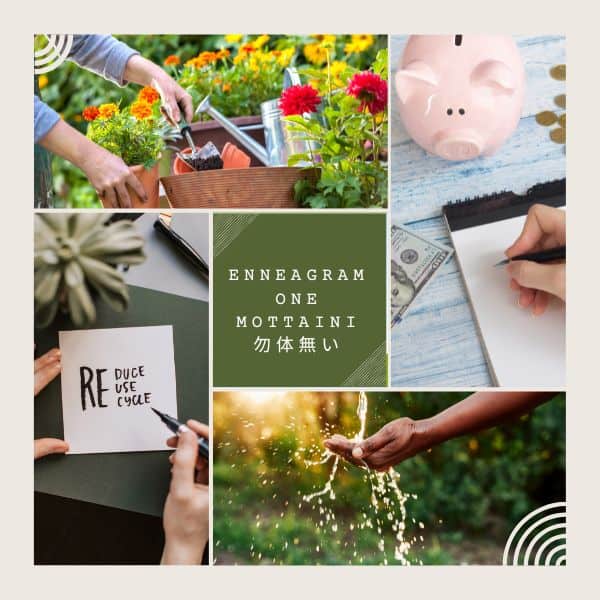
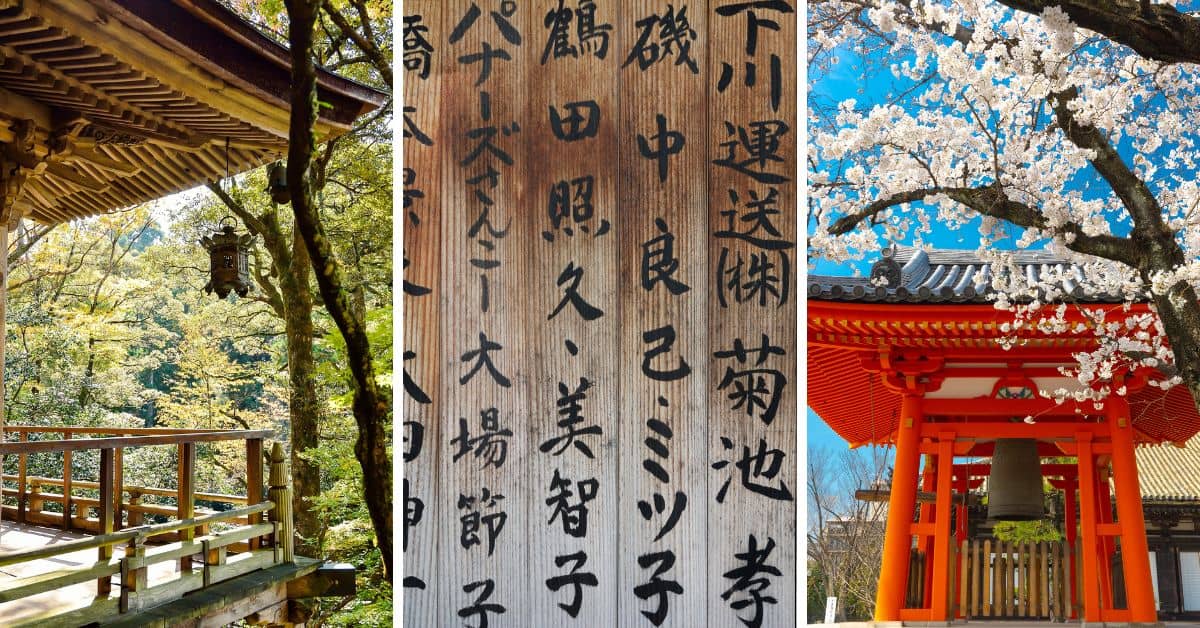
The Ethics of Respect, Responsibility, and “Don’t Waste What Matters”
Ones tend to feel inner pain when something is wasted. And not just items or food or that egg carton you could have turned into some preschool craft. Time. Talent. Resources. Integrity. Effort. Mottainai gives language to that pain without turning it into self-punishment.
Mottainai is often translated as “what a waste,” but that’s an oversimplification. At its heart, mottainai is about respect. Respect for objects. For nature. For effort. For what something has given, not just what it can still give. The concept gained global attention after environmental activist Wangari Maathai described it as the “fourth R”: reduce, reuse, recycle, and respect. But mottainai is older than environmental movements. It carries Buddhist ideas of interconnectedness and Shinto beliefs that objects themselves hold spirit and value.
One of (what I think) is the most interesting aspects of mottainai comes from Japanese folklore: tsukumogami. These are everyday objects that gain a soul after a hundred years of service. In a 14th-century scroll, discarded household tools become vengeful spirits after being thrown away thoughtlessly. While I may not necessarily believe this, I like the idea that everything that comes into our life, whether it be time, experience, or resource, should be used to the best of its ability. That’s just a way of honoring every detail of life.
For Ones, mottainai reframes responsibility in a healing way. Not “be perfect,” but “treat things as worthy.” Objects are more than tools. Nature isn’t just a resource. Your time, energy, and moral effort aren’t disposable either. Mottainai reminds Ones that goodness can be about honoring what already exists and stewarding it well.
Enneagram Two: Omoiyari

Empathy Without Self-Erasure
Omoiyari is often translated as empathy, but it’s more meaningful than how most people think about empathy. The word combines omou (to think or feel concern) and yaru (to do or send). Omoiyari is empathy put into action, without expectation of recognition or repayment. It’s what Twos do at their very best. It’s not “giving to get” but giving selflessly. Unlike Western ideas of helping, omoiyari doesn’t center the helper. There’s no “look how kind I am.” No one’s filming you helping a homeless person so they can post it on social media and get likes or follows. It’s giving because you understand someone’s inner world and feel moved to respond.
For Twos, this matters. Twos often give from a place of identity: If I am helpful, I am lovable. Omoiyari gently loosens that knot. It invites compassion without attachment to outcome. You don’t give to secure connection. You give because you see. Omoiyari also involves emotional restraint. It’s about understanding another’s feelings without flooding them with your own. At its healthiest, omoiyari allows Twos to be deeply caring without disappearing inside the care.
Enneagram Three: Ikigai

Purpose Beyond Performance
Ikigai (ee-key-guy) gets thrown around a lot online, usually next to a Venn diagram and a suspicious amount of hustle energy. But at its core, it’s much gentler than that. Ikigai combines iki (life) and gai (worth or value). Loosely translated, it means “a reason for being.” Or more honestly: the thing that makes getting up feel justified, even on the boring days.
Traditionally, Ikigai lives at the intersection of four things:
What you love
What you’re good at
What the world needs
What you can be paid for
For Threes, this sounds pretty close to a productivity trap. Another way to optimize your existence or another standard to meet. Of course, it will be appealing to Threes, but it’s key not to get wrapped up in the efficiency of it and lose the meaning.
Threes are excellent at achievement. You can hit goals, read rooms, adapt, succeed, and look competent while wondering why none of it feels as satisfying as it should. Ikigai pokes at that discomfort and asks, “Okay, but which of these wins actually feel like they belong to you? Which of these do you actually love”
When Ikigai is present, motivation changes. It’s about being pulled forward by meaning that also helps the world, provides and income, and uses your talents. Work stops feeling like a costume you put on and starts feeling like an extension of who you are. It also provides direction. Decisions get simpler. Not easier, but clearer. You can ask, Does this move me closer to what I value, or just closer to looking successful? That question alone saves Threes years of burnout.
And another thing: Ikigai doesn’t have to be flashy. It doesn’t have to be a calling announced with a logo and a podcast. It can be steady work. Meaningful service. Craft. Teaching. Creating something useful and doing it with care. Ultimately, Ikigai says your worth isn’t something you earn after you succeed. It’s something you uncover by paying attention to what feels right, even when no one is watching.
Enneagram Four: Oubaitori

Blooming Without Comparison
Oubaitori comes from four trees that bloom in spring: cherry, plum, peach, and apricot. Each flowers in its own season without rushing or competing. The philosophy is simple but meaningful: comparison steals your life.
I think the Chinese philosopher Lao Tzu expressed this philosophy well when he said, “Life is a series of natural and spontaneous changes. Don’t resist them; that only creates sorrow. Let reality be reality. Let things flow naturally forward in whatever way they like.”
Fours feel acutely aware of what’s missing, delayed, or different about their path. Oubaitori doesn’t ask Fours to stop longing. It asks them to stop measuring their becoming against someone else’s timeline. Your flowering or progress is not late or “wrong” because it’s different. It’s specific and nuanced, as is the other persons. You can honor your uniqueness without comparing it to someone else’s experience. It’s a reminder that spending time worrying about not being “enough” because you’re not like someone else is stealing the minutes and energy from your life.
You are on your own path. It’s going to look different than anyone elses. Find the beauty and meaning in your path and let go of comparisons and feelings of being “lesser” or “not enough.”
Enneagram Five: Shin-Gi-Tai

Whole Knowing, Not Just Mental Mastery
Shin-Gi-Tai comes from martial arts, and it describes balance between three things: shin (mind or spirit), gi (technique), and tai (body). When all three work together, you get mastery. When one dominates, things fall apart.
Fives tend to live in shin. The mind becomes the safe house. Information is stockpiled. Understanding is endlessly refined. And while that’s a gift, it can become a problem if you only every stay there. Shin-Gi-Tai asks a harder question: What happens when knowing never turns into doing?
In martial arts, a practitioner who only studies theory can explain every move perfectly and still freeze in a real fight. A technician can execute techniques flawlessly without understanding why they work. A purely physical fighter can overpower others but lacks depth. Each is impressive. None are whole.
For Fives, Shin-Gi-Tai isn’t a call to abandon thinking. It’s a reminder that wisdom needs embodiment. Knowledge has to pass through action. Insight has to land in real life. Otherwise, it stays hypothetical. For you, this might look like sharing an idea before it’s fully polished. Teaching something you’re still learning. Letting your body participate in life instead of treating it like an inconvenient accessory for your brain.
Shin-Gi-Tai reminds Fives that understanding deepens and becomes more meaningful when it’s tested, practiced, and lived. The mind doesn’t lose power when it steps into the world. Instead, it finally gets to see what it knows can actually do.
Enneagram Six: Seijaku

Calm That Exists Inside Chaos
Seijaku means tranquility, but not the kind that requires everything to stop. It’s active calm. Inner stillness that survives uncertainty. Sixes are wired to scan for danger, inconsistency, and threat. Seijaku doesn’t tell them to stop noticing all of that (I know, it’s impossible). It teaches them to stop letting the noticing hijack the nervous system.
Seijaku is acceptance without resignation. Chaos exists, but you can’t conquer it or outrun it. You have to learn to stand quietly inside it and still find your inner guidance in the process. Practicing seijaku might look like solitude walks, clearing clutter, or deliberate pauses before reacting. It’s choosing steadiness even in the midst of uncertainty.
There’s a quote I read by Pema Chödrön that I think embodies this concept well:”“As human beings, not only do we seek resolution, but we also feel that we deserve resolution. However, not only do we not deserve resolution, we suffer from resolution. We don’t deserve resolution; we deserve something better than that. We deserve our birthright, which is the middle way, an open state of mind that can relax with paradox and ambiguity.”
For Sixes, seijaku becomes a form of courage: trusting inner stability even when the world stays unpredictable.
Enneagram Seven: Datsuzoku

Breaking the Loop to Stay Alive
Datsuzoku means “escape from the ordinary.” It’s about adventure, going against the grain, and evolution. I think it’s perfect for Sevens because they fear stagnation more than pain. Life for a Seven becomes unbearable when it turns mechanical and rote. Datsuzoku legitimizes the Seven instinct to disrupt routine, but reframes it as conscious renewal rather than compulsive avoidance. And while it might sound fun and exciting, Datsuzoku isn’t about running from discomfort. It’s about reintroducing wonder. Changing routes. Trying unfamiliar experiences. Shocking the brain out of autopilot. And there’s neuroscience behind it: novelty creates dopamine, strengthens focus, and keeps awareness alive.
Datsuzoku helps Sevens reconnect with joy that leads towards meaning, not distraction. It’s not about pleasure-chasing, it’s about changing things up (even the rote fixation on pleasure-chasing) to go after wonder, creativity, beauty, and joy.
Enneagram Eight: Gaman

Endurance With Dignity
Gaman is often translated as perseverance, but that misses the emotional depth. Gaman is enduring hardship with self-respect and restraint. It’s about toughing out the challenges without being overrun by them or getting explosive in their wake.
Eights are no strangers to endurance. Most Eights I’ve spoken to have had to push through incredibly difficult challenges all their lives. They take pride in pushing through pain, pressure, and responsibility instinctively. What gaman offers is a softer, more contained form of strength, one that doesn’t require domination or intensity to prove resilience.
David Slater, professor of anthropology and director of the Institute of Comparative Culture at Tokyo’s Sophia University, describes gaman as a set of philosophies to deal with events outside our control. “Individuals develop within themselves an ability to persevere and tolerate things that are unexpected or bad, difficult to get through,” he says.
Gaman is about holding your ground without hardening your heart or crumbling. Bearing difficulty without turning it into a power struggle. Being strong by showing not only patience in adversity, but emotional control and regulation. For Eights, gaman allows strength to coexist with peace. It’s resilience that doesn’t need to conquer anything to be real.
Enneagram Nine: Shizen

Living in Accord With What Is
Shizen means naturalness. It’s about accepting the flow of life while shunning artificiality or inauthenticity. It’s about letting things be as they are, without force. Nines already sense this intuitively. They feel most at peace when life flows rather than resists. But while some might interpret Shizen as passivity, it’s more about acceptance and finding your place within the natural world. For a Nine it might be asking yourself, What happens if you stop pushing yourself out of the picture? You are alive and in the world, what is natural for you here?
Nines often build up inner resistance to their impulses and frustrations and to disturbances in the outer world. This takes a lot of work. It isn’t natural or authentic. It creates a feeling of exhaustion or numbness in the Nine. But when Nines are healthy, they let go of the resistance. They let life flow in and out of them. They take in the world around them with full awareness and also honor their natural instincts and their inner voice.
For Nines, living naturally includes honoring their own preferences, boundaries, and rhythms as part of the whole. It honors their desire for flow, openness, and connection to the natural world, while still calling attention to their place in it
What Do You Think?
Do you like these Japanese concepts? Is there one you liked more than the others? Let me know in the comments!
Find out more about your personality type in our eBooks, Discovering You: Unlocking the Power of Personality Type, The INFJ – Understanding the Mystic, The INTJ – Understanding the Strategist, and The INFP – Understanding the Dreamer. You can also connect with me via Facebook, Instagram, or YouTube!