
The Struggles Men Face in Friendships, Based On Their Myers-Briggs® Personality Type
Friendship is something everyone needs in order to really be happy and content with life. Even the most reclusive introvert craves a confidante to share their thoughts and feelings with. But for some men, forming meaningful relationships can be exceptionally challenging.
According to a recent 2021 survey of over 2,000 adults in the United States, less than half of men expressed genuine satisfaction with their circle of friends. Shockingly, 15% admitted to not having any close friends at all. This represents a staggering fivefold increase since 1990. Men were also less likely than women to rely on their friends for emotional support or to share personal feelings with them. These findings shed light on the importance of nurturing meaningful connections and the growing challenge of cultivating fulfilling friendships in today’s society.

“Boys, when they’re young, are capable of having all kinds of fun with each other and enjoy hanging out, being physical, and all that stuff. Then, something happens. We put them in school, where it’s OK to play and be aggressive, but where there’s something taboo about being too friendly.” – Daniel Ellenberg, president of Relationships That Work
But how can men cultivate deeper and more meaningful friendships? And how does personality type play a role in the struggles men face finding friendship in today’s world? That’s what today’s article aims to address.
Let’s get started!
The Impact of Myers-Briggs® Personality Types on Men’s Friendships
The ENFP Male

ENFP men aren’t here just to clock in, climb some bland corporate ladder, and die with a nice retirement plan. No. They want possibility, imagination, and a life that actually feels alive. They want meaning. They want to believe that anything could happen tomorrow and that it might just be beautiful. They’re the spark plugs of their friend groups—throwing out ideas, enthusiasm, and energy with abandon. Everyone else is starving for inspiration, and ENFPs are the buffet.
But here’s the thing: the “alpha male” script that so much of society still clings to? It feels about as appealing to an ENFP as a beige cubicle. They’d rather talk about purpose and values than about stock options or their bench press numbers. And under all that charisma and fun? There’s a depth of emotion most people never see. It’s not that they don’t want to share—it’s that in a lot of male circles, feelings are still treated like contraband. When everyone else is busy bonding over cars, sports, or the latest hustle, ENFP men are left hungry for something real. They want friendships that go beyond the surface, but saying that out loud can feel risky, like an invitation to be judged or laughed off. So they sit there, restless, wishing someone else at the table would just admit they care about more than horsepower or quarterly earnings.
Find out more about ENFPs: 7 Reasons Why You Need an ENFP Friend in Your Life
The ENTP Male

ENTP men are basically walking start-ups in human form. Restless, hungry, buzzing with ideas—they can’t sit still in a world full of possibilities. Their brains are like fireworks factories, and every conversation is a spark. One second they’re playing devil’s advocate, the next they’re dismantling your worldview with a grin and asking if you want tacos after. They thrive on discovery, chaos, and the thrill of saying the thing everyone else is too polite to say. And somehow, they pull it off with charm. People laugh, roll their eyes, or secretly admire them for having the guts to stir the pot.
The catch? There aren’t a lot of them out there. Statistically speaking, ENTPs make up only about 4.3% of the population, which means most of the world just doesn’t get them. And worse, we live in a culture that worships social niceties over raw truth. ENTPs want to rip the curtain off, ask “why,” and poke holes in what everyone else takes for granted. But when they do, people often label them as insensitive or “too much.” Translation: ENTP men end up surrounded by friends who want surface-level harmony while they’re itching for a cage match of ideas.
And that’s the real frustration. ENTPs don’t argue because they hate you, they argue because they love ideas. They want to wrestle with truth until it either breaks or shines brighter. But in a world where free speech is increasingly sanitized, that itch to debate can leave them feeling shut out, restless, or even lonely. They don’t want to be mean; they just want to talk about things that matter, without everyone clutching their pearls.
Find out more about ENTPs: 10 Things You Should Never Say to an ENTP
The INFP Male

INFP males are deeply sensitive and introspective. They take their time to figure out what matters most in life and strive to live in accordance with deeply-held personal values. Matters of meaning lie close to their heart more than matters of money or material gain. They have an acute sense of empathy and often relate deeply with others on a soul-level, by putting themselves in others’ shoes and using their own self-understanding to grasp others’ emotions.
The challenge INFP men face is finding people with whom they can connect and who are willing to explore meaningful topics of conversation. The world of men tends to be more focused on materialism and power than on true friendship. It can be hard for an INFP man to find peers with whom he can explore his spiritual ideas, discuss meaningful topics, and express the realm of the imagination. Many men find such things taboo and shy away from them, focusing instead on cars, video games, sports, or business. And while INFPs can occasionally find these topics enjoyable, they hope for deeper and more meaningful connection in their friendships. They want to go beyond the static conversations of shallow topics and explore the nuances of life that often go undisclosed.
Find out more about INFPs: Are INFPs Empaths?
The INTP Male

On the outside the INTP tends to seem quiet, maybe a little awkward, definitely not the guy trying to dominate the conversation. On the inside: a whole storm of theories, insights, and connections firing off. They can dissect an idea until it’s stripped down to its skeleton, then rebuild it into something you never saw coming.
The problem? Most of the “male bonding rituals” out there—trash talk, flexing, sports stats, endless banter—feel about as thrilling to an INTP as watching paint dry. They’re not trying to one-up anyone; they want conversations with some actual marrow in them. Philosophy. Science. Weird “what if” scenarios that keep you up until 3 a.m. But those conversations are rare, and the lack of depth in everyday socializing leaves them restless, maybe even disinterested in friendships altogether.
And then there’s consistency. INTPs crave deep, meaningful connections, but keeping up with the maintenance work of friendships? The texts, the calls, the regular meetups? That can feel overwhelming, or just… tedious. So while they’re sitting on this well of curiosity and insight, friendships can slip away because life pulled them into another research rabbit hole or late-night thought experiment. The irony? They want belonging. They want connection. But the effort it takes to keep friendships alive often drains them faster than solitude ever could.
Find out more about INTPs: Why INTPs Feel Overwhelmed When Looking for Friends
The ENFJ Male

ENFJ males look for depth, meaning, and understanding in their relationships. They crave intimacy and authenticity in relationships; a sense of closeness and warmth. They like to find ways to make the world better through social interaction, by helping those around them live up to their potential. Linda Berens, a psychologist and typology expert, calls ENFJs a “catalyst” personality type. Catalysts need meaning and purpose and thrive when they can counsel, mentor, and inspire those around them.
The challenge for ENFJ males is finding people who are willing to talk about meaningful topics with them. The trope of the “alpha male” has detrimental effects on male friendships, perpetuating harmful gender stereotypes that discourage empathy in boys and men. Expressions of physical and emotional affection, or even emotion and relationship-driven conversation, are often neglected or even ridiculed as “too feminine.” ENFJ men, who are conscious of society’s expectations of them, are often torn between wanting to maintain their authentic selves and wanting to fit in with the traditional standards of masculinity. This can lead to them feeling isolated or even ashamed of their more intense empathic nature. As catalysts, ENFJs crave unity, empathic relationships, and self-actualization more than they value competition, power, and status.
Find out more about ENFJs: Understanding ENFJ Feeling
The ENTJ Male

ENTJs are wired to envision, to strategize, to turn ideas into realities while the rest of us are still scribbling on napkins. In friendships, they don’t want cheerleaders or passive nodders—they want sparring partners. People who can challenge their logic, debate strategy, and keep up when the conversation shifts from politics to philosophy to “how do we fix the world by Friday?” And at the core, they respect authenticity above all. Walk your own path with integrity, and you’ve got their attention.
The struggle? Time. ENTJs are notorious for packing their schedules so tight it’s a wonder they even remember to eat. Work projects, personal projects, side projects, they live and breathe momentum. Friendships can get sidelined because they genuinely lose track of anything that isn’t tied to a mission.
And then there’s their delivery. ENTJs think they’re just being direct or efficient. Other people sometimes experience it like being hit with a firehose. Small talk feels like torture to them, so they go straight to the controversial, the intense, the thing nobody else wants to say. Which is exhilarating if you love that energy…and terrifying if you don’t. ENTJs don’t mean to bulldoze, but subtle accommodation for other people’s delicate feelings? Yeah, that’s not their strong suit. They’d rather rip off the Band-Aid than dance around the truth.
Find out more about ENTJs: How ENTJs Say “I Love You”
The INFJ Male

INFJ men are rare, and they feel it. They’re the kind of souls who walk into a room already tuned into everyone else’s emotions like human radio antennas. Gentle, introspective, and deeply curious about meaning, they crave connection that hits on every level—physical, mental, emotional, spiritual. If a friendship doesn’t have depth, it feels like eating cardboard.
But here’s the hard part: only about 1–3% of the population shares their type. Which means most of the time, they’re swimming in a sea of people who don’t quite “get” them. While other men are bonding over facts, sports scores, or “how’s work?” chatter, INFJ men want to peel back the curtain and talk about what it all means. That can come off as “too intense” or “too abstract” for people who are used to keeping things on the surface.
Add to that their energy limits. A big gathering that leaves most people hyped up will usually leave an INFJ drained and looking for the exit. Small talk feels like nails on a chalkboard; they don’t want to hear about your shopping trip, they want to know what keeps you awake at night or what you think happens after death. And when those conversations don’t materialize, INFJs can feel like they’re stuck wearing a mask just to fit in. Which, over time, is exhausting. So they withdraw. They show up less, or they settle for friendships that skim the surface while their deeper longings go unmet.
INFJ men deeply crave meaningful friendships. They just want the kind of friendship that feels like stepping into a quiet, sacred space where nothing has to be hidden. And those are hard to find.
Discover more about INFJs: 10 Things You Should Never Say to an INFJ
The INTJ Male

INTJ men are the visionaries who always seem to be three moves ahead while the rest of us are still arguing about step one. They live in patterns, theories, and strategies, turning over problems in their minds until a solution clicks into place. In friendships, they don’t want surface-level chatter, they want people who can throw ideas on the table, wrestle with big questions, and push them to refine their thinking. Bonus points if you can bring a little philosophy or metaphysics into the mix.
The sticking point? INTJs don’t exactly come across as warm and fuzzy. Their faces default to “do not disturb,” and their emotional expressions can be a challenge to read. Friends can mistake the quiet, stoic exterior for indifference when really, the INTJ is just running mental simulations in the background. “Resting INTJ face” is real, and it scares off more people than it should.
And then there’s small talk. For most people, it’s a social lubricant. For INTJs, it’s like chewing gravel. Weather updates, sports scores, chit-chat about the weekend—it all feels like a painfully long detour before you get to anything that matters. They’d rather skip the detour altogether, but doing so can make others feel dismissed or unimportant. The result? A lot of INTJ men end up feeling isolated because slogging through the layers of superficiality to get to the real conversation can feel like too much work.
INTJs want friends. They want depth. They just want to get there without pretending to care about how the traffic was on the way over.
Find out more about INTJs: 10 Things You Should Never Say to an INTJ
The ESFP Male

ESFP males are charismatic and spontaneous, with a restless desire to explore the world and make things happen. They are natural entertainers who can light up a room with their energy and humor. ESFPs need friendship that are high-energy and fun; they value friends that will go on an adventure with them, try new things, and seize the moment.
The challenge for ESFP males is that they have a more hidden sensitive side. While they may appear impulsive and no-nonsense, they have values, emotions, and beliefs which guide them and give them a sense of deep fulfillment. Yet men are often socialized to reject vulnerability and bottle up their emotions, and because of this ESFPs often find it difficult to express their feelings and values, even though they wish they could. This can mean that ESFP men often repress their feelings and give into a more socially acceptable tough, risk-taking exterior. Because they rarely get to express their more rich emotional side, they may lose touch with their feeling compass, and may in turn struggle to honor their true values or find meaning and fulfillment in their friendships. It’s common for ESFP men to have many friends, but to feel a bit unfulfilled in stereotypical male relationships.
The ESTP Male

ESTP males are daring, adventurous, and direct. They need friends that can keep up with their fast-paced lifestyle and willingness to take risks. As adventurers, they want people who can come on spontaneous trips with them, embark on physical challenges, or swap jokes and life stories.
The challenge for ESTP men in friendships is that they can easily “chameleon” in order to fit into different groups. Because of their adaptability, ESTPs can easily switch roles and amp up the charm depending upon the situation. This can be beneficial in some cases; however, it may also mean that ESTPs, on their own time, wonder which version of themselves is actually authentic. They may wonder if any of their friendships have depth and staying power, or if people are only with them for a good time.
Simultaneously, as men get older, more and more men become sedentary and focused on relaxation more than fun. This can be a problem for ESTPs, as they still crave adventure and excitement and their friends begin winding down. At times they can feel bored and restless in their friendships, wanting to go on adventures, play sports, or do anything that involves movement and excitement while their friends just want to sit on the couch and watch TV or talk.
The ISFP Male

ISFP men are gentle, authentic, and deeply in tune with beauty—whether that’s in music, painting, hiking through the woods, or just watching the way sunlight filters through leaves. They need space to create, breathe, and share passions with people who get it. Friendships, for them, are about authenticity and shared values, not noise or performance.
The tricky part? ISFP men don’t usually broadcast what’s on their minds. Talking it out isn’t their first instinct; they’d rather express themselves through a song, a sketch, or even just by showing up quietly. In male circles where communication often looks like heckling, arguing, or trading facts, the ISFP can feel out of place. They’d rather do something side by side—build something, explore nature, even just sit in silence—than get stuck in endless banter. And while they can joke around and roll with the crowd for a while, shallow friendships drain them fast.
To make matters worse, their quietness often gets misread as indifference. People assume they don’t care, when in reality they’re deeply invested, they just don’t feel the need to fill every silence with words. ISFPs love friendships where silence isn’t awkward, where being side by side feels just as connected as talking. Unfortunately, in a world that expects constant chatter, that kind of bond can be hard to find. Which sometimes leaves ISFP men wondering if there’s something wrong with them—when really, they’re just waiting for someone who values depth over noise.
Discover more about ISFPs: Are ISFPs Rare? Unleashing the Mystery
The ISTP Male

Friendships for ISTPs work best when they’re built around doing—swapping facts, climbing mountains, fixing engines, or diving into some new skill together. Put them in a big, noisy social gathering, though, and you’ll see them mentally checking the exits within minutes.
The catch? ISTPs can come across as distant, even cold. They’re not trying to be unfeeling, they just prioritize logic over emotional display. But when feelings aren’t front and center, people often assume they don’t care. That “aloof” vibe can push potential friends away before the ISTP even gets the chance to show they’re loyal and dependable in their own quiet way.
And then there’s their love of precise logic and wording. ISTPs can’t resist poking at weak arguments, fine-tuning definitions, or calling out inconsistencies. To them, it’s just sharpening the blade—it’s fun, it’s truth-seeking. To others, it feels like being cross-examined by a lawyer. Over time, ISTPs may start to feel like people just don’t care about accuracy or can’t handle straight talk. And that frustration can make them retreat, deciding it’s easier to stick with solo adventures than risk friendships that feel too fragile for honesty.
Explore more about ISTPs: 10 Things ISTPs Look for in a Relationship
The ESFJ Male

ESFJs are the ones pulling together game nights, hosting cookouts, or remembering everyone’s birthday down to the year. They need connection and make sure people feel welcome and cared for. Their circles are often big, but it’s not just about quantity, ESFJs want depth. They want friendships built on shared values, mutual respect, and genuine emotional investment.
The challenge? ESFJ men often put everyone else’s needs before their own, which can turn friendships into lopsided arrangements where they’re doing all the heavy-lifting and not getting much back. They’ll smile, host, listen, support, and then collapse later, frustrated and drained. It’s not that they don’t want to give; it’s that they quietly hope for reciprocity and sometimes don’t get it.
On top of that, ESFJs are natural social chameleons. They can adapt so well to the people around them that they sometimes lose track of themselves. And in male circles—where feelings are often shoved under the rug—the ESFJ man may find himself holding back, wearing a mask, offering only a surface-level version of who he really is. Outwardly, he looks like the perfect friend. Inwardly, he can feel disconnected, unseen, and hollow. That dissonance eats at them, and if it goes on too long, it can spiral into loneliness or even despair.
At their best, ESFJ men are steady, loyal, and full of heart. But they need friendships where they can take the mask off, stop hosting for a moment, and be cared for just as much as they care for everyone else.
The ESTJ Male

ESTJ men are the reliable ones. Outgoing but tough, they’re the guys people turn to when something needs fixing, planning, or organizing. They’re all about structure and clarity, and in friendships they’re often the “go-to” for advice, strategies, and no-nonsense problem-solving. If you need someone to help you make a plan—or tell you what’s going wrong with your plan—an ESTJ is probably already halfway through making a list about it.
The flip side? Their delivery. ESTJ men don’t sugarcoat. If they see a flaw, they point it out, usually thinking they’re being helpful. But what they hear in their head as “constructive feedback” often lands with others as “brutal takedown.” Usually they’re not trying to be mean, they just can’t stand letting a problem sit there unsolved. Unfortunately, most people don’t love being treated like a problem to solve.
Add to that their relationship with responsibility. ESTJs have a hard time justifying downtime when there’s work to be done. Friendships, while valued, often get bumped down the priority list beneath duties, projects, and obligations. The result? They can find themselves isolated and lonely because prioritizing social life feels almost irresponsible to them. They’ll keep grinding, telling themselves they’ll reconnect when things “calm down,” but things rarely do.
At their best, ESTJ men are steady, practical, and fiercely loyal. But for their friendships to thrive, they need to remember that caring for people isn’t a distraction from their responsibilities, it’s one of the most important ones.
Find out more about ESTJs: What It Means to be an ESTJ Personality Type
The ISFJ Male

ISFJ men are steady, loyal, and quietly devoted. They’re not chasing the biggest social circle or trying to rack up 500 acquaintances on speed dial. What they want are people they can actually trust—friends who show up, stick around, and don’t vanish the second life gets messy. When they find those people, ISFJs give them everything: loyalty, attention, and practical support.
The problem is, finding those friendships can feel like trying to locate a four-leaf clover in a football stadium. ISFJs are often shy about putting themselves out there, especially in loud, high-sensory social settings. They don’t thrive in chaos, but that’s where most people meet each other these days—bars, big parties, noisy group hangouts. No wonder ISFJ men would rather just… not.
And then there’s the whole “male bonding” culture of competition, heckling, and chest-thumping. For ISFJs, it’s like showing up to a karaoke night when you hate singing—you’ll survive it, but you’re not enjoying yourself. They’d rather have quieter, more meaningful conversations about life than play verbal dodgeball. But in a world that prizes success over connection, finding that kind of intimacy isn’t easy.
At their best, ISFJs are gentle, consistent, and profoundly loyal. But until they find the right people, they can end up feeling like the odd man out, wondering if anyone else actually values deep loyalty over bragging rights.
Find out more about ISFJs: 7 Reasons Why You Need an ISFJ Friend in Your Life
The ISTJ Male
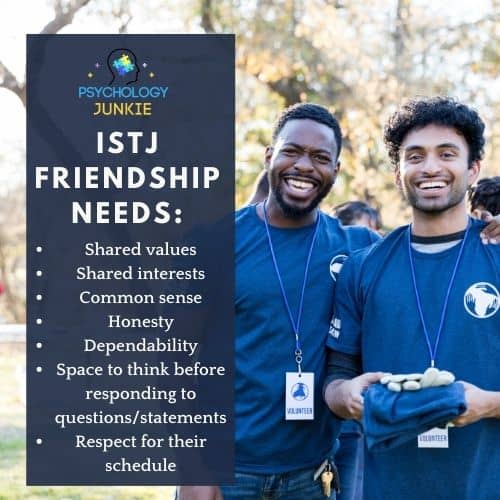
ISTJ men practical, loyal, and consistent, they’re the ones you can count on to actually show up when they say they will, remember the details everyone else forgets, and give grounded advice without sugarcoating it. They’re respectful but direct, and they take both work and personal commitments seriously. If you’ve got an ISTJ in your corner, you’ve basically got a human safety net.
The challenge? Time—and energy. ISTJ men often pour so much of themselves into work and responsibilities that, by the time they get home, all they want is some quiet and maybe a well-earned evening alone. That can leave friendships stuck on the back burner, and it isn’t because they don’t care about or need them. It’s just that large social events feel draining and the couch feels safe. Meeting new people in crowded, noisy environments? Honestly, it’s their version of a nightmare.
On top of that, ISTJs don’t hand out loyalty to just anyone. They have strong values and traditions, and they’re picky about who gets into their inner circle. They’d rather have two or three solid, long-term friends than twenty casual acquaintances. Often, the best way for ISTJs to meet people is through shared values or interests—church groups, hobby clubs, chess nights, anything that matches their interests and has a sense of structure. Small talk at random parties? Hard pass.
The key for ISTJ men is remembering that friendships, like everything else worthwhile, take effort and a bit of vulnerability. It’s not enough to show up and listen, you have to let people in, even if it feels uncomfortable at first. But once they do, ISTJs create friendships as steady and lasting as they are.
Find out more about ISTJs: Are ISTJs Rare? A Look at the Detective Personality Type
What Are Your Thoughts?
Do you have any experiences or insights that could be shared about making friends as your specific personality type? Please share your thoughts in the comments section below! We’d love to hear from you.
Find out more about your personality type in our eBooks, Discovering You: Unlocking the Power of Personality Type, The INFJ – Understanding the Mystic, The INTJ – Understanding the Strategist, and The INFP – Understanding the Dreamer. You can also connect with me via Facebook, Instagram, or Twitter!








This is really helpful! It’s good to know what my husband may struggle with, in his friendships. Shockingly, I actually struggle more with finding true friends than my husband does! (Maybe that’s an INFj thing?) I hope you will also write one of these for women! 😌
Hi Louisa! I struggle more with friendships than my ESTP husband does as well! I do want to write an article about the female struggles as well and that’s what I have next on my list so stay tuned 🙂
Thanks for an excellent article, Susan! I look forward to your one on women and what each type struggles with! I’m an ENFP and love my enthusiasm and creativity the most! Have you written anything yet about where we can *find* people of various of the types to become friends with? I’d love to read THAT! Your descriptions of these men’s types makes me want to meet certain ones for friendships. Thanks for your deep understanding and interest in MBTI types!!! And the way you communicate!
INTPs dislike small talk just as much as INTJs. You allude to this in your INTP description, but you do not directly state it.
I am an intj, and i am honest to my friends and always willing to help them, if i can, whenever they are in need; but i first ensure my own safety. If there is my own loss in some serious way, then i will not likely to help them, but even then i will try to find out some other way to help them.
Is it morally wrong, i don’t know?
But i think it’s logically right.