
10 Common Struggles of the Sexual Enneagram 1
Being an Sx 1 is no easy task. There is a particular kind of exhaustion that comes from seeing how everything could be better while also having to live here, in the current version, where people avoid important conversations and say “that’s just how I am” instead of pursuing personal growth.
If you’re a Sexual Enneagram One (or Sx 1 for short), you probably know what it feels like to be burned out. You care about people, sometimes with an intensity that makes everyone involved wish you had a less demanding hobby. You can see their potential, you can see what’s getting in the way, and you would like to help. But maybe the person you’re trying to help has a headache, an already busy schedule, or they simply don’t care with the intensity that you do.

Underneath that frustration, there can be a painful hope: surely love could be more honest, people could take responsibility, and life could feel a little less like watching someone repeatedly walk into a glass door you have clearly labeled. This mixture of hope and chronic disappointment can leave you lonely and wondering why caring so much keeps going so badly.
Not sure what your Enneagram type is? Take our free Enneagram questionnaire here.
First, What Is a Sexual Enneagram One?
In the subtype tradition associated with Claudio Naranjo and Beatrice Chestnut, the Sexual One is called “Zeal.” These Ones have a drive to reform others and they also have more openly expressed anger than people usually associate with Ones, which is why this subtype is called a countertype. [1]
“Sexual” refers to an instinct associated with attraction, chemistry, and intensity; it doesn’t tell us your orientation or how often anyone is taking their clothes off. These descriptions are tools for reflection, and individual Sexual Ones will relate to them differently. The examples below are original illustrations of how these patterns might show up in everyday life.
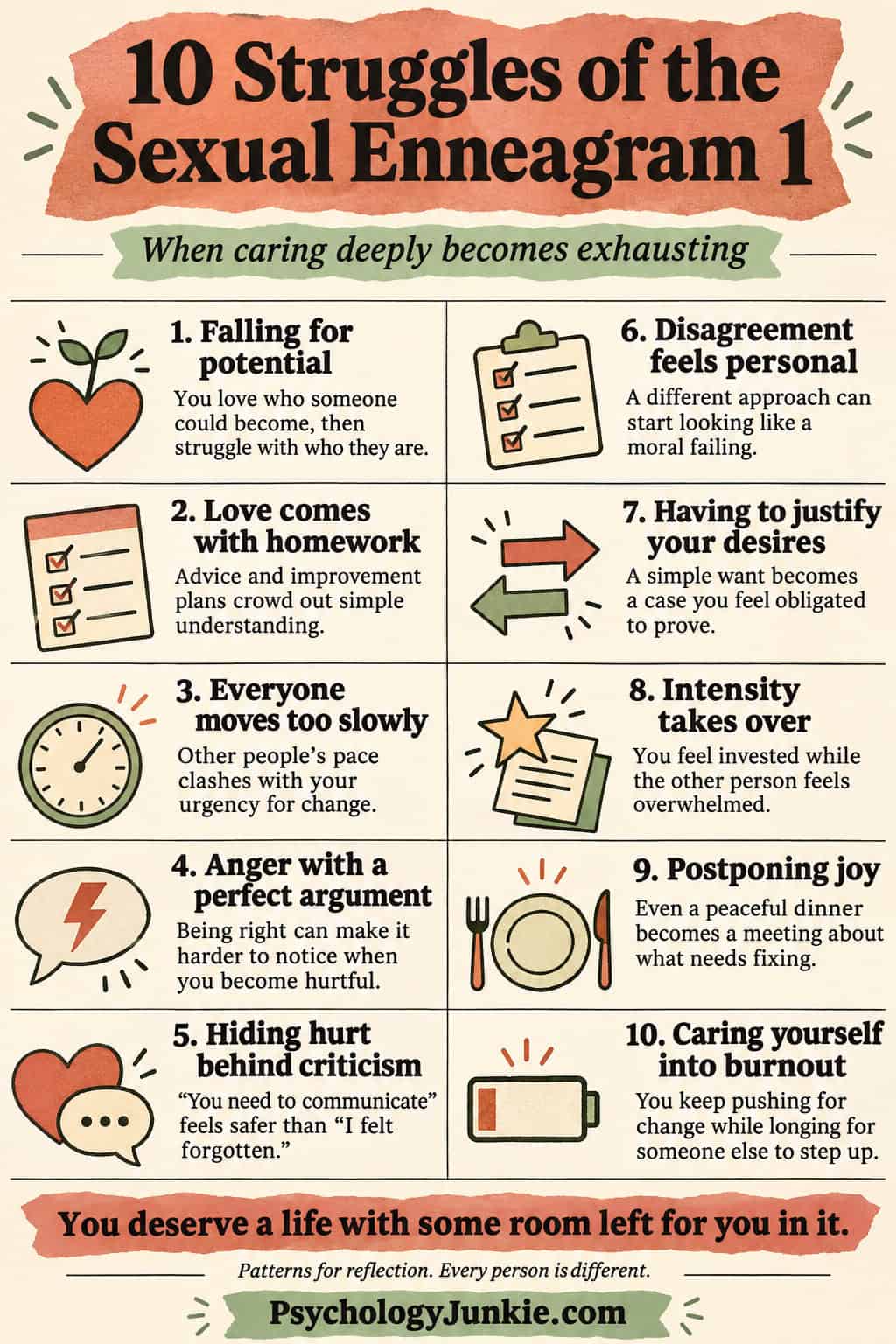
1. You Fall in Love with Potential and Then Resent Having to Wait for It
You meet someone and see the person they could become if they worked through their avoidance, believed in themselves, and stopped treating every uncomfortable feeling like a suspicious package. You can picture that person so clearly that their current behavior starts feeling like a temporary administrative error.
Months pass, possibly years, and you find yourself having the same conversation with slightly different furniture. This hurts because you’ve invested real love in a future the other person may never have agreed to pursue. They might want something different, or understand the problem and still keep choosing the familiar thing. You can see an exit from their misery, but you cannot walk through it on their behalf.
Ask yourself, “If they stayed as they are, would I still choose this relationship?” Let yourself answer without immediately backtracking.
2. Your Love Starts Coming with Homework
You want the people you love to flourish, so when they bring you a problem, your mind gets to work. You have an observation, a book recommendation, perhaps an actionable plan.
Sexual Ones have a knack for improving other people. [1] In a relationship, that can turn care into a steady stream of suggestions, until someone starts withholding their struggles because they don’t have the energy to be developed this evening.
That’s a miserable realization when you were trying to help. Before offering your solution, ask whether they want it. If they want company instead, try staying with them in the unresolved mess. You may feel about as useful as a decorative gourd, but being heard can mean so much to someone who already knows their life needs work.
3. Other People’s Pace Makes You Want to Leave Your Body
Once you understand what needs changing, continuing to live with the problem can feel absurd. You’ve discussed it, there’s a next step, and everyone is standing around looking at it like medieval villagers who have discovered a printer.
Impatience is a recurring theme in Sexual One descriptions, particularly when others don’t share your urgency. [2] Imagine trying to establish a fairer division of household work, explaining why you’re exhausted, and hearing someone promise to “be more mindful.” You suspect you’ll hear it again next Thursday while holding the same laundry basket.
Sometimes you need a clearer agreement and real accountability. Sometimes you’re expecting someone to change a deeply ingrained habit at the speed of your insight. Establish what progress would actually look like, including a realistic next step, before spending another evening becoming increasingly articulate about your despair.
4. Your Anger Is So Well Argued That You Forget to Examine It
Your anger can arrive looking extremely qualified. It has evidence, remembers dates, and can explain the wider implications for trust, fairness, and possibly civilization. You feel justified, and you may be justified, which makes it easier to overlook what happens next.
A valid complaint can still become a punishing conversation. You can be correct about the broken agreement and cruel in the way you address it, which is irritating news for those of us who would prefer accuracy to cover all other expenses.
Before confronting someone, decide what you’re asking for. An apology, a changed behavior, or a boundary you’re prepared to enforce? Having an actual purpose can keep a necessary conversation from becoming an opportunity to make someone feel as bad as you do.
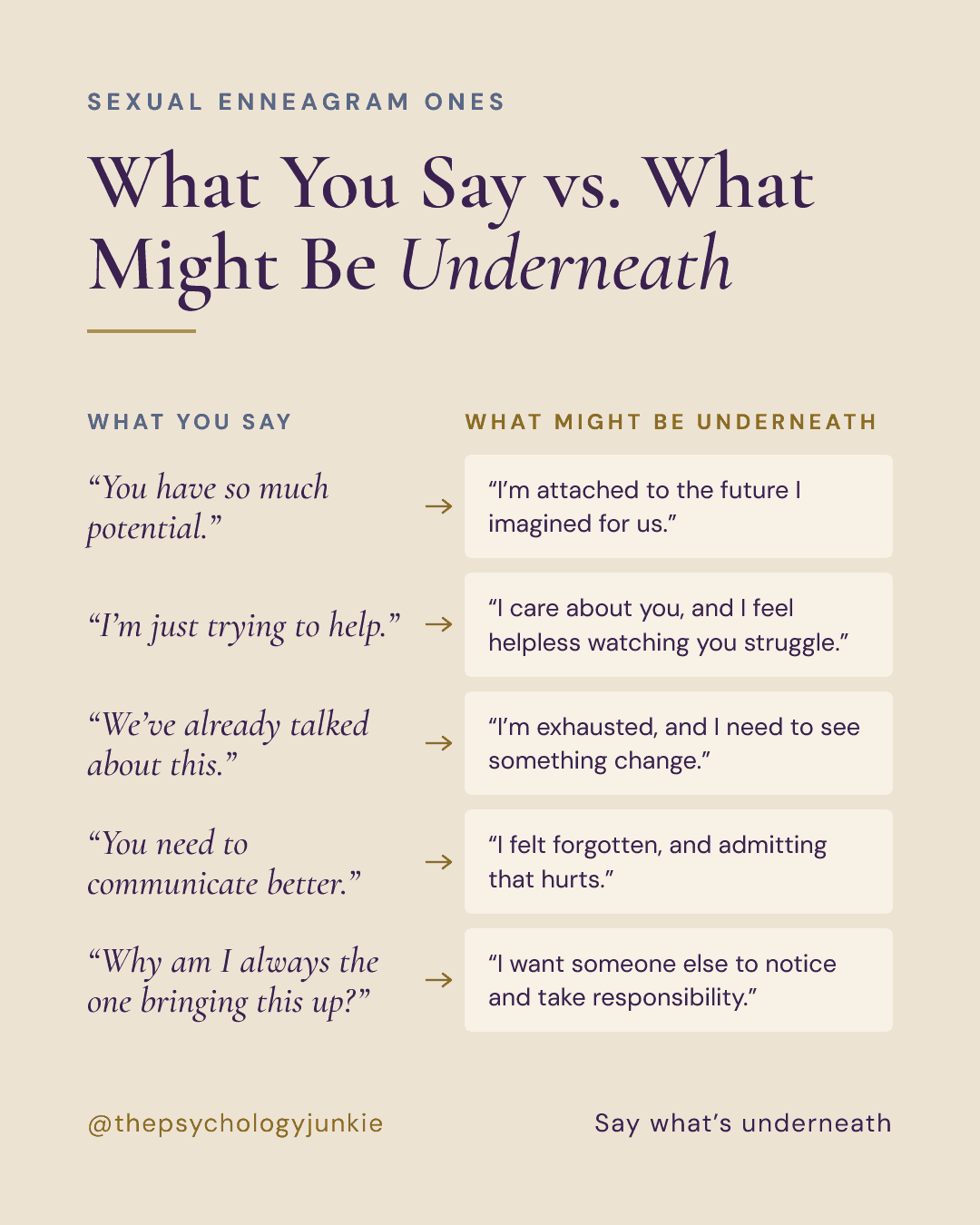
5. Saying “You Hurt Me” Feels Horribly Undignified
Psychologist Beatrice Chestnut describes Ones having difficulty acknowledging and expressing pain. [1] An everyday version might be finding it easier to explain someone’s inconsiderate behavior than to admit you felt unwanted.
“You need to communicate better” gives you somewhere solid to stand. “I missed you and wondered whether I mattered” leaves you exposed in a way that feels frankly unreasonable, considering you were already having a bad day. So instead of dealing with that vulnerability (yuck!), you deliver a beautifully organized critique while the frightened part of you waits underneath, hoping someone will understand the message you’ve taken considerable care to conceal.
Try saying what hurt before explaining what should change. “I felt forgotten when you didn’t call” gives the other person a chance to respond to your experience.
6. A Different Opinion Starts Looking Like a Moral Failing
Strong convictions can easily become rigid for Sexual Ones. [2] The difficulty is noticing when defending a value becomes treating your own approach as the only decent option.
Your partner wants a different budget, your colleague thinks your proposal needs more time, or your friend doesn’t want to join a cause you care about. Suddenly you’re wondering whether you’ve fundamentally misjudged their character over the last eleven years.
Sometimes disagreement reveals a serious incompatibility. Sometimes another person has different limits or sees a tradeoff you haven’t considered. Being certain doesn’t tell you which situation you’re in. Ask what matters to them, then listen without using their speaking time to improve your rebuttal. I realize this removes a popular recreational activity, but you may learn something.
7. Wanting Something Turns into Proving You Deserve It
Chestnut describes a tendency to justify desire through a sense of rightness. [1] You might experience this as needing an airtight case for something you simply want.
Perhaps you want to move, change careers, or have more excitement in your relationship. Rather than risk admitting how much you want it, you explain why it’s the responsible, necessary, spiritually evolved choice. Soon your preference has acquired an ethics department, and everyone else’s reservations sound vaguely suspect.
There’s relief in saying, “I want this, and I’m scared you won’t understand why it matters to me.” You can discuss practical realities without having to establish that your desire represents the highest available form of human existence.
8. You’re Having a Conversation While Someone Else Is Enduring One
The intensity described in Sexual Ones can come across as overwhelming or demanding. [2] From the inside, you may feel focused and invested. You’re asking questions because this matters, and avoiding the subject has accomplished so little.
Meanwhile, the person across from you has stopped contributing. Possibly they’re overwhelmed, or disagree and can’t find an opening. Possibly they need twenty minutes to figure out what they think, which feels inconvenient when you have already figured out what both of you should think.
Check whether there’s room for them in the conversation. If someone says they feel intimidated, get curious about the specific behavior. Hearing that can sting, especially when you’ve been feeling unheard yourself, but mutual understanding requires more than one person getting to the end of their argument.
9. Joy Keeps Getting Postponed Until Things Are Better
You finally get a pleasant evening together, and your brain notices everyone is calm enough for that difficult conversation you’ve been meaning to have. Within minutes, dinner has become a relationship summit and the potatoes are cooling beside several unresolved grievances.
There may be something that needs discussing. There may also be a reason you’re both starting to dread dinner. When improvement becomes a habit of attention, you can miss the good happening in front of you. Your partner makes an effort and you notice the part they missed. You have a peaceful afternoon and wonder whether you should use it more constructively, because apparently contentment is how they get you.
Try letting a good moment remain good without trying to improve upon it. You may discover how hungry you’ve been for an experience you didn’t have to manage.
10. You’re Exhausted and Still Feel Obligated to Care Harder
The drive for reform can become exhausting, and burnout is a frequent ordeal of just about every One I’ve ever met. [2]
You want someone else to notice, take responsibility, and care enough to act. Instead, you keep showing up with another plan, resenting a role you can’t quite make yourself put down. An underneath all that exhaustion is often a sense of grief. You wanted a relationship you could rest in and meaningful work without having to fight for every sensible change. You wanted your effort to count for enough that you could finally stop bracing.
Look at what you can influence, what belongs to someone else, and what continuing this way is costing you. A smaller commitment may be necessary, along with firmer boundaries or an honest conversation about reciprocity. You deserve a life with some room left for you in it.
You’re Allowed to Be a Person in the World You’re Trying to Improve
There is something moving about caring enough to keep trying when resignation would be easier. Your conviction can help people face things they’ve avoided for years, and your willingness to speak up can make a real difference.
You also have limits, preferences, blind spots, and days when your insightful feedback is partly the result of needing lunch. Being honest about those things gives your relationships more room to breathe. You can ask for change and listen to an answer you dislike. You can recognize someone’s potential and decide the relationship they currently offer hurts too much. You can apologize for your delivery while still needing the original problem addressed.
And occasionally, you can spend an evening with someone you love without helping them become a better person. You might both enjoy it, once the initial confusion wears off.
Do you relate to these struggles as a Sexual One? Which one made you feel understood, or slightly inclined to argue with your screen? Share your thoughts in the comments. I’d love to hear your experience.
Sources and Further Reading
This article follows the Naranjo–Chestnut subtype tradition. The everyday examples and reflections are original applications of the themes.
- Sexual One: “Zeal” — Ashlie Woods, featuring material from Beatrice Chestnut’s The Complete Enneagram, reproduced on Woods’s site with permission.
- Enneagram Sexual One — Stacy Erdman, Enneagram Entrepreneur.
- The Enneagram 1 Instinctual Variants — Psychology Junkie.


