
Here’s What Makes You Dangerous, Based on Your Myers-Briggs® Personality Type
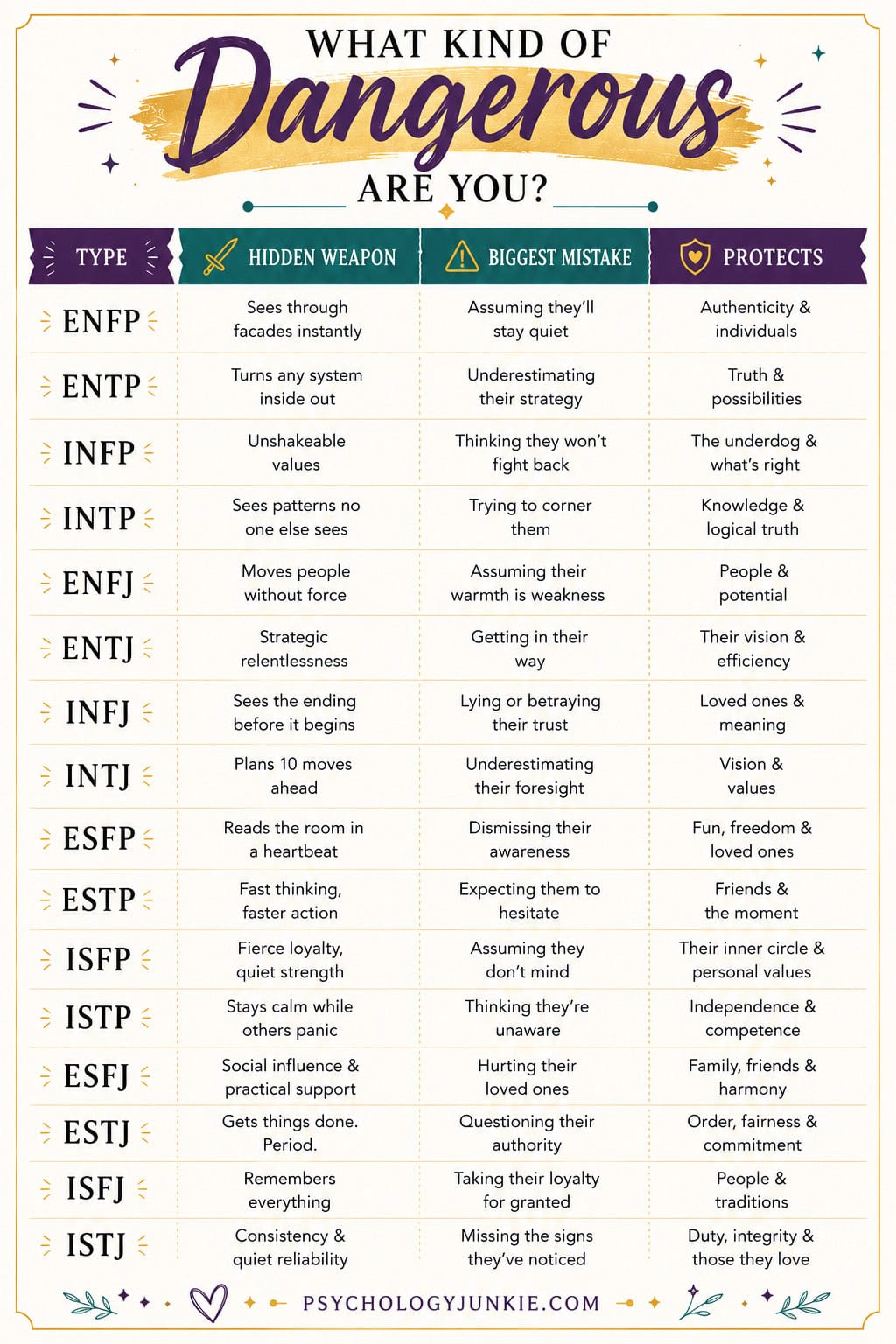
Have you ever wondered what would happen if you got on someone’s bad side? Each personality type has defense mechanisms and talents that they can use to take down an enemy or protect themselves from harm. What are yours? Find out!
Not sure what your personality type is? Take our new personality questionnaire!

Table of contents
Estimated reading time: 1 minute
Here’s What Makes You Dangerous, Based on Your Myers-Briggs® Personality Type
The ENFP
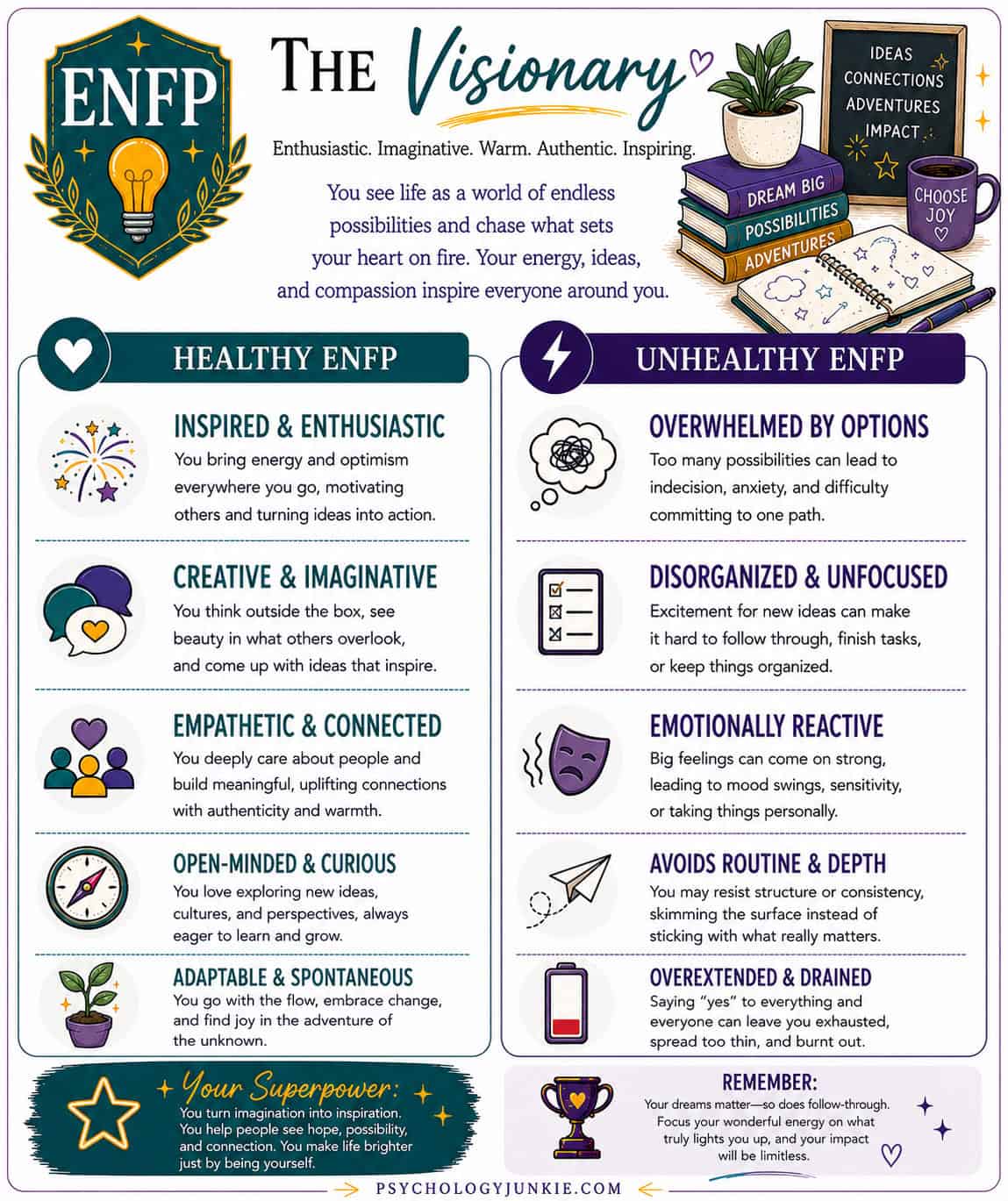
There are a lot of misconceptions about ENFPs. People see the big smiles, the spontaneous energy, the human confetti cannon persona, and assume they’re just here for a good time. But beneath that playful exterior is a mind that’s constantly scanning, questioning, and testing. ENFPs have an almost eerie ability to pick up on hidden motives, reading between the lines and sensing when something or someone is off.
And here’s the thing: they’re not afraid to say it. If you’re being phony, manipulative, or trying to pull the wool over people’s eyes, the ENFP is the first one to call you out—loudly, and maybe in front of an audience. These types challenge people, push buttons, and get others to confront their own contradictions. Sure, they’re empathetic and warm, but that doesn’t mean they’re going to let people slide into self-delusion without a fight.
Big mistake: Assuming they’ll stay quiet to keep the peace.
How this shows up in everyday life:
Imagine someone in a family always manages to make every disagreement about themselves. If someone else is hurting, they somehow become the victim instead. Everyone has gotten used to walking on eggshells.
An ENFP won’t stand this quietly for long. Instead of arguing about every little incident, they’ll say something like, “Has anyone noticed that no matter what happens, we always end up comforting you?”
The room gets quiet. Some types couldn’t tolerate the awkwardness, but the ENFP leans into it. Authenticity matters more than everyone’s comfort.
What makes ENFPs formidable is that they often see unhealthy relationship patterns before other people do. They connect conversations, behaviors, and emotions into a bigger picture, then put words to what everyone else has been sensing but couldn’t quite explain.
Psychologist Virginia Satir wrote, “The problem is not the problem; coping is the problem.” Healthy ENFPs have a way of exposing the patterns people have learned to live with. Once those patterns are spoken aloud, they’re much harder to ignore.
Read This Next: 10 Things That Excite the ENFP Personality Type
The ENTP
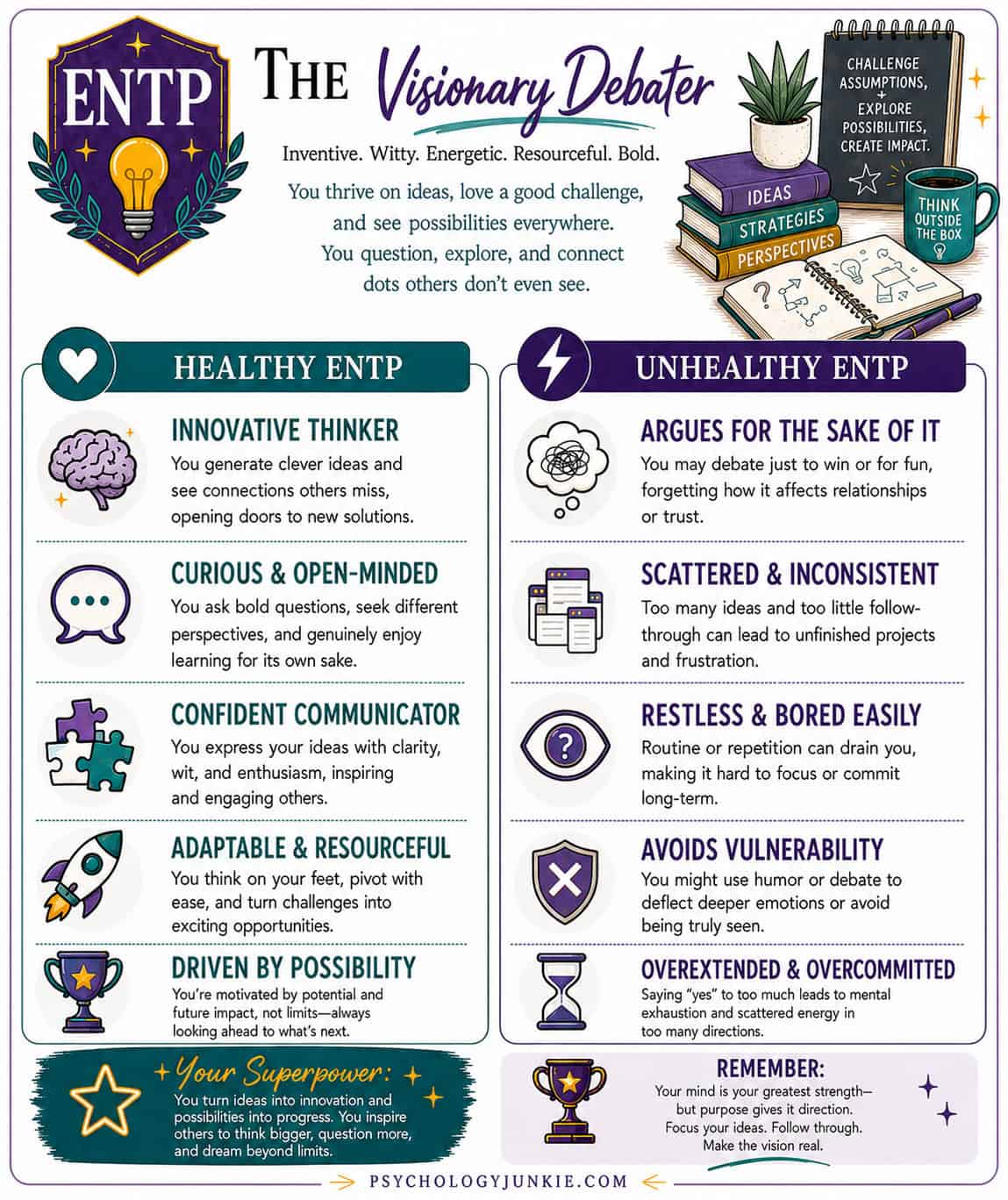
ENTPs get a thrill from playing devil’s advocate and questioning pre-established rules and traditions. These types are dangerous when they’re underestimated or forced into a corner. In situations like this, they can easily unhinge an entire organization by dismantling one small part of it. They quickly notice how complex systems are maintained and how each piece plays a role. Strategic and visionary, they are able to solve (or create) technical puzzles that will stump even the most analytical mind. Risk isn’t a huge fear of theirs, and they don’t mind putting their security on the line to bring down an opponent. They enjoy the thrill of mixing things up and creating chaos in order to reveal the truth.
Big mistake: Thinking you can beat them with conventional logic. They’ve already considered every angle and a few that don’t even exist yet.
How this shows up in everyday life:
Picture someone confidently explaining why their approach is the only one that could possibly work. They’ve shut down every alternative before anyone has had a chance to explore it.
The ENTP smiles, and asks a question like this:
“Okay…but if that’s true, why did the exact opposite work last year?”
Then another.
“What if the real problem isn’t what you think it is?”
Suddenly, the certainty starts to crack.
What makes ENTPs formidable is that they can spot weak assumptions almost instinctively. They enjoy testing ideas from every angle, and if someone is bluffing their way through a discussion or pretending they’ve already got all the answers, the ENTP will keep asking questions until the holes become impossible to ignore. As philosopher John Stuart Mill argued, “He who knows only his own side of the case knows little of that.” Healthy ENTPs have a habit of making people discover exactly how much they haven’t considered.
The INFP
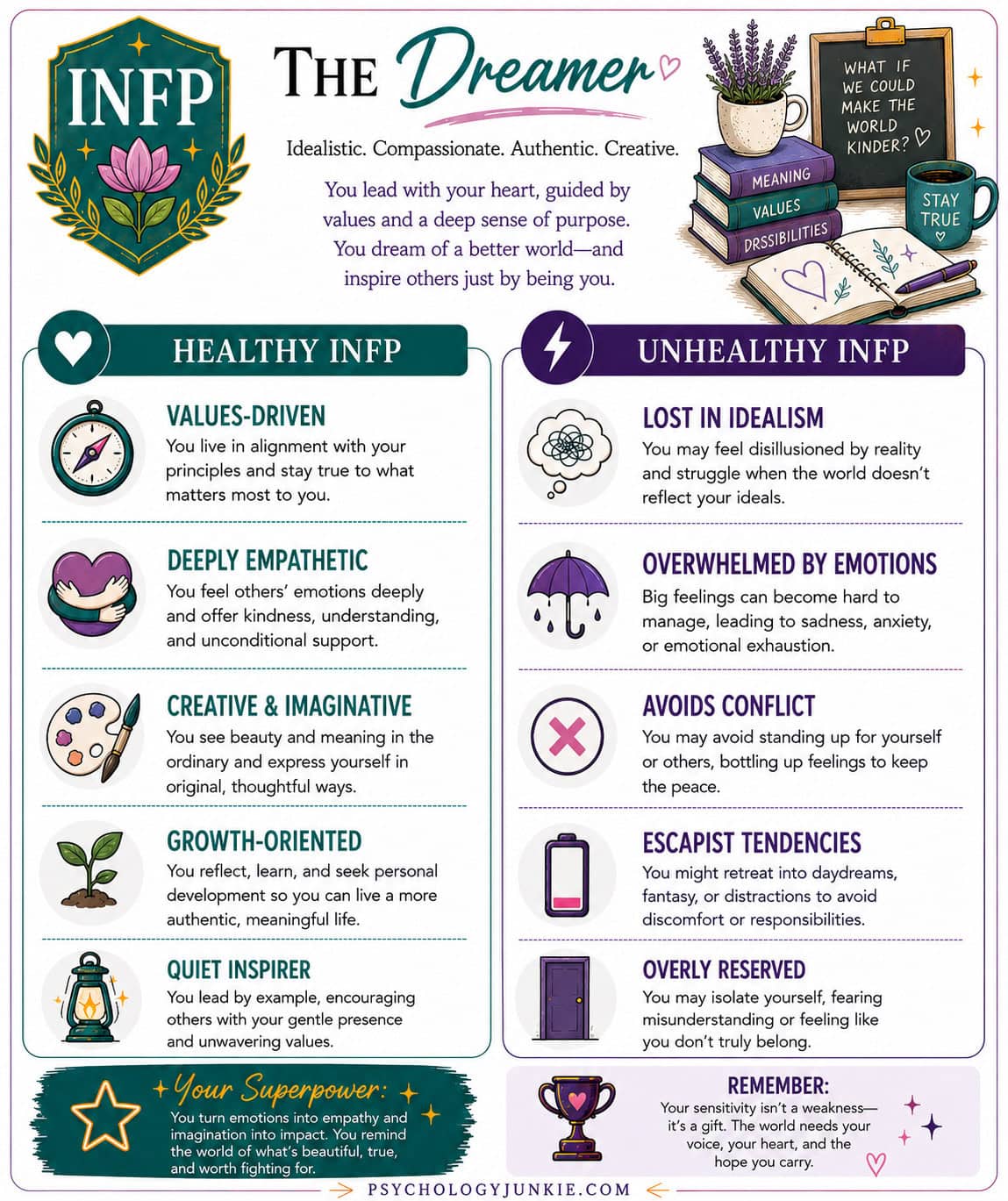
At first glance, INFPs might seem dreamy, introspective, maybe even a little reserved. But if you think that makes them pushovers, you’re in for a rude awakening. These types are champions of the underdog, and when they see cruelty, injustice, or hypocrisy, their quiet demeanor transforms into something fierce. There’s no half-hearted activism here; when an INFP believes in something, they believe with every fiber of their being.
And good luck trying to manipulate them. While they may be deeply empathetic, that doesn’t mean they’re easily swayed. Their values are theirs, and no amount of emotional guilt-tripping is going to make them abandon what they know is right. They’ll listen, they’ll consider, but if you try to push them into a belief that doesn’t align with their moral code? Yeah, that’s not happening.
Big mistake: Assuming their gentleness means they won’t fight back. They will—just not in the way you expect. And it will haunt you.
How this shows up in everyday life:
Imagine someone prides themselves on being kind and compassionate, but they’re constantly belittling people behind their backs or treating someone unfairly when they think no one is paying attention.
The INFP will not let this slide.
They might ask, “I thought you said everyone deserves compassion. Why doesn’t that apply here?”
Their words cut deep because it forces the other person to confront the gap between who they believe they are and how they’re actually behaving.
What makes INFPs formidable is that they’re deeply attuned to authenticity. They can often sense when someone’s words and actions no longer match, and if they believe someone is betraying their own values or hurting others in the process, they aren’t afraid to hold up a mirror. As Søren Kierkegaard wrote, “The most common form of despair is not being who you are.” Healthy INFPs have a way of reminding people of that truth, whether it’s comfortable or not.
Read This Next: Why Do INFPs Ghost?
The INTP
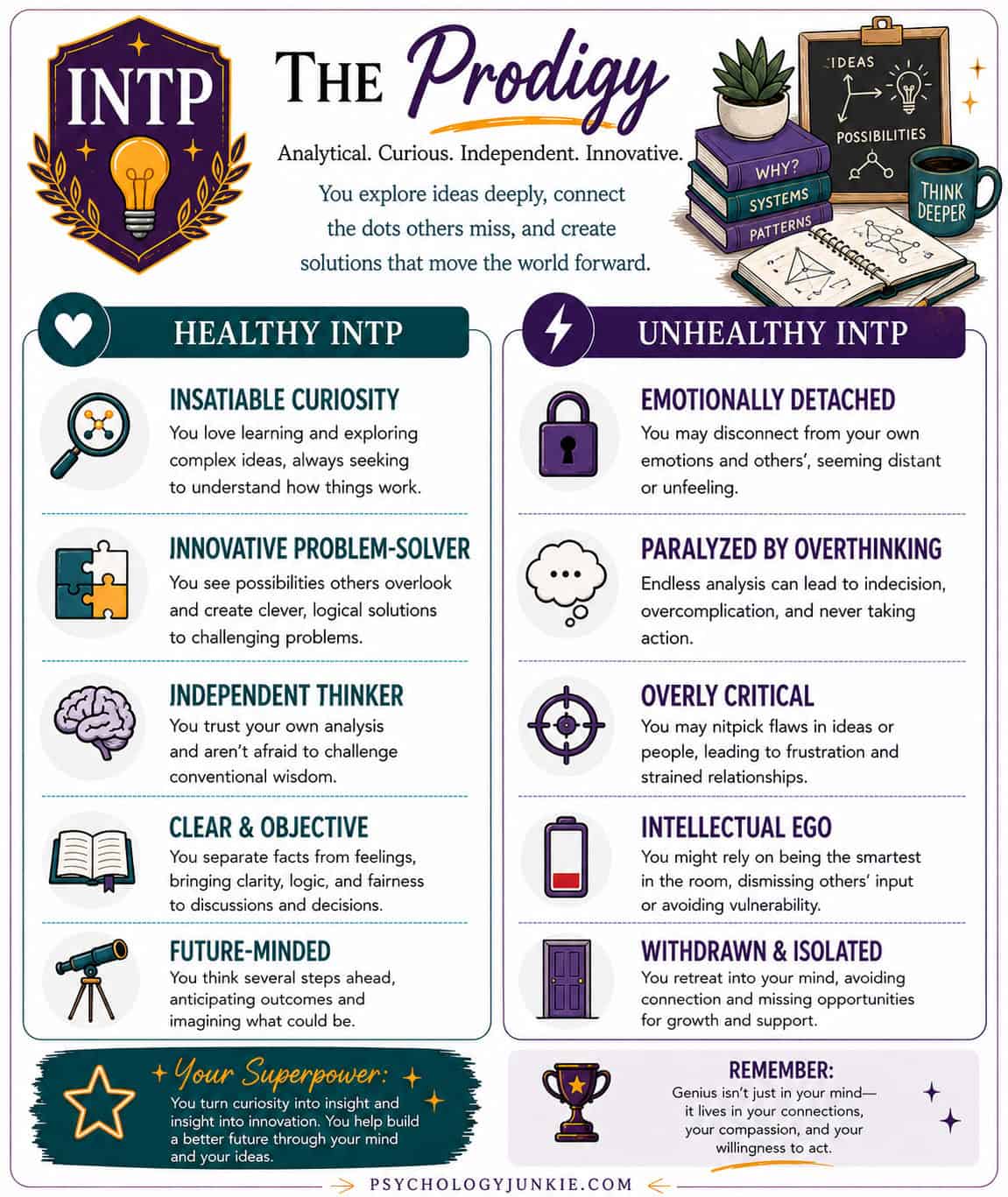
Knowledge is power, and if that’s true, INTPs are basically walking supercomputers. These types absorb information like a sponge, picking apart theories, spotting inconsistencies, and analyzing everything from multiple angles. They’re not the type to react emotionally in a crisis; instead, they detach, zooming out like a strategist overseeing a battlefield, calmly mapping out the best escape route while everyone else is panicking.
And if you think you can trap them? Good luck. INTPs can mentally dismantle most systems before you even realize they’re doing it. They spot the loopholes, the hidden flaws, the tiny cracks that most people miss. If they ever do decide to go on the offensive, their attacks are precise, devastating, and backed by an almost unfair level of accuracy. One perfectly placed verbal takedown from an INTP can have someone re-evaluating their entire existence.
Big mistake: Trying to corner them. They’ve already figured out three ways to get out—and one of them involves making you look like the fool.
How this shows up in everyday life:
Someone in a discussion keeps making bold claims, assuming no one is going to challenge them. They speak with absolute confidence, jumping from one point to the next before anyone has time to think.
The INTP lets them finish. Then they’ll ask a question.
“If that’s true…how do you explain this?”
Or they’ll point out that two parts of the person’s argument can’t both be true at the same time.
What makes INTPs formidable is that they’re unusually good at separating an idea from the person presenting it. While everyone else may get pulled into the emotion of the conversation, the INTP is tracing the logic underneath it. If they find a contradiction, they’ll keep following the thread until the entire argument begins to unravel under its own weight.
The philosopher Socrates famously used questions instead of accusations to expose weak reasoning. That same approach often comes naturally to healthy INTPs. They don’t have to overpower someone to win the discussion. Sometimes all they have to do is ask the one question the other person was hoping nobody would think to ask.
Read This Next: The Four Personality Types INTPs Clash With Most
The ENFJ
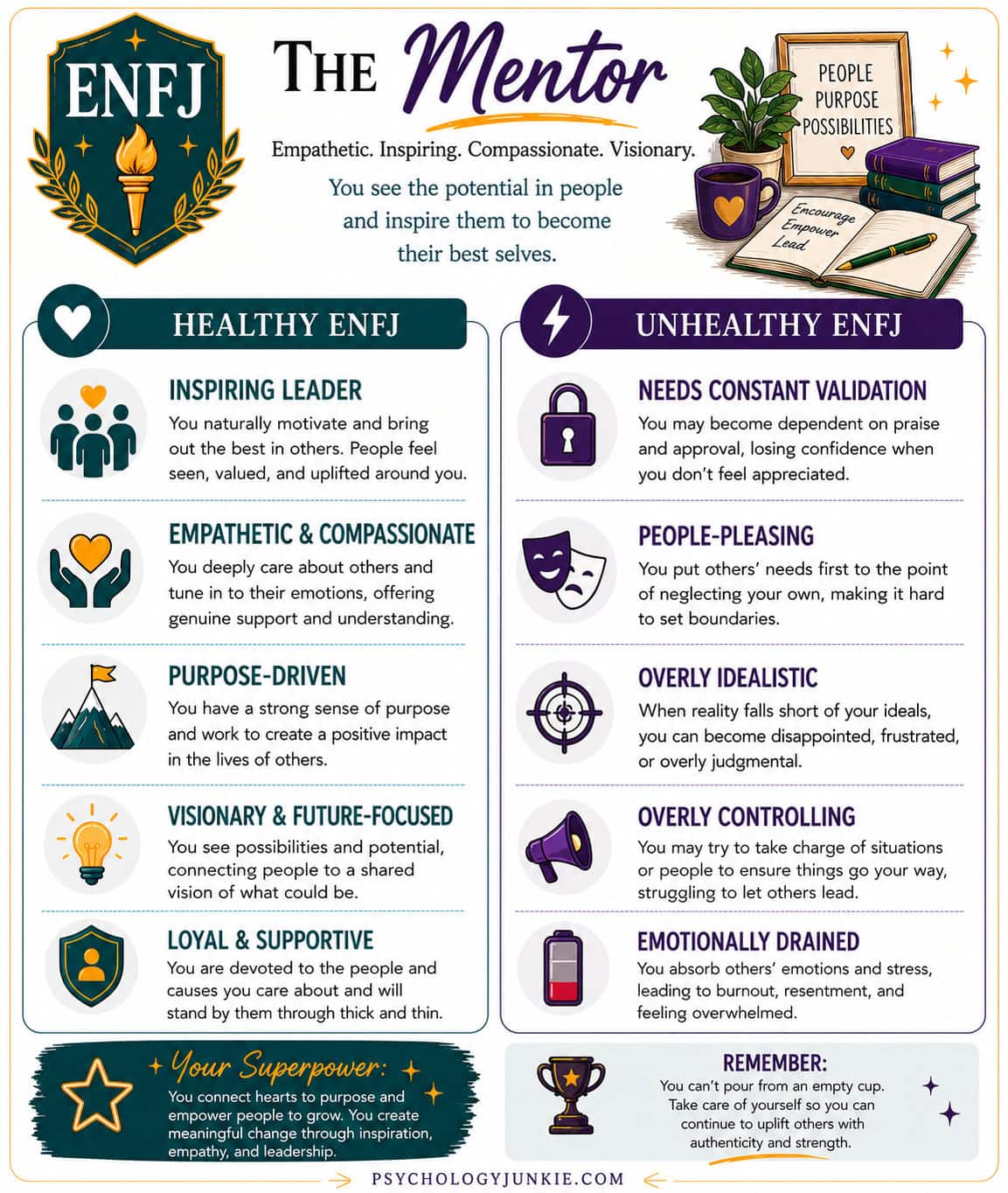
ENFJs are charismatic, insightful, and sometimes scarily attuned to the emotions and motivations of others, they have a way of making people feel seen, understood, and—most dangerously—inspired. Most of the time, they use this power for good, rallying communities, lifting people up, and helping others reach their full potential. But if you cross them? If you threaten someone they care about or stand in the way of their vision? Well… let’s just say they know exactly how to dismantle an opponent without ever raising their voice.
ENFJs are emotional strategists. They instinctively understand social dynamics, group psychology, and how to turn the tide of public opinion without making it obvious. If they wanted to start a movement, they could. If they wanted to turn an entire group against you? They could do that, too. The question isn’t whether they can manipulate a situation—it’s whether their moral compass tells them to.
Big mistake: Assuming their warmth means they’re harmless. They’re not just playing the game—they’re writing the rules.
How this shows up in everyday life:
Imagine someone in a friend group has a habit of making one person the scapegoat. They disguise it as teasing, and everyone goes along because they don’t want to make things awkward…or worse, they buy into it.
Instead of attacking the person, the ENFJ might calmly say something like, “Have you noticed that every joke seems to land on the same person? I don’t think they’re laughing anymore.”
What makes ENFJs formidable is that they understand people. They can sense when someone is using charm, guilt, or social pressure to control a relationship, and they have a way of naming what’s happening that makes everyone else see it too. Suddenly, behavior that once slipped under the radar becomes impossible to ignore.
The ENTJ
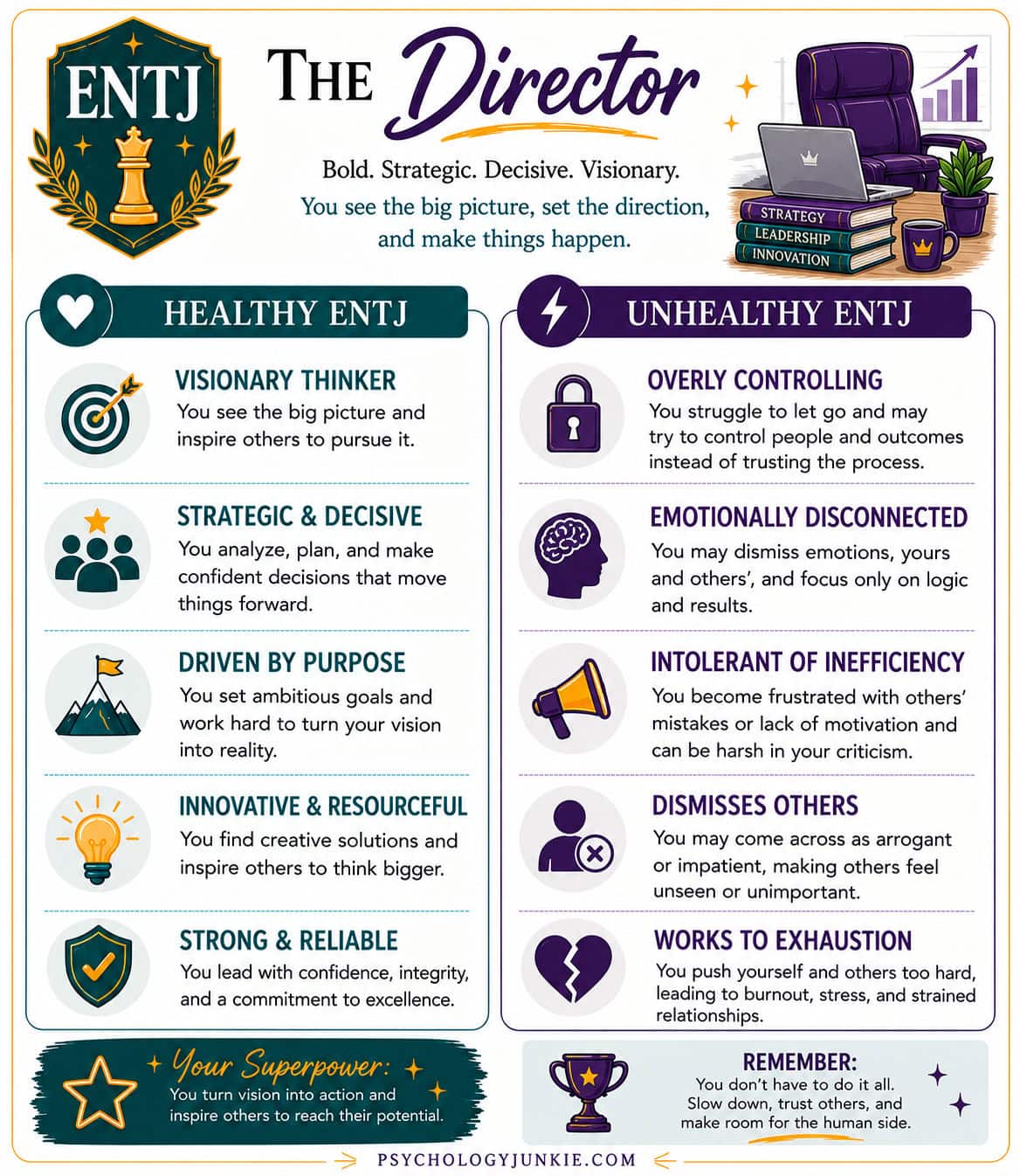
If you somehow manage to make an ENTJ your enemy, congratulations—you’ve just become a problem to be solved. And ENTJs love solving problems. These types are master strategists who can take a chaotic mess and turn it into a ruthless, efficient plan of action before you’ve even realized what’s happening.
What makes them especially dangerous? Their ability to remove emotions from the equation. They don’t get lost in petty drama or impulsive revenge. Instead, they step back, analyze the situation like a battlefield, and start orchestrating your downfall with the precision of a general leading an army. If you waste their time, betray their trust, or—worst of all—threaten someone they care about, they’ll focus on you with a level of intensity that’s frankly terrifying. And because they have an uncanny ability to predict outcomes, they’ll likely be three moves ahead before you’ve even figured out you’re in trouble.
Big mistake: Thinking you can out-plan them. They already have a contingency plan for your contingency plan.
How this shows up in everyday life:
Imagine someone has been running a meeting relying on confidence and volume to get their point across. They interrupt people, dodge difficult questions, and assume no one is going to challenge them.
The ENTJ lets them talk for a while, but not long, because their patience will wear thin fast. Then they start asking questions.
“Can you explain how you arrived at those numbers?” “If that’s the plan, what’s your backup when that doesn’t work?” “Who approved this?”
One by one, the weak spots begin to show. The conversation that was firmly under one person’s control suddenly belongs to the ENTJ instead. They’re testing whether the confidence is backed by competence, and if it isn’t, they have very little patience for the performance.
What makes ENTJs formidable is their willingness to seize control when they believe someone else is leading people in the wrong direction. They’re comfortable applying pressure, asking the difficult questions everyone else is avoiding, and refusing to let someone hide behind charisma or authority alone.
The INFJ
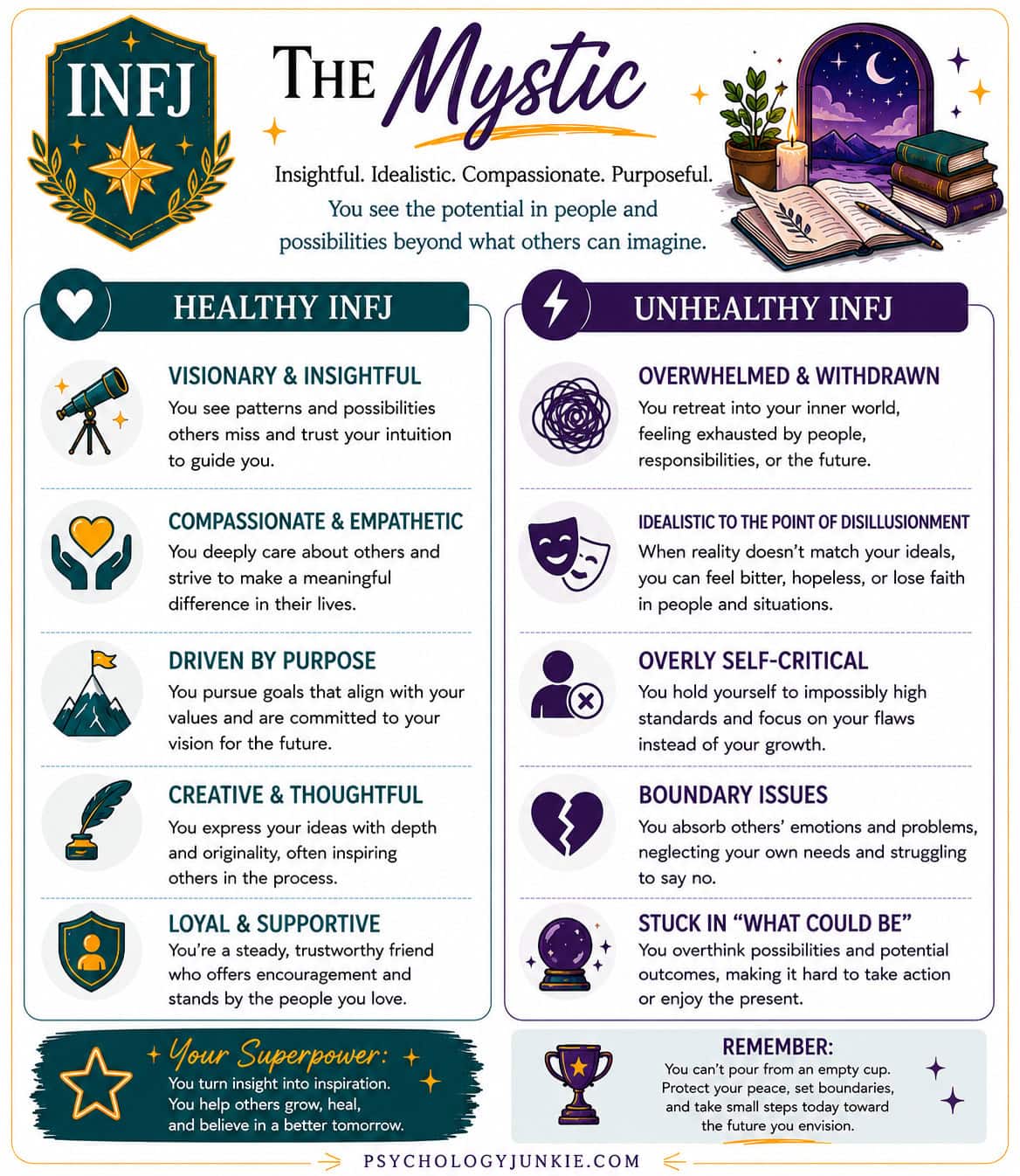
INFJs are often underestimated because of their quiet, dreamy nature. But beneath that calm exterior is a mind that’s constantly calculating. These types think five, ten, twenty steps ahead. They naturally gauge patterns and form predictions. It’s like they’re watching a slow-motion domino effect that nobody else can see, and they’re already anticipating exactly how it will all play out.
Most of the time, INFJs use this foresight for good. They guide, mentor, and help people avoid painful mistakes. But cross them? Hurt someone they love? That’s when things get… unsettling. INFJs don’t go for loud, aggressive takedowns—they get inside your head. They know exactly what words to say to unravel your confidence, exactly what truths to reveal to make you question yourself. They won’t just argue with you; they’ll make you confront the parts of yourself you were desperately trying to ignore. It’s psychological warfare with a velvet touch, and you won’t even realize how deep it’s cutting until it’s too late.
Big mistake: Assuming their silence means they’re powerless. They’re not speaking because they’re waiting.
How this shows up in everyday life:
Imagine someone has been manipulating everyone around them while pretending to be the victim. Most people respond to what the person is saying, but the the INFJ responds to why they’re saying it.
After watching the pattern long enough, they’ll say something like, “This isn’t really about fairness. You’re trying to stay in control.”
What makes INFJs formidable is that they often notice the motives hiding underneath people’s words. If someone has spent months crafting an image or carefully managing how others see them, one well-placed observation from an INFJ can unravel the entire performance.
Carl Jung wrote, “Until you make the unconscious conscious, it will direct your life and you will call it fate.” INFJs have a knack for bringing those hidden patterns into the light, whether people are ready for it or not.
Read This Next: Being Everyone’s Therapist (But Having No One to Talk To): The INFJ Experience
The INTJ
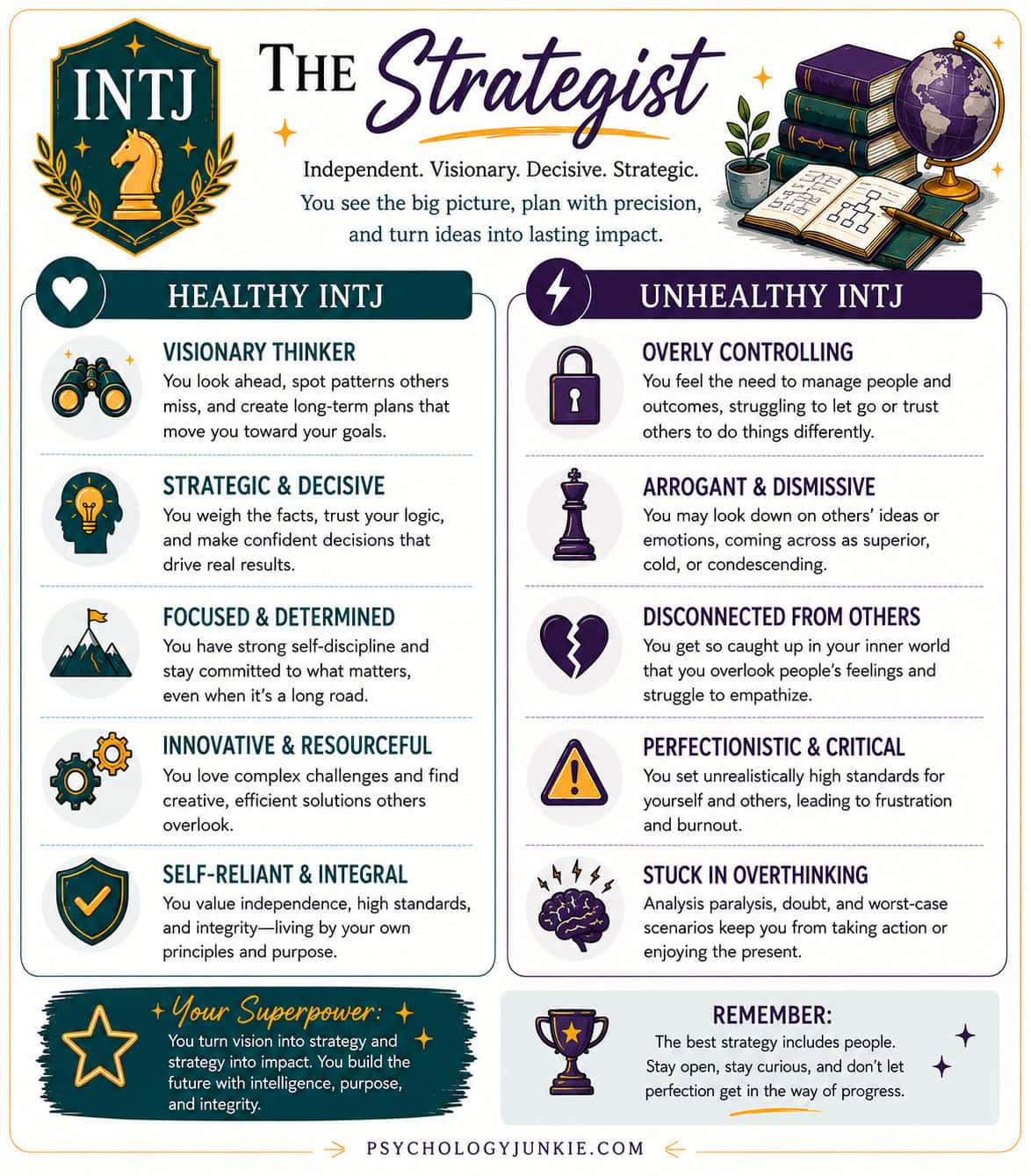
If you’ve somehow made an INTJ your enemy, one thing is certain: you were a problem long before you realized it. INTJs don’t react impulsively or lash out in the heat of the moment. Instead, they observe, analyze, and track patterns. And by the time you even sense there’s a problem, they’ve already mapped out three different ways to dismantle your entire operation.
These types are master strategists, seeing the long game when everyone else is distracted by short-term wins. Trying to manipulate them? They saw through it before you even opened your mouth. Think you can outmaneuver them? You’re already moving in the direction they anticipated. INTJs don’t fight battles unless they know they can win, and they never enter a conflict unprepared.
Big mistake: Thinking you have the upper hand. If an INTJ is letting you believe that, it’s because they want you to.
How this shows up in everyday life:
Imagine someone at work has been undermining the INTJ for weeks. They take credit for ideas, spread subtle rumors, or keep trying to corner them in meetings.
The INTJ probably doesn’t react right away. They’ll just watch, observe, and collect psychological insights and patterns. They start noticing the person’s habits. They learn what motivates them, what they’re trying to accomplish, and where their strategy depends on everyone else overlooking a key detail.
Then, when the time is right, they make one move.
Maybe they ask a question that exposes a flaw in the person’s plan before it’s approved. Maybe they present evidence that dismantles the story the other person has been building. Maybe they’ve already solved the problem before their opponent even realizes there’s a contest.
From the outside, it can feel almost unfair. The other person walks into the conversation believing they’re in control, only to discover the INTJ anticipated three moves ahead.
As Sun Tzu observed, “If you know the enemy and know yourself, you need not fear the result of a hundred battles.” Healthy INTJs often approach conflict with that same mindset. They don’t rely on being louder or more intimidating. They rely on seeing the shape of the game before everyone else does.
Read This Next: INTJ Grip Stress: What It Is and How to Cope
The ESFP
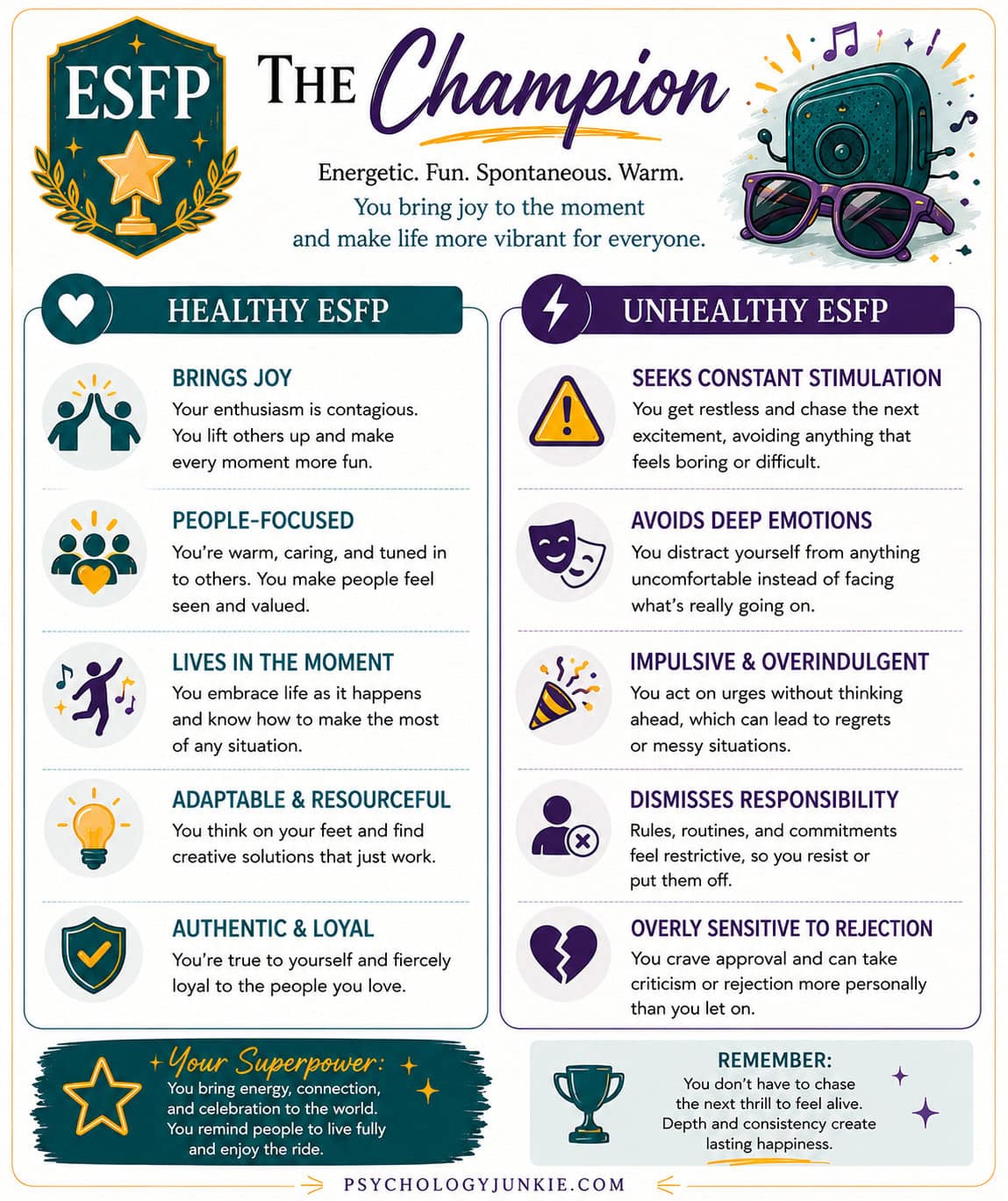
People tend to underestimate ESFPs. They’re friendly, charming, and always ready with a joke, but don’t mistake that for naivety. Beneath the easygoing exterior, ESFPs are hyper-aware of their surroundings, constantly picking up on non-verbal cues, microexpressions, and tiny shifts in behavior. They don’t need a master plan to catch someone off guard; they’re already reacting before the other person even realizes what’s happening. Their instinctive ability to read people makes them nearly impossible to deceive. Try to trick an ESFP, and you’ll be hit with a reality check so fast you won’t know what happened. They love defying expectations, turning the tables, and proving that they’re not as easy to fool as people assume.
Big mistake: Thinking their friendliness means they’re oblivious. They’ve already clocked your agenda before you’ve finished your first sentence.
How this shows up in everyday life:
Imagine someone in your friend group constantly puts other people down with little “jokes.” They always have an excuse ready if anyone calls them out. Most people laugh awkwardly and move on, but not the ESFP.
Instead of giving a lecture, they’ll smile and ask, “Wait…why is that funny?”
Or they might casually repeat the comment back to the person in a way that makes everyone hear it differently.
“So you’re saying she shouldn’t even try because she’ll probably fail?”
What makes ESFPs dangerous is that they have an instinct for social dynamics. They can tell when someone is trying to manipulate the mood, embarrass another person, or hide behind charm, and they know exactly how to shift the spotlight back onto the behavior itself.
The ESTP
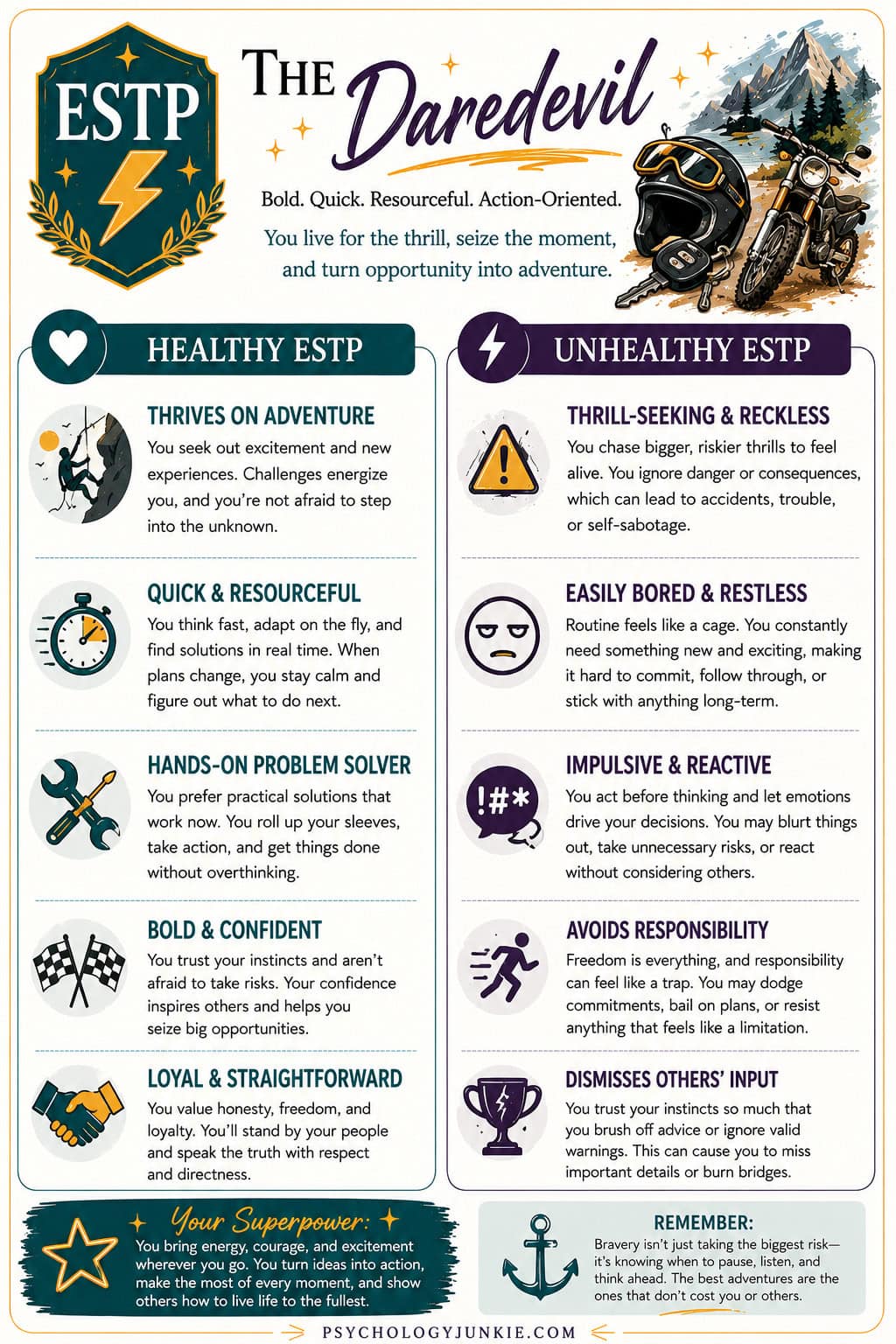
ESTPs fight to win. Fast, aggressive, and impossible to intimidate, these types thrive in chaos. They don’t have time for elaborate battle plans; they react in real-time, dodging, countering, and striking before their opponent even realizes what’s happening. If you challenge an ESTP, be prepared for a whirlwind of sharp comebacks, lightning-fast reflexes, and the kind of audacity that makes them both terrifying and oddly charming. They’ll either dismantle you with sheer confidence or, if it gets physical, they’ll win by being just a little faster, a little stronger, and a whole lot more willing to take a risk.
Big mistake: Trying to outmaneuver them in the moment. They don’t hesitate, and hesitation is what gets you flattened.
How this shows up in everyday life:
Imagine someone is dominating a meeting, loudly bending the facts to make themselves look better.
Most people either buy it or don’t think of the right response until they’re driving home.
The ESTP catches it on the spot. They’ll interrupt with something like, “Hold on…didn’t you say the exact opposite five minutes ago?” Or, “Interesting. So why did you leave that part out?” They can make a big impact without getting emotional or wordy. It’s one well-timed observation that suddenly shifts the room.
What makes ESTPs dangerous is how quickly they recognize when someone is bluffing, moving the goalposts, or trying to control the narrative. They don’t need hours to come up with the perfect comeback. They see the opening, take it, and force the other person to respond before they’ve had time to recover.
The ISFP
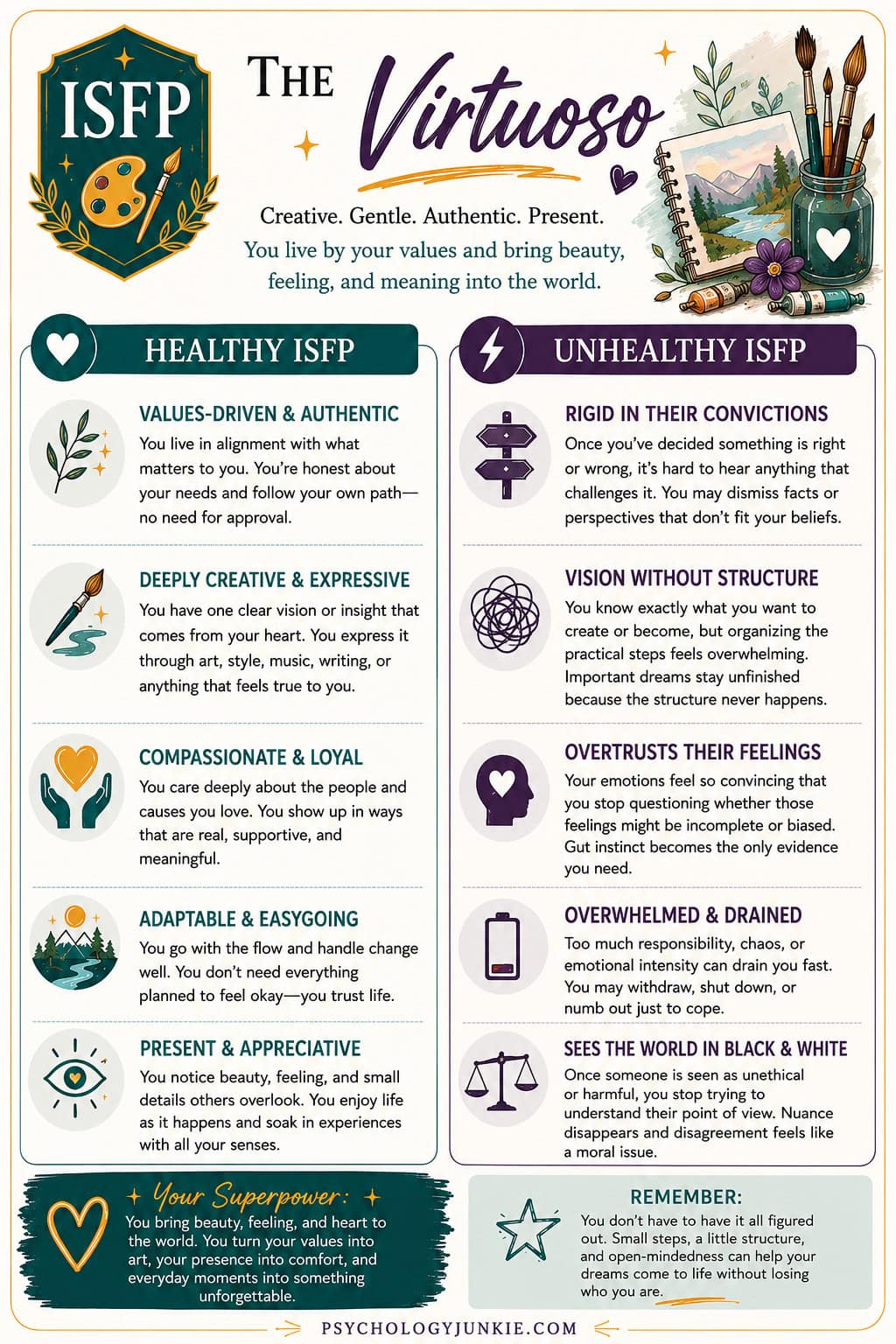
ISFPs are strong-willed defenders of those who they believe are persecuted, oppressed, or disadvantaged. They pair their emotional awareness with a keen attentiveness to what is happening around them in the present moment. While they may seem gentle and easy-going at first glance, they can quickly switch gears and become intense and physically aggressive in defense of someone they are protecting. They enjoy the thrill of action and physical experience and can move quickly to take action in a situation where the values or safety of someone they care about is threatened. They can also quickly spot signs of inauthenticity or hidden motives. This makes them very hard to trick or manipulate.
Big mistake: Assuming their kindness means they won’t fight back. Push an ISFP too far, and you’ll see just how fast quiet turns to lethal.
How this shows up in everyday life:
An ISFP usually gives people room to be themselves until someone crosses one of their core values. Then suddenly when the flexibility disappears.
If they believe someone is exploiting the vulnerable, acting dishonestly, or violating something they consider fundamentally important, they can become surprisingly immovable. The conversation stops being about convenience or compromise. It becomes about integrity.
I’ve seen healthy ISFPs stand completely alone rather than support something they believed was wrong. You may change their opinion with evidence and genuine dialogue, but you won’t change it through pressure.
As Viktor Frankl wrote, “Everything can be taken from a man but one thing: the last of the human freedoms—to choose one’s attitude.” ISFPs often live as though that freedom deserves protecting.
The ISTP
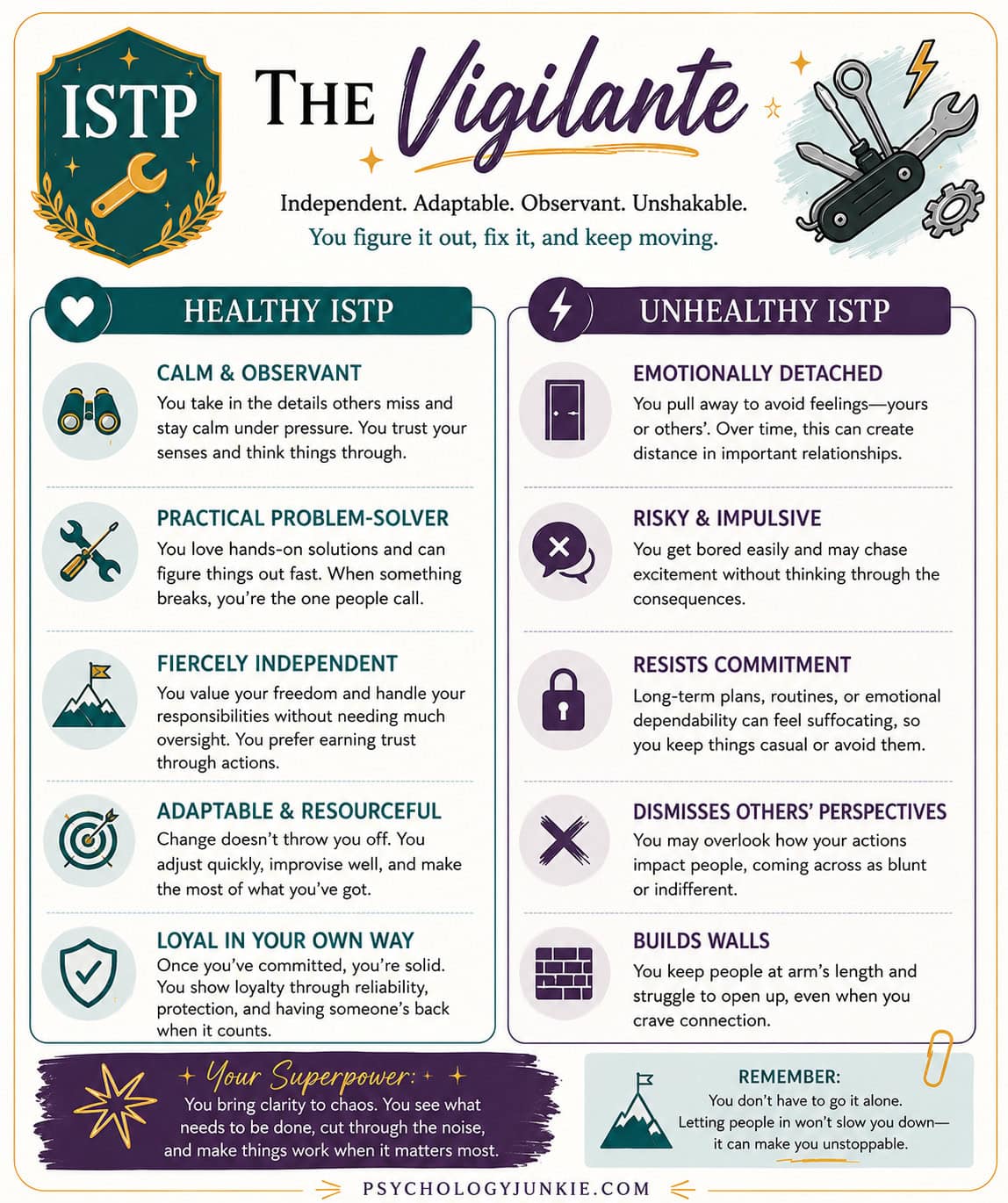
ISTPs are the enemies you never see coming. They don’t act on impulse; they wait for the perfect moment to strike. Their ability to analyze their surroundings is borderline terrifying. Think Jason Bourne: scanning the room, picking up on every weakness, and taking someone down before they even know a fight has started. They don’t get emotional, bluff, or waste time. If you push an ISTP too far, you might not get a dramatic explosion—you’ll just suddenly realize you’ve lost.
Big mistake: Assuming their silence means they’re not paying attention. They’ve already figured out five ways to take you down.
How this shows up in everyday life:
Imagine someone keeps trying to manipulate a group discussion. They’re using guilt, exaggeration, and emotional language to keep everyone off balance.
The ISTP lets them talk. Then, when there’s a pause, they ask one simple question.
“That doesn’t match what you said last week. Which version is true?”
Their response is usually detached but unsettling. The other person knows they’ve lost without the ISTP having to raise their voice or get defensive. They have a knack for spotting contradictions and exposing them concisely. One well-placed observation can unravel an entire performance, leaving the other person scrambling to explain themselves.
The ESFJ
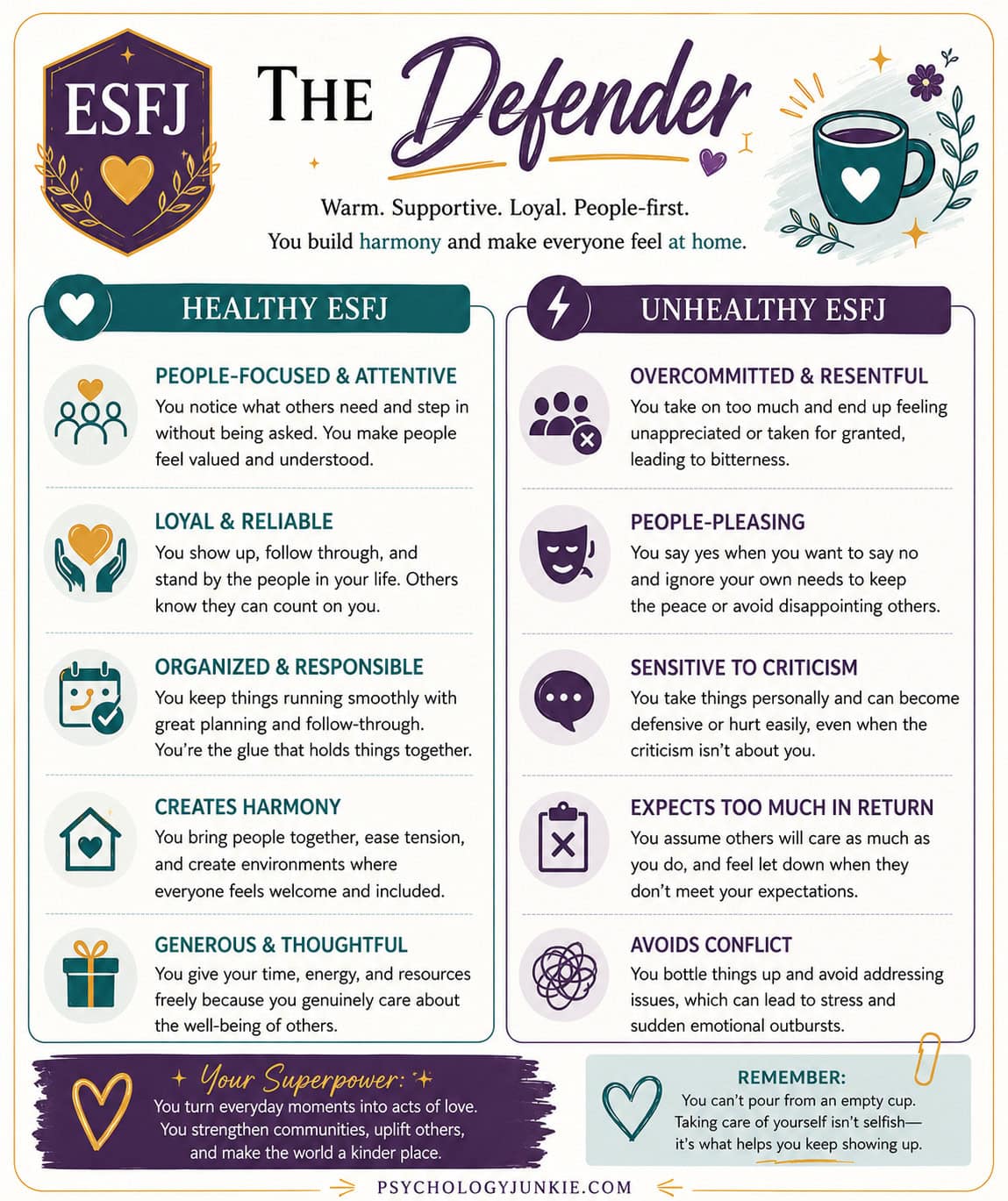
ESFJs don’t need to throw punches to take down an opponent – they just need to talk. Charismatic and socially attuned, they have a powerful ability to influence group dynamics. If someone threatens their loved ones or their values, ESFJs won’t come at them directly; instead, they’ll subtly shift the social tide, making sure everyone else sees exactly why this person can’t be trusted.
People tend to assume ESFJs are just warm and nurturing, which they are, but they’re also extremely protective. Because they’re natural connectors, they can rally a network of support almost effortlessly. Before you know it, the social world has turned against you and there’s no going back.
Big mistake: Thinking their kindness makes them a pushover. They’re not just part of the group—they run it.
How this shows up in everyday life:
Imagine someone continually mistreats people in a friend group. The ESFJ will start pulling people aside and talking to them individually. They compare notes, ask questions, and help everyone see the larger pattern. Before long, the group reaches the same conclusion on its own.
People sometimes underestimate how influential healthy ESFJs can be because their influence rarely feels forceful. They build consensus rather than demanding obedience.
If someone depends on social charm to hide bad behavior, that strategy often stops working once an ESFJ starts connecting the dots for everyone else.
The ESTJ
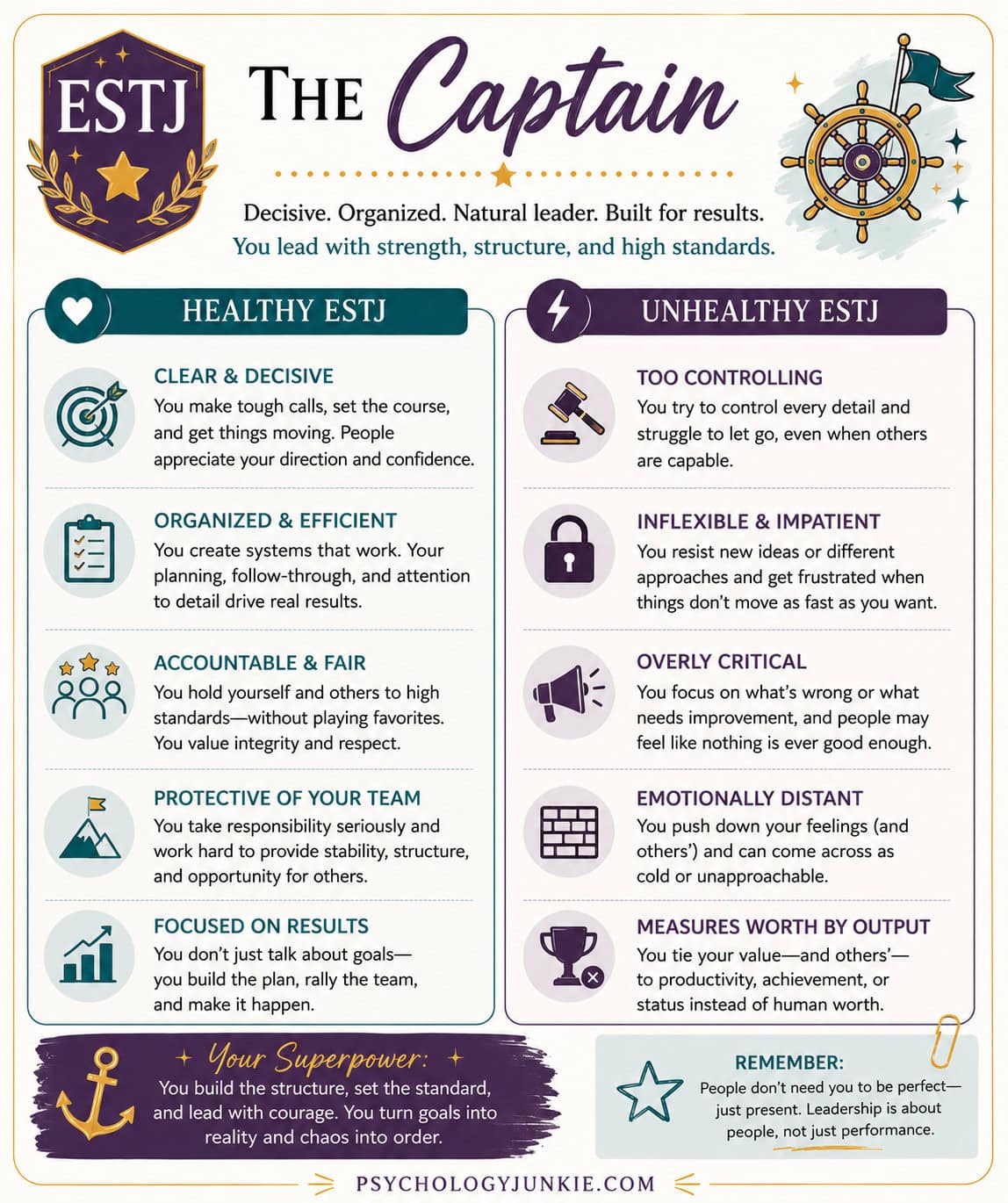
ESTJs don’t do nonsense. They don’t do excuses. And they definitely don’t do laziness. If someone is slacking off, breaking rules, or generally being incompetent, ESTJs will step in and set things straight without hesitation. They see the world as a system that needs to function smoothly, and if you’re clogging the gears? You’re getting removed.
These types aren’t prone to emotional manipulation, and they have zero patience for dishonesty. They trust logic, results, and track records, which means if you try to deceive them, they’ll see right through it. ESTJs don’t waste time plotting revenge; they just make sure that incompetence and dishonesty get exactly the consequences they deserve. They’ll either demote you to your rightful place or reorganize the situation so that your impact is minimized entirely.
Big mistake: Thinking you can charm or guilt your way out of accountability. ESTJs respect results, not excuses.
How this shows up in everyday life:
Suppose someone in the office keeps bending the rules while everyone else picks up the slack. Many people complain, and the ESTJ starts fixing the system.
They rewrite procedures, tighten accountability, clarify expectations, and remove loopholes that allowed the behavior in the first place. Sometimes the person they’re frustrated with barely realizes they’ve lost their advantage until it’s already gone.
The ISFJ
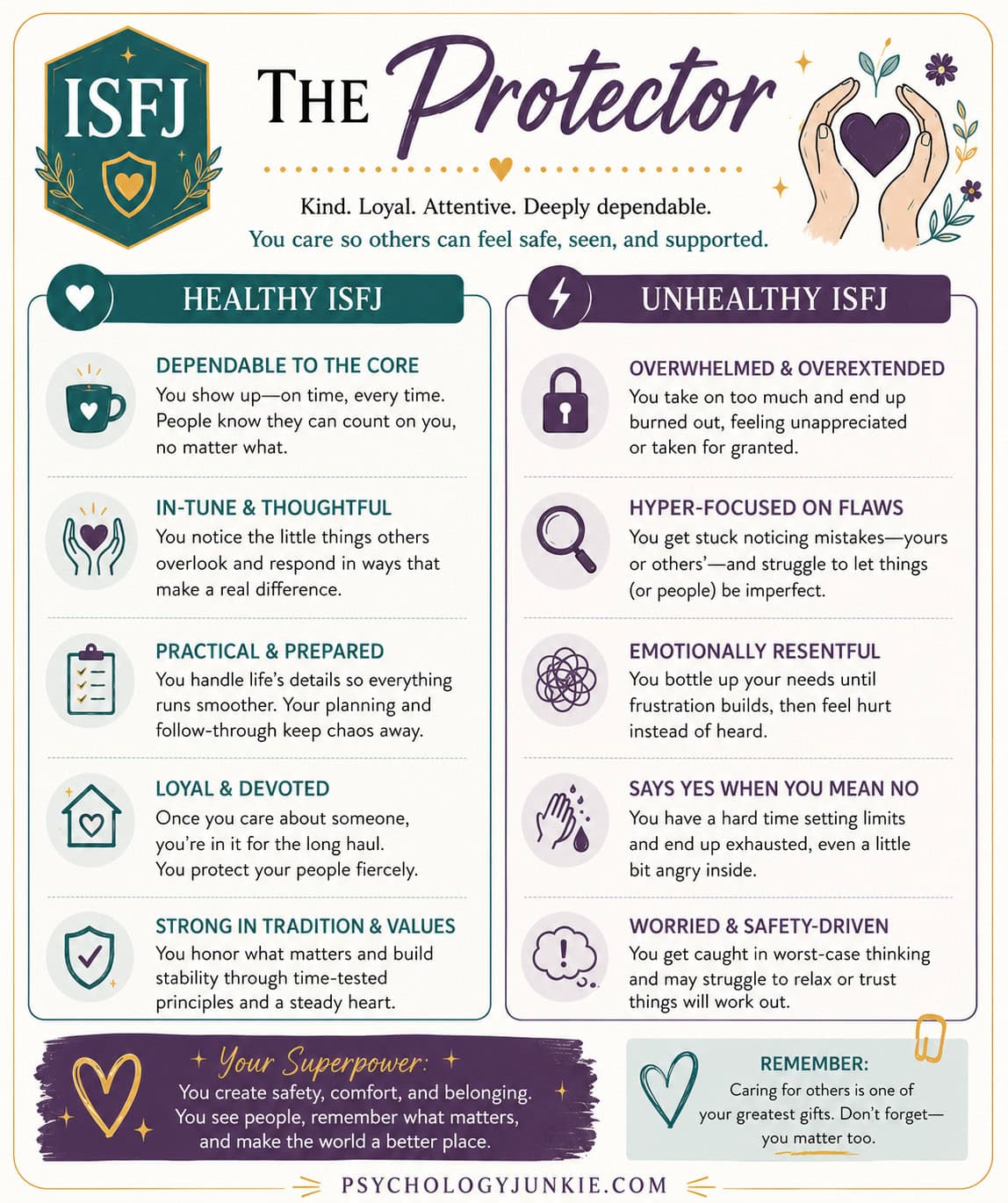
ISFJs are the last people to go looking for a fight, but if you cross a line? They never forget. Thoughtful, observant, and detail-oriented, they take their time before acting—but once they commit to a cause, they see it through to the bitter end. If someone violates their values or harms someone they love, they work quietly, carefully, and with the dedication to set things right.
What makes ISFJs particularly formidable is their patience. They don’t get distracted or lured into dramatic confrontations; they simply chip away at their opponent’s weak spots until they’ve dismantled the entire plan. They’re also incredibly perceptive when it comes to people’s emotions and behaviors, which means they can anticipate missteps before they even happen.
Big mistake: Thinking their quiet nature means they’ll let things go. They won’t. They’ll just wait until the perfect moment to act.
How this shows up in everyday life:
Someone hurts one of the people they love. At first, the ISFJ tries to give them the benefit of the doubt. They listen, watch, and hope it was a misunderstanding. But if the pattern continues, everything changes.
Because ISFJs pay such close attention to people’s habits and character over time, they’re surprisingly difficult to deceive repeatedly. They remember broken promises, subtle manipulations, and the little inconsistencies everyone else dismissed.
If they finally confront someone, it can feel unnerving because they’re drawing from months or years of careful observation. They aren’t throwing random accusations around. They’re describing a pattern that people struggle to explain away.
The ISTJ
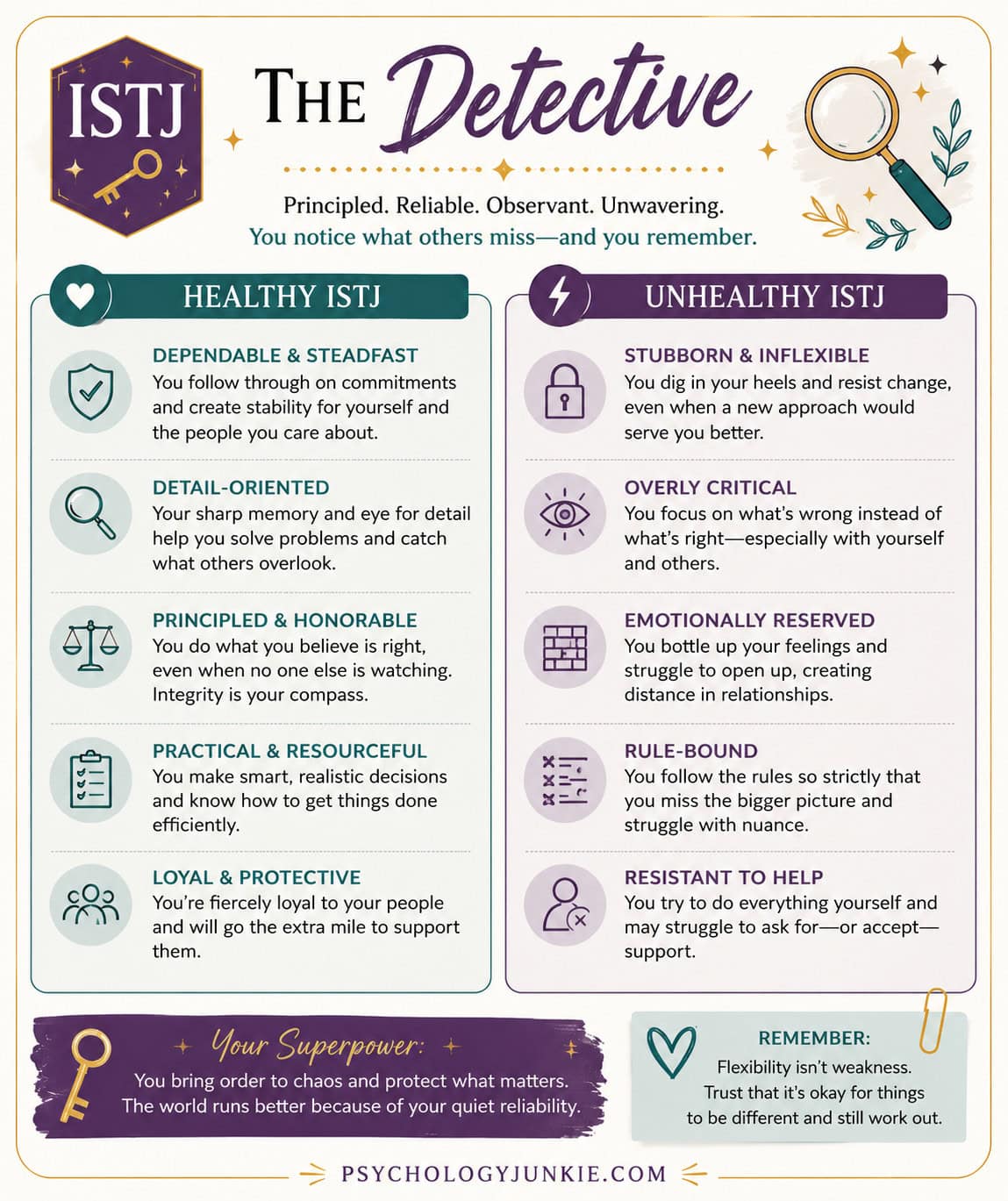
Focused, logical, and quick to notice patterns and inconsistencies, ISTJs are the enemy you never saw coming. At first glance, they seem reserved and down-to-earth, not particularly intense or combative. But the more time they spend around people the more they pick up on hidden weaknesses, habits, motives, and tendencies. If someone poses a threat they can quickly turn their enemy’s defects against them while patiently composing the perfect scheme to render their plot ineffective. ISTJs are persistent, dedicated, and not easy to distract. This can be a formidable weapon, especially if their opponent is easily sidetracked.
Big mistake: Assuming their silence means they’re not paying attention. They’ve already taken notes—and they have receipts.
How this shows up in everyday life:
Imagine someone at work keeps taking credit for other people’s ideas. Most people grumble about it, but the ISTJ starts paying attention.
They remember exactly who proposed the idea six months ago, who was in the meeting, what was promised afterward, and which deadlines mysteriously changed. They’re gathering facts because facts are difficult to argue with.
If they decide someone has crossed a serious line, they’re not going to get emotional about it. Instead, they’ll walk into the meeting with a timeline, documentation, and enough evidence that the other person ends up exposing themselves.
Sun Tzu wrote, “Every battle is won before it is fought.” Healthy ISTJs often approach conflict the same way. By the time they’re willing to confront someone, they’ve already done their homework.
What Are Your Thoughts?
Find out more about your personality type in our eBooks, Discovering You: Unlocking the Power of Personality Type, The INFJ – Understanding the Mystic, and The INFP – Understanding the Dreamer. You can also connect with me via Facebook, Instagram, or Twitter!









As an infj I can relate to all of these, is this like the psychic on the street generalizing enough to relate to all people or the chameleon effect of my type. If it is a chameleon effect then take all the best and worst of all types and place that under the infj.
Really useful!! Loved it…
I enjoyed this approach. I’d like to more articles like this one.
Believing in MBTI and devoting a career to it is dangerous. But who am I to speak, just a silly European.
We really need to stop taking about the MBTI. It has been proven again and again that it’s a measure with no scientific validity. Objective studies have not been able to discern these types in natural samples. Anyone using it while claiming to be a psychologist, is not practicing science, is not professional, and is instead a peddler of pseudo-science, riding the coat-tails of those who have done the hard work.
Then why are you even here? Also, if it’s “so unproven,” then why do psychologists still study it today in most universities, if not all? Furthermore, if the only reason you read this article, if indeed you read it, was to comment on the “unproveness” of Myers-Briggs, then I believe that is a waste of your time. Until you can provide actual evidence that Myers-Briggs is false, I am afraid I cannot even give your point of view the slightest bit of consideration. Good day, sir.
It would have been very helpful to know what the abbreviations on personality traits were. I was disappointed and there was no point in me reading.
I just noticed have every characteristics of these personalities,how is that even possible,do i have a mixed personality,i demand a response please.
As an INTP I only wish I had the powers described here…I’m more likely to find myself the victim of this strategy, but like most introverts I require a fair amount of time to process, so often by the time I’ve dismantled someone’s argument (if there are indeed flaws, as some are ironclad) the discussion is over, the lights are off and everyone has gone home. It’s usually only then that I realize my opponent had sidestepped the main thrust of my argument, either deliberately or inadvertently or had introduced non sequiturs that made him/her look good but didn’t address the topic at hand. Then I spend the next few days revisiting the argument in my head, kicking myself over what I should have said but didn’t and trying to figure out how to avoid situations like this in the future. Eventually I conclude that people are just mean and cruel and that I should avoid discussion or voicing opinions in mixed company altogether.
I found this post incredibly insightful! It’s fascinating to see how different Myers-Briggs types can possess unique strengths that make them ‘dangerous’ in their own way. I particularly resonated with the description of ENFPs—our passion and creativity can definitely be a double-edged sword. Thanks for sharing such a thought-provoking perspective!
I don’t think we need to stand on the side of accusations here. When someone does this, aren’t we actually seeing more about them than the subject they speak of. After all, we don’t have another person’s opinion. We have our own. The MB has enough to offer that makes it a worthwhile subject. I have used it as an ice breaker so many times and so successfully. There are many people who find it hard to locate what’s inside. If you hand a person an envelope they will surely open it and read the contents. MB is an envelope that holds a personal message for everyone but on their own terms and at their own level.
If we accuse it with a rock solid dislike title, we deny another the possibility, the potential and the tool they can use themselves.
Let’s just take what we need and leave others to do the same instead of needing to insist others agree or see our so called rightness. Who knows, the people who have criticized the MB might actually discover benefits in five years. That applies to everything really. A sapling cannot see over the object next to it until it grows a little taller. Know what I mean ?