
40 Iconic Enneagram 3 Characters From Movies, TV, and Literature
Enneagram Threes are known for their confidence and charisma. Talented, ambitious, and polished, they know how to chase after their dreams without turning back. Whether they’re captaining a volleyball team, running a corporation, or trying to become the greatest pilot in the world, they throw themselves into life with an intensity that’s hard to ignore.
But after years of working with Enneagram clients, I’ve found that confidence is rarely the whole story. And sometimes what looks like confidence can even be desperation. As with all of the personality types, there are thousands of factors that work behind the scenes to make them who they are, and no two are exactly alike.

Psychiatrist Claudio Naranjo, one of the pioneers of the modern Enneagram, described Type Three as becoming disconnected from their authentic feelings in pursuit of an idealized image of success. In other words, they can become so focused on becoming someone admirable that they lose touch with who they are beneath the achievements.
That’s why Threes make such compelling fictional characters.
They’re often standing at the intersection of identity and performance. Some discover that success isn’t nearly as satisfying as they imagined. Others learn that vulnerability earns more love than perfection ever could. And some become so consumed by winning that they can no longer remember why they started running in the first place.
As Carl Jung wrote, “The privilege of a lifetime is to become who you truly are.” I don’t think there’s any personality style that wrestles with that challenge more visibly than the Three.
Of course, not every Three looks the same. Some are charismatic performers. Some are strategic masterminds. Some become inspiring leaders, while others let ambition slowly hollow them out. The characters on this list all reflect different expressions of the same core motivation: the desire to become someone valuable, capable, and worthy of admiration.
Let’s take a look at some of the most iconic Enneagram Threes in movies and television.
Not sure what your Enneagram type is? Take our free Enneagram questionnaire here.
40 Iconic Enneagram 3 Characters From Movies, TV, and Literature

Table of contents
- 40 Iconic Enneagram 3 Characters From Movies, TV, and Literature
- #1 – Asuka Langley Soryu (Neon Genesis Evangelion)
- #2 – Oikawa Tooru (Haikyuu!!)
- #3 – Rainbow Dash (My Little Pony)
- #4 – Mei Lee (Turning Red)
- #5 – Blair Waldorf (Gossip Girl)
- #6 – BoJack Horseman (BoJack Horseman)
- #7 – Devi Vishwakumar (Never Have I Ever)
- #8 – Neito Monoma (My Hero Academia)
- #9 – Kamisato Ayato (Genshin Impact)
- #10 – Mel Medarda (Arcane)
- #11 – Cho Sang-woo ( Squid Game )
- #12 – Vox ( Hazbin Hotel )
- #13 – Tiana (The Princess and the Frog)
- #14 – Amy March ( Little Women )
- #15 – Petyr Baelish ( Game of Thrones )
- #16 – Miya Chinen ( SK8 the Infinity )
- #17 – Sansa Stark ( Game of Thrones )
- #18 – Paris Geller ( Gilmore Girls )
- #19 – Yuri Plisetsky ( Yuri!!! on Ice )
- #20 – Cristina Yang ( Grey’s Anatomy )
- #21 – Miranda Priestly ( The Devil Wears Prada )
- #22 – Damian Desmond ( Spy x Family )
- #23 – Don Draper ( Mad Men )
- #24 – Ruby Matthews ( Sex Education )
- #25 – Yennefer of Vengerberg ( The Witcher )
- #26 – Cal Jacobs ( Euphoria )
- #27 – A-Train ( The Boys )
- #28 – Tetta Kisaki ( Tokyo Revengers )
- #29 – Shiv Roy ( Succession )
- #30 – Beth Smith ( Rick and Morty )
- #31 – Kuon Wataru ( Blue Lock )
- #32 – Mia Dolan ( La La Land )
- #33 – Rin Matsuoka ( Free! )
- #34 – Tyrell Wellick ( Mr. Robot )
- #35 – Hong Hae-in ( Queen of Tears )
- #36 – Dr. Eric Foreman ( House )
- #37 – Saori Shibuki ( Alice in Borderland )
- #38 – Lee Young-joon (What’s Wrong With Secretary Kim?)
- #39 – Ryu Soo-yeol ( Bad and Crazy )
- #40 – Buzz Lightyear (Toy Story)
- Wrapping It Up…
- Other Articles You Might Enjoy:
#1 – Asuka Langley Soryu (Neon Genesis Evangelion)

On the surface, Asuka is impossible to miss. Brilliant, confident, outspoken, and competitive, Asuka walks into almost every room believing she has something to prove. She constantly reminds everyone that she’s an Eva pilot, boasts about her abilities, and becomes visibly frustrated whenever someone else outshines her. It’s easy to mistake this for arrogance.
The longer you watch Evangelion, though, the more obvious it becomes that her confidence is built on incredibly fragile ground.
As a child prodigy who earned a university degree while still a teenager, she’s spent most of her life learning that achievement earns attention, admiration, and perhaps most importantly, love. Whenever her performance begins slipping, her entire sense of self starts to unravel. She doesn’t just think, “I’m having a bad day.” Instead, her mind jumps to something much darker: “If I’m not the best pilot, then who am I?”
That’s one of the biggest traps for unhealthy Threes.
Psychologist Karen Horney once wrote that neurotic striving comes from trying to become “the person one feels one should be.” Asuka embodies that struggle fully. She has an image of the strong, independent, untouchable girl she believes she must become, and every weakness feels like a betrayal of that image.
#2 – Oikawa Tooru (Haikyuu!!)

I’ve seen a lot of debates about Oikawa’s Enneagram, but I keep coming back to Three.
Unlike the naturally gifted players around him, Oikawa knows exactly what it feels like to work twice as hard just to keep up. Every practice session, every late-night strategy session, every extra serve is fueled by this belief: If I work hard enough, I can beat talent.
He’s ambitious almost to a fault, but what I appreciate most is that his ambition isn’t shallow. He genuinely loves volleyball. You can see it in the way he studies opponents, develops strategies, and learns how to bring out the strengths of every teammate around him. Rather than focusing wholly on himself, he wants to become the kind of leader who elevates everyone else. This is what healthy Threes are capable of.
Of course, that doesn’t stop him from comparing himself to people like Kageyama or Ushijima.
Comparison is one of the biggest hazards for many Threes because someone always seems faster, smarter, richer, or more naturally talented. Oikawa feels those comparisons deeply, and there are moments where they almost consume him.
Fortunately, they don’t define him.
One of my favorite things about his story is that he never gives up. Instead of surrendering to the idea that genius always wins, he doubles down on discipline. As someone who has worked with many Enneagram Threes over the years, that’s something I’ve seen again and again. Healthy Threes eventually stop competing with everyone else and start competing with yesterday’s version of themselves.
#3 – Rainbow Dash (My Little Pony)

Rainbow Dash might be one of the most entertaining examples of an Enneagram Three because she’s so wonderfully obvious about it.
She wants to be the fastest flyer, the coolest pony, and the one everyone remembers, and she’s not shy about telling you.
Rainbow is all about competition. Whether she’s chasing a new flying record, trying to impress the Wonderbolts, or challenging Applejack to yet another contest, she genuinely comes alive when there’s an opportunity to prove herself.
Yet what keeps her from becoming a caricature is that she keeps learning the important lesson that winning isn’t everything.
Again and again, Rainbow is forced to choose between looking impressive and being a good friend. Sometimes she gets it wrong. Sometimes her desire to shine gets the better of her. But more often than not, she realizes that loyalty matters more than applause.
#4 – Mei Lee (Turning Red)

When we first meet Mei Lee, she’s trying very, very hard to be the perfect daughter. This means perfect grades, perfect behavior, perfect reputation, and, of course, a perfect future.
She genuinely loves her mother, but it’s also obvious that much of her identity has become wrapped up in earning approval. She lights up whenever she’s praised and panics whenever she thinks she’s disappointed someone.
That’s where her story becomes such a wonderful metaphor for Type Three.
The red panda isn’t only about puberty. It’s about authenticity.
Suddenly, all the messy, emotional, imperfect parts of herself refuse to stay hidden any longer. She has to decide whether she’ll continue performing the role everyone expects or embrace the person she’s actually becoming.
Carl Rogers once wrote, “The curious paradox is that when I accept myself just as I am, then I can change.” That idea sits right at the heart of Mei’s story.
Her happiest ending doesn’t come from becoming perfect. Instead, it comes from realizing she never had to be.
#5 – Blair Waldorf (Gossip Girl)

Everything about Blair Waldorf feels carefully curated. Her clothes, her friendships, her future, her social status, even the way she walks through the halls at school all communicate the same message: I know exactly who I am.
Except she doesn’t.
That’s what makes Blair such a fascinating Enneagram Three.
For much of Gossip Girl, she’s trying to become the version of herself she believes deserves love, respect, and admiration. She dreams of being powerful, elegant, successful, and untouchable, and she’s willing to work incredibly hard to get there. Unfortunately, she’s also constantly comparing herself to Serena, whose effortless charisma seems to attract everything Blair has spent years trying to earn.
I’ve seen this dynamic with quite a few Threes over the years. They compare themselves to people who appear to succeed without trying. That can be maddening because it so deeply unfair. Blair prepares relentlessly while Serena often stumbles into the spotlight without meaning to, and Blair can’t quite make peace with that.
Psychologist Carl Rogers believed that psychological health depends on bringing our real self closer to our ideal self. Blair spends much of the series trying to perfect the ideal self instead. She can be manipulative, snobbish, and controlling, but underneath all those defenses is a young woman who’s terrified that if the image falls apart, no one will stay.
#6 – BoJack Horseman (BoJack Horseman)

BoJack is probably the darkest example in this section because he shows what can happen when your entire identity becomes dependent on external validation.
Sure, he’s famous, successful, recognizable everywhere he goes. And yet he’s profoundly miserable.
One of the biggest misconceptions about Enneagram Three is that success automatically satisfies them. If that were true, BoJack’s story would have ended before the first episode. Instead, every achievement seems to buy him only a temporary sense of relief before he’s left wondering why the emptiness keeps coming back.
I’ve always thought BoJack illustrates something the psychologist Alfred Adler understood well. Adler believed that people often spend their lives compensating for deep feelings of inadequacy, and that compensation can become either healthy or destructive. BoJack’s entire life feels like one long attempt to outrun the belief that he’s fundamentally unlovable. Fame becomes the medication. Applause becomes the proof that maybe he’s worth something after all.
The tragedy is that validation never lasts very long.
As soon as one interview ends, another has to begin. One award leads to the next project. One burst of attention fades, leaving him desperate to recreate the feeling. Human beings want to feel that their lives matter. BoJack simply looks for that meaning in places that can never provide it permanently.
#7 – Devi Vishwakumar (Never Have I Ever)

Devi is intelligent, driven, funny, and constantly imagining the version of herself she wants everyone else to see. Whether she’s trying to become the girl with the perfect boyfriend, the highest grades, or the most exciting social life, she’s always reaching toward some future identity that promises everything will finally click into place.
After the death of her father, Devi becomes even more determined to regain a sense of control over her life. Like many Threes under stress, she throws herself into achievement and reinvention because movement feels safer than sitting still with grief. If she can just fix enough things, accomplish enough goals, or become impressive enough, maybe the pain won’t catch up with her.
The sad thing is that the more she tries to outrun her emotions, the more they spill out in unexpected ways. She hurts people she genuinely loves, makes impulsive decisions, and often creates the very problems she’s trying to avoid.
As a practitioner, I’ve found that younger Threes often struggle with exactly this dilemma. They’re incredibly resilient, but they sometimes mistake resilience for never needing help. Devi slowly learns that strength isn’t measured by how convincing your performance is. It’s measured by whether you can tell the truth about what’s happening inside you, even when that truth feels messy.
#8 – Neito Monoma (My Hero Academia)

Monoma is theatrical, dramatic, endlessly competitive, and seems to have an almost supernatural ability to turn every interaction into an opportunity to prove himself. At first he comes across as little more than an arrogant show-off, but I think there’s something more interesting happening beneath the surface.
Monoma desperately wants recognition. He’s painfully aware of how often he’s overlooked. He’s surrounded by classmates with flashier Quirks, bigger reputations, and more obvious talent, and he responds by making himself impossible to ignore. If his abilities won’t automatically put him in the spotlight, his personality certainly will.
I’ve met people who learned early in life that blending into the background felt dangerous. They discovered that being exceptional, entertaining, or impressive earned attention that ordinary effort didn’t. Over time, performing became second nature.
Monoma’s confidence often feels louder than it really is because it’s compensating for insecurity. Every boast seems designed to convince himself as much as everyone else. The irony is that underneath all the dramatics, he’s actually quite perceptive and capable. If he trusted that more often, he probably wouldn’t feel such a constant need to announce his worth.
His story reminds me of a line from philosopher Søren Kierkegaard: “Comparison is the most fatal acquaintance love can make.” I’d argue it’s equally dangerous for self-worth. Monoma spends so much energy measuring himself against everyone around him that he rarely gets to enjoy becoming his own person. When he lets go of that comparison, even briefly, you catch glimpses of someone who’s genuinely talented without needing to prove it every five minutes. Those moments make me wish we saw even more of that version of him.
#9 – Kamisato Ayato (Genshin Impact)

Ayato is calm, strategic, and almost impossible to catch off guard. While his younger sister naturally occupies more of the public spotlight, Ayato is usually somewhere behind the scenes pulling together information, anticipating problems, and moving people into exactly the right positions before anyone realizes there was a crisis in the first place.
After the deaths of his parents, Ayato inherits enormous responsibility long before he’s truly ready for it. Rather than collapsing under the weight, he adapts. He learns politics, develops alliances, protects his family’s position, and shields Ayaka from many of the harsher realities of leadership. Watching him work, you get the impression that every conversation is serving three different purposes at once.
I’ve met quite a few Threes who resemble Ayato more than the stereotypical energetic achiever. They’re measured and thoughtful, not the performative, flashy types. They don’t need everyone to applaud them because they gain satisfaction from knowing they’ve held everything together.
The danger, of course, is that people begin assuming they’re invincible.
Ayato rarely allows others to see how much pressure he’s carrying. He presents confidence because everyone around him depends on it. That’s admirable, but it can also be lonely.
#10 – Mel Medarda (Arcane)

When we first meet Mel, she’s already one of the most influential people in Piltover. She has wealth, status, political influence, and the respect of the Council. Yet unlike many leaders in fiction, she doesn’t rely on intimidation to get what she wants. She persuades, negotiates, and studies people carefully before deciding how to move forward.
That’s one of the reasons I enjoy typing fictional characters. Two people can both be ambitious while pursuing success in completely different ways. Mel’s ambition is more about vision and empathy than pure conquest (unlike her mother).
Her relationship with Jayce also reveals something I often see in healthier Threes. Rather than simply asking what exists today, she’s drawn toward what someone might become if they’re given the opportunity to succeed. Good leaders often have that gift.
Her story also carries an interesting tension between external expectations and personal values. Having grown up under Ambessa’s philosophy that strength comes through domination, Mel gradually discovers that influence built on trust can accomplish things violence never could. She doesn’t abandon ambition. She redefines it.
Carl Jung wrote, “Thinking is difficult, that’s why most people judge.” Mel consistently chooses the harder path. She observes before reacting, questions before condemning, and tries to understand the larger consequences of each decision. Those qualities make her one of my favorite examples of a Three whose competence serves something bigger than personal success.
#11 – Cho Sang-woo (Squid Game)

Long before he entered the Squid Game, Sang-woo was already carrying an unbearable burden.
Back home, Sang-woo was the success story. The neighborhood genius. The boy who got into Seoul National University. The son everyone pointed to with pride and compared their own children to. His future wasn’t just his own anymore. It belonged to everyone who had invested their hopes in him.
Then it all collapsed.
His failed investments left him drowning in debt, facing criminal charges, and terrified that his mother would lose everything because of his mistakes. What strikes me isn’t just that he made terrible decisions. It’s that he couldn’t bring himself to tell the truth. He would rather risk death in the Squid Game than face the humiliation of admitting he’d failed.
I’ve seen shades of this in some Enneagram Threes I’ve worked with over the years. They don’t fear failure nearly as much as they fear what failure means. If achievement has become the foundation of your identity, losing it can feel less like making a mistake and more like becoming one.
Psychologist Brené Brown has written, “Shame derives its power from being unspeakable.” Sang-woo spends almost the entire series trapped by exactly that kind of shame. Every desperate choice pushes him further away from the person he once wanted to be.
By the final episode, he has achieved exactly what he’d been fighting for: the opportunity to win. Yet standing across from Gi-hun, it finally becomes obvious that victory won’t undo what he’s become.
#12 – Vox (Hazbin Hotel)

Everything about Vox is carefully engineered to project power. He’s charismatic, polished, technologically brilliant, and always seems to know exactly how to command a room. He understands branding, influence, public opinion, and spectacle better than almost anyone around him. In many ways, he’s built an empire out of attention itself.
But attention has a funny habit of never feeling like enough.
For Vox, every victory immediately creates a new obsession. He gains influence over Hell, then wants more. He defeats one rival, then becomes consumed with another. He dreams of becoming something almost divine, adored by everyone and questioned by no one.
Healthy ambition can produce extraordinary accomplishments. Unhealthy compensation, however, creates an appetite that can never really be satisfied. The next achievement always promises fulfillment, but fulfillment never quite arrives, and I think that pattern defines Vox.
Even his rivalry with Alastor feels less like hatred than insecurity. Alastor represents the one person whose approval—or defeat—might finally prove Vox has become everything he wants to be. Instead of enjoying the influence he’s already earned, he becomes increasingly consumed by comparison.
I’ve noticed that unhealthy Threes often fall into this trap. They move the finish line every time they reach it. Instead of asking, “What kind of person am I becoming?” they ask, “What’s the next mountain?”
Eventually there are no mountains left, and loneliness consumes them.
For all his charm and confidence, Vox feels strangely hollow because he’s forgotten the difference between being admired and being known. The first feeds his ego. The second requires vulnerability, something he avoids almost at any cost.
#13 – Tiana (The Princess and the Frog)

Tiana is one of my favorite examples of a healthy Enneagram Three. From the beginning of the film, she works harder than almost anyone around her. She believes in earning what she has, refusing shortcuts or handouts even when they might make life considerably easier. Her determination is impressive and I think it’s one of the reasons so many people love her.
Yet at the same time, opening her restaurant seems to become proof that every sacrifice has been worthwhile. Rest starts to feel irresponsible to her (I think every Three reading this will relate to that sentiment). Time with friends becomes something she’ll enjoy later. Love can wait until after the dream is accomplished.
Psychologist Viktor Frankl observed that “Success, like happiness, cannot be pursued; it must ensue.” In other words, the more directly we chase fulfillment itself, the more elusive it becomes.
That’s the lesson Tiana learns, albeit a bit slowly. Naveen also helps her to realize the truth that ambition can’t be all there is. Through him, she rediscovers music, laughter, relationships, and the simple joy of being present instead of constantly preparing for some future version of life.
Of all the fictional Threes on this list, she may be one of the clearest examples of what healthy integration can look like.
#14 – Amy March (Little Women)

Amy March might be one of the most misunderstood characters in classic literature.
For years she’s been dismissed as vain, spoiled, or overly concerned with appearances. While there’s certainly a kernel of truth there, I think Louisa May Alcott was writing something much more interesting. I don’t personally think Amy is shallow. I see her as intensely aware of how the world works, particularly for women of her time.
She understands that talent alone isn’t always enough.
Status matters.
Presentation matters.
Reputation matters.
Unlike Jo, who often rebels against society’s expectations, Amy studies them carefully. She learns etiquette, develops her artistic abilities, refines her social skills, and positions herself for opportunities she knows won’t simply fall into her lap. That strategic quality is something I often see in healthy Threes. They’re always keen to the rules of the game.
At the same time, Amy struggles with a temptation common to many Threes: measuring her worth against someone else’s gifts. Throughout much of the novel she’s painfully aware of Jo’s confidence and artistic freedom while privately wondering whether she’ll ever become extraordinary in her own right.
I’ve found that comparison can become exhausting for Threes because they’re so good at noticing excellence in other people. Every accomplished person can start to feel like evidence that they’re somehow falling behind. Theodore Roosevelt famously observed, “Comparison is the thief of joy.” Whether or not he was the first to say it, the sentiment fits Amy remarkably well.
What I admire most about Amy is that she eventually lets go of becoming someone else’s version of successful. She recognizes that she may never become the artistic genius she’d hoped to be, but instead of clinging to an impossible dream, she builds a meaningful life using the gifts she genuinely has at her disposal.
#15 – Petyr Baelish (Game of Thrones)

Few fictional characters understand ambition quite like Littlefinger.
Born into a minor house with little wealth or influence, he spends his entire life watching powerful families dismiss him as insignificant. Rather than accepting his place in the social hierarchy, he decides he’ll rewrite it.
Littlefinger studies people with a kind of scientific curiosity. He notices what they want, what they fear, what they’ll sacrifice, and then carefully positions himself to benefit from every weakness he discovers. Watching him feels less like watching a warrior and more like watching an expert chess player who’s already thinking ten moves ahead.
He’s brilliant, resourceful, and extraordinarily disciplined. The tragedy is that his ambition gradually detaches from any meaningful purpose. At some point, winning becomes more important than what he’s actually winning for. Power stops being a tool and becomes the destination itself.
#16 – Miya Chinen (SK8 the Infinity)

What happens when success arrives before you’re emotionally ready for it?
As a child, Miya adores skateboarding. It’s playful, creative, and something he enjoys sharing with his friends. Then he starts winning.
The better he becomes, the fewer friends seem to stick around.
Instead of experiencing achievement as something that makes his life better, he starts associating it with loneliness. That’s a painful lesson for anyone to learn, especially as a child. Over time, he develops an arrogant, sarcastic persona that keeps people at a comfortable distance. After all, if they can’t get close to him, they can’t abandon him either.
I’ve worked with gifted teenagers who reminded me a little of Miya. Adults praised their accomplishments so consistently that they began believing their value rested entirely on continuing to impress everyone around them. It’s an unhealthy and heavy burden for a child to carry.
Psychologist Donald Winnicott believed that children develop best when they’re allowed to play freely rather than constantly perform. Watching Miya, I often think about that idea. Somewhere along the way, skateboarding stopped feeling like play and started feeling like proof.
However, through friendships with Reki and Langa, Miya slowly rediscovers something he’d almost forgotten: people can enjoy being around him even when he’s not standing on a podium. He doesn’t have to be the prodigy every moment of the day. He can simply be a kid.
#17 – Sansa Stark (Game of Thrones)

Sansa Stark is quiet where many Threes are outgoing and reserved where others are charismatic. But one thing I’ve learned after years of working with the Enneagram is that no two types look exactly the same.
When we first meet Sansa, she’s devoted to becoming the perfect lady. She dreams of marrying a handsome prince, wearing beautiful gowns, and living the kind of life she’s read about in songs and stories. More than anything, she wants to embody the image of grace, refinement, and nobility that she’s been taught to admire.
Like many young Threes, she has a clear picture of the person she believes she should become. Life, unfortunately, has other plans.
The horrors Sansa goes through force her to abandon nearly every illusion she once held about honor, romance, and power. Instead of breaking her completely, those experiences gradually reshape her understanding of strength. She learns to observe before acting, to hide her intentions when necessary, and to recognize that appearances can be carefully manufactured.
One of my favorite Carl Jung observations was that “No tree, it is said, can grow to heaven unless its roots reach down to hell.” Sansa’s wisdom doesn’t come from natural talent or privileged education. It comes from surviving unimaginable suffering without allowing that suffering to define her.
#18 – Paris Geller (Gilmore Girls)

From the moment she’s introduced, Paris seems to have one speed: full throttle. She signs up for every leadership position she can find, studies with frightening intensity, and treats every exam as though the fate of civilization depends on the outcome.
Underneath all that ambition, though, is someone who desperately wants proof that she’s enough. Every achievement feels temporary because another benchmark is already waiting around the corner. An A-minus becomes a crisis. A college rejection becomes an identity crisis.
Psychologist Albert Ellis argued that one of the healthiest things we can develop is unconditional self-acceptance. In other words, your worth as a human being doesn’t fluctuate every time you succeed or fall short. Paris spends much of the series learning that lesson the hard way.
#19 – Yuri Plisetsky (Yuri!!! on Ice)

From a young age, Yuri has been celebrated as a prodigy. His technical skill is extraordinary, his work ethic is unstoppable, and his determination borders on intimidating. Every competition feels personal because he’s trying to prove he deserves to stand among the best.
That pressure leaks into almost every part of his personality. He can be abrasive, sarcastic, and openly dismissive of other competitors, especially when he feels underestimated. It’s easy to interpret that as arrogance, but I think it’s often coming from a place of fear.
I’ve worked with enough high achievers to know that success can sometimes create its own anxiety. Once you’ve become known as “the gifted one,” every performance feels like a test of whether you can keep living up to the reputation.
Existential psychologist Rollo May wrote that “The opposite of courage in our society is not cowardice… it is conformity.” Yuri’s journey isn’t just about becoming a better skater. It’s about discovering his own style rather than trying to satisfy everyone else’s expectations. As he matures, he begins skating with more authenticity and confidence because his love of the sport slowly becomes stronger than his fear of losing.
#20 – Cristina Yang (Grey’s Anatomy)

Unlike some Threes who chase admiration or status, Cristina isn’t interested in being liked. She wants to be exceptional. From the moment she begins her internship, she’s focused on becoming the best surgeon in the room, often sacrificing sleep, relationships, and even her emotional well-being in pursuit of excellence.
That drive makes a lot more sense when you understand her past. As a child, she watched her father die after a car accident, desperately trying to stop the bleeding with her own hands. That kind of trauma leaves a mark. Becoming a cardiothoracic surgeon isn’t justa career choice for Cristina. It’s an attempt to gain mastery over the helplessness she experienced as a little girl.
I’ve worked with several achievement-oriented people who have this kind of story. Their ambition is an attempt to create certainty in a world that once felt unbearably chaotic. If they can become skilled enough, disciplined enough, successful enough, perhaps they’ll never feel powerless again.
#21 – Miranda Priestly (The Devil Wears Prada)

Miranda Priestly is often remembered as one of cinema’s greatest bosses. She’s demanding, intimidating, and nearly impossible to impress.
But I think reducing her to “the mean boss” misses what makes her such a compelling character.
Miranda didn’t build one of the most influential fashion magazines in the world by accident. She possesses extraordinary taste, discipline, and an almost unmatched ability to recognize excellence. She expects perfection because she demands it from herself first.
That’s one of the healthiest aspects of Type Three. They often raise the standard for everyone around them simply by refusing to settle for mediocrity.
The shadow side appears when performance becomes the only language they know.
Throughout the film, Miranda’s personal life unravels behind the scenes. Her marriage suffers, her loneliness becomes increasingly apparent, and every sacrifice she’s made in pursuit of professional success begins to reveal its cost. Yet she rarely allows anyone to see those cracks. Instead, she maintains absolute composure, as though showing weakness would somehow diminish everything she’s built.
Psychologist Carl Rogers believed that people flourish when they experience unconditional acceptance rather than feeling they must constantly earn approval. Miranda seems to have learned the opposite lesson. Her value has become inseparable from being indispensable.
That’s why one of the film’s most poignant moments isn’t one of her cutting remarks. It’s the brief glimpse of vulnerability after learning her marriage is ending. For just a moment, the perfectly polished editor disappears, revealing a woman who’s carrying far more than she lets the world see.
I don’t think Miranda is meant to teach us that ambition is dangerous.
I think she’s asking a harder question.
How much of yourself are you willing to sacrifice in order to become extraordinary?
#22 – Damian Desmond (Spy x Family)

Damian Desmond is one of the youngest characters on this list, yet he beautifully illustrates how early the Three’s core struggle can begin.
From the outside, Damian appears arrogant, entitled, and obsessed with status. He boasts about his family name, expects others to admire him, and works tirelessly to become an Imperial Scholar.
But underneath all that confidence is a lonely little boy who desperately wants one thing:
His father’s approval.
Almost everything Damian does circles back to that longing. He studies because he hopes achievement will finally earn recognition. He pushes himself because he believes success will make him worthy of attention. Even his pride often functions as armor, protecting him from the pain of feeling overlooked.
I’ve met children who remind me of Damian. They’re praised almost exclusively for what they accomplish rather than who they are. Over time, they begin believing love is something you earn instead of something freely given.
Psychologist Donald Winnicott wrote that children develop a “false self” when they feel they must adapt to meet others’ expectations rather than expressing who they genuinely are. Damian hasn’t completely reached that point, but you can already see him trying to become the son he thinks his father wants instead of simply being himself.
Fortunately, his friendships begin challenging that belief.
Whether he’s arguing with Anya, laughing with Emile and Ewen, or risking himself to protect classmates, Damian repeatedly discovers that genuine relationships aren’t built on perfect report cards or prestigious titles. They’re built on kindness, loyalty, and shared experiences.
For such a young character, that’s an incredibly hopeful direction. He still wants to succeed, but little by little he’s learning that achievement isn’t the same thing as affection.
#23 – Don Draper (Mad Men)

If I had to choose one fictional character who captures the deepest struggle of Enneagram Three, Don Draper would be near the top of the list.
Everything about Don is carefully constructed.
Even his name isn’t really his own.
After stealing another man’s identity during the Korean War, Don spends the rest of his life becoming someone else. He’s handsome, successful, charismatic, endlessly persuasive, and brilliant at convincing people that buying a product will somehow make them become a better version of themselves.
Ironically, he’s selling the very illusion he’s trapped inside.
Advertising is the perfect career for Don because it rewards image, aspiration, and reinvention. He’s extraordinarily gifted at understanding what people long for and crafting stories around those desires. Yet when it comes to his own life, he can never quite believe that the person beneath the carefully cultivated persona could ever be enough.
I’ve always thought Don represents what happens when the Three’s adaptive strategy becomes an identity. Instead of occasionally wearing different masks, he loses track of where the mask ends and the real person begins.
Carl Jung wrote, “The persona is a compromise between the individual and society concerning what a man should appear to be.” The problem arises when we mistake that persona for our actual self. That’s Don’s tragedy. He’s spent so many years performing confidence, masculinity, and success that genuine intimacy feels almost impossible.
Whenever someone begins seeing the frightened, ashamed man underneath, Don often withdraws, drinks, has an affair, or starts over somewhere else. Reinvention becomes easier than authenticity.
Yet beneath all the mistakes is someone who desperately wants to believe redemption is still possible. That’s what makes Don so compelling. He’s not chasing wealth for its own sake. He’s chasing the hope that if he can become successful enough, desirable enough, impressive enough, maybe he’ll finally outrun the shame he’s carried since childhood.
Of course, shame doesn’t work that way.
It follows us wherever we go until we’re willing to face it.
For me, that’s what makes Don Draper one of the most psychologically rich portrayals of Enneagram Three ever written. His story isn’t really about advertising.
It’s about the exhausting burden of trying to earn the right to exist by becoming someone extraordinary.
#24 – Ruby Matthews (Sex Education)

If you only watched the first few episodes of Sex Education, you’d probably assume Ruby Matthews is simply the stereotypical “mean popular girl.”
She’s fashionable, intimidating, effortlessly cool, and seems to have perfected the art of making everyone else feel slightly beneath her. She projects confidence so convincingly that it’s easy to believe she’s never questioned herself for a second.
Of course, that’s exactly the image she wants people to see.
As the series unfolds, we discover that much of Ruby’s identity has been carefully constructed to protect herself from shame. Her father is seriously ill, her family struggles financially, and the glamorous life her classmates assume she has simply doesn’t exist. Every designer outfit, cutting remark, and perfectly curated appearance becomes another brick in the wall separating her private life from her public one.
Psychologist Alfred Adler believed that people often compensate for deep feelings of inadequacy by striving toward superiority. Ruby illustrates this beautifully. Her confidence isn’t fake exactly, but it’s fragile. It depends on staying in control, remaining admired, and never allowing anyone to glimpse the frightened girl underneath.
That becomes especially clear when Otis begins seeing parts of her that no one else does. Instead of admiring the queen bee, he notices the daughter caring for an ailing father, the teenager embarrassed by circumstances beyond her control, and the young woman who’s exhausted from constantly performing confidence.
I’ve noticed that many Threes secretly long for exactly this kind of relationship. They want someone to love the person behind the performance. The difficulty is that allowing someone to see behind the curtain feels terrifying.
What I appreciate most about Ruby’s development is that she slowly begins risking authenticity, even though it hurts. She lets Otis into her real world, introduces him to her father, and admits feelings she’d spent years hiding behind sarcasm and image management.
Her heartbreak isn’t simply about losing a boyfriend.
It’s about discovering how vulnerable genuine authenticity can be after spending so many years hiding behind perfection.
#25 – Yennefer of Vengerberg (The Witcher)

Yennefer’s story may be one of the most heartbreaking explorations of Enneagram Three ever written because it begins with a child who genuinely believes she must transform herself before anyone could possibly love her.
Born with a severe spinal deformity and abused by nearly everyone around her, Yennefer learns painfully early that the world judges appearances. She’s mocked, rejected, beaten, and ultimately sold by her own father for less than the price of a pig.
Imagine carrying that message into adulthood.
Imagine believing your very existence is somehow defective.
When Yennefer enters Aretuza, she finds what appears to be an answer. If she becomes powerful enough… beautiful enough… accomplished enough… then perhaps she’ll finally become worthy of the love that has always been withheld from her.
It’s an understandable conclusion.
It’s also a devastating one.
Her transformation into one of the Continent’s most powerful sorceresses is exhilarating to watch, but there’s tragedy beneath every victory. Each achievement costs her something irreplaceable. By the time she’s gained beauty, influence, and prestige, she’s also sacrificed the possibility of bearing children and, in many ways, the hopeful young girl she used to be.
Carl Rogers once wrote, “The curious paradox is that when I accept myself just as I am, then I can change.” Yennefer spends decades pursuing the opposite strategy. She believes changing herself first will finally earn acceptance.
Instead, every accomplishment leaves the same emptiness behind.
That’s why her search for motherhood feels so psychologically fascinating. On the surface, it appears she’s simply longing for a child. Beneath that, though, I think she’s trying to reclaim the choice that was taken from her and heal the wound that told her she had to sacrifice herself to become worthy.
Only much later, through Geralt, Ciri, and even her complicated relationship with Tissaia, does Yennefer begin discovering something she’d never truly experienced before.
Love that isn’t contingent upon achievement.
Love that doesn’t have to be earned.
For an Enneagram Three, that realization can feel almost miraculous.
#26 – Cal Jacobs (Euphoria)

Cal Jacobs represents one of the saddest expressions of Type Three because almost every major decision in his life is built around becoming the person everyone else expected him to be.
As a young man, Cal had dreams, desires, and relationships that didn’t fit the rigid expectations placed upon him. Rather than risk rejection, he chose another path.
He built a life, a successful business, a respected reputation, and a conventional family. By almost every external measure, he won.
Yet beneath that polished exterior lives someone who feels profoundly disconnected from himself. His secret life isn’t just about infidelity or hidden desires. It’s an attempt to reclaim the authentic self he abandoned decades earlier in exchange for acceptance.
Psychologist Donald Winnicott described the concept of the “false self,” the version of ourselves we create to meet other people’s expectations. Healthy adaptation is part of life. But when the false self completely replaces the authentic one, people often experience a chronic sense of emptiness, regardless of how successful they become.
Cal embodies that struggle almost perfectly.
One of his most revealing speeches comes when he admits that his carefully constructed life has become a prison of his own making. The tragedy isn’t simply that he lied to everyone else. It’s that he spent so many years lying to himself.
I think that’s why Cal evokes such mixed emotions. He’s deeply flawed and causes enormous harm, yet underneath all of it is someone who never believed the real version of himself could survive in the world he inherited.
His story becomes a cautionary tale about what can happen when achievement, respectability, and image completely replace authenticity.
#27 – A-Train (The Boys)

At first, A-Train seems almost like a parody of an unhealthy Three.
He’s obsessed with fame, addicted to public approval, willing to sacrifice relationships for status, and terrified of losing his title as the fastest man alive. Every decision appears driven by celebrity, image, and career advancement.
But what makes him such an interesting character is that the series slowly peels those layers away.
Underneath the arrogance is fear.
Growing up poor, A-Train came to believe success wasn’t simply desirable. It was security. Fame meant safety. Wealth meant freedom. Losing his place in The Seven didn’t just threaten his career. It threatened the identity he’d spent his entire life building.
That’s why he resorts to Compound V despite knowing the risks. His body begins failing, but the thought of being ordinary feels even more unbearable.
I’ve noticed something similar among some high achievers. They don’t necessarily fear failure because of the failure itself. They fear disappearing. If they’ve always been known as the fastest, the smartest, or the most successful, they begin wondering who they are without those labels.
A-Train eventually reaches a point where external success no longer numbs his conscience. Watching innocent people suffer because of his choices forces him to confront a truth he’d spent years avoiding.
He’s become successful at the expense of becoming someone he actually respects.
Psychologist Viktor Frankl argued that meaning comes from serving something greater than ourselves. That’s exactly where A-Train’s redemption begins. For the first time, he starts helping people when there are no cameras, no marketing campaign, and no public applause waiting afterward.
One scene in particular captures this beautifully. After genuinely saving someone’s life, A-Train realizes he doesn’t feel the familiar self-loathing that usually follows his public heroics. It’s a quiet moment, but an incredibly significant one.
He’s finally experiencing what healthy Threes eventually discover:
Achievement is satisfying.
Recognition is enjoyable.
But integrity is what allows you to sleep at night.
That’s a lesson A-Train learns painfully, and it’s what transforms him from one of the show’s most self-centered characters into one of its most unexpectedly moving redemption stories.
#28 – Tetta Kisaki (Tokyo Revengers)

Tetta Kisaki is one of the darkest portrayals of an unhealthy Enneagram Three because nearly everything he does is motivated by one desperate question:
“How do I become someone she can’t reject?”
As a child, Kisaki is lonely, overlooked, and painfully aware of his own limitations. He’s not the strongest kid. He’s not naturally charismatic. He’s certainly not someone people instinctively admire. But rather than accepting those realities, he reaches a devastating conclusion.
If he becomes the most powerful person in Tokyo…
If he climbs high enough…
If he wins enough…
Then surely Hinata will love him.
Notice what happens there.
Love stops being a relationship and becomes a reward for achievement.
I’ve occasionally seen this mindset outside of fiction. Someone becomes convinced that if they can just become successful enough, attractive enough, wealthy enough, or influential enough, they’ll finally deserve affection. But relationships don’t work that way. Love can’t be engineered like a business plan.
Alfred Adler believed that feelings of inferiority can push people toward either healthy growth or destructive overcompensation. Kisaki represents the latter. Every accomplishment simply fuels a larger appetite for control. Every manipulation becomes justified because it serves the image of the person he believes he must become.
What’s especially chilling is that Kisaki rarely acts impulsively. He’s patient. Strategic. Methodical. He can delay gratification for years if it moves him closer to his objective. Those are qualities that make healthy Threes remarkable leaders.
Without empathy, however, those same strengths become terrifying.
People stop being people.
They become pieces on a chessboard.
What makes Kisaki tragic isn’t simply that he’s ambitious.
It’s that he mistakes possession for love and superiority for worth. No amount of power can fill that void because the problem was never his status.
It was the belief that he had to earn the right to be loved in the first place.
#29 – Shiv Roy (Succession)

Shiv is extraordinarily intelligent, politically savvy, and often the quickest person in the room to recognize what’s really happening beneath the surface. She prides herself on being independent, convincing herself that she’s different from the rest of her family. Yet time and again she finds herself pulled back into the very system she claims to reject.
Growing up under Logan Roy meant love was never unconditional. Approval had to be earned through competence, toughness, and usefulness. Weakness wasn’t comforted, instead it was exploited.
Children raised in environments like that often become exceptional performers because performance feels safer than vulnerability. If you’re impressive enough, perhaps you’ll finally become impossible to dismiss. Unfortunately, that strategy rarely produces genuine intimacy.
Shiv repeatedly sabotages the relationships she claims to value most, especially her marriage to Tom. She struggles to admit dependence, avoids emotional vulnerability, and often reaches for control whenever she feels uncertain. It’s not because she doesn’t care, it’s because caring feels dangerous.
Psychologist Brené Brown has written that vulnerability is the birthplace of love and belonging. Shiv spends much of the series doing almost everything possible to avoid vulnerability. She negotiates instead of trusting. She strategizes instead of connecting. She intellectualizes instead of grieving. The result is someone who often appears confident while privately wondering whether anyone would actually choose her if there were nothing left to win.
#30 – Beth Smith (Rick and Morty)

Beth Smith isn’t the first character people think of when discussing Enneagram Three, but the more I watched Rick and Morty, the more I saw someone whose identity is built around proving her worth.
Beth grew up idolizing a father who was nothing short of extraordinary. Rick Sanchez could invent almost anything, solve impossible problems, and routinely outthink everyone around him. Unfortunately, he also abandoned his daughter, leaving behind a little girl who came to the conclusion that maybe she simply wasn’t interesting enough for him to stay.
As an adult, Beth becomes intensely invested in competence. She’s a gifted veterinary surgeon and hugely committed to her work, yet she bristles whenever someone implies she’s “only” a horse surgeon rather than a physician. On the surface, it seems like simple pride. Underneath, I think she’s still trying to convince herself that she’s exceptional.
Carl Rogers argued that people often develop conditions of worth, believing they’re only valuable if they meet certain standards. Beth’s life illustrates this. She measures herself by intelligence, professional success, and independence because those are the qualities she learned her father respected most. But at the same time, she desperately longs for connection.
That’s what creates so much tension in her marriage to Jerry. Part of her looks down on him because he represents ordinariness, dependence, and emotional vulnerability, all the things she learned to distrust. Another part of her clings to him because he stayed. Unlike Rick, Jerry never left.
#31 – Kuon Wataru (Blue Lock)

Kuon Wataru’s story asks the question: What happens when you’ve worked harder than everyone around you… and they still hold you back?
Before Blue Lock, Kuon poured everything he had into soccer. He organized his high school team, developed strategies, and believed that if everyone worked together, they could accomplish something meaningful. Instead, he found himself surrounded by teammates who didn’t share his ambition. They were content to coast while he carried the weight.
By the time we meet him in Blue Lock, Kuon has decided that trust is a luxury he can’t afford. If other people are going to slow him down, he’ll simply get ahead without them, even if that means betrayal.
It’s easy to judge him for that choice. At the same time, I think many ambitious people can understand where the bitterness comes from. I’ve spoken with clients who have poured their hearts into a project only to feel like everyone else was content to do the bare minimum. Over time, disappointment can harden into cynicism.
Psychologist Erich Fromm warned that people sometimes choose security over connection when they’ve been hurt enough times. Kuon has reached that point. Winning matters more than belonging because belonging has already let him down. What keeps him from becoming a complete villain is that his love for soccer never actually disappears. When Team Z refuses to give up against overwhelming odds, something changes for him and he remembers why he started playing in the first place. It wasn’t simply to win, it was because he genuinely loved the game.
#32 – Mia Dolan (La La Land)

Mia Dolan is chasing a dream that most people have already told her is unrealistic. Every audition ends with another rejection. Casting directors barely look up from their phones. She works in a coffee shop on a movie lot where she’s surrounded every day by the kind of career she desperately wants but can’t quite reach, and yet she keeps showing up. That’s one of my favorite things about healthy Threes. We often focus on their ambition, but underneath that ambition is an extraordinary capacity for perseverance.
After enough rejection, she starts wondering whether everyone else was right all along. Maybe she simply isn’t talented enough. Maybe she should stop embarrassing herself and move on.
I’ve heard versions of that inner dialogue from so many creative people over the years. Writers. Artists. Musicians. Coaches. The goal starts out feeling exciting, but after enough closed doors, it begins feeling personal.
One of the wisest decisions she makes is writing her own one-woman play instead of waiting for someone else to discover her. Rather than continuing to hope another person will hand her an opportunity, she creates one herself.
#33 – Rin Matsuoka (Free!)

Rin Matsuoka understands something that every competitive athlete eventually discovers: Winning can become lonely.
As a child, Rin loved swimming because it connected him with his friends. They challenged one another, celebrated together, and dreamed about the future. Somewhere along the way, though, that joy became overshadowed by a single obsession: He had to become the best.
Part of that pressure comes from his desire to fulfill his late father’s dream of becoming an Olympic swimmer. It’s a beautiful motivation on one hand, but it’s also an incredibly heavy burden for a teenager to carry. Success stops feeling like a personal aspiration and starts feeling like an obligation.
I’ve seen this happen in families where children inherit a parent’s unfinished dreams. The goal may begin as love, but over time it can gradually become pressure. Instead of asking, “What do I want?” they’re asking, “What would make them proud?”
Rin becomes increasingly isolated because he convinces himself that relationships distract from greatness. Watching his old teammates laugh together stirs something painful inside him. He wants what they have, but he’s afraid slowing down will cost him the future he’s sacrificed so much to pursue.
#34 – Tyrell Wellick (Mr. Robot)

Tyrell Wellick may be one of the most unsettling Enneagram Threes on television because he treats success almost like a religion. He worships power the way some people worship a religion.
Every promotion, every carefully chosen outfit, and every calculated conversation is part of a larger campaign to climb higher. He’ll manipulate, seduce, intimidate, or flatter if it moves him one step closer to the life he believes he deserves. But Tyrell never seems satisfied for very long. Each achievement simply reveals another rung on the ladder.
Psychologist Karen Horney wrote that neurotic ambition often develops from a profound sense of inadequacy. The person isn’t chasing success because success is enjoyable. They’re chasing relief from the feeling that they aren’t enough, and I think that describes Tyrell almost perfectly.
His polished confidence masks someone who constantly needs external confirmation that he matters. When promotions don’t come, he unravels. When people fail to recognize his brilliance, his anger erupts in startling ways. He literally pays strangers to let him beat them because he has no healthy outlet for the pressure building inside him.
For all his manipulation, though, Tyrell isn’t incapable of loyalty. His devotion to Joanna and later to Elliot borders on obsession. He desperately wants to belong to something larger than himself, even if he expresses that longing in deeply unhealthy ways.
I’ve always found that contradiction interesting. Beneath all the ruthless ambition is someone searching for meaning, purpose, and significance. He simply mistakes power for all three.
#35 – Hong Hae-in (Queen of Tears)

When Queen of Tears begins, it’s easy to mistake Hong Hae-in for someone who’s simply cold. She’s efficient, demanding, emotionally reserved, and runs one of Korea’s largest companies with the kind of confidence that makes everyone else seem two steps behind. But the longer you spend with her, the more obvious it becomes that her reserve is just a way of protecting herself.
If something goes wrong, she fixes it. If a crisis appears, she takes charge. If people need direction, she provides it. She’s spent so much of her life solving problems that she gradually begins treating relationships like problems to solve as well. She assumes that being dependable should naturally communicate love, even when the people closest to her are longing for something much less tangible: emotional openness.
Hae-in’s illness forces her into unfamiliar territory because it presents her with a problem that cannot be solved through competence alone. She can’t negotiate with it, outwork it, or manage it into submission. For perhaps the first time in her life, she has to admit that she’s frightened and allow someone else to shoulder part of the burden.
#36 – Dr. Eric Foreman (House)
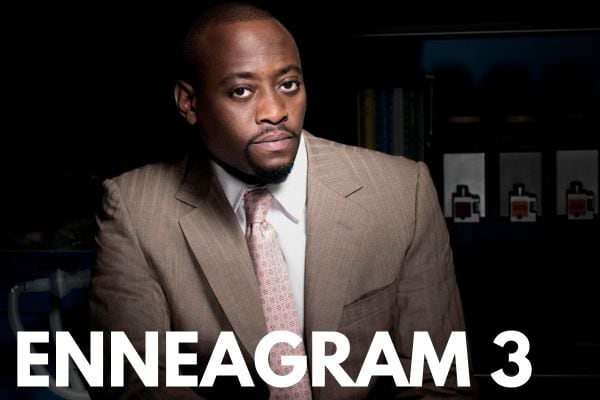
Eric Foreman is one of those characters who doesn’t immediately scream Enneagram Three, but the more you watch him, the more his motivations begin to reveal themselves. He’s disciplined, polished, relentlessly competent, and determined to prove that he belongs in the same room as Gregory House without becoming another version of him.
Foreman approaches medicine almost like an athlete approaches competition. He prepares thoroughly, expects excellence from himself, dresses impeccably, and refuses to let emotions cloud his judgment. Even when he disagrees with House, there’s an underlying respect for mastery. He wants to become extraordinary, but he wants to earn it the right way.
One thing I’ve always appreciated about Foreman is that he isn’t chasing recognition simply for applause. He genuinely wants to become an excellent physician because lives depend on it. We see that in the sleepless nights he spends worrying about missed diagnoses and in the enormous pressure he places on himself to get things right. Perfection isn’t about ego nearly as much as responsibility.
Psychologist Alfred Adler wrote that healthy striving pushes us toward competence and contribution rather than superiority. Foreman usually lands on the healthier side of that equation, although he isn’t immune to pride. He often struggles to admit mistakes, keeps colleagues at arm’s length, and sometimes mistakes emotional distance for professionalism. House even points out that Foreman has become so focused on proving himself that he risks losing the human connection that originally drew him to medicine.
I think that’s what makes his growth so satisfying. Over time, he becomes more comfortable relying on his colleagues, allowing friendships to develop, and accepting that being respected doesn’t require being emotionally unavailable. He never stops pursuing excellence, but he gradually realizes that leadership isn’t simply about being the smartest person in the room. It’s about creating an environment where everyone else can succeed too.
#37 – Saori Shibuki (Alice in Borderland)

Saori Shibuki is one of the bleakest portrayals of an unhealthy Three because she has become convinced that survival belongs only to those willing to manipulate first.
Before arriving in Borderland, she’d already learned to use her appearance and relationships as currency in the corporate world. Promotions weren’t earned through trust or loyalty but through carefully calculated exchanges of power. When she’s thrust into a world where every game literally determines life or death, those same habits become even more pronounced. She manipulates, seduces, deceives, and constantly evaluates people based on how useful they are.
It’s tempting to see Shibuki as purely selfish, but I think that interpretation misses something important. Fear is driving almost every decision she makes. She believes that vulnerability gets people killed, that kindness is naïve, and that trusting someone else simply creates another opportunity to be betrayed.
I’ve met people who carry this worldview after years of toxic workplaces or deeply damaging relationships. Eventually they stop asking, Who’s trustworthy? and start assuming No one is. Once that belief settles in, manipulation begins to feel less like cruelty and more like self-defense.
Carl Jung observed that “everything that irritates us about others can lead us to an understanding of ourselves.” Shibuki’s distrust says as much about the wounds she carries as it does about the people around her. When Chota shows her genuine compassion, she almost doesn’t know what to do with it. She immediately tries to turn it into another transaction because that’s the only language she trusts.
Her final moments are unexpectedly heartbreaking because, for the first time, she’s confronted with people willing to sacrifice themselves for someone else. That reality completely contradicts the worldview she’s built her life around. It’s far too late for her to rewrite her story, but the audience is left wondering who she might have become if she’d encountered that kind of loyalty much earlier in life.
#38 – Lee Young-joon (What’s Wrong With Secretary Kim?)

Lee Young-joon is probably the funniest Enneagram Three on this list because his confidence borders on performance art. He genuinely believes he’s the most handsome, intelligent, charismatic executive in the building, and if no one else happens to mention it, he’ll happily do the job himself.
What makes him entertaining, though, is that beneath all the narcissistic humor sits someone who’s surprisingly insecure. Young-joon has spent years constructing the image of the perfect executive, the perfect son, and the perfect man. Every hair is in place. Every suit is immaculate. Every achievement reinforces the identity he’s carefully built. The image becomes so polished that he eventually loses touch with the anxious person hiding underneath it.
As a personality practitioner, I’ve noticed that many Threes don’t consciously decide to create a persona. It happens gradually. They discover which version of themselves receives admiration, and before long that version begins showing up everywhere. The danger comes when they no longer know where the performance ends and the authentic self begins.
Carl Jung warned about identifying too strongly with what he called the persona, the social mask we wear to function in the world. The persona itself isn’t unhealthy. We all have one. Problems arise when we mistake that mask for our actual identity. Young-joon spends much of the series living inside his carefully curated image until his relationship with Secretary Kim slowly dismantles it.
She isn’t impressed by his résumé, his status, or his self-congratulatory speeches. She sees the frightened child underneath, carrying memories and insecurities he’d much rather ignore. That’s ultimately what transforms him. He discovers that intimacy isn’t built by convincing someone you’re perfect. It’s built by allowing someone to see the imperfect parts you’ve spent years hiding.
#39 – Ryu Soo-yeol (Bad and Crazy)

Ryu Soo-yeol begins Bad and Crazy as someone who’s exceptionally good at playing the game. He’s polished, ambitious, strategic, and always thinking three moves ahead. Promotions matter. Reputation matters. Looking successful matters. He understands exactly how the system works and, at least initially, has very few reservations about using it to his advantage.
One reason I enjoyed this character so much is that he illustrates something I’ve seen repeatedly in coaching sessions. Ambition isn’t inherently corrupting. The problem comes when success replaces purpose. Soo-yeol didn’t wake up one morning determined to compromise his integrity. It happened one rationalization at a time. Each shortcut felt small enough to justify until eventually he could barely recognize the person he’d become.
His alter ego, K, functions almost like the embodiment of his neglected conscience. Whether you interpret K psychologically or symbolically, he forces Soo-yeol to confront the gap between the man he wanted to become and the man staring back at him in the mirror. That’s an incredibly Three-like conflict. Healthy Threes don’t stop caring about achievement. They stop measuring their worth exclusively by achievement.
I often think of Viktor Frankl’s observation that “Success, like happiness, cannot be pursued; it must ensue.” Frankl argued that meaningful success grows out of serving something larger than ourselves rather than becoming an end in itself. Soo-yeol slowly discovers that solving cases, protecting victims, and acting with integrity provide a kind of satisfaction that promotions never quite managed to deliver.
By the end of his journey, he’s still ambitious. He still wants to excel. The difference is that excellence is no longer separated from character. He’s no longer asking, How high can I climb? He’s asking a much better question.
Who do I become while I’m climbing?
#40 – Buzz Lightyear (Toy Story)

From the very beginning of Lightyear and Toy Story, Buzz defines himself by one thing: being the hero who gets the job done. When his mistake strands an entire colony on a distant planet, he takes the failure completely onto his own shoulders. Rather than accepting that some setbacks are part of life, he becomes obsessed with making everything right, no matter how much it costs him. One test flight turns into dozens. Years slip away. Friends grow older, build families, and move on while Buzz remains fixated on a single objective. His identity has become so wrapped up in succeeding that he literally can’t imagine another way to live.
I’ve seen this mindset in high-achieving people more than once. They want to help others, but somewhere along the way, helping becomes tangled up with proving their worth. Rest starts to feel irresponsible. Changing direction feels like failure. They become so focused on the destination that they stop noticing the life unfolding around them.
Psychologist Carl Rogers believed that many people develop what he called “conditions of worth,” the feeling that they are only valuable when they perform well or meet certain expectations. With Buzz, his confidence isn’t rooted in believing he’s inherently valuable. It’s rooted in believing he must succeed. That’s a much shakier foundation than it first appears, because every mistake suddenly becomes a threat to his identity rather than simply a problem to solve.
What makes Buzz’s story especially compelling is that his greatest opponent ultimately turns out to be another version of himself. Zurg represents the logical end of Buzz’s unhealthy mindset: someone so consumed by correcting the past and achieving the perfect outcome that he sacrifices relationships, joy, and even his own humanity along the way. It’s a powerful metaphor for the Three’s shadow. When success becomes everything, life slowly shrinks until there’s room for nothing else.
Wrapping It Up…
If this list proves anything, it’s that Enneagram Threes are about far more than ambition. Yes, they often work hard, set big goals, and push themselves to excel, but underneath that drive is usually a very human longing to know that who they are—not just what they accomplish—is enough. That’s why these characters feel so compelling. Whether it’s Cristina Yang chasing mastery, Don Draper hiding behind a carefully crafted identity, Mia Dolan refusing to give up on a dream, or Hae-in learning that vulnerability is a strength rather than a weakness, each story explores a different answer to the same question: What happens when we build our identity around achievement?
As a personality practitioner, I’ve found that healthy Threes are some of the most inspiring people you’ll ever meet. They don’t lose their ambition as they grow; they simply stop confusing accomplishment with worth. Carl Rogers once wrote, “The curious paradox is that when I accept myself just as I am, then I can change.” I think that’s the lesson at the heart of the Three’s journey. Ironically, the moment they stop trying to earn their value is often the moment they become the most authentic, influential, and genuinely successful version of themselves.
Find out more about your personality type in our eBooks, Discovering You: Unlocking the Power of Personality Type, The INFJ – Understanding the Mystic, The ISFJ – Understanding the Protector, and The INFP – Understanding the Dreamer. You can also connect with me via Facebook, Instagram, or YouTube!













Hello,I think you won’t see this but I want to say something. First of all,your blogs are AMAZING. I used to use PDB app but it’s a mess and your blogs are better in my opinion. I just want something from you;if you don’t want to do it that’s totally fine. Can you please write a blog about a few K-Pop groups MBTI. Like BLACKPINK or BIGBANG,I need someone to analyze them and I couldn’t find anyone,thank you.
Thank you so much for the kind words!!! I agree about PDB being a mess. I enjoy perusing there, but often the votes seem really inaccurate. I would LOVE to profile Blackpink or BigBang, I enjoy both of them. So far I’ve only done BTS and Felix from SKZ but I’m hoping to get to more K-Pop bands over time so stay tuned!! Of course, if you have any theories, be sure to let me know 🙂