10 Iconic INFP K-Drama Characters
INFPs are one of my favorite personality types, so it drives me crazy when I see them shamelessly stereotyped in pretty much every type community. While some INFPs fit the “gentle dreamer” category, it’s certainly not all there is to them. They don’t all spend their days rescuing injured animals and gazing through rain-streaked windows dreaming up poetry or fantasy love stories.
That is the trouble with reducing a personality type to an aesthetic. Sure, some INFPs are all soft cardigans and pressed flowers. But they can also be funny, stubborn, angry, impractical, perceptive, self-protective, and even *gasp* villainous. Some build entire worlds in their heads. Some keep helping people long after anyone has earned it. A few suppress their anger so thoroughly that, when it finally surfaces, everyone acts shocked.

As an MBTI® practitioner, I look for a pattern instead of a collection of traits. INFPs lead with Introverted Feeling, or Fi, which organizes life according to an internal sense of what feels right, honest, or personally meaningful. Their auxiliary Extraverted Intuition, or Ne, notices possibilities and alternative interpretations. Introverted Sensing holds memories and emotional associations close, while Extraverted Thinking tries to organize the outside world when feelings and possibilities are no longer enough.
But don’t worry, you don’t need to remember those terms to enjoy this list. Just know that INFPs tend to ask questions like this:
Is this true to who I am?
What else could this become?
Why does this memory still matter?
How do I make something real out of what I believe?
Rainer Maria Rilke advised a young writer to “live the questions now.” That feels like an INFP sentence. These types live inside unresolved questions about identity, justice, imagination, belonging, anger, and whether growing up requires abandoning the parts of themselves that once made life bearable.
One important note before we begin: mental illness, trauma, shyness, creativity, and kindness do not prove that someone is an INFP. Any type can experience these things. I am looking at the broader pattern of how each character forms judgments, relates to possibilities, and protects a private sense of self. Fictional typing is interpretation, not bloodwork.
Spoilers appear throughout this article.
Before You Read Which INFP Struggle Feels Most Familiar
Choose the answer that feels closest to you. You can return to it at the end and see which character shares your struggle.
- I disappear into imagination when reality becomes too much.
- I keep helping people while treating my own needs as optional.
- I have a creative dream I am afraid will never become practical.
- I suppress anger until it frightens me.
- I want to believe in something magical again.
- People respond to the role I play rather than the person I am.
- I can forgive other people much faster than I forgive myself.
The Imaginative World Builders
For these characters, imagination is not a pastime that occupies their mind before falling asleep. It is shelter, language, protest, and sometimes a trap. Their inner worlds help them survive reality, but survival becomes complicated when the inner world starts replacing the outer one.
1. Kim Seo wan from Daily Dose of Sunshine
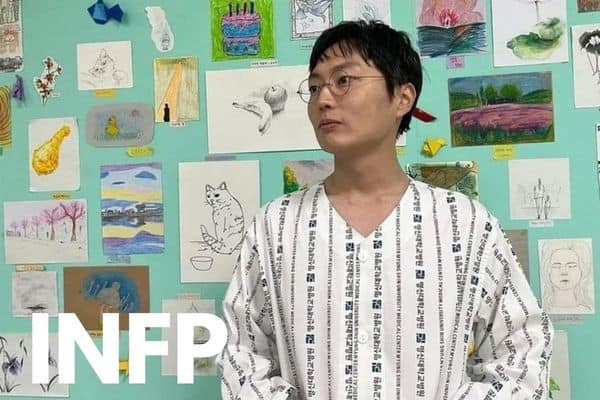
Kim Seo-wan broke my heart because he is so much more than the diagnosis attached to him. I don’t know if I’ve ever cried as much watching a TV show as I did when his story resolved.
Seo-wan is intelligent, imaginative, funny, and painfully aware that the life he expected to build has not materialized. While receiving psychiatric treatment, he interprets the hospital through the language of a video game called Lost Valhalla. Staff members become characters. Ordinary routines become quests. The hospital is no longer just a place where he is ill; it is a world in which he has a role.
It would be easy to point at his elaborate fantasy and call it Extraverted Intuition. I do not think that is fair or clinically responsible. His delusions belong to his illness, not his personality type. The more useful question is why Seo-wan remains so emotionally affecting when the fantasy falls away.
He wants his life to mean something. Beneath the game language is a man who feels left behind by the ordinary standards of adulthood. Other people seem to have crossed some invisible bridge into careers, competence, and respectable lives while he is still trying to explain why getting through the day feels like a boss battle. His suffering is intensified by the belief that he should have become someone else by now.
This is where I see the INFP pattern. Seo-wan does not measure life only through visible achievement. He needs a story that makes his experience personally coherent. His imagination gives pain a shape and gives him an identity larger than “patient.” That is both moving and dangerous. A private world can protect the self from shame, but it can also become the only place where the self feels powerful.
His connection with Da-eun matters because she enters his world without mocking him. She treats him as a person whose experiences deserve attention, even when she cannot share his reality. For someone who already feels defective and left behind, being met with dignity is no small thing.
Carl Rogers wrote, “The curious paradox is that when I accept myself just as I am, then I can change.” Seo-wan’s tragedy is that acceptance never becomes stable enough to hold him. He can imagine other worlds, but he cannot find a durable place for himself in this one.
Kim Seo-wan’s INFP signature: He uses imagination to create meaning when ordinary life makes him feel powerless. His gift is the ability to experience reality symbolically. His danger is allowing shame to convince him that he belongs only in the world he created.
2. Yeo Eui ju from Absolute Value of Romance
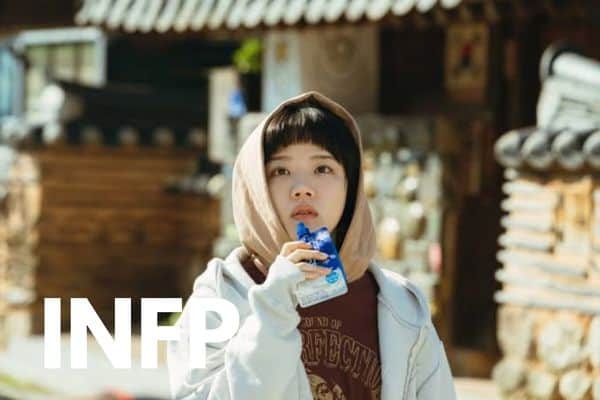
Thankfully, not every INFP imagination ends in tragedy. Sometimes it ends with a teenage novelist mentally recasting four teachers as characters in a BL romance because normal school life was apparently not providing enough material.
Yeo Eui-ju is an ordinary student by day and an aspiring web novelist by night. She writes under a pen name, dreams of literary success, and keeps publishing even when her stories receive almost no attention. One hundred episodes with roughly two readers is either humiliating or proof of extraordinary commitment. Probably both. As a fellow writer I immediately loved her; her quirky and vivid imagination, her commitment to her dream, and her adorable awkwardness. I wish I’d been friends with someone like her as a teenager.
What I enjoy about Eui-ju is that her imagination is active, nosy, and a little ridiculous. When observing people she starts generating alternative explanations for them. A look becomes subtext. An argument becomes chemistry. Four attractive new teachers move next door, and her mind immediately begins assembling a cast.
That is a playful version of Extraverted Intuition. Ne takes what is present and asks what else it could mean. It connects details, invents scenarios, and treats reality as a first draft. For Eui-ju, this is the fuel of creativity. It is also why reality occasionally has to tap her on the shoulder and ask whether it may participate in its own story.
Her Introverted Feeling appears in the privacy of her ambition. She wants readers, but writing is not a bid for popularity. It is part of a self she protects from classmates and teachers who may not understand it. Anyone who has created something deeply personal will recognize this contradiction: you want people to see the work, but the idea of being seen making it is unbearable.
I find this experience common for Introverted Feeling types, both IFP and ITJ types. We protect the inner parts of ourselves, our tastes, weird fixations, and deeper feelings, often struggling to find anyone who we feel safe enough to share them with.
Eui-ju adds something valuable to this list because INFP creativity is not always solemn and dark. It can be awkward, funny, romantic, experimental, and willing to publish episode 101 after episode 100 was ignored. Talent matters, but persistence is often the less glamorous part of a creative life. She has more of it than she realizes.
Try this: Think of one interest you protect because other people might find it strange, impractical, or embarrassing. What would happen if you treated it as a real part of your identity rather than a guilty side project?
3. Yoon Ji ho from Because This Is My First Life
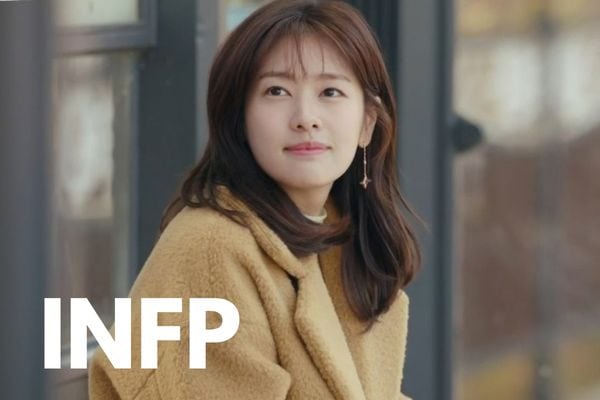
Yoon Ji-ho narrates her life as though she is trying to understand it while she lives it. I relate to that. Some people experience an event and move on. Others experience it, replay it, assign it a metaphor, revise the metaphor, and eventually wonder whether it could become an article. Ji-ho belongs to the second group.
At thirty, she is still trying to become a screenwriter while working as an underpaid assistant. She loses her home, enters a contract marriage for practical reasons, and finds herself living with Nam Se-hee, a man whose emotional operating system appears to have been designed by a mortgage calculator.
Ji-ho is gentle, but she’s also willing to make tough decisions. She accommodates people until accommodation requires her to abandon something essential. Then a stubbornness appears that others did not plan for. Her values are deep, and she needs choices to feel emotionally honest even when those choices make little sense to anyone watching from the outside.
Her relationship with writing also feels distinctly INFP. She is not drawn to stories because they are an efficient career choice. They help her interpret human experience. She notices emotional moments other people overlook and gives them language. This is one reason INFPs can make powerful writers: they often understand that an event and the meaning of an event are not the same thing.
I also appreciate that Ji-ho has to make decisions without knowing whether they will validate the years already spent trying. That feels far more honest than the usual message that persistence guarantees recognition. Sometimes persistence means continuing because the work still belongs to you, even when success remains undecided.
Rilke’s advice to “live the questions” fits Ji-ho especially well. She cannot reason her way into certainty about love, work, or marriage. She has to inhabit the experience long enough for her feelings to become clear. Frustrating? Yes. Human? Also yes.
The question Ji-ho’s story asks: If nobody applauded your life choices, which ones would still feel worth making?
Reader Pause What Does Your Imagination Do for You?
When reality becomes difficult, does imagination help you escape it, understand it, improve it, or turn it into something meaningful? There is no wrong answer, but there may be an answer you rely on so heavily that it has stopped helping.
The Gentle People Who Reach Their Limit
INFP anger is often misunderstood because it may remain hidden for a long time. A person can appear accommodating while resentment accumulates beneath the surface. By the time the anger becomes visible, everyone else has missed several chapters.
These characters show the darkest version of that process. Their violence should not be romanticized or blamed on personality type. What matters is the psychological pattern of suppressed pain, violated dignity, and a private moral world that becomes increasingly isolated from outside correction.
4. Yoon Jong woo from Strangers from Hell
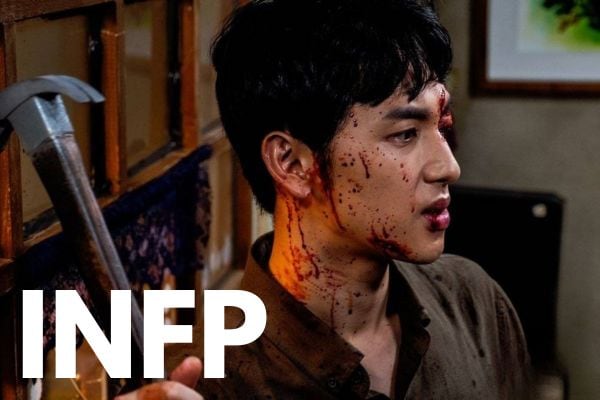
Yoon Jong-woo moves to Seoul to pursue his writing and accepts a cheap room at Eden Studio because he cannot afford anything better. The building is filthy, the residents are disturbing, his workplace is humiliating, and the dentist down the hall takes an interest in him that would concern any reasonable person. Unfortunately, reasonable people are in short supply.
Jong-woo begins as someone accustomed to swallowing his reactions. He dislikes his coworkers, resents his circumstances, feels dismissed by his girlfriend, and becomes increasingly alarmed by his neighbors. Yet he struggles to express the full force of that anger directly. He tries to remain civil while his internal world grows more violent and fearful.
This tension makes him a fascinating, if deeply unhealthy, INFP interpretation. His Introverted Feeling is not expressed as sweetness. It appears as a private emotional reality that other people cannot access. He knows how violated, trapped, and enraged he feels, but because those feelings remain largely internal, nobody around him understands how close he is to breaking.
Seo Moon-jo notices. That is part of what makes their relationship so disturbing. Moon-jo doesn’t just frighten Jong-woo; he recognizes the aggression Jong-woo has spent years denying. Being accurately seen can feel intoxicating when a person has felt invisible, even if the person doing the seeing is trying to turn you into a murderer.
Jong-woo’s imagination also works against him. As a novelist, he is naturally attentive to motive, atmosphere, and what may be concealed beneath ordinary behavior. In Eden Studio, suspicion keeps producing new possibilities, and many of them happen to be correct. The result is an environment where intuition and paranoia become difficult to separate.
What unsettles me most about Jong-woo is not that he contains darkness. Most people do. It is that he has so little healthy language or relational space in which to acknowledge it. His anger remains shameful and hidden until Moon-jo offers him an identity built around it.
A question worth sitting with: What happens to the parts of us we refuse to admit are there? Suppression is not the same as goodness. Sometimes the more ethical choice is to recognize anger early, while it can still become a boundary rather than a weapon.
5. Private Cho Suk bong from D.P.
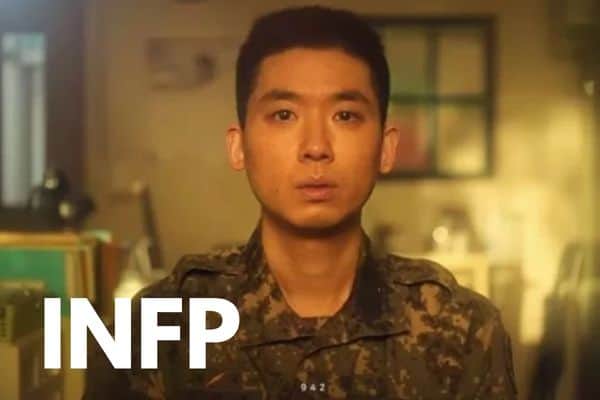
Before military abuse changes him, Cho Suk-bong is warm, awkward, artistic, and known for helping other soldiers. He draws, likes animation, and seems far better suited to encouraging students than surviving an institution where cruelty has been mistaken for discipline.
Then Hwang Jang-soo selects him as a target.
Suk-bong is humiliated, assaulted, and degraded while the people around him learn to treat his suffering as normal. This is one of the most painful elements of D.P. The abuse is not hidden. Plenty of people see it. They have just decided accepted a system in which seeing creates no obligation to act.
His eventual violence can feel like a complete personality reversal, but the earlier Suk-bong hasn’t disappeared. His rage grows from the same sensitivity that once made him considerate. He knows what dignity feels like, which means he also knows exactly when it has been taken from him. The desire for revenge becomes an attempt to force the outside world to acknowledge an injury everyone preferred to minimize.
I want to be careful here because “gentle person finally snaps” can become a seductive story. It may feel satisfying to watch an abuser become afraid, but Suk-bong is not liberated by revenge. He is still trapped inside what was done to him. Violence gives his pain an external form without giving him a future beyond it.
This is where inferior Extraverted Thinking may appear under extreme stress. Normally, Suk-bong responds to life through personal feeling and imagination. When he reaches his limit, his thinking narrows into a harsh objective: find Jang-soo, punish him, make the outcome match the crime. Everything that does not serve that goal falls away.
As an MBTI® practitioner, I would never type Suk-bong as an INFP just because he draws and seems sensitive. The stronger case is his intensely personal response to dignity, the imagination visible before the abuse consumes his life, and the way his moral world contracts under pressure until one violated value dominates everything else.
What I wish Suk-bong had received: Not advice to become tougher, but intervention before endurance became the only virtue anyone offered him.
6. Do Hye ryung from If Wishes Could Kill
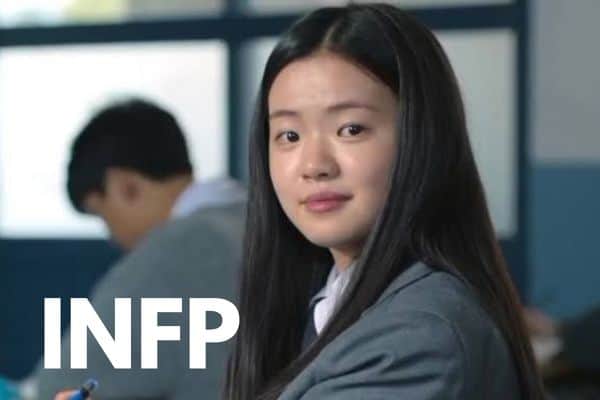
Do Hye-ryung’s story is reconstructed through tragedy, which means we know her most clearly at the point where humiliation and betrayal have already overwhelmed her. She uses the Girigo app to wish death on Kwon Si-won and Han Gi-tae, then takes her own life. The wish survives her, attaching private pain to a curse that continues harming people who had nothing to do with the original wound.
There is not enough ordinary life on-screen to build a long personality portrait without pretending certainty. Trauma can make any type appear withdrawn, reactive, or consumed by a single feeling. I would therefore treat Hye-ryung as a tentative INFP rather than an obvious one.
What supports the interpretation is the personal and symbolic nature of her response. She doesn’t look for ordinary accountability. Her pain becomes a wish, and the wish becomes a reality larger than she intended. That movement from private emotional injury into a destructive imagined outcome has the shape of Fi and Ne turned inward and cut off from hope.
Hye-ryung also demonstrates why strong feelings should not automatically be treated as moral instructions. Pain tells us that something matters. It does not always tell us what should happen next. When someone is humiliated and desperate, the imagined ending in which everyone responsible suffers may feel like justice. Once translated into reality, it often reaches people the original wound never named.
I feel more sorrow than judgment toward her. She is a young person making an irreversible decision from within an emotional state that feels permanent. Her story is brief, but it carries one of the article’s heaviest questions: what might have changed if somebody had helped her survive the interval between wishing for destruction and acting on it?
Hye-ryung’s emotional blind spot: She treats the intensity of the present moment as proof that no other future exists.
Reader Check In What Happens to Your Anger
- It turns inward and becomes self-criticism.
- It comes out as withdrawal, sarcasm, or resentment.
- I express it directly before it builds.
- I rarely recognize that I am angry until much later.
- It erupts after I have tolerated too much.
INFPs do not need to become aggressive to handle anger well. They usually need to recognize it sooner, name the violated value, and decide what boundary belongs in the real world.
The Hopeful Outsiders
These characters are treated as though they do not quite belong, yet they retain some capacity for loyalty, wonder, or belief. In several cases, hope is what remains after naïveté has been thoroughly removed.
7. Myeong Ja eun from Pyramid Game
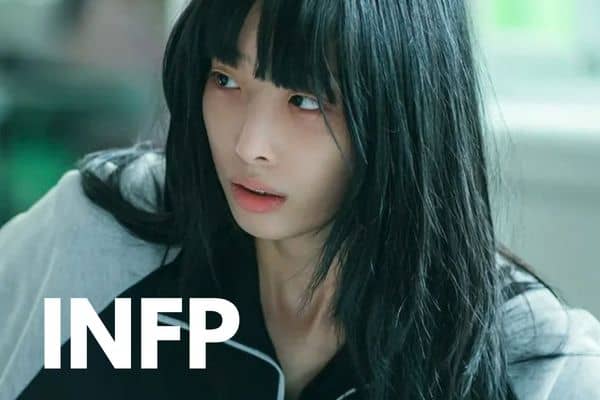
Myeong Ja-eun is the kind of character who makes me want to protect her and shake her gently by the shoulders. She is compassionate, loyal, and painfully willing to believe that everyone else’s needs deserve priority over her own.
In Pyramid Game, students rank one another through a monthly popularity vote. The student placed in Grade F becomes the sanctioned target of bullying. Ja-eun has spent a long time at the bottom, partly because Baek Ha-rin deliberately keeps her there. When Su-ji arrives and begins resisting the game, Ja-eun becomes both an ally and an emotional center of the rebellion.
Her Introverted Feeling shows in a form that is easy to miss because it doesn’t show up as moral courage. Ja-eun stays sensitive to individual suffering even after the group has taught her that suffering can be entertainment. At the same time, she carries guilt that does not entirely belong to her. INFPs can become so aware of their own motives and mistakes that they underestimate the responsibility of people who intentionally harmed them. Self-reflection is useful until it becomes a courtroom where you are always the defendant.
Ja-eun’s compassion also raises a difficult question: when does forgiveness stop being generous and start becoming another way to abandon yourself? She sees the wounded person inside Ha-rin, but understanding why someone became cruel doesn’t require volunteering for more cruelty.
I appreciate that Ja-eun’s softness is not treated as stupidity. She notices more than people assume. Her challenge is not learning that others can be vicious. She already knows. Her growth lies in accepting that resisting them does not make her vicious too.
What Ja-eun needs to remember: Protecting yourself is not a betrayal of your compassion. You are one of the people your values are supposed to include.
8. An Gi seok from Vincenzo
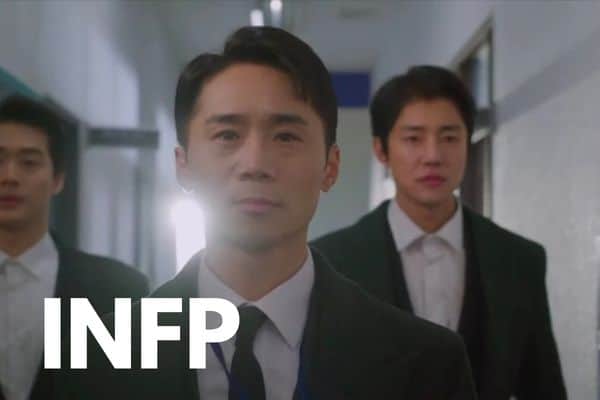
An Gi-seok is an intelligence agent assigned to investigate Vincenzo Cassano, a dangerous Mafia consigliere. Gi-seok evaluates the evidence, observes Vincenzo in action, and reaches the professionally rigorous conclusion that this man is incredibly cool. I adored him so much.
His admiration becomes one of Vincenzo’s best running jokes. He begins as an undercover observer and ends up behaving like a fan who happens to have government clearance. Gi-seok watches Vincenzo direct his ruthlessness toward people and institutions that conventional justice has failed to stop. As an INFP, this is incredibly satisfying ot him.
Gi-seok offers a lighter version of INFP idealization. Fi often searches for integrity, while Ne can build a large and appealing interpretation around a few emotionally significant details. Once Gi-seok decides Vincenzo is the noble antihero this corrupt world needs, every dramatic entrance becomes further evidence.
This tendency can be endearing, but it has risks. INFPs sometimes fall in love with a person’s potential, symbolic meaning, or apparent inner goodness before gathering enough boring information about how that person behaves on an average sday. Gi-seok is fortunate that Vincenzo really does possess a code. It is not a conventional code, and one would not necessarily want it explained during a background check, but it exists.
Because Gi-seok is a supporting comic character, I would not build an elaborate function argument around him. What makes him fit this list is his enthusiastic loyalty, romantic attraction to moral complexity, and willingness to support the individual he believes in even when the official institution takes a different view.
Gi-seok’s INFP danger: Confusing “I sense goodness in him” with a completed risk assessment.
9. Yoon Ah yi from The Sound of Magic
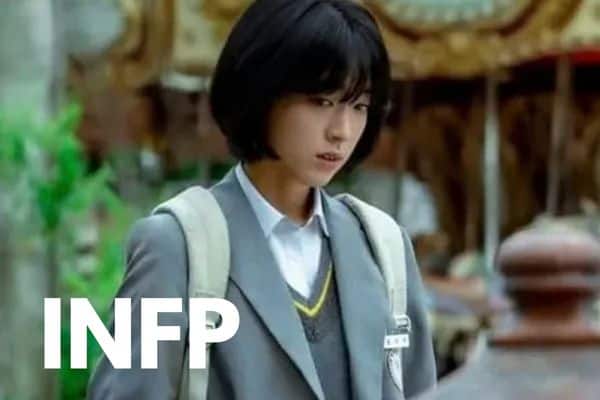
Yoon Ah-yi used to believe in magic. Then poverty, abandonment, debt, and responsibility arrived and informed her that childhood was over.
She is still a high school student, but she supports herself and her younger sister while trying to maintain strong grades. She wants to become an adult as quickly as possible because adulthood appears to mean control. Adults have money and get to decide what happens. They don’t have to wait for a parent who may never return.
Of course, most of the adults in The Sound of Magic are not persuasive advertisements for adulthood. Many are frightened, constrained, or performing success according to rules they did not choose. Then Ah-yi meets Ri-eul, an ENFP magician living in an abandoned amusement park who asks whether she believes in magic.
What follows is a lesson about becoming more whimsical even in the face of hardship. Ah-yi can’t solve poverty by thinking happy thoughts beside a carousel. What Ri-eul gives her is permission to recover a self that survival forced underground. She begins to consider that practicality and wonder don’t have to be enemies. In fact, a bit of wonder and whimsy can help you survive even the darkest circumstances.
This is one of the most recognizable INFP conflicts. Fi and Ne need a sense of inner possibility, but hardship can make possibility feel irresponsible. The person becomes competent, dutiful, and focused on getting through the week while privately mourning the parts of life that once felt alive. I believe that Yoon Ah-Yi is in the midst of grip stress, which for INFPs can make them more focused on practicality, productivity, and logic.
Ah-yi’s journey matters to me because so many people I know had traumatic backgrounds and their personality’s changed because of it. I’ve met INFPs who had to grow up too fast and put on a productive, logical exterior even though their inner world needed wonder and magic. This series asks who gets to define adulthood. Is maturity the ability to suppress every impractical longing, or is it the ability to build a life without abandoning your own inner voice?
Choose your answer: What would “magic” mean in your life now: creative freedom, financial breathing room, love, play, purpose, or permission to want something again?
The Person Behind the Public Identity
10. Do Ra ik from Idol I
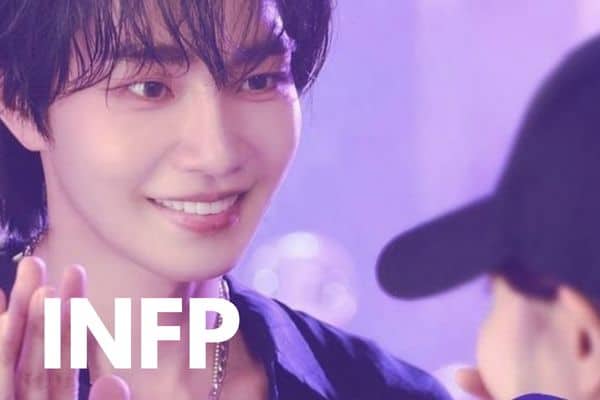
Do Ra-ik has enough fans to fill arenas, but much of that devotion belongs to an image designed, styled, marketed, and repeated until the public experiences it as a person. Ra-ik is the most popular member of the idol group Gold Boys. When he is accused of murder, the machinery surrounding his fame turns against him. The public that once projected goodness onto him can project guilt just as quickly. Both reactions flatten him into a story other people want to consume.
This makes him a strong contemporary INFP character. Introverted Feeling is deeply concerned with the integrity of the inner self. For someone whose livelihood depends on performing a public identity, the question “Who am I when nobody is watching?” becomes less philosophical and more like an occupational hazard.
Ra-ik’s isolation is intensified by the fact that even affection can feel invasive. Fans believe they know him because they recognize his face, lyrics, habits, and carefully released fragments of personality. His lawyer, Maeng Se-na, begins as one of those fans. The relationship can only become genuine as she learns to separate the man in danger from the idol she has imagined for eleven years.
I find this especially relevant now, when parasocial access encourages us to mistake information for intimacy. We may know what a performer eats, wears, fears, or watches before bed. That does not mean we know how they experience themselves. Public familiarity can coexist with profound personal invisibility.
Because of that, Ra-ik’s INFP struggle is not only about proving his innocence. He has to reclaim the right to be a complicated person rather than a product that is valuable only while the audience approves of it. Being loved as an image can become another form of loneliness.
Would you rather: Be admired by thousands of people who misunderstand you, or deeply known by three people? The answer sounds obvious until admiration starts paying the bills.
The INFP Survival Game
You are trapped overnight in an abandoned amusement park. Something is moving inside the hall of mirrors. Which character do you want beside you?
- Myeong Ja-eun: She will not abandon you, even when self-preservation strongly recommends it.
- Yoon Ah-yi: She is willing to believe that the impossible may be real.
- An Gi-seok: He technically has intelligence training, although he may become distracted if a charismatic criminal appears.
- Yoon Jong-woo: There is a reasonable chance he will frighten whatever is inside the mirror.
- Yeo Eui-ju: By sunrise, your ordeal will be a seventeen-part web novel with romantic subtext.
- Cho Suk-bong: He is observant, loyal, and more physically capable than people assume.
Which INFP Character Are You Most Like
Return to the answer you chose near the beginning.
I disappear into imagination when reality becomes too much. You may relate to Kim Seo-wan. Imagination gives you relief and meaning, but you may need people who help you remain connected to the world outside your head.
I keep helping people while treating my own needs as optional. You may relate to Myeong Ja-eun. Your compassion is real, but it should not require your permanent exclusion from the list of people who matter.
I have a creative dream I am afraid will never become practical. You may relate to Yoon Ji-ho or Yeo Eui-ju. One takes creativity seriously enough to suffer for it; the other keeps publishing through obscurity and embarrassment. Both remind us that creative identity develops through imperfect work, not private potential alone.
I suppress anger until it frightens me. You may recognize parts of Jong-woo or Suk-bong. Their stories are extreme, but the warning is useful: anger noticed early can become information, language, and boundaries. Anger denied for too long tends to choose less elegant forms of communication.
I want to believe in something magical again. You may relate to Yoon Ah-yi. Your task is not to abandon responsibility. It is to stop using responsibility as evidence that you are no longer allowed to feel alive.
People respond to the role I play rather than the person I am. You may relate to Do Ra-ik. Approval cannot fully nourish you when it belongs to a version of you that feels manufactured.
I can forgive other people much faster than I forgive myself. You may relate to Ja-eun, Ji-ho, or Hye-ryung. Look carefully at whether your self-judgment is producing growth or merely giving pain somewhere familiar to live.
Final Thoughts
These characters make the INFP personality feel larger than the usual sensitive-dreamer description. Their imagination can create novels, magic, meaning, suspicion, or entire alternate realities. Their compassion can protect outsiders, while their unspoken anger can become corrosive when nobody helps them give it language. Their deepest struggle is often the same: how do I remain faithful to what feels true inside me without losing contact with the world and people outside me?
Healthy INFP development does not require becoming less sensitive. Carl Rogers’ paradox is useful here: acceptance creates the conditions for change. When INFPs stop treating their sensitivity, imagination, and personal values as embarrassing defects, they can use those qualities more deliberately. Feeling becomes discernment. Imagination becomes creation. Anger becomes a boundary. Idealism becomes something they practice rather than something they retreat into.
That is what I appreciate most about the type. INFPs can recognize an inner life where other people see only behavior. They sense the unwritten story, the unrealized possibility, and the person buried beneath a role. The challenge is remembering that their own inner life deserves the same patient attention.
Which character felt most like you, and which one would you least want to meet in a narrow hallway? Let me know in the comments.
Find out more about your INFP personality type in my eBook, The INFP: Understanding the Dreamer
Research Notes
Character and plot details were checked against official Netflix, Paramount, Amazon MGM Studios, series and cast pages, along with AsianWiki, TIME, Soompi, Yonhap, and established drama reviews. Quotations are from Carl Rogers’ On Becoming a Person and Rainer Maria Rilke’s Letters to a Young Poet. Fictional typing remains an interpretation of consistent characterization rather than a clinical or psychological diagnosis.