
The Myers-Briggs® Personality Types of The Pitt Characters
I’m not usually a big fan of medical dramas. Often I find them too soapy or contrived, playing on my emotions in a way that feels manipulative. But The Pitt was different. Sure, they progressively amped up the stakes throughout season 1 until everyone in the show was at their breaking point. But the series felt more real, less manipulative, more technically accurate, but with stand-out characters that were multi-faceted and beautifully flawed. With that in mind, I’m going to explore the personality types of the characters. Keep in mind, I can’t actually profile any of these characters in person so there’s always the chance for inaccuracy. As Season 2 unfolds I’ll update if any new revelations seem to point in a different direction for a character’s personality type.
Let’s get started!

Not sure what your personality type is? Take our personality questionnaire!
The Myers-Briggs® Personality Types of The Pitt Characters

Dr. Michael “Robby” Robinavitch — ESTP
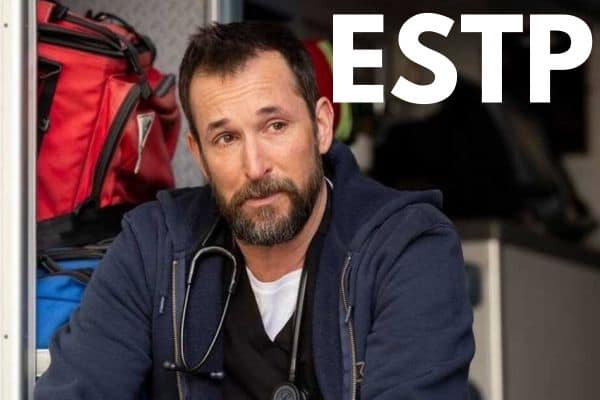
The ER is loud, bloody, unpredictable, and full of people on the worst day of their lives. Dr. Robby moves through it with steady focus, gathering details fast, making decisions faster, and acting with the grounded, present-moment awareness that defines dominant Extraverted Sensing types. He sees what’s happening right now and deals with it without theatrics or panic.
While Robby is grappling with some PTSD and some personal trauma throughout the series, he doesn’t actually break from any of it until the crescendo of relational catastrophe, death, stress, and sheer physical exhaustion have reached their peak.
I was surprised when researching Robby that so many people profiled him as INFJ. I toyed with that idea in my mind for a while, but couldn’t see it. INFJs are introverts with a high need for sensory stillness. They’re at their best when they are conceptualizing, dealing with the abstract, and focusing on big picture ideas rather than technical details. Robby is at home in the real world, moves quickly in chaos, and rapidly amasses technical details, troubleshooting on the fly with speed and precision. These speak to the strengths of the ESTP far more than the strengths of the INFJ. I’m not saying an INFJ couldn’t be an ER doctor, but they would likely approach it very differently, and the constant sensory intensity would take more conscious energy to manage.
Part of what makes Dr. Robby compelling is that he notices more than he lets on. ESTPs are excellent at reading the room, gathering details, and picking up on sensory cues that others miss. He sees when someone is struggling, when a colleague is holding something in, when a family needs someone to slow down and speak gently instead of clinically. He can be surprisingly compassionate in those moments, and it never feels forced. It feels like something he learned the hard way. Many people see this compassionate style and think that Robby must be a Feeling type, so let’s explore that.
ESTPs have a function called Extraverted Feeling that is the third function in their cognitive function stack. The third function is one that develops throughout life, but especially in mid-life and beyond. It’s a valued function, which means ESTPs prioritize it. Even though they are Thinking types, many ESTPs read other people’s emotions extremely well, even while struggling to process their own. Their Extraverted Feeling side focuses on noticing emotional details, scanning people’s moods, knowing how to turn up or down the volume emotionally for people so that they can meet their needs. Dr. Robby is in mid-life throughout the series and, as an ESTP, has really developed this side of himself. Using his attunement to emotion alongside his attunement to details helps him to have an insight into people and situations that others might miss.
Yet while Robby shows this feeling side, he’s ultimately still an ESTP. He focuses on logically solving problems, rapidly moving people through the ER, keeping up with a demanding pace, and solving problems as logically as possible. He has formulas to help manage his emotions, but then moves on to the next emergency. The loss of his mentor, the years of pressure, the things he’s seen and carries but rarely talks about, all of it sits just under the surface. A Feeling type (FJ) would probably try to process these feelings before reaching a breaking point, but Dr. Robby compartmentalizes these feelings. He pushes them down, refuses to talk about them, and instead focuses on his work. This is something ESTPs tend to do. They try to put their feelings in boxes so they can focus on the real world. The problem is that boxes don’t stay closed forever. Over time, this can lead to a breakdown. You catch glimpses of this in the moments when his composure cracks, when the weight of everything catches up to him and he suddenly looks less like the unshakable attending and more like a tired human being who has been holding too much for too long.
Dr. Heather Collins — ISTJ

Heather Collins has the kind of calm that ISTJs are famous for. It’s quiet, deliberate, almost severe at times, like a person who decided long ago that composure was not optional but necessary. The ER is chaos, noise, pressure, and constant emotional fallout, and she moves through it with steadiness, doing what needs to be done without drawing attention to herself.
Some people cope with stress by talking about it. Heather copes by working.
She is direct, practical, and focused on the task in front of her. When she teaches Victoria through an intubation or manages complex cases, there’s no bravado, no need to prove anything. She knows what she’s doing, and she does it. That grounded, methodical way of working fits well with an ISTJ temperament. People like Heather rely on experience, procedure, and careful observation. They trust what has proven reliable. They prepare. They endure. They show up, even when showing up hurts.
What stands out about her is the way she keeps her inner world tightly contained. She talks about leaving feelings at the door, and she means it. The pregnancy stays private. The trauma of loss is kept inside, carried like a weight she has decided is hers to bear and no one else’s responsibility.
Heather is someone who changed the course of her entire life after the financial crash, leaving a stable, successful career because she wanted her work to matter in a more human way. That decision says a lot about her. ISTJs are often portrayed as rigid or purely pragmatic, but at their core they tend to have a deep sense of duty and responsibility. When something feels meaningful and necessary, they commit to it fully, sometimes at great personal cost.
Dr. Frank Langdon — ESTJ

Langdon is the kind of doctor who walks into a trauma bay already halfway through solving the problem. He’s quick, decisive, and confident in his technical skills, the sort of resident attendings rely on because he rarely needs to be told what to do twice. Procedures don’t rattle him. Chaos doesn’t slow him down. In a crisis, he moves with the brisk efficiency of someone who trusts his training and expects the world to behave according to clear rules, or at least rules that can be figured out if you look closely enough.
That clarity is a big part of who he is. Langdon tends to see things in fairly defined terms. Effective or ineffective. Follow the protocol or don’t. That mindset serves him well in emergency medicine, where hesitation can cost lives and where experience teaches you that some decisions simply have to be made, quickly and firmly, whether everyone agrees with you or not.
At the same time, that same black-and-white way of thinking can make people harder for him to understand. Patients, interns, even his own family don’t always operate according to the neat logic he expects, and when they don’t, frustration shows through. It’s clear he’s still learning that medicine isn’t only about solving problems, it’s also about navigating human beings, which is a messier skill and one that doesn’t come naturally to everyone.
What’s interesting about Langdon is that he isn’t cold. Stereotypes about ESTJs would imply that they are (I hate the TJ stereotypes so much). But ESTJs ultimately want to help their tribe. While they may not always have the right empathetic thing to say, they want to make a difference in practical ways. He jokes, he mentors, he encourages Mel when she doubts herself, he tries to pass along what he’s learned, often by imitating the style of Robby, who he clearly admires more than he would ever say out loud. There’s warmth there, but it’s practical, understated, and sometimes awkward, like someone speaking a language he understands but doesn’t fully trust himself to use.
His personal life tells another story about him, one that explains some of the tension under the surface. He’s a husband and a father, someone who injured his back helping his parents move because paying movers felt unnecessary, which says a lot about his sense of responsibility and stubborn self-reliance. The injury, the medication, and the struggle to wean off it add a layer of vulnerability that he works hard to hide, insisting to Robby that he’s fine, that he’s still performing, that he’s still in control. It’s the kind of insistence that sounds convincing until you hear how urgently it’s being said.
Langdon is competitive, driven, and used to succeeding. Being Robby’s favorite resident, the one everyone expects to rise to the top, has shaped his identity in ways he probably hasn’t examined. Approval matters to him more than he would like to admit, and when that approval cracks, when trust is lost or questioned, it shakes him in a way that goes deeper than professional disappointment. It feels personal, almost existential, as if competence is the thread holding everything together. For ESTJs, competence and responsibility are everything, and when that’s put into question, Langdon crumbles.
At his best, Langdon is steady, capable, and deeply dedicated to his work, a doctor who can keep his head in situations where many people would lose theirs. At his worst, he can be impatient, rigid, and defensive, especially when he feels cornered or exposed. He is still in that difficult stage of growth where skill has outpaced self-awareness, where he knows exactly how to save a life but is still figuring out how to handle his own.
Dr. Dennis Whitaker — ISFJ or INFJ

Dennis Whitaker is easy to underestimate at first. He’s soft-spoken, a little awkward, and carries himself with the hesitancy of someone who is still measuring the room before deciding where he belongs in it. In a place like the ER, where confidence is loud and fast and sometimes abrasive, Dennis moves more carefully, more thoughtfully, as if he is trying to do right by people rather than simply get things done.
He connects with patients in a way that feels instinctive rather than trained. He treats the unhoused man everyone else calls “the Kraken” with dignity, volunteers for outreach, listens to people’s stories, and seems genuinely affected by the suffering around him. The death of his first patient sticks with him, not as a professional setback but as something personal, something he carries. There’s a quiet moral seriousness in him, the sense that medicine, for Dennis, is not just a career but a calling.
At the same time, he struggles with confidence. He doubts himself, second-guesses decisions, and takes mistakes hard, sometimes harder than the situation warrants. Being the first in his family to go to college, carrying financial stress, and leaving behind a small-town life where things were simpler have all shaped him into someone who feels he has something to prove, even if he rarely says it out loud.
What makes Dennis compelling is that his sensitivity isn’t weakness. When the pressure rises, he steps up. During the mass casualty incident, he doesn’t falter. Instead he does what needs to be done without freezing or panicking. And in one of the most telling moments of the season, he is the one who finds Robby during his panic attack and gently brings him back, offering reassurance without judgment.
It’s still early to pin down Dennis’s personality with certainty. He could be an INFJ, someone driven by a strong inner sense of meaning and purpose, guided by a quiet vision of the kind of person he wants to be. He could also be an ISFJ, someone shaped by duty, loyalty, and a deep desire to take care of others in practical, grounded ways. Right now, there simply isn’t enough information to know for sure, and that uncertainty feels fitting for a character who is still figuring himself out.
Dr. Samira Mohan — INFJ

Samira moves through the ER differently than most of the other residents. She is slower, more deliberate, more focused on understanding the whole story instead of just stabilizing the body in front of her. In a department built on speed, that makes her stand out, sometimes in ways that help her and sometimes in ways that put a target on her back.
She wants to understand people, not just treat them. She listens longer. She asks more questions. She notices patterns others miss, connecting symptoms that don’t seem related at first glance. There’s an instinct in her for looking beneath the surface, for asking what is really going on here, and that kind of pattern-focused, meaning-driven thinking is often what you see in INFJs.
At the same time, she’s not just about analysis. She cares deeply, sometimes too deeply. She hugs patients, advocates for them, and carries their stories with her long after the shift is over. That empathy makes her a patient favorite, but it also slows her down and sometimes clouds her judgment. She wants to do right by people so badly that she hesitates, overthinks, or puts her personal needs last sometimes.
When she believes she is right, she can become inflexible, bypassing supervisors, cutting corners in the name of doing what she believes is morally or intellectually necessary. From her perspective, she is protecting patients. From everyone else’s perspective, she is ignoring protocol and creating risk. Both things are true, which is part of what makes her complicated.
Samira is thoughtful, intense, and driven by a need to find meaning in everything she does. She is still learning how to balance compassion with efficiency, conviction with humility, and insight with collaboration. She is not the fastest doctor in the ER, and she may never be, but she sees things others miss, and that kind of perception, when tempered with experience, can become a powerful strength.
Dr. Melissa “Mel” King — ISFJ
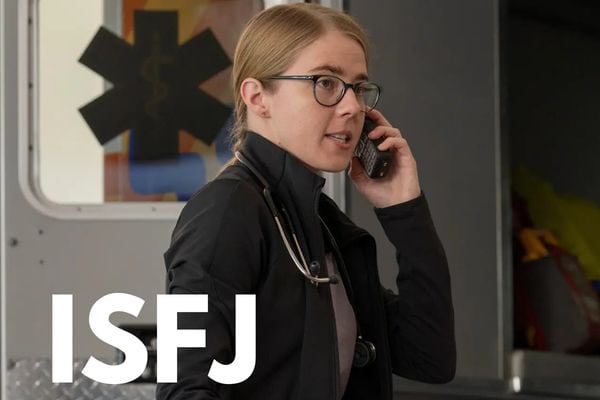
Dr. Mel King isn’t trying to dominate the trauma bay or prove she’s the smartest person in the department. She’s paying attention, quietly, carefully, noticing what people need and trying to meet those needs before anyone even asks.
She remembers details. She adjusts her approach for patients who are overwhelmed or neurodivergent. She creates calm in situations where panic would be the easier response. When she works with the autistic patient, she instinctively changes the environment and her communication style because she understands, on a lived level, what sensory overload and confusion feel like. That ability to draw on memory, experience, and careful observation to help people in practical ways fits strongly with an ISFJ style of thinking.
Mel is deeply compassionate, but her compassion is grounded. She doesn’t just feel for people, she does things for them. She finds resources for caregivers, helps families navigate systems, stays late, volunteers to give blood, picks gravel out of wounds without complaint, and steps up during the mass casualty incident with a steadiness that surprises people who underestimated her. When chaos hits, she works, methodically and attentively, focusing on the person in front of her.
What makes her especially moving as a character is how much of her life revolves around caring for others. She looks after her sister. She structures her time around what her sister enjoys. When someone asks what she does for fun, she struggles to answer because she has spent so long organizing her life around responsibility that her own desires have faded into the background. That quiet loss of self is something many caretakers understand but rarely say out loud.
There’s also a strong need for belonging in Mel. The ER becomes more than a workplace for her. It becomes a kind of family, a place where people rely on each other and where usefulness translates into connection. She works hard, goes above and beyond, genuinely wanting to contribute, to matter, and to feel that she has a place.
At times she gets overwhelmed emotionally, and she knows it. She steps away, soothes herself, calls her sister, finds small rituals to ground herself before returning to work. That self-awareness and willingness to regulate rather than push blindly forward, gives her a quiet resilience. She isn’t necessarily invulnerable, but she is steady.
Dr. Trinity Santos — ESTP

Trinity Santos moves through the ER like it’s a competition she intends to win. She pushes for procedures, jumps into cases, and makes fast decisions under pressure. She learns by doing, trusts her instincts, and responds in real time rather than standing back to analyze. That action-first approach is one of the clearest signs of an ESTP.
You see it in the way she handles emergencies. She spots details quickly, improvises when situations change, and isn’t afraid to take risks if she believes it will save a patient. The REBOA during the mass casualty incident is a good example. She doesn’t freeze or wait for perfect certainty. She sees the problem and acts.
Her personality fits this pattern as well. She’s blunt, sarcastic, and competitive, shaped by her background as an athlete and by a life where strength mattered. She speaks directly, pushes boundaries, and often skips steps, which sometimes gets her into trouble. Trinity’s mistakes rarely come from lack of skill. They come from moving too fast and trusting her judgment more than the system around her.
At the same time, she’s more compassionate than she appears. She protects vulnerable patients, stands up to people she believes are doing harm, and helps Whitaker when she realizes he has nowhere to live. Like many ESTPs, she shows care through action rather than words.
Trinity is impulsive, perceptive, physically grounded, and energized by high-pressure environments. She lives in the present, reacts quickly, and learns through experience. Taken together, those traits point strongly to an ESTP, someone built to act decisively in the middle of chaos rather than step back and watch from the sidelines.
Dr. Victoria Javadi — INTP

Victoria Javadi is brilliant, analytical, and used to succeeding in environments where knowledge is the currency that matters most. Diagnoses, mechanisms, probabilities, textbook explanations. That’s her comfort zone.
You see it in the way she approaches patients. Her first instinct is to analyze, to figure out what’s happening, to mentally map possibilities. She often jumps straight to the technical or theoretical side of a case, sometimes before she has fully adjusted to the emotional or situational reality around her.
She also has the kind of social awkwardness that comes from living in your head more than in the room. She corrects people without meaning to sound condescending, asks questions that unintentionally put others on edge, and sometimes misses how her words land until someone points it out. When McKay explains the difference between intent and impact, Victoria listens, reflects, and adjusts. She isn’t indifferent to people’s feelings. She just doesn’t always read them in real time.
Another strong clue is how much she cares about intellectual independence. She is deeply uncomfortable being seen as someone who succeeded because of her parents. She insists she earned her place, resists using connections, and wants to stand on her own work. That focus on competence and internal standards matches with the desire for competence and mastery that INTPs have.
At the same time, she’s still inexperienced in the real world. She has spent most of her life in academic environments, surrounded by structure and expectations. The ER confronts her with chaos, suffering, poverty, and moral complexity, and she doesn’t always know how to respond. She can be naive, sometimes unintentionally judgmental, and occasionally overwhelmed. But she learns quickly. Once she understands a mistake, she rarely repeats it.
Dr. Cassie McKay — ESFP
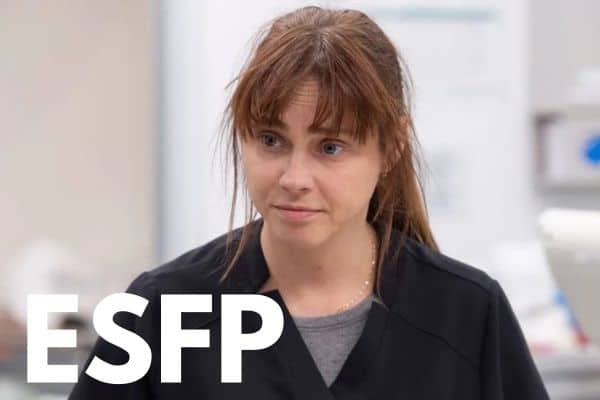
McKay operates in the present moment. She reacts quickly, trusts her instincts, and acts before everything is fully thought through. In the ER this often helps her. She reads people fast, responds decisively, and isn’t afraid to step in when someone is in danger or being mistreated.
You see this in how she handles vulnerable patients, trafficking cases, or anyone she believes is at risk. She doesn’t stand back and analyze systems or wait for perfect consensus. She moves into action. Reporting David to the police, disabling her ankle monitor during the mass casualty event, and repeatedly pushing boundaries to protect people all show that same pattern of immediate, action-first decision making. That’s classic Se-dominant behavior.
Her empathy is also very experiential. She connects with people through shared reality and experiences. Her history with addiction, poverty, and loss gives her an instinctive understanding of patients in similar situations, and she uses that understanding directly in her care.
Where this becomes a weakness is impulsivity. When something hits close to home, especially involving her son, she reacts emotionally and sometimes makes decisions without thinking through the long-term consequences. The feelings are real and strong, and they drive her behavior in the moment.
McKay isn’t strategic or detached. She’s reactive, perceptive, protective, and deeply present. She learns through experience, and she fights hardest for the people standing right in front of her. That combination of realism, instinct, and action fits ESFP well.
Dana Evans — ESTJ

Dana runs the ER like someone who has spent decades learning exactly what chaos looks like and exactly how to keep it from winning. She tracks supplies, staffing, beds, procedures, and priorities all at once, constantly directing people where they need to be and what needs to happen next. That kind of leadership is a hallmark of an ESTJ.
Dana is focused first on what works. She wants clear procedures, clear communication, and clear responsibility. When something breaks down, she doesn’t debate it for long. She fixes it, or she tells someone else to fix it. She expects competence, and she expects people to follow through. In a high-stakes environment like the ER, that mindset keeps people alive.
I really considered ESFJ or even ESFP for Dana for a long while. After all, she’s caring, friendly, affectionate, and often has a smile. But one of the clearest differences between Dana and a more Feeling-driven leader is where her attention naturally goes. A Feeling personality usually starts with emotional atmosphere. They monitor how everyone feels and then shape the environment around that. Dana does care about people, but she starts somewhere else. She starts with logistics.
Are we staffed?
Do we have supplies?
Who’s assigned where?
What’s the priority?
If those questions aren’t answered, nothing else matters. The emotional climate of the team improves when the system works, not the other way around. That’s a very Te-oriented way of approaching leadership.
Her care for people shows up in concrete, practical ways. She protects staff privacy, checks on coworkers who are struggling, mentors younger nurses, and steps in when patients need someone calm and grounded. But she rarely leads with emotional processing or long heart-to-heart conversations. Her support is usually brief, direct, and immediately followed by action. She comforts someone, then gets them back to work.
That blend of firmness and quiet warmth often confuses people. They see her kindness and assume she must be an ESFJ or ENFJ. But warmth alone doesn’t determine type; every type is equally capable of caring, they just show it in different ways. ExFJs will show care through emotional awareness, heart-to-heart conversations, and emotional or practical support. ESTJs show care by keeping the ship moving in the right direction, stocked with the right tools, and with every person on board knowing where to be, what to do, and when.
Dana’s experience also shows in her secondary strengths. Years on the job have made her incredibly observant. She notices small changes in people, patterns in the department, and problems before they escalate. That steady, experience-based awareness is characteristic of strong Introverted Sensing, which pairs naturally with Te in ESTJs. She trusts what she’s seen before. She trusts what has proven reliable.
I love that Dana exemplifies an ESTJ at their best, not an ESTJ stereotype. She’s structured because she knows what happens when structure collapses. She’s blunt because hesitation wastes time. She’s demanding because the stakes are real.
And beneath all of that, she cares deeply about her team. She just shows it by keeping the machine running, by making sure everyone has what they need, and by standing in the center of the storm so others can do their jobs.
Dr. Yolanda Garcia — ESTJ or ENTJ

Garcia walks into a room and immediately takes control of it. She speaks directly, gives orders without hesitation, and expects people to keep up. There’s very little softening in how she communicates. She says what needs to be said and moves on. That blunt, decisive style is one of the clearest markers of an ExTJ personality.
Her focus is always on results. What’s the diagnosis. What’s the procedure. What’s the fastest way to stabilize the patient and get them where they need to go. She doesn’t linger in uncertainty or entertain long debates if she thinks time is being wasted. She gathers the key facts, makes a decision, and executes.
You see this in the way she runs consults. She cuts people off when they ramble, asks for the information she actually needs, and gives clear instructions about what to do next. CT with contrast. Administer this. Call me when the scan is done. There’s no ambiguity, and no apology for the authority in her voice.
Her confidence borders on cockiness at times, but it’s built on real competence. She performs high-risk procedures under pressure and trusts her own judgment. Even when she clashes with ER staff, she rarely second-guesses herself. In her mind, the priority is solving the problem, not smoothing over egos.
Another ExTJ trait shows in how she evaluates people. Garcia respects strength, initiative, and skill. That’s why she takes an interest in Santos. She sees drive and assertiveness and wants to sharpen it. At the same time, she has little patience for what she sees as weakness or inexperience, which comes out in her sharp remarks and dry sarcasm.
Kiara Alfaro – ENFJ
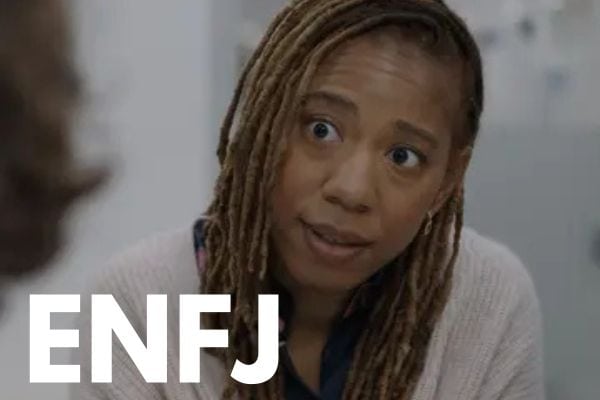
Kiara’s role in the ER is about people: How they’re coping, what they’re afraid of, and what they’ll need once the crisis is over. She naturally steps into the emotional and relational side of situations, often noticing what others are feeling before they say it out loud. That steady awareness of people’s inner worlds is one of the clearest signs of an ENFJ style of personality.
She pays attention to the person behind the problem. When families are overwhelmed, she slows things down and helps them process what’s happening. When staff are struggling, she notices. Even with Robby, she gently calls out that he isn’t as open as he claims to be, showing how easily she reads between the lines.
ENFJs often act as quiet coordinators of emotional well-being, and Kiara does this constantly. She reassures parents, comforts colleagues, and helps patients navigate frightening decisions. She doesn’t just relay information, that’s a job any doctor could do. Instead, she frames it in a way that people can actually absorb, which is why others trust her so quickly.
Kiara also shows a natural instinct for guidance and mentorship. She reassures coworkers when they spiral, helps families understand systems like Medicare or social services, and makes complicated processes feel manageable. She doesn’t push people aggressively. Instead, she encourages, nudges, and steadies them, helping them move forward at a pace they can handle.
Dr. Jack Abbott — ENTP (Tentatively)
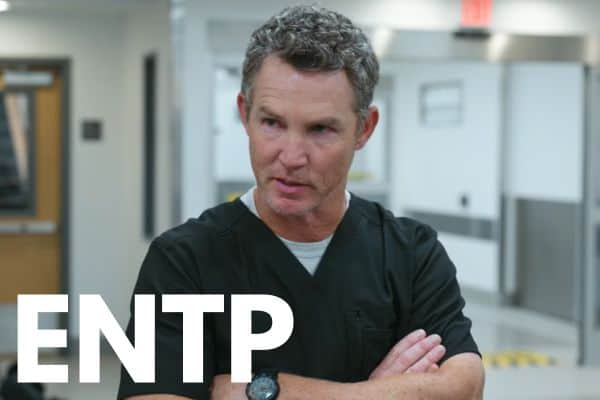
Jack doesn’t come across like the stereotypical ENTP at first. He’s quieter, more restrained, worn down by things most people never have to carry. But the core pattern is there once you look past the fatigue and the scars.
I’m tentatively profiling Abbott as ENTP, but we’ll see if following seasons add more to his character’s story. Right now I feel like I’m running on fairly limited information.
ENTPs are problem-solvers who stay mentally flexible under pressure, and Jack does this constantly. In the ER he adapts fast, thinks on his feet, and isn’t overly attached to rigid protocols when a situation calls for improvisation. He watches what’s happening, adjusts, and moves. There’s a willingness to try things, to pivot, to let people take calculated risks and learn from them. His response to Santos doing the REBOA procedure shows this clearly. He calls out the risk, because it matters, but he ultimately shows that the rules are secondary to what works for him.
He also has the ENTP tendency to teach by letting people figure things out. Rather than hovering, he observes. He steps in when necessary, but he trusts others to swim on their own. That confidence in emerging talent, and his ability to spot potential in people like Santos or Mohan, reflects the way ENTPs often think about growth. They’re less focused on controlling outcomes and more interested in what someone could become.
There’s also the dry humor. ENTP humor often has an edge to it, a little irreverent, sometimes dark, often used to deflect from heavier emotions. Jack’s jokes about therapy, his blunt comments, and his understated way of talking about difficult things all fit that pattern.
What makes him less obviously ENTP is how much he keeps inside. Trauma can do that. It can sand down the outward energy and leave the mind still active but the personality more subdued. The curiosity and adaptability are still there, but they’re quieter, less showy.
You also see the ENTP’s tertiary feeling side in the way he supports Robby. Sure, he’s blunt and direct, but he really wants to make sure Robby is encouraged and supported. He keeps talking, keeps trying to say the right thing, and clearly feels uncomfortable when Robby doesn’t respond back quickly (this is a common attribute of Extraverted Feeling, which ESTPs have in the tertiary position). ENTPs often care more than they admit, and their empathy tends to come out through perspective rather than sentiment. Jack reframes Robby’s self-criticism, reminding him that choking for a moment doesn’t erase everything he did right.
Abbott isn’t the stereotypical ENTP who fills a room with words. He’s the kind who stands in the corner, watching, making one dry remark that cuts straight to the truth, and then going back to observing the world with a mind that never really stops moving.
What Do You Think?
Do you agree with the personality types I’ve explored here, or do you have a different opinion? Let me know in the comments!
Find out more about your personality type in our eBooks, Discovering You: Unlocking the Power of Personality Type, The INFJ – Understanding the Mystic, The INTJ – Understanding the Strategist, and The INFP – Understanding the Dreamer. You can also connect with me via Facebook, Instagram, or YouTube!













I’ve always had a hard time pinning down Dr Robby’s personality, but I’m very surprised he’s the same personality as Dr Santos, albeit a more matured version. I also didn’t expect Dr Langdon to be types as an ESTJ – I assumed he was ESTP because he’s kind of impulsive in a similar way to Santos. A lot of people in the fandom also guess he has ADHD, which maybe could contribute to his impulsivity? (Buying a new dog without asking, not being able to go a long while without saying ‘something stupid’ – In Dana’s words, and not being able to stay still during the moment of silence.)
Just wondering if you could give some insight into why the personalities of Robby and Langdon may not be as I thought