
40 Iconic Enneagram 1 Characters from Movies, Television, and Literature
There’s something magnetic about an Enneagram One character. You can spot them a mile away: the moral center of their story, the perfectionist who won’t let a single detail slip, or the justice-seeker carrying the weight of the world (and usually everyone else’s standards) on their back. They’re the people tightening the screws, setting the rules, or trying desperately to save the day without making a mess of it. And when they crack under pressure? That’s when the story gets really interesting.
Of course, there are Enneagram One villains too. After all, unhealthy Ones can turn that same hunger for righteousness into self-righteousness and exhibit cruelty towards those they deem “lesser” or “unrighteous.” Don’t worry, we’ll get into those ones too.

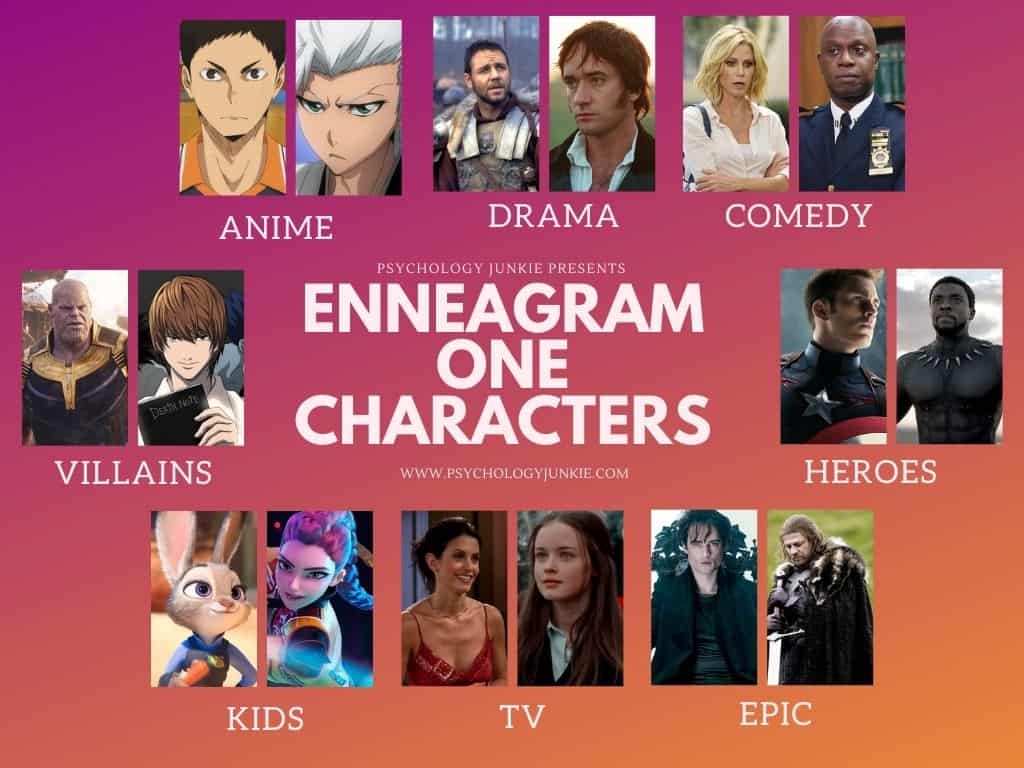
In this article, we’re diving into 40 iconic Enneagram One characters from movies, television, and literature. From righteous warriors like Captain America and Ashitaka, to sharp-eyed intellectuals like Hermione Granger and Darcy, to darker portraits of the One’s shadow side, like Judge Claude Frollo or Light Yagami. Whether they’re holding the line, striving for justice, or spiraling into obsession, each of these characters gives us a glimpse of the Enneagram One’s relentless pursuit of an ideal world.
Not sure what your personality type is? Take our Enneagram questionnaire here!
40 Iconic Enneagram 1 Characters from Movies, Television, and Literature
#1: Elsa (Frozen)

Elsa is practically the poster child for Enneagram One energy. From the very beginning of Frozen, she’s consumed with the idea of control. I mean, “conceal, don’t feel” is her motto, after all. Ones fear being “bad” or corrupt in some way, and Elsa embodies this in how she isolates, restrains, and disciplines herself in order to avoid hurting others. She spends most of her early life with the belief that perfection and repression are the only things keeping her world safe. I think we all breathed a sigh of relief for her when she finally “let it go.”
At her core, Elsa craves integrity and goodness. Ultimately, this is the goal of the One, their driving desire. She wants to live in harmony with her community and be a worthy protector of her people. But because Ones tend to magnify their flaws and judge themselves harshly, Elsa sees her gift as a curse. Her coping mechanism is withdrawal and self-imposed rules. No more snowman building for her! She doesn’t trust herself enough to allow mistakes, so she retreats into ice castles of isolation rather than risk moral failure in public.
When Elsa grows healthier, she learns to integrate more flexibility and grace, allowing her powers to flow instead of suppressing them. Like many Ones who begin to heal, she discovers that her gifts can be used for beauty and connection, not just tightly controlled perfection. Her arc shows the One’s struggle to balance high standards with self-acceptance, and how the same drive for “rightness” that can isolate them can also make them powerful agents of harmony and hope when tempered with compassion.
#2: Aki Hayakawa (Chainsaw Man)

The world is extremely chaotic in Chainsaw Man, but Aki Hayakawa is going to manage that to the best of his ability. He keeps his moral code strict and unyielding: devils are tools, not friends, and his job is to use them, not trust them. That’s the One’s black-and-white clarity; the need to draw firm lines in a world that feels treacherous and unpredictable. Beneath the standards, though, is the fear that defines Ones: the fear of being powerless in the face of corruption. The death of his family haunts him, driving his perfectionism and his need to keep everything under control this time around.
Ones cope by clamping down and getting more controlled: of themselves, of others, of anything that threatens to spin out of order. Aki shows this when he pushes Denji and Power to take the work seriously, bristles at their immaturity, and enforces his own rigid standards even when it makes him seem cold. But like many Ones, that harsh exterior hides a tenderness he doesn’t quite trust himself to show. He’s willing to shorten his own lifespan for the sake of his friends, lies in reports to protect them, and quietly shoulders grief instead of shutting it out. His coping mechanism is sacrifice: if he just bears the weight, maybe everyone else will be safe.
#3: Kento Nanami (Jujutsu Kaisen)
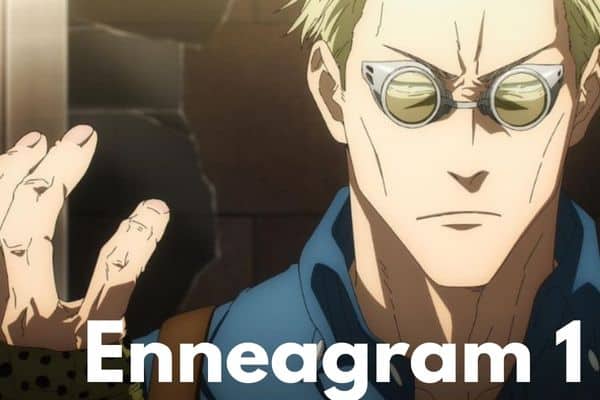
And now one of my favorite Enneagram Ones: Kento Nanami. He’s disciplined, principled, and just a little weary of the world’s nonsense. He left his corporate job because it felt hollow, but he didn’t return to because he was an adrenaline junkie. He did it because someone needed to do it. That sense of duty, of “if not me, then who,” is the One’s inner conscience at work. And externally he’s got the Enneagram 1 demeanor: Deliberate, restrained, and always guided by a clear standard of right and wrong.
Like many Ones, Nanami’s coping mechanisms are rooted in a need for control and order. He sets strict rules for himself — from setting specific work hours to fighting with a calm, methodical style. To him, discipline is how he keeps himself from losing control in a world of curses and moral ambiguity. He doesn’t waste words or energy, and he has little patience for those who treat sorcery like a game. Underneath, though, he’s driven by compassion, even if he shows it in understated ways (no touchy-feely stuff here!). His mentorship of Yuji, for instance, comes from a place of genuine concern and protectiveness.
But Nanami also illustrates the shadow side of the One: the exhaustion that comes from holding yourself — and the world — to such high standards. He bears the weight of his role with quiet resignation, even when it costs him his own well-being. Still, in his restraint, his dignity, and his willingness to keep fighting even when it feels hopeless, Nanami embodies the noble side of the One archetype: the reformer who may be tired, but refuses to compromise his integrity.
#4: Rumi (K-Pop Demon Hunters)
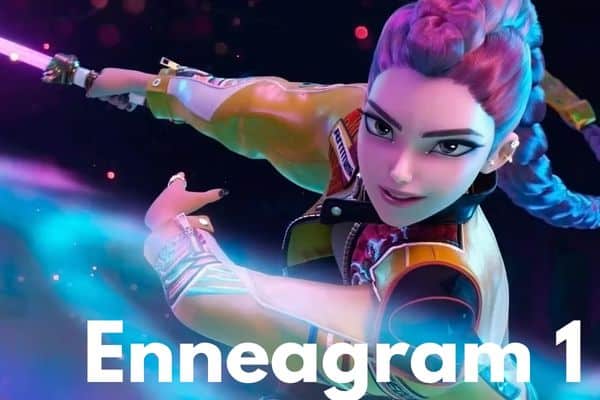
Rumi Kang is a woman who can’t rest until she’s purified what feels broken, both in the world and inside herself. From childhood, she’s carried the weight of being “the responsible one”: the leader of HUNTR/X, the protector of humanity, and the daughter tasked with erasing the stain of her demon heritage. That’s a lot to manage! That One fear of being corrupt or “bad” is written across her skin in the form of markings she hides, convinced that only flawless duty — sealing the Golden Honmoon, never faltering, never showing weakness — can redeem her. For Rumi, perfection is essential not just for her, but for all of humanity.
Her coping mechanisms are classic One: push harder, clamp down, keep working no matter what it costs. Even when her voice strains or her body nearly collapses, she refuses to admit vulnerability or talk about her struggles. She criticizes herself before anyone else can, and when she feels her demon side surfacing, shame drives her into secrecy and self-sacrifice. Like many Ones, she isolates under pressure, convinced that bearing the whole weight alone is better than risking others’ disappointment or harm.
I think Rumi’s arc also highlights the beauty of the One when they embrace compassion and trust. Beneath the rigid leader is someone deeply tender; a protective older sister to Mira and Zoey, a devoted idol who genuinely loves her fans, a warrior who longs not just to defeat evil but to inspire hope. Her growth comes as she lets others share the weight she’s carried since birth, realizing that integrity isn’t about erasing her demon half but accepting her whole self. In that shift, Rumi becomes the best version of the One: not a martyr crushed under impossible standards, but a leader whose principles create authenticity and strength for everyone around her.
#5: Thanos (Marvel)

Thanos is what happens when the hunger for “rightness” goes completely off the rails. His entire identity is wrapped around the belief that he alone sees the corruption of the universe clearly, and it’s his sacred mission to fix it. And to be fair, that’s kind of quintessential One. They have this inner voice that says, this is broken and I’ll fix it, no matter the cost. The problem is that in Thanos’s case, the “fix” is halving the population of the universe. Yikes!
Thanos is eerily serene, convinced of his moral integrity even as he wipes out half of existence. I’m not going to say that all unhealthy Ones are this extreme. But they’ll relate to the pressure to be the only one holding the line, to bear the weight of making things “right” because everyone else is failing. It’s exhausting, and when unchecked, it can morph into self-righteousness or, in Thanos’s case, genocidal math equations.
#6: Rory Gilmore (Gilmore Girls)
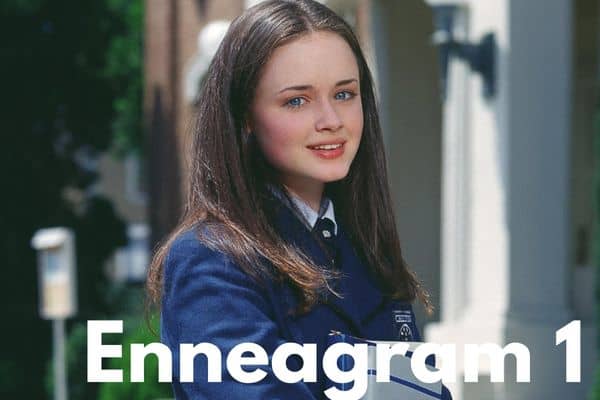
Rory Gilmore is the quintessential “good girl” Enneagram One. From the start of Gilmore Girls, she’s the model student. She diligent and hard-working, striving for the perfect grades, the right college, the right choices. That hunger for integrity and achievement is the One’s inner drive at work. I think most Ones (and honestly, a lot of us who grew up with pressure to perform) know the feeling of tying your worth to how flawlessly you execute the plan.
But Rory also shows us the shadow side of the One. That inner critic of hers never shuts up. She’s hard on herself, terrified of letting others down, and sometimes judgmental toward people who don’t live up to the same standards. And when she stumbles — like dropping out of Yale after harsh criticism — it feels catastrophic, because Ones often don’t know how to extend themselves grace. It’s all or nothing: perfect or failure.
What I love about Rory’s arc, though, is that she shows how messy the One journey really is. She’s not just the buttoned-up perfectionist, she wrestles with rebellion, mistakes, and the temptation to throw out the whole rulebook when it feels too heavy. And that’s real. Ones don’t just live in the black-and-white of “rightness”; they’re constantly navigating the gray, trying to reconcile their ideals with their humanity.
#7: Charles “Chuck” McGill (Better Call Saul)
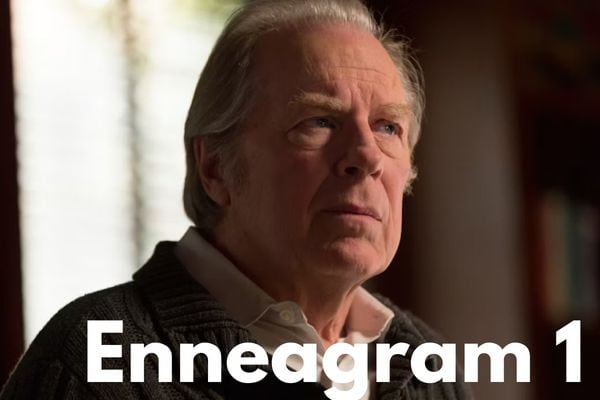
Chuck McGill is the darker, more frustrating face of the Enneagram One. Ugh…I really didn’t like this guy.
McGill sees the law as something pure, incorruptible, and worth defending at any cost. And yeah, that sounds good on the surface. But Chuck’s fear — that corruption will seep in, that Jimmy’s shortcuts and charm will cheapen everything he’s built — drives him to become rigid, self-righteous, and ultimately vindictive. His inner critic spills outward, policing everyone else, especially his brother.
What makes Chuck such an agonizing One to watch is that he isn’t wrong about Jimmy. Jimmy is a trickster, and he does bend the rules until they snap. But instead of responding with love or guidance (what Jimmy really wants), Chuck lets his ideals turn into contempt. That’s the trap for Ones: believing their moral clarity justifies cruelty. He convinces himself that sabotaging Jimmy’s career is an act of justice, not vengeance, even when it destroys their relationship and corrodes his own health. He can’t allow imperfection in the world, or in himself, and it consumes him.
Chuck’s brilliance, his discipline, his devotion to the law, those qualities could have made him a great mentor, even a reformer. But instead, his fear of corruption twisted into rigidity and bitterness, leaving him isolated. That’s the paradox of the Enneagram One: the more desperately they try to purify themselves and the world, the more human messiness they can create. Chuck’s story is a cautionary tale for every perfectionist — that justice without grace can burn everything down, including yourself.
#8: Toshiro Hitsugaya (Bleach)
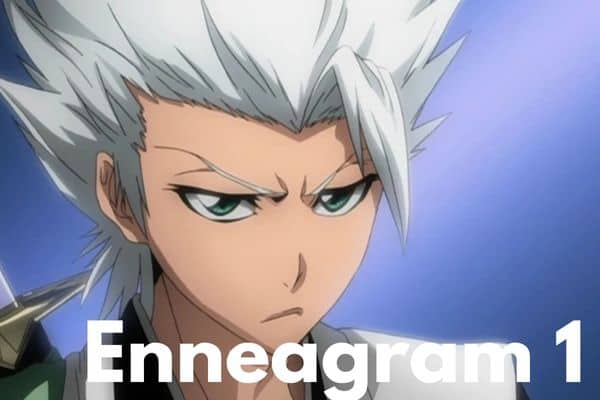
Tōshirō Hitsugaya is one of those people who looks like a kid but carries himself like he’s already lived three lifetimes. Even as the youngest captain in Soul Society, he’s all business. If you want to get under his skin fast, just slack off or crack a joke at the wrong time. He’ll freeze you out (literally) before you can say “sorry.” Even that whole thing about insisting everyone call him “Captain Hitsugaya”? That’s hilariously One energy — formal, principled, and dead set on respect.
Like a lot of Ones, his coping style is control. He locks down his emotions, keeps a poker face when people tease him, and buries himself in work. If someone’s goofing off, he’s visibly uncomfortable, because in his world, one mistake can get people killed. But under that icy exterior, he’s wildly protective; especially with Hinamori. The harshness is just him trying (sometimes too hard) to keep everyone safe.
What I love about Hitsugaya is how much he embodies the One’s inner tug-of-war: principle versus compassion, order versus warmth. He basically skipped childhood so he could step into responsibility, and you can feel both the nobility and loneliness in that choice. Watching him reminds me of how exhausting it is to always be “the adult in the room,” but also how inspiring it is when that integrity finally blends with heart.
#9: Raymond Jacob “Ray” Holt (Brooklyn 99)
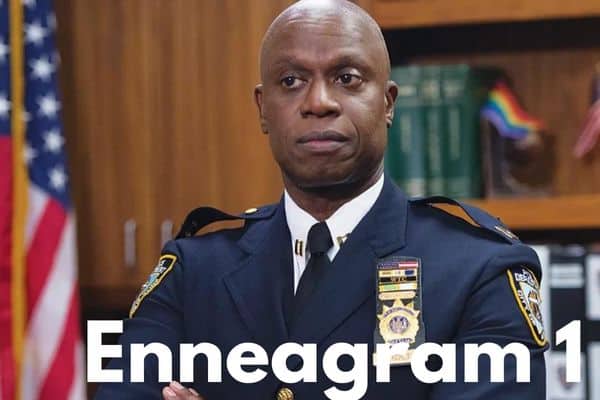
Captain Holt is a near-perfect embodiment of the Enneagram One’s seriousness, discipline, and unshakable moral compass. For Holt, the law is a calling; one that demands order, integrity, and fairness. He’s extremely precise and formal in how he speaks, how he dresses, and how he leads the Nine-Nine. That restraint and seriousness are his way of keeping chaos at bay. He believes in doing things the right way, every time, even when it’s unpopular or when others around him (like Jake) thrive on breaking the rules.
But what makes Holt such a lovable One is that beneath all the rigidity and stoicism, he’s deeply compassionate. He holds his detectives to high standards because he wants them to grow, not because he enjoys nitpicking. He’s the kind of leader who will risk his career to stand against corruption, but also quietly beam with pride (in his Holt-ian way) when his squad succeeds. Like many Ones, his greatest struggle is learning to relax, to allow imperfection, and to accept that warmth doesn’t dilute integrity. And over the seasons, we see Holt soften just enough — letting love, friendship, and even a bit of silliness creep in — without ever losing his core commitment to justice and order.
#10: Fitzwilliam Darcy (Pride and Prejudice)
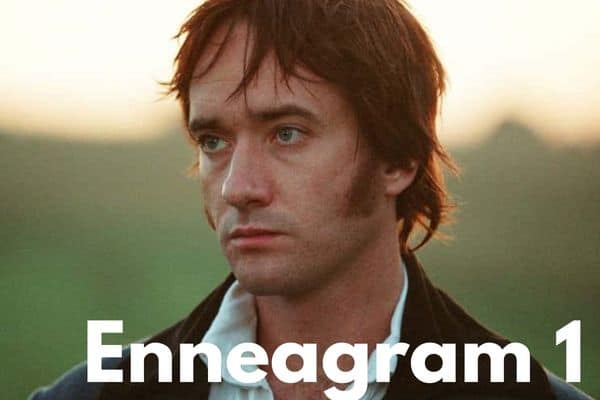
Darcy walks into the story stiff-backed, judgmental, and utterly convinced that his standards are the only ones worth living by. And, yes, that first impression is rough. He comes across as arrogant because Ones can’t help scanning the room for flaws and then bristling when people don’t meet their unspoken checklist.
But the thing about Ones is that when you peel back the rigidity, you find someone who cares deeply. Darcy’s pride masks a man who wants to live honorably, who wants to protect those he loves (even if it means meddling disastrously in Bingley and Jane’s romance). And when Elizabeth basically holds a mirror up to his self-righteousness he does the hardest thing a One can do: he changes. That, to me, is why Darcy feels so human and so enduring. He’s the perfectionist learning humility, the reformer learning grace.
#11: Prince Ashitaka (Princess Mononoke)
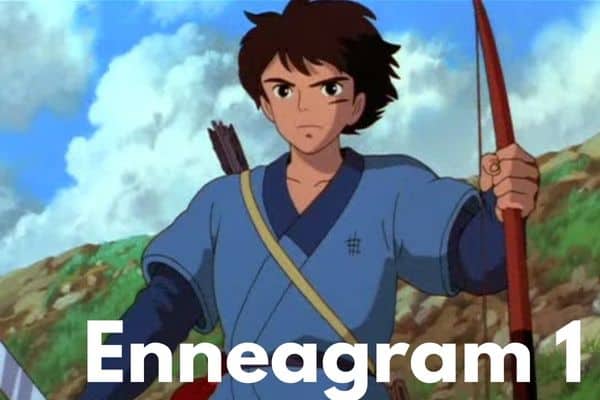
Ashitaka is the kind of Enneagram One who carries his integrity so quietly, you almost miss how fierce it really is. He’s not loud, he’s not self-righteous, he’s not lecturing everyone in sight. These are all stereotypes of the One, and yes, some Ones can be like that, but definitely not all. From the moment he’s cursed, he shoulders the burden without bitterness: “I’ll bear this weight, but I won’t let it turn me into someone cruel.” Even when he’s shot in the back, he doesn’t lash out, because violence for him is never about vengeance, it’s only ever about protection. Watching him, I can’t help but think: this is what the healthiest side of a One looks like — principled and strong without being domineering or punitive.
What I love most about Ashitaka is that he isn’t trying to prove he’s right. He’s trying to restore what’s right. That’s a subtle but very One distinction. He steps into this messy, bloody conflict between the forest gods and the humans and says, essentially, “Hatred is blinding you.” It’s the One’s dream in action: reconciliation, balance, a world where justice isn’t about punishment but about harmony. And yet, he’s not naïve — he’s willing to fight when he has to, but even then he fights clean, refusing to give in to the cycle of destruction. Personally, I find Ashitaka inspiring because he reminds me of what Ones look like when they’ve learned grace: they become bridges. They stop obsessing over who’s wrong and instead ask, “How do we heal this?” And that’s exactly what he does, quietly, stubbornly, all the way through Princess Mononoke.
#12: Angela Martin (The Office)
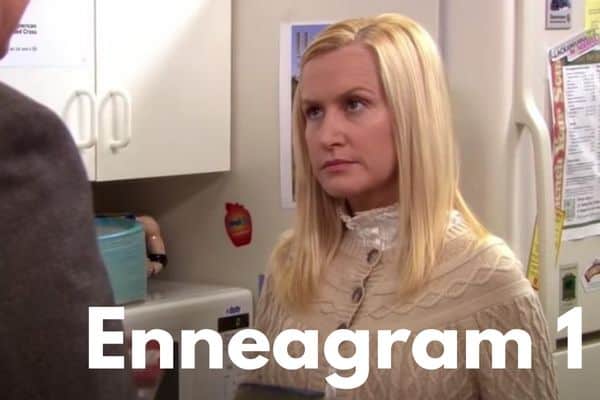
Angela Martin is the Enneagram One turned up to eleven in the most hilariously rigid way possible. She’s the self-appointed moral authority of The Office, constantly judging her coworkers for their “immorality” while conveniently overlooking her own not-so-secret affairs with Dwight or her own pride. That’s such an unhealthy One dilemma; holding others to impossibly high standards while quietly struggling with the same flaws. Angela clings to order, rules, and propriety like a lifeline: her cats are sacred, her party-planning committee is law, and God help you if you try to put up a poster of “sexy” babies. Watching her nitpick everyone else’s lives is funny on the surface, but it’s also a very real portrait of how Ones can use judgment to mask their own inner critic.
What’s fascinating is that underneath the sanctimony, Angela is deeply vulnerable. Her rigidity is a shield, a way of protecting herself from chaos and rejection. She wants to be good, respectable, above reproach — but life (and love) keeps tripping her up. Angela might be a parody of the nitpicky One, but she also captures the heart of the type: a longing for order, purity, and control in a world that refuses to cooperate.
#13: Eddard “Ned” Stark (Game of Thrones)
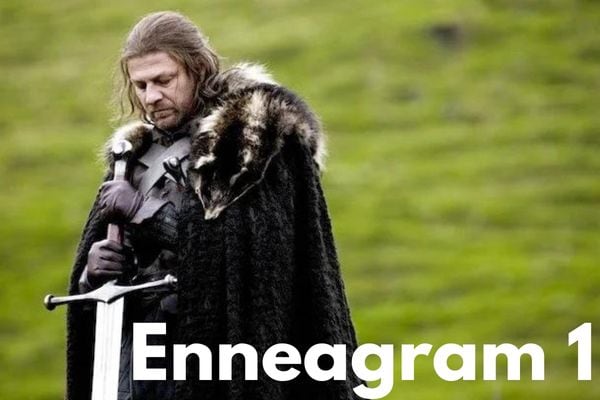
Ned Stark is guided by a moral compass so uncompromising that it becomes both his crown and his undoing. To Ned, honor is the foundation of who he is, the only way to keep chaos and corruption from consuming everything. That’s why he refuses to play the “game” at King’s Landing. He can’t bring himself to scheme like Littlefinger or justify atrocities like Robert or Tywin. And in true One fashion, he believes that if he just does the right thing, others will follow suit. It’s noble, but it’s also heartbreakingly naïve in a place where power always trumps principle.
What I find so moving about Ned is that his impossible standards comes from love. He isn’t a moralist for the sake of pride; he genuinely wants a world where truth and honor protect the innocent. That’s why he bends only once — when he confesses to treason he didn’t commit, just to save Sansa’s life. That moment says more about the heart of a One than anything else: even when he’s stripped of dignity and facing death, he still clings to integrity in the form of protecting his child. And of course, the tragedy is that it doesn’t save him. Ned’s story is the ultimate cautionary tale for Ones — that the world doesn’t always reward righteousness. But it’s also what makes him unforgettable. He reminds us that even if honor costs everything, it still has a kind of quiet, unshakable power.
#14: King T’Challa “Black Panther” (Marvel)
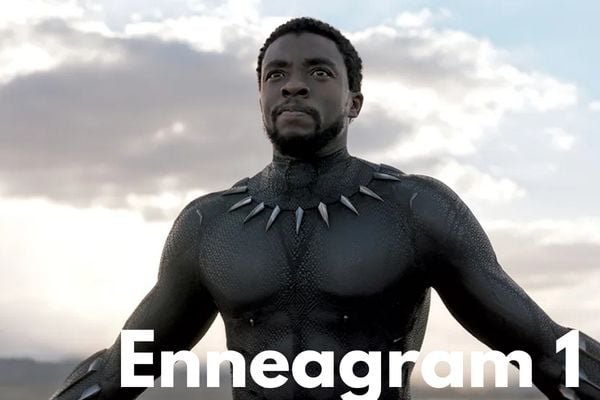
I love that T’Challa makes the Enneagram One look noble without ever feeling preachy. You can see how much weight he places on doing what’s right, but he’s serene and thoughtful about it. He inherits the throne and the mantle of Black Panther with deep reverence, and his first instinct is always to ask: what is the just path forward? Even when he doubts himself, even when tradition and morality clash, he doesn’t look for shortcuts. He steadies himself and leans into integrity.
What I love about T’Challa’s journey is that he shows how Ones grow when they realize perfection isn’t about clinging to the old order, but about reforming it. He starts by trying to be the flawless king his father wanted him to be, but life pushes him to face the blind spots in that vision, especially the isolationist policies of Wakanda. A less healthy One might double down on tradition, but T’Challa has the courage to admit, we were wrong, and we must do better.
#15: Master Shifu (Kung Fu Panda)

Master Shifu is the Enneagram One who’s wound a little too tight. Discipline, order, rules; those are his comfort zones. When we first meet him, he’s rigid and controlling, convinced that perfection is the only path to honor. That inner critic drives him to push Po beyond reason, because in Shifu’s eyes, nothing less than flawless mastery is acceptable.
But underneath the stern exterior, Shifu cares deeply. His harshness isn’t coming from a place of cruelty. Instead, it’s fear that failure will cost lives and dishonor the legacy he’s guarding. Like many Ones, he mistakes control for safety. The more chaotic things get, the more he doubles down on rules and rigidity.
Shifu’s growth mirrors the healthiest shift for Ones: learning to trust, to loosen his grip, and to see that imperfection doesn’t mean disaster. Through Po, he realizes that true strength comes not from rigid control but from embracing who you are flaws, quirks, and all. In that moment, Shifu becomes not just a master of kung fu, but a master of grace.
#16: Morpheus “Dream” (The Sandman)
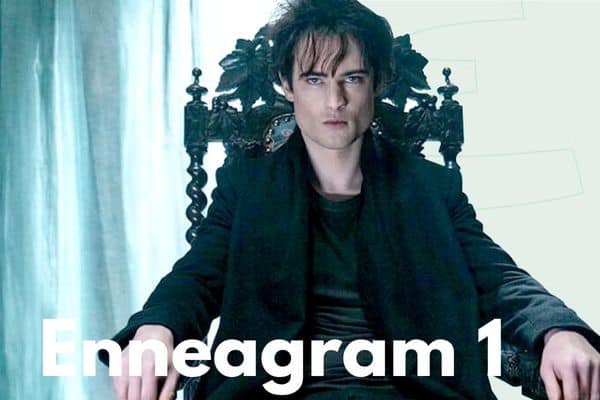
Morpheus is the Enneagram One in his most mythic, otherworldly form — a being who takes order and duty so seriously that he becomes almost imprisoned by them. As Dream of the Endless, he sees himself as the guardian of rules, stories, and boundaries between worlds. His entire identity is bound to structure: the Dreaming must run properly, the rules must be upheld, and he must embody that responsibility no matter the cost. It’s the One’s inner critic writ large — not just whispering in his ear, but shaping the very fabric of reality he governs.
What makes Morpheus fascinating (and very One-like) is how hard it is for him to bend. He’s noble, dignified, and utterly devoted to his purpose, but he struggles to allow warmth, flexibility, or forgiveness into the picture. He can be cold and self-righteous, punishing mortals and immortals alike when they step out of line. And yet, beneath the rigidity, he’s deeply compassionate. He feels the weight of every story, every dream, every being under his care. His journey shows both the beauty and the tragedy of the Enneagram One: when they hold too tightly to perfection and duty, they risk losing the very humanity (or in his case, the connection to others) that gives their ideals meaning.
#17: Kiritsugu Emiya (Fate/Zero)
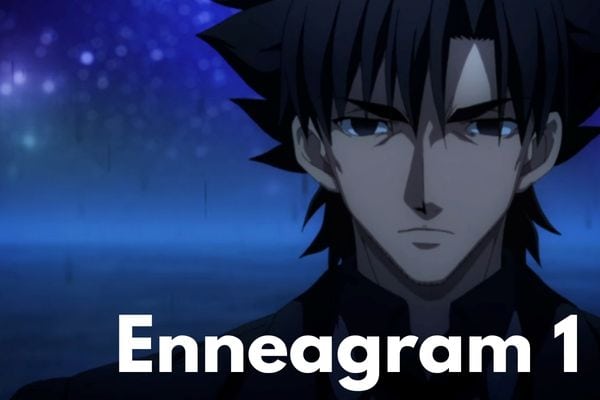
Kiritsugu Emiya is the kind of One who takes the reformer’s drive to a brutal extreme. As a kid, he wanted to be a “hero of justice,” someone who saves the weak and makes the world better. But after watching tragedy pile on tragedy — his first love turning into a Dead Apostle, his father experimenting with horrors — his sense of justice hardened into something cold and merciless. He decides the only way to stop evil is to kill it at the root, no matter how ugly or lonely that makes him. That’s very One: a black-and-white conviction that if the world is broken, someone has to fix it, even if it means burning themselves alive in the process.
What makes him compelling is the contradiction. He tries to act like a machine, calculating who needs to die so others can live, and yet his emotions leak through anyway — in his grief over Maiya, in his love for Irisviel, in the way he saves Shirou from the fire when he could’ve just walked away. He’s a One who can’t stop caring, even when he wishes he could.
#18: Yukichi Fukuzawa (Bungou Stray Dogs)
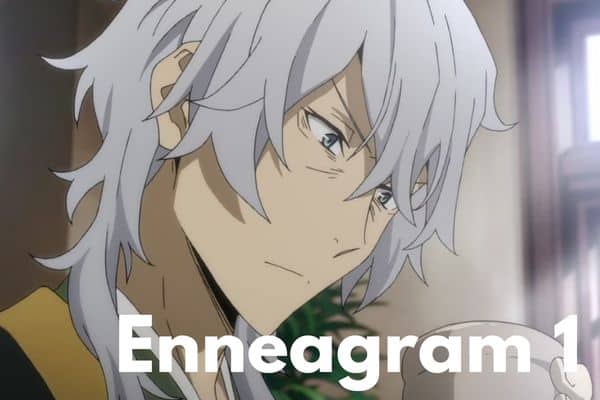
Fukuzawa is the kind of Enneagram One who radiates calm authority. He’s serious, steady, and always seems to have control over his emotions, even when everything around him is going off the rails. As president of the Armed Detective Agency, his number one priority is order and the well-being of his people. He’ll protect his subordinates at all costs, even offering himself up as a target so they don’t get dragged into danger. To him, peace and fairness in Yokohama are sacred, and he treats his role less like a job and more like a moral duty.
At the same time, he shows the softer, more human side of a One. He has a dry, cutting sense of humor and a quiet fondness for cats; details that break through the stern exterior and remind you he isn’t just a stoic rule-keeper. Still, that rigidity is always there. He expects obedience, he can be intimidating without raising his voice, and he hates disruption to the balance he’s worked so hard to preserve. But unlike harsher or more self-righteous Ones, Fukuzawa channels his principles into protection, not punishment. He’s the kind of leader who proves that discipline and compassion don’t have to cancel each other out — in fact, they can make each other stronger.
#19: Huey Freeman (The Boondocks)
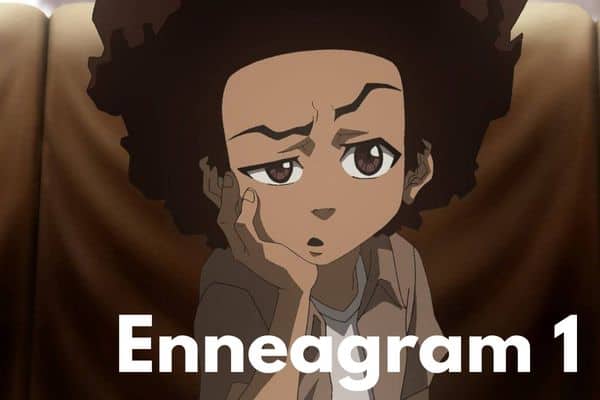
Huey Freeman is the Enneagram One in revolutionary form. He’s principled, serious, and deeply committed to exposing corruption and hypocrisy wherever he sees it. While other kids his age are playing games, Huey is reading Malcolm X, lecturing his neighbors about systemic injustice, and railing against the ignorance of society. He can’t stop scanning the world for what’s broken, and he feels personally responsible for trying to fix it. His intensity, his discipline, and even his sometimes humorless delivery all come from that core conviction that people should do better.
But like many Ones, Huey wrestles with frustration and cynicism when the world refuses to change. His sharp critiques can isolate him, and his high standards sometimes leave him exhausted and disillusioned. Still, beneath all the anger and seriousness, Huey’s sense of justice comes from a place of deep care. He believes people deserve better, even when he’s too proud or too tired to admit it. That’s what makes him such a compelling One: he’s both the kid trying to enjoy his life and the reformer carrying the weight of the world on his shoulders, often at the same time.
#20: Evelyn Wang (Everything Everywhere All at Once)
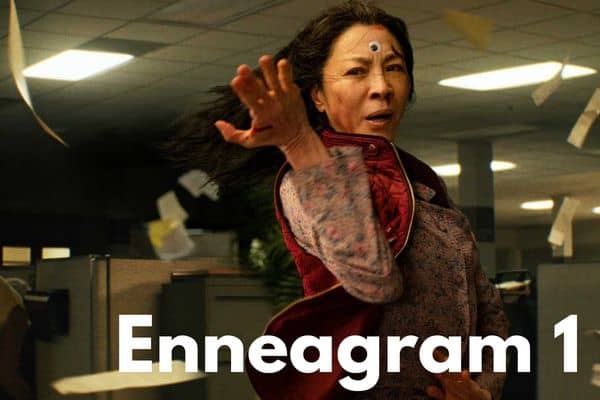
Evelyn Wang is the everyday mom who’s just trying to hold everything together and not drown under the weight of her own expectations. At the start of Everything Everywhere All at Once, she’s the picture of stress: receipts piling up, her marriage falling apart, her father criticizing her, her daughter begging her to see her… and Evelyn just keeps trying to fix it all by working harder, scolding more, pushing herself past the point of collapse. Like most Ones, she believes if she just pushes herself hard enough to get it “right,” things will eventually course correct.
What’s fascinating is how her journey across the multiverse mirrors the One’s growth. At first, she’s consumed by perfectionism and judgment — of herself, her daughter, even the infinite versions of her own life. She’s drowning in “shoulds.” But when she finally cracks open and listens to Waymond’s plea to choose kindness, everything shifts. She realizes that real “rightness” isn’t about control or scolding or perfection; it’s about compassion, about seeing others fully and loving them anyway. Evelyn learns what every healthy One eventually learns: that grace accomplishes what judgment never could.
#21 – Kathani “Kate” Sharma (Bridgerton)
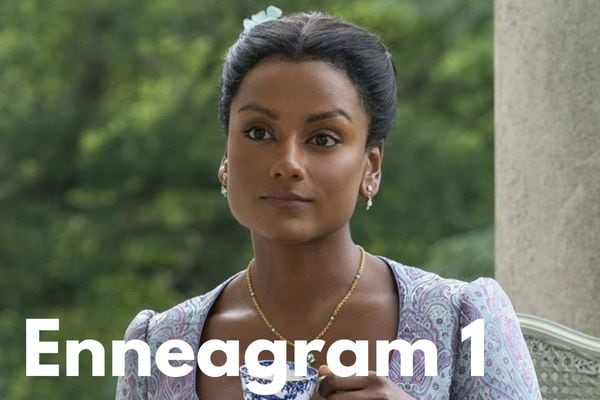
Kate Sharma is determined to do the “right” thing, whether that means shielding Edwina from unworthy suitors, biting back at Anthony Bridgerton for his arrogance, or sacrificing her own desires to keep her family’s honor intact.
Ultimately, Kate is terrified of failure. Specifically, she fears failing the people she loves. Since her parents’ deaths, she’s carried the burden of responsibility on her shoulders, convincing herself that she must be flawless so her sister can have a brighter, easier life. That’s a heavy load for anyone, let alone someone trying to navigate the social gauntlet of London’s marriage season. Her coping mechanism? Control. If she can predict every possible threat, vet every suitor, and keep her own feelings locked away, then maybe everything will turn out “right.”
But like many Ones, Kate’s rigidity hides a warm, passionate heart. When her walls crack, and when she lets herself laugh during Pall-Mall or admits her feelings for Anthony, you glimpse her longing for freedom from her own perfectionism. Kate doesn’t just want to be honorable; she wants to live fully. And her journey with Anthony shows us that for Ones, love often means learning that the world won’t fall apart if you stop gripping the reins quite so tightly.
#22 – Matthew “Matt” Murdock (Daredevil)
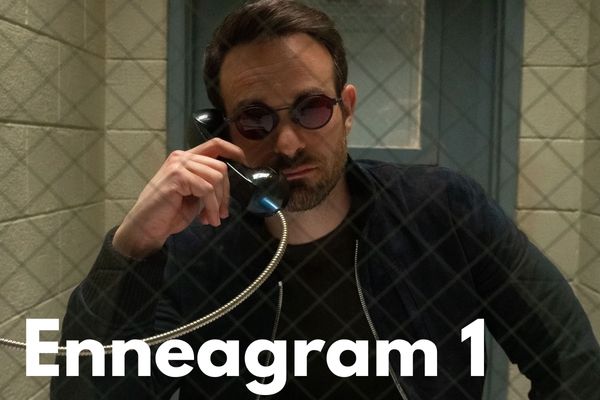
Matt Murdock grew up Catholic, poor, and stubborn in Hell’s Kitchen. A freak accident blinded him as a kid, but cranked up his other senses to superhuman levels. After his father was killed for refusing to throw a fight, Matt was trained by Stick to be a weapon. Ultimately, his compassion got him rejected. So he built his own path: lawyer by day, vigilante by night. In court, he argues for justice; on rooftops, he beats it out of criminals as Daredevil. He won’t kill because he believes redemption matters. (Everyone deserves a second chance—except Fisk, though he won’t admit it.)
That tension defines him. He’s constantly pulled between faith and fury, law and violence. He’s fought Punisher’s “just kill them” philosophy, Elektra’s chaos, the Hand’s mystic ninjas, and Wilson Fisk’s endless grip on the city. Each time he bleeds, loses, doubts God, and nearly crosses the line. But every time he comes back. Even when the city turns against him, even when fake Daredevils frame him for murder, even when his friends walk away—he refuses to give up the mask.
At his core, Matt is a man who keeps choosing hope in a place built on despair. He’s brutal but selfless, guilty but relentless, always dragging himself off the mat for one more round. He believes justice is worth fighting for, even if it breaks him.
#23 – Number One “Luther Hargreeves” (The Umbrella Academy)

Luther Hargreeves is dutiful, loyal, and just a little too convinced that if he holds everything together, the world won’t fall apart. As “Number One,” he internalized his father’s expectations more than any of his siblings. While the others bolted, Luther stayed behind, convinced it was his moral responsibility to be the glue of the family. That rigid sense of duty led him all the way to the moon on what he thought was a noble mission…only to find out later it was busywork. Nothing shatters a One quite like realizing the cause they’ve sacrificed everything for wasn’t even real.
Luther wants to believe in Reginald, in the Academy, in the idea that if you do the right thing, it will matter. But when those ideals crack, Luther falls apart — drugs, raves, reckless decisions — all because his idea of right and wrong and who to believe in got shaken.
And yet, Luther’s heart is pure. He’s protective, gentle, and longs for goodness to win out. His devotion to his siblings, his tenderness with Allison, and later his love for Sloane all show the softer side of the One. At his best, Luther’s Type One drive gives him strength and integrity. At his worst, it traps him in self-sacrifice and rigidity.
#24 – Judge Claude Frollo (The Hunchback of Notre Dame)
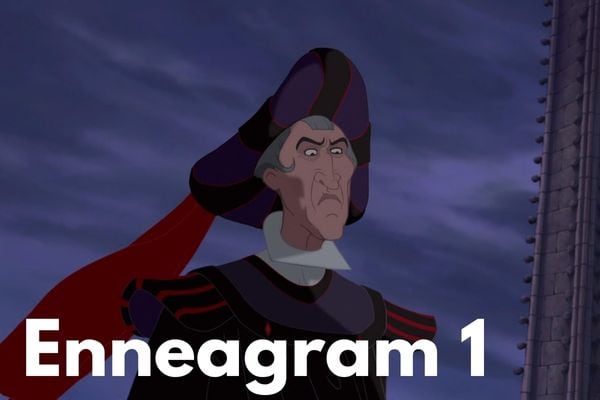
Judge Claude Frollo is one of Disney’s scariest villains precisely because he doesn’t think he’s a villain. In his head, he’s a holy man on a mission to purge Paris of sin. In reality? He’s a power-hungry narcissist hiding behind God’s name to justify cruelty. He spends decades persecuting the Romani, calling them corrupt and sinful, when really the corruption is coming from inside the house (or, in this case, the Cathedral).
What makes Frollo so unsettling is that he actually believes he’s righteous. Most villains twirl their mustaches and know they’re being bad. But Frollo prays while plotting genocide and tells himself it’s holy work. He’s convinced he’s purer than everyone else, even though he lusts after Esmeralda and blames her for it, calling it witchcraft instead of admitting he’s just…a human with desires like everyone else. That self-delusion, that refusal to see his own sin, is what makes him so dangerous. Enneagram Ones at their worst blame others for their sins and refuse to see their own corruption. They project and punish and lash out, seeing all the problems and villainy as being “out there” somewhere.
And then there’s his relationship with Quasimodo. Frollo raises him, educates him, even eats dinner with him—but it’s not love, it’s control. He calls himself Quasimodo’s “master” and convinces him the world is too cruel to handle. It’s typical abuser behavior: mix in just enough kindness to keep the victim dependent, while crushing their freedom at every turn.
#25 – Claire Dunphy (Modern Family)
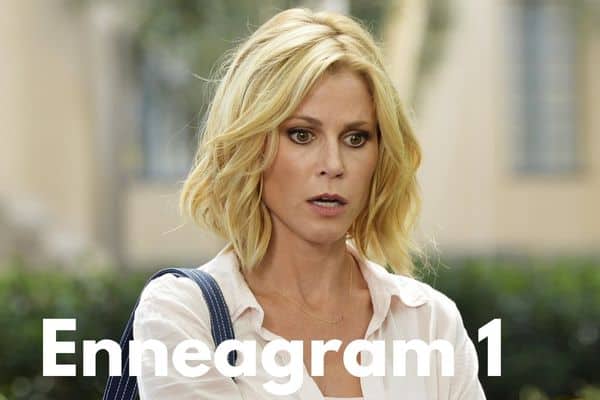
Claire Dunphy is the mom who color-codes the calendar, triple-checks the carpool schedule, and still somehow ends up running late because Phil was distracted by a magic trick or Luke wandered off. She’s Type-A to her core: competitive, perfectionistic, and always half a step away from yelling “why am I the only adult in this house?”
She’s not just a control freak, though, she’s also protective. Claire runs on the unspoken belief that if she lets her guard down, the entire Dunphy household will collapse into chaos. And she’s probably not wrong. Between Phil’s whimsical detours and her kids’ antics, Claire often feels like she’s holding everything together with duct tape and sarcasm. That edge of exasperation is basically her love language.
But the best thing about Claire is that, for all her bossiness, she cares. She wants her family to succeed, to stay safe, to live up to their potential, even if her delivery comes out more like “nagging” than “nurturing.” Underneath the eye-rolls and sharp one-liners, she’s got this big, anxious heart that just wants things to turn out right.
#26 – Sawamura Daichi (Haikyuu!!)

Daichi Sawamura is the captain everyone wishes they had in high school; steady, kind, but with just enough of a scary edge that nobody dares slack off. He’s Karasuno’s “dad” figure, the one who can laugh with you one second and then lock you out of the gym the next if you can’t get your act together (looking at you, Hinata and Kageyama). What makes him so great is that his discipline isn’t about ego or showing off, it’s about making sure the team comes first.
He’s ridiculously responsible, mature beyond his years, and honestly doesn’t even give off high schooler vibes most of the time. From his first year, he was already recruiting managers, suggesting improvements, and pushing everyone to practice harder, even when Karasuno was crumbling without a coach.
What really defines Daichi is his refusal to quit. Back in junior high, even when everyone else gave up in the face of a powerhouse team, Daichi kept chasing the ball like the game still mattered. That stubborn determination carried him through Karasuno’s lowest points—losses, internal fights, teammates losing confidence—and it’s what helped the team find their spark again.
#27 – Bree Van der Kamp (Desperate Housewives)
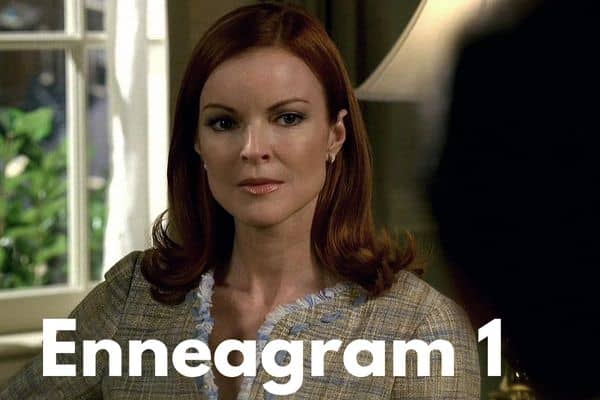
Bree Van de Kamp is the picture-perfect housewife; at least on the surface. Think immaculate casseroles, perfectly folded napkins, and a front lawn that could probably pass military inspection. She’s the kind of woman who makes other people feel guilty for not ironing their sheets. But underneath all that polish? Bree is driven by an Enneagram One-style need for control, order, and moral correctness—sometimes to the point where it costs her real connection.
When Bree’s marriage crumbles, when her kids rebel, when life refuses to fit neatly into her little box, she doubles down on control because that’s how she feels safe. If she can make the roast perfect, maybe everything else won’t fall apart. That impulse leads her into some pretty messy situations, like pushing her kids too hard, or covering up scandals to preserve appearances.
The tragedy and brilliance of Bree’s character is that she’s so human in her contradictions. She can be rigid, judgmental, even cold, but she also loves deeply, and her loyalty to the people she cares about never really wavers, even when they disappoint her. Bree is the kind of person who will quietly sacrifice her own happiness if it means keeping the family (or even just the illusion of the family) intact.
#28 – Mufasa (The Lion King)

Mufasa is the kind of leader who makes you believe in the whole “wise king” archetype. He’s strong, sure, but what really defines him is his calm authority and sense of responsibility. Every word he speaks carries weight because you can tell he’s lived what he’s teaching. When he explains the Circle of Life to Simba, it’s his whole worldview boiled down to something a cub can understand: respect the balance, respect your place, and protect those who can’t protect themselves.
At the same time, Mufasa isn’t some distant, stoic figure. He’s playful, loving, and deeply invested in being a father. One of his most endearing qualities is how he balances authority with warmth. He’ll scold Simba for being reckless in the elephant graveyard, but he’ll also lie under the stars with him and share wisdom about the great kings of the past. That duality—discipline with tenderness—is what makes him such a memorable character.
What’s striking about Mufasa is how much he embodies the ideal that power exists to serve, not to dominate. Even after his death, his presence guides the story, both literally, in that unforgettable scene in the sky, but also symbolically, as the standard Simba struggles to live up to. He’s the moral compass of The Lion King, the anchor that reminds us what leadership should look like: courage paired with humility, strength paired with compassion. And the playfulness matters, too, because that shows that he’s integrating some of his Seven side into the mix as well.
#29 – Minerva McGonagall (Harry Potter)
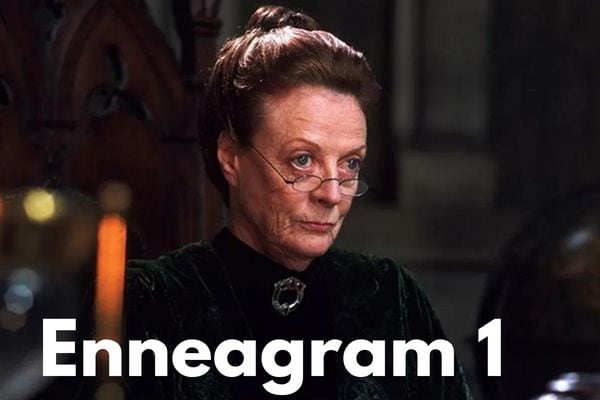
Minerva McGonagall is the professor who can silence a room with just one raised eyebrow. She doesn’t need to shout or wave her wand around dramatically. Instead, her presence alone demands respect. She’s sharp, stern, and no-nonsense, the kind of leader who expects you to pull your weight because she knows you’re capable of it. There’s a steeliness to her that makes even the boldest Gryffindor think twice before stepping out of line.
But beneath that stern exterior, she’s got a caring nature and a dry wit that catches you off guard. She may seem all rules and order, but when push comes to shove, she’ll bend those rules if it means protecting her students or standing up for what’s right. You see it when she quietly supports Harry, even when it puts her at odds with the Ministry. She’s not afraid to play the long game; carefully choosing her battles, and then fighting them with everything she’s got.
#30 – Maximus Decimus Meridius (Gladiator)
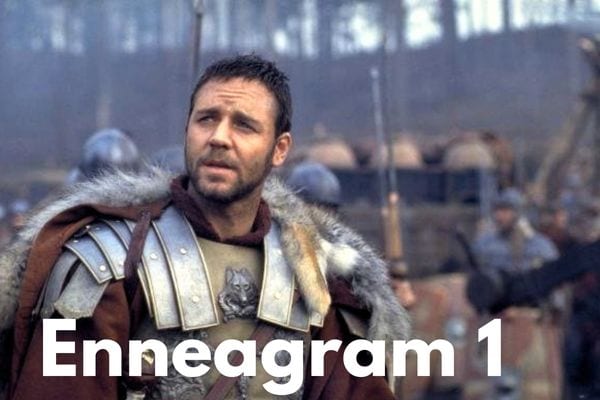
Before everything fell apart, Maximus was Rome’s most loyal general; steadfast, principled, and unwilling to compromise on what he believed was just. For him, duty was sacred. You can see that in how he leads: calm, steady, and deeply protective of the people under his command.
And like any good Enneagram One, what really lights a fire under him is corruption. When Commodus kills his father and snatches the throne, Maximus doesn’t just take it personally—he takes it as a cosmic insult. To Rome. To justice. To everything he’s built his life on. That righteous fury is what pushes him forward. He can’t stand to see honor twisted, and he’s willing to bleed, fight, and claw his way through hell if it means putting things right (and okay, yes, getting some revenge along the way).
Even when life completely strips him down he doesn’t lose himself. That’s the One coping style in action: discipline, restraint, grit. Maximus keeps his anger on a leash and aims it like a spear, turning his pain into purpose and fighting for something bigger than himself.
#31 – Light Yagami (Death Note)
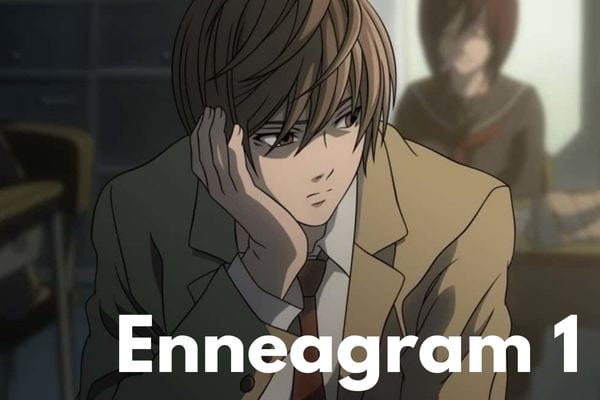
Light Yagami from Death Note is the poster child for what happens when the Enneagram One’s obsession with justice gets twisted into fanaticism. At his core, Light is driven by that unmistakable One motivation: to make the world a better, cleaner, more righteous place. He looks around and sees corruption, cruelty, and sin everywhere, and he can’t stand it. Enter the Death Note, and suddenly his lofty ideals come with godlike power. That’s where his perfectionistic streak morphs into a terrifying crusade.
Like many unhealthy Ones, Light can’t tolerate imperfection in himself or in others. He builds an image of moral superiority and justifies every choice, even the most horrifying ones, as “for the greater good.” Doing away with criminals is “cleansing.” And when people dare to challenge him, even those who might be good, he convinces himself they’re obstacles to justice.
Coping for Light is about control and righteousness. He buries his humanity under this mask of moral clarity, refusing to acknowledge his own flaws. If Ones at their best bring reform, compassion, and a sense of integrity, Light is what happens when that energy goes toxic—when justice becomes obsession, and the pursuit of purity becomes tyranny.
#32 – Shinobu Kocho (Demon Slayer: Kimetsu no Yaiba)
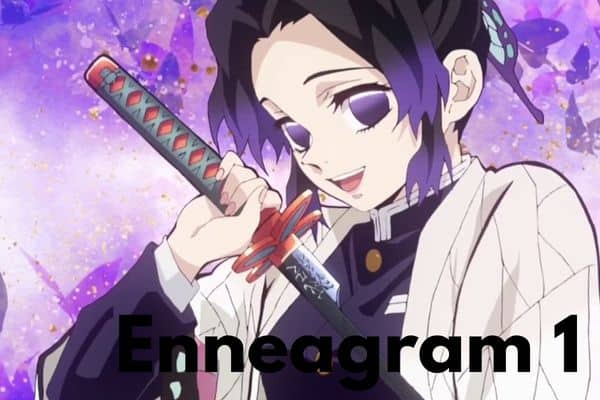
Shinobu Kocho, the Insect Hashira from Demon Slayer, is a great example of the softer but no less intense side of the Enneagram One. On the surface, she’s all grace, smiles, and calm words. As Tanjiro notices, she’s always smiling but is really deeply angry. She has an overwhelming drive to right wrongs and purge the world of cruelty. To Shinobu, demons represent everything corrupt and evil, and it’s her duty to eradicate them, no matter what it costs her.
Like many Ones, Shinobu struggles with anger. Instead of exploding outwardly like some other characters, she represses it, smoothing it into icy politeness. Her smile hides deep grief and fury over her sister’s death, but instead of letting that rage consume her, she channels it into disciplined, careful work. She creates poisons, perfects techniques, and sharpens every edge of her craft so she can fight for justice in her own way. In Infinity Castle we see just how hard she’s willing to push herself to stand up against evil (and if you haven’t seen it yet, you absolutely should!).
#33 – Hermione Granger (Harry Potter series)

From her very first moments at Hogwarts—correcting Ron’s spell pronunciation, following the rules to the letter—you can see Granger’s One energy in action. Order and correctness are her guides. If there’s a library book on it, she’s read it, memorized it, and is probably already creating a schedule to implement it.
And yet, beneath all her righteousness and hunger for perfection, Hermione also shows the softer heart of a 1w2. For her it isn’t enough to be right. She wants to make the world better. She pushes her friends to rise to their potential, stands up for the marginalized, and is willing to break the rules when the rules themselves are corrupt.
#34 – Caitlyn Kiramman (Arcane)

Caitlyn Kiramman is principled, justice-driven, and stubborn in all the ways that make Ones both inspiring and, at times, exhausting. Growing up in Piltover’s elite Kiramman family, she could have coasted through life in luxury, sipping tea and attending galas. But Caitlyn had bigger ideas. She rejected the easy path because her conscience kept nudging her: there’s something broken in this city, and someone has to fix it. I’m sure Ones everywhere relate to that inner voice.
Caitlyn’s conscience pushes back against using her family’s influence, it’s why she joins the Enforcers, and why she doggedly investigates corruption even when her superiors brush her off. It’s also why she clicks with Vi, despite Vi being her polar opposite in upbringing and approach. Caitlyn sees systems; Vi sees survival. Together, they balance each other. But Caitlyn is the one who keeps insisting, “We can do better than this. We should do better than this.”
Of course, Caitlyn isn’t immune to the shadow side of the One. After her mother’s death, grief curdles her sense of justice into something harder, angrier. She starts chasing vengeance against Jinx, and her rigid moral lines blur. Ones under stress can become harsh and uncompromising, convinced their way is the only righteous way. Caitlyn definitely edges into that territory in Season 2, and it strains her bond with Vi. But ultimately, what makes her compelling as a One is her ability to realign with her core values. She gets knocked off track, but she doesn’t stay lost. And I’ll stop there because I don’t want to give any spoilers!
#35 – Erwin Smith (Attack on Titan)
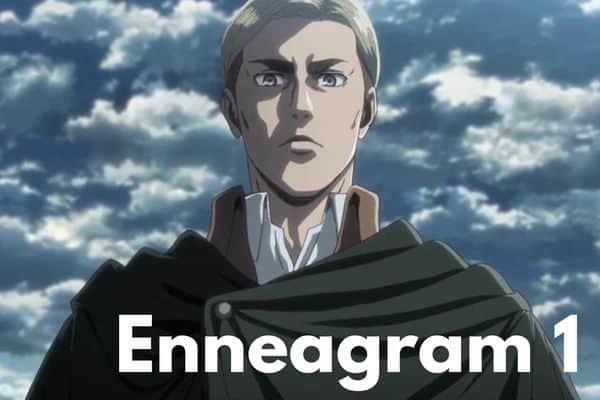
On the surface, Erwin Smith is the picture of a principled reformer: stoic, disciplined, and willing to sacrifice anything—even his own arm—to push humanity closer to freedom. He embodies that One quality of carrying the unbearable weight of responsibility, rallying his soldiers with speeches that inspire them to charge headfirst into certain death because he believes the cause is worth it. He’s also an ENTJ, so he has a gift for strategy and long-range vision. But his One side helps him to bring order and clarity to chaos. His moral authority made his soldiers trust him completely, even when his orders meant they probably wouldn’t make it back.
#36 – Steve Rogers “Captain America”

Steve Rogers is the principled reformer, the guy who refuses to compromise his values even when the whole world is telling him to bend. From the very beginning, when he was a sickly kid getting into fights he couldn’t win, Steve showed that deep One conviction: “I don’t like bullies, I don’t care where they’re from.” That clarity of right and wrong never left him, even after the Super Soldier Serum gave him the body to match the heart. For Steve, strength was never about just dominating or “winning.” It was about responsibility. That’s why he never hesitated to call out corruption, whether it was Hydra inside S.H.I.E.L.D., the Sokovia Accords, or even Tony Stark when he felt the line had been crossed. Ones can be maddeningly uncompromising, but with Steve, you always knew his heart was in the right place.
But what I love about Rogers is the way he paired his righteousness with compassion. He wanted to save as many lives as possible, even when it cost him everything. He was willing to throw himself on the grenade, to stay behind in the ice, to take the blows so others wouldn’t have to. In a world of gray morality, Steve Rogers held on to a vision of justice that never faltered. And while that rigidity sometimes caused conflict, it’s also what made him worthy of lifting Mjolnir—because at the end of the day, his strength wasn’t in the serum or the shield. It was in his unstoppable drive to live with integrity, no matter the cost.
#37 – Monica Geller (Friends)
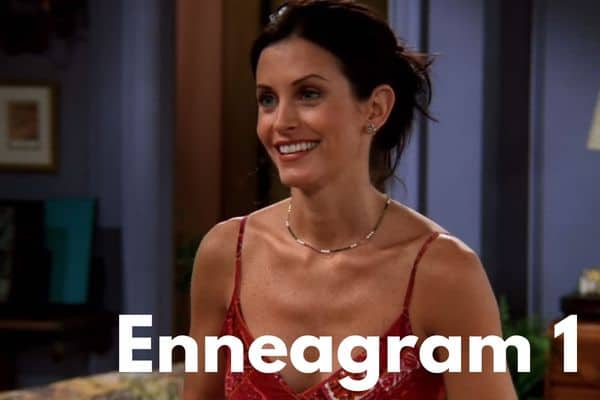
Monica Geller is the ultimate perfectionist—color-coding, label-making, rule-following, scrubbing the already-clean counter just to make sure it’s really clean. For Monica, creating order and doing things “right” is a way of life. Whether she’s lecturing Chandler about towel categories or refereeing her friends’ chaos, there’s always a correct way to do things.
But underneath all that discipline is a heart that wants everything—and everyone—to reach their best. Monica wants the people she loves to live up to their potential and to not settle for less. It can come out bossy (okay, a lot bossy), but it’s rarely from a place of ego. It’s from that inner drive Ones have to improve the world around them.
Of course, being a One means Monica also battles her inner critic. She can be hard on herself, always convinced she’s not quite good enough unless everything is perfect. That’s why she spirals when she loses a job or when her Thanksgiving dinner goes wrong—because to her, those slip-ups feel like moral failures. But she doesn’t stay down for long. She dusts herself off (probably with antibacterial spray), tries again, and keeps pushing forward. And that’s probably why her apartment was always the heart of the show.
#38 – Officer Judy Hopps (Zootopia)

From the time she’s a tiny bunny dreaming about becoming a police officer, Judy Hopps is fueled by this unshakable sense of justice and doing what’s right. That’s why she pushes through every doubt, stereotype, and setback. To her, giving up on her ideals would be a betrayal not just of herself, but of the whole idea of justice.
Like many Ones, Judy has a perfectionistic streak that can get her into trouble. She’s so focused on doing the right thing that she sometimes comes off as judgmental, like when she jumps to conclusions about predators being “inherently dangerous.” In her mind, she was protecting society, but to others (especially Nick), it sounded like bias. That’s the shadow side of the One: when the inner critic is so loud, it blinds them to nuance. The good news is that Judy learns from her mistake. Her humility in owning up to it and making amends is actually very One-like too. Ultimately, deep down, Ones want to be ethical, fair, and good.
Hopps can’t stand corruption, cruelty, or injustice, and she’ll run herself ragged to fix it. But she also has that softer One quality of genuine care: her belief in Nick, her compassion for the animals others overlook, her refusal to settle for the easy or cynical path. Judy’s story is the Enneagram One journey in action: learning that righteousness without empathy can do harm, but when she blends her integrity with compassion, she becomes the kind of leader and friend that actually changes the world.
#39 – Leia Organa (Star Wars)
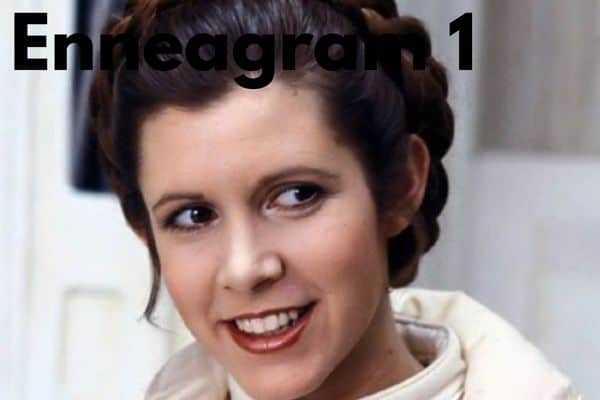
Leia Organa has that quintessential One drive for integrity and justice, only, in her case, it’s not just about tidying up the mess in her own life. It’s about cleaning up an entire galaxy. From the moment we meet her, she’s deeply principled, unwilling to bend or compromise in the face of tyranny. That “never back down, even if it kills me” aura follows her everywhere.
But like most Ones, Leia’s strength is also her Achilles’ heel. She can be rigid, uncompromising, and downright stubborn. There’s the One’s inner critic in her that doesn’t just police her own choices, but everyone else’s too. That’s why she clashes so hard with Han—his laid-back, “we’ll wing it” style makes her blood boil. To Leia, justice and order aren’t optional; they’re moral imperatives.
At her best, Leia embodies the noble side of the One: wise, courageous, and fiercely protective of what’s good. She leads with integrity, even when it costs her personally. At her worst, she risks burnout, frustration, and alienating people with her sharp edges. But what makes Leia so compelling is that her righteousness is never self-serving. She doesn’t fight for perfection to feel superior—she fights because she truly believes the galaxy deserves better.
#40 – Tenya Iida “Ingenium” (My Hero Academia)
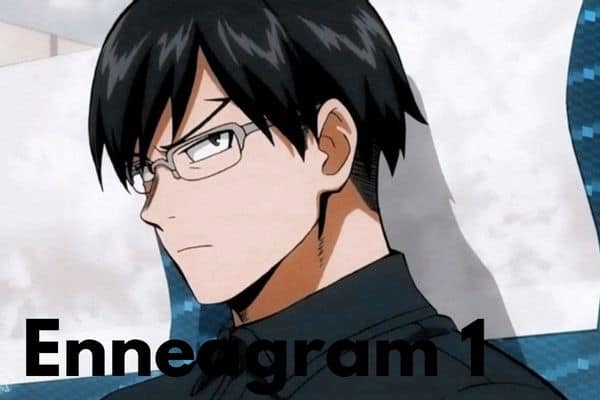
Tenya Iida is disciplined, rule-following, and so tightly wound with ideals that sometimes you want to shake him and say, “Tenya, relax. It’s just lunch, not a military operation.” But that’s exactly what makes him who he is: someone who believes that order and morality are his top obligations. His dramatic hand-chopping motions and loud declarations might make him seem over-the-top, but he’s just bent on doing things right, and he expects others to take that just as seriously.
Of course, being a One means that Tenya’s strengths can flip into weaknesses if he’s not careful. His rigid sense of justice nearly broke him when Stain crippled his brother, Tensei. That wound cracked open Tenya’s righteous exterior and let rage slip through, pushing him into revenge rather than real heroism. It’s a very One struggle—when the world doesn’t match their inner ideal, anger can creep in. But instead of letting shame or stubbornness swallow him, he left the scar on his hand as a daily reminder of what real justice means.
What Do You Think?
Do you relate to these characters or do you find them surprising? Let us and other readers know in the comments!